
Mica
Mica. (a) Identity and specifications. The color additive mica shall conform in identity and specifications to the requirements of § 73.1496(a)(1) and (b). (b) Uses and restrictions. Mica is safe for use in coloring cosmetics generally, including cosmetics applied to the area of the eye, in amounts consistent with good manufacturing practice. (c) Labeling. The color additive and any mixture prepared therefrom intended solely or in part for coloring purposes shall bear, in addition to any information required by law, labeling in accordance with of § 70.25 of this chapter. (d) Exemption from certification. Certification of this color additive is not necessary for the protection of the public health, and therefore batches thereof are exempt from the certification pursuant to section 721(c) of the act. [42 FR 38561, July 29, 1977]
Décision réglementaire et conditions complètes
- Statut
- Permitted list with conditions
- Rôle juridique
- Binding rule
- Résumé réglementaire
- Mica. (a) Identity and specifications. The color additive mica shall conform in identity and specifications to the requirements of § 73.1496(a)(1) and (b). (b) Uses and restrictions. Mica is safe for use in coloring cosmetics generally, including cosmetics applied to the area of the eye, in amounts consistent with good manufacturing practice. (c) Labeling. The color additive and any mixture prepared therefrom intended solely or in part for coloring purposes shall bear, in addition to any information required by law, labeling in accordance with of § 70.25 of this chapter. (d) Exemption from certification. Certification of this color additive is not necessary for the protection of the public health, and therefore batches thereof are exempt from the certification pursuant to section 721(c) of the act. [42 FR 38561, July 29, 1977]
- Conditions et restrictions
Mica. (a) Identity and specifications. The color additive mica shall conform in identity and specifications to the requirements of § 73.1496(a)(1) and (b). (b) Uses and restrictions. Mica is safe for use in coloring cosmetics generally, including cosmetics applied to the area of the eye, in amounts consistent with good manufacturing practice. (c) Labeling. The color additive and any mixture prepared therefrom intended solely or in part for coloring purposes shall bear, in addition to any information required by law, labeling in accordance with of § 70.25 of this chapter. (d) Exemption from certification. Certification of this color additive is not necessary for the protection of the public health, and therefore batches thereof are exempt from the certification pursuant to section 721(c) of the act. [42 FR 38561, July 29, 1977]
Identité de la substance
- Nom dans la source officielle
- Mica
- CAS
- 12001-26-2
- EC
- 310-127-6 (I)
- Correspondance d’identité
- name
- Ingrédient associé
- MICA
Données d’identité CosIng associées
Noms et alias
Description CosIng : Mica is a series of silicate minerals of varying chemical composition but with similar physical properties. Mica may have well-defined cleavage and split into very thin sheets.
Fonction cosmétique enregistrée : ANTICAKING, BULKING, COLORANT, OPACIFYING
Pages de fonctions :ANTICAKING, BULKING, COLORANT, OPACIFYING
Voir le profil complet de l’ingrédientAperçu multi-marchés pour cette identité
Fiches exactes associées actuellement présentes sur ce site. L’absence d’un marché signifie qu’aucune correspondance exacte n’a été importée, et non une autorisation d’utiliser la substance.
European Union
1 fiche associée
Ouvrir la fiche justificativeNew Zealand
1 fiche associée · 1 avec conditions spécifiques
Ouvrir la fiche justificativeUnited States
Fiche actuelle1 fiche associée · 1 avec conditions spécifiques
Ouvrir la fiche justificative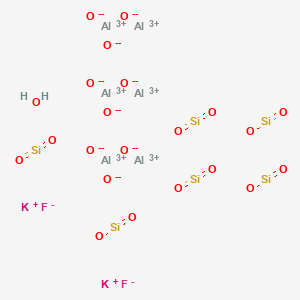
Chimie vérifiée pour le CAS 12001-26-2
Mica-group minerals
MICA, a generic term, refers to any of a group of approximately 30 silicate minerals occurring as non-fibrous plates. Muscovite (hydrated aluminium potassium silicate[KAl2(AlSi3O10)(F, OH)2 ])and phlogopite (potassium magnesium aluminum silicate hydroxide) are the two major micas of commerce. Micas are commonly found in ordinary rocks. Inhalation of mica dust presents an occupational hazard. — CAMEO Chemicals
- Nom IUPAC
- hexaaluminum;dipotassium;hexakis(dioxosilane);nonakis(oxygen(2-));difluoride;hydrate
- Formule moléculaire
- Al6F2H2K2O22Si6
- Masse moléculaire
- 800.60 g/mol
- Masse exacte
- 799.578781 Da
- Masse monoisotopique
- 799.578781 Da
- Surface polaire topologique
- 215,0 Ų
- Complexité moléculaire
- 18,0
- Charge formelle
- 0
- Donneurs de liaisons hydrogène
- 1
- Accepteurs de liaisons hydrogène
- 24
- Liaisons rotatives
- 0
- Atomes lourds
- 38
- Unités covalentes
- 26
Noms et synonymes signalés à PubChem
16 autres noms signalés
Identifiants de bases de données externes
- PubMed:24946801
Statistiques de structure avancées
- Stéréocentres atomiques définis
- 0
- Stéréocentres atomiques non définis
- 0
- Stéréocentres de liaison définis
- 0
- Stéréocentres de liaison non définis
- 0
- Conformères 3D
- 0
Identifiants de structure lisibles par machine
- SMILES
O.[O-2].[O-2].[O-2].[O-2].[O-2].[O-2].[O-2].[O-2].[O-2].O=[Si]=O.O=[Si]=O.O=[Si]=O.O=[Si]=O.O=[Si]=O.O=[Si]=O.[F-].[F-].[Al+3].[Al+3].[Al+3].[Al+3].[Al+3].[Al+3].[K+].[K+]- InChI
InChI=1S/6Al.2FH.2K.6O2Si.H2O.9O/c;;;;;;;;;;6*1-3-2;;;;;;;;;;/h;;;;;;2*1H;;;;;;;;;1H2;;;;;;;;;/q6*+3;;;2*+1;;;;;;;;9*-2/p-2- InChIKey
QYFRTHZXAGSYGT-UHFFFAOYSA-L
Preuves issues de bases de données scientifiques complémentaires
NIH PubChem PUG-View
Attributed physical-property, hazard, environmental and use annotations.
- Color/Form: Light gray to dark flakes or particles Source: Hazardous Substances Data Bank (HSDB)
- Color/Form: Soft, translucent solid; colorless to slight red (ruby), brown to greenish yellow (amber)... thin sheets that are flexible and elastic Source: Hazardous Substances Data Bank (HSDB)
- Color/Form: Colorless flakes or sheets of hydrous silicates Source: Hazardous Substances Data Bank (HSDB)
- Density: 2.6 to 3.2 (NIOSH, 2024) Source: CAMEO Chemicals
- Density: 2.6-3.2 Source: Hazardous Substances Data Bank (HSDB)
- Density: 2.6-3.2 Source: Occupational Safety and Health Administration (OSHA)
- Density: 2.6-3.2 @25 °C Source: PAC Chemical Database, U.S. Department of Energy
- Density: 2.6-3.2 Source: The National Institute for Occupational Safety and Health (NIOSH)
- Melting Point: 1500 °C Source: Hazardous Substances Data Bank (HSDB)
- Melting Point: Melting point = 1387 °C /Synthetic fluorophlogopite/ Source: Hazardous Substances Data Bank (HSDB)
- Melting Point: 1387 °C Source: PAC Chemical Database, U.S. Department of Energy
- Odor: Odorless Source: Hazardous Substances Data Bank (HSDB)
- Physical Description: MICA, a generic term, refers to any of a group of approximately 30 silicate minerals occurring as non-fibrous plates. Muscovite (hydrated aluminium potassium silicate[KAl2(AlSi3O10)(F, OH)2 ])and phlogopite (potassium magnesium aluminum silicate hydroxide) are the two major micas of commerce. Micas are commonly found in ordinary rocks. Inhalation of mica dust presents an occupational hazard. Source: CAMEO Chemicals
- Physical Description: Dry Powder; Large Crystals; CBI Source: EPA Chemical Data Reporting (CDR)
- Physical Description: Colorless, odorless flakes or sheets of hydrous silicates; [NIOSH] Crystalline silica not bound to other minerals is "free" silica. Silicates are minerals in which silicon and oxygen are combined with other elements. [Rom, p. 364] Source: Haz-Map, Information on Hazardous Chemicals and Occupational Diseases
- Physical Description: Colorless, odorless flakes or sheets of hydrous silicates. Source: Occupational Safety and Health Administration (OSHA)
- Physical Description: Colorless, odorless flakes or sheets of hydrous silicates. Source: The National Institute for Occupational Safety and Health (NIOSH)
- Refractive Index: Refractive index: 1.56-1.60 Source: Hazardous Substances Data Bank (HSDB)
- Solubility: Insoluble (NIOSH, 2024) Source: CAMEO Chemicals
- Solubility: Insoluble in water Source: Hazardous Substances Data Bank (HSDB)
- Solubility: Insoluble Source: The National Institute for Occupational Safety and Health (NIOSH)
- Vapor Pressure: 0 mmHg (approx) (NIOSH, 2024) Source: CAMEO Chemicals
- Vapor Pressure: 0 mm Hg (approximate) Source: Hazardous Substances Data Bank (HSDB)
- Vapor Pressure: 0 mmHg (approx) Source: Occupational Safety and Health Administration (OSHA)
- Vapor Pressure: 0 mmHg (approx) Source: The National Institute for Occupational Safety and Health (NIOSH)
- Exposure Routes: inhalation, skin and/or eye contact Source: The National Institute for Occupational Safety and Health (NIOSH)
- First Aid: Excerpt from NIOSH Pocket Guide for Mica (containing less than 1% quartz):; Eye: IRRIGATE IMMEDIATELY - If this chemical contacts the eyes, immediately wash (irrigate) the eyes with large amounts of water, occasionally lifting the lower and upper lids. Get medical attention immediately.; Breathing: FRESH AIR - If a person breathes large amounts of this chemical, move the exposed person to fresh air at once. Other measures are usually unnecessary. (NIOSH, 2024) Source: CAMEO Chemicals
- First Aid: (General first aid procedures); Eye: Irrigate immediately - If this chemical contacts the eyes, immediately wash (irrigate) the eyes with large amounts of water, occasionally lifting the lower and upper lids. Get medical attention immediately.; Breathing: Fresh air Source: The National Institute for Occupational Safety and Health (NIOSH)
- Note: This chemical does not meet GHS hazard criteria for 71.3% (600 of 841) of all reports. Source: European Chemicals Agency (ECHA)
- Signal: Danger Source: European Chemicals Agency (ECHA)
- GHS Hazard Statements: H319 (17.5%): Causes serious eye irritation [Warning Serious eye damage/eye irritation]; H335 (17.5%): May cause respiratory irritation [Warning Specific target organ toxicity, single exposure; Respiratory tract irritation]; H372 (11.5%): Causes damage to organs through prolonged or repeated exposure [Danger Specific target organ toxicity, repeated exposure]; H373 (12.5%): May causes damage to organs through prolonged or repeated exposure [Warning Specific target organ toxicity, repeated exposure] Source: European Chemicals Agency (ECHA)
- Precautionary Statement Codes: P260, P261, P264, P264+P265, P270, P271, P280, P304+P340, P305+P351+P338, P319, P337+P317, P403+P233, P405, and P501 (click each P-code to see the statement) Source: European Chemicals Agency (ECHA)
- ECHA C&L Notifications Summary: Aggregated GHS information provided per 841 reports by companies from 22 notifications to the ECHA C&L Inventory. Each notification may be associated with multiple companies.; Reported as not meeting GHS hazard criteria per 600 of 841 reports by companies.; There are 20 notifications provided by 241 of 841 reports by companies with hazard statement code(s).; Information may vary between notifications depending on impurities, additives, and other factors. The percentage value in parenthesis indicates the notified classification ratio from companies that provide hazard codes. Only hazard codes with percentage values above 10% are shown. For more detailed information, please visit ECHA C&L website. Source: European Chemicals Agency (ECHA)
- Signal: Danger Source: NITE-CMC
- GHS Hazard Statements: H372: Causes damage to organs through prolonged or repeated exposure [Danger Specific target organ toxicity, repeated exposure] Source: NITE-CMC
- Precautionary Statement Codes: P260, P264, P270, P319, and P501 (click each P-code to see the statement) Source: NITE-CMC
- Target Organs: respiratory system Source: The National Institute for Occupational Safety and Health (NIOSH)
- Consumer Uses: Filler; Not Known or Reasonably Ascertainable; Pigment; Lubricating agent Source: EPA Chemical Data Reporting (CDR)
- Industry Uses: Other; Lubricating agent; Filler; Not Known or Reasonably Ascertainable; Pigment Source: EPA Chemical Data Reporting (CDR)
- Sources/Uses: Mica, mainly muscovite and phlogopite, contains less than 1% quartz. Other species of mica are biotite, lepidolite, zimmwaldite, and roscoelite. Used as a filler for paint, cement, asphalt, and insulation material for electrical cables; Also used in drilling muds, cosmetics, and vacuum tubes/condensers; [ACGIH] Sericite is a variety of white mica; it is similar to muscovite and is used as a filler, carrier, and lubricant; [Reference #1] Source: Haz-Map, Information on Hazardous Chemicals and Occupational Diseases
- Industrial Processes with risk of exposure: Petroleum Production and Refining [Category: Industry]; Mining [Category: Industry] Source: Haz-Map, Information on Hazardous Chemicals and Occupational Diseases
- Uses: In aircraft construction Source: Hazardous Substances Data Bank (HSDB)
- Uses: PAPER & PAINT MANUFACTURE, & IN ELECTRIC INDUSTRY Source: Hazardous Substances Data Bank (HSDB)
- Uses: Electrical equipment, vacuum tubes, incandescent lamps, dusting agent, lubricant, windows in high-temperature equipment, filler in exterior paints, cosmetics, glass and ceramic flux, roofing, rubber, mold-release- agent, specialty paper for insulation and filtration, wallpaper and wallboard joint cement, oil-well drilling muds. Source: Hazardous Substances Data Bank (HSDB)
- Uses: Large transparent sheets used to serve as window panes...still used for slow combustion stoves, lanterns or peep-hole furnances...mica powder is used in the mfg of electric cables, pneumatic tyres, welding electrodes, bitmunized cardboard, paints and plastics, dielectric dressings, and flameproof insulators; it is often compacted with alkyd resins; vermiculite is widely used as an insulating material in the building industry; lepidolite is used in the glass and ceramic industries Source: Hazardous Substances Data Bank (HSDB)
- Uses: For more Uses (Complete) data for MICA (6 total), please visit the HSDB record page. Source: Hazardous Substances Data Bank (HSDB)
Mis en correspondance par: Existing checksum-valid CAS to unique PubChem CID match. Récupéré le: 2026-08-31. Ouvrir la fiche source
Les classifications scientifiques et les annotations de danger apportent du contexte et ne remplacent pas la décision réglementaire propre au marché indiquée ci-dessus.
Couverture des sources complémentaires et état des correspondances
| Source | Résultat | Vérifié |
|---|---|---|
| NIH PubChem PUG-View | Correspondance exacte | 2026-08-31 |
Une absence de correspondance enregistrée est une preuve utile que la source a été vérifiée ; ce n’est pas l’affirmation que la substance n’existe pas ailleurs.
Récupéré depuis NIH PubChem le 2026-09-02 par correspondance CAS à somme de contrôle valide. Les propriétés chimiques ne remplacent pas la décision réglementaire de cette page.
Source officielle et provenance
- Source enregistrée
- US FDA cosmetic ingredient framework
- Référence de la source
- 21 CFR 73.2496
- Identifiant de la fiche source
73.2496- Version de la source
- 2026-08-27
- Langue de la source
- English
- État de la traduction
- Original is English
- Source mise à jour le
- 2026-08-27
- Instantané vérifié le
- 2026-08-30 04:30 UTC
- Méthode de validation
- eCFR XML subpart/section parse; 99 records
- SHA-256
25a55a997379f510077dfb234fe3f366e8a1429cec3d0b20fe4b60e2baf3c36d
Notes du jeu de données enregistré
- Couverture du jeu de données
- Federal ingredient framework, prohibited/restricted examples and color-additive rules
- Note sur l’autorité
- The US has no EU-style general approved-ingredient catalogue; MoCRA listing is not approval
Place de cette fiche dans le jeu de données du marché
Répartition des statuts
Un texte de conditions est présent pour 90 des 99 fiches actuelles. Un champ de conditions vide est interprété selon le type de fiche ci-dessus ; il n’est jamais converti en une affirmation d’utilisation sans restriction.
United States contexte du marché
Complete enumerated federal ingredient rules
Version de la couverture : eCFR Title 21 issue date 27 August 2026
All cosmetic prohibitions/restrictions in Part 700 Subpart B and cosmetic-use colour additive listings in Parts 73, 74 and 82.
Liste de contrôle de vérification
- Search Part 700 and all relevant colour-additive parts.
- Confirm colour additive identity, permitted uses, limits and certification status.
- Assess safety and adulteration under the FD&C Act.
- Complete MoCRA facility/product, adverse-event and label obligations where applicable.
Sources officielles du marché
- US FDA cosmetic ingredient frameworkThe US has no EU-style general approved-ingredient catalogue; MoCRA listing is not approval
Procédure de vérification et exhaustivité de la fiche
Avant d’utiliser ce résultat dans une décision de conformité
- Confirmez que « Mica » et chaque identifiant CAS/CE correspondent à la matière de votre spécification fournisseur.
- Search Part 700 and all relevant colour-additive parts.
- Confirm colour additive identity, permitted uses, limits and certification status.
- Assess safety and adulteration under the FD&C Act.
- Complete MoCRA facility/product, adverse-event and label obligations where applicable.
- Consignez la version de la source et revérifiez auprès de l’autorité de réglementation avant la fabrication, la notification ou la mise sur le marché.
Champs disponibles dans cette fiche
- Nom officiel de la substanceDisponible
- CASDisponible
- ECDisponible
- Texte de condition distinctDisponible
- Date d’effetNon fourni
- Empreinte de l’instantané et méthodeDisponible
Questions auxquelles cette page répond
Citation stable
Mica. 21 CFR 73.2496. United States. Source version 2026-08-27. CosIng Checker regulatory record: https://cosingchecker.com/fr/regulations/us/records/742/
Citez l’autorité de réglementation comme autorité juridique. Cette page est un index structuré de preuves et une aide à la vérification, et non un substitut au texte officiel ni à une évaluation juridique professionnelle.
Interprétation et limites pour United States
This identity appears on a market positive list for the list function represented by the source record.
Confirm that the intended function and product use fall within the list scope and every stated condition.
Comment interpréter le rôle juridique
The cited row forms part of a binding rule or legally incorporated list for this market.
Preuves sur cette page
- Résultat enregistré : Permitted list with conditions
- Rôle juridique : Binding rule
- Version de la source : 2026-08-27
Ce que cela ne prouve pas
FDA has no general approved-cosmetic-ingredient catalogue; absence from these sections is not approval or proof of safety.
Recherche complémentaire sur la substance auprès de sources faisant autorité
Aucune de ces sources ne prévaut sur la décision de marché ci-dessus.
Cosmetic Ingredient Review safety assessments
Expert Panel conclusions, assessed ingredient groups, use conditions, dates and report documents
Independent expert review considered by FDA; not a government approval or binding market rule
Rechercher cette identité à la sourceFDA Global Substance Registration System
UNII identifiers, preferred names, substance types, codes and public substance relationships
Identity registry only; UNII availability does not imply FDA review or approval
Rechercher cette identité à la sourceILO/WHO International Chemical Safety Cards
Hazards, symptoms, first aid, storage, incompatibilities and physical properties for covered chemicals
International occupational chemical-safety reference; not cosmetic-use approval
Rechercher cette identité à la sourceJapan NITE-CHRIP
Chemical identity, Japanese and foreign legal lists, GHS hazards and exposure-related information
Chemical-management evidence; cosmetic status remains governed by the applicable MHLW standard and market rules
Rechercher cette identité à la sourceNIOSH Pocket Guide to Chemical Hazards
REL, PEL, IDLH, properties, exposure routes, symptoms, target organs, first aid and measurement methods for covered workplace chemicals
US occupational-health guidance and limits; not a cosmetic ingredient decision
Rechercher cette identité à la sourceOECD eChemPortal
Gateway to authority-owned physical-property, fate, ecotoxicity, toxicity, exposure and GHS records
Discovery gateway; each linked authority remains responsible for its data
Rechercher cette identité à la sourceUS EPA CompTox CTX APIs
Clé d’API requise pour l’importDTXSID identity, experimental and predicted properties, toxicity, bioactivity, exposure and environmental data
Scientific and computational evidence; predictions must remain labelled and do not determine cosmetic legality
Rechercher cette identité à la source