
Mica
Mica. (a) Identity and specifications. The color additive mica shall conform in identity and specifications to the requirements of § 73.1496(a)(1) and (b). (b) Uses and restrictions. Mica is safe for use in coloring cosmetics generally, including cosmetics applied to the area of the eye, in amounts consistent with good manufacturing practice. (c) Labeling. The color additive and any mixture prepared therefrom intended solely or in part for coloring purposes shall bear, in addition to any information required by law, labeling in accordance with of § 70.25 of this chapter. (d) Exemption from certification. Certification of this color additive is not necessary for the protection of the public health, and therefore batches thereof are exempt from the certification pursuant to section 721(c) of the act. [42 FR 38561, July 29, 1977]
Regulatorische Entscheidung und vollständige Bedingungen
- Status
- Permitted list with conditions
- Rechtsrolle
- Binding rule
- Regulatorische Zusammenfassung
- Mica. (a) Identity and specifications. The color additive mica shall conform in identity and specifications to the requirements of § 73.1496(a)(1) and (b). (b) Uses and restrictions. Mica is safe for use in coloring cosmetics generally, including cosmetics applied to the area of the eye, in amounts consistent with good manufacturing practice. (c) Labeling. The color additive and any mixture prepared therefrom intended solely or in part for coloring purposes shall bear, in addition to any information required by law, labeling in accordance with of § 70.25 of this chapter. (d) Exemption from certification. Certification of this color additive is not necessary for the protection of the public health, and therefore batches thereof are exempt from the certification pursuant to section 721(c) of the act. [42 FR 38561, July 29, 1977]
- Bedingungen und Beschränkungen
Mica. (a) Identity and specifications. The color additive mica shall conform in identity and specifications to the requirements of § 73.1496(a)(1) and (b). (b) Uses and restrictions. Mica is safe for use in coloring cosmetics generally, including cosmetics applied to the area of the eye, in amounts consistent with good manufacturing practice. (c) Labeling. The color additive and any mixture prepared therefrom intended solely or in part for coloring purposes shall bear, in addition to any information required by law, labeling in accordance with of § 70.25 of this chapter. (d) Exemption from certification. Certification of this color additive is not necessary for the protection of the public health, and therefore batches thereof are exempt from the certification pursuant to section 721(c) of the act. [42 FR 38561, July 29, 1977]
Stoffidentität
- Name in der amtlichen Quelle
- Mica
- CAS
- 12001-26-2
- EC
- 310-127-6 (I)
- Identitätszuordnung
- name
- Verknüpfter Inhaltsstoff
- MICA
Verknüpfte CosIng-Identitätsdaten
Namen und Aliase
CosIng-Beschreibung: Mica is a series of silicate minerals of varying chemical composition but with similar physical properties. Mica may have well-defined cleavage and split into very thin sheets.
Erfasste kosmetische Funktion: ANTICAKING, BULKING, COLORANT, OPACIFYING
Funktionsseiten:ANTICAKING, BULKING, COLORANT, OPACIFYING
Das vollständige Inhaltsstoffprofil ansehenMarktübergreifende Übersicht zu dieser Identität
Exakte verknüpfte Einträge, die derzeit auf dieser Website vorhanden sind. Ein fehlender Markt bedeutet, dass kein exakter Treffer importiert wurde, nicht dass der Stoff verwendet werden darf.
European Union
1 verknüpfter Eintrag
Unterstützenden Eintrag öffnenNew Zealand
1 verknüpfter Eintrag · 1 mit besonderen Bedingungen
Unterstützenden Eintrag öffnenUnited States
Aktueller Eintrag1 verknüpfter Eintrag · 1 mit besonderen Bedingungen
Unterstützenden Eintrag öffnen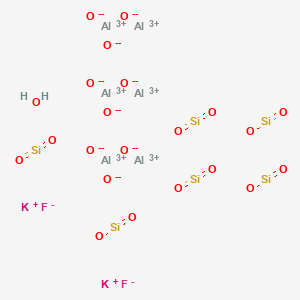
Verifizierte Chemie für CAS 12001-26-2
Mica-group minerals
MICA, a generic term, refers to any of a group of approximately 30 silicate minerals occurring as non-fibrous plates. Muscovite (hydrated aluminium potassium silicate[KAl2(AlSi3O10)(F, OH)2 ])and phlogopite (potassium magnesium aluminum silicate hydroxide) are the two major micas of commerce. Micas are commonly found in ordinary rocks. Inhalation of mica dust presents an occupational hazard. — CAMEO Chemicals
- IUPAC-Name
- hexaaluminum;dipotassium;hexakis(dioxosilane);nonakis(oxygen(2-));difluoride;hydrate
- Summenformel
- Al6F2H2K2O22Si6
- Molekulargewicht
- 800.60 g/mol
- Exakte Masse
- 799.578781 Da
- Monoisotopische Masse
- 799.578781 Da
- Topologische polare Oberfläche
- 215,0 Ų
- Molekulare Komplexität
- 18,0
- Formale Ladung
- 0
- Wasserstoffbrücken-Donoren
- 1
- Wasserstoffbrücken-Akzeptoren
- 24
- Drehbare Bindungen
- 0
- Schweratome
- 38
- Kovalente Einheiten
- 26
An PubChem gemeldete Namen und Synonyme
16 weitere gemeldete Namen
Kennungen in externen Datenbanken
- PubMed:24946801
Erweiterte Strukturstatistik
- Definierte Atom-Stereozentren
- 0
- Nicht definierte Atom-Stereozentren
- 0
- Definierte Bindungs-Stereozentren
- 0
- Nicht definierte Bindungs-Stereozentren
- 0
- 3D-Konformere
- 0
Maschinenlesbare Strukturkennungen
- SMILES
O.[O-2].[O-2].[O-2].[O-2].[O-2].[O-2].[O-2].[O-2].[O-2].O=[Si]=O.O=[Si]=O.O=[Si]=O.O=[Si]=O.O=[Si]=O.O=[Si]=O.[F-].[F-].[Al+3].[Al+3].[Al+3].[Al+3].[Al+3].[Al+3].[K+].[K+]- InChI
InChI=1S/6Al.2FH.2K.6O2Si.H2O.9O/c;;;;;;;;;;6*1-3-2;;;;;;;;;;/h;;;;;;2*1H;;;;;;;;;1H2;;;;;;;;;/q6*+3;;;2*+1;;;;;;;;9*-2/p-2- InChIKey
QYFRTHZXAGSYGT-UHFFFAOYSA-L
Belege aus weiteren wissenschaftlichen Datenbanken
NIH PubChem PUG-View
Attributed physical-property, hazard, environmental and use annotations.
- Color/Form: Light gray to dark flakes or particles Quelle: Hazardous Substances Data Bank (HSDB)
- Color/Form: Soft, translucent solid; colorless to slight red (ruby), brown to greenish yellow (amber)... thin sheets that are flexible and elastic Quelle: Hazardous Substances Data Bank (HSDB)
- Color/Form: Colorless flakes or sheets of hydrous silicates Quelle: Hazardous Substances Data Bank (HSDB)
- Density: 2.6 to 3.2 (NIOSH, 2024) Quelle: CAMEO Chemicals
- Density: 2.6-3.2 Quelle: Hazardous Substances Data Bank (HSDB)
- Density: 2.6-3.2 Quelle: Occupational Safety and Health Administration (OSHA)
- Density: 2.6-3.2 @25 °C Quelle: PAC Chemical Database, U.S. Department of Energy
- Density: 2.6-3.2 Quelle: The National Institute for Occupational Safety and Health (NIOSH)
- Melting Point: 1500 °C Quelle: Hazardous Substances Data Bank (HSDB)
- Melting Point: Melting point = 1387 °C /Synthetic fluorophlogopite/ Quelle: Hazardous Substances Data Bank (HSDB)
- Melting Point: 1387 °C Quelle: PAC Chemical Database, U.S. Department of Energy
- Odor: Odorless Quelle: Hazardous Substances Data Bank (HSDB)
- Physical Description: MICA, a generic term, refers to any of a group of approximately 30 silicate minerals occurring as non-fibrous plates. Muscovite (hydrated aluminium potassium silicate[KAl2(AlSi3O10)(F, OH)2 ])and phlogopite (potassium magnesium aluminum silicate hydroxide) are the two major micas of commerce. Micas are commonly found in ordinary rocks. Inhalation of mica dust presents an occupational hazard. Quelle: CAMEO Chemicals
- Physical Description: Dry Powder; Large Crystals; CBI Quelle: EPA Chemical Data Reporting (CDR)
- Physical Description: Colorless, odorless flakes or sheets of hydrous silicates; [NIOSH] Crystalline silica not bound to other minerals is "free" silica. Silicates are minerals in which silicon and oxygen are combined with other elements. [Rom, p. 364] Quelle: Haz-Map, Information on Hazardous Chemicals and Occupational Diseases
- Physical Description: Colorless, odorless flakes or sheets of hydrous silicates. Quelle: Occupational Safety and Health Administration (OSHA)
- Physical Description: Colorless, odorless flakes or sheets of hydrous silicates. Quelle: The National Institute for Occupational Safety and Health (NIOSH)
- Refractive Index: Refractive index: 1.56-1.60 Quelle: Hazardous Substances Data Bank (HSDB)
- Solubility: Insoluble (NIOSH, 2024) Quelle: CAMEO Chemicals
- Solubility: Insoluble in water Quelle: Hazardous Substances Data Bank (HSDB)
- Solubility: Insoluble Quelle: The National Institute for Occupational Safety and Health (NIOSH)
- Vapor Pressure: 0 mmHg (approx) (NIOSH, 2024) Quelle: CAMEO Chemicals
- Vapor Pressure: 0 mm Hg (approximate) Quelle: Hazardous Substances Data Bank (HSDB)
- Vapor Pressure: 0 mmHg (approx) Quelle: Occupational Safety and Health Administration (OSHA)
- Vapor Pressure: 0 mmHg (approx) Quelle: The National Institute for Occupational Safety and Health (NIOSH)
- Exposure Routes: inhalation, skin and/or eye contact Quelle: The National Institute for Occupational Safety and Health (NIOSH)
- First Aid: Excerpt from NIOSH Pocket Guide for Mica (containing less than 1% quartz):; Eye: IRRIGATE IMMEDIATELY - If this chemical contacts the eyes, immediately wash (irrigate) the eyes with large amounts of water, occasionally lifting the lower and upper lids. Get medical attention immediately.; Breathing: FRESH AIR - If a person breathes large amounts of this chemical, move the exposed person to fresh air at once. Other measures are usually unnecessary. (NIOSH, 2024) Quelle: CAMEO Chemicals
- First Aid: (General first aid procedures); Eye: Irrigate immediately - If this chemical contacts the eyes, immediately wash (irrigate) the eyes with large amounts of water, occasionally lifting the lower and upper lids. Get medical attention immediately.; Breathing: Fresh air Quelle: The National Institute for Occupational Safety and Health (NIOSH)
- Note: This chemical does not meet GHS hazard criteria for 71.3% (600 of 841) of all reports. Quelle: European Chemicals Agency (ECHA)
- Signal: Danger Quelle: European Chemicals Agency (ECHA)
- GHS Hazard Statements: H319 (17.5%): Causes serious eye irritation [Warning Serious eye damage/eye irritation]; H335 (17.5%): May cause respiratory irritation [Warning Specific target organ toxicity, single exposure; Respiratory tract irritation]; H372 (11.5%): Causes damage to organs through prolonged or repeated exposure [Danger Specific target organ toxicity, repeated exposure]; H373 (12.5%): May causes damage to organs through prolonged or repeated exposure [Warning Specific target organ toxicity, repeated exposure] Quelle: European Chemicals Agency (ECHA)
- Precautionary Statement Codes: P260, P261, P264, P264+P265, P270, P271, P280, P304+P340, P305+P351+P338, P319, P337+P317, P403+P233, P405, and P501 (click each P-code to see the statement) Quelle: European Chemicals Agency (ECHA)
- ECHA C&L Notifications Summary: Aggregated GHS information provided per 841 reports by companies from 22 notifications to the ECHA C&L Inventory. Each notification may be associated with multiple companies.; Reported as not meeting GHS hazard criteria per 600 of 841 reports by companies.; There are 20 notifications provided by 241 of 841 reports by companies with hazard statement code(s).; Information may vary between notifications depending on impurities, additives, and other factors. The percentage value in parenthesis indicates the notified classification ratio from companies that provide hazard codes. Only hazard codes with percentage values above 10% are shown. For more detailed information, please visit ECHA C&L website. Quelle: European Chemicals Agency (ECHA)
- Signal: Danger Quelle: NITE-CMC
- GHS Hazard Statements: H372: Causes damage to organs through prolonged or repeated exposure [Danger Specific target organ toxicity, repeated exposure] Quelle: NITE-CMC
- Precautionary Statement Codes: P260, P264, P270, P319, and P501 (click each P-code to see the statement) Quelle: NITE-CMC
- Target Organs: respiratory system Quelle: The National Institute for Occupational Safety and Health (NIOSH)
- Consumer Uses: Filler; Not Known or Reasonably Ascertainable; Pigment; Lubricating agent Quelle: EPA Chemical Data Reporting (CDR)
- Industry Uses: Other; Lubricating agent; Filler; Not Known or Reasonably Ascertainable; Pigment Quelle: EPA Chemical Data Reporting (CDR)
- Sources/Uses: Mica, mainly muscovite and phlogopite, contains less than 1% quartz. Other species of mica are biotite, lepidolite, zimmwaldite, and roscoelite. Used as a filler for paint, cement, asphalt, and insulation material for electrical cables; Also used in drilling muds, cosmetics, and vacuum tubes/condensers; [ACGIH] Sericite is a variety of white mica; it is similar to muscovite and is used as a filler, carrier, and lubricant; [Reference #1] Quelle: Haz-Map, Information on Hazardous Chemicals and Occupational Diseases
- Industrial Processes with risk of exposure: Petroleum Production and Refining [Category: Industry]; Mining [Category: Industry] Quelle: Haz-Map, Information on Hazardous Chemicals and Occupational Diseases
- Uses: In aircraft construction Quelle: Hazardous Substances Data Bank (HSDB)
- Uses: PAPER & PAINT MANUFACTURE, & IN ELECTRIC INDUSTRY Quelle: Hazardous Substances Data Bank (HSDB)
- Uses: Electrical equipment, vacuum tubes, incandescent lamps, dusting agent, lubricant, windows in high-temperature equipment, filler in exterior paints, cosmetics, glass and ceramic flux, roofing, rubber, mold-release- agent, specialty paper for insulation and filtration, wallpaper and wallboard joint cement, oil-well drilling muds. Quelle: Hazardous Substances Data Bank (HSDB)
- Uses: Large transparent sheets used to serve as window panes...still used for slow combustion stoves, lanterns or peep-hole furnances...mica powder is used in the mfg of electric cables, pneumatic tyres, welding electrodes, bitmunized cardboard, paints and plastics, dielectric dressings, and flameproof insulators; it is often compacted with alkyd resins; vermiculite is widely used as an insulating material in the building industry; lepidolite is used in the glass and ceramic industries Quelle: Hazardous Substances Data Bank (HSDB)
- Uses: For more Uses (Complete) data for MICA (6 total), please visit the HSDB record page. Quelle: Hazardous Substances Data Bank (HSDB)
Zugeordnet durch: Existing checksum-valid CAS to unique PubChem CID match. Abgerufen: 2026-08-31. Quelleneintrag öffnen
Wissenschaftliche Klassifizierungen und Gefahrenannotationen liefern Kontext und ersetzen nicht die oben gezeigte marktspezifische regulatorische Entscheidung.
Weitere Quellenabdeckung und Trefferstatus
| Quelle | Ergebnis | Geprüft |
|---|---|---|
| NIH PubChem PUG-View | Exakter Treffer | 2026-08-31 |
Ein erfasster Nicht-Treffer ist ein nützlicher Beleg dafür, dass die Quelle geprüft wurde; er ist keine Behauptung, dass der Stoff anderswo nicht existiert.
Am 2026-09-02 von NIH PubChem durch prüfsummengültigen CAS-Abgleich abgerufen. Chemische Eigenschaften ersetzen nicht die regulatorische Entscheidung auf dieser Seite.
Amtliche Quelle und Herkunft
- Registrierte Quelle
- US FDA cosmetic ingredient framework
- Quellenverweis
- 21 CFR 73.2496
- Eintrags-ID der Quelle
73.2496- Quellenversion
- 2026-08-27
- Quellsprache
- English
- Übersetzungsstatus
- Original is English
- Quelle aktualisiert
- 2026-08-27
- Stand geprüft
- 2026-08-30 04:30 UTC
- Validierungsmethode
- eCFR XML subpart/section parse; 99 records
- SHA-256
25a55a997379f510077dfb234fe3f366e8a1429cec3d0b20fe4b60e2baf3c36d
Hinweise zum registrierten Datensatz
- Datensatzabdeckung
- Federal ingredient framework, prohibited/restricted examples and color-additive rules
- Hinweis zur Behörde
- The US has no EU-style general approved-ingredient catalogue; MoCRA listing is not approval
Wie dieser Eintrag in den Marktdatensatz passt
Statusverteilung
Bedingungstext ist bei 90 von 99 aktuellen Einträgen vorhanden. Ein leeres Bedingungsfeld wird entsprechend der oben genannten Eintragsart interpretiert; es wird niemals in die Aussage einer uneingeschränkten Verwendung umgedeutet.
United States Marktkontext
Complete enumerated federal ingredient rules
Abdeckungsversion: eCFR Title 21 issue date 27 August 2026
All cosmetic prohibitions/restrictions in Part 700 Subpart B and cosmetic-use colour additive listings in Parts 73, 74 and 82.
Verifizierungs-Checkliste
- Search Part 700 and all relevant colour-additive parts.
- Confirm colour additive identity, permitted uses, limits and certification status.
- Assess safety and adulteration under the FD&C Act.
- Complete MoCRA facility/product, adverse-event and label obligations where applicable.
Amtliche Marktquellen
- US FDA cosmetic ingredient frameworkThe US has no EU-style general approved-ingredient catalogue; MoCRA listing is not approval
Verifizierungsablauf und Vollständigkeit des Eintrags
Bevor Sie dieses Ergebnis für eine Compliance-Entscheidung verwenden
- Bestätigen Sie, dass „Mica“ und jede CAS-/EC-Kennung sich auf das Material in Ihrer Lieferantenspezifikation beziehen.
- Search Part 700 and all relevant colour-additive parts.
- Confirm colour additive identity, permitted uses, limits and certification status.
- Assess safety and adulteration under the FD&C Act.
- Complete MoCRA facility/product, adverse-event and label obligations where applicable.
- Dokumentieren Sie die Quellenversion und prüfen Sie die Behörde vor Herstellung, Notifizierung oder Inverkehrbringen erneut.
In diesem Eintrag verfügbare Felder
- Amtlicher StoffnameVerfügbar
- CASVerfügbar
- ECVerfügbar
- Gesonderter BedingungstextVerfügbar
- Datum des InkrafttretensNicht angegeben
- Snapshot-Hash und MethodeVerfügbar
Fragen, die diese Seite beantwortet
Dauerhafte Zitierweise
Mica. 21 CFR 73.2496. United States. Source version 2026-08-27. CosIng Checker regulatory record: https://cosingchecker.com/de/regulations/us/records/742/
Zitieren Sie die Aufsichtsbehörde als rechtliche Autorität. Diese Seite ist ein strukturierter Belegindex und eine Verifizierungshilfe, kein Ersatz für den amtlichen Text oder eine fachkundige rechtliche Bewertung.
Auslegung und Grenzen für United States
This identity appears on a market positive list for the list function represented by the source record.
Confirm that the intended function and product use fall within the list scope and every stated condition.
Wie die Rechtsrolle auszulegen ist
The cited row forms part of a binding rule or legally incorporated list for this market.
Belege auf dieser Seite
- Erfasstes Ergebnis: Permitted list with conditions
- Rechtsrolle: Binding rule
- Quellenversion: 2026-08-27
Was es nicht beweist
FDA has no general approved-cosmetic-ingredient catalogue; absence from these sections is not approval or proof of safety.
Weitere maßgebliche Stoffrecherche
Keine dieser Quellen hebt die oben genannte Marktentscheidung auf.
Cosmetic Ingredient Review safety assessments
Expert Panel conclusions, assessed ingredient groups, use conditions, dates and report documents
Independent expert review considered by FDA; not a government approval or binding market rule
Diese Identität bei der Quelle recherchierenFDA Global Substance Registration System
UNII identifiers, preferred names, substance types, codes and public substance relationships
Identity registry only; UNII availability does not imply FDA review or approval
Diese Identität bei der Quelle recherchierenILO/WHO International Chemical Safety Cards
Hazards, symptoms, first aid, storage, incompatibilities and physical properties for covered chemicals
International occupational chemical-safety reference; not cosmetic-use approval
Diese Identität bei der Quelle recherchierenJapan NITE-CHRIP
Chemical identity, Japanese and foreign legal lists, GHS hazards and exposure-related information
Chemical-management evidence; cosmetic status remains governed by the applicable MHLW standard and market rules
Diese Identität bei der Quelle recherchierenNIOSH Pocket Guide to Chemical Hazards
REL, PEL, IDLH, properties, exposure routes, symptoms, target organs, first aid and measurement methods for covered workplace chemicals
US occupational-health guidance and limits; not a cosmetic ingredient decision
Diese Identität bei der Quelle recherchierenOECD eChemPortal
Gateway to authority-owned physical-property, fate, ecotoxicity, toxicity, exposure and GHS records
Discovery gateway; each linked authority remains responsible for its data
Diese Identität bei der Quelle recherchierenUS EPA CompTox CTX APIs
Für den Import ist ein API-Schlüssel erforderlichDTXSID identity, experimental and predicted properties, toxicity, bioactivity, exposure and environmental data
Scientific and computational evidence; predictions must remain labelled and do not determine cosmetic legality
Diese Identität bei der Quelle recherchieren