
CosIng Database Explained: How to Look Up a Cosmetic Ingredient
Find a cosmetic ingredient by INCI name, CAS or EC number. Follow two worked examples to distinguish a CosIng inventory entry from an EU Annex rule.
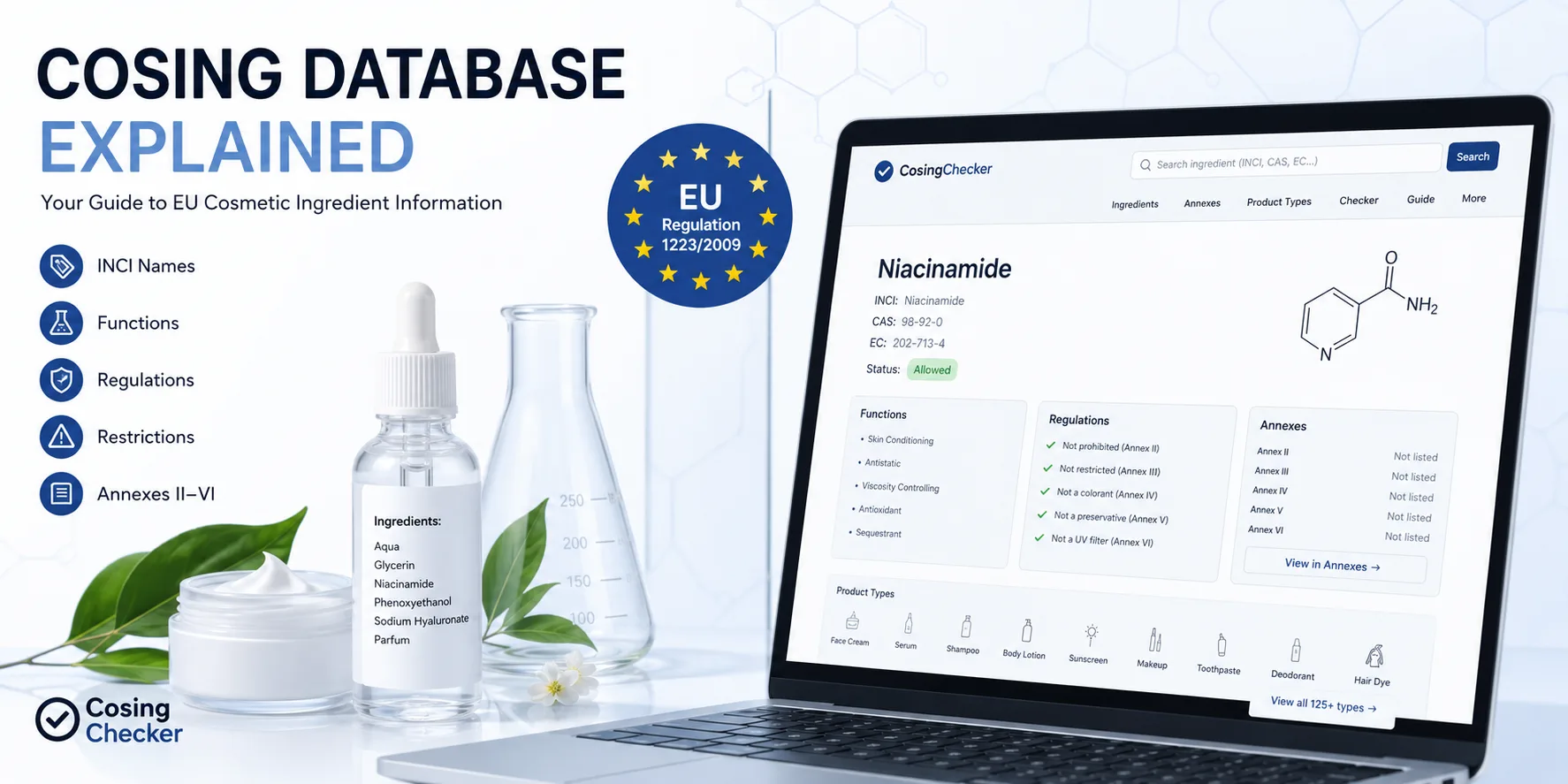
CosIng is the European Commission’s database for cosmetic ingredient information. Start with the exact ingredient name or an identifier such as a CAS or EC number. An inventory record helps identify the substance and its recorded functions. To find out whether EU rules restrict a particular use, open the applicable Annex entry and check its conditions in the current regulation. The European Commission’s CosIng overview explains the scope of the inventory.
Where to look for each answer
| Your question | Start here |
|---|---|
| What does this name on my label identify? | Ingredient search for the exact INCI name or a number. |
| Does a condition apply to this use in the EU? | EU Annexes II–VI and the current regulation for the product category and use. |
| Which records match everything on my label? | INCI Checker for a complete list, then open each relevant result. |
Search by INCI name, CAS number or EC number
Copy the complete name from the ingredients panel. Keep hyphens, numerals and other parts of the name that distinguish similar records. If you have a CAS or EC number from a supplier specification, use the full identifier and compare the returned names with the specification. A shared number can appear alongside more than one cosmetic name or form. The guide to shared CAS and EC numbers shows an example where a number alone does not resolve the identity.
Example 1: read the Glycerin inventory page
Open Glycerin. The record gives the cosmetic name, identifiers and reported functions, including humectant. If you are reading a moisturizer label, the function explains a term you might encounter in formulation. The page does not give the concentration in your bottle or tell you why its manufacturer used it. If there is no direct Annex result for your exact search, check the identity and scope before drawing any conclusion. For a technical review, record the exact query, market and date.
Example 2: follow Phenoxyethanol to an Annex entry
Open Phenoxyethanol, then follow Annex V entry 29. This takes you from the ingredient identity to a record for its use as a preservative. Read the product or use conditions and the wording of the limit in the official text. The amount in a raw material blend and the amount in a finished cosmetic are separate pieces of evidence. An ordinary ingredients list gives you the name, so a reviewer who needs a concentration must obtain it from an appropriate product document.
What Annexes II–VI cover
Under Regulation (EC) No 1223/2009, Annex II lists prohibited substances and Annex III lists restrictions. Annexes IV, V and VI cover colorants, preservatives and UV filters, respectively, subject to the applicable conditions. Use the exact entry, including the substance form and any notes that limit its scope. Check the regulation version and applicable dates before using the result for a product decision. A function in the inventory and a legal entry answer different questions.
What “active” means in the inventory
The Commission distinguishes current and historical entries. If an inventory entry is marked active, that describes the record’s status in the database. It does not mean the name is a drug active ingredient or that every cosmetic use is permitted. Save the record date and check the applicable legal text if the decision depends on timing.
Keep a note you can verify later
Save the package or specification name, matched record and identifiers. Add the relevant Annex entry, the market, the use you checked and the date of the source. If an identity or use condition remains unclear, record the next piece of evidence you need. For a pack with several ingredients, follow the step-by-step cosmetic ingredient list guide. It shows how to use the checker and decide which results need a closer look.
À propos de cet article
Cet article fait partie du blog de CosIng Checker, où nous publions des guides, des notes et des explications pratiques sur les ingrédients cosmétiques de l’UE, les restrictions des annexes II à VI, les avertissements, les conservateurs, les filtres UV, les colorants et les sujets de conformité associés.