
Cadmium nitrate; cadmium dinitrate
Cadmium nitrate; cadmium dinitrate figure à l’annexe II en tant que substance interdite dans les produits cosmétiques mis sur le marché de l’UE.
Détails de la fiche
Nom chimique
Cadmium nitrate; cadmium dinitrate
Nom chimique / IUPAC
Cadmium nitrate; cadmium dinitrate
Informations réglementaires
CMR
| Catégorie | Carcinogenic | Mutagenic | Reprotoxic |
|---|---|---|---|
| Cat. 1B | ✓ | ✓ | — |
Données clés
Identité et propriétés chimiques
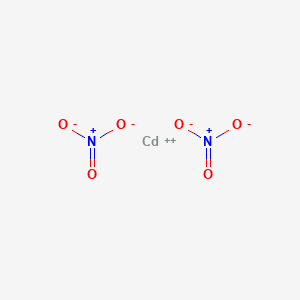
Cadmium Nitrate
Cadmium nitrate is an inorganic nitrate salt having Cd(2+) as the counterion. It has a role as a genotoxin, a carcinogenic agent and a hepatotoxic agent. It is a cadmium salt and an inorganic nitrate salt. It contains a cadmium(2+). — ChEBI
- Nom IUPAC
- cadmium(2+) dinitrate
- Formule moléculaire
- CdN2O6
- Masse moléculaire
- 236.42 g/mol
- Masse exacte
- 237.879001 Da
- Surface polaire topologique
- 126,0 Ų
- Donneurs de liaisons hydrogène
- 0
- Accepteurs de liaisons hydrogène
- 6
- Unités covalentes
- 3
- Stéréocentres définis
- 0
Également connu sous le nom de
14 autres noms signalés
Identifiants de bases de données externes
- ChEBI:CHEBI:77732
Preuves issues de bases de données scientifiques complémentaires
EMBL-EBI ChEBI
cadmium nitrate
An inorganic nitrate salt having Cd(2+) as the counterion.
- Formule
- Cd.2NO3
- Masse moyenne
- 236.420 g/mol
- Masse monoisotopique
- 237.87899 Da
- Charge formelle
- 0
- cadmium salt — is a (CHEBI:50293)
- inorganic nitrate salt — is a (CHEBI:51084)
- carcinogenic agent — has role (CHEBI:50903)
- hepatotoxic agent — has role (CHEBI:50908)
- genotoxin — has role (CHEBI:50902)
- cadmium(2+) — has part (CHEBI:48775)
- carcinogenic agent — has role (CHEBI:50903)
- hepatotoxic agent — has role (CHEBI:50908)
- genotoxin — has role (CHEBI:50902)
- cadmium salt — is a (CHEBI:50293)
- inorganic nitrate salt — is a (CHEBI:51084)
Noms supplémentaires validés
Références croisées de cette source
- CAS: 10325-94-7 — ChemIDplus
- REGISTRY_NUMBER: 8156730 — Reaxys
- MANUAL_X_REF: Cadmium_nitrate — Wikipedia
Mis en correspondance par: Exact CAS cross-reference in the ChEBI compound record. Source mise à jour le: 2015-06-24. Récupéré le: 2026-08-31. Ouvrir la fiche source
NIH PubChem PUG-View
Attributed physical-property, hazard, environmental and use annotations.
- Boiling Point: 132 °C @760 [mm Hg] Source: PAC Chemical Database, U.S. Department of Energy
- Color/Form: White cubic crystals Source: Hazardous Substances Data Bank (HSDB)
- Color/Form: White, amorphous pieces or hygroscopic needles Source: Hazardous Substances Data Bank (HSDB)
- Color/Form: White, prismatic needles Source: Hazardous Substances Data Bank (HSDB)
- Density: 2.45 at 68 °F (USCG, 1999) - Denser than water; will sink Source: CAMEO Chemicals
- Density: 3.6 g/cu cm Source: Hazardous Substances Data Bank (HSDB)
- Density: 3.6 @25 °C Source: PAC Chemical Database, U.S. Department of Energy
- Melting Point: 138 °F (USCG, 1999) Source: CAMEO Chemicals
- Melting Point: 360 °C Source: Hazardous Substances Data Bank (HSDB)
- Melting Point: 360 °C Source: PAC Chemical Database, U.S. Department of Energy
- Physical Description: Cadmium nitrate is an odorless white solid. Sinks in water. (USCG, 1999) Source: CAMEO Chemicals
- Physical Description: White solid; [HSDB] White odorless crystals; [MSDSonline] There are 3 hydrates that form at temperatures <56 deg C; [Ullmann] Source: Haz-Map, Information on Hazardous Chemicals and Occupational Diseases
- Solubility: Soluble in ammonia, alcohol Source: Hazardous Substances Data Bank (HSDB)
- Solubility: Sol in ethanol Source: Hazardous Substances Data Bank (HSDB)
- Solubility: Soluble in ether, acetone Source: Hazardous Substances Data Bank (HSDB)
- Solubility: In water, 156 g/100 g water at 25 °C Source: Hazardous Substances Data Bank (HSDB)
- Carcinogen Classification: 1, carcinogenic to humans. (L135) Source: Toxin and Toxin Target Database (T3DB)
- Exposure Routes: Oral (L6) ; inhalation (L6) ; dermal (L6) Source: Toxin and Toxin Target Database (T3DB)
- First Aid: INHALATION: remove patient to fresh air; seek medical attention.; INGESTION: give large amounts of water and induce vomiting; give milk or egg whites; seek medical attention.; EYES: flush with copious amounts of water for 15 min.; consult a physician.; SKIN: wash with soap and water. (USCG, 1999) Source: CAMEO Chemicals
- Signal: Danger Source: Regulation (EC) No 1272/2008 of the European Parliament and of the Council
- GHS Hazard Statements: H302: Harmful if swallowed [Warning Acute toxicity, oral]; H312: Harmful in contact with skin [Warning Acute toxicity, dermal]; H332: Harmful if inhaled [Warning Acute toxicity, inhalation]; H340: May cause genetic defects [Danger Germ cell mutagenicity]; H350: May cause cancer [Danger Carcinogenicity]; H372: Causes damage to organs through prolonged or repeated exposure [Danger Specific target organ toxicity, repeated exposure]; H400: Very toxic to aquatic life [Warning Hazardous to the aquatic environment, acute hazard]; H410: Very toxic to aquatic life with long lasting effects [Warning Hazardous to the aquatic environment, long-term hazard] Source: Regulation (EC) No 1272/2008 of the European Parliament and of the Council
- Precautionary Statement Codes: P203, P260, P261, P264, P270, P271, P273, P280, P301+P317, P302+P352, P304+P340, P317, P318, P319, P321, P330, P362+P364, P391, P405, and P501 (click each P-code to see the statement) Source: Regulation (EC) No 1272/2008 of the European Parliament and of the Council
- Signal: Danger Source: European Chemicals Agency (ECHA)
- GHS Hazard Statements: H301 (90%): Toxic if swallowed [Danger Acute toxicity, oral]; H302+H312+H332 (31.4%): Harmful if swallowed, in contact with skin or if inhaled [Warning Acute toxicity, oral; acute toxicity, dermal; acute toxicity, inhalation]; H302 (10%): Harmful if swallowed [Warning Acute toxicity, oral]; H312 (42.9%): Harmful in contact with skin [Warning Acute toxicity, dermal]; H330 (90%): Fatal if inhaled [Danger Acute toxicity, inhalation]; H332 (10%): Harmful if inhaled [Warning Acute toxicity, inhalation]; H340 (90%): May cause genetic defects [Danger Germ cell mutagenicity]; H350 (92.9%): May cause cancer [Danger Carcinogenicity]; H360 (88.6%): May damage fertility or the unborn child [Danger Reproductive toxicity]; H372 (90%): Causes damage to organs through prolonged or repeated exposure [Danger Specific target organ toxicity, repeated exposure]; H400 (100%): Very toxic to aquatic life [Warning Hazardous to the aquatic environment, acute hazard]; H410 (100%): Very toxic to aquatic life with long lasting effects [Warning Hazardous to the aquatic environment, long-term hazard] Source: European Chemicals Agency (ECHA)
- Precautionary Statement Codes: P203, P260, P261, P264, P270, P271, P273, P280, P284, P301+P316, P301+P317, P302+P352, P304+P340, P316, P317, P318, P319, P320, P321, P330, P362+P364, P391, P403+P233, P405, and P501 (click each P-code to see the statement) Source: European Chemicals Agency (ECHA)
- ECHA C&L Notifications Summary: Aggregated GHS information provided per 70 reports by companies from 8 notifications to the ECHA C&L Inventory. Each notification may be associated with multiple companies.; Information may vary between notifications depending on impurities, additives, and other factors. The percentage value in parenthesis indicates the notified classification ratio from companies that provide hazard codes. Only hazard codes with percentage values above 10% are shown. For more detailed information, please visit ECHA C&L website. Source: European Chemicals Agency (ECHA)
- Signal: Danger Source: NITE-CMC
- GHS Hazard Statements: H340: May cause genetic defects [Danger Germ cell mutagenicity] Source: NITE-CMC
- Precautionary Statement Codes: P203, P280, P318, P405, and P501 (click each P-code to see the statement) Source: NITE-CMC
- GHS Hazard Statements: H301: Toxic if swallowed [Danger Acute toxicity, oral]; H341: Suspected of causing genetic defects [Warning Germ cell mutagenicity]; H350: May cause cancer [Danger Carcinogenicity]; H361: Suspected of damaging fertility or the unborn child [Warning Reproductive toxicity]; H370: Causes damage to organs [Danger Specific target organ toxicity, single exposure]; H372: Causes damage to organs through prolonged or repeated exposure [Danger Specific target organ toxicity, repeated exposure] Source: NITE-CMC
- Precautionary Statement Codes: P203, P260, P264, P270, P280, P301+P316, P308+P316, P318, P319, P321, P330, P405, and P501 (click each P-code to see the statement) Source: NITE-CMC
- Health Effects: Chronic exposure to cadmium fumes can cause chemical pneumonitis, pulmonary edema, and lung diseases such as bronchitis and emphysema. Cadmium also accumulates in the kidneys, causing permanent damage. Loss of bone density also occurs. Nitrate and nitrite poisoning causes methemoglobinemia. Nitrites may cause pregnancy complications and developmental effects. They may also be carcinogenic. (L1137, L6) Source: Toxin and Toxin Target Database (T3DB)
- Toxicity Summary: Cadmium initially binds to metallothionein and is transported to the kidney. Toxic effects are observed once the concentration of cadmium exceeds that of available metallothionein, and it has also been shown that the cadmium-metallothionein complex may be damaging. Accumulation of cadmium in the kidney results in increased excretion of vital low and high weight molecular proteins. Cadmium is a high affinity zinc analog and can interfere in its biological processes. It also binds to and activates the estrogen receptor, likely stimulating the growth of certain types of cancer cells and causing other estrogenic effects, such as reproductive dysfunction. Cadmium causes cell apoptosis by activating mitogen-activated protein kinases. Nitrate's toxicity is a result of it's conversion to nitrite once in the body. Nitrite causes the autocatalytic oxidation of oxyhemoglobin to hydrogen peroxide and methemoglobin. This elevation of methemoglobin levels is a condition known as methemoglobinemia, and is characterized by tissue hypoxia, as methemoglobin cannot bind oxygen. (A2450, L1613, L8, A18, A19, A28) Source: Toxin and Toxin Target Database (T3DB)
- Environmental Bioconcentration: Salvinia natans (fern) exposed to cadmium nitrate for 21 days exhibited a bioconcentration factor of 960. Source: Hazardous Substances Data Bank (HSDB)
- Environmental Bioconcentration: Mya arenaria, (soft shell clam) exposed to cadmium nitrate for 70 days exhibited a bioconcentration factor of 160. Source: Hazardous Substances Data Bank (HSDB)
- Environmental Bioconcentration: Crassostrea virginica, (American oyster) exposed to cadmium nitrate for 98 days exhibited a bioconcentration factor of 1,220. Source: Hazardous Substances Data Bank (HSDB)
- Environmental Bioconcentration: Lemna valdiviana (duck weed) exposed to cadmium nitrate for 21 days exhibited a bioconcentration factor of 603. Source: Hazardous Substances Data Bank (HSDB)
- Sources/Uses: Used in photographic emulsions, nuclear reactors to control rate of nuclear fission, and glass and ceramic colorants; [HSDB] Used in storage batteries and to make red lusters in glass and porcelain; [Ullmann] Source: Haz-Map, Information on Hazardous Chemicals and Occupational Diseases
- Industrial Processes with risk of exposure: Battery Manufacturing [Category: Industry]; Photographic Processing [Category: Other]; Glass Manufacturing [Category: Industry] Source: Haz-Map, Information on Hazardous Chemicals and Occupational Diseases
- Activities with risk of exposure: Ceramics making [Category: Hobbies] Source: Haz-Map, Information on Hazardous Chemicals and Occupational Diseases
- Uses: In making other cadmium salts; in photographic emulsions. Source: Hazardous Substances Data Bank (HSDB)
- Uses: Oxidation of the sulfide or sulfite under carefully controlled oxidizing atmospheres at high temperature. An alternate method involves treatment of powdered cadmium nitrate, halide, oxide, or carbonate with dimethyl sulfate. Source: Hazardous Substances Data Bank (HSDB)
- Uses: The use of cadmium soaps as components of PVC stabilizers is decreasing because of their toxic properties. Solid PVC stabilizers contain cadmium soaps of saturated fatty acids, whereas liquid stabilizers contain soaps of unsaturated or branched, short-chain fatty acids. The soaps act as heat and light stabilizers, and soaps of saturated fatty acids are used as lubricants in the processing of PVC. Unlike other metallic soaps used in the PVC sector, cadmium soaps do not affect transparency and are suitable for hard, transparent PVC products. However, for safety reason their use is nowadays being replaced by mixtures of calcium-zinc stearate plus other stabilizers. /Cadmium metallic soaps/ Source: Hazardous Substances Data Bank (HSDB)
- Uses: Production of red lusters in glass and porcelain and in cadmium-nickel sinter plates of storage batteries. Source: Hazardous Substances Data Bank (HSDB)
- Uses: For more Uses (Complete) data for CADMIUM NITRATE (6 total), please visit the HSDB record page. Source: Hazardous Substances Data Bank (HSDB)
- Uses: Cadmium nitrate is used mainly to prepare other cadmium salts. It is also used for coloring glass and porcelain and as a flash powder in photography. (L450) Source: Toxin and Toxin Target Database (T3DB)
Mis en correspondance par: Existing checksum-valid CAS to unique PubChem CID match. Récupéré le: 2026-08-31. Ouvrir la fiche source
Les classifications scientifiques et les annotations de danger apportent du contexte et ne remplacent pas la décision réglementaire propre au marché indiquée ci-dessus.
Couverture des sources complémentaires et état des correspondances
| Source | Résultat | Vérifié |
|---|---|---|
| EMBL-EBI ChEBI | Correspondance exacte | 2026-08-31 |
| NIH PubChem PUG-View | Correspondance exacte | 2026-08-31 |
Une absence de correspondance enregistrée est une preuve utile que la source a été vérifiée ; ce n’est pas l’affirmation que la substance n’existe pas ailleurs.
Récupéré depuis NIH PubChem le 2026-09-02 par correspondance CAS à somme de contrôle valide. Les propriétés chimiques ne remplacent pas la décision réglementaire de cette page.
Fiches associées pour Cadmium nitrate; cadmium dinitrate
Les correspondances directes sont limitées pour cette fiche ; des entrées voisines de l’annexe II sont donc également affichées.
Cadmium hydroxide; cadmium dihydroxide
Dibutyltin dilaurate; dibutyl[bis(dodecanoyloxy)] stannane
Clorofene; chlorophene; 2-benzyl-4-chlorophenol
Anthraquinone; 9,10-anthraquinone
Cyproconazole (ISO); (2RS,3RS;2RS,3SR)-2-(4-chlorophenyl)-3-cyclopropyl-1-(1H-1,2,4-triazol-1-yl)bu…
Nonadecafluorodecanoic acid [1]; Ammonium nonadecafluorodecanoate [2]; Sodium nonadecafluorodecanoa…
Cyanamide; carbanonitril
N,N'-Methylenedimorpholine; N,N'-methylenebismorpholine; [formaldehyde released from N,N'-Methylene…
Spiroxamine (ISO); 8-tert-butyl-1,4-dioxaspirol[4.5]decan-2-ylmethyl(ethyl)(propyl)amine
Reaction products of paraformaldehyde with 2-hydroxypropylamine (3:2); [formaldehyde released from …
Ce que signifie l’annexe II pour Cadmium nitrate; cadmium dinitrate
Cadmium nitrate; cadmium dinitrate figure comme substance interdite à l’annexe II du règlement (CE) n° 1223/2009 relatif aux produits cosmétiques et ne doit pas être ajouté intentionnellement. L’article 17 traite séparément des traces involontaires, techniquement inévitables dans le respect des bonnes pratiques de fabrication et compatibles avec l’exigence de sécurité de l’article 3.
Les formulateurs doivent contrôler leurs ingrédients et matières premières afin de s’assurer qu’aucun ne contient cette substance. Les fournisseurs doivent fournir, sur demande, une documentation confirmant son absence.
La page fait également apparaître 12 fiches d’annexe associées présentant des identifiants, une logique d’annexe ou des schémas de dénomination qui se recoupent.
Liste de contrôle de conformité
- Vérifiez que cette substance est absente de toutes les matières premières et formulations finies.
- Demandez aux fournisseurs de matières premières une attestation d’absence ou un certificat d’analyse.
- Consignez le résultat du contrôle dans le dossier d’information produit (DIP).
- Cette substance a une classification CMR. Examinez le tableau CMR ci-dessus et vérifiez le statut actuel dans les annexes II/III avant toute utilisation.
Questions fréquentes
Note de source pour la fiche Cadmium nitrate; cadmium dinitrate de l’annexe II
Cette page résume une fiche de l’annexe II pour Cadmium nitrate; cadmium dinitrate à partir de documents publics de la Commission européenne sur les cosmétiques et ajoute les correspondances d’inventaire ou d’identifiants associées lorsqu’elles sont disponibles.
Utilisez cette page de fiche pour examiner les conditions de l’annexe II pour Cadmium nitrate; cadmium dinitrate, mais confirmez toute décision réglementaire finale auprès du libellé officiel en vigueur de l’annexe et des fichiers sources.
Outils et étapes suivantes
Vérifiez votre formule
Collez une liste INCI complète pour détecter Cadmium nitrate; cadmium dinitrate et d’autres fiches d’annexe de l’UE signalées en une seule passe.
Vérificateur INCIComparer des entrées
Comparez Cadmium nitrate; cadmium dinitrate côte à côte avec une autre fiche d’annexe pour examiner les différences de restrictions, de concentrations et d’annexe.
ComparerParcourir l’annexe
Consultez toutes les fiches de l’annexe II et comparez les conditions réglementaires entre les substances de cette annexe.
Ouvrir l’annexe II