
How to Check a Cosmetic Ingredient List with an INCI Checker
Paste a cosmetic ingredient list, select a market and follow a worked example to read inventory matches, Annex results and names that need checking.
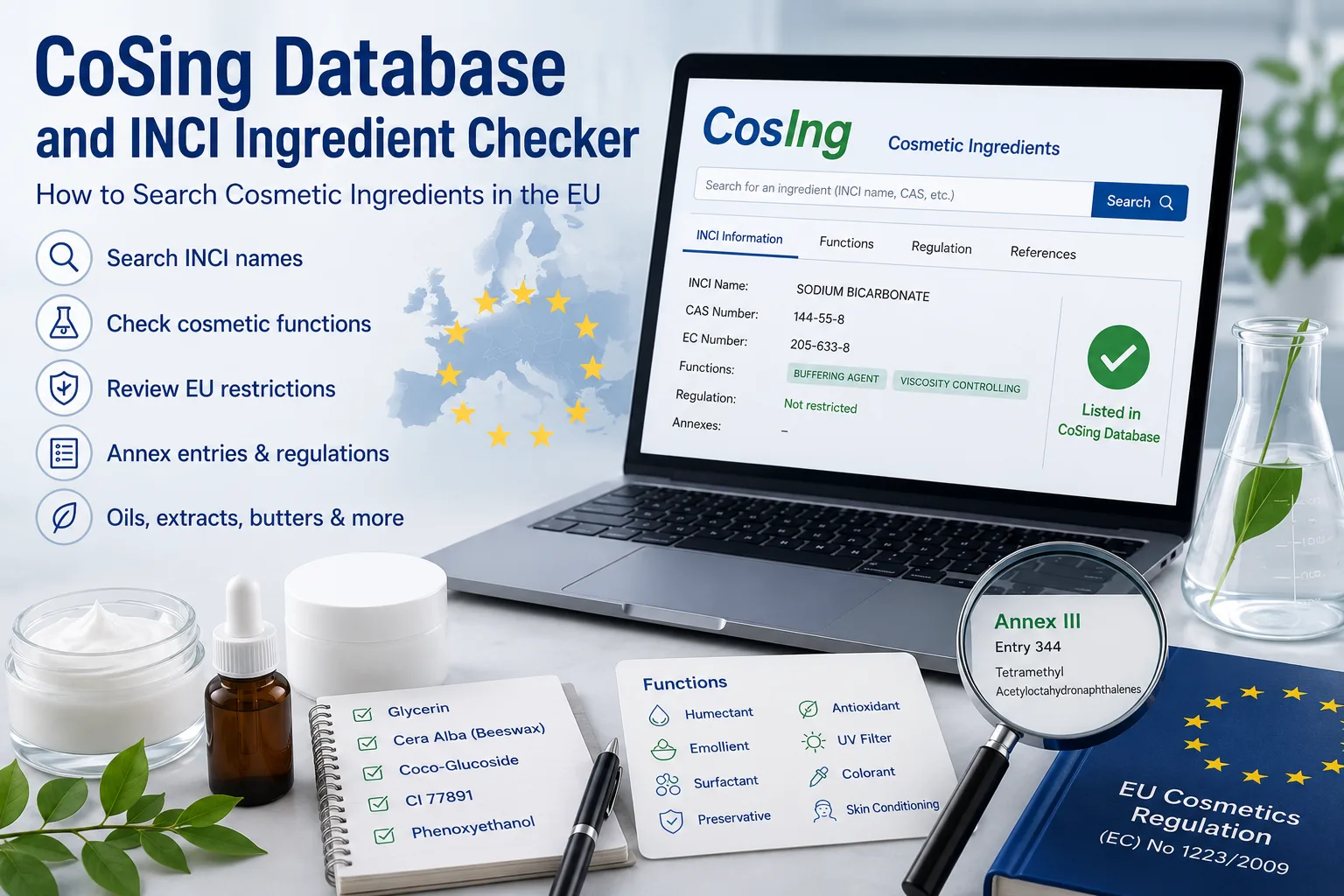
Copy the full ingredient declaration, paste it into the INCI Checker and select the market for your product. Open the individual results to see what matched. Start by separating ingredient identity from the rules that apply to a particular use. A shopper can use this to verify a name on a label. A brand or formulation team can use it to decide which documents and source entries to check next.
1. Copy the ingredients from the exact package
Use the panel headed “Ingredients.” Confirm the name, variant and market, especially if a shop combines more than one formula in one listing. Keep the order and all parts of each ingredient name. A name such as Caprylyl/Capryl Glucoside contains a slash that belongs to the name. If a shade line lists colorants under “may contain” or a plus/minus symbol, save that group separately. The guide to CI numbers explains why a grouped declaration can leave an individual shade unresolved.
2. Paste the list and choose the market
The checker accepts one item per line or a comma-separated list. For a first run, select the European Union if the package is sold there. Use the other market options according to where you intend to buy or sell the product. If the package text came from a photo or retailer, keep the source. When a line is unreadable, check it against the actual package before treating an automatic match as the intended ingredient.
3. Try this sample: Aqua, Glycerin, Phenoxyethanol
| Try this name | What to open and why |
|---|---|
| Aqua | Open the inventory match and check that the printed name matches the water entry. |
| Glycerin | Open the ingredient record to read its identity and recorded functions. |
| Phenoxyethanol | Open Annex V entry 29 for the EU preservative entry. Read the conditions as part of the result. |
This is a practice list, not a product formula. Its ingredient names give you something to open and compare. They do not give you a percentage, the exact product use or a finished product assessment. The CosIng database guide explains when to use an inventory page and when to follow an Annex entry.
4. Resolve unclear names before drawing conclusions
Check a name that is missing or similar to another result by opening Ingredient Search and copying the whole term again. Look for transcription errors and preserve numbers or words such as “Sodium” that change the identity. For supplier documents, a CAS or EC number can help resolve the match, provided it agrees with the material name and form. Save unresolved items for follow-up with the manufacturer or supplier.
5. Compare two labelled products if the formula may have changed
Save the two exact declarations, one per version. Open Formula Compare to identify shared and differing names. A change in the ingredient list is useful evidence that a declaration differs. The comparison does not give you concentrations or establish how a product performs. Check any changed use directions and dates separately before telling others what changed.
Record the outcome in one line per ingredient
For the sample above, a useful note is “Phenoxyethanol, identity matched, EU Annex V entry 29 for preservative use, concentration not shown on the pack.” A second reviewer can see exactly what you found and what still needs checking. Use this format for a supplier handoff or to keep track of a question you plan to ask a brand.
When to open the official source
For a purchase, keep the full declaration and the information most relevant to your choice. For an EU product review, carry the exact entry, substance form, intended function, conditions and date into your notes. Read the latest applicable text of the EU Cosmetics Regulation for a regulatory conclusion. If your decision requires a concentration, raw material specification or assessment for the finished product, record that separately and request the relevant document.
Über diesen Artikel
Dieser Artikel gehört zum Blog von CosIng Checker, in dem wir Leitfäden, Notizen und praxisnahe Erläuterungen zu kosmetischen Inhaltsstoffen der EU, Beschränkungen aus den Anhängen II–VI, Warnhinweisen, Konservierungsstoffen, UV-Filtern, Farbstoffen und verwandten Compliance-Themen veröffentlichen.