
Safe Cosmetics During Pregnancy – What Ingredients to Avoid (EU Guide)
Learn which cosmetic ingredients are safe during pregnancy and which to avoid. EU-based guide covering retinol, caffeine, hair dyes, and skincare safety for pregnant women.
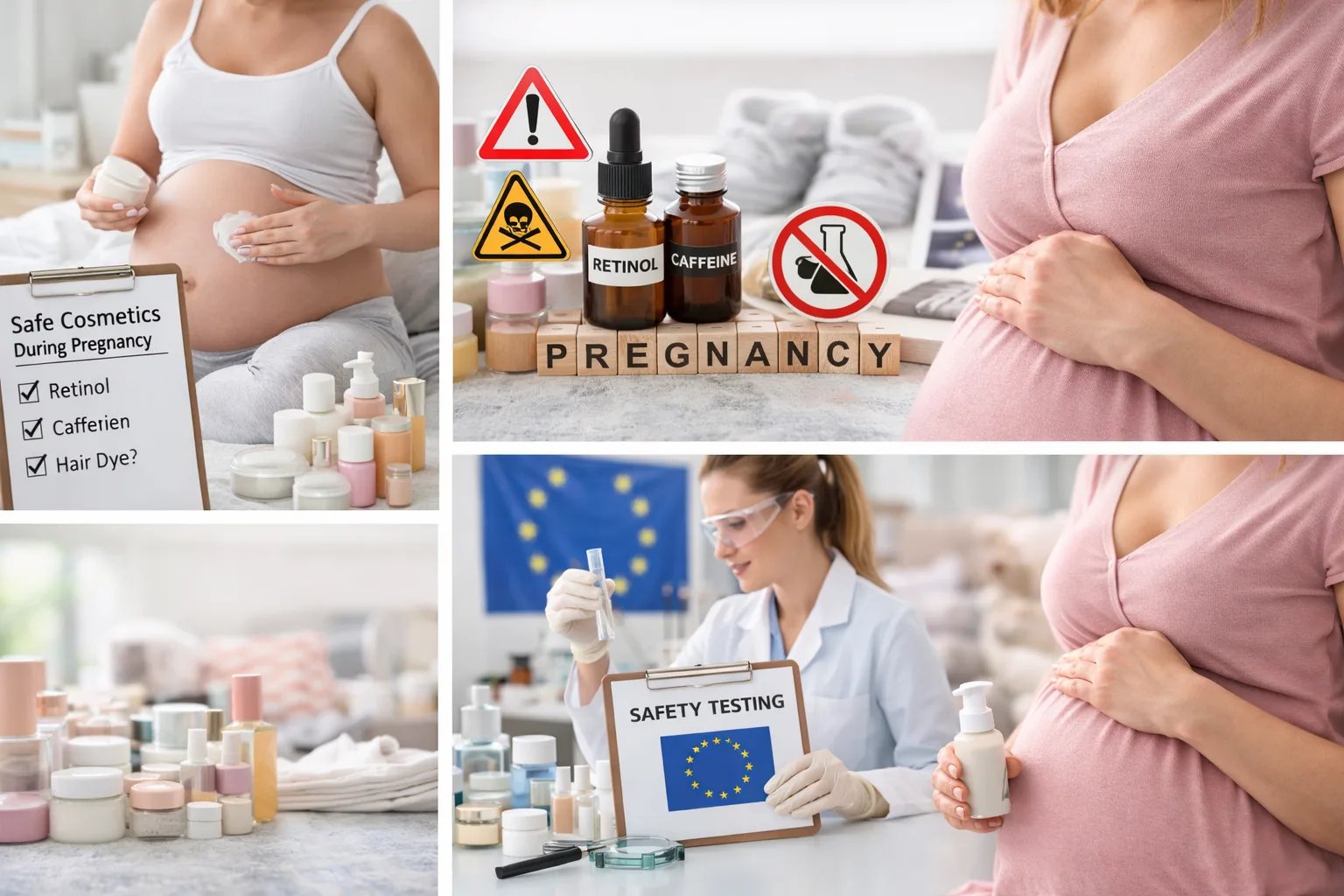
Among women who are expecting a child—especially their first—many questions arise about safe cosmetics during pregnancy. These doubts are often triggered by discussions found online. Can I dye my hair? How should I take care of my skin while pregnant? What should I avoid using so as not to harm the baby?
Fortunately, the vast majority of products available on the market are safe for both the mother and the child. These concerns often stem from so-called folk beliefs or consumer myths. Choosing cosmetics is a very personal matter, but such decisions should not be driven by fear regarding safety. Regulations require that all cosmetic products be proven safe before they are placed on the market. Product labels also include appropriate warnings when necessary. However, warnings specifically related to pregnancy are rarely seen, because safety assessors are aware that products may be used by pregnant women and evaluate them accordingly. If a product posed any risk to human health, it would not be approved for sale. In most cases, there are no contraindications for using cosmetics during pregnancy. Still, it is worth paying attention to certain ingredients that are not recommended during this period. Below, we suggest what to be cautious about.
Cosmetics and pregnancy – do they exclude each other?
No. The vast majority of cosmetic products can be used during pregnancy, unless a doctor supervising the pregnancy advises otherwise. If there are any doubts about using specific products or active ingredients, it is always best to consult a physician.
Cosmetics as a work-related exposure
It should be remembered that in certain professions, women may be exposed to higher amounts of chemical substances—such as hairdressers, cosmetologists, beauticians, or nail stylists. In such cases, it is especially advisable to discuss this with a doctor.
Which cosmetics should be avoided during pregnancy?
There are, however, some specific cases where the use of certain cosmetic products may be discouraged.
Retinol and vitamin A derivatives
The use of retinoids during pregnancy should be discussed with a doctor. Retinoids may be present in various sources: diet, supplements, medications, as well as cosmetics. The total dose—both ingested and applied—should be monitored during pregnancy. Therefore, before using products containing retinoids, it is important to consult a healthcare professional.
2. Caffeine
Another group of ingredients that may be discouraged is caffeine. For this reason, products such as anti-cellulite cosmetics containing caffeine should include a specific note on the packaging. It is always important to read labels carefully.
Hair dyeing
Is it safe to dye hair during pregnancy? Studies have not shown a link between hair dyeing and risks to the fetus. The same applies to hair bleaching products.
It is important to remember that all cosmetic ingredients, including those used in hair dyes, are evaluated by the European Scientific Committee on Consumer Safety. This committee collects and analyzes toxicological data, including potential effects on fetal development. Available evidence suggests that there is no particular risk for pregnant women or their unborn children, which is why there are no specific restrictions for these types of products.
Allergies
If you suffer from allergies, skincare during pregnancy may become more challenging. Symptoms may worsen, and allergic reactions may also appear in women who have never experienced them before.
The risk of allergies is usually clearly described on product packaging, often with a recommendation to perform a patch test before use. This is always advisable, but especially during pregnancy, as treating allergic reactions may be more difficult due to limitations in medication use.
If you have any doubts about specific ingredients, you can always refer to our ingredient encyclopedia, where their properties and effects are described. It is also recommended to discuss them with your doctor.
Breastfeeding and cosmetics
All cosmetic products and their ingredients undergo detailed evaluation by toxicologists as part of the safety assessment process. The potential for a substance to penetrate into the bloodstream or breast milk is thoroughly examined.
If there were any risk to the child—for example, ingestion of residues from products used on the breast—appropriate warnings would be included on the packaging.
The Scientific Committee on Consumer Safety, which evaluates cosmetic substances, carefully reviews all available data on ingredients used in finished cosmetic products, including those used during breastfeeding. If there were any significant risk that a substance could penetrate deeply into the skin and accumulate in breast milk, it would certainly be prohibited.
The purpose of cosmetic products is to care for the skin, maintain it in good condition, and enhance appearance—without affecting the health of the user, including transfer into breast milk.
If there are any concerns about the safety of cosmetic use during breastfeeding, it is always advisable to consult a pediatrician.
About this article
This article is part of the CosIng Checker blog, where we publish guides, notes and practical explainers about EU cosmetic ingredients, Annex II–VI restrictions, warnings, preservatives, UV filters, colorants and related compliance topics.