
Benzene, methyl-
Listed by the Saudi Food and Drug Authority as restricted in cosmetic products; open the cited detail for the current conditions.
监管决定及完整条件
- 状态
- Restricted
- 法律地位
- Binding rule
- 监管摘要
- Listed by the Saudi Food and Drug Authority as restricted in cosmetic products; open the cited detail for the current conditions.
- 条件与限制
- If this row does not reproduce conditions, open the cited official detail because omission does not mean unrestricted use. 请打开所引用的来源,并适用下方的全市场要求。
物质身份
- 官方来源名称
- Benzene, methyl-
- CAS
- 108-88-3
- EC
- 203-625-9
- 身份映射
- cas_number
- 关联成分
- TOLUENE
关联的 CosIng 身份数据
名称和别名
CosIng 描述: Benzene, methyl-
欧盟清单限制备注: III/185
已记录的化妆品功能: ANTIOXIDANT, SOLVENT
功能页面:ANTIOXIDANT, SOLVENT
查看完整的成分档案该身份的跨市场概览
本站目前已有的精确关联记录。某市场缺失表示没有已导入的精确匹配,并不表示准许使用该物质。
European Union
1 条关联记录 · 1 条含特定条件
打开支持记录Great Britain
1 条关联记录 · 1 条含特定条件
打开支持记录New Zealand
1 条关联记录 · 1 条含特定条件
打开支持记录ASEAN
1 条关联记录 · 1 条含特定条件
打开支持记录South Korea
1 条关联记录 · 1 条含特定条件
打开支持记录India
1 条关联记录 · 1 条含特定条件
打开支持记录Saudi Arabia
当前记录1 条关联记录
打开支持记录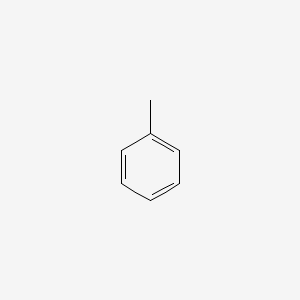
CAS 108-88-3 的已核实化学信息
Toluene
Toluene is the simplest member of the class toluenes consisting of a benzene core which bears a single methyl substituent. It has a role as a non-polar solvent, a cholinergic antagonist, a neurotoxin and a fuel additive. It is a volatile organic compound, a member of toluenes and a methylbenzene. — ChEBI
- IUPAC 名称
- toluene
- 分子式
- C7H8
- 分子量
- 92.14 g/mol
- 精确质量
- 92.062600255 Da
- 单同位素质量
- 92.062600255 Da
- XLogP3
- 2.7
- 拓扑极性表面积
- 0.0 Ų
- 分子复杂度
- 42.0
- 形式电荷
- 0
- 氢键供体
- 0
- 氢键受体
- 0
- 可旋转键
- 0
- 重原子
- 7
- 共价单元
- 1
向 PubChem 报告的名称和同义词
另有 16 个已报告名称
外部数据库标识符
- ChEBI:CHEBI:17578
- ChEMBL:CHEMBL9113
- EPA DTXSID:DTXSID00184990
- EPA DTXSID:DTXSID7021360
- PubMed:38070821
- PubMed:37944760
- PubMed:36416909
- PubMed:34921580
- PubMed:33438815
- PubMed:33269480
- PubMed:33064461
- PubMed:32980479
- PubMed:32728564
- PubMed:32437847
- PubMed:32234516
- PubMed:30910524
高级结构统计
- 已定义的原子立体中心
- 0
- 未定义的原子立体中心
- 0
- 已定义的键立体中心
- 0
- 未定义的键立体中心
- 0
- 三维药效团特征
- 1
- 三维环
- 1
- 三维疏水基团
- 0
- 三维受体特征
- 0
- 三维供体特征
- 0
- 三维阴离子中心
- 0
- 三维阳离子中心
- 0
- 三维构象异构体
- 1
- 有效三维可旋转键
- 0.0
机器可读的结构标识符
- SMILES
CC1=CC=CC=C1- InChI
InChI=1S/C7H8/c1-7-5-3-2-4-6-7/h2-6H,1H3- InChIKey
YXFVVABEGXRONW-UHFFFAOYSA-N
来自其他科学数据库的证据
NIH PubChem PUG-View
Attributed physical-property, hazard, environmental and use annotations.
- Autoignition Temperature: 896 °F (USCG, 1999) 来源: CAMEO Chemicals
- Autoignition Temperature: 896 °F (480 °C) 来源: Hazardous Substances Data Bank (HSDB)
- Autoignition Temperature: 480 °C 来源: ILO-WHO International Chemical Safety Cards (ICSCs)
- Boiling Point: 231.1 °F at 760 mmHg (NTP, 1992) 来源: CAMEO Chemicals
- Boiling Point: 110.6 °C 来源: DrugBank
- Boiling Point: 110.6 °C 来源: Hazardous Substances Data Bank (HSDB)
- Boiling Point: 110.00 to 111.00 °C. @ 760.00 mm Hg 来源: Human Metabolome Database (HMDB)
- Boiling Point: 111 °C 来源: ILO-WHO International Chemical Safety Cards (ICSCs)
- Boiling Point: 232 °F 来源: Occupational Safety and Health Administration (OSHA)
- Boiling Point: 110.63 °C @760 [mm Hg] 来源: PAC Chemical Database, U.S. Department of Energy
- Boiling Point: 232 °F 来源: The National Institute for Occupational Safety and Health (NIOSH)
- Color/Form: Colorless liquid 来源: Hazardous Substances Data Bank (HSDB)
- Density: 0.867 at 68 °F (USCG, 1999) - Less dense than water; will float 来源: CAMEO Chemicals
- Density: 0.8623 g/cu cm at 20 °C 来源: Hazardous Substances Data Bank (HSDB)
- Density: Relative density (water = 1): 0.87 来源: ILO-WHO International Chemical Safety Cards (ICSCs)
- Density: 0.87 来源: Occupational Safety and Health Administration (OSHA)
- Density: 0.8623 @25 °C 来源: PAC Chemical Database, U.S. Department of Energy
- Density: 0.87 来源: The National Institute for Occupational Safety and Health (NIOSH)
- Flash Point: 40 °F (NTP, 1992) 来源: CAMEO Chemicals
- Flash Point: 4.4 °C 来源: Haz-Map, Information on Hazardous Chemicals and Occupational Diseases
- Flash Point: 4.0 °C (39.2 °F) - closed cup 来源: Hazardous Substances Data Bank (HSDB)
- Flash Point: 4.4 dec C (closed cup) 来源: Hazardous Substances Data Bank (HSDB)
- Flash Point: 40 °F (4 °C) (Closed cup) 来源: Hazardous Substances Data Bank (HSDB)
- Flash Point: 4 °C c.c. 来源: ILO-WHO International Chemical Safety Cards (ICSCs)
- Flash Point: 40 °F 来源: Occupational Safety and Health Administration (OSHA)
- Flash Point: 40 °F 来源: The National Institute for Occupational Safety and Health (NIOSH)
- LogP: 2.73 来源: DrugBank
- LogP: log Kow = 2.73 来源: Hazardous Substances Data Bank (HSDB)
- LogP: 2.73 来源: Human Metabolome Database (HMDB)
- LogP: 2.69 来源: ILO-WHO International Chemical Safety Cards (ICSCs)
- Melting Point: -139 °F (NTP, 1992) 来源: CAMEO Chemicals
- Melting Point: -94.9 °C 来源: DrugBank
- Melting Point: -94.9 °C 来源: Hazardous Substances Data Bank (HSDB)
- Melting Point: -95 °C 来源: Human Metabolome Database (HMDB)
- Melting Point: -95 °C 来源: ILO-WHO International Chemical Safety Cards (ICSCs)
- Melting Point: -139 °F 来源: Occupational Safety and Health Administration (OSHA)
- Melting Point: -94.95 °C 来源: PAC Chemical Database, U.S. Department of Energy
- Melting Point: -139 °F 来源: The National Institute for Occupational Safety and Health (NIOSH)
- Odor: Sweet, pungent, benzene-like odor 来源: Hazardous Substances Data Bank (HSDB)
- Physical Description: Toluene appears as a clear colorless liquid with a characteristic aromatic odor. Flash point 40 °F. Less dense than water (7.2 lb / gal) and insoluble in water. Hence floats on water. Vapors heavier than air. May be toxic by inhalation, ingestion or skin contact. Used in aviation and automotive fuels, as a solvent, and to make other chemicals. 来源: CAMEO Chemicals
- Physical Description: CBI; Gas Vapor; Dry Powder; Other Solid; Liquid; Gas Vapor; Liquid; Liquid; Other Solid 来源: EPA Chemical Data Reporting (CDR)
- Physical Description: Colorless liquid with a sweet, pungent, benzene-like odor; [NIOSH] 来源: Haz-Map, Information on Hazardous Chemicals and Occupational Diseases
- Physical Description: Liquid 来源: Human Metabolome Database (HMDB)
- Physical Description: COLOURLESS LIQUID WITH CHARACTERISTIC ODOUR. 来源: ILO-WHO International Chemical Safety Cards (ICSCs)
- Physical Description: Colorless liquid with a sweet, pungent, benzene-like odor. 来源: Occupational Safety and Health Administration (OSHA)
- Physical Description: Colorless liquid with a sweet, pungent, benzene-like odor. 来源: The National Institute for Occupational Safety and Health (NIOSH)
- Refractive Index: Index of refraction: 1.4967 @ 20 °C/D 来源: Hazardous Substances Data Bank (HSDB)
- Solubility: less than 1 mg/mL at 64 °F (NTP, 1992) 来源: CAMEO Chemicals
- Solubility: 526 mg/L (at 25 °C) 来源: DrugBank
- Solubility: In water, 526 mg/L at 25 °C 来源: Hazardous Substances Data Bank (HSDB)
- Solubility: Miscible with alcohol, chloroform, ether, acetone, glacial acetic acid, carbon disulfide 来源: Hazardous Substances Data Bank (HSDB)
- Solubility: Soluble in ethanol, benzene, diethyl ether, acetone, chloroform, glacial acetic acid and carbon disulfide 来源: Hazardous Substances Data Bank (HSDB)
- Solubility: 0.526 mg/mL at 25 °C 来源: Human Metabolome Database (HMDB)
- Solubility: Solubility in water: none 来源: ILO-WHO International Chemical Safety Cards (ICSCs)
- Solubility: (74 °F): 0.07% 来源: The National Institute for Occupational Safety and Health (NIOSH)
- Vapor Pressure: 10 mmHg at 43.5 °F ; 20 mmHg at 65.1 °F; 40 mmHg at 89.2 °F (NTP, 1992) 来源: CAMEO Chemicals
- Vapor Pressure: 28.4 [mmHg] 来源: Haz-Map, Information on Hazardous Chemicals and Occupational Diseases
- Vapor Pressure: 28.4 mm Hg at 25 °C 来源: Hazardous Substances Data Bank (HSDB)
- Vapor Pressure: Vapor pressure, kPa at 25 °C: 3.8 来源: ILO-WHO International Chemical Safety Cards (ICSCs)
- Vapor Pressure: 21 mmHg 来源: Occupational Safety and Health Administration (OSHA)
- Vapor Pressure: 7.5 [mm Hg] @1.5 °C 来源: PAC Chemical Database, U.S. Department of Energy
- Vapor Pressure: 21 mmHg 来源: The National Institute for Occupational Safety and Health (NIOSH)
- Viscosity: 1.165 mPa-s at -25 °C; 0.778 mPa-s at 0 °C; 0.560 mPa-s at 25 °C; 0.424 mPa-s at 50 °C; 0.333 mPa-s at 75 °C; 0.270 mPa-s at 100 °C 来源: Hazardous Substances Data Bank (HSDB)
- Viscosity: 0.68 mm²/s at 20 °C 来源: ILO-WHO International Chemical Safety Cards (ICSCs)
- IARC Carcinogenic Agent: Toluene 来源: International Agency for Research on Cancer (IARC)
- IARC Carcinogenic Classes: Group 3: Not classifiable as to its carcinogenicity to humans 来源: International Agency for Research on Cancer (IARC)
- IARC Monographs: Volume 47: (1989) Some Organic Solvents, Resin Monomers and Related Compounds, Pigments and Occupational Exposures in Paint Manufacture and Painting; Volume 71: (1999) Re-evaluation of Some Organic Chemicals, Hydrazine and Hydrogen Peroxide (Part 1, Part 2, Part 3) 来源: International Agency for Research on Cancer (IARC)
- Publication Year: 1999 来源: International Agency for Research on Cancer (IARC)
- Evaluation Year: 1998 来源: International Agency for Research on Cancer (IARC)
- Substance: Toluene 来源: NTP Technical Reports
- NTP Technical Report: TR-371: Toxicology and Carcinogenesis Studies of Toluene (CASRN 108-88-3) in F344/N Rats and B6C3F1 Mice (Inhalation Studies) (1990 ) 来源: NTP Technical Reports
- Peer Review Date: 03/13/89 来源: NTP Technical Reports
- Conclusion for Male Rat: No Evidence 来源: NTP Technical Reports
- Conclusion for Female Rat: No Evidence 来源: NTP Technical Reports
- Conclusion for Male Mice: No Evidence 来源: NTP Technical Reports
- Conclusion for Female Mice: No Evidence 来源: NTP Technical Reports
- Exposure Routes: The substance can be absorbed into the body by inhalation, through the skin and by ingestion. 来源: ILO-WHO International Chemical Safety Cards (ICSCs)
- Exposure Routes: inhalation, skin absorption, ingestion, skin and/or eye contact 来源: The National Institute for Occupational Safety and Health (NIOSH)
- Exposure Routes: Oral (L174) ; inhalation (L174) ; dermal (L174) 来源: Toxin and Toxin Target Database (T3DB)
- First Aid: EYES: First check the victim for contact lenses and remove if present. Flush victim's eyes with water or normal saline solution for 20 to 30 minutes while simultaneously calling a hospital or poison control center. Do not put any ointments, oils, or medication in the victim's eyes without specific instructions from a physician. IMMEDIATELY transport the victim after flushing eyes to a hospital even if no symptoms (such as redness or irritation) develop.; SKIN: IMMEDIATELY flood affected skin with water while removing and isolating all contaminated clothing. Gently wash all affected skin areas thoroughly with soap and water. If symptoms such as redness or irritation develop, IMMEDIATELY call a physician and be prepared to transport the victim to a hospital for treatment.; INHALATION: IMMEDIATELY leave the contaminated area; take deep breaths of fresh air. If symptoms (such as wheezing, coughing, shortness of breath, or burning in the mouth, throat, or chest) develop, call a physician and be prepared to transport the victim to a hospital. Provide proper respiratory protection to rescuers entering an unknown atmosphere. Whenever possible, Self-Contained Breathing Apparatus (SCBA) shou 来源: CAMEO Chemicals
- ERG2024, Guide 130 (Toluene): General First Aid:; · Call 911 or emergency medical service.; · Ensure that medical personnel are aware of the material(s) involved, take precautions to protect themselves and avoid contamination.; · Move victim to fresh air if it can be done safely.; · Administer oxygen if breathing is difficult.; · If victim is not breathing:; -- DO NOT perform mouth-to-mouth resuscitation; the victim may have ingested or inhaled the substance.; -- If equipped and pulse detected, wash face and mouth, then give artificial respiration using a proper respiratory medical device (bag-valve mask, pocket mask equipped with a one-way valve or other device).; -- If no pulse detected or no respiratory medical device available, provide continuous compressions. Conduct a pulse check every two minutes or monitor for any signs of spontaneous respirations.; · Remove and isolate contaminated clothing and shoes.; · For minor skin contact, avoid spreading material on unaffected skin.; · In case of contact with substance, remove immediately by flushing skin or eyes with running water for at least 20 minutes.; · For severe burns, immediate medical attention is required.; · Effects of exposure (inhalation, ingestion, 来源: Emergency Response Guidebook (ERG)
- First Aid: (General first aid procedures); Eye: Irrigate immediately - If this chemical contacts the eyes, immediately wash (irrigate) the eyes with large amounts of water, occasionally lifting the lower and upper lids. Get medical attention immediately.; Skin: Soap wash promptly - If this chemical contacts the skin, promptly wash the contaminated skin with soap and water. If this chemical penetrates the clothing, promptly remove the clothing and wash the skin with soap and water. Get medical attention promptly.; Breathing: Respiratory support; Swallow: Medical attention immediately - If this chemical has been swallowed, get medical attention immediately. 来源: The National Institute for Occupational Safety and Health (NIOSH)
- Signal: Danger 来源: Regulation (EC) No 1272/2008 of the European Parliament and of the Council
- GHS Hazard Statements: H225: Highly Flammable liquid and vapor [Danger Flammable liquids]; H304: May be fatal if swallowed and enters airways [Danger Aspiration hazard]; H315: Causes skin irritation [Warning Skin corrosion/irritation]; H336: May cause drowsiness or dizziness [Warning Specific target organ toxicity, single exposure; Narcotic effects]; H361d ***: Suspected of damaging the unborn child [Warning Reproductive toxicity]; H373 **: May causes damage to organs through prolonged or repeated exposure [Warning Specific target organ toxicity, repeated exposure] 来源: Regulation (EC) No 1272/2008 of the European Parliament and of the Council
- Precautionary Statement Codes: P203, P210, P233, P240, P241, P242, P243, P260, P261, P264, P271, P280, P301+P316, P302+P352, P303+P361+P353, P304+P340, P318, P319, P321, P331, P332+P317, P362+P364, P370+P378, P403+P233, P403+P235, P405, and P501 (click each P-code to see the statement) 来源: Regulation (EC) No 1272/2008 of the European Parliament and of the Council
- Note: This chemical does not meet GHS hazard criteria for < 0.1% (8 of 9036) of reports. 来源: European Chemicals Agency (ECHA)
- Signal: Danger 来源: European Chemicals Agency (ECHA)
- GHS Hazard Statements: H225 (98.5%): Highly Flammable liquid and vapor [Danger Flammable liquids]; H304 (99.8%): May be fatal if swallowed and enters airways [Danger Aspiration hazard]; H315 (98.5%): Causes skin irritation [Warning Skin corrosion/irritation]; H336 (98.3%): May cause drowsiness or dizziness [Warning Specific target organ toxicity, single exposure; Narcotic effects]; H361 (95.3%): Suspected of damaging fertility or the unborn child [Warning Reproductive toxicity]; H373 (98.4%): May causes damage to organs through prolonged or repeated exposure [Warning Specific target organ toxicity, repeated exposure]; H412 (16.5%): Harmful to aquatic life with long lasting effects [Hazardous to the aquatic environment, long-term hazard] 来源: European Chemicals Agency (ECHA)
- Precautionary Statement Codes: P203, P210, P233, P240, P241, P242, P243, P260, P261, P264, P271, P273, P280, P301+P316, P302+P352, P303+P361+P353, P304+P340, P318, P319, P321, P331, P332+P317, P362+P364, P370+P378, P403+P233, P403+P235, P405, and P501 (click each P-code to see the statement) 来源: European Chemicals Agency (ECHA)
- ECHA C&L Notifications Summary: Aggregated GHS information provided per 9036 reports by companies from 197 notifications to the ECHA C&L Inventory. Each notification may be associated with multiple companies.; Reported as not meeting GHS hazard criteria per 8 of 9036 reports by companies.; There are 195 notifications provided by 9028 of 9036 reports by companies with hazard statement code(s).; Information may vary between notifications depending on impurities, additives, and other factors. The percentage value in parenthesis indicates the notified classification ratio from companies that provide hazard codes. Only hazard codes with percentage values above 10% are shown. For more detailed information, please visit ECHA C&L website. 来源: European Chemicals Agency (ECHA)
- GHS Hazard Statements: H225 (100%): Highly Flammable liquid and vapor [Danger Flammable liquids]; H304 (100%): May be fatal if swallowed and enters airways [Danger Aspiration hazard]; H315 (100%): Causes skin irritation [Warning Skin corrosion/irritation]; H336 (100%): May cause drowsiness or dizziness [Warning Specific target organ toxicity, single exposure; Narcotic effects]; H361 (100%): Suspected of damaging fertility or the unborn child [Warning Reproductive toxicity]; H373 (100%): May causes damage to organs through prolonged or repeated exposure [Warning Specific target organ toxicity, repeated exposure] 来源: European Chemicals Agency (ECHA)
- Precautionary Statement Codes: P203, P210, P233, P240, P241, P242, P243, P260, P261, P264, P271, P280, P301+P316, P302+P352, P303+P361+P353, P304+P340, P318, P319, P321, P331, P332+P317, P362+P364, P370+P378, P403+P233, P403+P235, P405, and P501 (click each P-code to see the statement) 来源: European Chemicals Agency (ECHA)
- ECHA C&L Notifications Summary: The GHS information provided by 1 company from 1 notification to the ECHA C&L Inventory. 来源: European Chemicals Agency (ECHA)
- Signal: Danger 来源: NITE-CMC
- Health Effects: Acute exposure to cholinesterase inhibitors can cause a cholinergic crisis characterized by severe nausea/vomiting, salivation, sweating, bradycardia, hypotension, collapse, and convulsions. Increasing muscle weakness is a possibility and may result in death if respiratory muscles are involved. Accumulation of ACh at motor nerves causes overstimulation of nicotinic expression at the neuromuscular junction. When this occurs symptoms such as muscle weakness, fatigue, muscle cramps, fasciculation, and paralysis can be seen. When there is an accumulation of ACh at autonomic ganglia this causes overstimulation of nicotinic expression in the sympathetic system. Symptoms associated with this are hypertension, and hypoglycemia. Overstimulation of nicotinic acetylcholine receptors in the central nervous system, due to accumulation of ACh, results in anxiety, headache, convulsions, ataxia, depression of respiration and circulation, tremor, general weakness, and potentially coma. When there is expression of muscarinic overstimulation due to excess acetylcholine at muscarinic acetylcholine receptors symptoms of visual disturbances, tightness in chest, wheezing due to bronchoconstriction, incre 来源: Toxin and Toxin Target Database (T3DB)
- NFPA Health Rating: 2 - Materials that, under emergency conditions, can cause temporary incapacitation or residual injury. 来源: Hazardous Substances Data Bank (HSDB)
- NFPA Fire Rating: 3 - Liquids and solids that can be ignited under almost all ambient temperature conditions. Materials produce hazardous atmospheres with air under almost all ambient temperatures or, though unaffected by ambient temperatures, are readily ignited under almost all conditions. 来源: Hazardous Substances Data Bank (HSDB)
- NFPA Instability Rating: 0 - Materials that in themselves are normally stable, even under fire conditions. 来源: Hazardous Substances Data Bank (HSDB)
- Target Organs: Cardiovascular (Heart and Blood Vessels), Developmental (effects while organs are developing), Immunological (Immune System), Neurological (Nervous System), Respiratory (From the Nose to the Lungs) 来源: Agency for Toxic Substances and Disease Registry (ATSDR)
- Target Organs: Nervous; Urinary 来源: EPA Integrated Risk Information System (IRIS)
- Target Organs: Eyes, skin, respiratory system, central nervous system, liver, kidneys 来源: The National Institute for Occupational Safety and Health (NIOSH)
- Cosmetic Ingredient Review Finding(s): Safe in the present practices of use and concentration. Ingredient, concentration, and use information are available in documents discoverable at https://cir-reports.cir-safety.org 来源: Cosmetic Ingredient Review (CIR)
- Toxicity Summary: IDENTIFICATION AND USE: Toluene is a colorless liquid. It is not registered for current pesticide use in the U.S., but approved pesticide uses may change periodically and so federal, state and local authorities must be consulted for currently approved uses. Toluene is a component of gasoline, paints, inks, lacquers, paint thinners, adhesives, fingernail polish, cleaning agents, and rubber. BTX (a mixture of benzene, toluene, and xylene) is added to gasoline to improve octane ratings. Toluene is used to produce benzene, trinitrotoluene (TNT), nylon, plastics, and polyurethanes. It is also used in production of drugs of abuse. Toluene is a favorite of solvent abusers, who intentionally inhale high concentrations to achieve a euphoric effect. HUMAN EXPOSURE AND TOXICITY: Eye and upper airway irritation occurred after a 6.5 hr exposure to an air level of 100 ppm (377 mg/cu m) toluene, and lacrymation was seen at 500 mg/cu m. Volunteers exposed to 100 ppm (377 mg/cu m) toluene for 6 hr/day for four days suffered from subjective complaints of headache, dizziness and a sensation of intoxication. In subjects exposed to 750 mg/cu m for 8 hr, fatigue, muscular weakness, confusion, impaired c 来源: Hazardous Substances Data Bank (HSDB)
- Toxicity Summary: Toluene is a cholinesterase or acetylcholinesterase (AChE) inhibitor. A cholinesterase inhibitor (or 'anticholinesterase') suppresses the action of acetylcholinesterase. Because of its essential function, chemicals that interfere with the action of acetylcholinesterase are potent neurotoxins, causing excessive salivation and eye-watering in low doses, followed by muscle spasms and ultimately death. Nerve gases and many substances used in insecticides have been shown to act by binding a serine in the active site of acetylcholine esterase, inhibiting the enzyme completely. Acetylcholine esterase breaks down the neurotransmitter acetylcholine, which is released at nerve and muscle junctions, in order to allow the muscle or organ to relax. The result of acetylcholine esterase inhibition is that acetylcholine builds up and continues to act so that any nerve impulses are continually transmitted and muscle contractions do not stop. Among the most common acetylcholinesterase inhibitors are phosphorus-based compounds, which are designed to bind to the active site of the enzyme. The structural requirements are a phosphorus atom bearing two lipophilic groups, a leaving group (such as a halide 来源: Toxin and Toxin Target Database (T3DB)
- Environmental Bioconcentration: The BCF of toluene in eels (Anguilla japonica) was reported as 13(1) and the BCF in golden ide (Leuciscus idus melanotus) was reported as 90(2). According to a classification scheme(3), these BCF values suggest the potential for bioconcentration in aquatic organisms is low to moderate(SRC). 来源: Hazardous Substances Data Bank (HSDB)
- Environmental Fate: TERRESTRIAL FATE: Based on a classification scheme(1), Koc values of 37-178 measured in soil(2,3) indicate that toluene is expected to have high to moderate mobility in soil(SRC). Volatilization of toluene from moist soil surfaces is expected to be an important fate process(SRC) given a Henry's Law constant of 6.64X10⁻³ atm-cu m/mole(4). Toluene is expected to volatilize from dry soil surfaces(SRC) based upon a vapor pressure of 28.4 mm Hg at 25 °C(5). Complete biodegradation of toluene was observed in lab microcosm tests during a 40 hour incubation period using soils previously exposed to toluene(6). The biodegradation half-life in various soils was reported as several hours to 71 days(7). These tests suggest that biodegradation is an important environmental fate process in soil(SRC). 来源: Hazardous Substances Data Bank (HSDB)
- Environmental Fate: AQUATIC FATE: Based on a classification scheme(1), a Koc value of 166 measured in lake sediment(2) indicates that toluene is not expected to adsorb to suspended solids and sediment(SRC). Volatilization from water surfaces is expected(3) based upon a Henry's Law constant of 6.64X10⁻³ atm-cu m/mole(4). Using this Henry's Law constant and an estimation method(3), volatilization half-lives for a model river and model lake are 1 hour and 4 days, respectively(SRC). According to a classification scheme(5), BCF values of 13(6) and 90(7) measured in fish suggest the potential for bioconcentration in aquatic organisms is low to moderate(SRC). The half-life of toluene in aerobic and anaerobic water was reported as 4 and 56 days(8), respectively, suggesting that biodegradation is an important environmental fate process in water(SRC). 来源: Hazardous Substances Data Bank (HSDB)
- Environmental Fate: ATMOSPHERIC FATE: According to a model of gas/particle partitioning of semivolatile organic compounds in the atmosphere(1), toluene, which has a vapor pressure of 28.4 mm Hg at 25 °C(2), is expected to exist solely as a vapor in the ambient atmosphere. Vapor-phase toluene is degraded in the atmosphere by reaction with photochemically-produced hydroxyl radicals, nitrate radicals and ozone molecules(SRC). The half-life for the reaction with hydroxyl radicals is estimated to be 2 days(SRC), calculated from its rate constant of 5.93X10⁻¹² cu cm/molecule-sec at 25 °C(3). The half-life for the nighttime reaction with nitrate radicals is estimated as 491 days(SRC) calculated from its rate constant of 6.8X10⁻¹⁷ cu cm/molecule-sec at 25 °C(4). The half-life for the reaction with ozone is estimated as 27,950 days(SRC) calculated from its rate constant of 4.1X10⁻²² cu cm/molecule-sec at 25 °C(4). Toluene does not absorb light at wavelengths >290 nm(5) and, therefore, is not expected to be susceptible to direct photolysis by sunlight(SRC). 来源: Hazardous Substances Data Bank (HSDB)
- Consumer Uses: Adhesion/cohesion promoter; Intermediate; Sealant (barrier); Catalyst; Corrosion inhibitor; Not Known or Reasonably Ascertainable; Plasticizer; Fuel agents; Fuel; Fuels and fuel additives; Monomers; Other; Lubricating agent; Solvent; Dispersing agent 来源: EPA Chemical Data Reporting (CDR)
- Industry Uses: Not Known or Reasonably Ascertainable; Diluent; Waterproofing agent; Catalyst; Reducing agent; Sealant (barrier); Plasticizer; Laboratory chemicals; Anti-scaling agent; Intermediate; Processing aids, specific to petroleum production; Pigment; Adhesion/cohesion promoter; Lubricating agent; CBI; Other; Binder; Dispersing agent; Solvent; Fuel; Fuel agents; Chemical reaction regulator; Monomers; Fuels and fuel additives; Processing aids not otherwise specified 来源: EPA Chemical Data Reporting (CDR)
- Cosmetic Ingredient Review Link: CIR ingredient: Toluene 来源: Cosmetic Ingredient Review (CIR)
- Uses: The major use of toluene is as a mixture added to gasoline to improve octane ratings. Toluene is also used to produce benzene and as a solvent in paints, coatings, synthetic fragrances, adhesives, inks, and cleaning agents. 来源: EPA Hazardous Air Pollutants
- Sources/Uses: Derived from petroleum, toluene is used as a solvent and chemical intermediate. Purified toluene contains about 0.01% benzene, but crude toluene may contain as much as 25% benzene. Rotogravure printers were exposed to high concentrations of toluene (decreasing from about 1710 ppm in 1969 to about 43-157 ppm in 1980). [ACGIH] Used in photography (color retouching); [www.ci.tucson.az.us/arthazards/medium.html] 来源: Haz-Map, Information on Hazardous Chemicals and Occupational Diseases
- Industrial Processes with risk of exposure: Semiconductor Manufacturing [Category: Industry]; Painting (Solvents) [Category: Paint]; Working with Glues and Adhesives [Category: Other]; Leather Tanning and Processing [Category: Industry]; Photographic Processing [Category: Other]; Silk-Screen Printing [Category: Other] 来源: Haz-Map, Information on Hazardous Chemicals and Occupational Diseases
- Activities with risk of exposure: Painting [Category: Hobbies]; Woodworking [Category: Hobbies]; Preparing and mounting animal skins (taxidermy) [Category: Hobbies] 来源: Haz-Map, Information on Hazardous Chemicals and Occupational Diseases
- Uses: For toluene (USEPA/OPP Pesticide Code: 080601) there are 0 labels match. /SRP: Not registered for current use in the U.S., but approved pesticide uses may change periodically and so federal, state and local authorities must be consulted for currently approved uses./ 来源: Hazardous Substances Data Bank (HSDB)
- Uses: Toluene is a component of gasoline, paints, inks, lacquers, paint thinners, adhesives, fingernail polish, cleaning agents, and rubber. BTX (a mixture of benzene, toluene, and xylene) is added to gasoline to improve octane ratings. Toluene is used to produce benzene, trinitrotoluene (TNT), nylon, plastics, and polyurethanes. 来源: Hazardous Substances Data Bank (HSDB)
- Uses: Aviation gasoline and high-octane blending stock; benzene, phenol, and caprolactam; solvent for paints and coatings, gums, resins, most oils, rubber, vinyl organosols; diluent and thinner in nitrocellulose lacquers; adhesive solvent in plastic toys and model airplanes; chemicals (benzoic acid, benzyl and benzoyl derivatives, saccharin, medicines, dyes, perfumes); source of toluenediisocyanates (polyurethane resins); explosives (TNT); toluene sulfonates (detergents); scintillation counters. 来源: Hazardous Substances Data Bank (HSDB)
- Uses: In manufacture benzoic acid, benzaldehyde, explosives, dyes, and many other organic compounds; as a solvent for paints, lacquers, gums, resins; thinner for inks, perfumes, dyes; in the extraction of various principles from plants; as gasoline additive. 来源: Hazardous Substances Data Bank (HSDB)
- Uses: For more Uses (Complete) data for TOLUENE (13 total), please visit the HSDB record page. 来源: Hazardous Substances Data Bank (HSDB)
- Uses: Toluene is used in paints, paint thinners, fingernail polish, lacquers, adhesives, and rubber and in some printing and leather tanning processes. Gasoline, which contains 5 to 7 perfect toluene by weight, is the largest source of atmospheric emissions and exposure of the general populace. (T10, L174) 来源: Toxin and Toxin Target Database (T3DB)
映射方: Existing checksum-valid CAS to unique PubChem CID match. 检索时间: 2026-08-31. 打开来源记录
科学分类和危害注释仅提供背景信息,不能取代上方所示针对具体市场的监管决定。
其他来源的覆盖范围和匹配状态
| 来源 | 结果 | 已检查 |
|---|---|---|
| NIH PubChem PUG-View | 精确匹配 | 2026-08-31 |
已记录的无匹配结果是该来源已被检查的有效证据;这并不表示该物质在别处不存在。
于 2026-08-31 通过校验和有效的 CAS 匹配从美国国立卫生研究院 (NIH) PubChem 检索。化学性质不能取代本页的监管决定。
官方来源与出处
- 已登记来源
- Saudi SFDA prohibited and restricted ingredient lists
- 来源参考
- SFDA restricted list, page 18, row 2
- 来源记录 ID
restricted-17-2- 来源版本
- live-snapshot-2026-08-30
- 来源语言
- English
- 翻译状态
- Original is English
- 快照检查时间
- 2026-08-30 05:18 UTC
- 验证方法
- complete SFDA paginated HTML snapshot; strict page/row counts
- SHA-256
ceb6cc636e6b1f4b3013f88ce0297217b49d6194342c6ece5c03b1e04256d71a
已登记的数据集备注
- 数据集覆盖范围
- Prohibited and restricted substances with CAS, EC and conditions
- 权威性说明
- Official SFDA dated lists; version and hash each release
本记录在市场数据集中的位置
Saudi Arabia 市场背景
Complete official list index
覆盖版本: SFDA live prohibited/restricted lists, snapshot 30 August 2026
Every page and entry in the public SFDA prohibited and restricted ingredient indexes; restricted detail pages remain the source for conditions.
核实清单
- Search names and CAS across both SFDA lists.
- Open the cited restricted-entry detail and apply every condition.
- Check current SFDA/GSO technical regulations and updates.
- Complete eCosma notification, label and responsible-party requirements.
官方市场来源
- Saudi SFDA prohibited and restricted ingredient listsOfficial SFDA dated lists; version and hash each release
核实工作流程与记录完整性
在将此结果用于合规决定之前
- 确认“Benzene, methyl-”及每个 CAS/EC 标识符所指的物料与您的供应商规格一致。
- Search names and CAS across both SFDA lists.
- Open the cited restricted-entry detail and apply every condition.
- Check current SFDA/GSO technical regulations and updates.
- Complete eCosma notification, label and responsible-party requirements.
- 记录来源版本,并在生产、备案或上市之前重新核查监管机构。
本记录中的可用字段
- 官方物质名称可用
- CAS可用
- EC可用
- 单独的条件文本来源行中不存在
- 生效日期未提供
- 快照哈希与方法可用
本页回答的问题
稳定引用
Benzene, methyl-. SFDA restricted list, page 18, row 2. Saudi Arabia. Source version live-snapshot-2026-08-30. CosIng Checker regulatory record: https://cosingchecker.com/zh-hans/regulations/sa/records/11497/
请将监管机构作为法律依据来引用。本页是结构化的证据索引和核实辅助工具,不能替代官方文本或专业法律评估。
Saudi Arabia 的解读与局限
This substance is not unrestricted: cosmetic use is subject to the conditions in the cited official record.
Check product type, body area, concentration, purity and warning requirements before deciding whether a formulation is compliant.
如何解读法律地位
The cited row forms part of a binding rule or legally incorporated list for this market.
本页证据
- 记录结果:Restricted
- 法律地位:Binding rule
- 来源版本:live-snapshot-2026-08-30
它不能证明什么
No list match is not permission; Gulf/SFDA product, claim, notification and technical requirements still apply.
进一步的权威物质研究
这些来源均不能推翻上述市场决定。
Cosmetic Ingredient Review safety assessments
Expert Panel conclusions, assessed ingredient groups, use conditions, dates and report documents
Independent expert review considered by FDA; not a government approval or binding market rule
在来源处研究此身份FDA Global Substance Registration System
UNII identifiers, preferred names, substance types, codes and public substance relationships
Identity registry only; UNII availability does not imply FDA review or approval
在来源处研究此身份ILO/WHO International Chemical Safety Cards
Hazards, symptoms, first aid, storage, incompatibilities and physical properties for covered chemicals
International occupational chemical-safety reference; not cosmetic-use approval
在来源处研究此身份Japan NITE-CHRIP
Chemical identity, Japanese and foreign legal lists, GHS hazards and exposure-related information
Chemical-management evidence; cosmetic status remains governed by the applicable MHLW standard and market rules
在来源处研究此身份NIOSH Pocket Guide to Chemical Hazards
REL, PEL, IDLH, properties, exposure routes, symptoms, target organs, first aid and measurement methods for covered workplace chemicals
US occupational-health guidance and limits; not a cosmetic ingredient decision
在来源处研究此身份OECD eChemPortal
Gateway to authority-owned physical-property, fate, ecotoxicity, toxicity, exposure and GHS records
Discovery gateway; each linked authority remains responsible for its data
在来源处研究此身份US EPA CompTox CTX APIs
导入需要 API 密钥DTXSID identity, experimental and predicted properties, toxicity, bioactivity, exposure and environmental data
Scientific and computational evidence; predictions must remain labelled and do not determine cosmetic legality
在来源处研究此身份