
클로로펜(2-벤질-4-클로로페놀)
Listed by the Korean MFDS as a cosmetic ingredient requiring conditions of use.
监管决定及完整条件
- 状态
- Restricted
- 法律地位
- Binding rule
- 监管摘要
- Listed by the Korean MFDS as a cosmetic ingredient requiring conditions of use.
- 条件与限制
0.05%
物质身份
- 官方来源名称
- 클로로펜(2-벤질-4-클로로페놀)
- CAS
- 120-32-1
- EC
- 204-385-8
- 身份映射
- cas_number
- 关联成分
- CHLOROPHENE
关联的 CosIng 身份数据
名称和别名
CosIng 描述: Phenol, 4-chloro-2-(phenylmethyl)-
欧盟清单限制备注: II/1602
已记录的化妆品功能: ANTIMICROBIAL, PRESERVATIVE
功能页面:ANTIMICROBIAL, PRESERVATIVE
查看完整的成分档案该身份的跨市场概览
本站目前已有的精确关联记录。某市场缺失表示没有已导入的精确匹配,并不表示准许使用该物质。
European Union
1 条关联记录
打开支持记录Great Britain
1 条关联记录
打开支持记录New Zealand
1 条关联记录
打开支持记录ASEAN
1 条关联记录
打开支持记录China
1 条关联记录 · 1 条含特定条件
打开支持记录South Korea
当前记录1 条关联记录 · 1 条含特定条件
打开支持记录Brazil
1 条关联记录 · 1 条含特定条件
打开支持记录India
1 条关联记录 · 1 条含特定条件
打开支持记录Saudi Arabia
1 条关联记录
打开支持记录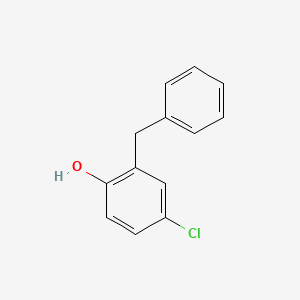
CAS 120-32-1 的已核实化学信息
Chlorophene
2-benzyl-4-chlorophenol is a diarylmethane. — ChEBI
- IUPAC 名称
- 2-benzyl-4-chlorophenol
- 分子式
- C13H11ClO
- 分子量
- 218.68 g/mol
- 精确质量
- 218.0498427 Da
- 单同位素质量
- 218.0498427 Da
- XLogP3
- 4.0
- 拓扑极性表面积
- 20.2 Ų
- 分子复杂度
- 189.0
- 形式电荷
- 0
- 氢键供体
- 1
- 氢键受体
- 1
- 可旋转键
- 2
- 重原子
- 15
- 共价单元
- 1
向 PubChem 报告的名称和同义词
另有 16 个已报告名称
外部数据库标识符
- ChEBI:CHEBI:228003
- ChEMBL:CHEMBL1328919
- EPA DTXSID:DTXSID5020154
- PubMed:33049310
- PubMed:29228274
- PubMed:28728110
- PubMed:22649928
- PubMed:21251949
- PubMed:20629411
- PubMed:18822043
- PubMed:16678383
- PubMed:15546637
- PubMed:12537123
- PubMed:11417646
- PubMed:8529821
高级结构统计
- 已定义的原子立体中心
- 0
- 未定义的原子立体中心
- 0
- 已定义的键立体中心
- 0
- 未定义的键立体中心
- 0
- 三维药效团特征
- 3
- 三维环
- 2
- 三维疏水基团
- 0
- 三维受体特征
- 0
- 三维供体特征
- 1
- 三维阴离子中心
- 0
- 三维阳离子中心
- 0
- 三维构象异构体
- 7
- 有效三维可旋转键
- 2.0
机器可读的结构标识符
- SMILES
C1=CC=C(C=C1)CC2=C(C=CC(=C2)Cl)O- InChI
InChI=1S/C13H11ClO/c14-12-6-7-13(15)11(9-12)8-10-4-2-1-3-5-10/h1-7,9,15H,8H2- InChIKey
NCKMMSIFQUPKCK-UHFFFAOYSA-N
来自其他科学数据库的证据
NIH PubChem PUG-View
Attributed physical-property, hazard, environmental and use annotations.
- Boiling Point: 320 to 324 °F at 3.5 mmHg (NTP, 1992) 来源: CAMEO Chemicals
- Boiling Point: 160-162 °C at 3.5 mm Hg 来源: Hazardous Substances Data Bank (HSDB)
- Color/Form: White to light tan or pink flakes 来源: Hazardous Substances Data Bank (HSDB)
- Density: 1.22 (NTP, 1992) - Denser than water; will sink 来源: CAMEO Chemicals
- Density: 1.185 at 58 °C 来源: Hazardous Substances Data Bank (HSDB)
- Flash Point: 370 °F (NTP, 1992) 来源: CAMEO Chemicals
- LogP: log Kow = 3.6 来源: Hazardous Substances Data Bank (HSDB)
- Melting Point: 119.3 °F (NTP, 1992) 来源: CAMEO Chemicals
- Melting Point: 48.5 °C 来源: Hazardous Substances Data Bank (HSDB)
- Odor: White to light tan or pink flakes 来源: Hazardous Substances Data Bank (HSDB)
- Physical Description: Ortho-benzyl-para-chlorophenol appears as white to light tan or pink flakes or white crystals. Insoluble in water. Slight phenolic odor. (NTP, 1992) 来源: CAMEO Chemicals
- Physical Description: White to light tan or pink solid; [Hawley] 来源: Haz-Map, Information on Hazardous Chemicals and Occupational Diseases
- Solubility: less than 1 mg/mL at 61 °F (NTP, 1992) 来源: CAMEO Chemicals
- Solubility: Highly sol in alcohol and other org solvents 来源: Hazardous Substances Data Bank (HSDB)
- Solubility: In water, 149 mg/L at 25 °C 来源: Hazardous Substances Data Bank (HSDB)
- Vapor Pressure: 0.1 mmHg at 68 °F (NTP, 1992) 来源: CAMEO Chemicals
- Vapor Pressure: 0.0000506 [mmHg] 来源: Haz-Map, Information on Hazardous Chemicals and Occupational Diseases
- Vapor Pressure: 1.87X10⁻⁷ kPa = 1.4X10⁻⁶ mm Hg /extrapolated/ 来源: Hazardous Substances Data Bank (HSDB)
- Substance: o-Benzyl-p-Chlorophenol 来源: NTP Technical Reports
- NTP Technical Report: TR-444: One-Year Initiation/Promotion Study of o-Benzyl-p-Chlorophenol (CASRN 120-32-1) in Swiss (CD-1) Mice (Mouse Skin Study) (1995 ) 来源: NTP Technical Reports
- Peer Review Date: 11/17/93 来源: NTP Technical Reports
- Note: Initiation/Promotion Study 来源: NTP Technical Reports
- Summary: Under the conditions of this 1-year mouse skin initiation/promotion study in Swiss (CD-1) mice, o -benzyl- p -chlorophenol was a cutaneous irritant and a weak skin tumor promoter relative to strong promoters such as TPA. BCP had no activity as an initiator or as a complete carcinogen. 来源: NTP Technical Reports
- NTP Technical Report: TR-424: Toxicology and Carcinogenesis Studies of o-Benzyl-p-Chlorophenol (CASRN 120-32-1) in F344/N Rats and B6C3F1 Mice (Gavage Studies) (1994 ) 来源: NTP Technical Reports
- Peer Review Date: 12/01/92 来源: NTP Technical Reports
- Conclusion for Male Rat: No Evidence 来源: NTP Technical Reports
- Conclusion for Female Rat: Equivocal Evidence 来源: NTP Technical Reports
- Conclusion for Male Mice: Some Evidence 来源: NTP Technical Reports
- Conclusion for Female Mice: No Evidence 来源: NTP Technical Reports
- Summary: Under the conditions of these 2-year gavage studies, there was no evidence of carcinogenic activity of o-benzyl-p-chlorophenol in male F344/N rats receiving 30, 60, or 120 mg/kg body weight. There was equivocal evidence of carcinogenic activity of o-benzyl-p-chlorophenol in female F344/N rats based on the occurrence of two rare renal transitional cell carcinomas. There was some evidence of carcinogenic activity of o-benzyl-p-chlorophenol in male B6C3F1 mice based on increased incidences of renal tubule adenoma and renal tubule adenoma or carcinoma (combined). There was no evidence of carcinogenic activity of o-benzyl-p-chlorophenol in female B6C3F1, mice receiving 120, 240, or 480 mg/kg.; o-Benzyl-p-chlorophenol was nephrotoxic for male and female F344/N rats and B6C3F1 mice. The severity of nephropathy was increased in male and female rats and the incidence and severity of nephropathy was increased in male and female mice. The incidence and severity of nephropathy increased with length of treatment. Other lesions considered to be associated with the nephropathy and the secondary hyperparathyroidism in male rats and in male and female mice included fibrous osteodystrophy and soft t 来源: NTP Technical Reports
- First Aid: EYES: First check the victim for contact lenses and remove if present. Flush victim's eyes with water or normal saline solution for 20 to 30 minutes while simultaneously calling a hospital or poison control center. Do not put any ointments, oils, or medication in the victim's eyes without specific instructions from a physician. IMMEDIATELY transport the victim after flushing eyes to a hospital even if no symptoms (such as redness or irritation) develop.; SKIN: IMMEDIATELY flood affected skin with water while removing and isolating all contaminated clothing. Gently wash all affected skin areas thoroughly with soap and water. IMMEDIATELY call a hospital or poison control center even if no symptoms (such as redness or irritation) develop. IMMEDIATELY transport the victim to a hospital for treatment after washing the affected areas.; INHALATION: IMMEDIATELY leave the contaminated area; take deep breaths of fresh air. If symptoms (such as wheezing, coughing, shortness of breath, or burning in the mouth, throat, or chest) develop, call a physician and be prepared to transport the victim to a hospital. Provide proper respiratory protection to rescuers entering an unknown atmosphere. Whene 来源: CAMEO Chemicals
- Signal: Danger 来源: Regulation (EC) No 1272/2008 of the European Parliament and of the Council
- GHS Hazard Statements: H315: Causes skin irritation [Warning Skin corrosion/irritation]; H317: May cause an allergic skin reaction [Warning Sensitization, Skin]; H318: Causes serious eye damage [Danger Serious eye damage/eye irritation]; H332: Harmful if inhaled [Warning Acute toxicity, inhalation]; H351: Suspected of causing cancer [Warning Carcinogenicity]; H361f: Suspected of damaging fertility [Warning Reproductive toxicity]; H373: May causes damage to organs through prolonged or repeated exposure [Warning Specific target organ toxicity, repeated exposure]; H400: Very toxic to aquatic life [Warning Hazardous to the aquatic environment, acute hazard]; H410: Very toxic to aquatic life with long lasting effects [Warning Hazardous to the aquatic environment, long-term hazard] 来源: Regulation (EC) No 1272/2008 of the European Parliament and of the Council
- Precautionary Statement Codes: P203, P260, P261, P264, P264+P265, P271, P272, P273, P280, P302+P352, P304+P340, P305+P354+P338, P317, P318, P319, P321, P332+P317, P333+P317, P362+P364, P391, P405, and P501 (click each P-code to see the statement) 来源: Regulation (EC) No 1272/2008 of the European Parliament and of the Council
- Note: This chemical does not meet GHS hazard criteria for 3.3% (5 of 150) of reports. 来源: European Chemicals Agency (ECHA)
- Signal: Danger 来源: European Chemicals Agency (ECHA)
- GHS Hazard Statements: H302 (42%): Harmful if swallowed [Warning Acute toxicity, oral]; H315 (69.3%): Causes skin irritation [Warning Skin corrosion/irritation]; H317 (34%): May cause an allergic skin reaction [Warning Sensitization, Skin]; H318 (90.7%): Causes serious eye damage [Danger Serious eye damage/eye irritation]; H332 (31.3%): Harmful if inhaled [Warning Acute toxicity, inhalation]; H335 (37.3%): May cause respiratory irritation [Warning Specific target organ toxicity, single exposure; Respiratory tract irritation]; H351 (31.3%): Suspected of causing cancer [Warning Carcinogenicity]; H361 (28.7%): Suspected of damaging fertility or the unborn child [Warning Reproductive toxicity]; H373 (31.3%): May causes damage to organs through prolonged or repeated exposure [Warning Specific target organ toxicity, repeated exposure]; H400 (66%): Very toxic to aquatic life [Warning Hazardous to the aquatic environment, acute hazard]; H410 (62%): Very toxic to aquatic life with long lasting effects [Warning Hazardous to the aquatic environment, long-term hazard]; H411 (24.7%): Toxic to aquatic life with long lasting effects [Hazardous to the aquatic environment, long-term hazard] 来源: European Chemicals Agency (ECHA)
- Precautionary Statement Codes: P203, P260, P261, P264, P264+P265, P270, P271, P272, P273, P280, P301+P317, P302+P352, P304+P340, P305+P354+P338, P317, P318, P319, P321, P330, P332+P317, P333+P317, P362+P364, P391, P403+P233, P405, and P501 (click each P-code to see the statement) 来源: European Chemicals Agency (ECHA)
- ECHA C&L Notifications Summary: Aggregated GHS information provided per 150 reports by companies from 14 notifications to the ECHA C&L Inventory. Each notification may be associated with multiple companies.; Reported as not meeting GHS hazard criteria per 5 of 150 reports by companies.; There are 13 notifications provided by 145 of 150 reports by companies with hazard statement code(s).; Information may vary between notifications depending on impurities, additives, and other factors. The percentage value in parenthesis indicates the notified classification ratio from companies that provide hazard codes. Only hazard codes with percentage values above 10% are shown. For more detailed information, please visit ECHA C&L website. 来源: European Chemicals Agency (ECHA)
- Signal: Danger 来源: NITE-CMC
- GHS Hazard Statements: H315: Causes skin irritation [Warning Skin corrosion/irritation]; H317: May cause an allergic skin reaction [Warning Sensitization, Skin]; H318: Causes serious eye damage [Danger Serious eye damage/eye irritation]; H332: Harmful if inhaled [Warning Acute toxicity, inhalation]; H351: Suspected of causing cancer [Warning Carcinogenicity]; H361: Suspected of damaging fertility or the unborn child [Warning Reproductive toxicity]; H371: May cause damage to organs [Warning Specific target organ toxicity, single exposure]; H372: Causes damage to organs through prolonged or repeated exposure [Danger Specific target organ toxicity, repeated exposure]; H400: Very toxic to aquatic life [Warning Hazardous to the aquatic environment, acute hazard]; H410: Very toxic to aquatic life with long lasting effects [Warning Hazardous to the aquatic environment, long-term hazard] 来源: NITE-CMC
- Precautionary Statement Codes: P203, P260, P261, P264, P264+P265, P270, P271, P272, P273, P280, P302+P352, P304+P340, P305+P354+P338, P308+P316, P317, P318, P319, P321, P332+P317, P333+P317, P362+P364, P391, P405, and P501 (click each P-code to see the statement) 来源: NITE-CMC
- Signal: Danger 来源: Hazardous Chemical Information System (HCIS), Safe Work Australia
- Cosmetic Ingredient Review Conclusion: The CIR Expert Panel concludes that the available data are insufficient to support safety of Dichlorophene or Chlorophene. 来源: Cosmetic Ingredient Review (CIR)
- Cosmetic Ingredient Review Finding(s): Ingredients for which the data are insufficient and their use in cosmetics is not supported 来源: Cosmetic Ingredient Review (CIR)
- Toxicity Summary: AR binding was observed for clorophene, which were both associated with delays in sexual development and decrements in reproductive performance. 来源: Toxin and Toxin Target Database (T3DB)
- Environmental Bioconcentration: A BCF value of 75 was measured for bluegill sunfish(1). Bluegill sunfish (Lepomis machrochirus) were exposed to 0.057 mg/L o-benzyl-p-chlorophenol for a period of 96 hours followed by a depuration period of 96 hours to determine the ability of the fish to metabolize and eliminate o-benzyl-p-chlorophenol. Depuration rate constants were from 4.67 to 6.94/days with a half-life of 0.14 days(1). The rate constant of o-benzyl-p-chlorophenol uptake in fish ranged from 11.8 to 13.8/days with a half-life of 0.06 days. According to a classification scheme(2), this BCF value suggests that bioconcentration in aquatic organisms is moderate(SRC). 来源: Hazardous Substances Data Bank (HSDB)
- Environmental Fate: TERRESTRIAL FATE: Based on a classification scheme(1), a Koc value of 2,050(2), indicates that o-benzyl-p-chlorophenol is expected to have slight mobility in soil(SRC). Volatilization from moist soil surfaces is not expected to be an important fate process based upon an estimated Henry's Law constant of 2.7X10⁻⁹ atm-cu m/mole(SRC) derived from its extrapolated vapor pressure, 1.4X10⁻⁶ mm Hg(2), and water solubility, 149 mg/L(2). Volatilization from dry soil surfaces is not expected to be important based on the vapor pressure of this compound(2). Biodegradation of o-benzyl-p-chlorophenol is expected to occur rapidly based on degradation half-lives of 1 to 2 days, in a sewage sludge(2). 来源: Hazardous Substances Data Bank (HSDB)
- Environmental Fate: AQUATIC FATE: Based on a classification scheme(1), a Koc value of 2,050 (2), indicates that o-benzyl-p-chlorophenol is expected to adsorb to suspended solids and sediment(SRC). Volatilization from water surfaces is not expected to be an important fate process(3) based upon an estimated Henry's Law constant of 2.7X10⁻⁹ atm-cu m/mole(SRC) derived from its extrapolated vapor pressure, 1.4X10⁻⁶ mm Hg(2), and water solubility, 149 mg/L(2). According to a classification scheme(4), a BCF of 75 measured in fish(2), suggests bioconcentration in aquatic organisms is moderate(SRC). An aqueous photolysis half-life of approximately 0.7 days(2), indicates photolysis in sunlit surface waters will be an important fate process(SRC). In addition, river die-away studies using non-acclimated river water indicates that the biodegradation half-life of o-benzyl-p-chlorophenol is approximately 1 to 3 days(2,5). 来源: Hazardous Substances Data Bank (HSDB)
- Environmental Fate: ATMOSPHERIC FATE: According to a model of gas/particle partitioning of semivolatile organic compounds in the atmosphere(1), o-benzyl-p-chlorophenol, which has an extrapolated vapor pressure of 1.4X10⁻⁶ mm Hg at 25 °C(2), is expected to exist in both the vapor and particulate phases in the ambient atmosphere. Vapor-phase o-benzyl-p-chlorophenol is degraded in the atmosphere by reaction with photochemically-produced hydroxyl radicals(SRC); the half-life for this reaction in air is estimated to be about 22 hours (SRC), calculated from its rate constant of 1.8X10⁻¹¹ cu cm/molecule-sec at 25 °C(SRC) that was derived using a structure estimation method(3). Particulate-phase o-benzyl-p-chlorophenol may be removed from the air by wet and dry deposition(SRC). o-Benzyl-p-chlorophenol has been shown to undergo direct photolysis in aqueous solutions with a half-life of approximately 0.7 days(2), which indicates that direct photolysis in the atmosphere may be possible(SRC). 来源: Hazardous Substances Data Bank (HSDB)
- Cosmetic Ingredient Review Link: CIR ingredient: Chlorophene 来源: Cosmetic Ingredient Review (CIR)
- Sources/Uses: Used in household, hospital, and veterinary disinfectants; Also used as a fungicide, herbicide, antimicrobial, and cosmetics preservative; [HSDB] Used as a disinfectant (swimming pool decks, industrial water systems, poultry houses and other farming premises, food processing, and restaurants); [Reference #1] 来源: Haz-Map, Information on Hazardous Chemicals and Occupational Diseases
- Industrial Processes with risk of exposure: Using Disinfectants or Biocides [Category: Clean]; Farming (Pesticides) [Category: Industry] 来源: Haz-Map, Information on Hazardous Chemicals and Occupational Diseases
- Uses: For o-benzyl-p-chlorophenol (USEPA/OPP Pesticide Code: 062201) ACTIVE products with label matches. /SRP: Registered for use in the U.S. but approved pesticide uses may change periodically and so federal, state and local authorities must be consulted for currently approved uses./ 来源: Hazardous Substances Data Bank (HSDB)
- Uses: Active principle or enhancing agent for disinfectants 来源: Hazardous Substances Data Bank (HSDB)
- Uses: Germicide in disinfectant solutions & soap formulations. 来源: Hazardous Substances Data Bank (HSDB)
- Uses: o-Benzyl-p-chlorophenol is produced as a fungicide. 来源: Hazardous Substances Data Bank (HSDB)
- Uses: For more Uses (Complete) data for O-BENZYL-P-CHLOROPHENOL (7 total), please visit the HSDB record page. 来源: Hazardous Substances Data Bank (HSDB)
- Uses: Use (kg; approx.) in Germany (2009): >250; Consumption (g per capita; approx.) in Germany (2009): 0.00305; Calculated removal (%): 47.9 来源: NORMAN Suspect List Exchange
- Uses: Clorophene is used as an antiseptic agent and a disinfectant in hospitals and restaurants. 来源: Toxin and Toxin Target Database (T3DB)
映射方: Existing checksum-valid CAS to unique PubChem CID match. 检索时间: 2026-08-31. 打开来源记录
科学分类和危害注释仅提供背景信息,不能取代上方所示针对具体市场的监管决定。
其他来源的覆盖范围和匹配状态
| 来源 | 结果 | 已检查 |
|---|---|---|
| NIH PubChem PUG-View | 精确匹配 | 2026-08-31 |
已记录的无匹配结果是该来源已被检查的有效证据;这并不表示该物质在别处不存在。
于 2026-08-31 通过校验和有效的 CAS 匹配从美国国立卫生研究院 (NIH) PubChem 检索。化学性质不能取代本页的监管决定。
官方来源与出处
- 已登记来源
- South Korea MFDS cosmetic ingredient data
- 来源参考
- 화장품 안전기준 등에 관한 규정, 별표 2, record 2-95
- 来源记录 ID
2-95- 来源版本
- 2026-19
- 来源语言
- Korean
- 翻译状态
- No English translation
- 生效日期
- 2026-03-18
- 来源更新
- 2026-03-18
- 快照检查时间
- 2026-08-30 04:33 UTC
- 验证方法
- MFDS JSON appendices 1–2 parse; 1077 prohibited, 243 restricted
- SHA-256
056de35b843a5e31f709073f9e79d5e6e18f7c9164eb537bb099b185a37ef7d8
已登记的数据集备注
- 数据集覆盖范围
- Ingredient identity and separate restriction/regulation data endpoints
- 权威性说明
- Korean source is canonical; English materials alone are not complete enough for certification
本记录在市场数据集中的位置
South Korea 市场背景
Complete current appendix dataset
覆盖版本: MFDS Notice 2026-19, effective 18 March 2026
All rows in official Appendix 1 (prohibited) and Appendix 2 (restricted) of the Safety Standards for Cosmetics.
核实清单
- Match the Korean canonical substance name and identifiers.
- Review all Appendix 1 and 2 matches and conditions.
- Check functional-cosmetic and positive-list requirements where applicable.
- Confirm current MFDS notice, responsible seller and label obligations.
官方市场来源
- South Korea MFDS cosmetic ingredient dataKorean source is canonical; English materials alone are not complete enough for certification
核实工作流程与记录完整性
在将此结果用于合规决定之前
- 确认“클로로펜(2-벤질-4-클로로페놀)”及每个 CAS/EC 标识符所指的物料与您的供应商规格一致。
- Match the Korean canonical substance name and identifiers.
- Review all Appendix 1 and 2 matches and conditions.
- Check functional-cosmetic and positive-list requirements where applicable.
- Confirm current MFDS notice, responsible seller and label obligations.
- 记录来源版本,并在生产、备案或上市之前重新核查监管机构。
本记录中的可用字段
- 官方物质名称可用
- CAS可用
- EC可用
- 单独的条件文本可用
- 生效日期可用
- 快照哈希与方法可用
本页回答的问题
稳定引用
클로로펜(2-벤질-4-클로로페놀). 화장품 안전기준 등에 관한 규정, 별표 2, record 2-95. South Korea. Source version 2026-19. CosIng Checker regulatory record: https://cosingchecker.com/zh-hans/regulations/kr/records/1933/
请将监管机构作为法律依据来引用。本页是结构化的证据索引和核实辅助工具,不能替代官方文本或专业法律评估。
South Korea 的解读与局限
This substance is not unrestricted: cosmetic use is subject to the conditions in the cited official record.
Check product type, body area, concentration, purity and warning requirements before deciding whether a formulation is compliant.
如何解读法律地位
The cited row forms part of a binding rule or legally incorporated list for this market.
本页证据
- 记录结果:Restricted
- 法律地位:Binding rule
- 来源版本:2026-19
- 生效日期:2026-03-18
它不能证明什么
Korean source wording is canonical and other positive lists/notices may still apply to the formulation.
进一步的权威物质研究
这些来源均不能推翻上述市场决定。
Cosmetic Ingredient Review safety assessments
Expert Panel conclusions, assessed ingredient groups, use conditions, dates and report documents
Independent expert review considered by FDA; not a government approval or binding market rule
在来源处研究此身份FDA Global Substance Registration System
UNII identifiers, preferred names, substance types, codes and public substance relationships
Identity registry only; UNII availability does not imply FDA review or approval
在来源处研究此身份ILO/WHO International Chemical Safety Cards
Hazards, symptoms, first aid, storage, incompatibilities and physical properties for covered chemicals
International occupational chemical-safety reference; not cosmetic-use approval
在来源处研究此身份Japan NITE-CHRIP
Chemical identity, Japanese and foreign legal lists, GHS hazards and exposure-related information
Chemical-management evidence; cosmetic status remains governed by the applicable MHLW standard and market rules
在来源处研究此身份NIOSH Pocket Guide to Chemical Hazards
REL, PEL, IDLH, properties, exposure routes, symptoms, target organs, first aid and measurement methods for covered workplace chemicals
US occupational-health guidance and limits; not a cosmetic ingredient decision
在来源处研究此身份OECD eChemPortal
Gateway to authority-owned physical-property, fate, ecotoxicity, toxicity, exposure and GHS records
Discovery gateway; each linked authority remains responsible for its data
在来源处研究此身份US EPA CompTox CTX APIs
导入需要 API 密钥DTXSID identity, experimental and predicted properties, toxicity, bioactivity, exposure and environmental data
Scientific and computational evidence; predictions must remain labelled and do not determine cosmetic legality
在来源处研究此身份