
五氯苯酚及其碱金属盐类 — Pentachlorophenol and its alkali salts (CAS No. 87-86-5 / CAS No. 131-52-2 / CAS No. 7778-73-6)
Pentachlorophenol and its alkali salts (CAS No. 87-86-5 / CAS No. 131-52-2 / CAS No. 7778-73-6)
The NMPA binding 2021 catalogue prohibits this raw material in cosmetic formulas in China.
监管决定及完整条件
- 状态
- Prohibited
- 法律地位
- Binding rule
- 监管摘要
- The NMPA binding 2021 catalogue prohibits this raw material in cosmetic formulas in China.
- 条件与限制
Prohibited in cosmetic product formulas. Verify the cited Chinese source identity and any later NMPA amendment before use.
物质身份
- 官方来源名称
- 五氯苯酚及其碱金属盐类 — Pentachlorophenol and its alkali salts (CAS No. 87-86-5 / CAS No. 131-52-2 / CAS No. 7778-73-6)
- CAS
- 87-86-5; 131-52-2; 7778-73-6
- EC
- Not supplied in this source row
- 身份映射
- standalone:official_nmpa_record
该身份的跨市场概览
本站目前已有的精确关联记录。某市场缺失表示没有已导入的精确匹配,并不表示准许使用该物质。
European Union
1 条关联记录
打开支持记录Great Britain
1 条关联记录
打开支持记录New Zealand
3 条关联记录
打开支持记录ASEAN
2 条关联记录
打开支持记录China
当前记录1 条关联记录 · 1 条含特定条件
打开支持记录South Korea
1 条关联记录 · 1 条含特定条件
打开支持记录Brazil
2 条关联记录 · 2 条含特定条件
打开支持记录India
1 条关联记录 · 1 条含特定条件
打开支持记录Saudi Arabia
1 条关联记录
打开支持记录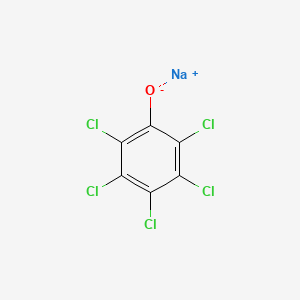
CAS 131-52-2 的已核实化学信息
Sodium pentachlorophenolate
Sodium pentachlorophenate is a white or tan, powdered solid. It is soluble in water and may burn, but it is not easily ignited. It may be toxic by ingestion, inhalation and skin absorption. It is used as a fungicide, herbicide and as a disinfectant. — CAMEO Chemicals
- IUPAC 名称
- sodium 2,3,4,5,6-pentachlorophenolate
- 分子式
- C6Cl5NaO
- 分子量
- 288.3 g/mol
- 精确质量
- 287.825997 Da
- 单同位素质量
- 285.828947 Da
- 拓扑极性表面积
- 23.1 Ų
- 分子复杂度
- 155.0
- 形式电荷
- 0
- 氢键供体
- 0
- 氢键受体
- 1
- 可旋转键
- 0
- 重原子
- 13
- 共价单元
- 2
向 PubChem 报告的名称和同义词
另有 16 个已报告名称
外部数据库标识符
- ChEMBL:CHEMBL3560394
- EPA DTXSID:DTXSID4040264
高级结构统计
- 已定义的原子立体中心
- 0
- 未定义的原子立体中心
- 0
- 已定义的键立体中心
- 0
- 未定义的键立体中心
- 0
- 三维构象异构体
- 0
机器可读的结构标识符
- SMILES
C1(=C(C(=C(C(=C1Cl)Cl)Cl)Cl)Cl)[O-].[Na+]- InChI
InChI=1S/C6HCl5O.Na/c7-1-2(8)4(10)6(12)5(11)3(1)9;/h12H;/q;+1/p-1- InChIKey
HCJLVWUMMKIQIM-UHFFFAOYSA-M
来自其他科学数据库的证据
NIH PubChem PUG-View
Attributed physical-property, hazard, environmental and use annotations.
- Boiling Point: Decomposes. (USCG, 1999) 来源: CAMEO Chemicals
- Color/Form: White crystalline solid 来源: Hazardous Substances Data Bank (HSDB)
- Color/Form: Tan powder, pellets 来源: Hazardous Substances Data Bank (HSDB)
- Color/Form: Buff-colored flakes 来源: Hazardous Substances Data Bank (HSDB)
- Density: 2.0 mg/L at 22 °C/4 °C 来源: Hazardous Substances Data Bank (HSDB)
- LogP: log Kow = 1.3 at pH 10 来源: Hazardous Substances Data Bank (HSDB)
- Odor: Phenolic odor 来源: Hazardous Substances Data Bank (HSDB)
- Physical Description: Sodium pentachlorophenate is a white or tan, powdered solid. It is soluble in water and may burn, but it is not easily ignited. It may be toxic by ingestion, inhalation and skin absorption. It is used as a fungicide, herbicide and as a disinfectant. 来源: CAMEO Chemicals
- Physical Description: White or tan solid; [Hawley] Small slightly brown beads; [MSDSonline] 来源: Haz-Map, Information on Hazardous Chemicals and Occupational Diseases
- Physical Description: WHITE OR TAN FLAKES OR POWDER WITH CHARACTERISTIC ODOUR. 来源: ILO-WHO International Chemical Safety Cards (ICSCs)
- Solubility: In water, 3.30X10+5 mg/L at 25 °C 来源: Hazardous Substances Data Bank (HSDB)
- Solubility: Solubility in water (g/L): 22.4 at 20 °C; 33 at 30 °C 来源: Hazardous Substances Data Bank (HSDB)
- Solubility: Solubility at 25 °C (g/L): methanol 22; acetone 37 来源: Hazardous Substances Data Bank (HSDB)
- Solubility: 21% (wt/vol) at 5 °C (water), 29% (wt/vol) at 40 °C (water), 33% (wt/vol at 25 °C (water) 来源: Hazardous Substances Data Bank (HSDB)
- Solubility: Soluble in ethanol and acetone; insoluble in benzene and petroleum oils 来源: Hazardous Substances Data Bank (HSDB)
- Solubility: Solubility in water, g/100ml at 25 °C: 33 来源: ILO-WHO International Chemical Safety Cards (ICSCs)
- pH: Aqueous solution has alkaline reaction 来源: Hazardous Substances Data Bank (HSDB)
- Carcinogen Classification: 2B, possibly carcinogenic to humans. (L135) 来源: Toxin and Toxin Target Database (T3DB)
- Exposure Routes: The substance can be absorbed into the body by inhalation, through the skin and by ingestion. 来源: ILO-WHO International Chemical Safety Cards (ICSCs)
- Exposure Routes: Oral (L127) ; inhalation (L127) ; dermal (L127) 来源: Toxin and Toxin Target Database (T3DB)
- First Aid: Signs and Symptoms of Sodium Pentachlorophenate Exposure: Signs and symptoms of sodium pentachlorophenate exposure include skin irritation, irritation and burning of eyes, numbness and opacity of the cornea, upper respiratory tract irritation, pain in chest, coughing, sneezing, rapid breathing, difficulty in breathing, and bronchitis. Contact dermatitis may be observed after severe exposure. Profuse sweating, headache, weakness, loss of appetite, abdominal pain, nausea, cardiac dilatation, tachycardia (rapid heart beat), and cardiac failure may occur. High fever may be present, and exposed individual may experience an intense thirst, although this may be masked by nausea and vomiting. Declining alertness may progress to stupor, convulsions, and coma. Ingestion may be followed by delayed scar tissue formation, which may later cause problems with swallowing and stomach filling and emptying.; Emergency Life-Support Procedures: Acute exposure to sodium pentachlorophenate may require decontamination and life support for the victims. Emergency personnel should wear protective clothing appropriate to the type and degree of contamination. Air-purifying or supplied-air respiratory equipment 来源: CAMEO Chemicals
- ERG2024, Guide 154 (Sodium pentachlorophenate): General First Aid:; · Call 911 or emergency medical service.; · Ensure that medical personnel are aware of the material(s) involved, take precautions to protect themselves and avoid contamination.; · Move victim to fresh air if it can be done safely.; · Administer oxygen if breathing is difficult.; · If victim is not breathing:; -- DO NOT perform mouth-to-mouth resuscitation; the victim may have ingested or inhaled the substance.; -- If equipped and pulse detected, wash face and mouth, then give artificial respiration using a proper respiratory medical device (bag-valve mask, pocket mask equipped with a one-way valve or other device).; -- If no pulse detected or no respiratory medical device available, provide continuous compressions. Conduct a pulse check every two minutes or monitor for any signs of spontaneous respirations.; · Remove and isolate contaminated clothing and shoes.; · For minor skin contact, avoid spreading material on unaffected skin.; · In case of contact with substance, remove immediately by flushing skin or eyes with running water for at least 20 minutes.; · For severe burns, immediate medical attention is required.; · Effects of exposure (inhalation, ingestion, 来源: Emergency Response Guidebook (ERG)
- Signal: Danger 来源: Regulation (EC) No 1272/2008 of the European Parliament and of the Council
- GHS Hazard Statements: H301: Toxic if swallowed [Danger Acute toxicity, oral]; H311: Toxic in contact with skin [Danger Acute toxicity, dermal]; H315: Causes skin irritation [Warning Skin corrosion/irritation]; H319: Causes serious eye irritation [Warning Serious eye damage/eye irritation]; H330: Fatal if inhaled [Danger Acute toxicity, inhalation]; H335: May cause respiratory irritation [Warning Specific target organ toxicity, single exposure; Respiratory tract irritation]; H351: Suspected of causing cancer [Warning Carcinogenicity]; H400: Very toxic to aquatic life [Warning Hazardous to the aquatic environment, acute hazard]; H410: Very toxic to aquatic life with long lasting effects [Warning Hazardous to the aquatic environment, long-term hazard] 来源: Regulation (EC) No 1272/2008 of the European Parliament and of the Council
- Precautionary Statement Codes: P203, P260, P261, P262, P264, P264+P265, P270, P271, P273, P280, P284, P301+P316, P302+P352, P304+P340, P305+P351+P338, P316, P318, P319, P320, P321, P330, P332+P317, P337+P317, P361+P364, P362+P364, P391, P403+P233, P405, and P501 (click each P-code to see the statement) 来源: Regulation (EC) No 1272/2008 of the European Parliament and of the Council
- Signal: Danger 来源: European Chemicals Agency (ECHA)
- GHS Hazard Statements: H301+H311 (61.8%): Toxic if swallowed or in contact with skin [Danger Acute toxicity, oral; acute toxicity, dermal]; H301 (100%): Toxic if swallowed [Danger Acute toxicity, oral]; H311 (100%): Toxic in contact with skin [Danger Acute toxicity, dermal]; H315 (100%): Causes skin irritation [Warning Skin corrosion/irritation]; H319 (100%): Causes serious eye irritation [Warning Serious eye damage/eye irritation]; H330 (100%): Fatal if inhaled [Danger Acute toxicity, inhalation]; H335 (100%): May cause respiratory irritation [Warning Specific target organ toxicity, single exposure; Respiratory tract irritation]; H351 (100%): Suspected of causing cancer [Warning Carcinogenicity]; H400 (100%): Very toxic to aquatic life [Warning Hazardous to the aquatic environment, acute hazard]; H410 (100%): Very toxic to aquatic life with long lasting effects [Warning Hazardous to the aquatic environment, long-term hazard] 来源: European Chemicals Agency (ECHA)
- Precautionary Statement Codes: P203, P260, P261, P262, P264, P264+P265, P270, P271, P273, P280, P284, P301+P316, P302+P352, P304+P340, P305+P351+P338, P316, P318, P319, P320, P321, P330, P332+P317, P337+P317, P361+P364, P362+P364, P391, P403+P233, P405, and P501 (click each P-code to see the statement) 来源: European Chemicals Agency (ECHA)
- ECHA C&L Notifications Summary: Aggregated GHS information provided per 170 reports by companies from 4 notifications to the ECHA C&L Inventory. Each notification may be associated with multiple companies.; Information may vary between notifications depending on impurities, additives, and other factors. The percentage value in parenthesis indicates the notified classification ratio from companies that provide hazard codes. Only hazard codes with percentage values above 10% are shown. For more detailed information, please visit ECHA C&L website. 来源: European Chemicals Agency (ECHA)
- Signal: Danger 来源: NITE-CMC
- GHS Hazard Statements: H301: Toxic if swallowed [Danger Acute toxicity, oral]; H310: Fatal in contact with skin [Danger Acute toxicity, dermal]; H315: Causes skin irritation [Warning Skin corrosion/irritation]; H318: Causes serious eye damage [Danger Serious eye damage/eye irritation]; H330: Fatal if inhaled [Danger Acute toxicity, inhalation]; H350: May cause cancer [Danger Carcinogenicity]; H360: May damage fertility or the unborn child [Danger Reproductive toxicity]; H370: Causes damage to organs [Danger Specific target organ toxicity, single exposure]; H372: Causes damage to organs through prolonged or repeated exposure [Danger Specific target organ toxicity, repeated exposure] 来源: NITE-CMC
- Precautionary Statement Codes: P203, P260, P262, P264, P264+P265, P270, P271, P280, P284, P301+P316, P302+P352, P304+P340, P305+P354+P338, P308+P316, P316, P317, P318, P319, P320, P321, P330, P332+P317, P361+P364, P362+P364, P403+P233, P405, and P501 (click each P-code to see the statement) 来源: NITE-CMC
- GHS Hazard Statements: H301: Toxic if swallowed [Danger Acute toxicity, oral]; H310: Fatal in contact with skin [Danger Acute toxicity, dermal]; H315: Causes skin irritation [Warning Skin corrosion/irritation]; H319: Causes serious eye irritation [Warning Serious eye damage/eye irritation]; H330: Fatal if inhaled [Danger Acute toxicity, inhalation]; H351: Suspected of causing cancer [Warning Carcinogenicity]; H361: Suspected of damaging fertility or the unborn child [Warning Reproductive toxicity]; H371: May cause damage to organs [Warning Specific target organ toxicity, single exposure]; H372: Causes damage to organs through prolonged or repeated exposure [Danger Specific target organ toxicity, repeated exposure]; H373: May causes damage to organs through prolonged or repeated exposure [Warning Specific target organ toxicity, repeated exposure] 来源: NITE-CMC
- Precautionary Statement Codes: P203, P260, P262, P264, P264+P265, P270, P271, P280, P284, P301+P316, P302+P352, P304+P340, P305+P351+P338, P308+P316, P316, P318, P319, P320, P321, P330, P332+P317, P337+P317, P361+P364, P362+P364, P403+P233, P405, and P501 (click each P-code to see the statement) 来源: NITE-CMC
- Health Effects: Acute exposure to cholinesterase inhibitors can cause a cholinergic crisis characterized by severe nausea/vomiting, salivation, sweating, bradycardia, hypotension, collapse, and convulsions. Increasing muscle weakness is a possibility and may result in death if respiratory muscles are involved. Accumulation of ACh at motor nerves causes overstimulation of nicotinic expression at the neuromuscular junction. When this occurs symptoms such as muscle weakness, fatigue, muscle cramps, fasciculation, and paralysis can be seen. When there is an accumulation of ACh at autonomic ganglia this causes overstimulation of nicotinic expression in the sympathetic system. Symptoms associated with this are hypertension, and hypoglycemia. Overstimulation of nicotinic acetylcholine receptors in the central nervous system, due to accumulation of ACh, results in anxiety, headache, convulsions, ataxia, depression of respiration and circulation, tremor, general weakness, and potentially coma. When there is expression of muscarinic overstimulation due to excess acetylcholine at muscarinic acetylcholine receptors symptoms of visual disturbances, tightness in chest, wheezing due to bronchoconstriction, incre 来源: Toxin and Toxin Target Database (T3DB)
- Toxicity Summary: Pentachlorophenol is a cholinesterase or acetylcholinesterase (AChE) inhibitor. A cholinesterase inhibitor (or 'anticholinesterase') suppresses the action of acetylcholinesterase. Because of its essential function, chemicals that interfere with the action of acetylcholinesterase are potent neurotoxins, causing excessive salivation and eye-watering in low doses, followed by muscle spasms and ultimately death. Nerve gases and many substances used in insecticides have been shown to act by binding a serine in the active site of acetylcholine esterase, inhibiting the enzyme completely. Acetylcholine esterase breaks down the neurotransmitter acetylcholine, which is released at nerve and muscle junctions, in order to allow the muscle or organ to relax. The result of acetylcholine esterase inhibition is that acetylcholine builds up and continues to act so that any nerve impulses are continually transmitted and muscle contractions do not stop. Among the most common acetylcholinesterase inhibitors are phosphorus-based compounds, which are designed to bind to the active site of the enzyme. The structural requirements are a phosphorus atom bearing two lipophilic groups, a leaving group (such a 来源: Toxin and Toxin Target Database (T3DB)
- Environmental Bioconcentration: Rainbow trout exposed to waterborne sodium pentachlorophenate averaging 35 and 660 ng/L for about 115 days accumulated levels of pentachlorophenate that were related to the concentration and duration of exposure. Pentachlorophenate levels in organs (liver and gall bladder), the remaining fish, and the percent of total pentachlorophenate in the organs remained relatively uniform among the control fish over the 115 day period. Fish exposed to 35 ng/L contained slightly higher pentachlorophenate levels with a higher percentage found in the organs. The highest levels of pentachlorophenate occurred in fish exposed to 660 ng/L where concentration in the organs averaged 2200 ug/kg after 115 days. Thus, uptake from water is an important pathway for the accumulation of pentachlorophenate by rainbow trout. 来源: Hazardous Substances Data Bank (HSDB)
- Environmental Fate: Pentachlorophenate disappeared from the water of microcosms simulating some of the characteristics of littoral zones during the first 6 wk after exposure to a single application of 41 ug/l (14)C-labeled sodium pentachlorophenate. Concn of inorganic (14)C in water samples increased during this period and subsequently declined. The total (14)C residues in the water declined approx 2% per day throughout the experiment and radioactive residues in macrophytes increased linearly between days 1 and 35, reaching concn greater than 700 times the initial concn in water. Concn of (14)C residues in macrophytes dropped rapidly after the 8th week of the experiment. Some (14)C pentachlorophenate was degraded to (14)C carbon dioxide and photosynthetic fixation of (14)C carbon dioxide occurred. At the end of the experiment, 40-43% of the radioactivity was present in benthic sediments and approx 5% was recovered in scrapings of mineral precipitates and algae from the walls of the microcosms. About 40% of the applied radioactivity was not detected in microcosm components and was presumably lost to the atmosphere during the 180 day exposure period. 来源: Hazardous Substances Data Bank (HSDB)
- Sources/Uses: Used as bactericide, fungicide, and disinfectant (cooling towers, adhesives, construction materials, leather tanning, paints, petroleum drilling muds, photographic solutions, pulp and paper processing, textiles, water treatment, and industrial re-circulating water); [HSDB] Used as herbicide; [Hawley] 来源: Haz-Map, Information on Hazardous Chemicals and Occupational Diseases
- Restricted Notes: Not currently registered as pesticide with the EPA for use in the US; [HSDB] Banned in the EU as pesticide for plant protection; Use severely restricted as a biocide; [eChemPortal: ESIS] 来源: Haz-Map, Information on Hazardous Chemicals and Occupational Diseases
- Industrial Processes with risk of exposure: Petroleum Production and Refining [Category: Industry]; Pulp and Paper Processing [Category: Industry]; Textiles (Fiber & Fabric Manufacturing) [Category: Industry]; Painting (Pigments, Binders, and Biocides) [Category: Paint]; Working with Glues and Adhesives [Category: Other]; Using Disinfectants or Biocides [Category: Clean]; Farming (Pesticides) [Category: Industry]; Sewer and Wastewater Treatment [Category: Industry]; Leather Tanning and Processing [Category: Industry]; Photographic Processing [Category: Other] 来源: Haz-Map, Information on Hazardous Chemicals and Occupational Diseases
- Uses: For pentachlorophenol, sodium salt (USEPA/OPP Pesticide Code: 063003) there are 0 labels match. /SRP: Not registered for current use in the U.S., but approved pesticide uses may change periodically and so federal, state and local authorities must be consulted for currently approved uses./ 来源: Hazardous Substances Data Bank (HSDB)
- Uses: The active ingredient is no longer contained in any registered pesticide products ... "cancelled." 来源: Hazardous Substances Data Bank (HSDB)
- Uses: Fungicide /non-USA/ 来源: Hazardous Substances Data Bank (HSDB)
- Uses: PCP or its sodium salt have also been used as a herbicide and dessicant for forage seed crops, a herbicide for non-food vegetation control, a biocide in the post-harvest washing of fruit, and as an insecticide for use in beehives, seed plots, and greenhouses. PCP was formerly used as a herbicide in paddy and upland rice fields, particularly in Japan. /Former/ 来源: Hazardous Substances Data Bank (HSDB)
- Uses: For more Uses (Complete) data for PENTACHLOROPHENOL, SODIUM SALT (8 total), please visit the HSDB record page. 来源: Hazardous Substances Data Bank (HSDB)
- Uses: Pentachlorophenol is a restrictively used pesticide and is used industrially as a wood preservative for utility poles, railroad ties, and wharf pilings. (L127) 来源: Toxin and Toxin Target Database (T3DB)
映射方: Existing checksum-valid CAS to unique PubChem CID match. 检索时间: 2026-08-31. 打开来源记录
科学分类和危害注释仅提供背景信息,不能取代上方所示针对具体市场的监管决定。
其他来源的覆盖范围和匹配状态
| 来源 | 结果 | 已检查 |
|---|---|---|
| NIH PubChem PUG-View | 精确匹配 | 2026-08-31 |
已记录的无匹配结果是该来源已被检查的有效证据;这并不表示该物质在别处不存在。
于 2026-09-02 通过校验和有效的 CAS 匹配从美国国立卫生研究院 (NIH) PubChem 检索。化学性质不能取代本页的监管决定。
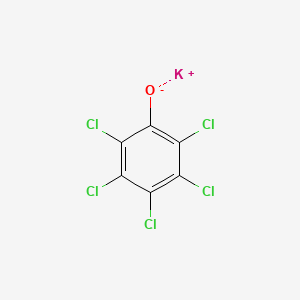
CAS 7778-73-6 的已核实化学信息
Potassium pentachlorophenolate
- IUPAC 名称
- potassium 2,3,4,5,6-pentachlorophenolate
- 分子式
- C6Cl5KO
- 分子量
- 304.4 g/mol
- 精确质量
- 303.799934 Da
- 单同位素质量
- 301.802885 Da
- 拓扑极性表面积
- 23.1 Ų
- 分子复杂度
- 155.0
- 形式电荷
- 0
- 氢键供体
- 0
- 氢键受体
- 1
- 可旋转键
- 0
- 重原子
- 13
- 共价单元
- 2
向 PubChem 报告的名称和同义词
另有 6 个已报告名称
外部数据库标识符
- EPA DTXSID:DTXSID3064801
高级结构统计
- 已定义的原子立体中心
- 0
- 未定义的原子立体中心
- 0
- 已定义的键立体中心
- 0
- 未定义的键立体中心
- 0
- 三维构象异构体
- 0
机器可读的结构标识符
- SMILES
C1(=C(C(=C(C(=C1Cl)Cl)Cl)Cl)Cl)[O-].[K+]- InChI
InChI=1S/C6HCl5O.K/c7-1-2(8)4(10)6(12)5(11)3(1)9;/h12H;/q;+1/p-1- InChIKey
WYQQGYULUDOPRU-UHFFFAOYSA-M
于 2026-09-02 通过校验和有效的 CAS 匹配从美国国立卫生研究院 (NIH) PubChem 检索。化学性质不能取代本页的监管决定。
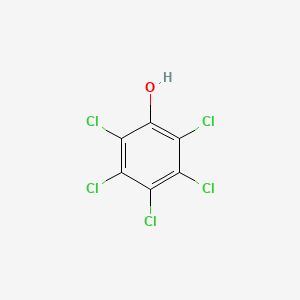
CAS 87-86-5 的已核实化学信息
Pentachlorophenol
Pentachlorophenol is a chlorophenol that is phenol substituted by 5 chloro groups. It has a role as a human xenobiotic metabolite. It is a chlorophenol, an organochlorine pesticide, a member of pentachlorobenzenes and an aromatic fungicide. It is functionally related to a pentachlorobenzene. It is a conjugate acid of a pentachlorophenolate. — ChEBI
- IUPAC 名称
- 2,3,4,5,6-pentachlorophenol
- 分子式
- C6HCl5O
- 分子量
- 266.3 g/mol
- 精确质量
- 265.844053 Da
- 单同位素质量
- 263.847003 Da
- XLogP3
- 5.1
- 拓扑极性表面积
- 20.2 Ų
- 分子复杂度
- 150.0
- 形式电荷
- 0
- 氢键供体
- 1
- 氢键受体
- 1
- 可旋转键
- 0
- 重原子
- 12
- 共价单元
- 1
向 PubChem 报告的名称和同义词
另有 16 个已报告名称
外部数据库标识符
- ChEBI:CHEBI:17642
- ChEMBL:CHEMBL75967
- EPA DTXSID:DTXSID7021106
- PubMed:23062977
- PubMed:23029295
- PubMed:23016294
- PubMed:22989423
- PubMed:22969335
- PubMed:22967521
- PubMed:22964389
- PubMed:22946166
- PubMed:22912977
- PubMed:22887158
- PubMed:22883160
- PubMed:22868905
高级结构统计
- 已定义的原子立体中心
- 0
- 未定义的原子立体中心
- 0
- 已定义的键立体中心
- 0
- 未定义的键立体中心
- 0
- 三维药效团特征
- 2
- 三维环
- 1
- 三维疏水基团
- 0
- 三维受体特征
- 0
- 三维供体特征
- 1
- 三维阴离子中心
- 0
- 三维阳离子中心
- 0
- 三维构象异构体
- 1
- 有效三维可旋转键
- 0.0
机器可读的结构标识符
- SMILES
C1(=C(C(=C(C(=C1Cl)Cl)Cl)Cl)Cl)O- InChI
InChI=1S/C6HCl5O/c7-1-2(8)4(10)6(12)5(11)3(1)9/h12H- InChIKey
IZUPBVBPLAPZRR-UHFFFAOYSA-N
于 2026-08-31 通过校验和有效的 CAS 匹配从美国国立卫生研究院 (NIH) PubChem 检索。化学性质不能取代本页的监管决定。
官方来源与出处
- 已登记来源
- China NMPA banned raw-material catalogues (2021)
- 来源参考
- NMPA 2021 Catalogue of Raw Materials Banned for Cosmetics, entry 1014
- 来源记录 ID
chemical-1014- 来源版本
- NMPA Announcement No. 74 of 2021, effective 2021-05-26
- 来源语言
- Chinese with source English/Latin identity
- 翻译状态
- Official English translation · 英文译文
- 生效日期
- 2021-05-26
- 来源更新
- 2021-05-26
- 快照检查时间
- 2026-08-31 14:13 UTC
- 验证方法
- pdfplumber tables; exact 1,284 + 109 row counts and contiguous source numbering
- SHA-256
8848aa3e0c7ac5e74f56fc27927336c4fc2e5bc80137da087c2ca9ba2d2c075e
已登记的数据集备注
- 数据集覆盖范围
- All 1,284 banned raw materials and 109 banned plant/animal raw materials effective from 26 May 2021
- 权威性说明
- Binding NMPA catalogues replacing Tables 1 and 2 of the 2015 Technical Specification
本记录在市场数据集中的位置
China 市场背景
Complete prohibited catalogues plus official-source workflow
覆盖版本: NMPA 2021 banned catalogues plus dynamic IECIC List I/List II system current since 2025
All 1,284 banned raw materials and 109 banned plant/animal raw materials, plus the official workflow for the dynamic existing-ingredient inventory, other technical restrictions and new ingredients.
核实清单
- Search the current NMPA IECIC List I and List II by Chinese name and identity.
- Check prohibited/restricted and positive lists in the current Safety and Technical Standards.
- Review technical purpose, use history and any monitoring period.
- Confirm Chinese labelling, safety assessment and filing/registration duties.
官方市场来源
- China NMPA IECIC dynamic inventoryOfficial NMPA inventory, not a blanket permission or safety decision
- China draft mandatory cosmetic safety standardConsultation draft — not current law and not a substitute for the effective NMPA catalogues
- China NMPA banned raw-material catalogues (2021)Binding NMPA catalogues replacing Tables 1 and 2 of the 2015 Technical Specification
核实工作流程与记录完整性
在将此结果用于合规决定之前
- 确认“五氯苯酚及其碱金属盐类 — Pentachlorophenol and its alkali salts (CAS No. 87-86-5 / CAS No. 131-52-2 / CAS No. 7778-73-6)”及每个 CAS/EC 标识符所指的物料与您的供应商规格一致。
- Search the current NMPA IECIC List I and List II by Chinese name and identity.
- Check prohibited/restricted and positive lists in the current Safety and Technical Standards.
- Review technical purpose, use history and any monitoring period.
- Confirm Chinese labelling, safety assessment and filing/registration duties.
- 记录来源版本,并在生产、备案或上市之前重新核查监管机构。
本记录中的可用字段
- 官方物质名称可用
- CAS可用
- EC未提供
- 单独的条件文本可用
- 生效日期可用
- 快照哈希与方法可用
本页回答的问题
稳定引用
五氯苯酚及其碱金属盐类 — Pentachlorophenol and its alkali salts (CAS No. 87-86-5 / CAS No. 131-52-2 / CAS No. 7778-73-6). NMPA 2021 Catalogue of Raw Materials Banned for Cosmetics, entry 1014. China. Source version NMPA Announcement No. 74 of 2021, effective 2021-05-26. CosIng Checker regulatory record: https://cosingchecker.com/zh-hans/regulations/cn/records/12703/
请将监管机构作为法律依据来引用。本页是结构化的证据索引和核实辅助工具,不能替代官方文本或专业法律评估。
China 的解读与局限
This official record identifies the substance as prohibited for cosmetic use in the stated market scope.
Do not rely on a formulation containing this identity until the cited source, effective date and exact substance match have been verified.
如何解读法律地位
The cited row forms part of a binding rule or legally incorporated list for this market.
本页证据
- 记录结果:Prohibited
- 法律地位:Binding rule
- 来源版本:NMPA Announcement No. 74 of 2021, effective 2021-05-26
- 生效日期:2021-05-26
它不能证明什么
IECIC listing is not blanket approval; absence may require the new cosmetic ingredient route, and restrictions are checked separately.
进一步的权威物质研究
这些来源均不能推翻上述市场决定。
Cosmetic Ingredient Review safety assessments
Expert Panel conclusions, assessed ingredient groups, use conditions, dates and report documents
Independent expert review considered by FDA; not a government approval or binding market rule
在来源处研究此身份FDA Global Substance Registration System
UNII identifiers, preferred names, substance types, codes and public substance relationships
Identity registry only; UNII availability does not imply FDA review or approval
在来源处研究此身份ILO/WHO International Chemical Safety Cards
Hazards, symptoms, first aid, storage, incompatibilities and physical properties for covered chemicals
International occupational chemical-safety reference; not cosmetic-use approval
在来源处研究此身份Japan NITE-CHRIP
Chemical identity, Japanese and foreign legal lists, GHS hazards and exposure-related information
Chemical-management evidence; cosmetic status remains governed by the applicable MHLW standard and market rules
在来源处研究此身份NIOSH Pocket Guide to Chemical Hazards
REL, PEL, IDLH, properties, exposure routes, symptoms, target organs, first aid and measurement methods for covered workplace chemicals
US occupational-health guidance and limits; not a cosmetic ingredient decision
在来源处研究此身份OECD eChemPortal
Gateway to authority-owned physical-property, fate, ecotoxicity, toxicity, exposure and GHS records
Discovery gateway; each linked authority remains responsible for its data
在来源处研究此身份US EPA CompTox CTX APIs
导入需要 API 密钥DTXSID identity, experimental and predicted properties, toxicity, bioactivity, exposure and environmental data
Scientific and computational evidence; predictions must remain labelled and do not determine cosmetic legality
在来源处研究此身份