
Methylphenidate and its salts
Canada Hotlist: Methylphenidate and its salts
Health Canada lists this ingredient as prohibited for use in cosmetic products.
监管决定及完整条件
- 状态
- Prohibited
- 法律地位
- Official guidance
- 监管摘要
- Health Canada lists this ingredient as prohibited for use in cosmetic products.
- 条件与限制
- A prohibition entry may contain no separate condition text because the regulatory outcome is the prohibition itself. 请打开所引用的来源,并适用下方的全市场要求。
物质身份
- 官方来源名称
- Methylphenidate and its salts
- CAS
- 113-45-1
- EC
- Not supplied in this source row
- 身份映射
- standalone:cas_number
该身份的跨市场概览
本站目前已有的精确关联记录。某市场缺失表示没有已导入的精确匹配,并不表示准许使用该物质。
European Union
1 条关联记录
打开支持记录Great Britain
1 条关联记录
打开支持记录Canada
当前记录1 条关联记录
打开支持记录New Zealand
1 条关联记录
打开支持记录ASEAN
1 条关联记录
打开支持记录China
1 条关联记录 · 1 条含特定条件
打开支持记录South Korea
1 条关联记录 · 1 条含特定条件
打开支持记录Brazil
1 条关联记录 · 1 条含特定条件
打开支持记录India
1 条关联记录 · 1 条含特定条件
打开支持记录Saudi Arabia
1 条关联记录
打开支持记录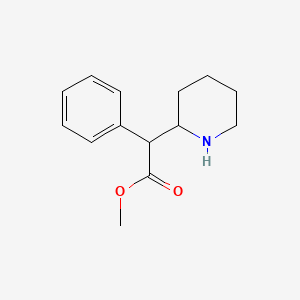
CAS 113-45-1 的已核实化学信息
Methylphenidate
Methyl phenyl(piperidin-2-yl)acetate is a amino acid ester that is methyl phenylacetate in which one of the hydrogens alpha to the carbonyl group is replaced by a piperidin-2-yl group. It is a methyl ester, a member of piperidines and a beta-amino acid ester. — ChEBI
- IUPAC 名称
- methyl 2-phenyl-2-piperidin-2-ylacetate
- 分子式
- C14H19NO2
- 分子量
- 233.31 g/mol
- 精确质量
- 233.141578849 Da
- 单同位素质量
- 233.141578849 Da
- XLogP3
- 0.2
- 拓扑极性表面积
- 38.3 Ų
- 分子复杂度
- 249.0
- 形式电荷
- 0
- 氢键供体
- 1
- 氢键受体
- 3
- 可旋转键
- 4
- 重原子
- 17
- 共价单元
- 1
向 PubChem 报告的名称和同义词
另有 16 个已报告名称
外部数据库标识符
高级结构统计
- 已定义的原子立体中心
- 0
- 未定义的原子立体中心
- 2
- 已定义的键立体中心
- 0
- 未定义的键立体中心
- 0
- 三维药效团特征
- 5
- 三维环
- 2
- 三维疏水基团
- 0
- 三维受体特征
- 1
- 三维供体特征
- 1
- 三维阴离子中心
- 0
- 三维阳离子中心
- 1
- 三维构象异构体
- 10
- 有效三维可旋转键
- 5.2
机器可读的结构标识符
- SMILES
COC(=O)C(C1CCCCN1)C2=CC=CC=C2- InChI
InChI=1S/C14H19NO2/c1-17-14(16)13(11-7-3-2-4-8-11)12-9-5-6-10-15-12/h2-4,7-8,12-13,15H,5-6,9-10H2,1H3- InChIKey
DUGOZIWVEXMGBE-UHFFFAOYSA-N
来自其他科学数据库的证据
NIH PubChem PUG-View
Attributed physical-property, hazard, environmental and use annotations.
- Boiling Point: BP: 135 to 137 °C at 0.6 mm Hg 来源: Hazardous Substances Data Bank (HSDB)
- Color/Form: Crystals from ethanol (aqueous) 来源: Hazardous Substances Data Bank (HSDB)
- Dissociation Constants: pKa = 8.9 来源: Hazardous Substances Data Bank (HSDB)
- Dissociation Constants: pKa = 8.77 来源: Hazardous Substances Data Bank (HSDB)
- LogP: log Kow = 0.20 at pH 7.2 来源: Hazardous Substances Data Bank (HSDB)
- LogP: 2.1 来源: Human Metabolome Database (HMDB)
- Melting Point: 74-75 °C 来源: Hazardous Substances Data Bank (HSDB)
- Melting Point: 224 - 226 °C 来源: Human Metabolome Database (HMDB)
- Physical Description: Solid 来源: Human Metabolome Database (HMDB)
- Solubility: 1255mg/L 来源: DrugBank
- Solubility: Practically insoluble in water 来源: Hazardous Substances Data Bank (HSDB)
- Solubility: Soluble in alcohol, ethyl acetate, ether; practically insoluble in petroleum ether 来源: Hazardous Substances Data Bank (HSDB)
- Solubility: 1.82e-01 g/L 来源: Human Metabolome Database (HMDB)
- Carcinogen Classification: No indication of carcinogenicity to humans (not listed by IARC). 来源: Toxin and Toxin Target Database (T3DB)
- Exposure Routes: Oral. Readily absorbed in a biphasic manner when orally administered (tablets) to children diagnosed with ADHD and to healthy adults. In children and adults males, after administration of a single oral dose of Ritalin LA and Ritalin given in two doses 4 hours apart, peak plasma concentration is reached approximately 2 hours for the first phase and 5-6 hours for the second phase. The absolute oral bioavailability of methylphenidate in children was 22±8% for d-methylphenidate and 5±3% for l-methylphenidate. These low values suggest that methylphenidate is highly metabolized presystemically. 来源: Toxin and Toxin Target Database (T3DB)
- Signal: Warning 来源: European Chemicals Agency (ECHA)
- GHS Hazard Statements: H302 (100%): Harmful if swallowed [Warning Acute toxicity, oral]; H315 (100%): Causes skin irritation [Warning Skin corrosion/irritation]; H319 (100%): Causes serious eye irritation [Warning Serious eye damage/eye irritation]; H341 (100%): Suspected of causing genetic defects [Warning Germ cell mutagenicity] 来源: European Chemicals Agency (ECHA)
- Precautionary Statement Codes: P203, P264, P264+P265, P270, P280, P301+P317, P302+P352, P305+P351+P338, P318, P321, P330, P332+P317, P337+P317, P362+P364, P405, and P501 (click each P-code to see the statement) 来源: European Chemicals Agency (ECHA)
- ECHA C&L Notifications Summary: The GHS information provided by 1 company from 1 notification to the ECHA C&L Inventory. 来源: European Chemicals Agency (ECHA)
- Signal: Danger 来源: Hazardous Substances Data Bank (HSDB)
- GHS Hazard Statements: H302: Harmful if swallowed [Warning Acute toxicity, oral]; H334: May cause allergy or asthma symptoms or breathing difficulties if inhaled [Danger Sensitization, respiratory] 来源: Hazardous Substances Data Bank (HSDB)
- Precautionary Statement Codes: P233, P260, P264, P270, P271, P284, P301+P317, P304+P340, P330, P342+P316, P403, and P501 (click each P-code to see the statement) 来源: Hazardous Substances Data Bank (HSDB)
- Health Effects: Using large amounts of these drugs can result in a condition known as amphetamine psychosis -- which can result in auditory, visual and tactile hallucinations, intense paranoia, irrational thoughts and beliefs, delusions, and mental confusion. 来源: Toxin and Toxin Target Database (T3DB)
- Toxicity Summary: IDENTIFICATION AND USE: Methylphenidate Hydrochloride is a psychostimulant used to treat different behavioral disorders. Indications: Used to treat narcolepsy and hyperkinetic states in children (as an adjunct to psychological, educational and social measures) for amphetamine, dextroamphetamine and ethylphenidate. It is misused for performance enhancement and relief of fatigue. Abuse either orally or by injection is extremely common. HUMAN EXPOSURE AND TOXICITY: Main risks include: Acute central nervous system (CNS) stimulation, cardiotoxicity causing tachycardia, arrhythmias, hypertension and cardiovascular collapse. High risk of dependency and abuse. Cardiovascular effects include: palpitation, chest pain, tachycardia, arrhythmias and hypertension; cardiovascular collapse can occur in severe poisoning. Myocardial ischemia, infarction and ventricular dysfunction are described. CNS effects include: stimulation of CNS, tremor, restlessness, agitation, insomnia, increased motor activity, headache, convulsions, coma and hyperreflexia. Stroke and cerebral vasculitis have been observed. Gastrointestinal effects include: vomiting, diarrhea and cramps. Genitourinary effects include: incre 来源: Hazardous Substances Data Bank (HSDB)
- Toxicity Summary: The first step in a medication overdose is to immediately contact a poison control center for the appropriate management steps. Doses that exceed 60 mg of the immediate-release formulation or 120 mg of the extended-release formulation can be considered toxic. If the overdosed quantity is unknown, the patient should be assessed for signs and symptoms such as tremors, hyperreflexia, convulsions, euphoria, confusion, hallucinations, delirium, flushing, and fever, in addition to the common adverse effects mentioned above. Supportive care with supplemental oxygen, intravenous fluids, and external cooling methods is the mainstay of treatment. Multiple studies have shown that benzodiazepines are an option, especially if dystonia, agitation, or convulsions are present. 来源: StatPearls
- Toxicity Summary: Methylphenidate blocks dopamine uptake in central adrenergic neurons by blocking dopamine transport or carrier proteins. Methylphenidate acts at the brain stem arousal system and the cerebral cortex and causes increased sympathomimetic activity in the central nervous system. Alteration of serotonergic pathways via changes in dopamine transport may result. 来源: Toxin and Toxin Target Database (T3DB)
- Environmental Bioconcentration: An estimated BCF of 3 was calculated in fish for methylphenidate(SRC), using a log Kow of 0.20(1) and a regression-derived equation(2). According to a classification scheme(2), this BCF suggests the potential for bioconcentration in aquatic organisms is low(SRC). 来源: Hazardous Substances Data Bank (HSDB)
- Environmental Fate: TERRESTRIAL FATE: Based on a classification scheme(1), an estimated Koc value of 1600(SRC), determined from a structure estimation method(2), indicates that methylphenidate is expected to have low mobility in soil(SRC). The pKa of methylphenidate is 8.9(3), indicating that this compound will exist partially in the cation form in the environment and cations generally adsorb more strongly to soils containing organic carbon and clay than their neutral counterparts(4). Volatilization of the neutral species of methylphenidate from moist soil surfaces is not expected to be an important fate process(SRC) given an estimated Henry's Law constant of 4.4X10⁻⁹ atm-cu m/mole(SRC), using a fragment constant estimation method(5). Methylphenidate is not expected to volatilize from dry soil surfaces(SRC) based upon an estimated vapor pressure of 5.9X10⁻⁵ mm Hg at 25 °C(SRC), determined from a fragment constant method(2). Biodegradation data in soil were not available(SRC, 2015). 来源: Hazardous Substances Data Bank (HSDB)
- Environmental Fate: AQUATIC FATE: Based on a classification scheme(1), an estimated Koc value of 1600(SRC), determined from a structure estimation method(2), indicates that methylphenidate is expected to adsorb to suspended solids and sediment(SRC). Volatilization of the neutral species from water surfaces is not expected(3) based upon an estimated Henry's Law constant of 4.4X10⁻⁹ atm-cu m/mole(SRC), developed using a fragment constant estimation method(4). A pKa of 8.9(5) indicates methylphenidate will exist partially in the cation form at pH values of 5 to 9 and, therefore, volatilization from water surfaces is not expected to be an important fate process(SRC). According to a classification scheme(6), an estimated BCF of 3(SRC), from its log Kow of 0.20(7) and a regression-derived equation(2), suggests the potential for bioconcentration in aquatic organisms is low(SRC). Base-catalyzed second-order hydrolysis rate constant half-lives of 23 and 2.3 years at pH values of 7 and 8, respectively(2), suggest that hydrolysis may be a slow environmental fate process. Biodegradation data in water were not available(SRC, 2015). 来源: Hazardous Substances Data Bank (HSDB)
- Environmental Fate: ATMOSPHERIC FATE: According to a model of gas/particle partitioning of semivolatile organic compounds in the atmosphere(1), methylphenidate, which has an estimated vapor pressure of 5.9X10⁻⁵ mm Hg at 25 °C(SRC), determined from a fragment constant method(2), will exist in both the vapor and particulate phases in the ambient atmosphere. Vapor-phase methylphenidate is degraded in the atmosphere by reaction with photochemically-produced hydroxyl radicals(SRC); the half-life for this reaction in air is estimated to be 1 hr(SRC), calculated from its rate constant of 1.1X10⁻¹⁰ cu cm/molecule-sec at 25 °C(SRC) that was derived using a structure estimation method(3). Particulate-phase methylphenidate may be removed from the air by wet and dry deposition(SRC). Methylphenidate contains chromophores that absorb at wavelengths >290 nm(4) and, therefore, may be susceptible to direct photolysis by sunlight(SRC). 来源: Hazardous Substances Data Bank (HSDB)
- Uses: Methylphenidate (DEA Code Number: 1724) is a Schedule II controlled substance. 来源: Hazardous Substances Data Bank (HSDB)
- Uses: Schedule II Controlled Substance: (A) The drug or other substance has a high potential for abuse; (B) The drug or other substance has a currently accepted medical use in treatment in the United States or a currently accepted medical use with severe restrictions; and (C) Abuse of the drug or other substances may lead to severe psychological or physical dependence. 来源: Hazardous Substances Data Bank (HSDB)
- Uses: MEDICATION (VET) 来源: Hazardous Substances Data Bank (HSDB)
- Uses: MEDICATION 来源: Hazardous Substances Data Bank (HSDB)
- Uses: Central Nervous System Stimulants; Dopamine Uptake Inhibitors 来源: Hazardous Substances Data Bank (HSDB)
- Uses: Use (kg) in Switzerland (2009): >250; Use (kg; approx.) in Germany (2009): >1000; Use (kg) in USA (2002): 9090; Consumption (g per capita) in Switzerland (2009): 0.032; Consumption (g per capita; approx.) in Germany (2009): 0.012; Consumption (g per capita) in the USA (2002): 0.032; Excretion rate: 0.1; Calculated removal (%): 92.1 来源: NORMAN Suspect List Exchange
- Uses: For use as an integral part of a total treatment program which typically includes other remedial measures (psychological, educational, social) for a stabilizing effect in children with a behavioral syndrome characterized by the following group of developmentally inappropriate symptoms: moderate-to-severe distractibility, short attention span, hyperactivity, emotional lability, and impulsivity. 来源: Toxin and Toxin Target Database (T3DB)
映射方: Existing checksum-valid CAS to unique PubChem CID match. 检索时间: 2026-08-31. 打开来源记录
科学分类和危害注释仅提供背景信息,不能取代上方所示针对具体市场的监管决定。
其他来源的覆盖范围和匹配状态
| 来源 | 结果 | 已检查 |
|---|---|---|
| NIH PubChem PUG-View | 精确匹配 | 2026-08-31 |
已记录的无匹配结果是该来源已被检查的有效证据;这并不表示该物质在别处不存在。
于 2026-09-02 通过校验和有效的 CAS 匹配从美国国立卫生研究院 (NIH) PubChem 检索。化学性质不能取代本页的监管决定。
官方来源与出处
- 已登记来源
- Health Canada Cosmetic Ingredient Hotlist
- 来源参考
- Hotlist prohibited entry 318
- 来源记录 ID
prohibited:318- 来源版本
- Health Canada Hotlist 2025-08-13
- 来源语言
- English
- 翻译状态
- Original is English
- 来源更新
- 2025-08-13
- 快照检查时间
- 2026-08-30 04:07 UTC
- 验证方法
- strict HTML tables t1=490 and t2=90
- SHA-256
8b52ff573d08373ee90121f6a701b3607e4a3d6fc748a7d56171eb53510af91a
已登记的数据集备注
- 数据集覆盖范围
- Administrative prohibitions, restrictions, conditions and warning requirements
- 权威性说明
- Official Health Canada compliance indicator; not a complete safety clearance
本记录在市场数据集中的位置
Canada 市场背景
Complete Hotlist snapshot
覆盖版本: Health Canada Cosmetic Ingredient Hotlist, 13 August 2025
All prohibited and restricted Hotlist entries, including conditions and warning requirements published in the official list.
核实清单
- Search English/French names and CAS identifiers.
- Apply every restriction, concentration and label warning.
- Check Food and Drugs Act/Cosmetic Regulations requirements.
- Recheck the current Hotlist before notification or sale.
官方市场来源
- Health Canada Cosmetic Ingredient HotlistOfficial Health Canada compliance indicator; not a complete safety clearance
核实工作流程与记录完整性
在将此结果用于合规决定之前
- 确认“Methylphenidate and its salts”及每个 CAS/EC 标识符所指的物料与您的供应商规格一致。
- Search English/French names and CAS identifiers.
- Apply every restriction, concentration and label warning.
- Check Food and Drugs Act/Cosmetic Regulations requirements.
- Recheck the current Hotlist before notification or sale.
- 记录来源版本,并在生产、备案或上市之前重新核查监管机构。
本记录中的可用字段
- 官方物质名称可用
- CAS可用
- EC未提供
- 单独的条件文本来源行中不存在
- 生效日期未提供
- 快照哈希与方法可用
本页回答的问题
稳定引用
Methylphenidate and its salts. Hotlist prohibited entry 318. Canada. Source version Health Canada Hotlist 2025-08-13. CosIng Checker regulatory record: https://cosingchecker.com/zh-hans/regulations/ca/records/318/
请将监管机构作为法律依据来引用。本页是结构化的证据索引和核实辅助工具,不能替代官方文本或专业法律评估。
Canada 的解读与局限
This official record identifies the substance as prohibited for cosmetic use in the stated market scope.
Do not rely on a formulation containing this identity until the cited source, effective date and exact substance match have been verified.
如何解读法律地位
The authority uses this source as compliance guidance; the underlying legislation remains controlling.
本页证据
- 记录结果:Prohibited
- 法律地位:Official guidance
- 来源版本:Health Canada Hotlist 2025-08-13
它不能证明什么
The Hotlist is an administrative compliance tool, not an exhaustive safety approval list.
进一步的权威物质研究
这些来源均不能推翻上述市场决定。
Cosmetic Ingredient Review safety assessments
Expert Panel conclusions, assessed ingredient groups, use conditions, dates and report documents
Independent expert review considered by FDA; not a government approval or binding market rule
在来源处研究此身份FDA Global Substance Registration System
UNII identifiers, preferred names, substance types, codes and public substance relationships
Identity registry only; UNII availability does not imply FDA review or approval
在来源处研究此身份ILO/WHO International Chemical Safety Cards
Hazards, symptoms, first aid, storage, incompatibilities and physical properties for covered chemicals
International occupational chemical-safety reference; not cosmetic-use approval
在来源处研究此身份Japan NITE-CHRIP
Chemical identity, Japanese and foreign legal lists, GHS hazards and exposure-related information
Chemical-management evidence; cosmetic status remains governed by the applicable MHLW standard and market rules
在来源处研究此身份NIOSH Pocket Guide to Chemical Hazards
REL, PEL, IDLH, properties, exposure routes, symptoms, target organs, first aid and measurement methods for covered workplace chemicals
US occupational-health guidance and limits; not a cosmetic ingredient decision
在来源处研究此身份OECD eChemPortal
Gateway to authority-owned physical-property, fate, ecotoxicity, toxicity, exposure and GHS records
Discovery gateway; each linked authority remains responsible for its data
在来源处研究此身份US EPA CompTox CTX APIs
导入需要 API 密钥DTXSID identity, experimental and predicted properties, toxicity, bioactivity, exposure and environmental data
Scientific and computational evidence; predictions must remain labelled and do not determine cosmetic legality
在来源处研究此身份