
DISODIUM SELENITE
Selenious, acid, sodium salt (1:2)
DISODIUM SELENITE 在本页关联 1 条欧盟附件记录。 清单备注:II/297。
按市场划分的监管证据
此矩阵将已核实的成分规则与已映射但尚未导入的来源区分开。没有已导入的规则并不意味着该成分获准使用。
滑动或横向滚动以查看所有列。
| 市场 | 证据状态 | 记录 | 来源语言 |
|---|---|---|---|
| European Union | 已关联证据 Prohibited entry found 打开此证据 | 1 | English and EU languages |
| Great Britain | 来源已映射 Official source mapped; ingredient rule not imported | 0 | English |
| Canada | 来源已映射 Official source mapped; ingredient rule not imported | 0 | English and French |
| New Zealand | 来源已映射 Official source mapped; ingredient rule not imported | 0 | English |
| ASEAN | 来源已映射 Official source mapped; ingredient rule not imported | 0 | English and national languages |
| China | 来源已映射 Official source mapped; ingredient rule not imported | 0 | Chinese with selected English material |
| Japan | 来源已映射 Official source mapped; ingredient rule not imported | 0 | Japanese; official English translation available |
| South Korea | 来源已映射 Official source mapped; ingredient rule not imported | 0 | Korean with some English names |
| United States | 来源已映射 Official source mapped; ingredient rule not imported | 0 | English |
| Australia | 来源已映射 Official source mapped; ingredient rule not imported | 0 | English |
| Brazil | 来源已映射 Official source mapped; ingredient rule not imported | 0 | Portuguese with INCI crosswalks |
| India | 来源已映射 Official source mapped; ingredient rule not imported | 0 | English and Hindi |
| Saudi Arabia | 来源已映射 Official source mapped; ingredient rule not imported | 0 | Arabic and English |
DISODIUM SELENITE 的清单详情
INCI 名称
DISODIUM SELENITE
说明
Selenious, acid, sodium salt (1:2)
DISODIUM SELENITE 的附件记录
Selenium and its compounds with the exception of selenium disulphide under the conditions set out...
关键数据
化学身份与性质
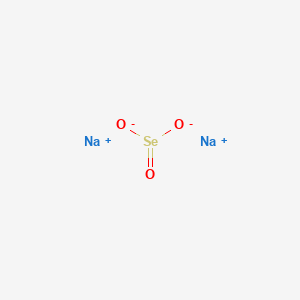
Sodium Selenite
Disodium selenite is an inorganic sodium salt composed of sodium and selenite ions in a 2:1 ratio. It has a role as a nutraceutical. It is an inorganic sodium salt and a selenite salt. — ChEBI
- IUPAC 名称
- disodium;selenite
- 分子式
- Na2O3Se
- 分子量
- 172.95 g/mol
- 精确质量
- 173.88080 Da
- 拓扑极性表面积
- 63.2 Ų
- 氢键供体
- 0
- 氢键受体
- 3
- 共价单元
- 3
- 已定义的立体中心
- 0
又称
另有 16 个已报告名称
外部数据库标识符
- ChEBI:CHEBI:48843
- ChEMBL:CHEMBL112302
- EPA DTXSID:DTXSID0032077
来自其他科学数据库的证据
EMBL-EBI ChEBI
disodium selenite
An inorganic sodium salt composed of sodium and selenite ions in a 2:1 ratio.
- 配方
- 2Na.O3Se
- 平均质量
- 172.937 g/mol
- 单同位素质量
- 173.88080 Da
- 形式电荷
- 0
- selenite salt — is a (CHEBI:48840)
- inorganic sodium salt — is a (CHEBI:38702)
- nutraceutical — has role (CHEBI:50733)
- antineoplastic agent — has role (CHEBI:35610)
- cardiovascular drug — has role (CHEBI:35554)
- nutraceutical — has role (CHEBI:50733)
- antineoplastic agent — has role (CHEBI:35610)
- cardiovascular drug — has role (CHEBI:35554)
- selenite salt — is a (CHEBI:48840)
- inorganic sodium salt — is a (CHEBI:38702)
- 12798669 来源: PubMed
- 12852761 来源: PubMed
- 16889072 来源: PubMed
- 18044833 来源: PubMed
- 20971640 来源: PubMed
- 25282270 来源: PubMed
- 33276991 来源: PubMed
- 35486317 来源: PubMed
- 35662217 来源: PubMed
- 36397962 来源: PubMed
- 36567968 来源: PubMed
- 36600950 来源: PubMed
- 36798481 来源: PubMed
- 37006874 来源: PubMed
- 37020163 来源: PubMed
- 37048216 来源: PubMed
- 37302765 来源: PubMed
- 37362095 来源: PubMed
- 37967787 来源: PubMed
- 38008716 来源: PubMed
- 38023380 来源: PubMed
- 38070396 来源: PubMed
- 38150116 来源: PubMed
- 38177716 来源: PubMed
其他整理的名称
来自此来源的交叉引用
- CAS: 10102-18-8 — ChemIDplus
- CAS: 10102-18-8 — KEGG COMPOUND
- REGISTRY_NUMBER: 30272 — Gmelin
- MANUAL_X_REF: DBSALT001761 — DrugBank
- MANUAL_X_REF: Sodium_selenite — Wikipedia
映射方: Exact CAS cross-reference in the ChEBI compound record. 来源更新: 2024-05-17. 检索时间: 2026-08-31. 打开来源记录
NIH PubChem PUG-View
Attributed physical-property, hazard, environmental and use annotations.
- Boiling Point: Decomposes (NTP, 1992) 来源: CAMEO Chemicals
- Color/Form: Tetragonal prisms 来源: Hazardous Substances Data Bank (HSDB)
- Color/Form: White tetragonal crystals 来源: Hazardous Substances Data Bank (HSDB)
- Color/Form: White powder 来源: Hazardous Substances Data Bank (HSDB)
- Density: 3.1 (NTP, 1992) - Denser than water; will sink 来源: CAMEO Chemicals
- Density: Specific gravity: 3.1 (Water = 1) 来源: Hazardous Substances Data Bank (HSDB)
- Melting Point: 1310 °F (decomposes) (NTP, 1992) 来源: CAMEO Chemicals
- Melting Point: 710 °C (decomposes) 来源: Hazardous Substances Data Bank (HSDB)
- Melting Point: 710 °C 来源: PAC Chemical Database, U.S. Department of Energy
- Physical Description: Sodium selenite appears as a white colored crystalline solid. Soluble in water and more dense than water. Contact may irritate skin, eyes and mucous membranes. Toxic by ingestion, inhalation and skin absorption. 来源: CAMEO Chemicals
- Physical Description: Hygroscopic solid; [ICSC] White solid; [HSDB] Beige odorless crystalline powder; [MSDSonline] 来源: Haz-Map, Information on Hazardous Chemicals and Occupational Diseases
- Physical Description: HYGROSCOPIC SOLID IN VARIOUS FORMS. 来源: ILO-WHO International Chemical Safety Cards (ICSCs)
- Solubility: greater than or equal to 100 mg/mL at 70.7 °F (NTP, 1992) 来源: CAMEO Chemicals
- Solubility: Insoluble in alcohol 来源: Hazardous Substances Data Bank (HSDB)
- Solubility: 89.8 g/100 g water 来源: Hazardous Substances Data Bank (HSDB)
- Solubility: Solubility in water, g/100ml at 20 °C: 85 来源: ILO-WHO International Chemical Safety Cards (ICSCs)
- Vapor Pressure: less than 0.001 mmHg at 68 °F (NTP, 1992) 来源: CAMEO Chemicals
- Carcinogen Classification: 3, not classifiable as to its carcinogenicity to humans. (L135) 来源: Toxin and Toxin Target Database (T3DB)
- Exposure Routes: The substance can be absorbed into the body by inhalation of its aerosol and by ingestion. 来源: ILO-WHO International Chemical Safety Cards (ICSCs)
- Exposure Routes: Oral (L619) ; inhalation (L619) ; dermal (L619) 来源: Toxin and Toxin Target Database (T3DB)
- First Aid: Signs and Symptoms of Sodium Selenite Exposure: Signs and symptoms of acute sodium selenite exposure include the following: garlic odor on breath, drooling, nasal irritation and burning sensation in nostrils, vomiting, hypotension, dizziness, and poor reflexes. Pulmonary edema, cardiopulmonary arrest, and coma are possible complications. Contact with sodium selenite often results in skin irritation and burns.; Emergency Life-Support Procedures: Acute exposure to sodium selenite may require decontamination and life support for the victims. Emergency personnel should wear protective clothing appropriate to the type and degree of contamination. Air-purifying or supplied-air respiratory equipment should also be worn, as necessary. Rescue vehicles should carry supplies such as plastic sheeting and disposable plastic bags to assist in preventing spread of contamination.; Inhalation Exposure:; 1. Move victims to fresh air. Emergency personnel should avoid self-exposure to sodium selenite.; 2. Evaluate vital signs including pulse and respiratory rate, and note any trauma. If no pulse is detected, provide CPR. If not breathing, provide artificial respiration. If breathing is labored, admini 来源: CAMEO Chemicals
- Signal: Danger 来源: Regulation (EC) No 1272/2008 of the European Parliament and of the Council
- GHS Hazard Statements: H300: Fatal if swallowed [Danger Acute toxicity, oral]; H317: May cause an allergic skin reaction [Warning Sensitization, Skin]; H331: Toxic if inhaled [Danger Acute toxicity, inhalation]; H411: Toxic to aquatic life with long lasting effects [Hazardous to the aquatic environment, long-term hazard] 来源: Regulation (EC) No 1272/2008 of the European Parliament and of the Council
- Precautionary Statement Codes: P261, P264, P270, P271, P272, P273, P280, P301+P316, P302+P352, P304+P340, P316, P321, P330, P333+P317, P362+P364, P391, P403+P233, P405, and P501 (click each P-code to see the statement) 来源: Regulation (EC) No 1272/2008 of the European Parliament and of the Council
- Signal: Danger 来源: European Chemicals Agency (ECHA)
- GHS Hazard Statements: H300+H330 (11%): Fatal if swallowed or if inhaled [Danger Acute toxicity, oral; acute toxicity, inhalation]; H300 (100%): Fatal if swallowed [Danger Acute toxicity, oral]; H315 (28.4%): Causes skin irritation [Warning Skin corrosion/irritation]; H317 (92.9%): May cause an allergic skin reaction [Warning Sensitization, Skin]; H319 (28%): Causes serious eye irritation [Warning Serious eye damage/eye irritation]; H330 (28%): Fatal if inhaled [Danger Acute toxicity, inhalation]; H331 (71.6%): Toxic if inhaled [Danger Acute toxicity, inhalation]; H400 (29.7%): Very toxic to aquatic life [Warning Hazardous to the aquatic environment, acute hazard]; H410 (28.6%): Very toxic to aquatic life with long lasting effects [Warning Hazardous to the aquatic environment, long-term hazard]; H411 (75.5%): Toxic to aquatic life with long lasting effects [Hazardous to the aquatic environment, long-term hazard] 来源: European Chemicals Agency (ECHA)
- Precautionary Statement Codes: P260, P261, P264, P264+P265, P270, P271, P272, P273, P280, P284, P301+P316, P302+P352, P304+P340, P305+P351+P338, P316, P320, P321, P330, P332+P317, P333+P317, P337+P317, P362+P364, P391, P403+P233, P405, and P501 (click each P-code to see the statement) 来源: European Chemicals Agency (ECHA)
- ECHA C&L Notifications Summary: Aggregated GHS information provided per 518 reports by companies from 13 notifications to the ECHA C&L Inventory. Each notification may be associated with multiple companies.; Information may vary between notifications depending on impurities, additives, and other factors. The percentage value in parenthesis indicates the notified classification ratio from companies that provide hazard codes. Only hazard codes with percentage values above 10% are shown. For more detailed information, please visit ECHA C&L website. 来源: European Chemicals Agency (ECHA)
- Signal: Danger 来源: NITE-CMC
- GHS Hazard Statements: H300: Fatal if swallowed [Danger Acute toxicity, oral]; H315: Causes skin irritation [Warning Skin corrosion/irritation]; H319: Causes serious eye irritation [Warning Serious eye damage/eye irritation]; H341: Suspected of causing genetic defects [Warning Germ cell mutagenicity]; H361: Suspected of damaging fertility or the unborn child [Warning Reproductive toxicity]; H370: Causes damage to organs [Danger Specific target organ toxicity, single exposure]; H372: Causes damage to organs through prolonged or repeated exposure [Danger Specific target organ toxicity, repeated exposure]; H401: Toxic to aquatic life [Hazardous to the aquatic environment, acute hazard]; H410: Very toxic to aquatic life with long lasting effects [Warning Hazardous to the aquatic environment, long-term hazard] 来源: NITE-CMC
- Precautionary Statement Codes: P203, P260, P264, P264+P265, P270, P273, P280, P301+P316, P302+P352, P305+P351+P338, P308+P316, P318, P319, P321, P330, P332+P317, P337+P317, P362+P364, P391, P405, and P501 (click each P-code to see the statement) 来源: NITE-CMC
- Signal: Warning 来源: NITE-CMC
- GHS Hazard Statements: H400: Very toxic to aquatic life [Warning Hazardous to the aquatic environment, acute hazard]; H410: Very toxic to aquatic life with long lasting effects [Warning Hazardous to the aquatic environment, long-term hazard] 来源: NITE-CMC
- Health Effects: Chronic oral exposure to high concentrations of selenium compounds can produce a disease called selenosis. The major signs of selenosis are hair loss, nail brittleness, and neurological abnormalities (such as numbness and other odd sensations in the extremities). Animal studies have shown that selenium may also affect sperm production and the female reproductive cycle. (L619) 来源: Toxin and Toxin Target Database (T3DB)
- Toxicity Summary: Selenium readily substitutes for sulfur in biomolecules and in many biochemical reactions, especially when the concentration of selenium is high and the concentration of sulfur is low. Inactivation of the sulfhydryl enzymes necessary for oxidative reactions in cellular respiration, through effects on mitochondrial and microsomal electron transport, might contribute to acute selenium toxicity. Selenomethionine (a common organic selenium compound) also appears to randomly substitute for methionine in protein synthesis. This substitution may affect the structure and functionability of the protein, for example, by altering disulfide bridges. Inorganic forms of selenium appear to react with tissue thiols by redox catalysis, resulting in formation of reactive oxygen species and causing damage by oxidative stress. (L619) 来源: Toxin and Toxin Target Database (T3DB)
- Environmental Bioconcentration: The BCF values observed for selenium selenite in carp (Cyprinus carpio) after 28 days exposure at 10 and 1 ug/L concentrations were <8.1-10 and <85, respectively(1). 来源: Hazardous Substances Data Bank (HSDB)
- Environmental Fate: TERRESTRIAL FATE: Selenite (Se(IV)) is soluble, but can strongly adsorb to soil minerals and organic material(1). In soils, inorganic selenium compounds can be methylated by microorganisms and subsequently volatilize to the atmosphere(2,3); dimethylselenide and dimethyl diselenide are the principal products(3). 来源: Hazardous Substances Data Bank (HSDB)
- Environmental Fate: AQUATIC FATE: In aqueous solution, over the pH range of 3 to 9, the biselenite species predominates; at pHs >9, selenite is the major species(1). 来源: Hazardous Substances Data Bank (HSDB)
- Sources/Uses: Used as a colorant in glass production; [Kanerva, p. 1501] Used in glass manufacturing to remove green color, as an alkaloidal reagent, to test seed germination, as a reagent in bacteriology, for decorating porcelain, and as a dietary supplement; [HSDB] 来源: Haz-Map, Information on Hazardous Chemicals and Occupational Diseases
- Industrial Processes with risk of exposure: Glass Manufacturing [Category: Industry] 来源: Haz-Map, Information on Hazardous Chemicals and Occupational Diseases
- Activities with risk of exposure: Ceramics making [Category: Hobbies]; Enameling [Category: Hobbies] 来源: Haz-Map, Information on Hazardous Chemicals and Occupational Diseases
- Uses: Removing green color from glass during its mfr; alkaloidal reagent 来源: Hazardous Substances Data Bank (HSDB)
- Uses: Reagent in bacteriology, testing germination of seeds, decorating porcelain 来源: Hazardous Substances Data Bank (HSDB)
- Uses: As a soil additive for selenium-deficient areas. 来源: Hazardous Substances Data Bank (HSDB)
- Uses: MEDICATION 来源: Hazardous Substances Data Bank (HSDB)
- Uses: MEDICATION (VET) 来源: Hazardous Substances Data Bank (HSDB)
- Uses: Sodium selenite is mainly used in the manufacture of colorless glass. Its pink coloration cancels out the green color imparted by iron impurities. (L737) 来源: Toxin and Toxin Target Database (T3DB)
映射方: Existing checksum-valid CAS to unique PubChem CID match. 检索时间: 2026-08-31. 打开来源记录
科学分类和危害注释仅提供背景信息,不能取代上方所示针对具体市场的监管决定。
其他来源的覆盖范围和匹配状态
| 来源 | 结果 | 已检查 |
|---|---|---|
| EMBL-EBI ChEBI | 精确匹配 | 2026-08-31 |
| NIH PubChem PUG-View | 精确匹配 | 2026-08-31 |
已记录的无匹配结果是该来源已被检查的有效证据;这并不表示该物质在别处不存在。
于 2026-08-31 通过校验和有效的 CAS 匹配从美国国立卫生研究院 (NIH) PubChem 检索。化学性质不能取代本页的监管决定。
欧盟官方成分名称证据
该成分名称与 2025 年欧盟官方通用成分名称词汇表完全匹配。
相关清单证据
配方功能重叠的成分
其他官方和科学来源
11 个可用于核查此身份的外部数据库
每个链接都会在该来源中搜索此身份。 各来源是什么及其法律效力
DISODIUM SELENITE 在 CosIng 清单中的呈现方式
CosIng 清单将 DISODIUM SELENITE 列为化妆品成分,本页将其关联到 1 条附件记录。清单条目记录名称和标识符,而附件记录显示该物质在欧盟化妆品法规中被禁用、限用或列入准用清单的情况。
在官方数据中,DISODIUM SELENITE 还被标记了 1 项化妆品功能。功能标识描述预期用途,但不能取代在配方或标签工作之前对关联附件记录的监管审查。