
ETHYLENE DICHLORIDE
ETHYLENE DICHLORIDE 在本页关联 1 条欧盟附件记录。 清单备注:II/125。
按市场划分的监管证据
此矩阵将已核实的成分规则与已映射但尚未导入的来源区分开。没有已导入的规则并不意味着该成分获准使用。
滑动或横向滚动以查看所有列。
| 市场 | 证据状态 | 记录 | 来源语言 |
|---|---|---|---|
| European Union | 已关联证据 Prohibited entry found 打开此证据 | 1 | English and EU languages |
| Great Britain | 已关联证据 Prohibited 打开此证据 | 1 | English |
| Canada | 已关联证据 Prohibited 打开此证据 | 1 | English and French |
| New Zealand | 已关联证据 Prohibited 打开此证据 | 1 | English |
| ASEAN | 已关联证据 Prohibited 打开此证据 | 1 | English and national languages |
| China | 已关联证据 Prohibited 打开此证据 | 1 | Chinese with selected English material |
| Japan | 来源已映射 Official source mapped; ingredient rule not imported | 0 | Japanese; official English translation available |
| South Korea | 已关联证据 Prohibited 打开此证据 | 1 | Korean with some English names |
| United States | 来源已映射 Official source mapped; ingredient rule not imported | 0 | English |
| Australia | 来源已映射 Official source mapped; ingredient rule not imported | 0 | English |
| Brazil | 已关联证据 Prohibited 打开此证据 | 1 | Portuguese with INCI crosswalks |
| India | 已关联证据 Prohibited 打开此证据 | 1 | English and Hindi |
| Saudi Arabia | 已关联证据 Prohibited 打开此证据 | 1 | Arabic and English |
ETHYLENE DICHLORIDE 的清单详情
INCI 名称
ETHYLENE DICHLORIDE
ETHYLENE DICHLORIDE 的附件记录
Dichloroethanes (ethylene chlorides) e.g. 1,2-Dichloroethane
关键数据
- NOT REPORTED
No function currently reported.
化学身份与性质
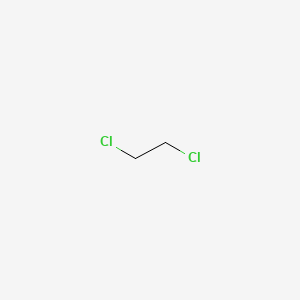
1,2-Dichloroethane
1,2-dichloroethane is a member of the class of chloroethanes substituted by two chloro groups at positions 1 and 2. It has a role as a mutagen, a non-polar solvent and a hepatotoxic agent. — ChEBI
- IUPAC 名称
- 1,2-dichloroethane
- 分子式
- C2H4Cl2
- 分子量
- 98.96 g/mol
- 精确质量
- 97.9690055 Da
- XLogP3
- 1.5
- 拓扑极性表面积
- 0.0 Ų
- 氢键供体
- 0
- 氢键受体
- 0
- 共价单元
- 1
- 已定义的立体中心
- 0
又称
另有 16 个已报告名称
外部数据库标识符
- ChEBI:CHEBI:27789
- ChEMBL:CHEMBL16370
- EPA DTXSID:DTXSID6020438
- PubMed:37150348
- PubMed:37028497
- PubMed:34560092
- PubMed:31734271
- PubMed:31520740
- PubMed:30664321
- PubMed:30081051
- PubMed:28973639
- PubMed:28960355
- PubMed:28421967
- PubMed:28189721
- PubMed:27301210
来自其他科学数据库的证据
EMBL-EBI ChEBI
1,2-dichloroethane
A member of the class of chloroethanes substituted by two chloro groups at positions 1 and 2.
- 配方
- C2H4Cl2
- 平均质量
- 98.960 g/mol
- 单同位素质量
- 97.96901 Da
- 形式电荷
- 0
- chloroethanes — is a (CHEBI:36016)
- mutagen — has role (CHEBI:25435)
- non-polar solvent — has role (CHEBI:48355)
- hepatotoxic agent — has role (CHEBI:50908)
- mutagen — has role (CHEBI:25435)
- non-polar solvent — has role (CHEBI:48355)
- hepatotoxic agent — has role (CHEBI:50908)
- chloroethanes — is a (CHEBI:36016)
其他整理的名称
来自此来源的交叉引用
- CAS: 107-06-2 — NIST Chemistry WebBook
- CAS: 107-06-2 — KEGG COMPOUND
- CAS: 107-06-2 — ChemIDplus
- MANUAL_X_REF: 1,2-Dichloroethane — Wikipedia
- MANUAL_X_REF: 12-DICHLOROETHANE — MetaCyc
- MANUAL_X_REF: 2774 — PPDB
- MANUAL_X_REF: c0001 — UM-BBD
- MANUAL_X_REF: C06752 — KEGG COMPOUND
- MANUAL_X_REF: DB03733 — DrugBank
- MANUAL_X_REF: DCE — PDBeChem
- MANUAL_X_REF: HMDB0029571 — HMDB
- REGISTRY_NUMBER: 49272 — Gmelin
- REGISTRY_NUMBER: 605264 — Reaxys
映射方: Exact CAS cross-reference in the ChEBI compound record. 来源更新: 2021-06-17. 检索时间: 2026-08-31. 打开来源记录
NIH PubChem PUG-View
Attributed physical-property, hazard, environmental and use annotations.
- Autoignition Temperature: 775 °F (USCG, 1999) 来源: CAMEO Chemicals
- Autoignition Temperature: 775 °F (413 °C) 来源: Hazardous Substances Data Bank (HSDB)
- Autoignition Temperature: 440 °C 来源: ILO-WHO International Chemical Safety Cards (ICSCs)
- Boiling Point: 182.3 °F at 760 mmHg (NTP, 1992) 来源: CAMEO Chemicals
- Boiling Point: 83.5 °C 来源: DrugBank
- Boiling Point: 83.4 °C 来源: Hazardous Substances Data Bank (HSDB)
- Boiling Point: 83.00 to 84.00 °C. @ 760.00 mm Hg 来源: Human Metabolome Database (HMDB)
- Boiling Point: 83.5 °C 来源: ILO-WHO International Chemical Safety Cards (ICSCs)
- Boiling Point: 182 °F 来源: Occupational Safety and Health Administration (OSHA)
- Boiling Point: 83.5 °C @760 [mm Hg] 来源: PAC Chemical Database, U.S. Department of Energy
- Boiling Point: 182 °F 来源: The National Institute for Occupational Safety and Health (NIOSH)
- Color/Form: Heavy liquid 来源: Hazardous Substances Data Bank (HSDB)
- Color/Form: Clear, colorless, oily liquid 来源: Hazardous Substances Data Bank (HSDB)
- Color/Form: Clear liquid at ambient temperatures 来源: Hazardous Substances Data Bank (HSDB)
- Color/Form: Colorless liquid [Note: Decomposes slowly, becomes acidic & darkens in color] 来源: Hazardous Substances Data Bank (HSDB)
- Color/Form: Colorless, oily liquid 来源: Hazardous Substances Data Bank (HSDB)
- Density: 1.253 at 68 °F (USCG, 1999) - Denser than water; will sink 来源: CAMEO Chemicals
- Density: 1.2454 at 25 °C 来源: Hazardous Substances Data Bank (HSDB)
- Density: Relative density (water = 1): 1.2 来源: ILO-WHO International Chemical Safety Cards (ICSCs)
- Density: 1.24 来源: Occupational Safety and Health Administration (OSHA)
- Density: 1.2454 @25 °C 来源: PAC Chemical Database, U.S. Department of Energy
- Density: 1.24 来源: The National Institute for Occupational Safety and Health (NIOSH)
- Flash Point: 56 °F (NTP, 1992) 来源: CAMEO Chemicals
- Flash Point: 13.0 °C (55.4 °F) - closed cup - Tested according to Annex V of Directive 67/548/EEC. 来源: Hazardous Substances Data Bank (HSDB)
- Flash Point: 56 °F (13 °C) - closed cup 来源: Hazardous Substances Data Bank (HSDB)
- Flash Point: 65 °F (18 °C) - open cup. 来源: Hazardous Substances Data Bank (HSDB)
- Flash Point: 13 °C c.c. 来源: ILO-WHO International Chemical Safety Cards (ICSCs)
- Flash Point: 56 °F 来源: Occupational Safety and Health Administration (OSHA)
- Flash Point: 56 °F 来源: The National Institute for Occupational Safety and Health (NIOSH)
- LogP: 1.48 来源: DrugBank
- LogP: log Kow = 1.48 来源: Hazardous Substances Data Bank (HSDB)
- LogP: 1.48 来源: Human Metabolome Database (HMDB)
- LogP: 1.48 来源: ILO-WHO International Chemical Safety Cards (ICSCs)
- Melting Point: -31.5 °F (NTP, 1992) 来源: CAMEO Chemicals
- Melting Point: -35.5 °C 来源: DrugBank
- Melting Point: -35.6 °C 来源: Hazardous Substances Data Bank (HSDB)
- Melting Point: -35.3 °C 来源: Human Metabolome Database (HMDB)
- Melting Point: -35.7 °C 来源: ILO-WHO International Chemical Safety Cards (ICSCs)
- Melting Point: -32 °F 来源: Occupational Safety and Health Administration (OSHA)
- Melting Point: -35.7 °C 来源: PAC Chemical Database, U.S. Department of Energy
- Melting Point: -32 °F 来源: The National Institute for Occupational Safety and Health (NIOSH)
- Odor: Pleasant, chloroform-like 来源: Hazardous Substances Data Bank (HSDB)
- Odor: Pleasant odor 来源: Hazardous Substances Data Bank (HSDB)
- Odor: Chloroform-like odor 来源: Hazardous Substances Data Bank (HSDB)
- Odor: Sweet 来源: Hazardous Substances Data Bank (HSDB)
- Physical Description: Ethylene dichloride appears as a clear colorless liquid with a chloroform-like odor. Flash point 56 °F. Denser than water and insoluble in water. Vapors are heavier than air. Density 10.4 lb / gal. 来源: CAMEO Chemicals
- Physical Description: Liquid; Gas Vapor 来源: EPA Chemical Data Reporting (CDR)
- Physical Description: Colorless liquid with a pleasant, chloroform-like odor. [Note: Decomposes slowly, becomes acidic & darkens in color.] [NIOSH] 来源: Haz-Map, Information on Hazardous Chemicals and Occupational Diseases
- Physical Description: Liquid 来源: Human Metabolome Database (HMDB)
- Physical Description: COLOURLESS VISCOUS LIQUID WITH CHARACTERISTIC ODOUR. TURNS DARK ON EXPOSURE TO AIR, MOISTURE AND LIGHT. 来源: ILO-WHO International Chemical Safety Cards (ICSCs)
- Physical Description: Colorless liquid with a pleasant, chloroform-like odor. 来源: Occupational Safety and Health Administration (OSHA)
- Physical Description: Colorless liquid with a pleasant, chloroform-like odor. [Note: Decomposes slowly, becomes acidic & darkens in color.] 来源: The National Institute for Occupational Safety and Health (NIOSH)
- Refractive Index: Index of refraction: 1.4422 at 25 °C/D 来源: Hazardous Substances Data Bank (HSDB)
- Solubility: 5 to 10 mg/mL at 66 °F (NTP, 1992) 来源: CAMEO Chemicals
- Solubility: 8600 mg/L (at 25 °C) 来源: DrugBank
- Solubility: In water, 8,600 mg/L at 25 °C 来源: Hazardous Substances Data Bank (HSDB)
- Solubility: Solubility in water at 20 °C: 0.86% wt 来源: Hazardous Substances Data Bank (HSDB)
- Solubility: 0.869 g/100 mL water at 20 °C 来源: Hazardous Substances Data Bank (HSDB)
- Solubility: Miscible with alcohol, chloroform, ether 来源: Hazardous Substances Data Bank (HSDB)
- Solubility: For more Solubility (Complete) data for 1,2-Dichloroethane (6 total), please visit the HSDB record page. 来源: Hazardous Substances Data Bank (HSDB)
- Solubility: 8.6 mg/mL at 25 °C 来源: Human Metabolome Database (HMDB)
- Solubility: Solubility in water, g/100ml: 0.87 来源: ILO-WHO International Chemical Safety Cards (ICSCs)
- Solubility: 0.9% 来源: The National Institute for Occupational Safety and Health (NIOSH)
- Vapor Pressure: 60 mmHg at 68 °F ; 100 mmHg at 84.9 °F (NTP, 1992) 来源: CAMEO Chemicals
- Vapor Pressure: 78.9 [mmHg] 来源: Haz-Map, Information on Hazardous Chemicals and Occupational Diseases
- Vapor Pressure: 78.9 mm Hg at 25 °C 来源: Hazardous Substances Data Bank (HSDB)
- Vapor Pressure: Vapor pressure, kPa at 20 °C: 8.7 来源: ILO-WHO International Chemical Safety Cards (ICSCs)
- Vapor Pressure: 64 mmHg 来源: Occupational Safety and Health Administration (OSHA)
- Vapor Pressure: 75 [mm Hg] @23.7 °C 来源: PAC Chemical Database, U.S. Department of Energy
- Vapor Pressure: 64 mmHg 来源: The National Institute for Occupational Safety and Health (NIOSH)
- Viscosity: 0.84 cP at 20 °C 来源: Hazardous Substances Data Bank (HSDB)
- IARC Carcinogenic Agent: 1,2-Dichloroethane 来源: International Agency for Research on Cancer (IARC)
- IARC Carcinogenic Classes: Group 2B: Possibly carcinogenic to humans 来源: International Agency for Research on Cancer (IARC)
- IARC Monographs: Volume 20: (1979) Some Halogenated Hydrocarbons; Volume Sup 7: Overall Evaluations of Carcinogenicity: An Updating of IARC Monographs Volumes 1 to 42, 1987; 440 pages; ISBN 92-832-1411-0 (out of print); Volume 71: (1999) Re-evaluation of Some Organic Chemicals, Hydrazine and Hydrogen Peroxide (Part 1, Part 2, Part 3) 来源: International Agency for Research on Cancer (IARC)
- Publication Year: 1999 来源: International Agency for Research on Cancer (IARC)
- Evaluation Year: 1998 来源: International Agency for Research on Cancer (IARC)
- Substance: 1,2-Dichloroethane 来源: NTP Technical Reports
- NTP Technical Report: TR-055: Bioassay of 1,2-Dichloroethane for Possible Carcinogenicity (CASRN 107-06-2) (1978 ) 来源: NTP Technical Reports
- Peer Review Date: 03/06/78 来源: NTP Technical Reports
- Conclusion for Male Rat: Clear Evidence 来源: NTP Technical Reports
- Conclusion for Female Rat: Clear Evidence 来源: NTP Technical Reports
- Conclusion for Male Mice: Clear Evidence 来源: NTP Technical Reports
- Conclusion for Female Mice: Clear Evidence 来源: NTP Technical Reports
- Exposure Routes: The substance can be absorbed into the body by inhalation of its vapour, through the skin and by ingestion. 来源: ILO-WHO International Chemical Safety Cards (ICSCs)
- Exposure Routes: inhalation, ingestion, skin absorption, skin and/or eye contact 来源: The National Institute for Occupational Safety and Health (NIOSH)
- Exposure Routes: Oral (L157); inhalation (L157) ; dermal (L157) 来源: Toxin and Toxin Target Database (T3DB)
- First Aid: EYES: First check the victim for contact lenses and remove if present. Flush victim's eyes with water or normal saline solution for 20 to 30 minutes while simultaneously calling a hospital or poison control center. Do not put any ointments, oils, or medication in the victim's eyes without specific instructions from a physician. IMMEDIATELY transport the victim after flushing eyes to a hospital even if no symptoms (such as redness or irritation) develop.; SKIN: IMMEDIATELY flood affected skin with water while removing and isolating all contaminated clothing. Gently wash all affected skin areas thoroughly with soap and water. IMMEDIATELY call a hospital or poison control center even if no symptoms (such as redness or irritation) develop. IMMEDIATELY transport the victim to a hospital for treatment after washing the affected areas.; INHALATION: IMMEDIATELY leave the contaminated area; take deep breaths of fresh air. IMMEDIATELY call a physician and be prepared to transport the victim to a hospital even if no symptoms (such as wheezing, coughing, shortness of breath, or burning in the mouth, throat, or chest) develop. Provide proper respiratory protection to rescuers entering an unknow 来源: CAMEO Chemicals
- ERG2024, Guide 131 (Ethylene dichloride): General First Aid:; · Call 911 or emergency medical service.; · Ensure that medical personnel are aware of the material(s) involved, take precautions to protect themselves and avoid contamination.; · Move victim to fresh air if it can be done safely.; · Administer oxygen if breathing is difficult.; · If victim is not breathing:; -- DO NOT perform mouth-to-mouth resuscitation; the victim may have ingested or inhaled the substance.; -- If equipped and pulse detected, wash face and mouth, then give artificial respiration using a proper respiratory medical device (bag-valve mask, pocket mask equipped with a one-way valve or other device).; -- If no pulse detected or no respiratory medical device available, provide continuous compressions. Conduct a pulse check every two minutes or monitor for any signs of spontaneous respirations.; · Remove and isolate contaminated clothing and shoes.; · For minor skin contact, avoid spreading material on unaffected skin.; · In case of contact with substance, remove immediately by flushing skin or eyes with running water for at least 20 minutes.; · For severe burns, immediate medical attention is required.; · Effects of exposure (inhalation, ingestion, 来源: Emergency Response Guidebook (ERG)
- First Aid: (General first aid procedures); Eye: Irrigate immediately - If this chemical contacts the eyes, immediately wash (irrigate) the eyes with large amounts of water, occasionally lifting the lower and upper lids. Get medical attention immediately.; Skin: Soap wash promptly - If this chemical contacts the skin, promptly wash the contaminated skin with soap and water. If this chemical penetrates the clothing, promptly remove the clothing and wash the skin with soap and water. Get medical attention promptly.; Breathing: Respiratory support; Swallow: Medical attention immediately - If this chemical has been swallowed, get medical attention immediately. 来源: The National Institute for Occupational Safety and Health (NIOSH)
- Signal: Danger 来源: Regulation (EC) No 1272/2008 of the European Parliament and of the Council
- GHS Hazard Statements: H225: Highly Flammable liquid and vapor [Danger Flammable liquids]; H302: Harmful if swallowed [Warning Acute toxicity, oral]; H315: Causes skin irritation [Warning Skin corrosion/irritation]; H319: Causes serious eye irritation [Warning Serious eye damage/eye irritation]; H335: May cause respiratory irritation [Warning Specific target organ toxicity, single exposure; Respiratory tract irritation]; H350: May cause cancer [Danger Carcinogenicity] 来源: Regulation (EC) No 1272/2008 of the European Parliament and of the Council
- Precautionary Statement Codes: P203, P210, P233, P240, P241, P242, P243, P261, P264, P264+P265, P270, P271, P280, P301+P317, P302+P352, P303+P361+P353, P304+P340, P305+P351+P338, P318, P319, P321, P330, P332+P317, P337+P317, P362+P364, P370+P378, P403+P233, P403+P235, P405, and P501 (click each P-code to see the statement) 来源: Regulation (EC) No 1272/2008 of the European Parliament and of the Council
- Signal: Danger 来源: European Chemicals Agency (ECHA)
- GHS Hazard Statements: H225 (100%): Highly Flammable liquid and vapor [Danger Flammable liquids]; H302 (100%): Harmful if swallowed [Warning Acute toxicity, oral]; H304 (37.4%): May be fatal if swallowed and enters airways [Danger Aspiration hazard]; H315 (100%): Causes skin irritation [Warning Skin corrosion/irritation]; H319 (100%): Causes serious eye irritation [Warning Serious eye damage/eye irritation]; H331 (46.4%): Toxic if inhaled [Danger Acute toxicity, inhalation]; H335 (100%): May cause respiratory irritation [Warning Specific target organ toxicity, single exposure; Respiratory tract irritation]; H350 (100%): May cause cancer [Danger Carcinogenicity] 来源: European Chemicals Agency (ECHA)
- Precautionary Statement Codes: P203, P210, P233, P240, P241, P242, P243, P261, P264, P264+P265, P270, P271, P280, P301+P316, P301+P317, P302+P352, P303+P361+P353, P304+P340, P305+P351+P338, P316, P318, P319, P321, P330, P331, P332+P317, P337+P317, P362+P364, P370+P378, P403+P233, P403+P235, P405, and P501 (click each P-code to see the statement) 来源: European Chemicals Agency (ECHA)
- ECHA C&L Notifications Summary: Aggregated GHS information provided per 666 reports by companies from 29 notifications to the ECHA C&L Inventory. Each notification may be associated with multiple companies.; Information may vary between notifications depending on impurities, additives, and other factors. The percentage value in parenthesis indicates the notified classification ratio from companies that provide hazard codes. Only hazard codes with percentage values above 10% are shown. For more detailed information, please visit ECHA C&L website. 来源: European Chemicals Agency (ECHA)
- Signal: Danger 来源: NITE-CMC
- GHS Hazard Statements: H225: Highly Flammable liquid and vapor [Danger Flammable liquids]; H302: Harmful if swallowed [Warning Acute toxicity, oral]; H320: Causes eye irritation [Warning Serious eye damage/eye irritation]; H331: Toxic if inhaled [Danger Acute toxicity, inhalation]; H336: May cause drowsiness or dizziness [Warning Specific target organ toxicity, single exposure; Narcotic effects]; H350: May cause cancer [Danger Carcinogenicity]; H370: Causes damage to organs [Danger Specific target organ toxicity, single exposure]; H372: Causes damage to organs through prolonged or repeated exposure [Danger Specific target organ toxicity, repeated exposure]; H373: May causes damage to organs through prolonged or repeated exposure [Warning Specific target organ toxicity, repeated exposure]; H402: Harmful to aquatic life [Hazardous to the aquatic environment, acute hazard] 来源: NITE-CMC
- Precautionary Statement Codes: P203, P210, P233, P240, P241, P242, P243, P260, P261, P264, P264+P265, P270, P271, P273, P280, P301+P317, P303+P361+P353, P304+P340, P305+P351+P338, P308+P316, P316, P318, P319, P321, P330, P337+P317, P370+P378, P403+P233, P403+P235, P405, and P501 (click each P-code to see the statement) 来源: NITE-CMC
- GHS Hazard Statements: H225: Highly Flammable liquid and vapor [Danger Flammable liquids]; H302: Harmful if swallowed [Warning Acute toxicity, oral]; H304: May be fatal if swallowed and enters airways [Danger Aspiration hazard]; H320: Causes eye irritation [Warning Serious eye damage/eye irritation]; H331: Toxic if inhaled [Danger Acute toxicity, inhalation]; H336: May cause drowsiness or dizziness [Warning Specific target organ toxicity, single exposure; Narcotic effects]; H341: Suspected of causing genetic defects [Warning Germ cell mutagenicity]; H351: Suspected of causing cancer [Warning Carcinogenicity]; H370: Causes damage to organs [Danger Specific target organ toxicity, single exposure]; H372: Causes damage to organs through prolonged or repeated exposure [Danger Specific target organ toxicity, repeated exposure] 来源: NITE-CMC
- Precautionary Statement Codes: P203, P210, P233, P240, P241, P242, P243, P260, P261, P264, P264+P265, P270, P271, P280, P301+P316, P301+P317, P303+P361+P353, P304+P340, P305+P351+P338, P308+P316, P316, P318, P319, P321, P330, P331, P337+P317, P370+P378, P403+P233, P403+P235, P405, and P501 (click each P-code to see the statement) 来源: NITE-CMC
- Health Effects: Breathing or swallowing large amounts of 1,2-dichloroethane can produce nervous system disorders, kidney diseases, or lung effects. This can also lead to heart failure. Skin lesions and benign pulmonary tumors were reported in animals exposed dermally to liquid 1,2-dichloroethane. 1,2-dichloroethane can cause death from cardiac arrhythmia, bronchitis, hemorrhagic gastritis and colitis, hepatocellular damage, renal tubular necrosis and calcification, central nervous system depression, and histological changes in brain tissue after a sufficient single oral dose. (L156) 来源: Toxin and Toxin Target Database (T3DB)
- NFPA Health Rating: 2 - Materials that, under emergency conditions, can cause temporary incapacitation or residual injury. 来源: Hazardous Substances Data Bank (HSDB)
- NFPA Fire Rating: 3 - Liquids and solids that can be ignited under almost all ambient temperature conditions. Materials produce hazardous atmospheres with air under almost all ambient temperatures or, though unaffected by ambient temperatures, are readily ignited under almost all conditions. 来源: Hazardous Substances Data Bank (HSDB)
- NFPA Instability Rating: 0 - Materials that in themselves are normally stable, even under fire conditions. 来源: Hazardous Substances Data Bank (HSDB)
- Target Organs: Cancer, Developmental (effects while organs are developing), Gastrointestinal (Stomach and Intestines, part of the digestive system), Hepatic (Liver), Immunological (Immune System), Neurological (Nervous System), Ocular (Eyes), Renal (Urinary System or Kidneys), Reproductive (Producing Children) 来源: Agency for Toxic Substances and Disease Registry (ATSDR)
- Target Organs: Eyes, skin, kidneys, liver, central nervous system, cardiovascular system 来源: The National Institute for Occupational Safety and Health (NIOSH)
- Toxicity Summary: IDENTIFICATION AND USE: 1,2-Dichloroethane is a colorless, oily liquid. It is used in production of vinyl chloride, trichloroethylene, vinylidene chloride, and trichloroethane. It is also used as lead scavenger in antiknock gasoline, paint, varnish, and finish removers, metal degreasing, soaps and scouring compounds, wetting and penetrating agents, ore flotation, and as a solvent. HUMAN STUDIES: Acute incidental exposure to 1,2-dichloroethane by inhalation or ingestion has resulted in a variety of effects in humans, including effects on the central nervous system, liver, kidney, lung and cardiovascular system. The respiratory effects exhibited by individuals who died following acute oral exposure to 1,2-dichloroethane included congestion, pulmonary edema (at 570 mg/kg/day) and bronchitis. Ingestion of >/= 570 mg/kg/day of 1,2-dichloroethane resulted in severe hepatocellular damage and liver atrophy and necrosis. The potential carcinogenicity of 1,2-dichloroethane in exposed human populations has not been extensively investigated. It induced unscheduled DNA synthesis in primary cultures of human cells and gene mutation in several cell lines. Mutation frequency in human cell lines ha 来源: Hazardous Substances Data Bank (HSDB)
- Toxicity Summary: 1,2-Dichloroethane is metabolized to 2-chloroacetaldehyde, S-(2-chloroethyl)glutathione by conjugation with glutathione, and to other putative reactive intermediates capable of binding covalently to cellular macromolecules in the liver, kidney, and other tissues. The conjugation of 1,2-dichloroethane with glutathione is catalyzed primarily by glutathione S-transferases. 1,2-Dichloroethane appears to be activated to mutagenic species to a lesser extent by the hepatic microsomal cytochrome P-450 enzyme system. Reactive metabolites of 1,2-dichloroethane produced by hepatic microsomal cytochrome P-450 can bind to cellular proteins and DNA. It has been suggested that 1,2-dichloroethane-induced toxicity occurs when the biotransformation processes are saturated, thereby allowing higher levels of 1,2-dichloroethane to circulate throughout the body and conjugate with glutathione instead of being detoxified and eliminated. (L156, A113) 来源: Toxin and Toxin Target Database (T3DB)
- Environmental Bioconcentration: A BCF of 2 was measured for 1,2-dichloroethane in bluegill sunfish, Lepomis macrochirus(1). According to a classification scheme(2), this BCF suggests bioconcentration in aquatic organisms is low(SRC). 来源: Hazardous Substances Data Bank (HSDB)
- Environmental Fate: TERRESTRIAL FATE: Based on a classification scheme(1), a Koc value of 33(2), indicates that 1,2-dichloroethane is expected to have very high mobility in soil(SRC). Volatilization of 1,2-dichloroethane from moist soil surfaces is expected(SRC) given a Henry's Law constant of 1.18X10⁻³ atm-cu m/mole(3). 1,2-Dichloroethane is expected to volatilize from dry soil surfaces(SRC) based upon a vapor pressure of 78.9 mm Hg at 25 °C(4). A 0% of Theoretical BOD using activated sludge in the Japanese MITI test(5) suggests that biodegradation is not expected in soil(SRC). 来源: Hazardous Substances Data Bank (HSDB)
- Environmental Fate: AQUATIC FATE: Based on a classification scheme(1), a Koc value of 33(2), indicates that 1,2-dichloroethane is not expected to adsorb to suspended solids and sediment(SRC). Volatilization from water surfaces is expected(3) based upon a Henry's Law constant of 1.18X10⁻³ atm-cu m/mole(4). Using this Henry's Law constant and an estimation method(3), volatilization half-lives for a model river and model lake are 4 hours and 4 days, respectively(SRC). 1,2-Dichloroethane is not expected to undergo hydrolysis based on an approximated hydrolysis half-life of 50,000 years(5). According to a classification scheme(6), a reported BCF of 2(7), measured in fish, suggests the potential for bioconcentration in aquatic organisms is low. 1,2-Dichloroethane was 0% degraded after 21 days in the modified shake flask test(8), suggesting that biodegradation is not expected to be an important environmental fate process in water(SRC). 来源: Hazardous Substances Data Bank (HSDB)
- Environmental Fate: ATMOSPHERIC FATE: According to a model of gas/particle partitioning of semivolatile organic compounds in the atmosphere(1), 1,2-dichloroethane, which has a vapor pressure of 78.9 mm Hg at 25 °C(2), is expected to exist solely as a vapor in the ambient atmosphere. Vapor-phase 1,2-dichloroethane is degraded in the atmosphere by reaction with photochemically-produced hydroxyl radicals(SRC); the half-life for this reaction in air is estimated to be 65 days(SRC), calculated from its rate constant of 2.48X10⁻¹³ cu cm/molecule-sec at 25 °C(3). 1,2-Dichloroethane does not contain chromophores that absorb at wavelengths >290 nm(4) and, therefore, is not expected to be susceptible to direct photolysis by sunlight(SRC). The tropospheric half-life of 1,2-dichloroethane in England has been reported as 17 weeks(5). 来源: Hazardous Substances Data Bank (HSDB)
- Consumer Uses: Intermediate 来源: EPA Chemical Data Reporting (CDR)
- Industry Uses: Monomers; Solvent; Intermediate; Soil amendments (fertilizers); Flame retardant 来源: EPA Chemical Data Reporting (CDR)
- Uses: Ethylene dichloride is primarily used in the production of vinyl chloride as well as other chemicals. It is used in solvents in closed systems for various extraction and cleaning purposes in organic synthesis. It is also added to leaded gasoline as a lead scavenger. It was formerly used in ore flotation, as a grain fumigant, as a metal degreaser, and in textile and PVC cleaning. 来源: EPA Hazardous Air Pollutants
- Sources/Uses: Used in organic synthesis; used in the past as a solvent, degreaser, paint remover, and fumigant; [ACGIH] Has been used as a dry cleaning agent and solvent for degreasing, resins, adhesives, cosmetics, and pharmaceuticals; [HSDB] 来源: Haz-Map, Information on Hazardous Chemicals and Occupational Diseases
- Restricted Notes: Use as fumigant suspended by EPA due to toxicity. [Sullivan, p. 1053] 来源: Haz-Map, Information on Hazardous Chemicals and Occupational Diseases
- Industrial Processes with risk of exposure: Metal Degreasing [Category: Clean]; Working with Glues and Adhesives [Category: Other]; Plastic Composites Manufacturing [Category: Industry] 来源: Haz-Map, Information on Hazardous Chemicals and Occupational Diseases
- Uses: For 1,2-dichloroethane (USEPA/OPP Pesticide Code: 042003) there are 0 labels match. /SRP: Not registered for current use in the U.S., but approved pesticide uses may change periodically and so federal, state and local authorities must be consulted for currently approved uses./ 来源: Hazardous Substances Data Bank (HSDB)
- Uses: The majority of the total EDC production is used for the production of vinyl chloride. Some EDC is used in the production of chlorinated solvents, such as 1,1,1-trichloroethane and tri- and tetrachloroethylene. The rest goes into various processes mainly for the synthesis of ethylenediamines. Its use as a solvent (dewaxing, deparaffinizing petroleum fractions, and coating remover) is marginal. 来源: Hazardous Substances Data Bank (HSDB)
- Uses: Manufacture of vinyl chloride, acetyl cellulose; solvent for fats, oils, waxes, gums, resins, and particularly for rubber. Has been used as an insect and soil fumigant. Organic solvent. 来源: Hazardous Substances Data Bank (HSDB)
- Uses: Fumigant /Former use/ 来源: Hazardous Substances Data Bank (HSDB)
- Uses: For more Uses (Complete) data for 1,2-Dichloroethane (9 total), please visit the HSDB record page. 来源: Hazardous Substances Data Bank (HSDB)
- Uses: The most common use of 1,2-dichloroethane is in the production of vinyl chloride which is used to make a variety of plastic and vinyl products including polyvinyl chloride (PVC) pipes, furniture and automobile upholstery, wall coverings, housewares, and automobile parts. It is also used as a solvent and is added to leaded gasoline to remove lead. Exposure occurs mainly by breathing air or drinking water contaminated with 1,2-dichloroethane. Humans can be exposed to low levels of 1,2-dichloroethane through the skin or air by contact with old products made with 1,2-dichloroethane. (L156) 来源: Toxin and Toxin Target Database (T3DB)
映射方: Existing checksum-valid CAS to unique PubChem CID match. 检索时间: 2026-08-31. 打开来源记录
科学分类和危害注释仅提供背景信息,不能取代上方所示针对具体市场的监管决定。
其他来源的覆盖范围和匹配状态
| 来源 | 结果 | 已检查 |
|---|---|---|
| EMBL-EBI ChEBI | 精确匹配 | 2026-08-31 |
| NIH PubChem PUG-View | 精确匹配 | 2026-08-31 |
已记录的无匹配结果是该来源已被检查的有效证据;这并不表示该物质在别处不存在。
于 2026-08-31 通过校验和有效的 CAS 匹配从美国国立卫生研究院 (NIH) PubChem 检索。化学性质不能取代本页的监管决定。
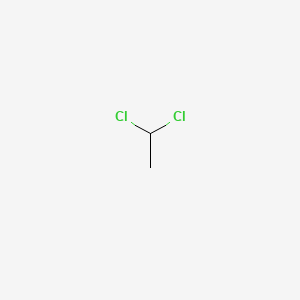
1,1-Dichloroethane
1,1-Dichloroethane is an organochlorine compound. — ChEBI
- IUPAC 名称
- 1,1-dichloroethane
- 分子式
- C2H4Cl2
- 分子量
- 98.96 g/mol
- 精确质量
- 97.9690055 Da
- XLogP3
- 1.9
- 拓扑极性表面积
- 0.0 Ų
- 氢键供体
- 0
- 氢键受体
- 0
- 共价单元
- 1
- 已定义的立体中心
- 0
又称
另有 16 个已报告名称
外部数据库标识符
- ChEBI:CHEBI:81599
- ChEMBL:CHEMBL45079
- EPA DTXSID:DTXSID1020437
- PubMed:22900494
- PubMed:22685458
- PubMed:22563207
- PubMed:22536127
- PubMed:22489148
- PubMed:22096850
- PubMed:22071373
- PubMed:21955221
- PubMed:21798103
- PubMed:21772764
- PubMed:21717170
- PubMed:21488665
来自其他科学数据库的证据
NIH PubChem PUG-View
Attributed physical-property, hazard, environmental and use annotations.
- Autoignition Temperature: 856 °F (USCG, 1999) 来源: CAMEO Chemicals
- Autoignition Temperature: 856 °F 来源: Hazardous Substances Data Bank (HSDB)
- Autoignition Temperature: 458 °C 来源: ILO-WHO International Chemical Safety Cards (ICSCs)
- Boiling Point: 135.1 °F at 760 mmHg (NTP, 1992) 来源: CAMEO Chemicals
- Boiling Point: 57.4 °C 来源: Hazardous Substances Data Bank (HSDB)
- Boiling Point: 57 °C 来源: ILO-WHO International Chemical Safety Cards (ICSCs)
- Boiling Point: 135 °F 来源: Occupational Safety and Health Administration (OSHA)
- Boiling Point: 57.3 °C @760 [mm Hg] 来源: PAC Chemical Database, U.S. Department of Energy
- Boiling Point: 135 °F 来源: The National Institute for Occupational Safety and Health (NIOSH)
- Color/Form: Colorless, oily liquid 来源: Hazardous Substances Data Bank (HSDB)
- Color/Form: Colorless, neutral, mobile liquid 来源: Hazardous Substances Data Bank (HSDB)
- Density: 1.174 at 68 °F (USCG, 1999) - Denser than water; will sink 来源: CAMEO Chemicals
- Density: 1.175 at 20 °C/4 °C; 1.1680 at 25 °C/4 °C 来源: Hazardous Substances Data Bank (HSDB)
- Density: Liquid thermal conductivity at 35 °F: 0.804 BTU-in/hr-sq ft-deg F; saturated vapor density 0.07032 lb/cu ft at 20 °C 来源: Hazardous Substances Data Bank (HSDB)
- Density: Relative density (water = 1): 1.2 来源: ILO-WHO International Chemical Safety Cards (ICSCs)
- Density: 1.18 来源: Occupational Safety and Health Administration (OSHA)
- Density: 1.757 @ 20°C 来源: PAC Chemical Database, U.S. Department of Energy
- Density: 1.18 来源: The National Institute for Occupational Safety and Health (NIOSH)
- Flash Point: 22 °F (NTP, 1992) 来源: CAMEO Chemicals
- Flash Point: -17 °C 来源: Haz-Map, Information on Hazardous Chemicals and Occupational Diseases
- Flash Point: -10.0 °C (14.0 °F) - closed cup 来源: Hazardous Substances Data Bank (HSDB)
- Flash Point: 2 °F (-17 °C) (closed cup) 来源: Hazardous Substances Data Bank (HSDB)
- Flash Point: 14 °C (open cup); -8.33 °C (closed cup) 来源: Hazardous Substances Data Bank (HSDB)
- Flash Point: 22 def F /open cup/ 来源: Hazardous Substances Data Bank (HSDB)
- Flash Point: -6 °C c.c. 来源: ILO-WHO International Chemical Safety Cards (ICSCs)
- Flash Point: 22 °F 来源: Occupational Safety and Health Administration (OSHA)
- Flash Point: 2 °F 来源: The National Institute for Occupational Safety and Health (NIOSH)
- LogP: log Kow = 1.79 来源: Hazardous Substances Data Bank (HSDB)
- LogP: 1.8 来源: ILO-WHO International Chemical Safety Cards (ICSCs)
- Melting Point: -143 °F (NTP, 1992) 来源: CAMEO Chemicals
- Melting Point: -96.93 °C 来源: Hazardous Substances Data Bank (HSDB)
- Melting Point: -98 °C 来源: ILO-WHO International Chemical Safety Cards (ICSCs)
- Melting Point: -143 °F 来源: Occupational Safety and Health Administration (OSHA)
- Melting Point: -96.9 °C 来源: PAC Chemical Database, U.S. Department of Energy
- Melting Point: -143 °F 来源: The National Institute for Occupational Safety and Health (NIOSH)
- Odor: Aromatic ethereal odor 来源: Hazardous Substances Data Bank (HSDB)
- Odor: Chloroform-like odor 来源: Hazardous Substances Data Bank (HSDB)
- Odor: Ether-like odor 来源: Hazardous Substances Data Bank (HSDB)
- Physical Description: 1,1-dichloroethane appears as a colorless liquid with an ether-like odor. Slightly soluble in water and slightly denser than water. Flash point below 70 °F. Vapors denser than air. Used to make other chemicals. 来源: CAMEO Chemicals
- Physical Description: Liquid 来源: EPA Chemical Data Reporting (CDR)
- Physical Description: Colorless, oily liquid with a chloroform-like odor; [NIOSH] Clear colorless to light yellow liquid; [Acros Organics MSDS] 来源: Haz-Map, Information on Hazardous Chemicals and Occupational Diseases
- Physical Description: COLOURLESS LIQUID WITH CHARACTERISTIC ODOUR. 来源: ILO-WHO International Chemical Safety Cards (ICSCs)
- Physical Description: Colorless, oily liquid with a chloroform-like odor. 来源: Occupational Safety and Health Administration (OSHA)
- Physical Description: Colorless, oily liquid with a chloroform-like odor. 来源: The National Institute for Occupational Safety and Health (NIOSH)
- Refractive Index: Index of refraction: 1.4167 at 20 °C 来源: Hazardous Substances Data Bank (HSDB)
- Solubility: less than 1 mg/mL at 68 °F (NTP, 1992) 来源: CAMEO Chemicals
- Solubility: For more Solubility (Complete) data for 1,1-Dichloroethane (11 total), please visit the HSDB record page. 来源: Hazardous Substances Data Bank (HSDB)
- Solubility: In water, 5,040 mg/L at 25 °C 来源: Hazardous Substances Data Bank (HSDB)
- Solubility: Soluble in alcohol, ether, fixed and volatile oils. 来源: Hazardous Substances Data Bank (HSDB)
- Solubility: Soluble in acetone; very soluble in ethanol, ethyl ether 来源: Hazardous Substances Data Bank (HSDB)
- Solubility: Miscible with oxygenated and chlorinated solvents. 来源: Hazardous Substances Data Bank (HSDB)
- Solubility: Readily soluble in all liquid chlorinated hydrocarbons and in a large variety of other organic solvents (ethers, alcohols) 来源: Hazardous Substances Data Bank (HSDB)
- Solubility: In water, 5,100 mg/L, temp not specified 来源: Hazardous Substances Data Bank (HSDB)
- Solubility: Solubility in water, g/100ml at 20 °C: 0.6 (poor) 来源: ILO-WHO International Chemical Safety Cards (ICSCs)
- Solubility: 0.6% 来源: The National Institute for Occupational Safety and Health (NIOSH)
- Vapor Pressure: 234 mmHg at 77 °F ; 182 mmHg at 68 °F (NTP, 1992) 来源: CAMEO Chemicals
- Vapor Pressure: 227.0 [mmHg] 来源: Haz-Map, Information on Hazardous Chemicals and Occupational Diseases
- Vapor Pressure: 2.27X10+2 mm Hg at 25 °C 来源: Hazardous Substances Data Bank (HSDB)
- Vapor Pressure: Vapor pressure, kPa at 20 °C: 24 来源: ILO-WHO International Chemical Safety Cards (ICSCs)
- Vapor Pressure: 182 mmHg at 68 °F 来源: Occupational Safety and Health Administration (OSHA)
- Vapor Pressure: 75 [mm Hg] @1 °C 来源: PAC Chemical Database, U.S. Department of Energy
- Vapor Pressure: 182 mmHg 来源: The National Institute for Occupational Safety and Health (NIOSH)
- Viscosity: 0.464 mPa s at 25 °C; 0.362 mPa s at 50 °C 来源: Hazardous Substances Data Bank (HSDB)
- pH: Neutral 来源: Hazardous Substances Data Bank (HSDB)
- Substance: 1,1-Dichloroethane 来源: NTP Technical Reports
- NTP Technical Report: TR-066: Bioassay of 1,1-Dichloroethane for Possible Carcinogenicity (CASRN 75-34-3) (1978 ) 来源: NTP Technical Reports
- Peer Review Date: 01/18/78 来源: NTP Technical Reports
- Conclusion for Male Rat: No Evidence 来源: NTP Technical Reports
- Conclusion for Female Rat: Equivocal Evidence 来源: NTP Technical Reports
- Conclusion for Male Mice: No Evidence 来源: NTP Technical Reports
- Conclusion for Female Mice: Equivocal Evidence 来源: NTP Technical Reports
- Summary: There were dose-related marginal increases in mammary adenocarcinomas and in hemangiosarcomas among female rats and there was a statistically significant increase in the incidence of endometrial stromal polyps among dosed female mice as compared to controls. These findings are indicative of the possible carcinogenic potential of the test compound. However, it must be recognized that under the conditions of this bioassay there was no conclusive evidence for the carcinogenicity of 1,1-dichloroethane in Osborne-Mendel rats or B6C3F1 mice. 来源: NTP Technical Reports
- Carcinogen Classification: No indication of carcinogenicity (not listed by IARC). (L135) 来源: Toxin and Toxin Target Database (T3DB)
- Exposure Routes: The substance can be absorbed into the body by inhalation and by ingestion. 来源: ILO-WHO International Chemical Safety Cards (ICSCs)
- Exposure Routes: inhalation, ingestion, skin and/or eye contact 来源: The National Institute for Occupational Safety and Health (NIOSH)
- Exposure Routes: Inhalation (L404) ; oral (L404) ; dermal (L404) ; eye contact (L404) 来源: Toxin and Toxin Target Database (T3DB)
- First Aid: EYES: First check the victim for contact lenses and remove if present. Flush victim's eyes with water or normal saline solution for 20 to 30 minutes while simultaneously calling a hospital or poison control center. Do not put any ointments, oils, or medication in the victim's eyes without specific instructions from a physician. IMMEDIATELY transport the victim after flushing eyes to a hospital even if no symptoms (such as redness or irritation) develop.; SKIN: IMMEDIATELY flood affected skin with water while removing and isolating all contaminated clothing. Gently wash all affected skin areas thoroughly with soap and water. If symptoms such as redness or irritation develop, IMMEDIATELY call a physician and be prepared to transport the victim to a hospital for treatment.; INHALATION: IMMEDIATELY leave the contaminated area; take deep breaths of fresh air. If symptoms (such as wheezing, coughing, shortness of breath, or burning in the mouth, throat, or chest) develop, call a physician and be prepared to transport the victim to a hospital. Provide proper respiratory protection to rescuers entering an unknown atmosphere. Whenever possible, Self-Contained Breathing Apparatus (SCBA) shou 来源: CAMEO Chemicals
- ERG2024, Guide 130 (1,1-Dichloroethane): General First Aid:; · Call 911 or emergency medical service.; · Ensure that medical personnel are aware of the material(s) involved, take precautions to protect themselves and avoid contamination.; · Move victim to fresh air if it can be done safely.; · Administer oxygen if breathing is difficult.; · If victim is not breathing:; -- DO NOT perform mouth-to-mouth resuscitation; the victim may have ingested or inhaled the substance.; -- If equipped and pulse detected, wash face and mouth, then give artificial respiration using a proper respiratory medical device (bag-valve mask, pocket mask equipped with a one-way valve or other device).; -- If no pulse detected or no respiratory medical device available, provide continuous compressions. Conduct a pulse check every two minutes or monitor for any signs of spontaneous respirations.; · Remove and isolate contaminated clothing and shoes.; · For minor skin contact, avoid spreading material on unaffected skin.; · In case of contact with substance, remove immediately by flushing skin or eyes with running water for at least 20 minutes.; · For severe burns, immediate medical attention is required.; · Effects of exposure (inhalation, ingestion, 来源: Emergency Response Guidebook (ERG)
- First Aid: (General first aid procedures); Eye: Irrigate immediately - If this chemical contacts the eyes, immediately wash (irrigate) the eyes with large amounts of water, occasionally lifting the lower and upper lids. Get medical attention immediately.; Skin: Soap flush promptly - If this chemical contacts the skin, promptly flush the contaminated skin with soap and water. If this chemical penetrates the clothing, promptly remove the clothing and flush the skin with water. If irritation persists after washing, get medical attention.; Breathing: Respiratory support; Swallow: Medical attention immediately - If this chemical has been swallowed, get medical attention immediately. 来源: The National Institute for Occupational Safety and Health (NIOSH)
- Signal: Danger 来源: Regulation (EC) No 1272/2008 of the European Parliament and of the Council
- GHS Hazard Statements: H225: Highly Flammable liquid and vapor [Danger Flammable liquids]; H302: Harmful if swallowed [Warning Acute toxicity, oral]; H319: Causes serious eye irritation [Warning Serious eye damage/eye irritation]; H335: May cause respiratory irritation [Warning Specific target organ toxicity, single exposure; Respiratory tract irritation]; H412: Harmful to aquatic life with long lasting effects [Hazardous to the aquatic environment, long-term hazard] 来源: Regulation (EC) No 1272/2008 of the European Parliament and of the Council
- Precautionary Statement Codes: P210, P233, P240, P241, P242, P243, P261, P264, P264+P265, P270, P271, P273, P280, P301+P317, P303+P361+P353, P304+P340, P305+P351+P338, P319, P330, P337+P317, P370+P378, P403+P233, P403+P235, P405, and P501 (click each P-code to see the statement) 来源: Regulation (EC) No 1272/2008 of the European Parliament and of the Council
- Signal: Danger 来源: European Chemicals Agency (ECHA)
- GHS Hazard Statements: H225 (100%): Highly Flammable liquid and vapor [Danger Flammable liquids]; H302 (100%): Harmful if swallowed [Warning Acute toxicity, oral]; H319 (100%): Causes serious eye irritation [Warning Serious eye damage/eye irritation]; H332 (12%): Harmful if inhaled [Warning Acute toxicity, inhalation]; H335 (100%): May cause respiratory irritation [Warning Specific target organ toxicity, single exposure; Respiratory tract irritation]; H412 (100%): Harmful to aquatic life with long lasting effects [Hazardous to the aquatic environment, long-term hazard] 来源: European Chemicals Agency (ECHA)
- Precautionary Statement Codes: P210, P233, P240, P241, P242, P243, P261, P264, P264+P265, P270, P271, P273, P280, P301+P317, P303+P361+P353, P304+P340, P305+P351+P338, P317, P319, P330, P337+P317, P370+P378, P403+P233, P403+P235, P405, and P501 (click each P-code to see the statement) 来源: European Chemicals Agency (ECHA)
- ECHA C&L Notifications Summary: Aggregated GHS information provided per 50 reports by companies from 9 notifications to the ECHA C&L Inventory. Each notification may be associated with multiple companies.; Information may vary between notifications depending on impurities, additives, and other factors. The percentage value in parenthesis indicates the notified classification ratio from companies that provide hazard codes. Only hazard codes with percentage values above 10% are shown. For more detailed information, please visit ECHA C&L website. 来源: European Chemicals Agency (ECHA)
- Signal: Danger 来源: NITE-CMC
- GHS Hazard Statements: H225: Highly Flammable liquid and vapor [Danger Flammable liquids]; H315: Causes skin irritation [Warning Skin corrosion/irritation]; H319: Causes serious eye irritation [Warning Serious eye damage/eye irritation]; H332: Harmful if inhaled [Warning Acute toxicity, inhalation]; H335: May cause respiratory irritation [Warning Specific target organ toxicity, single exposure; Respiratory tract irritation]; H336: May cause drowsiness or dizziness [Warning Specific target organ toxicity, single exposure; Narcotic effects]; H341: Suspected of causing genetic defects [Warning Germ cell mutagenicity]; H370: Causes damage to organs [Danger Specific target organ toxicity, single exposure]; H402: Harmful to aquatic life [Hazardous to the aquatic environment, acute hazard]; H411: Toxic to aquatic life with long lasting effects [Hazardous to the aquatic environment, long-term hazard] 来源: NITE-CMC
- Precautionary Statement Codes: P203, P210, P233, P240, P241, P242, P243, P260, P261, P264, P264+P265, P270, P271, P273, P280, P302+P352, P303+P361+P353, P304+P340, P305+P351+P338, P308+P316, P317, P318, P319, P321, P332+P317, P337+P317, P362+P364, P370+P378, P391, P403+P233, P403+P235, P405, and P501 (click each P-code to see the statement) 来源: NITE-CMC
- GHS Hazard Statements: H225: Highly Flammable liquid and vapor [Danger Flammable liquids]; H319: Causes serious eye irritation [Warning Serious eye damage/eye irritation]; H333: May be harmful if inhaled [Warning Acute toxicity, inhalation]; H335: May cause respiratory irritation [Warning Specific target organ toxicity, single exposure; Respiratory tract irritation]; H336: May cause drowsiness or dizziness [Warning Specific target organ toxicity, single exposure; Narcotic effects]; H370: Causes damage to organs [Danger Specific target organ toxicity, single exposure]; H373: May causes damage to organs through prolonged or repeated exposure [Warning Specific target organ toxicity, repeated exposure] 来源: NITE-CMC
- Precautionary Statement Codes: P210, P233, P240, P241, P242, P243, P260, P261, P264, P264+P265, P270, P271, P280, P303+P361+P353, P304+P317, P304+P340, P305+P351+P338, P308+P316, P319, P321, P337+P317, P370+P378, P403+P233, P403+P235, P405, and P501 (click each P-code to see the statement) 来源: NITE-CMC
- Health Effects: 1,1-dichloroethane can cause kidney disease after long-term, high-level exposure in the air. It is also known to cause liver damage, as well as central nervous system depression. 1,1-Dichloroethane can cause dermatitis on prolonged dermal exposure. (L403, T65) 来源: Toxin and Toxin Target Database (T3DB)
- NFPA Health Rating: 1 - Materials that, under emergency conditions, can cause significant irritation. 来源: Hazardous Substances Data Bank (HSDB)
- NFPA Fire Rating: 3 - Liquids and solids that can be ignited under almost all ambient temperature conditions. Materials produce hazardous atmospheres with air under almost all ambient temperatures or, though unaffected by ambient temperatures, are readily ignited under almost all conditions. 来源: Hazardous Substances Data Bank (HSDB)
- NFPA Instability Rating: 0 - Materials that in themselves are normally stable, even under fire conditions. 来源: Hazardous Substances Data Bank (HSDB)
- Target Organs: Neurological (Nervous System), Renal 来源: Agency for Toxic Substances and Disease Registry (ATSDR)
- Target Organs: Skin, liver, kidneys, lungs, central nervous system 来源: The National Institute for Occupational Safety and Health (NIOSH)
- Toxicity Summary: IDENTIFICATION AND USE: 1,1-Dichloroethane is a colorless, oily liquid. It is used as a chemical intermediate in the production of vinyl chloride and of 1,1,1-trichloroethane. It is also a grain fumigant and has limited use as a solvent for plastics, oils, fats, paint, and varnishes. 1,1-Dichloroethane is used in the manufacture of high vacuum rubber and silicone grease. The chemical can also be used as a coupling agent in antiknock gasoline, for metal degreasing, organic synthesis, and ore floatation. It was formerly used as an anesthetic but it is of no importance in this field today. HUMAN STUDIES: Symptoms of exposure to this compound may include liver and kidney damage, skin and eye irritation, dermatitis, skin burns, unconsciousness, CNS depression, drowsiness, nausea, vomiting, faintness, irritation of the respiratory tract, salivation, sneezing, coughing, dizziness, lacrimation, reddening of the conjunctiva, cyanosis, and circulatory failure. ANIMAL STUDIES: No toxic effects were observed in rabbits dermally exposed to an upper limit dose of 2 mL 1,1-dichloroethane/kg bw for 24 hr during a 14-day observation period. In a study of acute toxicity to adult male rats, there was 来源: Hazardous Substances Data Bank (HSDB)
- Toxicity Summary: IDENTIFICATION AND USE: Dichloroethane is most commonly used in the production of vinyl chloride monomer (1,2-dichloroethane). HUMAN STUDIES: Laboratory investigations were carried out on 280 workers exposed to vinyl chloride and dichloroethane. Some hematological indices and liver function were examined. A case of vinyl chloride disease was reported in which the combined effect of vinyl chloride and dichloroethane was apparent. The acute and subacute toxicity of dichloroethane increased when it was administered under conditions of high temperature. ANIMAL STUDIES: There are no data available. 来源: Hazardous Substances Data Bank (HSDB)
- Toxicity Summary: The limited information available about 1,1-dichloroethane suggests that it may be nephrotoxic, fetotoxic, and possibly carcinogenic. 1,1-Dichloroethane has been observed to enhance cell transformation and results suggest that 1,1-dichloroethane or a metabolite can bind to cellular macromolecules such as DNA. It had been reported that 1,1-dichloroethane binds to nucleic acids and proteins in vivo and in vitro. This binding is also mediated by the liver cytochrome-P-450 system. Phenobarbital enhances the extent of covalent macromolecular binding. Hence, metabolites of 1,1-dichloroethane bind to the DNA, RNA, and tissue proteins. (L403) 来源: Toxin and Toxin Target Database (T3DB)
- Environmental Bioconcentration: An estimated BCF of 7 was calculated in fish for 1,1-dichloroethane(SRC), using a log Kow of 1.79(1) and a regression-derived equation(2). According to a classification scheme(3), this BCF suggests the potential for bioconcentration in aquatic organisms is low(SRC). All of the chloroethanes have an elimination half-life of < 2 days as measured by whole body levels in exposed bluegills(4). 来源: Hazardous Substances Data Bank (HSDB)
- Environmental Fate: Aquatic and Atmospheric Fate: Chloroethanes are expected to be present in industrial air and water emissions. They volatilize rapidly from surface water and persist in urban atmospheres. Hydrolysis and biodegradation are expected to be slow. /Chloroethanes/ 来源: Hazardous Substances Data Bank (HSDB)
- Environmental Fate: TERRESTRIAL FATE: Based on a classification scheme(1), measured Koc values of 30(2) and 9.2(3) indicate that 1,1-dichloroethane is expected to have very high mobility in soil(SRC). Volatilization of 1,1-dichloroethane from moist soil surfaces is expected to be an important fate process(SRC) given a Henry's Law constant of 5.62X10⁻³ atm-cu m/mole(4). 1,1-Dichloroethane is expected to volatilize from dry soil surfaces(SRC) based upon a vapor pressure of 227 mm Hg at 25 °C(5). The half-life of 1,1-dichloroethane under sulfate-reducing conditions was approximately 115 days using well monitoring data from a landfill with a contamination history(6), indicating that biodegradation is a slow environmental fate process in soil(SRC). 来源: Hazardous Substances Data Bank (HSDB)
- Environmental Fate: AQUATIC FATE: Based on a classification scheme(1), measured Koc values of 30(2) and 9.2(3) indicate that 1,1-dichloroethane is not expected to adsorb to suspended solids and sediment(SRC). Volatilization from water surfaces is expected(4) based upon a Henry's Law constant of 5.62X10⁻³ atm-cu m/mole(5). Using this Henry's Law constant and an estimation method(4), volatilization half-lives for a model river and model lake are 3 hrs and 4 days, respectively(SRC). According to a classification scheme(6), an estimated BCF of 7(SRC), from its log Kow of 1.79(7) and a regression-derived equation(8), suggests the potential for bioconcentration in aquatic organisms is low(SRC). The half-life of 1,1-dichloroethane under sulfate-reducing conditions was approximately 115 days using well monitoring data from a landfill with a contamination history(9), indicating that biodegradation is a slow environmental fate process in water(SRC). Hydrolysis is not expected to be an important environmental fate process(SRC) given a hydrolysis half-life of 61.3 years at 25 °C and pH 7(10). 来源: Hazardous Substances Data Bank (HSDB)
- Environmental Fate: ATMOSPHERIC FATE: According to a model of gas/particle partitioning of semivolatile organic compounds in the atmosphere(1), 1,1-dichloroethane, which has a vapor pressure of 227 mm Hg at 25 °C(SRC), is expected to exist solely as a vapor in the ambient atmosphere. Vapor-phase 1,1-dichloroethane is degraded in the atmosphere by reaction with photochemically-produced hydroxyl radicals(SRC); the half-life for this reaction in air is estimated to be 59 days(SRC), calculated from its rate constant of 2.74X10⁻¹³ cu cm/molecule-sec at 25 °C(3). 1,1-Dichloroethane does not contain chromophores that absorb at wavelengths >290 nm(4) and, therefore, is not expected to be susceptible to direct photolysis by sunlight(SRC). 来源: Hazardous Substances Data Bank (HSDB)
- Industry Uses: Intermediate 来源: EPA Chemical Data Reporting (CDR)
- Uses: Ethylidene dichloride is primarily used as an intermediate in the manufacture of other chemicals such as vinyl chloride and 1,1,1-trichloroethane, and to manufacture high vacuum rubber. In the past, ethylidene dichloride was used as an anesthetic, but that use has been discontinued. 来源: EPA Hazardous Air Pollutants
- Sources/Uses: Used as a chemical intermediate, grain fumigant, and solvent for plastics and oils; in the past, used as an anesthetic; [ACGIH] Used as a cleaning agent, in metal degreasing, rubber cementing, in fabric spreading, ore flotation, fire extinguishing, as an insecticide spray, extraction solvent, coupling agent in antiknock gasoline, paint, varnish, and finish remover, and to make high vacuum rubber; [HSDB] Used as a reagent and solvent for paint and varnishes; [Merck Index] 来源: Haz-Map, Information on Hazardous Chemicals and Occupational Diseases
- Industrial Processes with risk of exposure: Metal Degreasing [Category: Clean]; Textiles (Fiber & Fabric Manufacturing) [Category: Industry]; Painting (Solvents) [Category: Paint]; Farming (Pesticides) [Category: Industry]; Metal Extraction and Refining [Category: Industry] 来源: Haz-Map, Information on Hazardous Chemicals and Occupational Diseases
- Uses: Reagent and chemical intermediate. Solvent for paint, varnishes; degreaser. 来源: Hazardous Substances Data Bank (HSDB)
- Uses: 1,1-Dichlorethane is used as a chemical intermediate and grain fumigant /SRP: former use/ and has limited use as a solvent for plastics, oils, and fats. It was formerly used as an anesthetic but it is of no importance in this field today. 来源: Hazardous Substances Data Bank (HSDB)
- Uses: Used in the manufacture of high vacuum rubber and silicone grease. 来源: Hazardous Substances Data Bank (HSDB)
- Uses: ... primarily used as a feedstock for the production of 1,1,1-trichloroethane. 来源: Hazardous Substances Data Bank (HSDB)
- Uses: For more Uses (Complete) data for 1,1-Dichloroethane (6 total), please visit the HSDB record page. 来源: Hazardous Substances Data Bank (HSDB)
- Uses: Most commonly used in the production of vinyl chloride monomer /1,2-dichloroethane/ 来源: Hazardous Substances Data Bank (HSDB)
- Uses: ... an intermediate in the production of 1,1,1-trichloroethane. Other uses negligable. /1,1-dichloroethane/ 来源: Hazardous Substances Data Bank (HSDB)
- Uses: 1,1-Dichloroethane is used primarily to make 1,1,1-trichloroethane and a number of other chemicals. It is also used to dissolve other substances such as paint, varnish and finish removers, and to remove grease. Exposure may results from breathing air containing vapors of 1,1-dichloroethane, drinking contaminated water, and through eye and skin contact. (L403) 来源: Toxin and Toxin Target Database (T3DB)
映射方: Existing checksum-valid CAS to unique PubChem CID match. 检索时间: 2026-08-31. 打开来源记录
科学分类和危害注释仅提供背景信息,不能取代上方所示针对具体市场的监管决定。
其他来源的覆盖范围和匹配状态
| 来源 | 结果 | 已检查 |
|---|---|---|
| NIH PubChem PUG-View | 精确匹配 | 2026-08-31 |
已记录的无匹配结果是该来源已被检查的有效证据;这并不表示该物质在别处不存在。
于 2026-09-02 通过校验和有效的 CAS 匹配从美国国立卫生研究院 (NIH) PubChem 检索。化学性质不能取代本页的监管决定。
欧盟官方成分名称证据
该成分名称与 2025 年欧盟官方通用成分名称词汇表完全匹配。
相关清单证据
配方功能重叠的成分
其他官方和科学来源
11 个可用于核查此身份的外部数据库
每个链接都会在该来源中搜索此身份。 各来源是什么及其法律效力
ETHYLENE DICHLORIDE 在 CosIng 清单中的呈现方式
CosIng 清单将 ETHYLENE DICHLORIDE 列为化妆品成分,本页将其关联到 1 条附件记录。清单条目记录名称和标识符,而附件记录显示该物质在欧盟化妆品法规中被禁用、限用或列入准用清单的情况。
在官方数据中,ETHYLENE DICHLORIDE 还被标记了 1 项化妆品功能。功能标识描述预期用途,但不能取代在配方或标签工作之前对关联附件记录的监管审查。