
DIETHYLHEXYL PHTHALATE
DIETHYLHEXYL PHTHALATE 在本页关联 1 条欧盟附件记录。 清单备注:II/677。
一览
- 功能
- Fragrance, perfuming, plasticiser, solvent
- CAS
- 117-81-7
- EC
- 204-211-0
- 欧盟附件
- 附件 II/677
- 附件 II/677: 化妆品中禁用
科学依据:2 份 SCCS 意见
欧盟消费者安全科学委员会(SCCS)评估过该物质。其意见是附录条目的科学依据。
- Opinion concerning Chemical Ingredients in Cosmetic Products classified as Carcinogenic, Mutagenic or Toxic to Reproduction according to the Chemicals Direct...
- Opinion concerning Chemical Ingredients in Cosmetic Products classified as Carcinogenic, Mutagenic or Toxic to Reproduction according to the Chemicals Direct...
按市场划分的监管证据
此矩阵将已核实的成分规则与已映射但尚未导入的来源区分开。没有已导入的规则并不意味着该成分获准使用。
滑动或横向滚动以查看所有列。
| 市场 | 证据状态 | 记录 | 来源语言 |
|---|---|---|---|
| European Union | 已关联证据 Prohibited entry found 打开此证据 | 1 | English and EU languages |
| Great Britain | 已关联证据 Prohibited 打开此证据 | 1 | English |
| Canada | 已关联证据 Prohibited 打开此证据 | 1 | English and French |
| New Zealand | 已关联证据 Prohibited 打开此证据 | 1 | English |
| ASEAN | 已关联证据 Prohibited 打开此证据 | 1 | English and national languages |
| China | 已关联证据 Prohibited 打开此证据 | 1 | Chinese with selected English material |
| Japan | 来源已映射 Official source mapped; ingredient rule not imported | 0 | Japanese; official English translation available |
| South Korea | 来源已映射 Official source mapped; ingredient rule not imported | 0 | Korean with some English names |
| United States | 来源已映射 Official source mapped; ingredient rule not imported | 0 | English |
| Australia | 已关联证据 Prohibited 打开此证据 | 1 | English |
| Brazil | 已关联证据 Prohibited 打开此证据 | 1 | Portuguese with INCI crosswalks |
| India | 已关联证据 Prohibited 打开此证据 | 1 | English and Hindi |
| Saudi Arabia | 已关联证据 Prohibited 打开此证据 | 1 | Arabic and English |
DIETHYLHEXYL PHTHALATE 的清单详情
INCI 名称
DIETHYLHEXYL PHTHALATE
DIETHYLHEXYL PHTHALATE 的附件记录
bis(2-Ethylhexyl) phthalate; (Diethylhexyl phthalate)
关键数据
- FRAGRANCE
Imparting an odour or taste. Creating a perceivable pleasant smell and/or masking a bad smell.
- PERFUMING
Used for perfume and aromatic raw materials.
- PLASTICISER
Softening and making supple synthetic polymers that otherwise could not be easily deformed, spread or worked out.
- SOLVENT
Dissolving other components of cosmetics. Solvents are usually liquids (aqueous and nonaqueous).
化学身份与性质
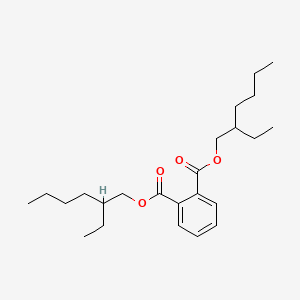
Di(2-ethylhexyl) phthalate
Bis(2-ethylhexyl) phthalate is a phthalate ester that is the bis(2-ethylhexyl) ester of benzene-1,2-dicarboxylic acid. It has a role as an apoptosis inhibitor, an androstane receptor agonist and a plasticiser. It is a phthalate ester and a diester. — ChEBI
- IUPAC 名称
- bis(2-ethylhexyl) benzene-1,2-dicarboxylate
- 分子式
- C24H38O4
- 分子量
- 390.6 g/mol
- 精确质量
- 390.27700969 Da
- XLogP3
- 7.4
- 拓扑极性表面积
- 52.6 Ų
- 氢键供体
- 0
- 氢键受体
- 4
- 共价单元
- 1
- 已定义的立体中心
- 0
又称
另有 16 个已报告名称
外部数据库标识符
- ChEBI:CHEBI:17747
- ChEMBL:CHEMBL1242017
- EPA DTXSID:DTXSID5020607
- PubMed:23065997
- PubMed:23022116
- PubMed:22998075
- PubMed:22995194
- PubMed:22989312
- PubMed:22985986
- PubMed:22963843
- PubMed:22956148
- PubMed:22953188
- PubMed:22947618
- PubMed:22945567
- PubMed:22934997
来自其他科学数据库的证据
NIH PubChem PUG-View
Attributed physical-property, hazard, environmental and use annotations.
- Autoignition Temperature: 735 °F (NTP, 1992) 来源: CAMEO Chemicals
- Autoignition Temperature: 735 °F (390 °C) 来源: Hazardous Substances Data Bank (HSDB)
- Autoignition Temperature: 350 °C 来源: ILO-WHO International Chemical Safety Cards (ICSCs)
- Boiling Point: 723 °F at 760 mmHg (NTP, 1992) 来源: CAMEO Chemicals
- Boiling Point: 384 °C 来源: Hazardous Substances Data Bank (HSDB)
- Boiling Point: BP: 231 °C at 5 mm Hg 来源: Hazardous Substances Data Bank (HSDB)
- Boiling Point: 385 °C 来源: ILO-WHO International Chemical Safety Cards (ICSCs)
- Boiling Point: 727 °F 来源: Occupational Safety and Health Administration (OSHA)
- Boiling Point: 384 °C @760 [mm Hg] 来源: PAC Chemical Database, U.S. Department of Energy
- Boiling Point: 727 °F 来源: The National Institute for Occupational Safety and Health (NIOSH)
- Color/Form: Liquid 来源: Hazardous Substances Data Bank (HSDB)
- Color/Form: Colorless, oily liquid 来源: Hazardous Substances Data Bank (HSDB)
- Density: 0.98 at 77 °F (USCG, 1999) - Less dense than water; will float 来源: CAMEO Chemicals
- Density: 0.981 g/cu cm at 25 °C 来源: Hazardous Substances Data Bank (HSDB)
- Density: Relative density (water = 1): 0.986 来源: ILO-WHO International Chemical Safety Cards (ICSCs)
- Density: 0.99 来源: Occupational Safety and Health Administration (OSHA)
- Density: 0.981 @25 °C 来源: PAC Chemical Database, U.S. Department of Energy
- Density: 0.99 来源: The National Institute for Occupational Safety and Health (NIOSH)
- Flash Point: 405 °F (NTP, 1992) 来源: CAMEO Chemicals
- Flash Point: 420 °F (215 °C) (Open cup) 来源: Hazardous Substances Data Bank (HSDB)
- Flash Point: 215 °C o.c. 来源: ILO-WHO International Chemical Safety Cards (ICSCs)
- Flash Point: 420 °F (open cup) 来源: Occupational Safety and Health Administration (OSHA)
- Flash Point: (oc) 420 °F 来源: The National Institute for Occupational Safety and Health (NIOSH)
- LogP: log Kow = 7.60 来源: Hazardous Substances Data Bank (HSDB)
- LogP: 5.03 来源: ILO-WHO International Chemical Safety Cards (ICSCs)
- Melting Point: -58 °F (NTP, 1992) 来源: CAMEO Chemicals
- Melting Point: -55 °C 来源: Hazardous Substances Data Bank (HSDB)
- Melting Point: -50 °C 来源: ILO-WHO International Chemical Safety Cards (ICSCs)
- Melting Point: -58 °F 来源: Occupational Safety and Health Administration (OSHA)
- Melting Point: -55 °C 来源: PAC Chemical Database, U.S. Department of Energy
- Melting Point: -58 °F 来源: The National Institute for Occupational Safety and Health (NIOSH)
- Odor: Slight odor 来源: Hazardous Substances Data Bank (HSDB)
- Physical Description: Di(2-ethylhexyl) phthalate is a colorless to pale yellow oily liquid. Nearly odorless. (USCG, 1999) 来源: CAMEO Chemicals
- Physical Description: Other Solid; Large Crystals; Liquid; Liquid 来源: EPA Chemical Data Reporting (CDR)
- Physical Description: COLOURLESS-TO-LIGHT COLOURED VISCOUS LIQUID WITH CHARACTERISTIC ODOUR. 来源: ILO-WHO International Chemical Safety Cards (ICSCs)
- Physical Description: Colorless, oily liquid with a slight odor. 来源: Occupational Safety and Health Administration (OSHA)
- Physical Description: Colorless, oily liquid with a slight odor. 来源: The National Institute for Occupational Safety and Health (NIOSH)
- Refractive Index: Index of refraction: 1.4853 at 20 °C/D 来源: Hazardous Substances Data Bank (HSDB)
- Solubility: less than 0.1 mg/mL at 72 °F (NTP, 1992) 来源: CAMEO Chemicals
- Solubility: In water, 2.70X10⁻¹ mg/L at 25 °C 来源: Hazardous Substances Data Bank (HSDB)
- Solubility: LESS THAN 0.01% IN WATER @ 25 °C 来源: Hazardous Substances Data Bank (HSDB)
- Solubility: Soluble in blood and fluids containing lipoproteins 来源: Hazardous Substances Data Bank (HSDB)
- Solubility: MISCIBLE WITH MINERAL OIL & HEXANE 来源: Hazardous Substances Data Bank (HSDB)
- Solubility: Slightly soluble in carbon tetrachloride 来源: Hazardous Substances Data Bank (HSDB)
- Solubility: Solubility in water: none 来源: ILO-WHO International Chemical Safety Cards (ICSCs)
- Solubility: (75 °F): 0.00003% 来源: The National Institute for Occupational Safety and Health (NIOSH)
- Vapor Pressure: 1.32 mmHg at 392 °F (NTP, 1992) 来源: CAMEO Chemicals
- Vapor Pressure: Vapor pressure = 9.75X10⁻⁶ mm Hg at 25 °C 来源: Hazardous Substances Data Bank (HSDB)
- Vapor Pressure: 1.42X10⁻⁷ mm Hg at 25 °C 来源: Hazardous Substances Data Bank (HSDB)
- Vapor Pressure: Vapor pressure, kPa at 20 °C: 0.001 来源: ILO-WHO International Chemical Safety Cards (ICSCs)
- Vapor Pressure: 1.32 mmHg at 392 °F 来源: Occupational Safety and Health Administration (OSHA)
- Vapor Pressure: <0.01 mmHg 来源: The National Institute for Occupational Safety and Health (NIOSH)
- Viscosity: 22 cSt at 20 °C; 386 cSt at 0 °C; 5 cSt at 100 °C 来源: Hazardous Substances Data Bank (HSDB)
- IARC Carcinogenic Agent: Di(2-ethylhexyl)phthalate 来源: International Agency for Research on Cancer (IARC)
- IARC Carcinogenic Classes: Group 2B: Possibly carcinogenic to humans 来源: International Agency for Research on Cancer (IARC)
- IARC Monographs: Volume Sup 7: Overall Evaluations of Carcinogenicity: An Updating of IARC Monographs Volumes 1 to 42, 1987; 440 pages; ISBN 92-832-1411-0 (out of print); Volume 77: (2000) Some Industrial Chemicals; Volume 101: (2012) Some Chemicals Present in Industrial and Consumer Products, Food and Drinking-water 来源: International Agency for Research on Cancer (IARC)
- Publication Year: 2013 来源: International Agency for Research on Cancer (IARC)
- Evaluation Year: 2011 来源: International Agency for Research on Cancer (IARC)
- Substance: Di(2-ethylhexyl) phthalate 来源: NTP Technical Reports
- NTP Technical Report: TR-601: Toxicology and Carcinogenesis Studies of Di(2-ethylhexyl) Phthalate (CASRN 117-81-7) Administered in Feed to Sprague Dawley (Hsd:Sprague Dawley SD) Rats (2021 ) 来源: NTP Technical Reports
- Peer Review Date: 04/02/21 来源: NTP Technical Reports
- Conclusion for Male Rat: Clear Evidence 来源: NTP Technical Reports
- Conclusion for Female Rat: Clear Evidence 来源: NTP Technical Reports
- Conclusion for Male Mice: Clear Evidence 来源: NTP Technical Reports
- Conclusion for Female Mice: Clear Evidence 来源: NTP Technical Reports
- Exposure Routes: The substance can be absorbed into the body by inhalation, through the skin and by ingestion. 来源: ILO-WHO International Chemical Safety Cards (ICSCs)
- Exposure Routes: inhalation, ingestion, skin and/or eye contact 来源: The National Institute for Occupational Safety and Health (NIOSH)
- Exposure Routes: Oral (L1903) ; inhalation (L1903) ; dermal (L1903) 来源: Toxin and Toxin Target Database (T3DB)
- First Aid: EYES: First check the victim for contact lenses and remove if present. Flush victim's eyes with water or normal saline solution for 20 to 30 minutes while simultaneously calling a hospital or poison control center. Do not put any ointments, oils, or medication in the victim's eyes without specific instructions from a physician. IMMEDIATELY transport the victim after flushing eyes to a hospital even if no symptoms (such as redness or irritation) develop.; SKIN: IMMEDIATELY flood affected skin with water while removing and isolating all contaminated clothing. Gently wash all affected skin areas thoroughly with soap and water. IMMEDIATELY call a hospital or poison control center even if no symptoms (such as redness or irritation) develop. IMMEDIATELY transport the victim to a hospital for treatment after washing the affected areas.; INHALATION: IMMEDIATELY leave the contaminated area; take deep breaths of fresh air. IMMEDIATELY call a physician and be prepared to transport the victim to a hospital even if no symptoms (such as wheezing, coughing, shortness of breath, or burning in the mouth, throat, or chest) develop. Provide proper respiratory protection to rescuers entering an unknow 来源: CAMEO Chemicals
- First Aid: (General first aid procedures); Eye: Irrigate immediately - If this chemical contacts the eyes, immediately wash (irrigate) the eyes with large amounts of water, occasionally lifting the lower and upper lids. Get medical attention immediately.; Breathing: Respiratory support; Swallow: Medical attention immediately - If this chemical has been swallowed, get medical attention immediately. 来源: The National Institute for Occupational Safety and Health (NIOSH)
- Signal: Danger 来源: Regulation (EC) No 1272/2008 of the European Parliament and of the Council
- GHS Hazard Statements: H360FD: May damage fertility; May damage the unborn child [Danger Reproductive toxicity] 来源: Regulation (EC) No 1272/2008 of the European Parliament and of the Council
- Precautionary Statement Codes: P203, P280, P318, P405, and P501 (click each P-code to see the statement) 来源: Regulation (EC) No 1272/2008 of the European Parliament and of the Council
- Note: This chemical does not meet GHS hazard criteria for < 0.1% (1 of 1071) of reports. 来源: European Chemicals Agency (ECHA)
- Signal: Danger 来源: European Chemicals Agency (ECHA)
- GHS Hazard Statements: H360 (94.5%): May damage fertility or the unborn child [Danger Reproductive toxicity] 来源: European Chemicals Agency (ECHA)
- Precautionary Statement Codes: P203, P280, P318, P405, and P501 (click each P-code to see the statement) 来源: European Chemicals Agency (ECHA)
- ECHA C&L Notifications Summary: Aggregated GHS information provided per 1071 reports by companies from 27 notifications to the ECHA C&L Inventory.; Reported as not meeting GHS hazard criteria per 1 of 1071 reports by companies.; There are 26 notifications provided by 1070 of 1071 reports by companies with hazard statement code(s).; Information may vary between notifications depending on impurities, additives, and other factors. The percentage value in parenthesis indicates the notified classification ratio from companies that provide hazard codes. Only hazard codes with percentage values above 10% are shown. For more detailed information, please visit ECHA C&L website. 来源: European Chemicals Agency (ECHA)
- Signal: Danger 来源: NITE-CMC
- GHS Hazard Statements: H320: Causes eye irritation [Warning Serious eye damage/eye irritation]; H335: May cause respiratory irritation [Warning Specific target organ toxicity, single exposure; Respiratory tract irritation]; H351: Suspected of causing cancer [Warning Carcinogenicity]; H360: May damage fertility or the unborn child [Danger Reproductive toxicity]; H373: May causes damage to organs through prolonged or repeated exposure [Warning Specific target organ toxicity, repeated exposure]; H400: Very toxic to aquatic life [Warning Hazardous to the aquatic environment, acute hazard]; H411: Toxic to aquatic life with long lasting effects [Hazardous to the aquatic environment, long-term hazard] 来源: NITE-CMC
- Precautionary Statement Codes: P203, P260, P261, P264+P265, P271, P273, P280, P304+P340, P305+P351+P338, P318, P319, P337+P317, P391, P403+P233, P405, and P501 (click each P-code to see the statement) 来源: NITE-CMC
- GHS Hazard Statements: Not Classified 来源: NITE-CMC
- Health Effects: Chronic and/or high levels of DEHP exposure may cause reproductive and developmental damage. This includes damaged sperm, delayed sexual maturity, and deficiencies in the development of male babies. DEHP may also cause liver and kidney damage, and is potentially carcinogenic. (L181, L182) 来源: Toxin and Toxin Target Database (T3DB)
- NFPA Health Rating: 1 - Materials that, under emergency conditions, can cause significant irritation. 来源: Hazardous Substances Data Bank (HSDB)
- NFPA Fire Rating: 1 - Materials that must be preheated before ignition can occur. Materials require considerable preheating, under all ambient temperature conditions, before ignition and combustion can occur. 来源: Hazardous Substances Data Bank (HSDB)
- NFPA Instability Rating: 0 - Materials that in themselves are normally stable, even under fire conditions. 来源: Hazardous Substances Data Bank (HSDB)
- Target Organs: Cancer, Developmental (effects while organs are developing), Hepatic (Liver), Immunological (Immune System), Renal (Urinary System or Kidneys), Reproductive (Producing Children) 来源: Agency for Toxic Substances and Disease Registry (ATSDR)
- Target Organs: Hepatic 来源: EPA Integrated Risk Information System (IRIS)
- Target Organs: Eyes, respiratory system, central nervous system, liver, reproductive system, gastrointestinal tract 来源: The National Institute for Occupational Safety and Health (NIOSH)
- Toxicity Summary: IDENTIFICATION AND USE: Di(2-ethylhexyl)phthalate (DEHP) is a colorless, oily liquid. Plastics may contain from 1 to 40% DEHP by weight and are used in consumer products such as imitation leather, rainwear, footwear, upholstery, flooring, wire and cable, tablecloths, shower curtains, food packaging materials and children's toys. DEHP is also used as a hydraulic fluid and as a dielectric fluid (a non-conductor of electric current) in electrical capacitors, a detector for leaks in respirators. DEHP is not registered for current use in the U.S., but approved pesticide uses may change periodically and so federal, state and local authorities must be consulted for currently approved uses. HUMAN EXPOSURE AND TOXICITY: DEHP has been found in various types of food, such as fish, shellfish, eggs and cheese. Blood transfusions and other medical treatment using plastic devices may lead to involuntary human exposure to DEHP. Available data on oral administration indicate that DEHP is hydrolyzed in the gut by pancreatic lipase. The metabolites formed, i.e., mono(2-ethylhexyl)phthalate and 2-ethyl hexanol, are rapidly absorbed. Mono-2-ethylhexyl phthalate was detected in human teeth. When adminis 来源: Hazardous Substances Data Bank (HSDB)
- Toxicity Summary: Monoethylhexylphthalate (MEHP), one of the major metabolites of DEHP, induces peroxisome proliferation by activating peroxisome proliferator activated receptors. This is believed to increase production of hydrogen peroxide by peroxisomes and enhance cell proliferation, leading to hepatotoxic and carcinogenic effects. MEHP is also believed to exhibit testicular toxicity by targeting and damaging the Sertoli cells. DEHP may act as an antiandrogen during a critical stage of reproductive tract differentiation by reducing testosterone in fetal males, hindering development. (L181, A106) 来源: Toxin and Toxin Target Database (T3DB)
- Environmental Bioconcentration: Experimental BCF values range from a log 2 to 4 in fish and invertebrates(1-7). Log BCFs of 2.93 and 2.06 were measured in fathead minnows (Pimephales promelas)(2) and bluegill sunfish (Lepomis macrochirus), respectively(3). BCF values of <0.7-29.7 and 1-3.4 were reported using carp (Cyprinus carpio) which were exposed over an 8-week period to bis(2-ethylhexyl) phthalate concentrations of 0.1 and 1.0 ppm, respectively(8). According to a classification scheme(9), these BCFs suggest that bioconcentration in aquatic organisms is low to very high(SRC). Experiments with rainbow trout (Salmo gairdneri) showed that the majority of (14)C-bis(2-ethylhexyl) phthalate did not reach the systemic circulation of the fish, but was present in the exposure water as metabolites as a result of pre-systemic branchial metabolism of this compound during uptake from the water to the blood(10). Biota-sediment accumulation factors were 1.0, 0.5 and 1.3 in roach (Rutilus rutilus), chub (Leuciscus cephalus) and perch (Perca fluviatilis), respectively; fish were collected from the Orge River, France from Jul 2009 to Apr 2010(11). BCFs of 0.02-0.11 were reported for bis(2-ethylhexyl) phthalate in water spinach 来源: Hazardous Substances Data Bank (HSDB)
- Environmental Bioconcentration: Bis(2-ethylhexyl) phthalate bioconcentration factor for rainbow trout: 42-113; duration, 36 days, whole body. Bioconcentration factor for fathead minnow 155-886; duration, 56 days, whole body. Bioconcentration factor for Gammarus pseudolimnaeus (scud): 54-2,680 (from dry to wet weight); duration, 14-21 days, whole body. Bioconcentration factor for Aselius brevicaudus (sowbug): 14-50 (from dry to wet weight); duration, 21 days, whole body. 来源: Hazardous Substances Data Bank (HSDB)
- Environmental Fate: TERRESTRIAL FATE: Based on a classification scheme(1), Koc values ranging from 87,420(2) to 510,000(3), indicate that bis(2-ethylhexyl) phthalate is expected to be immobile in soil(SRC). Volatilization of bis(2-ethylhexyl) phthalate from moist soil surfaces is not expected to be an important fate process(SRC) given an estimated Henry's Law constant of 2.7X10⁻⁷ atm-cu m/mole(SRC), based upon its vapor pressure, 1.42X10⁻⁷ mm Hg(4), and water solubility, 0.27 mg/L(5). Bis(2-ethylhexyl) phthalate is not expected to volatilize from dry soil surfaces(SRC) based upon its vapor pressure(4). Mineralization rates of 15 to 50% remaining after 80 days(6) and 22 to 32% (14)CO2 in three soils after 60 days incubation(7) suggest that biodegradation proceeds slowly in soil environments(SRC). 来源: Hazardous Substances Data Bank (HSDB)
- Environmental Fate: AQUATIC FATE: Based on a classification scheme(1), Koc values ranging from 87,420(2) to 510,000(3), indicate that bis(2-ethylhexyl) phthalate is expected to adsorb to suspended solids and sediment(SRC). Volatilization from water surfaces is not expected(4) based upon an estimated Henry's Law constant of 2.7X10⁻⁷ atm-cu m/mole(SRC), derived from its vapor pressure, 1.42X10⁻⁷ mm Hg(5), and water solubility, 0.27 mg/L(6). Bis(2-ethylhexyl) phthalate is not expected to undergo hydrolysis in the environment based on an aqueous hydrolysis half-life of 2000 years that was determined at pH 7(3). According to a classification scheme(7), BCF values of <0.1(8) to 850(9) in carp, bluegill and fathead minnows, suggest bioconcentration in aquatic organisms is low to very high; this range may indicate the ability of aquatic organisms to readily metabolize this class of compounds(3). In unacclimated aquatic systems no biodegradation was observed(10), but a biodegradation half-life of 60 to 70 hours in groundwater impacted by bis(2-ethylhexyl) phthalate was reported(11), suggesting that biodegradation is dependent to a large extent on acclimation of aquatic environments(SRC). 来源: Hazardous Substances Data Bank (HSDB)
- Environmental Fate: ATMOSPHERIC FATE: According to a model of gas/particle partitioning of semivolatile organic compounds in the atmosphere(1), bis(2-ethylhexyl) phthalate, which has a vapor pressure of 1.42X10⁻⁷ mm Hg at 25 °C(2), will exist in both the vapor and particulate phases in the ambient atmosphere. Vapor-phase bis(2-ethylhexyl) phthalate is degraded in the atmosphere by reaction with photochemically-produced hydroxyl radicals(SRC); the half-life for this reaction in air is estimated to be 16 hours(SRC), calculated from its rate constant of 2.2X10⁻¹¹ cu cm/molecule-sec at 25 °C(SRC) that was derived using a structure estimation method(3). Particulate-phase bis(2-ethylhexyl) phthalate may be removed from the air by wet and dry deposition(SRC). Bis(2-ethylhexyl) phthalate contains chromophores that absorb at wavelengths >290 nm(4) and, therefore, may be susceptible to direct photolysis by sunlight(SRC). Gas-phase hydroxyl radicals reacted with bis(2-ethylhexyl) phthalate adsorbed onto silicon dioxide, aluminum oxide, iron(III) oxide and coal fly ash(5), exhibiting half-lives of 1.1, 1.2, 1.3 and 2.0 days, respectively(SRC). 来源: Hazardous Substances Data Bank (HSDB)
- Consumer Uses: Processing aids not otherwise specified; Plasticizer; Not Known or Reasonably Ascertainable 来源: EPA Chemical Data Reporting (CDR)
- Industry Uses: Plasticizer; Not Known or Reasonably Ascertainable; Processing aids not otherwise specified 来源: EPA Chemical Data Reporting (CDR)
- Uses: Congress has permanently banned three types of phthalates (DEHP, DBP, BBP) in any amount greater than 0.1 percent (computed for each phthalate, individually) in (1) children's toys and (2) certain child care articles. di-(2-ethylhexyl) phthalate (DEHP), dibutyl phthalate (DBP), or benzyl butyl phthalate (BBP). 来源: Hazardous Substances Data Bank (HSDB)
- Uses: For bis(2-ethylhexylphthalate) (USEPA/OPP Pesticide Code: 295200) there are 0 labels match. /SRP: Not registered for current use in the U.S., but approved pesticide uses may change periodically and so federal, state and local authorities must be consulted for currently approved uses./ 来源: Hazardous Substances Data Bank (HSDB)
- Uses: The active ingredient is no longer contained in any registered pesticide products ... "cancelled." 来源: Hazardous Substances Data Bank (HSDB)
- Uses: Plastics may contain from 1 to 40% di(2-ethylhexyl) phthalate by weight and are used in consumer products such as imitation leather, rainwear, footwear, upholstery, flooring, wire and cable, tablecloths, shower curtains, food packaging materials and children's toys. ... Di(2-ethylhexyl) phthalate is also used as a hydraulic fluid and as a dielectric fluid (a non-conductor of electric current) in electrical capacitors. 来源: Hazardous Substances Data Bank (HSDB)
- Uses: For more Uses (Complete) data for BIS(2-ETHYLHEXYL) PHTHALATE (19 total), please visit the HSDB record page. 来源: Hazardous Substances Data Bank (HSDB)
- Uses: Plastics -> Typical concentration range in plastic materials -> 2.0 - 35.0% 来源: NORMAN Suspect List Exchange
- Uses: DEHP is present in plastic products such as wall coverings, tablecloths, floor tiles, furniture upholstery, shower curtains, garden hoses, swimming pool liners, rainwear, baby pants, dolls, some toys, shoes, automobile upholstery and tops, packaging film and sheets, sheathing for wire and cable, medical tubing, and blood storage bags. (L181) 来源: Toxin and Toxin Target Database (T3DB)
映射方: Existing checksum-valid CAS to unique PubChem CID match. 检索时间: 2026-08-31. 打开来源记录
科学分类和危害注释仅提供背景信息,不能取代上方所示针对具体市场的监管决定。
其他来源的覆盖范围和匹配状态
| 来源 | 结果 | 已检查 |
|---|---|---|
| NIH PubChem PUG-View | 精确匹配 | 2026-08-31 |
已记录的无匹配结果是该来源已被检查的有效证据;这并不表示该物质在别处不存在。
于 2026-08-31 通过校验和有效的 CAS 匹配从美国国立卫生研究院 (NIH) PubChem 检索。化学性质不能取代本页的监管决定。
欧盟官方成分名称证据
该成分名称与 2025 年欧盟官方通用成分名称词汇表完全匹配。
相关清单证据
配方功能重叠的成分
其他官方和科学来源
11 个可用于核查此身份的外部数据库
每个链接都会在该来源中搜索此身份。 各来源是什么及其法律效力
DIETHYLHEXYL PHTHALATE 在 CosIng 清单中的呈现方式
CosIng 清单将 DIETHYLHEXYL PHTHALATE 列为化妆品成分,本页将其关联到 1 条附件记录。清单条目记录名称和标识符,而附件记录显示该物质在欧盟化妆品法规中被禁用、限用或列入准用清单的情况。
在官方数据中,DIETHYLHEXYL PHTHALATE 还被标记了 4 项化妆品功能。功能标识描述预期用途,但不能取代在配方或标签工作之前对关联附件记录的监管审查。