
HYDRATED SILICA
Silicic acid; synthetic amorphous silicon dioxide
HYDRATED SILICA 列于欧盟 CosIng 清单,但本页尚未关联任何直接的附件记录。
按市场划分的监管证据
此处跟踪的 13 个市场均未导入该成分的规则。
这描述的是本清单,而非法律。没有已导入的规则并不能证明某成分获准使用:规则可能以其他名称或标识符存在,或存在于尚未在此导入的数据集中。
HYDRATED SILICA 的清单详情
INCI 名称
HYDRATED SILICA
说明
Silicic acid; synthetic amorphous silicon dioxide
HYDRATED SILICA 的附件记录
关键数据
- ABRASIVE
Removing unwanted tissue or foreign materials from various body surfaces, including mechanical tooth cleaning and/or gloss improvement.
- ABSORBENT
Taking up water- and/or oil-soluble (dissolved or finely dispersed) substances.
- ANTICAKING
Preventing agglomeration of particulate solids into lumps or hard masses (cohesive cake), thus allowing free flow of particles.
- BULKING
Non-reactive (chemically inert), solid ingredients that dilute other solids and/or increase the volume of cosmetic products.
- OPACIFYING
Reducing transparency or translucency of cosmetics.
- VISCOSITY CONTROLLING
Increasing or decreasing the viscosity (thickness) of cosmetics.
化学身份与性质
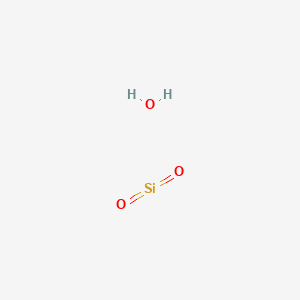
Hydrated Silica
The Panel concluded that synthetically-manufactured amorphous ... Hydrated Silica are safe in the present practices of use and concentration described in the safety assessment when formulated to be non-irritating. — Cosmetic Ingredient Review (CIR)
- IUPAC 名称
- dioxosilane;hydrate
- 分子式
- H2O3Si
- 分子量
- 78.099 g/mol
- 精确质量
- 77.97732046 Da
- 拓扑极性表面积
- 35.1 Ų
- 氢键供体
- 1
- 氢键受体
- 3
- 共价单元
- 2
- 已定义的立体中心
- 0
又称
另有 15 个已报告名称
外部数据库标识符
- EPA DTXSID:DTXSID70913092
来自其他科学数据库的证据
NIH PubChem PUG-View
Attributed physical-property, hazard, environmental and use annotations.
- Note: This chemical does not meet GHS hazard criteria for 100% (4 of 4) of all reports. 来源: European Chemicals Agency (ECHA)
- GHS Hazard Statements: Not Classified; Reported as not meeting GHS hazard criteria by 4 of 4 companies. For more detailed information, please visit ECHA C&L website. 来源: European Chemicals Agency (ECHA)
- ECHA C&L Notifications Summary: Aggregated GHS information provided per 4 reports by companies from 1 notifications to the ECHA C&L Inventory.; Reported as not meeting GHS hazard criteria per 4 of 4 reports by companies.; There are 0 notifications provided by 0 of 4 reports by companies with hazard statement code(s).; Information may vary between notifications depending on impurities, additives, and other factors. The percentage value in parenthesis indicates the notified classification ratio from companies that provide hazard codes. Only hazard codes with percentage values above 10% are shown. For more detailed information, please visit ECHA C&L website. 来源: European Chemicals Agency (ECHA)
- Cosmetic Ingredient Review Conclusion: The Panel concluded that synthetically-manufactured amorphous ... Hydrated Silica are safe in the present practices of use and concentration described in the safety assessment when formulated to be non-irritating. 来源: Cosmetic Ingredient Review (CIR)
- Cosmetic Ingredient Review Finding(s): Safe for use in cosmetics, with qualifications 来源: Cosmetic Ingredient Review (CIR)
- Cosmetic Ingredient Review Link: CIR ingredient: Hydrated Silica 来源: Cosmetic Ingredient Review (CIR)
映射方: Existing checksum-valid CAS to unique PubChem CID match. 检索时间: 2026-08-31. 打开来源记录
科学分类和危害注释仅提供背景信息,不能取代上方所示针对具体市场的监管决定。
其他来源的覆盖范围和匹配状态
| 来源 | 结果 | 已检查 |
|---|---|---|
| EMBL-EBI ChEBI | 无精确记录 | 2026-08-31 |
| NIH PubChem PUG-View | 精确匹配 | 2026-08-31 |
已记录的无匹配结果是该来源已被检查的有效证据;这并不表示该物质在别处不存在。
于 2026-08-31 通过校验和有效的 CAS 匹配从美国国立卫生研究院 (NIH) PubChem 检索。化学性质不能取代本页的监管决定。
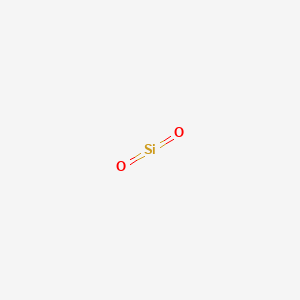
Silica
Silicon dioxide is a silicon oxide made up of linear triatomic molecules in which a silicon atom is covalently bonded to two oxygens. — ChEBI
- IUPAC 名称
- dioxosilane
- 分子式
- O2Si
- 分子量
- 60.084 g/mol
- 精确质量
- 59.966755773 Da
- 拓扑极性表面积
- 34.1 Ų
- 氢键供体
- 0
- 氢键受体
- 2
- 共价单元
- 1
- 已定义的立体中心
- 0
又称
另有 16 个已报告名称
外部数据库标识符
- ChEBI:CHEBI:30563
- EPA DTXSID:DTXSID1029677
来自其他科学数据库的证据
NIH PubChem PUG-View
Attributed physical-property, hazard, environmental and use annotations.
- Boiling Point: 4046 °F at 760 mmHg (NIOSH, 2024) 来源: CAMEO Chemicals
- Boiling Point: 4046 °F 来源: Hazardous Substances Data Bank (HSDB)
- Boiling Point: 2230 °C 来源: Hazardous Substances Data Bank (HSDB)
- Boiling Point: 2230 °C 来源: ILO-WHO International Chemical Safety Cards (ICSCs)
- Boiling Point: 2950 °C @760 [mm Hg] 来源: PAC Chemical Database, U.S. Department of Energy
- Boiling Point: 4046 °F 来源: The National Institute for Occupational Safety and Health (NIOSH)
- Color/Form: Amorphous powder 来源: Hazardous Substances Data Bank (HSDB)
- Color/Form: Transparent to gray powder (Note: Amorphous silica is the non-crystalline form of O2Si). ... solid 来源: Hazardous Substances Data Bank (HSDB)
- Color/Form: Silica gel is a coherent, rigid, continuous three-dimensional network of spherical particles of colloidal microporous silica. 来源: Hazardous Substances Data Bank (HSDB)
- Color/Form: Transparent crystals 来源: Hazardous Substances Data Bank (HSDB)
- Density: 2.2 (NIOSH, 2024) - Denser than water; will sink 来源: CAMEO Chemicals
- Density: 2.2 @ 25 °C 来源: Hazardous Substances Data Bank (HSDB)
- Density: 2.6 来源: Hazardous Substances Data Bank (HSDB)
- Density: Colorless crystals or white powder; odorless and tasteless; density: 2.2-2.6; soluble in molten alkai when finely divided and amorphous /Silicon dioxide/ 来源: Hazardous Substances Data Bank (HSDB)
- Density: Density = 2.20 g/cm; Refractive index = 1.459; Surface tension = 5.200 @ 298 K (calc); Thermal conductivity = 1.37 W/m-deg K at 298 deg K ; Heat of Formation = -903.2 kJ/mol at 298 deg K; Heat Capacity = 37.94 J/mol-deg K at 298 deg K; Dielectric Constant = 3.8 /Corning 7940 fused silica/ 来源: Hazardous Substances Data Bank (HSDB)
- Density: Density = 2.648 /alpha-Quartz/ /from table/ 来源: Hazardous Substances Data Bank (HSDB)
- Density: Density = 2.269 /alpha-Tridymite/ /from table/ 来源: Hazardous Substances Data Bank (HSDB)
- Density: Density = 2.318 /alpha-Cristobalite/ /from table/ 来源: Hazardous Substances Data Bank (HSDB)
- Density: Density = 2.909 /Coesite/ /from table/ 来源: Hazardous Substances Data Bank (HSDB)
- Density: Density = 4.287 /Stishovite/ /from table/ 来源: Hazardous Substances Data Bank (HSDB)
- Density: 2.3 g/cm³ 来源: ILO-WHO International Chemical Safety Cards (ICSCs)
- Density: 2.334 @25 °C 来源: PAC Chemical Database, U.S. Department of Energy
- Melting Point: 3110 °F (NIOSH, 2024) 来源: CAMEO Chemicals
- Melting Point: 3110 °F 来源: Hazardous Substances Data Bank (HSDB)
- Melting Point: 1710 °C 来源: Hazardous Substances Data Bank (HSDB)
- Melting Point: 1716 - 1736 °C 来源: Human Metabolome Database (HMDB)
- Melting Point: 1713 °C 来源: ILO-WHO International Chemical Safety Cards (ICSCs)
- Melting Point: 1722 °C 来源: PAC Chemical Database, U.S. Department of Energy
- Melting Point: 3110 °F 来源: The National Institute for Occupational Safety and Health (NIOSH)
- Odor: Odorless 来源: Hazardous Substances Data Bank (HSDB)
- Physical Description: Transparent to gray, odorless powder. Irritating to the skin and eyes on contact. Inhalation will cause irritation in the respiratory tract. [Note: Amorphous silica is the non-crystalline form of SiO2.] 来源: CAMEO Chemicals
- Physical Description: Dry Powder; Other Solid; Large Crystals; CBI 来源: EPA Chemical Data Reporting (CDR)
- Physical Description: Dry Powder; Wet Solid; Other Solid; Large Crystals; CBI; Liquid 来源: EPA Chemical Data Reporting (CDR)
- Physical Description: Dry Powder; Large Crystals; Dry Powder; Large Crystals; Wet Solid; Dry Powder; Liquid; Liquid; Large Crystals; Liquid; Liquid; Other Solid; Dry Powder; Other Solid; Dry Powder; Large Crystals; Liquid; Other Solid; Dry Powder; Large Crystals; Liquid; Wet Solid; Other Solid; Other Solid; Wet Solid; Large Crystals; Dry Powder; Wet Solid; Other Solid; Dry Powder; Wet Solid; Large Crystals; Other Solid; CBI 来源: EPA Chemical Data Reporting (CDR)
- Physical Description: Liquid; Other Solid; Dry Powder 来源: EPA Chemical Data Reporting (CDR)
- Physical Description: White, fluffy powder or granules. Hygroscopic 来源: EU Food Improvement Agents
- Physical Description: Transparent to gray, odorless powder. [Note: Amorphous silica is the non-crystalline form of SiO2.]; [NIOSH] 来源: Haz-Map, Information on Hazardous Chemicals and Occupational Diseases
- Physical Description: Solid 来源: Human Metabolome Database (HMDB)
- Physical Description: COLOURLESS OR WHITE CRYSTALS. 来源: ILO-WHO International Chemical Safety Cards (ICSCs)
- Physical Description: Solid 来源: Occupational Safety and Health Administration (OSHA)
- Physical Description: Transparent to gray, odorless powder. [Note: Amorphous silica is the non-crystalline form of SiO2.] 来源: The National Institute for Occupational Safety and Health (NIOSH)
- Solubility: Insoluble (NIOSH, 2024) 来源: CAMEO Chemicals
- Solubility: The solubility of the various phases of silicas is very complex and depends upon several factors. Solubility increases with temperature and pH and is affected by the presence of trace metals. Particle size influences the rate of solubility. /Silica/ 来源: Hazardous Substances Data Bank (HSDB)
- Solubility: Insoluble 来源: Hazardous Substances Data Bank (HSDB)
- Solubility: Silica is rather poorly soluble in water although solubility is higher for the amorphous than for the crystalline morphologies. ... The external amorphous layer in quartz is more soluble than the crystalline underlying core. 来源: Hazardous Substances Data Bank (HSDB)
- Solubility: AMORPHOUS IS SOL IN ALKALIES, ESP WHEN FINELY DIVIDED 来源: Hazardous Substances Data Bank (HSDB)
- Solubility: Practically insoluble in water or acids. Dissolves readily in HF, forming silicon tetrafluoride. 来源: Hazardous Substances Data Bank (HSDB)
- Solubility: Very slightly sol in alkali. 来源: Hazardous Substances Data Bank (HSDB)
- Solubility: Soluble in hot potassium hydroxide and hot sodium hydroxide solutions. Insoluble in ethanol. 来源: Hazardous Substances Data Bank (HSDB)
- Solubility: Silica is rather poorly soluble in water and solubility is lower for the crystalline than for the amorphous morphologies. ...Solubility increases with temperature and pH and is affected by the presence of trace metals. Particle size influences the rate of solubility. 来源: Hazardous Substances Data Bank (HSDB)
- Solubility: The external amorphous layer in quartz (the Beilby layer) is more soluble than the crystalline underlying core. 来源: Hazardous Substances Data Bank (HSDB)
- Solubility: Solubility in water: none 来源: ILO-WHO International Chemical Safety Cards (ICSCs)
- Solubility: Insoluble 来源: The National Institute for Occupational Safety and Health (NIOSH)
- Vapor Pressure: 0 mmHg (approx) (NIOSH, 2024) 来源: CAMEO Chemicals
- Vapor Pressure: approx 0 mm Hg 来源: Hazardous Substances Data Bank (HSDB)
- Vapor Pressure: 10 mm Hg @ 1732 °C 来源: Hazardous Substances Data Bank (HSDB)
- Vapor Pressure: 0 mmHg (approx) 来源: The National Institute for Occupational Safety and Health (NIOSH)
- IARC Carcinogenic Agent: Silica, amorphous 来源: International Agency for Research on Cancer (IARC)
- IARC Carcinogenic Classes: Group 3: Not classifiable as to its carcinogenicity to humans 来源: International Agency for Research on Cancer (IARC)
- IARC Monographs: Volume Sup 7: Overall Evaluations of Carcinogenicity: An Updating of IARC Monographs Volumes 1 to 42, 1987; 440 pages; ISBN 92-832-1411-0 (out of print); Volume 68: (1997) Silica, Some Silicates, Coal Dust and para-Aramid Fibrils 来源: International Agency for Research on Cancer (IARC)
- Publication Year: 1997 来源: International Agency for Research on Cancer (IARC)
- Evaluation Year: 1996 来源: International Agency for Research on Cancer (IARC)
- Exposure Routes: Exposure mainly occurs via inhalation. 来源: ILO-WHO International Chemical Safety Cards (ICSCs)
- Exposure Routes: inhalation, skin and/or eye contact 来源: The National Institute for Occupational Safety and Health (NIOSH)
- First Aid: Excerpt from NIOSH Pocket Guide for Silica, amorphous:; Eye: IRRIGATE IMMEDIATELY - If this chemical contacts the eyes, immediately wash (irrigate) the eyes with large amounts of water, occasionally lifting the lower and upper lids. Get medical attention immediately.; Breathing: FRESH AIR - If a person breathes large amounts of this chemical, move the exposed person to fresh air at once. Other measures are usually unnecessary. (NIOSH, 2024) 来源: CAMEO Chemicals
- First Aid: (General first aid procedures); Eye: Irrigate immediately - If this chemical contacts the eyes, immediately wash (irrigate) the eyes with large amounts of water, occasionally lifting the lower and upper lids. Get medical attention immediately.; Breathing: Fresh air 来源: The National Institute for Occupational Safety and Health (NIOSH)
- GHS Hazard Statements: Not Classified; Reported as not meeting GHS hazard criteria by 7724 of 9127 companies 来源: European Chemicals Agency (ECHA)
- ECHA C&L Notifications Summary: Aggregated GHS information provided per 9127 reports by companies from 60 notifications to the ECHA C&L Inventory.; Reported as not meeting GHS hazard criteria per 7724 of 9127 reports by companies.; There are 55 notifications provided by 1403 of 9127 reports by companies with hazard statement code(s).; Information may vary between notifications depending on impurities, additives, and other factors. The percentage value in parenthesis indicates the notified classification ratio from companies that provide hazard codes. Only hazard codes with percentage values above 10% are shown. For more detailed information, please visit ECHA C&L website. 来源: European Chemicals Agency (ECHA)
- Note: This chemical does not meet GHS hazard criteria for 35% (889 of 2540) of reports. 来源: European Chemicals Agency (ECHA)
- Signal: Warning 来源: European Chemicals Agency (ECHA)
- GHS Hazard Statements: H315 (56.3%): Causes skin irritation [Warning Skin corrosion/irritation]; H319 (56.3%): Causes serious eye irritation [Warning Serious eye damage/eye irritation]; H335 (56.3%): May cause respiratory irritation [Warning Specific target organ toxicity, single exposure; Respiratory tract irritation] 来源: European Chemicals Agency (ECHA)
- Precautionary Statement Codes: P261, P264, P264+P265, P271, P280, P302+P352, P304+P340, P305+P351+P338, P319, P321, P332+P317, P337+P317, P362+P364, P403+P233, P405, and P501 (click each P-code to see the statement) 来源: European Chemicals Agency (ECHA)
- ECHA C&L Notifications Summary: Aggregated GHS information provided per 2540 reports by companies from 18 notifications to the ECHA C&L Inventory. Each notification may be associated with multiple companies.; Reported as not meeting GHS hazard criteria per 889 of 2540 reports by companies.; There are 17 notifications provided by 1651 of 2540 reports by companies with hazard statement code(s).; Information may vary between notifications depending on impurities, additives, and other factors. The percentage value in parenthesis indicates the notified classification ratio from companies that provide hazard codes. Only hazard codes with percentage values above 10% are shown. For more detailed information, please visit ECHA C&L website. 来源: European Chemicals Agency (ECHA)
- Note: This chemical does not meet GHS hazard criteria for 96% (1614 of 1682) of all reports. 来源: European Chemicals Agency (ECHA)
- GHS Hazard Statements: Not Classified; Reported as not meeting GHS hazard criteria by 1614 of 1682 companies (only 4% companies provided GHS information). For more detailed information, please visit ECHA C&L website. 来源: European Chemicals Agency (ECHA)
- ECHA C&L Notifications Summary: Aggregated GHS information provided per 1682 reports by companies from 17 notifications to the ECHA C&L Inventory.; Reported as not meeting GHS hazard criteria per 1614 of 1682 reports by companies.; There are 14 notifications provided by 68 of 1682 reports by companies with hazard statement code(s).; Information may vary between notifications depending on impurities, additives, and other factors. The percentage value in parenthesis indicates the notified classification ratio from companies that provide hazard codes. Only hazard codes with percentage values above 10% are shown. For more detailed information, please visit ECHA C&L website. 来源: European Chemicals Agency (ECHA)
- Note: This chemical does not meet GHS hazard criteria for 9.7% (125 of 1288) of reports. 来源: European Chemicals Agency (ECHA)
- Signal: Danger 来源: European Chemicals Agency (ECHA)
- Target Organs: Cancer, Immunological (Immune System), Renal (Urinary System or Kidneys), Respiratory (From the Nose to the Lungs) 来源: Agency for Toxic Substances and Disease Registry (ATSDR)
- Target Organs: Eyes, respiratory system 来源: The National Institute for Occupational Safety and Health (NIOSH)
- Cosmetic Ingredient Review Conclusion: The Panel concluded that synthetically-manufactured amorphous Silica ... safe in the present practices of use and concentration described in the safety assessment when formulated to be non-irritating. 来源: Cosmetic Ingredient Review (CIR)
- Cosmetic Ingredient Review Finding(s): Safe for use in cosmetics, with qualifications 来源: Cosmetic Ingredient Review (CIR)
- Toxicity Summary: IDENTIFICATION: Quartz is a frequently occurring solid component of most natural mineral dusts. HUMAN EXPOSURE: Human exposures to quartz occur most often during occupational activities that involve the movement of earth, disturbance of silica containing products (masonry, concrete), or use or manufacture of silica containing products. Environmental exposure to ambient quartz dust can occur during natural, industrial and agricultural activities. Respirable quartz dust particles can be inhaled and deposited in the lung. There are many epidemiological studies of occupational cohorts exposed to respirable quartz dust. Silicosis, lung cancer and pulmonary tuberculosis are associated with occupational exposure to quartz dust. Statistically significant increases in deaths or cases of bronchitis, emphysema, chronic obstructive pulmonary disease, autoimmune related diseases (scleroderma, rheumatoid arthritis, systemic lupus erythematosus) and renal diseases have been reported. Silicosis is the critical effect for hazard identification and risk assessment. There are sufficient epidemiological data to allow the risk of silicosis to be quantitatively estimated, but not to permit accurate esti 来源: Hazardous Substances Data Bank (HSDB)
- Consumer Uses: Filler; Not Known or Reasonably Ascertainable; Sealant (barrier); Other 来源: EPA Chemical Data Reporting (CDR)
- Consumer Uses: Other; Abrasives; Filler; Not Known or Reasonably Ascertainable; Surface modifier 来源: EPA Chemical Data Reporting (CDR)
- Consumer Uses: CBI; Binder; Other; Lubricating agent; Anti-caking agent; Polymerization promoter; Dispersing agent; Anti-adhesive/cohesive; Insulators; Abrasives; Processing aids not otherwise specified; Surfactant (surface active agent); Flow promoter; Sealant (barrier); Soil amendments (fertilizers); Viscosity modifiers; Not Known or Reasonably Ascertainable; Thickening agent; Filler; Catalyst; Absorbent; Plasticizer; Dehydrating agent (desiccant); Adsorbent; Defoamer; Surface modifier; Pigment; Hardener; Solids separation (precipitating) agent, not otherwise specified; Intermediate; Processing aids, specific to petroleum production 来源: EPA Chemical Data Reporting (CDR)
- Consumer Uses: Abrasives; Binder; Insulators; Hardener; Not Known or Reasonably Ascertainable; Thickening agent; Sealant (barrier) 来源: EPA Chemical Data Reporting (CDR)
- Industry Uses: Other; Insulators; Abrasives; Heat transferring agent; pH regulating agent; Sealant (barrier); Crystal growth modifiers (nucleating agents); Not Known or Reasonably Ascertainable; Filler 来源: EPA Chemical Data Reporting (CDR)
- Industry Uses: Filler; Stabilizing agent; Flow promoter; Hardener; Adsorbent; Surface modifier; Other; Abrasives 来源: EPA Chemical Data Reporting (CDR)
- Industry Uses: Surfactant (surface active agent); Processing aids not otherwise specified; Bleaching agent; Opacifer; Plating agent; Abrasives; Anti-adhesive/cohesive; Insulators; Intermediates; Polymerization promoter; Dispersing agent; Anti-caking agent; Lubricating agent; CBI; Wetting agent (non-aqueous); Other; Binder; Processing aids, specific to petroleum production; Intermediate; Hardener; Chelating agent; Solids separation (precipitating) agent, not otherwise specified; Anti-static agent; Pigment; Adhesion/cohesion promoter; Etching agent; Adsorbent; Defoamer; Surface modifier; Oxidizing agent; Dehydrating agent (desiccant); Anti-slip agent; Plasticizer; Dusting agent; Hydraulic fluids; Absorbent; Not Known or Reasonably Ascertainable; Corrosion inhibitor; Crystal growth modifiers (nucleating agents); Thickening agent; Filler; Ion exchange agent; Catalyst; Soil amendments (fertilizers); Viscosity modifiers; Flow promoter; Stabilizing agent; Film former 来源: EPA Chemical Data Reporting (CDR)
- Industry Uses: Insulators; Other; Binder; Abrasives; Opacifer; Sealant (barrier); Thickening agent; Not Known or Reasonably Ascertainable; Filler 来源: EPA Chemical Data Reporting (CDR)
- Cosmetic Ingredient Review Link: CIR ingredient: Silica 来源: Cosmetic Ingredient Review (CIR)
- Sources/Uses: Used as a filler in rubber products, paints, animal feeds, pesticides, insulation materials, and cosmetics; [Rom, p. 527] Silica nanoparticle applications include leukemia cell biomarkers, cancer therapy, drug delivery, mechanical polishing, and additives to drugs, cosmetics, printing inks, varnishes, and food; [PMID 21191487] Polycrystalline silicon and silicon dioxide materials are etched in semiconductor manufacturing. [CSH, p. 45] 来源: Haz-Map, Information on Hazardous Chemicals and Occupational Diseases
- Industrial Processes with risk of exposure: Semiconductor Manufacturing [Category: Industry]; Mining [Category: Industry]; Cement Producing [Category: Industry]; Farming (Feed Additives) [Category: Industry] 来源: Haz-Map, Information on Hazardous Chemicals and Occupational Diseases
- Uses: For silicon dioxide (USEPA/OPP Pesticide Code: 072605 ACTIVE products with label matches. /SRP: Registered for use in the U.S. but approved pesticide uses may change periodically and so federal, state and local authorities must be consulted for currently approved uses./ 来源: Hazardous Substances Data Bank (HSDB)
- Uses: Amorphous silica (such as fumed silica) is incorporated in a variety of food products as anti-caking agents at levels up to 2% by weight. Amorphous silica is also used as an anti-caking agent and as an excipient in pharmaceuticals for various drug and vitamin preparations. 来源: Hazardous Substances Data Bank (HSDB)
- Uses: According to the different physicochemical properties, the major classes of synthetic amorphous silica are used in a variety of products, e.g. as fillers in the rubber industry, in tire compounds, as free-flow and anti-caking agents in powder materials, and as liquid carriers, particularly in the manufacture of animal feed and agrochemicals; other uses are found in toothpaste additives, paints, silicon rubber, insulation material, liquid systems in coatings, adhesives, printing inks, plastisol car undercoats, and cosmetics. 来源: Hazardous Substances Data Bank (HSDB)
- Uses: Bioactive glasses are silica-based, surface-active bone substitutes that have shown good biocompatibility both in bone and in soft tissue and are used in oral and maxillofacial bone augmentation. 来源: Hazardous Substances Data Bank (HSDB)
- Uses: For more Uses (Complete) data for AMORPHOUS SILICA (18 total), please visit the HSDB record page. 来源: Hazardous Substances Data Bank (HSDB)
- Uses: Silica sand has been used for many different purposes for many years; its most ancient and principal use throughout history has been in the manufacture of glass. Sands are used in ceramics, foundry, abrasive, hydraulic fracturing applications and many other uses. 来源: Hazardous Substances Data Bank (HSDB)
- Uses: Refractory silica bricks, in which silica is converted by heat into cristobalite and tridymite are used in sprung arches of open-hearth furnaces, covers of electric furnaces, roofs of glass-tank furnaces, blast pre-heaters and coke and gas ovens. 来源: Hazardous Substances Data Bank (HSDB)
- Uses: ...Several uses require the material /sand and gravel/ to be ground. In some uses (e.g. sandblasting, abrasives), grinding also occurs during the use. 来源: Hazardous Substances Data Bank (HSDB)
- Uses: Industrial sand sold or used by United States producers in 1994, by major end use -- Glass-making: containers, flat (plate and window), specialty, and fibreglass (un-ground or ground); Foundry: moulding and core, moulding and core facing (ground), and refractory; Metallurgical applications: silicon carbide and flux for metal smelting; Abrasives: blasting, scouring cleansers (ground), sawing and sanding, and chemicals (ground and un-ground); Fillers: rubber, paints, putty, and whole grain fillers/building products; Ceramics: pottery, brick, tile; Filtration: water (municipal, county, local), swimming pools, and others; Petroleum industry: hydraulic fracturing, well packing, and cementing; Recreational: golf courses, baseball, volleyball, play sands, beaches, traction (engine), roofing granules and fillers, and other purposes (ground silica or whole grain). /From table/ 来源: Hazardous Substances Data Bank (HSDB)
映射方: Existing checksum-valid CAS to unique PubChem CID match. 检索时间: 2026-08-31. 打开来源记录
科学分类和危害注释仅提供背景信息,不能取代上方所示针对具体市场的监管决定。
其他来源的覆盖范围和匹配状态
| 来源 | 结果 | 已检查 |
|---|---|---|
| NIH PubChem PUG-View | 精确匹配 | 2026-08-31 |
已记录的无匹配结果是该来源已被检查的有效证据;这并不表示该物质在别处不存在。
于 2026-08-31 通过校验和有效的 CAS 匹配从美国国立卫生研究院 (NIH) PubChem 检索。化学性质不能取代本页的监管决定。
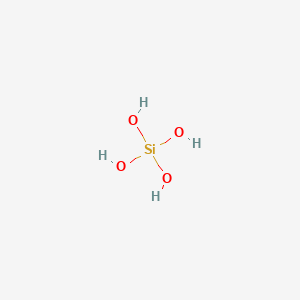
Orthosilicic acid
Silicic acid is a silicon oxoacid. It is a conjugate acid of a trihydrogensilicate(1-). — ChEBI
- IUPAC 名称
- silicic acid
- 分子式
- H4O4Si
- 分子量
- 96.11 g/mol
- 精确质量
- 95.98788514 Da
- 拓扑极性表面积
- 80.9 Ų
- 氢键供体
- 4
- 氢键受体
- 4
- 共价单元
- 1
- 已定义的立体中心
- 0
又称
另有 16 个已报告名称
外部数据库标识符
- ChEBI:CHEBI:26675
- EPA DTXSID:DTXSID5058721
- PubMed:8953708
于 2026-08-31 通过校验和有效的 CAS 匹配从美国国立卫生研究院 (NIH) PubChem 检索。化学性质不能取代本页的监管决定。
欧盟官方成分名称证据
该成分名称与 2025 年欧盟官方通用成分名称词汇表完全匹配。
相关清单证据
配方功能重叠的成分
其他官方和科学来源
11 个可用于核查此身份的外部数据库
每个链接都会在该来源中搜索此身份。 各来源是什么及其法律效力
HYDRATED SILICA 在 CosIng 清单中的呈现方式
CosIng 清单将 HYDRATED SILICA 列为化妆品成分,本页将其关联到 0 条附件记录。清单条目记录名称和标识符,而附件记录显示该物质在欧盟化妆品法规中被禁用、限用或列入准用清单的情况。
在官方数据中,HYDRATED SILICA 还被标记了 6 项化妆品功能。功能标识描述预期用途,但不能取代在配方或标签工作之前对关联附件记录的监管审查。