
欧盟官方标签名称词汇表条目 6460
CI 77015
本记录确认了用于欧盟化妆品标签标示的官方通用成分名称。它本身并不能确认该物质获准使用、不受限制或安全。
全球证据概览
所解析的身份在 13 个已索引市场数据集中的 4 个有匹配的监管证据:5 条国家记录和 1 条欧盟附件记录。下方列出每项结果和证据缺口。
已检查的市场
13
有证据的市场
4
证据缺口
9
已解析的标识符
20
已解析的物质身份
CAS:1332-25-81309-37-18029-34-31317-61-91345-27-352357-70-71345-25-112227-89-38031-18-3778577-37-0153065-40-812001-26-2999999-99-4
EC:215-168-2310-127-6215-277-5215-722-3257-870-1215-721-8235-442-5
成分索引记录:
FULLER'S EARTH
化妆品功能: ABRASIVE, ABSORBENT, BULKING, OPACIFYING
English Fullers Earth,Solum Fullonum (EU)
HYDROLYZED TREMELLA FUCIFORMIS SPOROCARP EXTRACT
化妆品功能: ANTIOXIDANT, FILM FORMING, HAIR CONDITIONING, HUMECTANT, SKIN CONDITIONING
Hydrolyzed Tremella Fuciformis Sporocarp Extract is the hydrolysate of Tremella Fuciformis Sporocarp Extract derived by acid, enzyme or other method of hydrolysis.
LIMNANTHES ALBA SEED OIL
化妆品功能: SKIN CONDITIONING
Limnanthes Alba (Meadowfoam) Seed Oil is the oil extracted from the seeds of the meadowfoam plant, Limnanthes alba, Limnanthaceae.
PINUS PINASTER SEED OIL
化妆品功能: HAIR CONDITIONING, SKIN CONDITIONING, SKIN CONDITIONING - EMOLLIENT, SKIN PROTECTING
Pinus Pinaster Seed Oil is the volatile obtained by cold pression of seeds of Pinus pinaster, Pinaceae.
PRUNUS DOMESTICA SEED POWDER
化妆品功能: ABRASIVE
Prunus Domestica Seed Powder is the powder obtained from the dried, ground seeds of the Plum, Prunus domestica L., Rosaceae
SOLUM FULLONUM
化妆品功能: ABSORBENT, ANTICAKING, BULKING, GEL FORMING, OPACIFYING, VISCOSITY CONTROLLING
Fuller's Earth is a non-plastic variety of kaolin containing an aluminum magnesium silicate
16 个匹配或报告的名称
CI 77015BUTTERCI 77491CI 77499FULLER'S EARTHHYDROLYZED TREMELLA FUCIFORMIS SPOROCARP EXTRACTLIMNANTHES ALBA SEED OILMICAPINUS PINASTER SEED OILPRUNUS DOMESTICA SEED POWDERSOLUM FULLONUMAluminum silicate coloured with ferric oxideIron Oxide BlackIron oxide red (Pigment Red 101)Iron oxide black (Pigment Black 11)Mica
全部 13 个市场的监管证据
打开每条匹配记录,查看其范围、浓度、条件、警示语和官方来源版本。
滑动或横向滚动以查看数据集覆盖范围和后续操作。
| 市场 | 结果 | 记录 | 数据集 | 含义 / 后续操作 |
|---|---|---|---|---|
| European Union EU | 有条件准用清单匹配 | 1打开记录 1 | Complete annex dataset Regulation (EC) 1223/2009 consolidated to 1 May 2026 | 请查看每条关联记录及其确切条件。 |
| Great Britain GB | Permitted list with conditions | 1打开记录 1 | Complete consolidated annex dataset GB retained Regulation 1223/2009 schedules, effective 15 August 2026 | 请查看每条关联记录及其确切条件。 |
| Canada CA | 未找到匹配项 | 0 | Complete Hotlist snapshot Health Canada Cosmetic Ingredient Hotlist, 13 August 2025 | The Hotlist is an administrative compliance tool, not an exhaustive safety approval list. |
| New Zealand NZ | Permitted list with conditions | 3打开记录 1打开记录 2 | Complete schedules dataset Cosmetic Products Group Standard schedules effective 1 January 2026 | 请查看每条关联记录及其确切条件。 |
| ASEAN ASEAN | 未找到匹配项 | 0 | Complete regional annex dataset ASEAN Cosmetic Directive annexes 2026-1, 22 June 2026 | Regional annex coverage does not replace member-state implementation dates, notifications or national deviations. |
| China CN | 未找到匹配项 | 0 | Complete prohibited catalogues plus official-source workflow NMPA 2021 banned catalogues plus dynamic IECIC List I/List II system current since 2025 | IECIC listing is not blanket approval; absence may require the new cosmetic ingredient route, and restrictions are checked separately. |
| Japan JP | 未找到匹配项 | 0 | Complete Standards appendices dataset MHLW Standards for Cosmetics official English source and Japanese amendments checked for the imported snapshot | The Japanese text and subsequent notices are canonical; no local match is not a product-compliance conclusion. |
| South Korea KR | 未找到匹配项 | 0 | Complete current appendix dataset MFDS Notice 2026-19, effective 18 March 2026 | Korean source wording is canonical and other positive lists/notices may still apply to the formulation. |
| United States US | Permitted list with conditions | 1打开记录 1 | Complete enumerated federal ingredient rules eCFR Title 21 issue date 27 August 2026 | 请查看每条关联记录及其确切条件。 |
| Australia AU | 未找到匹配项 | 0 | Complete cosmetic-relevant Poisons Standard subset plus official workflow Therapeutic Goods (Poisons Standard—June 2026) Instrument 2026 | An AICIS Inventory match is not cosmetic approval; no Inventory match can indicate a new, exempted, reported or confidential introduction. |
| Brazil BR | 未找到匹配项 | 0 | Complete prohibited dataset plus current restricted-list workflow ANVISA RDC 1.029/2026 and RDC 1.030/2026, published 15 June 2026 | RDC 1.030/2026 amends rather than replaces the prohibited baseline, and the second restricted-list revision was still under consultation in July 2026. |
| India IN | 未找到匹配项 | 0 | Complete current Part 2 dataset plus official workflow for Parts 1, 3 and 4 Cosmetics Rules 2020 plus current BIS IS 4707 parts (1:2020, 2:2025, 3:2025, 4:2022) | The standards are separate controlled publications; absence from a locally indexed excerpt is not permission. |
| Saudi Arabia SA | 未找到匹配项 | 0 | Complete official list index SFDA live prohibited/restricted lists, snapshot 30 August 2026 | No list match is not permission; Gulf/SFDA product, claim, notification and technical requirements still apply. |
没有与此筛选条件匹配的市场行。
匹配的市场记录和条件
Great Britain
GB retained Regulation 1223/2009 schedules, effective 15 August 2026New Zealand
Cosmetic Products Group Standard schedules effective 1 January 2026Iron oxide red (Pigment Red 101)Permitted list with conditions
Colour index: 77491 · CAS: 1309-37-1 · Colour: Red · Other limitations: E 172
Schedule 6, reference 135, source row 151 · effective-2026-01-01
Iron oxide black (Pigment Black 11)Permitted list with conditions
Colour index: 77499 · CAS: 12227-89-3 · Colour: Black · Other limitations: E 172
Schedule 6, reference 137, source row 153 · effective-2026-01-01
MicaPermitted list with conditions
Colour index: 77019 · CAS: 12001-26-2 · Colour: Shine
Schedule 6, reference 1, source row 180 · effective-2026-01-01
United States
eCFR Title 21 issue date 27 August 2026附件 II–VI 的精确证据
Annex IV条目 121
打开完整监管记录CI 77015
化学身份与性质
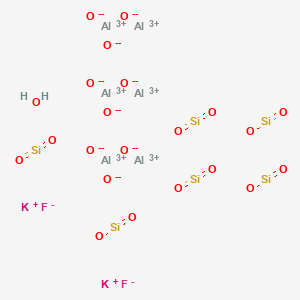
CAS 12001-26-2PubChem CID 131842327
Mica-group minerals
MICA, a generic term, refers to any of a group of approximately 30 silicate minerals occurring as non-fibrous plates. Muscovite (hydrated aluminium potassium silicate[KAl2(AlSi3O10)(F, OH)2 ])and phlogopite (potassium magnesium aluminum silicate hydroxide) are the two major micas of commerce. Micas are commonly found in ordinary rocks. Inhalation of mica dust presents an occupational hazard. — CAMEO Chemicals
- IUPAC 名称
- hexaaluminum;dipotassium;hexakis(dioxosilane);nonakis(oxygen(2-));difluoride;hydrate
- 分子式
- Al6F2H2K2O22Si6
- 分子量
- 800.60 g/mol
- 精确质量
- 799.578781 Da
- 拓扑极性表面积
- 215.0 Ų
- 氢键供体
- 1
- 氢键受体
- 24
- 共价单元
- 26
- 已定义的立体中心
- 0
又称
MICAMuscovite micaV8A1AW0880ZimmwalditeSuzoriteAbhrakSuzorite micaMica, fluorian
另有 16 个已报告名称
Silicate, micaMicromica W 1Suzorite 60SDavenite P 12Sansostory SHC2000RefChem:818809P 80PHX 610Mica (containing less than 1% quartz)CI 77019Beautyturess 24K Gold Peel-Off Mask 120gBeautyturess Gold Foil Snail Peel-Off Mask 50g 24K601-648-2C 1000S 200COMMON MICA
外部数据库标识符
- PubMed:24946801
来自其他科学数据库的证据
NIH PubChem PUG-View
标识符精确匹配131842327
Attributed physical-property, hazard, environmental and use annotations.
- Color/Form: Light gray to dark flakes or particles 来源: Hazardous Substances Data Bank (HSDB)
- Color/Form: Soft, translucent solid; colorless to slight red (ruby), brown to greenish yellow (amber)... thin sheets that are flexible and elastic 来源: Hazardous Substances Data Bank (HSDB)
- Color/Form: Colorless flakes or sheets of hydrous silicates 来源: Hazardous Substances Data Bank (HSDB)
- Density: 2.6 to 3.2 (NIOSH, 2024) 来源: CAMEO Chemicals
- Density: 2.6-3.2 来源: Hazardous Substances Data Bank (HSDB)
- Density: 2.6-3.2 来源: Occupational Safety and Health Administration (OSHA)
- Density: 2.6-3.2 @25 °C 来源: PAC Chemical Database, U.S. Department of Energy
- Density: 2.6-3.2 来源: The National Institute for Occupational Safety and Health (NIOSH)
- Melting Point: 1500 °C 来源: Hazardous Substances Data Bank (HSDB)
- Melting Point: Melting point = 1387 °C /Synthetic fluorophlogopite/ 来源: Hazardous Substances Data Bank (HSDB)
- Melting Point: 1387 °C 来源: PAC Chemical Database, U.S. Department of Energy
- Odor: Odorless 来源: Hazardous Substances Data Bank (HSDB)
- Physical Description: MICA, a generic term, refers to any of a group of approximately 30 silicate minerals occurring as non-fibrous plates. Muscovite (hydrated aluminium potassium silicate[KAl2(AlSi3O10)(F, OH)2 ])and phlogopite (potassium magnesium aluminum silicate hydroxide) are the two major micas of commerce. Micas are commonly found in ordinary rocks. Inhalation of mica dust presents an occupational hazard. 来源: CAMEO Chemicals
- Physical Description: Dry Powder; Large Crystals; CBI 来源: EPA Chemical Data Reporting (CDR)
- Physical Description: Colorless, odorless flakes or sheets of hydrous silicates; [NIOSH] Crystalline silica not bound to other minerals is "free" silica. Silicates are minerals in which silicon and oxygen are combined with other elements. [Rom, p. 364] 来源: Haz-Map, Information on Hazardous Chemicals and Occupational Diseases
- Physical Description: Colorless, odorless flakes or sheets of hydrous silicates. 来源: Occupational Safety and Health Administration (OSHA)
- Physical Description: Colorless, odorless flakes or sheets of hydrous silicates. 来源: The National Institute for Occupational Safety and Health (NIOSH)
- Refractive Index: Refractive index: 1.56-1.60 来源: Hazardous Substances Data Bank (HSDB)
- Solubility: Insoluble (NIOSH, 2024) 来源: CAMEO Chemicals
- Solubility: Insoluble in water 来源: Hazardous Substances Data Bank (HSDB)
- Solubility: Insoluble 来源: The National Institute for Occupational Safety and Health (NIOSH)
- Vapor Pressure: 0 mmHg (approx) (NIOSH, 2024) 来源: CAMEO Chemicals
- Vapor Pressure: 0 mm Hg (approximate) 来源: Hazardous Substances Data Bank (HSDB)
- Vapor Pressure: 0 mmHg (approx) 来源: Occupational Safety and Health Administration (OSHA)
- Vapor Pressure: 0 mmHg (approx) 来源: The National Institute for Occupational Safety and Health (NIOSH)
- Exposure Routes: inhalation, skin and/or eye contact 来源: The National Institute for Occupational Safety and Health (NIOSH)
- First Aid: Excerpt from NIOSH Pocket Guide for Mica (containing less than 1% quartz):; Eye: IRRIGATE IMMEDIATELY - If this chemical contacts the eyes, immediately wash (irrigate) the eyes with large amounts of water, occasionally lifting the lower and upper lids. Get medical attention immediately.; Breathing: FRESH AIR - If a person breathes large amounts of this chemical, move the exposed person to fresh air at once. Other measures are usually unnecessary. (NIOSH, 2024) 来源: CAMEO Chemicals
- First Aid: (General first aid procedures); Eye: Irrigate immediately - If this chemical contacts the eyes, immediately wash (irrigate) the eyes with large amounts of water, occasionally lifting the lower and upper lids. Get medical attention immediately.; Breathing: Fresh air 来源: The National Institute for Occupational Safety and Health (NIOSH)
- Note: This chemical does not meet GHS hazard criteria for 71.3% (600 of 841) of all reports. 来源: European Chemicals Agency (ECHA)
- Signal: Danger 来源: European Chemicals Agency (ECHA)
- GHS Hazard Statements: H319 (17.5%): Causes serious eye irritation [Warning Serious eye damage/eye irritation]; H335 (17.5%): May cause respiratory irritation [Warning Specific target organ toxicity, single exposure; Respiratory tract irritation]; H372 (11.5%): Causes damage to organs through prolonged or repeated exposure [Danger Specific target organ toxicity, repeated exposure]; H373 (12.5%): May causes damage to organs through prolonged or repeated exposure [Warning Specific target organ toxicity, repeated exposure] 来源: European Chemicals Agency (ECHA)
- Precautionary Statement Codes: P260, P261, P264, P264+P265, P270, P271, P280, P304+P340, P305+P351+P338, P319, P337+P317, P403+P233, P405, and P501 (click each P-code to see the statement) 来源: European Chemicals Agency (ECHA)
- ECHA C&L Notifications Summary: Aggregated GHS information provided per 841 reports by companies from 22 notifications to the ECHA C&L Inventory. Each notification may be associated with multiple companies.; Reported as not meeting GHS hazard criteria per 600 of 841 reports by companies.; There are 20 notifications provided by 241 of 841 reports by companies with hazard statement code(s).; Information may vary between notifications depending on impurities, additives, and other factors. The percentage value in parenthesis indicates the notified classification ratio from companies that provide hazard codes. Only hazard codes with percentage values above 10% are shown. For more detailed information, please visit ECHA C&L website. 来源: European Chemicals Agency (ECHA)
- Signal: Danger 来源: NITE-CMC
- GHS Hazard Statements: H372: Causes damage to organs through prolonged or repeated exposure [Danger Specific target organ toxicity, repeated exposure] 来源: NITE-CMC
- Precautionary Statement Codes: P260, P264, P270, P319, and P501 (click each P-code to see the statement) 来源: NITE-CMC
- Target Organs: respiratory system 来源: The National Institute for Occupational Safety and Health (NIOSH)
- Consumer Uses: Filler; Not Known or Reasonably Ascertainable; Pigment; Lubricating agent 来源: EPA Chemical Data Reporting (CDR)
- Industry Uses: Other; Lubricating agent; Filler; Not Known or Reasonably Ascertainable; Pigment 来源: EPA Chemical Data Reporting (CDR)
- Sources/Uses: Mica, mainly muscovite and phlogopite, contains less than 1% quartz. Other species of mica are biotite, lepidolite, zimmwaldite, and roscoelite. Used as a filler for paint, cement, asphalt, and insulation material for electrical cables; Also used in drilling muds, cosmetics, and vacuum tubes/condensers; [ACGIH] Sericite is a variety of white mica; it is similar to muscovite and is used as a filler, carrier, and lubricant; [Reference #1] 来源: Haz-Map, Information on Hazardous Chemicals and Occupational Diseases
- Industrial Processes with risk of exposure: Petroleum Production and Refining [Category: Industry]; Mining [Category: Industry] 来源: Haz-Map, Information on Hazardous Chemicals and Occupational Diseases
- Uses: In aircraft construction 来源: Hazardous Substances Data Bank (HSDB)
- Uses: PAPER & PAINT MANUFACTURE, & IN ELECTRIC INDUSTRY 来源: Hazardous Substances Data Bank (HSDB)
- Uses: Electrical equipment, vacuum tubes, incandescent lamps, dusting agent, lubricant, windows in high-temperature equipment, filler in exterior paints, cosmetics, glass and ceramic flux, roofing, rubber, mold-release- agent, specialty paper for insulation and filtration, wallpaper and wallboard joint cement, oil-well drilling muds. 来源: Hazardous Substances Data Bank (HSDB)
- Uses: Large transparent sheets used to serve as window panes...still used for slow combustion stoves, lanterns or peep-hole furnances...mica powder is used in the mfg of electric cables, pneumatic tyres, welding electrodes, bitmunized cardboard, paints and plastics, dielectric dressings, and flameproof insulators; it is often compacted with alkyd resins; vermiculite is widely used as an insulating material in the building industry; lepidolite is used in the glass and ceramic industries 来源: Hazardous Substances Data Bank (HSDB)
- Uses: For more Uses (Complete) data for MICA (6 total), please visit the HSDB record page. 来源: Hazardous Substances Data Bank (HSDB)
映射方: Existing checksum-valid CAS to unique PubChem CID match. 检索时间: 2026-08-31. 打开来源记录
科学分类和危害注释仅提供背景信息,不能取代上方所示针对具体市场的监管决定。
其他来源的覆盖范围和匹配状态
| 来源 | 结果 | 已检查 |
|---|---|---|
| NIH PubChem PUG-View | 精确匹配 | 2026-08-31 |
已记录的无匹配结果是该来源已被检查的有效证据;这并不表示该物质在别处不存在。
于 2026-09-02 通过校验和有效的 CAS 匹配从美国国立卫生研究院 (NIH) PubChem 检索。化学性质不能取代本页的监管决定。
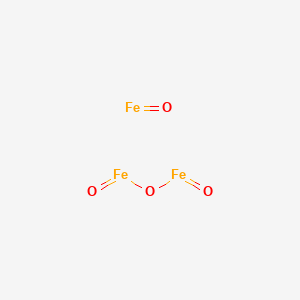
CAS 12227-89-3CAS 1317-61-9PubChem CID 16211978
Iron oxide (Fe3O4)
- IUPAC 名称
- oxoiron;oxo(oxoferriooxy)iron
- 分子式
- Fe3O4
- 分子量
- 231.53 g/mol
- 精确质量
- 231.784465 Da
- 拓扑极性表面积
- 60.4 Ų
- 氢键供体
- 0
- 氢键受体
- 4
- 共价单元
- 2
- 已定义的立体中心
- 0
又称
Ferriferrous OxideOxide, FerriferrousOxide, FerrosoferricRefChem:9235661317-61-9215-277-5Black Iron OxideC.I. 77499
另有 16 个已报告名称
CHEBI:50821EPT 500ferric ferrous oxideFerrosoferric OxideIron (II, III) OxideIron ores, magnetiteiron(II) diiron(III) oxideMagnetic BlackXM0M87F357Iron Oxide BlackIron(II,III)oxideEINECS 235-442-5Iron Oxide Pigment BlackIron(II,III) oxide, CPIron Oxide BlackDISCONTINUEDoxo[(oxoferrio)oxy]iron; oxoiron
来自其他科学数据库的证据
NIH PubChem PUG-View
标识符精确匹配16211978
Attributed physical-property, hazard, environmental and use annotations.
- Density: 5.17 @25 °C 来源: PAC Chemical Database, U.S. Department of Energy
- Melting Point: 1597 °C 来源: PAC Chemical Database, U.S. Department of Energy
- Physical Description: CBI; Other Solid 来源: EPA Chemical Data Reporting (CDR)
- Physical Description: CBI; Dry Powder; Wet Solid; Large Crystals; Wet Solid; Other Solid; Dry Powder; Dry Powder; Other Solid; Liquid; Other Solid; Dry Powder; Large Crystals; Liquid; Liquid; Dry Powder; Large Crystals 来源: EPA Chemical Data Reporting (CDR)
- Note: This chemical does not meet GHS hazard criteria for 47% (956 of 2034) of reports. 来源: European Chemicals Agency (ECHA)
- Signal: Warning 来源: European Chemicals Agency (ECHA)
- GHS Hazard Statements: H252 (13%): Self-heating in large quantities; may catch fire [Warning Self-heating substances and mixtures]; H315 (32.3%): Causes skin irritation [Warning Skin corrosion/irritation]; H319 (32.8%): Causes serious eye irritation [Warning Serious eye damage/eye irritation]; H335 (32.3%): May cause respiratory irritation [Warning Specific target organ toxicity, single exposure; Respiratory tract irritation] 来源: European Chemicals Agency (ECHA)
- Precautionary Statement Codes: P235, P261, P264, P264+P265, P271, P280, P302+P352, P304+P340, P305+P351+P338, P319, P321, P332+P317, P337+P317, P362+P364, P403+P233, P405, P407, P410, P413, P420, and P501 (click each P-code to see the statement) 来源: European Chemicals Agency (ECHA)
- ECHA C&L Notifications Summary: Aggregated GHS information provided per 2034 reports by companies from 19 notifications to the ECHA C&L Inventory. Each notification may be associated with multiple companies.; Reported as not meeting GHS hazard criteria per 956 of 2034 reports by companies.; There are 17 notifications provided by 1078 of 2034 reports by companies with hazard statement code(s).; Information may vary between notifications depending on impurities, additives, and other factors. The percentage value in parenthesis indicates the notified classification ratio from companies that provide hazard codes. Only hazard codes with percentage values above 10% are shown. For more detailed information, please visit ECHA C&L website. 来源: European Chemicals Agency (ECHA)
- Note: This chemical does not meet GHS hazard criteria for 98.1% (355 of 362) of all reports. 来源: European Chemicals Agency (ECHA)
- GHS Hazard Statements: Not Classified; Reported as not meeting GHS hazard criteria by 355 of 362 companies (only 1.9% companies provided GHS information). For more detailed information, please visit ECHA C&L website. 来源: European Chemicals Agency (ECHA)
- ECHA C&L Notifications Summary: Aggregated GHS information provided per 362 reports by companies from 5 notifications to the ECHA C&L Inventory.; Reported as not meeting GHS hazard criteria per 355 of 362 reports by companies.; There are 4 notifications provided by 7 of 362 reports by companies with hazard statement code(s).; Information may vary between notifications depending on impurities, additives, and other factors. The percentage value in parenthesis indicates the notified classification ratio from companies that provide hazard codes. Only hazard codes with percentage values above 10% are shown. For more detailed information, please visit ECHA C&L website. 来源: European Chemicals Agency (ECHA)
- Consumer Uses: Pigment 来源: EPA Chemical Data Reporting (CDR)
- Consumer Uses: Not Known or Reasonably Ascertainable; Filler; Pigment; Dye; Magnetic element; Other 来源: EPA Chemical Data Reporting (CDR)
- Industry Uses: Pigment 来源: EPA Chemical Data Reporting (CDR)
- Industry Uses: Adsorbent; Laboratory chemicals; Dye; Pigment; Filler; Not Known or Reasonably Ascertainable; Abrasives; CBI; Other; Alloys; Magnetic element 来源: EPA Chemical Data Reporting (CDR)
映射方: Existing checksum-valid CAS to unique PubChem CID match. 检索时间: 2026-08-31. 打开来源记录
科学分类和危害注释仅提供背景信息,不能取代上方所示针对具体市场的监管决定。
其他来源的覆盖范围和匹配状态
| 来源 | 结果 | 已检查 |
|---|---|---|
| NIH PubChem PUG-View | 精确匹配 | 2026-08-31 |
已记录的无匹配结果是该来源已被检查的有效证据;这并不表示该物质在别处不存在。
于 2026-09-02 通过校验和有效的 CAS 匹配从美国国立卫生研究院 (NIH) PubChem 检索。化学性质不能取代本页的监管决定。
- IUPAC 名称
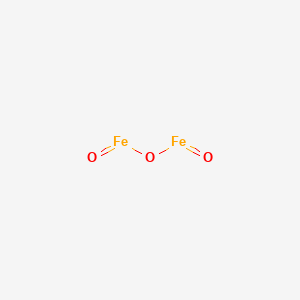
- oxo(oxoferriooxy)iron
- 分子式
- Fe2O3
- 分子量
- 159.69 g/mol
- 精确质量
- 159.854615 Da
- 拓扑极性表面积
- 43.4 Ų
- 氢键供体
- 0
- 氢键受体
- 3
- 共价单元
- 1
- 已定义的立体中心
- 0
又称
Iron trioxideIron oxide, rediron(3+) oxideiron (III) oxideAnhydrous Ferric OxideAnhydrous Iron (III) OxideCHEBI:50819Ferrum Oxydatum
另有 16 个已报告名称
Iron oxide,Hematite 8124Anhydrous Iron (III)RefChem:55186Ferric oxide (anhydrous)616-935-811554 Red1K09F3G675215-168-2Anchred standardAnhydrous iron oxideAnhydrous oxide of ironArmenian boleBayer S 11Bayferrox 105MBlack oxide of iron
外部数据库标识符
- ChEBI:CHEBI:50819
来自其他科学数据库的证据
NIH PubChem PUG-View
标识符精确匹配518696
Attributed physical-property, hazard, environmental and use annotations.
- Color/Form: Reddish-brown hexagonal crystals 来源: Hazardous Substances Data Bank (HSDB)
- Color/Form: Reddish or blueish-black powder 来源: Hazardous Substances Data Bank (HSDB)
- Color/Form: Steel gray to red hexagonal 来源: Hazardous Substances Data Bank (HSDB)
- Color/Form: Red-brown solid. /Iron oxide dust and fume, as Fe/ 来源: Hazardous Substances Data Bank (HSDB)
- Color/Form: A fine, red powder of ferric oxide. /Rouge/ 来源: Hazardous Substances Data Bank (HSDB)
- Density: 5.25 g/cu cm 来源: Hazardous Substances Data Bank (HSDB)
- Density: 5.24 g/cm³ 来源: ILO-WHO International Chemical Safety Cards (ICSCs)
- Density: 5.24 来源: Occupational Safety and Health Administration (OSHA)
- Density: 5.24 来源: The National Institute for Occupational Safety and Health (NIOSH)
- Melting Point: Iron 2664 °F 来源: Haz-Map, Information on Hazardous Chemicals and Occupational Diseases
- Melting Point: 1539 °C 来源: Hazardous Substances Data Bank (HSDB)
- Melting Point: 1565 °C 来源: ILO-WHO International Chemical Safety Cards (ICSCs)
- Melting Point: 2664 °F 来源: Occupational Safety and Health Administration (OSHA)
- Melting Point: 2664 °F 来源: The National Institute for Occupational Safety and Health (NIOSH)
- Melting Point: 2849 °F 来源: The National Institute for Occupational Safety and Health (NIOSH)
- Physical Description: Dry Powder; Other Solid; Dry Powder; Large Crystals; Liquid; Liquid; Dry Powder; Large Crystals; Liquid; Wet Solid; Other Solid; CBI; Large Crystals; Wet Solid; Other Solid; Dry Powder 来源: EPA Chemical Data Reporting (CDR)
- Physical Description: Reddish-brown solid; Note: Exposure to fume may occur during the arc-welding of iron; [NIOSH] Insoluble in water; [CHEMINFO] 来源: Haz-Map, Information on Hazardous Chemicals and Occupational Diseases
- Physical Description: REDDISH BROWN-TO-BLACK CRYSTALS OR POWDER. 来源: ILO-WHO International Chemical Safety Cards (ICSCs)
- Physical Description: Reddish-brown solid. 来源: Occupational Safety and Health Administration (OSHA)
- Physical Description: Reddish-brown solid. [Note: Exposure to fume may occur during the arc-welding of iron.] 来源: The National Institute for Occupational Safety and Health (NIOSH)
- Physical Description: A fine, red powder of ferric oxide. [Note: Usually used in cake form or impregnated in paper or cloth.] 来源: The National Institute for Occupational Safety and Health (NIOSH)
- Refractive Index: Index of refraction: 3.01, 2.94 (LI) 来源: Hazardous Substances Data Bank (HSDB)
- Solubility: Soluble in acids; insoluble in water, alcohol, ether 来源: Hazardous Substances Data Bank (HSDB)
- Solubility: Solubility in water: none 来源: ILO-WHO International Chemical Safety Cards (ICSCs)
- Solubility: Insoluble 来源: The National Institute for Occupational Safety and Health (NIOSH)
- Vapor Pressure: 0 mm Hg (approximate) 来源: Hazardous Substances Data Bank (HSDB)
- Vapor Pressure: 0 mmHg (approx) 来源: Occupational Safety and Health Administration (OSHA)
- Vapor Pressure: 0 mmHg (approx) 来源: The National Institute for Occupational Safety and Health (NIOSH)
- IARC Carcinogenic Agent: Ferric oxide 来源: International Agency for Research on Cancer (IARC)
- IARC Carcinogenic Classes: Group 3: Not classifiable as to its carcinogenicity to humans 来源: International Agency for Research on Cancer (IARC)
- IARC Monographs: Volume 1: (1972) Some Inorganic Substances, Chlorinated Hydrocarbons, Aromatic Amines, N-Nitroso Compounds, and Natural Products; Volume Sup 7: Overall Evaluations of Carcinogenicity: An Updating of IARC Monographs Volumes 1 to 42, 1987; 440 pages; ISBN 92-832-1411-0 (out of print) 来源: International Agency for Research on Cancer (IARC)
- Publication Year: 1987 来源: International Agency for Research on Cancer (IARC)
- Evaluation Year: 1987 来源: International Agency for Research on Cancer (IARC)
- Exposure Routes: inhalation 来源: The National Institute for Occupational Safety and Health (NIOSH)
- Exposure Routes: inhalation, skin and/or eye contact 来源: The National Institute for Occupational Safety and Health (NIOSH)
- First Aid: (General first aid procedures); Breathing: Respiratory support 来源: The National Institute for Occupational Safety and Health (NIOSH)
- First Aid: (General first aid procedures); Eye: Irrigate immediately - If this chemical contacts the eyes, immediately wash (irrigate) the eyes with large amounts of water, occasionally lifting the lower and upper lids. Get medical attention immediately.; Breathing: Fresh air 来源: The National Institute for Occupational Safety and Health (NIOSH)
- Note: This chemical does not meet GHS hazard criteria for 66.9% (2296 of 3433) of all reports. 来源: European Chemicals Agency (ECHA)
- Signal: Warning 来源: European Chemicals Agency (ECHA)
- GHS Hazard Statements: H319 (18.5%): Causes serious eye irritation [Warning Serious eye damage/eye irritation]; H411 (12%): Toxic to aquatic life with long lasting effects [Hazardous to the aquatic environment, long-term hazard] 来源: European Chemicals Agency (ECHA)
- Precautionary Statement Codes: P264+P265, P273, P280, P305+P351+P338, P337+P317, P391, and P501 (click each P-code to see the statement) 来源: European Chemicals Agency (ECHA)
- ECHA C&L Notifications Summary: Aggregated GHS information provided per 3433 reports by companies from 44 notifications to the ECHA C&L Inventory. Each notification may be associated with multiple companies.; Reported as not meeting GHS hazard criteria per 2296 of 3433 reports by companies.; There are 40 notifications provided by 1137 of 3433 reports by companies with hazard statement code(s).; Information may vary between notifications depending on impurities, additives, and other factors. The percentage value in parenthesis indicates the notified classification ratio from companies that provide hazard codes. Only hazard codes with percentage values above 10% are shown. For more detailed information, please visit ECHA C&L website. 来源: European Chemicals Agency (ECHA)
- Signal: Danger 来源: NITE-CMC
- GHS Hazard Statements: H370: Causes damage to organs [Danger Specific target organ toxicity, single exposure]; H372: Causes damage to organs through prolonged or repeated exposure [Danger Specific target organ toxicity, repeated exposure] 来源: NITE-CMC
- Precautionary Statement Codes: P260, P264, P270, P308+P316, P319, P321, P405, and P501 (click each P-code to see the statement) 来源: NITE-CMC
- GHS Hazard Statements: H315: Causes skin irritation [Warning Skin corrosion/irritation]; H318: Causes serious eye damage [Danger Serious eye damage/eye irritation]; H335: May cause respiratory irritation [Warning Specific target organ toxicity, single exposure; Respiratory tract irritation]; H372: Causes damage to organs through prolonged or repeated exposure [Danger Specific target organ toxicity, repeated exposure] 来源: NITE-CMC
- Precautionary Statement Codes: P260, P261, P264, P264+P265, P270, P271, P280, P302+P352, P304+P340, P305+P354+P338, P317, P319, P321, P332+P317, P362+P364, P403+P233, P405, and P501 (click each P-code to see the statement) 来源: NITE-CMC
- Target Organs: respiratory system 来源: The National Institute for Occupational Safety and Health (NIOSH)
- Target Organs: Eyes, skin, respiratory system 来源: The National Institute for Occupational Safety and Health (NIOSH)
- Consumer Uses: Other; Soil amendments (fertilizers); Catalyst; Filler; Not Known or Reasonably Ascertainable; Pigment; Intermediate; Dye 来源: EPA Chemical Data Reporting (CDR)
- Industry Uses: Reducing agent; Soil amendments (fertilizers); Catalyst; Not Known or Reasonably Ascertainable; Filler; Oxidizing agent; Adsorbent; Laboratory chemicals; Dye; Pigment; Solids separation (precipitating) agent, not otherwise specified; Intermediate; Heat stabilizer; Processing aids, specific to petroleum production; Other; Alloys; Abrasives 来源: EPA Chemical Data Reporting (CDR)
- Sources/Uses: Iron oxide is used in pigments, abrasives (jeweler's rouge), and magnetic tapes. Exposure can occur in mining, smelting, grinding steel, polishing, and welding; [ACGIH] 来源: Haz-Map, Information on Hazardous Chemicals and Occupational Diseases
- Industrial Processes with risk of exposure: Steel Producing [Category: Industry]; Abrasive Blasting [Category: Clean]; Metal Preparation and Pouring [Category: Foundry]; Welding [Category: Weld]; Painting (Pigments, Binders, and Biocides) [Category: Paint]; Mining [Category: Industry]; Cement Producing [Category: Industry]; Metal Extraction and Refining [Category: Industry] 来源: Haz-Map, Information on Hazardous Chemicals and Occupational Diseases
- Uses: Polishing agent for glass, precious metals, diamonds; in magnets, magnetic tapes; as catalyst; pigment for paper, linoleum, ceramics, glass; paint for ironwork, ship hulls; in electrical resistors and semiconductors; as colloidal solutions as stain for polysaccharides. 来源: Hazardous Substances Data Bank (HSDB)
- Uses: As a pigment, mfr of ferrites for electronic uses. 来源: Hazardous Substances Data Bank (HSDB)
- Uses: Metallurgy, gas purification, paint and rubber pigment, component of thermite, polishing compounds, mordant, lab reagent, catalyst (p-hydrogen), feed additive, electronic pigments for TV, permanent magnets, memory cores for computers, magnetic tapes. 来源: Hazardous Substances Data Bank (HSDB)
- Uses: Used almost exclusively to color decorative concrete; in paints and coatings 来源: Hazardous Substances Data Bank (HSDB)
- Uses: For more Uses (Complete) data for FERRIC OXIDE (8 total), please visit the HSDB record page. 来源: Hazardous Substances Data Bank (HSDB)
映射方: Existing checksum-valid CAS to unique PubChem CID match. 检索时间: 2026-08-31. 打开来源记录
科学分类和危害注释仅提供背景信息,不能取代上方所示针对具体市场的监管决定。
其他来源的覆盖范围和匹配状态
| 来源 | 结果 | 已检查 |
|---|---|---|
| NIH PubChem PUG-View | 精确匹配 | 2026-08-31 |
已记录的无匹配结果是该来源已被检查的有效证据;这并不表示该物质在别处不存在。
于 2026-09-02 通过校验和有效的 CAS 匹配从美国国立卫生研究院 (NIH) PubChem 检索。化学性质不能取代本页的监管决定。
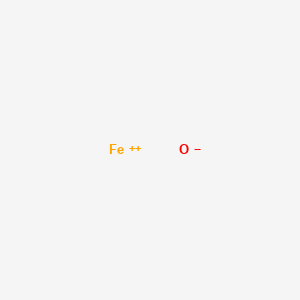
CAS 1345-25-1PubChem CID 449809
Ferrous oxide
- IUPAC 名称
- iron(2+);oxygen(2-)
- 分子式
- FeO
- 分子量
- 71.84 g/mol
- 精确质量
- 71.929850 Da
- 拓扑极性表面积
- 1.0 Ų
- 氢键供体
- 0
- 氢键受体
- 1
- 共价单元
- 2
- 已定义的立体中心
- 0
又称
Iron oxide (FeO)G7036X8B5HCI 77489C.I. 77489IRON (II) OXIDERefChem:921574215-721-8CHEBI:50820
另有 9 个已报告名称
Iron monooxideIron monoxideIron(II) oxideNatural wuestiteFERROUS OXIDE [II]FERROUS OXIDE [MI]FERROUS OXIDE [HSDB]FERROUS OXIDE [VANDF]VBMVTYDPPZVILR-UHFFFAOYSA-N
外部数据库标识符
- EPA DTXSID:DTXSID1041976
于 2026-09-02 通过校验和有效的 CAS 匹配从美国国立卫生研究院 (NIH) PubChem 检索。化学性质不能取代本页的监管决定。
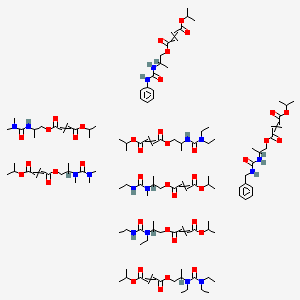
CAS 153065-40-8PubChem CID 168010134
1-O-[2-(benzylcarbamoylamino)propyl] 4-O-propan-2-yl but-2-enedioate;1-O-[2-(diethylcarbamoylamino)propyl] 4-O-propan-2-yl but-2-enedioate;1-O-[2-[diethylcarbamoyl(ethyl)amino]propyl] 4-O-propan-2-yl but-2-enedioate;1-O-[2-(dimethylcarbamoylamino)propyl] 4-O-propan-2-yl but-2-enedioate;1-O-[2-[dimethylcarbamoyl(methyl)amino]propyl] 4-O-propan-2-yl but-2-enedioate;1-O-[2-[ethylcarbamoyl(methyl)amino]propyl] 4-O-propan-2-yl but-2-enedioate;1-O-[2-[ethyl(ethylcarbamoyl)amino]propyl] 4-O-propan-2-yl but-2-enedioate;1-O-[2-(phenylcarbamoylamino)propyl] 4-O-propan-2-yl but-2-enedioate
- IUPAC 名称
- 1-O-[2-(benzylcarbamoylamino)propyl] 4-O-propan-2-yl but-2-enedioate;1-O-[2-(diethylcarbamoylamino)propyl] 4-O-propan-2-yl but-2-enedioate;1-O-[2-[diethylcarbamoyl(ethyl)amino]propyl] 4-O-propan-2-yl but-2-enedioate;1-O-[2-(dimethylcarbamoylamino)propyl] 4-O-propan-2-yl but-2-enedioate;1-O-[2-[dimethylcarbamoyl(methyl)amino]propyl] 4-O-propan-2-yl but-2-enedioate;1-O-[2-[ethylcarbamoyl(methyl)amino]propyl] 4-O-propan-2-yl but-2-enedioate;1-O-[2-[ethyl(ethylcarbamoyl)amino]propyl] 4-O-propan-2-yl but-2-enedioate;1-O-[2-(phenylcarbamoylamino)propyl] 4-O-propan-2-yl but-2-enedioate
- 分子式
- C123H198N16O40
- 分子量
- 2541.0 g/mol
- 精确质量
- 2540.3984800 Da
- 拓扑极性表面积
- 680.0 Ų
- 氢键供体
- 8
- 氢键受体
- 40
- 共价单元
- 8
- 已定义的立体中心
- 0
又称
C123H198N16O40
于 2026-08-31 通过校验和有效的 CAS 匹配从美国国立卫生研究院 (NIH) PubChem 检索。化学性质不能取代本页的监管决定。
官方来源与范围
导入自委员会实施决定 (EU) 2025/1175(数据集版本 EU 2025/1175)。词汇表为第 19(1)(g) 条所要求的成分表提供通用成分名称;它不是准许清单或安全清单。
打开官方决定