
欧盟官方标签名称词汇表条目 3244
BENZYL BENZOATE
本记录确认了用于欧盟化妆品标签标示的官方通用成分名称。它本身并不能确认该物质获准使用、不受限制或安全。
全球证据概览
所解析的身份在 13 个已索引市场数据集中的 5 个有匹配的监管证据:4 条国家记录和 1 条欧盟附件记录。下方列出每项结果和证据缺口。
已检查的市场
13
有证据的市场
5
证据缺口
8
已解析的标识符
2
已解析的物质身份
CAS:120-51-4
EC:204-402-9
成分索引记录:
BENZYL BENZOATE
Ph. Eur. 名称: Benzylis benzoas
化妆品功能: ANTIMICROBIAL, PERFUMING, SOLVENT
Benzyl benzoate; Phenylmethyl benzoate
清单限制备注: III/85
4 个匹配或报告的名称
BENZYL BENZOATEBenzylis benzoasBenzyl benzoateBenzyl benzoate (CAS No. 120-51-4)
全部 13 个市场的监管证据
打开每条匹配记录,查看其范围、浓度、条件、警示语和官方来源版本。
滑动或横向滚动以查看数据集覆盖范围和后续操作。
| 市场 | 结果 | 记录 | 数据集 | 含义 / 后续操作 |
|---|---|---|---|---|
| European Union EU | 限用 | 1打开记录 1 | Complete annex dataset Regulation (EC) 1223/2009 consolidated to 1 May 2026 | 请查看每条关联记录及其确切条件。 |
| Great Britain GB | Restricted | 1打开记录 1 | Complete consolidated annex dataset GB retained Regulation 1223/2009 schedules, effective 15 August 2026 | 请查看每条关联记录及其确切条件。 |
| Canada CA | 未找到匹配项 | 0 | Complete Hotlist snapshot Health Canada Cosmetic Ingredient Hotlist, 13 August 2025 | The Hotlist is an administrative compliance tool, not an exhaustive safety approval list. |
| New Zealand NZ | Restricted | 1打开记录 1 | Complete schedules dataset Cosmetic Products Group Standard schedules effective 1 January 2026 | 请查看每条关联记录及其确切条件。 |
| ASEAN ASEAN | 未找到匹配项 | 0 | Complete regional annex dataset ASEAN Cosmetic Directive annexes 2026-1, 22 June 2026 | Regional annex coverage does not replace member-state implementation dates, notifications or national deviations. |
| China CN | 未找到匹配项 | 0 | Complete prohibited catalogues plus official-source workflow NMPA 2021 banned catalogues plus dynamic IECIC List I/List II system current since 2025 | IECIC listing is not blanket approval; absence may require the new cosmetic ingredient route, and restrictions are checked separately. |
| Japan JP | 未找到匹配项 | 0 | Complete Standards appendices dataset MHLW Standards for Cosmetics official English source and Japanese amendments checked for the imported snapshot | The Japanese text and subsequent notices are canonical; no local match is not a product-compliance conclusion. |
| South Korea KR | 未找到匹配项 | 0 | Complete current appendix dataset MFDS Notice 2026-19, effective 18 March 2026 | Korean source wording is canonical and other positive lists/notices may still apply to the formulation. |
| United States US | 未找到匹配项 | 0 | Complete enumerated federal ingredient rules eCFR Title 21 issue date 27 August 2026 | FDA has no general approved-cosmetic-ingredient catalogue; absence from these sections is not approval or proof of safety. |
| Australia AU | 未找到匹配项 | 0 | Complete cosmetic-relevant Poisons Standard subset plus official workflow Therapeutic Goods (Poisons Standard—June 2026) Instrument 2026 | An AICIS Inventory match is not cosmetic approval; no Inventory match can indicate a new, exempted, reported or confidential introduction. |
| Brazil BR | 未找到匹配项 | 0 | Complete prohibited dataset plus current restricted-list workflow ANVISA RDC 1.029/2026 and RDC 1.030/2026, published 15 June 2026 | RDC 1.030/2026 amends rather than replaces the prohibited baseline, and the second restricted-list revision was still under consultation in July 2026. |
| India IN | Restricted | 1打开记录 1 | Complete current Part 2 dataset plus official workflow for Parts 1, 3 and 4 Cosmetics Rules 2020 plus current BIS IS 4707 parts (1:2020, 2:2025, 3:2025, 4:2022) | 请查看每条关联记录及其确切条件。 |
| Saudi Arabia SA | Restricted | 1打开记录 1 | Complete official list index SFDA live prohibited/restricted lists, snapshot 30 August 2026 | 请查看每条关联记录及其确切条件。 |
没有与此筛选条件匹配的市场行。
匹配的市场记录和条件
Great Britain
GB retained Regulation 1223/2009 schedules, effective 15 August 2026New Zealand
Cosmetic Products Group Standard schedules effective 1 January 2026India
Cosmetics Rules 2020 plus current BIS IS 4707 parts (1:2020, 2:2025, 3:2025, 4:2022)Saudi Arabia
SFDA live prohibited/restricted lists, snapshot 30 August 2026附件 II–VI 的精确证据
Annex III条目 85
打开完整监管记录Benzyl benzoate
限制: The presence of the substance must be indicated in the list of ingredients referred to in Article 19(1)g when its concentration exceeds: - 0.001% in leave-on products - 0.01% in rinse-off products
化学身份与性质
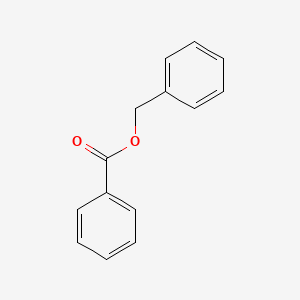
CAS 120-51-4PubChem CID 2345
Benzyl Benzoate
Benzyl benzoate is a benzoate ester obtained by the formal condensation of benzoic acid with benzyl alcohol. It has been isolated from the plant species of the genus Polyalthia. It has a role as an acaricide, a scabicide and a plant metabolite. It is a benzoate ester and a benzyl ester. It is functionally related to a benzoic acid. — ChEBI
- IUPAC 名称
- benzyl benzoate
- 分子式
- C14H12O2
- 分子量
- 212.24 g/mol
- 精确质量
- 212.083729621 Da
- XLogP3
- 4.0
- 拓扑极性表面积
- 26.3 Ų
- 氢键供体
- 0
- 氢键受体
- 2
- 共价单元
- 1
- 已定义的立体中心
- 0
又称
AscabiolBenylateBenzoic acid, phenylmethyl esterPhenylmethyl benzoateBenzoic acid, benzyl esterScobenolAscabinNovoscabin
另有 16 个已报告名称
ScabiozonBenzyl phenylformateBenzyletsColebenzPeruscabinScabancaScabagenScabitoxVanzoateVenzonateScabideBenzyl benzenecarboxylateAntiscabiosumBenzylis benzoasBenzyl alcohol benzoic esterPeruscabina
外部数据库标识符
- ChEBI:CHEBI:41237
- ChEMBL:CHEMBL1239
- EPA DTXSID:DTXSID8029153
- PubMed:29540657
- PubMed:27965148
- PubMed:27270453
- PubMed:26795242
- PubMed:23001898
- PubMed:22980009
- PubMed:22954530
- PubMed:22833176
- PubMed:22799103
- PubMed:22721474
- PubMed:22701601
- PubMed:22619691
来自其他科学数据库的证据
NIH PubChem PUG-View
标识符精确匹配2345
Attributed physical-property, hazard, environmental and use annotations.
- Autoignition Temperature: 896 °F (480 °C) 来源: Hazardous Substances Data Bank (HSDB)
- Autoignition Temperature: 480 °C 来源: ILO-WHO International Chemical Safety Cards (ICSCs)
- Boiling Point: 323.5 °C 来源: DrugBank
- Boiling Point: 321.3 °C 来源: Hazardous Substances Data Bank (HSDB)
- Boiling Point: BP: 323-324 °C 来源: Hazardous Substances Data Bank (HSDB)
- Boiling Point: 323.00 to 324.00 °C. @ 760.00 mm Hg 来源: Human Metabolome Database (HMDB)
- Boiling Point: 324 °C 来源: ILO-WHO International Chemical Safety Cards (ICSCs)
- Boiling Point: 323-324 °C 来源: Joint FAO/WHO Expert Committee on Food Additives (JECFA)
- Boiling Point: 324 °C @760 [mm Hg] 来源: PAC Chemical Database, U.S. Department of Energy
- Color/Form: Leaflets or oily liquid 来源: Hazardous Substances Data Bank (HSDB)
- Color/Form: Water-white liquid 来源: Hazardous Substances Data Bank (HSDB)
- Color/Form: Colorless, oily liquid 来源: Hazardous Substances Data Bank (HSDB)
- Color/Form: Clear, colorless liquid 来源: Hazardous Substances Data Bank (HSDB)
- Density: 1.1121 g/cu cm at 25 °C 来源: Hazardous Substances Data Bank (HSDB)
- Density: Relative density (water = 1): 1.1 来源: ILO-WHO International Chemical Safety Cards (ICSCs)
- Density: 1.113-1.121 来源: Joint FAO/WHO Expert Committee on Food Additives (JECFA)
- Density: 1.116 @25 °C 来源: PAC Chemical Database, U.S. Department of Energy
- Flash Point: 148 °C 来源: Haz-Map, Information on Hazardous Chemicals and Occupational Diseases
- Flash Point: 158 °C (316 °F) - closed cup 来源: Hazardous Substances Data Bank (HSDB)
- Flash Point: 298 °F (148 °C) - closed cup 来源: Hazardous Substances Data Bank (HSDB)
- Flash Point: 148 °C 来源: ILO-WHO International Chemical Safety Cards (ICSCs)
- LogP: 3.97 来源: DrugBank
- LogP: log Kow = 3.97 来源: Hazardous Substances Data Bank (HSDB)
- LogP: 3.7 来源: Human Metabolome Database (HMDB)
- LogP: 3.97 来源: ILO-WHO International Chemical Safety Cards (ICSCs)
- Melting Point: 21 °C 来源: DrugBank
- Melting Point: 19 °C 来源: Hazardous Substances Data Bank (HSDB)
- Melting Point: 21 °C 来源: Human Metabolome Database (HMDB)
- Melting Point: 21 °C 来源: ILO-WHO International Chemical Safety Cards (ICSCs)
- Odor: Light, balsamic odor reminiscent of almond 来源: Hazardous Substances Data Bank (HSDB)
- Odor: Faint, pleasant, aromatic odor 来源: Hazardous Substances Data Bank (HSDB)
- Physical Description: CBI; Other Solid; Dry Powder; Other Solid; Liquid 来源: EPA Chemical Data Reporting (CDR)
- Physical Description: Colorless liquid or white solid; [ICSC] Not miscible or difficult to mix in water; [MSDSonline] Pleasant odor; Slightly volatile in steam and insoluble in water; [Ullmann] 来源: Haz-Map, Information on Hazardous Chemicals and Occupational Diseases
- Physical Description: Solid 来源: Human Metabolome Database (HMDB)
- Physical Description: COLOURLESS LIQUID OR WHITE SOLID WITH CHARACTERISTIC ODOUR. 来源: ILO-WHO International Chemical Safety Cards (ICSCs)
- Physical Description: leaflets or oily liquid with a faint, sweet, balsamic odour 来源: Joint FAO/WHO Expert Committee on Food Additives (JECFA)
- Refractive Index: Index of refraction: 1.5680 at 20 °C/D 来源: Hazardous Substances Data Bank (HSDB)
- Refractive Index: Index of refraction: 1.5681 at 21 °C/D 来源: Hazardous Substances Data Bank (HSDB)
- Refractive Index: 1.566-1.571 来源: Joint FAO/WHO Expert Committee on Food Additives (JECFA)
- Solubility: 15.4 mg/L 来源: DrugBank
- Solubility: Insoluble in water 来源: Hazardous Substances Data Bank (HSDB)
- Solubility: Insoluble in glycerol; miscible with alcohol, chloroform, ether, oils 来源: Hazardous Substances Data Bank (HSDB)
- Solubility: Soluble in ethanol, ethyl ether, acetone, benzene, methanol, chloroform 来源: Hazardous Substances Data Bank (HSDB)
- Solubility: 1.98e-02 g/L 来源: Human Metabolome Database (HMDB)
- Solubility: Solubility in water: none 来源: ILO-WHO International Chemical Safety Cards (ICSCs)
- Solubility: insoluble in water; soluble in organic solvents, oils 来源: Joint FAO/WHO Expert Committee on Food Additives (JECFA)
- Solubility: miscible at room temperature (in ethanol) 来源: Joint FAO/WHO Expert Committee on Food Additives (JECFA)
- Vapor Pressure: 0.000224 [mmHg] 来源: Haz-Map, Information on Hazardous Chemicals and Occupational Diseases
- Vapor Pressure: 0.000224 mm Hg at 25 °C 来源: Hazardous Substances Data Bank (HSDB)
- Vapor Pressure: 0.00022 [mm Hg] @25 °C 来源: PAC Chemical Database, U.S. Department of Energy
- Viscosity: 8.292 cP at 25 °C 来源: Hazardous Substances Data Bank (HSDB)
- pH: Solution in alcohol practically neutral to moistened litmus paper 来源: Hazardous Substances Data Bank (HSDB)
- Exposure Routes: The substance can be absorbed into the body by inhalation of its aerosol, through the skin and by ingestion. 来源: ILO-WHO International Chemical Safety Cards (ICSCs)
- Signal: Warning 来源: Regulation (EC) No 1272/2008 of the European Parliament and of the Council
- GHS Hazard Statements: H302: Harmful if swallowed [Warning Acute toxicity, oral]; H411: Toxic to aquatic life with long lasting effects [Hazardous to the aquatic environment, long-term hazard] 来源: Regulation (EC) No 1272/2008 of the European Parliament and of the Council
- Precautionary Statement Codes: P264, P270, P273, P301+P317, P330, P391, and P501 (click each P-code to see the statement) 来源: Regulation (EC) No 1272/2008 of the European Parliament and of the Council
- Signal: Warning 来源: European Chemicals Agency (ECHA)
- GHS Hazard Statements: H302 (100%): Harmful if swallowed [Warning Acute toxicity, oral]; H400 (21.1%): Very toxic to aquatic life [Warning Hazardous to the aquatic environment, acute hazard]; H411 (99.4%): Toxic to aquatic life with long lasting effects [Hazardous to the aquatic environment, long-term hazard] 来源: European Chemicals Agency (ECHA)
- Precautionary Statement Codes: P264, P270, P273, P301+P317, P330, P391, and P501 (click each P-code to see the statement) 来源: European Chemicals Agency (ECHA)
- ECHA C&L Notifications Summary: Aggregated GHS information provided per 2822 reports by companies from 24 notifications to the ECHA C&L Inventory. Each notification may be associated with multiple companies.; Information may vary between notifications depending on impurities, additives, and other factors. The percentage value in parenthesis indicates the notified classification ratio from companies that provide hazard codes. Only hazard codes with percentage values above 10% are shown. For more detailed information, please visit ECHA C&L website. 来源: European Chemicals Agency (ECHA)
- Signal: Warning 来源: NITE-CMC
- GHS Hazard Statements: H371: May cause damage to organs [Warning Specific target organ toxicity, single exposure]; H400: Very toxic to aquatic life [Warning Hazardous to the aquatic environment, acute hazard]; H411: Toxic to aquatic life with long lasting effects [Hazardous to the aquatic environment, long-term hazard] 来源: NITE-CMC
- Precautionary Statement Codes: P260, P264, P270, P273, P308+P316, P391, P405, and P501 (click each P-code to see the statement) 来源: NITE-CMC
- GHS Hazard Statements: H302: Harmful if swallowed [Warning Acute toxicity, oral] 来源: NITE-CMC
- Precautionary Statement Codes: P264, P270, P301+P317, P330, and P501 (click each P-code to see the statement) 来源: NITE-CMC
- NFPA Health Rating: 1 - Materials that, under emergency conditions, can cause significant irritation. 来源: Hazardous Substances Data Bank (HSDB)
- NFPA Fire Rating: 1 - Materials that must be preheated before ignition can occur. Materials require considerable preheating, under all ambient temperature conditions, before ignition and combustion can occur. 来源: Hazardous Substances Data Bank (HSDB)
- NFPA Instability Rating: 0 - Materials that in themselves are normally stable, even under fire conditions. 来源: Hazardous Substances Data Bank (HSDB)
- Cosmetic Ingredient Review Finding(s): Safe in the present practices of use and concentration. Ingredient, concentration, and use information are available in documents discoverable at https://cir-reports.cir-safety.org 来源: Cosmetic Ingredient Review (CIR)
- Toxicity Summary: IDENTIFICATION AND USE: Benzyl benzoate is a liquid. It is used as solvent of cellulose acetate, nitrocellulose and artificial musk, substitute for camphor in celluloid and plastic pyroxylin compounds, perfume fixative, in confectionary and chewing gum flavors. As an insecticide/miticide, it was used to control dust mites in carpets, mattresses, upholstery, and on furniture. Benzyl benzoate is used as an alternative agent for the topical treatment of scabies and also has been used for the topical treatment of pediculosis (lice infestation). It is also used in veterinary medicine as acaricide and pediculicide, but is contraindicated in cats. It was used in the Vietnam War to eradicate and repel certain ticks and mites. HUMAN STUDIES: Direct contact may cause skin irritation. Liquid is irritating to eyes on direct contact, but no damage has been reported. There was no evidence of adverse effects on pregnancy outcome due to topical benzyl benzoate lotion. Benzyl benzoate gave estrogenic responses in a human breast cancer cell line in culture. ANIMAL STUDIES: 13-week study in rats demonstrated decreased body weight gain and mortality at 800 mg/kg/day. Neurotoxicity signs noted such as 来源: Hazardous Substances Data Bank (HSDB)
- Environmental Bioconcentration: An estimated BCF of 190 was calculated in fish for benzyl benzoate(SRC), using a log Kow of 3.97(1) and a regression-derived equation(1). According to a classification scheme(2), this BCF suggests the potential for bioconcentration in aquatic organisms is high(SRC). 来源: Hazardous Substances Data Bank (HSDB)
- Environmental Fate: TERRESTRIAL FATE: Based on a classification scheme(1), an estimated Koc value of 2500(SRC), determined from a structure estimation method(2), indicates that benzyl benzoate is expected to have slight mobility in soil(SRC). Volatilization of benzyl benzoate from moist soil surfaces is not expected to be an important fate process(SRC) given an estimated Henry's Law constant of 2.3X10⁻⁷ atm-cu m/mole(SRC), developed using a fragment constant estimation method(3). Benzyl benzoate is not expected to volatilize from dry soil surfaces(SRC) based upon a vapor pressure of 2.24X10⁻⁴ mm Hg at 25 °C(3). Utilizing the Japanese MITI test, 90% of the Theoretical BOD was reached in 4 weeks(4) indicating that biodegradation is an important environmental fate process in soil(SRC). 来源: Hazardous Substances Data Bank (HSDB)
- Environmental Fate: AQUATIC FATE: Based on a classification scheme(1), an estimated Koc value of 2500(SRC), determined from a structure estimation method(2), indicates that benzyl benzoate is expected to adsorb to suspended solids and sediment(SRC). Volatilization from water surfaces is not expected(3) based upon an estimated Henry's Law constant of 2.3X10⁻⁷ atm-cu m/mole(SRC), developed using a fragment constant estimation method(2). According to a classification scheme(4), an estimated BCF of 190(SRC), from its log Kow of 3.97(5) and a regression-derived equation(2), suggests the potential for bioconcentration in aquatic organisms is high(SRC). Hydrolysis is not expected to be an important environmental fate process as suggested by estimated acid-base hydrolysis half-lives of 1.7 years and 63 days at pH 7 and pH 8, respectively(1). Utilizing the Japanese MITI test, 90% of the Theoretical BOD was reached in 4 weeks(6) indicating that biodegradation is an important environmental fate process in water(SRC). 来源: Hazardous Substances Data Bank (HSDB)
- Environmental Fate: ATMOSPHERIC FATE: According to a model of gas/particle partitioning of semivolatile organic compounds in the atmosphere(1), benzyl benzoate, which has a vapor pressure of 2.25X10⁻⁴ mm Hg at 25 °C(2), will exist in both the vapor and particulate phases in the ambient atmosphere. Vapor-phase benzyl benzoate is degraded in the atmosphere by reaction with photochemically-produced hydroxyl radicals(SRC); the half-life for this reaction in air is estimated to be 55 hrs(SRC), calculated from its rate constant of 7.0X10⁻¹² cu cm/molecule-sec at 25 °C(SRC) that was derived using a structure estimation method(3). Particulate-phase benzyl benzoate may be removed from the air by wet and dry deposition(SRC). Benzyl benzoate contains chromophores that absorb at wavelengths >290 nm(4) and, therefore, may be susceptible to direct photolysis by sunlight(SRC). 来源: Hazardous Substances Data Bank (HSDB)
- Consumer Uses: Fragrance; Plasticizer; Not Known or Reasonably Ascertainable 来源: EPA Chemical Data Reporting (CDR)
- Industry Uses: Flavoring and nutrient; Solvent; Not Known or Reasonably Ascertainable; Fixing agent (mordant); Fragrance 来源: EPA Chemical Data Reporting (CDR)
- Cosmetic Ingredient Review Link: CIR ingredient: Benzyl Benzoate 来源: Cosmetic Ingredient Review (CIR)
- Sources/Uses: Used in plastic pyroxylin compounds, flavors, perfumes, plasticizers, dye carriers, antispasmodic drugs, insect repellants, scabicides , and pediculicides; [HSDB] Used as a dye carrier and a solvent for cellulose derivatives, plasticizers, and perfume fixatives; It is the main constituent in Peru balsam; Used in drugs for asthma; [Ullmann] 来源: Haz-Map, Information on Hazardous Chemicals and Occupational Diseases
- Uses: For benzyl benzoate (USEPA/OPP Pesticide Code: 009501) ACTIVE products with label matches. /SRP: Registered for use in the USA but approved pesticide uses may change periodically and so federal, state and local authorities must be consulted for currently approved uses./ 来源: Hazardous Substances Data Bank (HSDB)
- Uses: As solvent of cellulose acetate, nitrocellulose and artificual musk; substitute for camphor in celluloid and plastic pyroxylin compounds; perfume fixative; in confectionary and chewing gum flavors. 来源: Hazardous Substances Data Bank (HSDB)
- Uses: Fixative and solvent for musk in perfumes and flavors; medicine (external); plasticizer for nitrocellulose and cellulose acetate, miticide. 来源: Hazardous Substances Data Bank (HSDB)
- Uses: Reported uses (ppm):; Table: Reported uses (ppm): (Flavor and Extract Manufacturers' Association, 1994) [Table#818] 来源: Hazardous Substances Data Bank (HSDB)
- Uses: For more Uses (Complete) data for Benzyl benzoate (8 total), please visit the HSDB record page. 来源: Hazardous Substances Data Bank (HSDB)
- Uses: Use (kg; approx.) in Germany (2009): >750; Consumption (g per capita; approx.) in Germany (2009): 0.00916; Excretion rate: 1; Calculated removal (%): 94.9 来源: NORMAN Suspect List Exchange
映射方: Existing checksum-valid CAS to unique PubChem CID match. 检索时间: 2026-08-31. 打开来源记录
科学分类和危害注释仅提供背景信息,不能取代上方所示针对具体市场的监管决定。
其他来源的覆盖范围和匹配状态
| 来源 | 结果 | 已检查 |
|---|---|---|
| NIH PubChem PUG-View | 精确匹配 | 2026-08-31 |
已记录的无匹配结果是该来源已被检查的有效证据;这并不表示该物质在别处不存在。
于 2026-09-02 通过校验和有效的 CAS 匹配从美国国立卫生研究院 (NIH) PubChem 检索。化学性质不能取代本页的监管决定。
官方来源与范围
导入自委员会实施决定 (EU) 2025/1175(数据集版本 EU 2025/1175)。词汇表为第 19(1)(g) 条所要求的成分表提供通用成分名称;它不是准许清单或安全清单。
打开官方决定