跳至主要内容
CAS 1 条记录

CAS 1310-65-2

CAS 1310-65-2 与法规 1223/2009 附件 II–VI 中的 1 条欧盟附件记录相匹配。

CAS 1310-65-2 的记录

1 共
附件
III
条目
15b

LITHIUM HYDROXIDE

Lithium hydroxide

(a) 1. Contains alkali Avoid contact with eyes Can cause blindness Keep out of reach of children 2. Avoid contact with eyes Can cause blindness (b) Contains alkali Keep out of reach of children Avoid contact wi...
EC
最大浓度

化学身份与性质

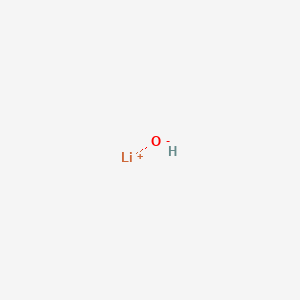
CAS 1310-65-2 的 PubChem 二维化学结构
CAS 1310-65-2PubChem CID 3939

Lithium Hydroxide

Lithium hydroxide is an alkali metal hydroxide. — ChEBI

IUPAC 名称
lithium hydroxide
分子式
HLiO
分子量
24.0 g/mol
精确质量
24.01874309 Da
拓扑极性表面积
1.0 Ų
氢键供体
1
氢键受体
1
共价单元
2
已定义的立体中心
0

又称

Lithium hydrateLithium hydroxide anhydrousLithium hydroxide (Li(OH))903YL31JASCHEBI:33979215-183-4RefChem:5957G51XLP968G
另有 16 个已报告名称
lithium;hydroxideLiOHLithiumhydroxidLithium hydroxide, anhydrousHLiOLithium hydroxide flakeslithiumhydroxideLithium Hydroxide; Lithium HydrateLithium hydoxideEINECS 215-183-4UN2679UN2680UNII-903YL31JASlithium hydroxidlithium hyroxidelitium hydroxide
外部数据库标识符

来自其他科学数据库的证据

NIH PubChem PUG-View
标识符精确匹配3939

Attributed physical-property, hazard, environmental and use annotations.

  • First Aid: Excerpt from ERG Guide 154 [Substances - Toxic and/or Corrosive (Non-Combustible)]:; Refer to the "General First Aid" section. Specific First Aid: For corrosives, in case of contact, immediately flush skin or eyes with running water for at least 30 minutes. Additional flushing may be required. (ERG, 2024) 来源: CAMEO Chemicals
  • ERG2024, Guide 154 (Lithium hydroxide, solution; Lithium hydroxide): General First Aid:; · Call 911 or emergency medical service.; · Ensure that medical personnel are aware of the material(s) involved, take precautions to protect themselves and avoid contamination.; · Move victim to fresh air if it can be done safely.; · Administer oxygen if breathing is difficult.; · If victim is not breathing:; -- DO NOT perform mouth-to-mouth resuscitation; the victim may have ingested or inhaled the substance.; -- If equipped and pulse detected, wash face and mouth, then give artificial respiration using a proper respiratory medical device (bag-valve mask, pocket mask equipped with a one-way valve or other device).; -- If no pulse detected or no respiratory medical device available, provide continuous compressions. Conduct a pulse check every two minutes or monitor for any signs of spontaneous respirations.; · Remove and isolate contaminated clothing and shoes.; · For minor skin contact, avoid spreading material on unaffected skin.; · In case of contact with substance, remove immediately by flushing skin or eyes with running water for at least 20 minutes.; · For severe burns, immediate medical attention is required.; · Effects of exposure (inhalation, ingestion, 来源: Emergency Response Guidebook (ERG)
  • ERG2024, Guide 154 (Lithium hydroxide; Lithium hydroxide, solution): General First Aid:; · Call 911 or emergency medical service.; · Ensure that medical personnel are aware of the material(s) involved, take precautions to protect themselves and avoid contamination.; · Move victim to fresh air if it can be done safely.; · Administer oxygen if breathing is difficult.; · If victim is not breathing:; -- DO NOT perform mouth-to-mouth resuscitation; the victim may have ingested or inhaled the substance.; -- If equipped and pulse detected, wash face and mouth, then give artificial respiration using a proper respiratory medical device (bag-valve mask, pocket mask equipped with a one-way valve or other device).; -- If no pulse detected or no respiratory medical device available, provide continuous compressions. Conduct a pulse check every two minutes or monitor for any signs of spontaneous respirations.; · Remove and isolate contaminated clothing and shoes.; · For minor skin contact, avoid spreading material on unaffected skin.; · In case of contact with substance, remove immediately by flushing skin or eyes with running water for at least 20 minutes.; · For severe burns, immediate medical attention is required.; · Effects of exposure (inhalation, ingestion, 来源: Emergency Response Guidebook (ERG)
  • Note: This chemical does not meet GHS hazard criteria for 9.7% (95 of 980) of reports. 来源: European Chemicals Agency (ECHA)
  • Signal: Danger 来源: European Chemicals Agency (ECHA)
  • GHS Hazard Statements: H301 (12.6%): Toxic if swallowed [Danger Acute toxicity, oral]; H302 (73.6%): Harmful if swallowed [Warning Acute toxicity, oral]; H311 (10.9%): Toxic in contact with skin [Danger Acute toxicity, dermal]; H314 (89.8%): Causes severe skin burns and eye damage [Danger Skin corrosion/irritation]; H318 (72.4%): Causes serious eye damage [Danger Serious eye damage/eye irritation] 来源: European Chemicals Agency (ECHA)
  • Precautionary Statement Codes: P260, P262, P264, P264+P265, P270, P280, P301+P316, P301+P317, P301+P330+P331, P302+P352, P302+P361+P354, P304+P340, P305+P354+P338, P316, P317, P321, P330, P361+P364, P363, P405, and P501 (click each P-code to see the statement) 来源: European Chemicals Agency (ECHA)
  • ECHA C&L Notifications Summary: Aggregated GHS information provided per 980 reports by companies from 28 notifications to the ECHA C&L Inventory. Each notification may be associated with multiple companies.; Reported as not meeting GHS hazard criteria per 95 of 980 reports by companies.; There are 26 notifications provided by 885 of 980 reports by companies with hazard statement code(s).; Information may vary between notifications depending on impurities, additives, and other factors. The percentage value in parenthesis indicates the notified classification ratio from companies that provide hazard codes. Only hazard codes with percentage values above 10% are shown. For more detailed information, please visit ECHA C&L website. 来源: European Chemicals Agency (ECHA)
  • Signal: Danger 来源: NITE-CMC
  • GHS Hazard Statements: H301: Toxic if swallowed [Danger Acute toxicity, oral]; H314: Causes severe skin burns and eye damage [Danger Skin corrosion/irritation]; H318: Causes serious eye damage [Danger Serious eye damage/eye irritation]; H331: Toxic if inhaled [Danger Acute toxicity, inhalation]; H336: May cause drowsiness or dizziness [Warning Specific target organ toxicity, single exposure; Narcotic effects]; H360: May damage fertility or the unborn child [Danger Reproductive toxicity]; H362: May cause harm to breast-fed children [Reproductive toxicity, effects on or via lactation]; H370: Causes damage to organs [Danger Specific target organ toxicity, single exposure]; H372: Causes damage to organs through prolonged or repeated exposure [Danger Specific target organ toxicity, repeated exposure] 来源: NITE-CMC
  • Precautionary Statement Codes: P203, P260, P261, P263, P264, P264+P265, P270, P271, P280, P301+P316, P301+P330+P331, P302+P361+P354, P304+P340, P305+P354+P338, P308+P316, P316, P317, P318, P319, P321, P330, P363, P403+P233, P405, and P501 (click each P-code to see the statement) 来源: NITE-CMC
  • GHS Hazard Statements: H314: Causes severe skin burns and eye damage [Danger Skin corrosion/irritation]; H318: Causes serious eye damage [Danger Serious eye damage/eye irritation]; H331: Toxic if inhaled [Danger Acute toxicity, inhalation]; H360: May damage fertility or the unborn child [Danger Reproductive toxicity]; H370: Causes damage to organs [Danger Specific target organ toxicity, single exposure] 来源: NITE-CMC
  • Precautionary Statement Codes: P203, P260, P261, P264, P264+P265, P270, P271, P280, P301+P330+P331, P302+P361+P354, P304+P340, P305+P354+P338, P308+P316, P316, P317, P318, P321, P363, P403+P233, P405, and P501 (click each P-code to see the statement) 来源: NITE-CMC
  • Signal: Danger 来源: Hazardous Chemical Information System (HCIS), Safe Work Australia
  • GHS Hazard Statements: H302: Harmful if swallowed [Warning Acute toxicity, oral]; H314: Causes severe skin burns and eye damage [Danger Skin corrosion/irritation] 来源: Hazardous Chemical Information System (HCIS), Safe Work Australia
  • Industry Uses: Absorbent; Ion exchange agent; Viscosity modifiers; Intermediate; Dye; Lubricating agent; Processing aids not otherwise specified 来源: EPA Chemical Data Reporting (CDR)
  • Sources/Uses: Used in photographic developing solutions, alkaline storage batteries, lithium-based greases, polymerization catalysts, carbon dioxide absorbents, alkyd paints, textile dye solubilizers, and copper electroplating baths; Produced along with lithium oxide when lithium-aluminum alloys are heated by welding or cutting; [AIHA] Used in cosmetics; [ExPub: EC] 来源: Haz-Map, Information on Hazardous Chemicals and Occupational Diseases
  • Industrial Processes with risk of exposure: Welding [Category: Weld]; Electroplating [Category: Plate]; Battery Manufacturing [Category: Industry]; Painting (Pigments, Binders, and Biocides) [Category: Paint]; Gas Welding and Cutting [Category: Weld]; Photographic Processing [Category: Other]; Textiles (Printing, Dyeing, or Finishing) [Category: Industry] 来源: Haz-Map, Information on Hazardous Chemicals and Occupational Diseases

映射方: Existing checksum-valid CAS to unique PubChem CID match. 检索时间: 2026-08-31. 打开来源记录

科学分类和危害注释仅提供背景信息,不能取代上方所示针对具体市场的监管决定。

其他来源的覆盖范围和匹配状态
来源结果已检查
NIH PubChem PUG-View精确匹配2026-08-31

已记录的无匹配结果是该来源已被检查的有效证据;这并不表示该物质在别处不存在。

于 2026-08-31 通过校验和有效的 CAS 匹配从美国国立卫生研究院 (NIH) PubChem 检索。化学性质不能取代本页的监管决定。

本站如何使用 CAS 1310-65-2

CAS 1310-65-2 是化学文摘社 (Chemical Abstracts Service) 的标识符,用于将本页对应到特定物质。在当前数据集中,有 1 条欧盟附件记录共用该标识符,可帮助您交叉核对同一物质是出现在一种还是多种监管情境中。

当供应商规格书、SDS 或原料档案给出 CAS 1310-65-2,而您需要在一处查看所有关联的附件 II–VI 记录时,请使用本页。上方的条目卡片是查看浓度限值、警示语、附件归属和产品类型条件的最快途径。

常见问题

以 CAS 1310-65-2 标识的物质,如果在不同情境下适用不同条件,可能出现在欧盟化妆品法规的多个附件中。例如,某物质可能在附件 III 中按特定条件受到限制,同一 CAS 也可能在附件 IV 中作为准用着色剂按另行规定的条件出现。每个条目都必须单独审查。

将 CAS 编号与您的原料规格书和 CoA 文件进行交叉核对。当该 CAS 出现在附件 II 时,应核实其不存在。当其出现在附件 III 时,应核实您的配方满足浓度限值和产品类型条件。共用此 CAS 编号的所有附件条目均列于上方。

CAS 编号由美国化学文摘社 (Chemical Abstracts Service) 分配,全球通用。EC 编号是来自 EINECS、ELINCS 或 NLP 清单等名录的欧盟委员会标识符。两种标识符都可能出现在欧盟化妆品附件条目中。有些物质两者都有,有些只有其一,一些较旧的条目可能两者都没有。

INCI 检查器接受成分名称、CAS 编号和 EC 编号。可直接检查此 CAS 编号,然后对照供应商规格书和所有关联的附件条件核实结果。

工具与后续步骤

检查您的配方

扫描完整的 INCI 成分表,然后使用 CAS 1310-65-2 交叉核对匹配物质背后的任何供应商文件。

INCI 检查器

浏览附件

按类别浏览所有欧盟化妆品法规附件。

全部附件

按名称搜索

搜索您的文件中与 CAS 1310-65-2 并列出现的 INCI 名称、别名或相关标识符。

搜索