
Tetraethyl pyrophosphate; TEPP (ISO) (CAS No. 107-49-3)
IS 4707 Part 2:2025 Annex A lists this ingredient as one that must not form part of a cosmetic product in India.
규제 판단 및 전체 조건
- 상태
- Prohibited
- 법적 역할
- Binding rule
- 규제 요약
- IS 4707 Part 2:2025 Annex A lists this ingredient as one that must not form part of a cosmetic product in India.
- 조건 및 제한 사항
Must not form part of the composition of cosmetic products. Apply the general trace and safety notes published after Annex A.
물질 정체
- 공식 출처상의 명칭
- Tetraethyl pyrophosphate; TEPP (ISO) (CAS No. 107-49-3)
- CAS
- 107-49-3
- EC
- Not supplied in this source row
- 정체 매핑
- standalone:official_bis_record
이 정체의 시장 간 요약
현재 이 사이트에 있는 정확히 연결된 기록입니다. 시장이 없는 것은 가져온 정확한 일치 항목이 없다는 뜻이며, 해당 물질의 사용이 허용된다는 뜻이 아닙니다.
European Union
연결된 기록 1건
보조 기록 열기Great Britain
연결된 기록 1건
보조 기록 열기Canada
연결된 기록 1건
보조 기록 열기New Zealand
연결된 기록 1건
보조 기록 열기ASEAN
연결된 기록 1건
보조 기록 열기China
연결된 기록 1건 · 특정 조건이 있는 기록 1건
보조 기록 열기South Korea
연결된 기록 1건
보조 기록 열기Brazil
연결된 기록 1건 · 특정 조건이 있는 기록 1건
보조 기록 열기India
현재 기록연결된 기록 1건 · 특정 조건이 있는 기록 1건
보조 기록 열기Saudi Arabia
연결된 기록 1건
보조 기록 열기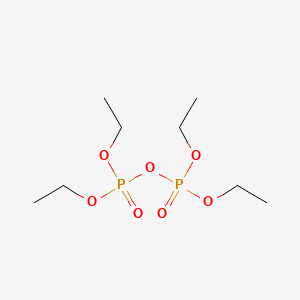
CAS 107-49-3의 검증된 화학 정보
Tetraethyl Pyrophosphate
TEPP is an organic diphosphate. — ChEBI
- IUPAC 명칭
- diethoxyphosphoryl diethyl phosphate
- 분자식
- C8H20O7P2
- 분자량
- 290.19 g/mol
- 정확한 질량
- 290.06842697 Da
- 단일 동위원소 질량
- 290.06842697 Da
- XLogP3
- 0.4
- 위상 극성 표면적
- 80.3 Ų
- 분자 복잡도
- 246.0
- 형식 전하
- 0
- 수소 결합 공여체
- 0
- 수소 결합 수용체
- 7
- 회전 가능 결합
- 10
- 중원자
- 17
- 공유결합 단위
- 1
PubChem에 보고된 명칭 및 동의어
보고된 명칭 16개 더 보기
외부 데이터베이스 식별자
- ChEBI:CHEBI:82149
- ChEMBL:CHEMBL293787
- EPA DTXSID:DTXSID3034957
- PubMed:22163587
- PubMed:20872688
- PubMed:20391100
- PubMed:20095145
- PubMed:19435147
- PubMed:19379510
- PubMed:18468398
- PubMed:16720085
- PubMed:16481169
- PubMed:15908205
- PubMed:11926204
고급 구조 통계
- 정의된 원자 입체중심
- 0
- 정의되지 않은 원자 입체중심
- 0
- 정의된 결합 입체중심
- 0
- 정의되지 않은 결합 입체중심
- 0
- 3D 파마코포어 특성
- 2
- 3D 고리
- 0
- 3D 소수성 부위
- 0
- 3D 수용체 특성
- 2
- 3D 공여체 특성
- 0
- 3D 음이온 중심
- 0
- 3D 양이온 중심
- 0
- 3D 형태이성질체
- 10
- 유효 3D 회전자
- 10.0
기계 판독 가능한 구조 식별자
- SMILES
CCOP(=O)(OCC)OP(=O)(OCC)OCC- InChI
InChI=1S/C8H20O7P2/c1-5-11-16(9,12-6-2)15-17(10,13-7-3)14-8-4/h5-8H2,1-4H3- InChIKey
IDCBOTIENDVCBQ-UHFFFAOYSA-N
추가 과학 데이터베이스의 근거
EMBL-EBI ChEBI
TEPP
- 처방
- C8H20O7P2
- 평균 질량
- 290.189 g/mol
- 단일 동위원소 질량
- 290.06843 Da
- 형식 전하
- 0
- organic diphosphate — is a (CHEBI:62889)
- organic diphosphate — is a (CHEBI:62889)
- 12383012 출처: PubMed
추가 선별 명칭
이 출처의 상호 참조
매핑 기준: Exact CAS cross-reference in the ChEBI compound record. 가져온 시각: 2026-08-31. 출처 기록 열기
NIH PubChem PUG-View
Attributed physical-property, hazard, environmental and use annotations.
- Boiling Point: 280 °F at 2.3 mmHg (EPA, 1998) 출처: CAMEO Chemicals
- Boiling Point: 82 °C @ 0.05 mm Hg; 124 °C @ 1.1 mm Hg; 138 °C @ 2.3 mm Hg 출처: Hazardous Substances Data Bank (HSDB)
- Boiling Point: 280 °F at 2.3 mmHg 출처: Occupational Safety and Health Administration (OSHA)
- Boiling Point: 310 °C @760 [mm Hg] 출처: PAC Chemical Database, U.S. Department of Energy
- Boiling Point: Decomposes 출처: The National Institute for Occupational Safety and Health (NIOSH)
- Color/Form: Mobile liquid 출처: Hazardous Substances Data Bank (HSDB)
- Color/Form: Colorless to amber liquid (Note: A solid below 32 degrees F). 출처: Hazardous Substances Data Bank (HSDB)
- Density: 1.185 at 68 °F (EPA, 1998) - Denser than water; will sink 출처: CAMEO Chemicals
- Density: 1.185 @ 20 °C/4 °C 출처: Hazardous Substances Data Bank (HSDB)
- Density: Density: about 1.2 @ 25 °C; dark amber-colored mobile liquid /Technical product/ 출처: Hazardous Substances Data Bank (HSDB)
- Density: 1.18 g/cm³ 출처: ILO-WHO International Chemical Safety Cards (ICSCs)
- Density: Relative density of the vapour/air-mixture at 20 °C (air = 1): 1.00 출처: ILO-WHO International Chemical Safety Cards (ICSCs)
- Density: 1.185 출처: Occupational Safety and Health Administration (OSHA)
- Density: 1.2 @25 °C 출처: PAC Chemical Database, U.S. Department of Energy
- Density: 1.19 출처: The National Institute for Occupational Safety and Health (NIOSH)
- Flash Point: >110 °C c.c. 출처: ILO-WHO International Chemical Safety Cards (ICSCs)
- LogP: 2.94 출처: ILO-WHO International Chemical Safety Cards (ICSCs)
- Melting Point: 32 °F (EPA, 1998) 출처: CAMEO Chemicals
- Melting Point: Solid below 32 °F 출처: Hazardous Substances Data Bank (HSDB)
- Melting Point: 32 °F 출처: Occupational Safety and Health Administration (OSHA)
- Melting Point: 32 °F 출처: The National Institute for Occupational Safety and Health (NIOSH)
- Odor: Agreeable odor 출처: Hazardous Substances Data Bank (HSDB)
- Odor: AROMATIC 출처: Hazardous Substances Data Bank (HSDB)
- Odor: Faint, fruity odor 출처: Hazardous Substances Data Bank (HSDB)
- Physical Description: Tetraethyl pyrophosphate is an organic phosphate pesticide which acts as an inhibitor of cholinesterase, and as such it is highly toxic by all routes of exposure. It is a water-white to amber liquid, depending on purity. Tetraethyl pyrophosphate is soluble in water and is slowly decomposed by water. It is toxic by inhalation and by skin absorption. It may be found as a liquid or as a dry mixture where the liquid is absorbed onto a dry carrier. 출처: CAMEO Chemicals
- Physical Description: Colorless to amber liquid with a faint, fruity odor. [insecticide] [Note: A solid below 32 degrees F.]; [NIOSH] 출처: Haz-Map, Information on Hazardous Chemicals and Occupational Diseases
- Physical Description: COLOURLESS HYGROSCOPIC LIQUID. 출처: ILO-WHO International Chemical Safety Cards (ICSCs)
- Physical Description: Colorless to amber liquid with a faint, fruity odor. 출처: Occupational Safety and Health Administration (OSHA)
- Physical Description: Colorless to amber liquid with a faint, fruity odor. [insecticide] [Note: A solid below 32 °F.] 출처: The National Institute for Occupational Safety and Health (NIOSH)
- Refractive Index: Index of refraction: 1.4196 @ 20 deg C/D 출처: Hazardous Substances Data Bank (HSDB)
- Solubility: Miscible (decomposes) (NTP, 1992) 출처: CAMEO Chemicals
- Solubility: Miscible with glycerol, ethylene glycol, toluene, propylene glycol, acetone, methanol, benzene, carbon tetrachloride, xylene, ethanol, chloroform 출처: Hazardous Substances Data Bank (HSDB)
- Solubility: Miscible in water 출처: Hazardous Substances Data Bank (HSDB)
- Solubility: Solubility in water: good 출처: ILO-WHO International Chemical Safety Cards (ICSCs)
- Solubility: Miscible 출처: The National Institute for Occupational Safety and Health (NIOSH)
- Vapor Pressure: 0.00047 mmHg at 86 °F (EPA, 1998) 출처: CAMEO Chemicals
- Vapor Pressure: 0.00015 [mmHg] 출처: Haz-Map, Information on Hazardous Chemicals and Occupational Diseases
- Vapor Pressure: 2.60X10⁻⁴ mm Hg at 25 °C (extrapolated from 4.7X10⁻⁴ mm Hg at 30 °C) 출처: Hazardous Substances Data Bank (HSDB)
- Vapor Pressure: Vapor pressure, Pa at 20 °C: 2 출처: ILO-WHO International Chemical Safety Cards (ICSCs)
- Vapor Pressure: 0.0002 mmHg 출처: Occupational Safety and Health Administration (OSHA)
- Vapor Pressure: 0.00047 [mm Hg] @25 °C 출처: PAC Chemical Database, U.S. Department of Energy
- Vapor Pressure: 0.0002 mmHg 출처: The National Institute for Occupational Safety and Health (NIOSH)
- Exposure Routes: The substance can be absorbed into the body by inhalation, through the skin and by ingestion. 출처: ILO-WHO International Chemical Safety Cards (ICSCs)
- Exposure Routes: inhalation, skin absorption, ingestion, skin and/or eye contact 출처: The National Institute for Occupational Safety and Health (NIOSH)
- First Aid: Warning: Effects may be delayed up to 12 hours. Caution is advised.; Note: TEPP is a cholinesterase inhibitor.; Signs and Symptoms of TEPP Exposure: Acute exposure to TEPP may produce the following signs and symptoms: sweating, pinpoint pupils, blurred vision, headache, dizziness, profound weakness, muscle spasms, seizures, and coma. Mental confusion and psychosis may occur. Excessive salivation, nausea, vomiting, anorexia, diarrhea, and abdominal pain may also occur. The heart rate may decrease following oral exposure or increase following dermal exposure. Chest pain may be noted. Hypotension (low blood pressure) may be observed, although hypertension (high blood pressure) is not uncommon. Respiratory symptoms include dyspnea (shortness of breath), pulmonary edema, respiratory depression, and respiratory paralysis.; Emergency Life-Support Procedures: Acute exposure to TEPP may require decontamination and life support for the victims. Emergency personnel should wear protective clothing appropriate to the type and degree of contamination. Air purifying or supplied-air respiratory equipment should also be worn, as necessary. Rescue vehicles should carry supplies such as plastic sheet 출처: CAMEO Chemicals
- First Aid: (General first aid procedures); Eye: Irrigate immediately - If this chemical contacts the eyes, immediately wash (irrigate) the eyes with large amounts of water, occasionally lifting the lower and upper lids. Get medical attention immediately.; Skin: Water flush immediately - If this chemical contacts the skin, immediately flush the contaminated skin with water. If this chemical penetrates the clothing, immediately remove the clothing and flush the skin with water. Get medical attention promptly.; Breathing: Respiratory support; Swallow: Medical attention immediately - If this chemical has been swallowed, get medical attention immediately. 출처: The National Institute for Occupational Safety and Health (NIOSH)
- Signal: Danger 출처: Regulation (EC) No 1272/2008 of the European Parliament and of the Council
- GHS Hazard Statements: H300: Fatal if swallowed [Danger Acute toxicity, oral]; H310: Fatal in contact with skin [Danger Acute toxicity, dermal]; H400: Very toxic to aquatic life [Warning Hazardous to the aquatic environment, acute hazard] 출처: Regulation (EC) No 1272/2008 of the European Parliament and of the Council
- Precautionary Statement Codes: P262, P264, P270, P273, P280, P301+P316, P302+P352, P316, P321, P330, P361+P364, P391, P405, and P501 (click each P-code to see the statement) 출처: Regulation (EC) No 1272/2008 of the European Parliament and of the Council
- Signal: Danger 출처: European Chemicals Agency (ECHA)
- GHS Hazard Statements: H300 (100%): Fatal if swallowed [Danger Acute toxicity, oral]; H310 (100%): Fatal in contact with skin [Danger Acute toxicity, dermal]; H400 (100%): Very toxic to aquatic life [Warning Hazardous to the aquatic environment, acute hazard] 출처: European Chemicals Agency (ECHA)
- Precautionary Statement Codes: P262, P264, P270, P273, P280, P301+P316, P302+P352, P316, P321, P330, P361+P364, P391, P405, and P501 (click each P-code to see the statement) 출처: European Chemicals Agency (ECHA)
- ECHA C&L Notifications Summary: Aggregated GHS information provided per 42 reports by companies from 2 notifications to the ECHA C&L Inventory. Each notification may be associated with multiple companies.; Information may vary between notifications depending on impurities, additives, and other factors. The percentage value in parenthesis indicates the notified classification ratio from companies that provide hazard codes. Only hazard codes with percentage values above 10% are shown. For more detailed information, please visit ECHA C&L website. 출처: European Chemicals Agency (ECHA)
- Signal: Danger 출처: NITE-CMC
- GHS Hazard Statements: H300: Fatal if swallowed [Danger Acute toxicity, oral]; H310: Fatal in contact with skin [Danger Acute toxicity, dermal]; H315: Causes skin irritation [Warning Skin corrosion/irritation]; H319: Causes serious eye irritation [Warning Serious eye damage/eye irritation]; H330: Fatal if inhaled [Danger Acute toxicity, inhalation]; H370: Causes damage to organs [Danger Specific target organ toxicity, single exposure]; H372: Causes damage to organs through prolonged or repeated exposure [Danger Specific target organ toxicity, repeated exposure] 출처: NITE-CMC
- Precautionary Statement Codes: P260, P262, P264, P264+P265, P270, P271, P280, P284, P301+P316, P302+P352, P304+P340, P305+P351+P338, P308+P316, P316, P319, P320, P321, P330, P332+P317, P337+P317, P361+P364, P362+P364, P403+P233, P405, and P501 (click each P-code to see the statement) 출처: NITE-CMC
- GHS Hazard Statements: H300: Fatal if swallowed [Danger Acute toxicity, oral]; H310: Fatal in contact with skin [Danger Acute toxicity, dermal]; H315: Causes skin irritation [Warning Skin corrosion/irritation]; H319: Causes serious eye irritation [Warning Serious eye damage/eye irritation]; H330: Fatal if inhaled [Danger Acute toxicity, inhalation]; H370: Causes damage to organs [Danger Specific target organ toxicity, single exposure]; H373: May causes damage to organs through prolonged or repeated exposure [Warning Specific target organ toxicity, repeated exposure] 출처: NITE-CMC
- Signal: Danger 출처: Hazardous Chemical Information System (HCIS), Safe Work Australia
- Target Organs: Eyes, respiratory system, central nervous system, cardiovascular system, gastrointestinal tract, blood cholinesterase 출처: The National Institute for Occupational Safety and Health (NIOSH)
- Environmental Bioconcentration: An estimated BCF of 3.2 was calculated for tetraethyl pyrophosphate(SRC), using an estimated log Kow of 0.45(1) and a regression-derived equation(2). According to a classification scheme(3), this BCF suggests the potential for bioconcentration in aquatic organisms is low(SRC), provided the compound is not altered physically or chemically once released into the environment. 출처: Hazardous Substances Data Bank (HSDB)
- Environmental Fate: TERRESTRIAL FATE: Based on a classification scheme(1), an estimated Koc value of 2.2(SRC), determined from a water solubility of 1.00X10+6 mg/L(2) and a regression-derived equation(3), indicates that tetraethyl pyrophosphate is expected to have very high mobility in soil(SRC). Volatilization of tetraethyl pyrophosphate from moist soil surfaces is not expected to be an important fate process(SRC) given an estimated Henry's Law constant of 2.2X10⁻¹⁰ atm-cu m/mole(SRC) derived from its vapor pressure, 2.60X10⁻⁴ mm Hg at 25 °C(2), and water solubility(2). Tetraethyl pyrophosphate is not expected to volatilize from dry soil surfaces(SRC) based upon its vapor pressure(2). Biodegradation data for this substance were not located in the literature. 출처: Hazardous Substances Data Bank (HSDB)
- Environmental Fate: AQUATIC FATE: Based on a classification scheme(1), an estimated Koc value of 2.2(SRC), determined from a water solubility of 1.00X10+6 mg/L(2) and a regression-derived equation(3), indicates that tetraethyl pyrophosphate is not expected to adsorb to suspended solids and sediment(SRC). Volatilization from water surfaces is not expected(3) based upon an estimated Henry's Law constant of 2.2X10⁻¹⁰ atm-cu m/mole(SRC), derived from its vapor pressure, 2.60X10⁻⁴ mm Hg at 25 °C(2), and water solubility(2). Using this Henry's Law constant and an estimation method(3). According to a classification scheme(4), an estimated BCF of 3.2(SRC), from an estimated log Kow(5) and a regression-derived equation(6), suggests the potential for bioconcentration in aquatic organisms is low(SRC). Biodegradation data for this substance were not located in the literature. 출처: Hazardous Substances Data Bank (HSDB)
- Environmental Fate: ATMOSPHERIC FATE: According to a model of gas/particle partitioning of semivolatile organic compounds in the atmosphere(1), tetraethyl pyrophosphate, which has a vapor pressure of 2.60X10⁻⁴ mm Hg at 25 °C(2), is expected to exist solely as a vapor in the ambient atmosphere. Vapor-phase tetraethyl pyrophosphate is degraded in the atmosphere by reaction with photochemically-produced hydroxyl radicals(SRC); the half-life for this reaction in air is estimated to be 5.0 hours(SRC), calculated from its rate constant of 7.7X10⁻¹¹ cu cm/molecule-sec at 25 °C(SRC) that was derived using a structure estimation method(3). 출처: Hazardous Substances Data Bank (HSDB)
- Environmental Fate: Aquatic or Terrestrial Fate: ... Rapidly hydrolyzed in the presence of moisture. 출처: Hazardous Substances Data Bank (HSDB)
- Sources/Uses: Commercially available as dust, concentrate, or solution in methyl chloride to kill aphids, spiders, mites, mealy bugs, leafhoppers, and thrips; [ACGIH] Used on vegetable and fruit crops, it is one of the first organophosphate insecticide developed and has been largely replaced by newer products. [HSDB] 출처: Haz-Map, Information on Hazardous Chemicals and Occupational Diseases
- Industrial Processes with risk of exposure: Farming (Pesticides) [Category: Industry] 출처: Haz-Map, Information on Hazardous Chemicals and Occupational Diseases
- Uses: For tetraethyl pyrophosphate (USEPA/OPP Pesticide Code: 079601) there are 0 labels match. /SRP: Not registered for current use in the U.S., but approved pesticide uses may change periodically and so federal, state and local authorities must be consulted for currently approved uses./ 출처: Hazardous Substances Data Bank (HSDB)
- Uses: Insecticide-acaricide; used on three vegetable crops and three fruit crops; one of first organic phosphate insecticides in the US (1946); largely replaced by other products. 출처: Hazardous Substances Data Bank (HSDB)
- Uses: ... /It is/ used in the control of some aphids, spider mites, mealybugs, and leafhoppers and thrips. 출처: Hazardous Substances Data Bank (HSDB)
- Uses: Contact poison ... very effective against active stages of mites and other soft bodied insects. 출처: Hazardous Substances Data Bank (HSDB)
매핑 기준: Existing checksum-valid CAS to unique PubChem CID match. 가져온 시각: 2026-08-31. 출처 기록 열기
과학적 분류와 유해성 주석은 맥락을 제공할 뿐이며, 위에 표시된 시장별 규제 판단을 대체하지 않습니다.
추가 출처 적용 범위 및 일치 상태
| 출처 | 결과 | 확인됨 |
|---|---|---|
| EMBL-EBI ChEBI | 정확히 일치 | 2026-08-31 |
| NIH PubChem PUG-View | 정확히 일치 | 2026-08-31 |
기록된 불일치는 출처를 확인했다는 유용한 근거이며, 해당 물질이 다른 곳에 존재하지 않는다는 주장이 아닙니다.
체크섬이 유효한 CAS 일치를 통해 2026-08-31에 NIH PubChem에서 가져왔습니다. 화학적 특성은 이 페이지의 규제 판단을 대체하지 않습니다.
공식 출처 및 출처 정보
- 등록된 출처
- India BIS IS 4707 cosmetic ingredient standards
- 출처 참조
- IS 4707 (Part 2):2025 Annex A, entry 274
- 출처 기록 ID
annex-a:274- 출처 버전
- IS 4707 (Part 2):2025, fifth revision
- 출처 언어
- English
- 번역 상태
- Original is English
- 시행일
- 2025-08-09
- 출처 업데이트
- 2025-08-09
- 스냅샷 확인
- 2026-08-31 15:30 UTC
- 검증 방법
- 206 text layers; Annex A 1-1614 and Annex B 1-313 with seven lettered source rows
- SHA-256
905dd0326361c53da8a354b948331946951ac3ae27d60d8e2474efb051239603
등록된 데이터세트 주석
- 데이터세트 적용 범위
- Complete current Part 2:2025 Annex A prohibited and Annex B restricted rows; Parts 1, 3 and 4 remain linked official checks
- 권위 관련 주석
- Indian Standards referenced by the cosmetics regulatory framework; use the controlled current editions
이 기록이 시장 데이터세트에서 차지하는 위치
상태 분포
현재 기록 1931건 중 1931건에 조건 텍스트가 있습니다. 조건 필드가 비어 있는 경우 위의 기록 유형에 따라 해석되며, 제한 없는 사용에 대한 주장으로 전환되지 않습니다.
India 시장 맥락
Complete current Part 2 dataset plus official workflow for Parts 1, 3 and 4
적용 범위 버전: Cosmetics Rules 2020 plus current BIS IS 4707 parts (1:2020, 2:2025, 3:2025, 4:2022)
All 1,614 prohibited Annex A rows and 317 numbered/lettered restricted Annex B rows from IS 4707 Part 2:2025; official checks remain for colourants, preservatives and UV filters in Parts 1, 3 and 4.
확인 체크리스트
- Confirm product class and current Cosmetics Rules/gazette amendments.
- Check all applicable parts of IS 4707 by exact identity.
- Apply Schedule S/other finished-product standards where relevant.
- Verify licence/import registration, labelling and testing requirements.
공식 시장 출처
- India Cosmetics Rules 2020Official CDSCO rules and gazette updates; standards may require separate licensed sources
- India BIS IS 4707 cosmetic ingredient standardsIndian Standards referenced by the cosmetics regulatory framework; use the controlled current editions
확인 절차 및 기록 완전성
이 결과를 규제 준수 판단에 사용하기 전에
- “Tetraethyl pyrophosphate; TEPP (ISO) (CAS No. 107-49-3)”와(과) 모든 CAS/EC 식별자가 공급업체 규격서의 물질을 가리키는지 확인하세요.
- Confirm product class and current Cosmetics Rules/gazette amendments.
- Check all applicable parts of IS 4707 by exact identity.
- Apply Schedule S/other finished-product standards where relevant.
- Verify licence/import registration, labelling and testing requirements.
- 출처 버전을 기록하고, 제조, 신고 또는 시장 출시 전에 규제 기관을 다시 확인하세요.
이 기록에서 제공되는 필드
- 공식 물질 명칭제공됨
- CAS제공됨
- EC제공되지 않음
- 별도의 조건 텍스트제공됨
- 시행일제공됨
- 스냅샷 해시 및 방법제공됨
이 페이지가 답하는 질문
안정적인 인용
Tetraethyl pyrophosphate; TEPP (ISO) (CAS No. 107-49-3). IS 4707 (Part 2):2025 Annex A, entry 274. India. Source version IS 4707 (Part 2):2025, fifth revision. CosIng Checker regulatory record: https://cosingchecker.com/ko/regulations/in/records/14868/
법적 권위로서 규제 기관을 인용하세요. 이 페이지는 구조화된 근거 색인이자 확인 보조 도구이며, 공식 본문이나 전문적인 법률 평가를 대체하지 않습니다.
India의 해석 및 한계
This official record identifies the substance as prohibited for cosmetic use in the stated market scope.
Do not rely on a formulation containing this identity until the cited source, effective date and exact substance match have been verified.
법적 역할 해석 방법
The cited row forms part of a binding rule or legally incorporated list for this market.
이 페이지의 근거
- 기록된 결과: Prohibited
- 법적 역할: Binding rule
- 출처 버전: IS 4707 (Part 2):2025, fifth revision
- 시행일: 2025-08-09
증명하지 않는 것
The standards are separate controlled publications; absence from a locally indexed excerpt is not permission.
추가 공신력 있는 물질 조사
이 출처들 중 어느 것도 위의 시장 판단을 번복하지 않습니다.
Cosmetic Ingredient Review safety assessments
Expert Panel conclusions, assessed ingredient groups, use conditions, dates and report documents
Independent expert review considered by FDA; not a government approval or binding market rule
출처에서 이 정체 조사FDA Global Substance Registration System
UNII identifiers, preferred names, substance types, codes and public substance relationships
Identity registry only; UNII availability does not imply FDA review or approval
출처에서 이 정체 조사ILO/WHO International Chemical Safety Cards
Hazards, symptoms, first aid, storage, incompatibilities and physical properties for covered chemicals
International occupational chemical-safety reference; not cosmetic-use approval
출처에서 이 정체 조사Japan NITE-CHRIP
Chemical identity, Japanese and foreign legal lists, GHS hazards and exposure-related information
Chemical-management evidence; cosmetic status remains governed by the applicable MHLW standard and market rules
출처에서 이 정체 조사NIOSH Pocket Guide to Chemical Hazards
REL, PEL, IDLH, properties, exposure routes, symptoms, target organs, first aid and measurement methods for covered workplace chemicals
US occupational-health guidance and limits; not a cosmetic ingredient decision
출처에서 이 정체 조사OECD eChemPortal
Gateway to authority-owned physical-property, fate, ecotoxicity, toxicity, exposure and GHS records
Discovery gateway; each linked authority remains responsible for its data
출처에서 이 정체 조사US EPA CompTox CTX APIs
가져오기에 API 키 필요DTXSID identity, experimental and predicted properties, toxicity, bioactivity, exposure and environmental data
Scientific and computational evidence; predictions must remain labelled and do not determine cosmetic legality
출처에서 이 정체 조사