
Tetrahydrofuran
The consolidated GB Cosmetics Regulation lists this record in Annex II.
규제 판단 및 전체 조건
- 상태
- Prohibited
- 법적 역할
- Binding rule
- 규제 요약
- The consolidated GB Cosmetics Regulation lists this record in Annex II.
- 조건 및 제한 사항
- A prohibition entry may contain no separate condition text because the regulatory outcome is the prohibition itself. 인용된 출처를 열고 아래의 시장 전체 요건을 적용하세요.
물질 정체
- 공식 출처상의 명칭
- Tetrahydrofuran
- CAS
- 109-99-9
- EC
- 203-726-8
- 정체 매핑
- standalone:official_gb_annex
이 정체의 시장 간 요약
현재 이 사이트에 있는 정확히 연결된 기록입니다. 시장이 없는 것은 가져온 정확한 일치 항목이 없다는 뜻이며, 해당 물질의 사용이 허용된다는 뜻이 아닙니다.
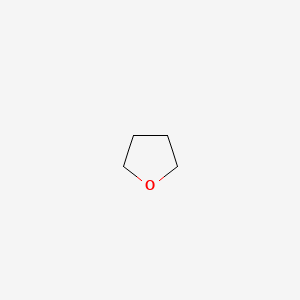
CAS 109-99-9의 검증된 화학 정보
Tetrahydrofuran
Oxolane is a cyclic ether that is butane in which one hydrogen from each methyl group is substituted by an oxygen. It has a role as a polar aprotic solvent. It is a volatile organic compound, a member of oxolanes, a saturated organic heteromonocyclic parent and a cyclic ether. — ChEBI
- IUPAC 명칭
- oxolane
- 분자식
- C4H8O
- 분자량
- 72.11 g/mol
- 정확한 질량
- 72.057514874 Da
- 단일 동위원소 질량
- 72.057514874 Da
- XLogP3
- 0.5
- 위상 극성 표면적
- 9.2 Ų
- 분자 복잡도
- 22.0
- 형식 전하
- 0
- 수소 결합 공여체
- 0
- 수소 결합 수용체
- 1
- 회전 가능 결합
- 0
- 중원자
- 5
- 공유결합 단위
- 1
PubChem에 보고된 명칭 및 동의어
보고된 명칭 16개 더 보기
외부 데이터베이스 식별자
- ChEBI:CHEBI:26911
- ChEMBL:CHEMBL276521
- EPA DTXSID:DTXSID1021328
- PubMed:38042390
- PubMed:37337224
- PubMed:33358762
- PubMed:28495613
- PubMed:23125578
- PubMed:23098206
- PubMed:23083272
- PubMed:23075300
- PubMed:23068763
- PubMed:23039368
- PubMed:23030277
- PubMed:23016368
고급 구조 통계
- 정의된 원자 입체중심
- 0
- 정의되지 않은 원자 입체중심
- 0
- 정의된 결합 입체중심
- 0
- 정의되지 않은 결합 입체중심
- 0
- 3D 파마코포어 특성
- 2
- 3D 고리
- 1
- 3D 소수성 부위
- 0
- 3D 수용체 특성
- 1
- 3D 공여체 특성
- 0
- 3D 음이온 중심
- 0
- 3D 양이온 중심
- 0
- 3D 형태이성질체
- 1
- 유효 3D 회전자
- 1.0
기계 판독 가능한 구조 식별자
- SMILES
C1CCOC1- InChI
InChI=1S/C4H8O/c1-2-4-5-3-1/h1-4H2- InChIKey
WYURNTSHIVDZCO-UHFFFAOYSA-N
추가 과학 데이터베이스의 근거
NIH PubChem PUG-View
Attributed physical-property, hazard, environmental and use annotations.
- Autoignition Temperature: 610 °F (USCG, 1999) 출처: CAMEO Chemicals
- Autoignition Temperature: 321 °C (610 °F) 출처: Hazardous Substances Data Bank (HSDB)
- Autoignition Temperature: 321 °C 출처: ILO-WHO International Chemical Safety Cards (ICSCs)
- Boiling Point: 151 °F at 760 mmHg (NTP, 1992) 출처: CAMEO Chemicals
- Boiling Point: 65 °C 출처: Hazardous Substances Data Bank (HSDB)
- Boiling Point: 65.00 °C. @ 760.00 mm Hg 출처: Human Metabolome Database (HMDB)
- Boiling Point: 66 °C 출처: ILO-WHO International Chemical Safety Cards (ICSCs)
- Boiling Point: 151 °F 출처: Occupational Safety and Health Administration (OSHA)
- Boiling Point: 65 °C @760 [mm Hg] 출처: PAC Chemical Database, U.S. Department of Energy
- Boiling Point: 151 °F 출처: The National Institute for Occupational Safety and Health (NIOSH)
- Color/Form: Colorless, mobile liquid 출처: Hazardous Substances Data Bank (HSDB)
- Color/Form: Water-white liquid 출처: Hazardous Substances Data Bank (HSDB)
- Color/Form: Colorless liquid 출처: Hazardous Substances Data Bank (HSDB)
- Density: 0.888 at 68 °F (USCG, 1999) - Less dense than water; will float 출처: CAMEO Chemicals
- Density: 0.8833 g/cu cm at 25 °C 출처: Hazardous Substances Data Bank (HSDB)
- Density: Saturated liquid density: 55.230 lb/cu ft; saturated vapor pressure: 2.913 lb/sq in; saturated vapor density: 0.03660 lb/cu ft (all at 75 °F) 출처: Hazardous Substances Data Bank (HSDB)
- Density: Relative density (water = 1): 0.89 출처: ILO-WHO International Chemical Safety Cards (ICSCs)
- Density: 0.89 출처: Occupational Safety and Health Administration (OSHA)
- Density: 0.8833 @25 °C 출처: PAC Chemical Database, U.S. Department of Energy
- Density: 0.89 출처: The National Institute for Occupational Safety and Health (NIOSH)
- Dissociation Constants: pKa = -2.08 출처: Hazardous Substances Data Bank (HSDB)
- Flash Point: 6 °F (NTP, 1992) 출처: CAMEO Chemicals
- Flash Point: -14 °C 출처: Haz-Map, Information on Hazardous Chemicals and Occupational Diseases
- Flash Point: 6 °F (closed cup); -4 °F (open cup) 출처: Hazardous Substances Data Bank (HSDB)
- Flash Point: -14.5 °C (closed cup) 출처: Hazardous Substances Data Bank (HSDB)
- Flash Point: -14.5 °C c.c. 출처: ILO-WHO International Chemical Safety Cards (ICSCs)
- Flash Point: 6 °F 출처: Occupational Safety and Health Administration (OSHA)
- Flash Point: 6 °F 출처: The National Institute for Occupational Safety and Health (NIOSH)
- LogP: log Kow = 0.46 출처: Hazardous Substances Data Bank (HSDB)
- LogP: 0.46 출처: Human Metabolome Database (HMDB)
- LogP: 0.46 (estimated) 출처: ILO-WHO International Chemical Safety Cards (ICSCs)
- Melting Point: -163.3 °F (NTP, 1992) 출처: CAMEO Chemicals
- Melting Point: -108.44 °C 출처: Hazardous Substances Data Bank (HSDB)
- Melting Point: -108.3 °C 출처: Human Metabolome Database (HMDB)
- Melting Point: -108.5 °C 출처: ILO-WHO International Chemical Safety Cards (ICSCs)
- Melting Point: -163.3 °F 출처: Occupational Safety and Health Administration (OSHA)
- Melting Point: -108.44 °C 출처: PAC Chemical Database, U.S. Department of Energy
- Melting Point: -163 °F 출처: The National Institute for Occupational Safety and Health (NIOSH)
- Odor: Ether-like odor 출처: Hazardous Substances Data Bank (HSDB)
- Odor: FAINT FRUITY ODOR 출처: Hazardous Substances Data Bank (HSDB)
- Physical Description: Tetrahydrofuran appears as a clear colorless liquid with an ethereal odor. Less dense than water. Flash point 6 °F. Vapors are heavier than air. 출처: CAMEO Chemicals
- Physical Description: Dry Powder; Liquid 출처: EPA Chemical Data Reporting (CDR)
- Physical Description: Colorless liquid with an ether-like odor; [NIOSH] 출처: Haz-Map, Information on Hazardous Chemicals and Occupational Diseases
- Physical Description: Liquid 출처: Human Metabolome Database (HMDB)
- Physical Description: COLOURLESS LIQUID WITH CHARACTERISTIC ODOUR. 출처: ILO-WHO International Chemical Safety Cards (ICSCs)
- Physical Description: Colorless liquid with an ether-like odor. 출처: Occupational Safety and Health Administration (OSHA)
- Physical Description: Colorless liquid with an ether-like odor. 출처: The National Institute for Occupational Safety and Health (NIOSH)
- Refractive Index: Index of refraction: 1.4050 at 20 °C/D 출처: Hazardous Substances Data Bank (HSDB)
- Solubility: greater than or equal to 100 mg/mL at 68 °F (NTP, 1992) 출처: CAMEO Chemicals
- Solubility: Miscible with alcohols, ketones, esters, hydrocarbons, and ethers. 출처: Hazardous Substances Data Bank (HSDB)
- Solubility: Very soluble in acetone, benzene, ether, ethanol, and chloroform 출처: Hazardous Substances Data Bank (HSDB)
- Solubility: 30% IN WATER AT 25 °C 출처: Hazardous Substances Data Bank (HSDB)
- Solubility: Miscible in water at 25 °C 출처: Hazardous Substances Data Bank (HSDB)
- Solubility: 1000.0 mg/mL 출처: Human Metabolome Database (HMDB)
- Solubility: Solubility in water: freely soluble 출처: ILO-WHO International Chemical Safety Cards (ICSCs)
- Solubility: Miscible 출처: The National Institute for Occupational Safety and Health (NIOSH)
- Vapor Pressure: 114 mmHg at 59 °F ; 145 mmHg at 68 °F (NTP, 1992) 출처: CAMEO Chemicals
- Vapor Pressure: 162.0 [mmHg] 출처: Haz-Map, Information on Hazardous Chemicals and Occupational Diseases
- Vapor Pressure: Vapor pressure = 0.06 atm at 0 °C, 0.11 atm at 10 °C, 0.173 atm at 20 °C, 0.26 atm at 30 °C 출처: Hazardous Substances Data Bank (HSDB)
- Vapor Pressure: 1.62X10+2 mm Hg at 25 °C 출처: Hazardous Substances Data Bank (HSDB)
- Vapor Pressure: Vapor pressure, kPa at 20 °C: 19.3 출처: ILO-WHO International Chemical Safety Cards (ICSCs)
- Vapor Pressure: 132 mmHg 출처: Occupational Safety and Health Administration (OSHA)
- Vapor Pressure: 75 [mm Hg] @9 °C 출처: PAC Chemical Database, U.S. Department of Energy
- Vapor Pressure: 132 mmHg 출처: The National Institute for Occupational Safety and Health (NIOSH)
- Viscosity: 0.53 cP at 20 °C 출처: Hazardous Substances Data Bank (HSDB)
- Viscosity: 0.5 mPa*s at 20 °C 출처: ILO-WHO International Chemical Safety Cards (ICSCs)
- IARC Carcinogenic Agent: Tetrahydrofuran 출처: International Agency for Research on Cancer (IARC)
- IARC Carcinogenic Classes: Group 2B: Possibly carcinogenic to humans 출처: International Agency for Research on Cancer (IARC)
- IARC Monographs: Volume 119: (2019) Some Chemicals That Cause Tumours of the Urinary Tract in Rodents 출처: International Agency for Research on Cancer (IARC)
- Publication Year: 2019 출처: International Agency for Research on Cancer (IARC)
- Evaluation Year: 2017 출처: International Agency for Research on Cancer (IARC)
- Substance: Tetrahydrofuran 출처: NTP Technical Reports
- NTP Technical Report: TR-475: Toxicology and Carcinogenesis Studies of Tetrahydrofuran (CASRN 109-99-9) in F344/N Rats and B6C3F1 Mice (Inhalation Studies) (1998 ) 출처: NTP Technical Reports
- Peer Review Date: 12/11/96 출처: NTP Technical Reports
- Conclusion for Male Rat: Some Evidence 출처: NTP Technical Reports
- Conclusion for Female Rat: No Evidence 출처: NTP Technical Reports
- Conclusion for Male Mice: No Evidence 출처: NTP Technical Reports
- Conclusion for Female Mice: Clear Evidence 출처: NTP Technical Reports
- Exposure Routes: The substance can be absorbed into the body by inhalation of its vapour, by ingestion and through the skin. 출처: ILO-WHO International Chemical Safety Cards (ICSCs)
- Exposure Routes: inhalation, skin and/or eye contact, ingestion 출처: The National Institute for Occupational Safety and Health (NIOSH)
- First Aid: EYES: First check the victim for contact lenses and remove if present. Flush victim's eyes with water or normal saline solution for 20 to 30 minutes while simultaneously calling a hospital or poison control center. Do not put any ointments, oils, or medication in the victim's eyes without specific instructions from a physician. IMMEDIATELY transport the victim after flushing eyes to a hospital even if no symptoms (such as redness or irritation) develop.; SKIN: IMMEDIATELY flood affected skin with water while removing and isolating all contaminated clothing. Gently wash all affected skin areas thoroughly with soap and water. If symptoms such as redness or irritation develop, IMMEDIATELY call a physician and be prepared to transport the victim to a hospital for treatment.; INHALATION: IMMEDIATELY leave the contaminated area; take deep breaths of fresh air. If symptoms (such as wheezing, coughing, shortness of breath, or burning in the mouth, throat, or chest) develop, call a physician and be prepared to transport the victim to a hospital. Provide proper respiratory protection to rescuers entering an unknown atmosphere. Whenever possible, Self-Contained Breathing Apparatus (SCBA) shou 출처: CAMEO Chemicals
- ERG2024, Guide 127 (Tetrahydrofuran): General First Aid:; · Call 911 or emergency medical service.; · Ensure that medical personnel are aware of the material(s) involved, take precautions to protect themselves and avoid contamination.; · Move victim to fresh air if it can be done safely.; · Administer oxygen if breathing is difficult.; · If victim is not breathing:; -- DO NOT perform mouth-to-mouth resuscitation; the victim may have ingested or inhaled the substance.; -- If equipped and pulse detected, wash face and mouth, then give artificial respiration using a proper respiratory medical device (bag-valve mask, pocket mask equipped with a one-way valve or other device).; -- If no pulse detected or no respiratory medical device available, provide continuous compressions. Conduct a pulse check every two minutes or monitor for any signs of spontaneous respirations.; · Remove and isolate contaminated clothing and shoes.; · For minor skin contact, avoid spreading material on unaffected skin.; · In case of contact with substance, remove immediately by flushing skin or eyes with running water for at least 20 minutes.; · For severe burns, immediate medical attention is required.; · Effects of exposure (inhalation, ingestion, 출처: Emergency Response Guidebook (ERG)
- First Aid: (General first aid procedures); Eye: Irrigate immediately - If this chemical contacts the eyes, immediately wash (irrigate) the eyes with large amounts of water, occasionally lifting the lower and upper lids. Get medical attention immediately.; Skin: Water flush promptly - If this chemical contacts the skin, flush the contaminated skin with water promptly. If this chemical penetrates the clothing, immediately remove the clothing and flush the skin with water promptly. If irritation persists after washing, get medical attention.; Breathing: Respiratory support; Swallow: Medical attention immediately - If this chemical has been swallowed, get medical attention immediately. 출처: The National Institute for Occupational Safety and Health (NIOSH)
- Signal: Danger 출처: Regulation (EC) No 1272/2008 of the European Parliament and of the Council
- GHS Hazard Statements: H225: Highly Flammable liquid and vapor [Danger Flammable liquids]; H319: Causes serious eye irritation [Warning Serious eye damage/eye irritation]; H335: May cause respiratory irritation [Warning Specific target organ toxicity, single exposure; Respiratory tract irritation]; H351: Suspected of causing cancer [Warning Carcinogenicity] 출처: Regulation (EC) No 1272/2008 of the European Parliament and of the Council
- Precautionary Statement Codes: P203, P210, P233, P240, P241, P242, P243, P261, P264+P265, P271, P280, P303+P361+P353, P304+P340, P305+P351+P338, P318, P319, P337+P317, P370+P378, P403+P233, P403+P235, P405, and P501 (click each P-code to see the statement) 출처: Regulation (EC) No 1272/2008 of the European Parliament and of the Council
- Note: This chemical does not meet GHS hazard criteria for 0.1% (2 of 1661) of reports. 출처: European Chemicals Agency (ECHA)
- Signal: Danger 출처: European Chemicals Agency (ECHA)
- GHS Hazard Statements: H225 (99.8%): Highly Flammable liquid and vapor [Danger Flammable liquids]; H302 (31.6%): Harmful if swallowed [Warning Acute toxicity, oral]; H319 (99.3%): Causes serious eye irritation [Warning Serious eye damage/eye irritation]; H335 (98.7%): May cause respiratory irritation [Warning Specific target organ toxicity, single exposure; Respiratory tract irritation]; H336 (23.2%): May cause drowsiness or dizziness [Warning Specific target organ toxicity, single exposure; Narcotic effects]; H351 (51.5%): Suspected of causing cancer [Warning Carcinogenicity] 출처: European Chemicals Agency (ECHA)
- Precautionary Statement Codes: P203, P210, P233, P240, P241, P242, P243, P261, P264, P264+P265, P270, P271, P280, P301+P317, P303+P361+P353, P304+P340, P305+P351+P338, P318, P319, P330, P337+P317, P370+P378, P403+P233, P403+P235, P405, and P501 (click each P-code to see the statement) 출처: European Chemicals Agency (ECHA)
- ECHA C&L Notifications Summary: Aggregated GHS information provided per 1661 reports by companies from 91 notifications to the ECHA C&L Inventory. Each notification may be associated with multiple companies.; Reported as not meeting GHS hazard criteria per 2 of 1661 reports by companies.; There are 90 notifications provided by 1659 of 1661 reports by companies with hazard statement code(s).; Information may vary between notifications depending on impurities, additives, and other factors. The percentage value in parenthesis indicates the notified classification ratio from companies that provide hazard codes. Only hazard codes with percentage values above 10% are shown. For more detailed information, please visit ECHA C&L website. 출처: European Chemicals Agency (ECHA)
- Signal: Warning 출처: NITE-CMC
- GHS Hazard Statements: H315: Causes skin irritation [Warning Skin corrosion/irritation] 출처: NITE-CMC
- Precautionary Statement Codes: P264, P280, P302+P352, P321, P332+P317, and P362+P364 (click each P-code to see the statement) 출처: NITE-CMC
- Signal: Danger 출처: NITE-CMC
- NFPA Health Rating: 2 - Materials that, under emergency conditions, can cause temporary incapacitation or residual injury. 출처: Hazardous Substances Data Bank (HSDB)
- NFPA Fire Rating: 3 - Liquids and solids that can be ignited under almost all ambient temperature conditions. Materials produce hazardous atmospheres with air under almost all ambient temperatures or, though unaffected by ambient temperatures, are readily ignited under almost all conditions. 출처: Hazardous Substances Data Bank (HSDB)
- NFPA Instability Rating: 1 - Materials that in themselves are normally stable but that can become unstable at elevated temperatures and pressures. 출처: Hazardous Substances Data Bank (HSDB)
- Target Organs: Developmental; Hepatic; Nervous 출처: EPA Integrated Risk Information System (IRIS)
- Target Organs: Eyes, respiratory system, central nervous system 출처: The National Institute for Occupational Safety and Health (NIOSH)
- Toxicity Summary: HUMAN TOXICITY: Data pertaining to the toxicity of tetrahydrofuran (THF) in humans is quite limited. The probable oral lethal dose in humans is 50-500 mg/kg. Severe occipital headaches were reported in the testing for pharmacological properties of THF & among technicians performing animal experiments. Toxicity (TCLo) is expected following exposure to a 2.5% concn of THF. ANIMAL TOXICITY: Animal studies indicate that THF is only "MODERATELY TOXIC" from acute exposure with the lowest reported LD50's of 1900-2900 mg/kg by oral route. Median lethal concns by inhalation varied with the duration of exposure but were >20,000 ppm with all species for exposures of 1 hr or less. Reports of animal studies document irritation of the skin & mucous membranes, including the eyes, nose, & upper respiratory tract, as the predominant effect from lower exposures (about 100-200 ppm). High acute doses (about 25,000 ppm) produced anesthesia with delayed induction & recovery periods, accompanied by a fall in blood pressure & strong respiratory stimulation. The margin of safety between anesthesia & death is small. Other effects recorded are those of damage to liver, kidneys, & lung after prolonged exposur 출처: Hazardous Substances Data Bank (HSDB)
- Environmental Bioconcentration: An estimated BCF of 3 was calculated in fish for tetrahydrofuran(SRC), using a log Kow of 0.46(1) and a regression-derived equation(2). According to a classification scheme(3), this BCF suggests the potential for bioconcentration in aquatic organisms is low(SRC). 출처: Hazardous Substances Data Bank (HSDB)
- Environmental Fate: TERRESTRIAL FATE: Based on a classification scheme(1), Koc values of 18 and 23(2), indicate that tetrahydrofuran is expected to have very high mobility in soil(SRC). Volatilization of tetrahydrofuran from moist soil surfaces is expected to be an important fate process(SRC) given a Henry's Law constant of 7.05X10⁻⁵ atm-cu m/mole(3). Tetrahydrofuran is expected to volatilize from dry soil surfaces(SRC) based upon a vapor pressure of 162 mm Hg at 25 °C(4). Tetrahydrofuran, added to the surface of 2 different soil samples which had been sterilized to prevent microbial degradation, had a disappearance half-life of 5.7 days(5). A 100% of theoretical BOD using activated sludge in the Japanese MITI test(6) suggests that biodegradation is an important environmental fate process in soil(SRC); however, the EEC manometric respirometric method, tested in 22 different laboratories, gave a mean of 34% of the theoretical BOD within 28 days(7). 출처: Hazardous Substances Data Bank (HSDB)
- Environmental Fate: AQUATIC FATE: Based on a classification scheme(1), Koc values of 18 and 23(2), indicate that tetrahydrofuran is not expected to adsorb to suspended solids and sediment(SRC). Volatilization from water surfaces is expected(3) based upon a Henry's Law constant of 7.05X10⁻⁵ atm-cu m/mole(4). Using this Henry's Law constant and an estimation method(3), volatilization half-lives for a model river and model lake are 13 hours and 6.6 days, respectively(SRC). According to a classification scheme(5), an estimated BCF of 3(SRC), from its log Kow of 0.46(6) and a regression-derived equation(7), suggests the potential for bioconcentration in aquatic organisms is low(SRC). In the modified MITI screening test, tetrahydrofuran at 100 mg/L was completely biodegraded in 14 days using an activated sludge inoculum(8); however, the EEC manometric respirometric method, tested in 22 different laboratories, gave a mean of 34% of the theoretical BOD within 28 days(9). 출처: Hazardous Substances Data Bank (HSDB)
- Environmental Fate: ATMOSPHERIC FATE: According to a model of gas/particle partitioning of semivolatile organic compounds in the atmosphere(1), tetrahydrofuran, which has a vapor pressure of 162 mm Hg at 25 °C(2), is expected to exist solely as a vapor in the ambient atmosphere. Vapor-phase tetrahydrofuran is degraded in the atmosphere by reaction with photochemically-produced hydroxyl radicals; the half-life for this reaction in air is 21 to 24 hours(3), calculated from its measured rate constants of 1.62X10⁻¹¹ to 1.8X10⁻¹¹ cu cm/molecule-sec(4). Butyrolactone and alpha-hydroxytetrahydrofuran were formed as products during the photooxidation of tetrahydrofuran(5). Tetrahydrofuran will also react with nitrate radicals; the half-life for this reaction in air is 3 days(SRC), calculated from its measured rate constant of 4.88X10⁻¹⁵ cu cm/molecule-sec(6). Tetrahydrofuran is moderately reactive in photochemical smog conditions where nitrogen oxides are present; reactions occur in time scales of hours(7-9). 출처: Hazardous Substances Data Bank (HSDB)
- Consumer Uses: Other; Anti-adhesive/cohesive; Solvent; Laboratory chemicals; Intermediate; Not Known or Reasonably Ascertainable 출처: EPA Chemical Data Reporting (CDR)
- Industry Uses: Anti-adhesive/cohesive; Solvent; Other; Tanning agents not otherwise specified; Monomers; Processing aids not otherwise specified; Fuel agents; Fuel; Fragrance; Catalyst; Not Known or Reasonably Ascertainable; Intermediate; Laboratory chemicals 출처: EPA Chemical Data Reporting (CDR)
- Sources/Uses: Used as a solvent for polymers and resins, a wetting agent for textiles, and a chemical intermediate; [ACGIH] Used as a solvent in inks, adhesives, and lacquers; [HSDB] 출처: Haz-Map, Information on Hazardous Chemicals and Occupational Diseases
- Industrial Processes with risk of exposure: Textiles (Fiber & Fabric Manufacturing) [Category: Industry]; Painting (Solvents) [Category: Paint]; Working with Glues and Adhesives [Category: Other]; Plastic Composites Manufacturing [Category: Industry] 출처: Haz-Map, Information on Hazardous Chemicals and Occupational Diseases
- Uses: Solvent for high polymers, especially polyvinyl chloride. As reaction medium for Grignard and metal hydride reactions. In the synthesis of butyrolactone, succinic acid, 1,4-butanediol diacetate. Solvent in histological techniques. 출처: Hazardous Substances Data Bank (HSDB)
- Uses: Solvent for fat oils, unvulcanized rubber; for making adipic acid 출처: Hazardous Substances Data Bank (HSDB)
- Uses: Solvent in preparation of printing inks, adhesives, lacquers, & other coatings; Grignard reagent in synthesis of motor fuels, vitamins, hormones, pharmaceuticals, synthetic perfumes, organometallic cmpds, & insecticides. 출처: Hazardous Substances Data Bank (HSDB)
- Uses: Solvent for natural and synthetic resins, particularly vinyls, in topcoating solutions, polymer coating, cellophane, protective coatings, adhesives, magnetic tapes, printing inks, etc., Grignard reactions, lithium aluminum hydride reductions, and polymerizations; chemical intermediate and monomer. 출처: Hazardous Substances Data Bank (HSDB)
- Uses: For more Uses (Complete) data for Tetrahydrofuran (6 total), please visit the HSDB record page. 출처: Hazardous Substances Data Bank (HSDB)
매핑 기준: Existing checksum-valid CAS to unique PubChem CID match. 가져온 시각: 2026-08-31. 출처 기록 열기
과학적 분류와 유해성 주석은 맥락을 제공할 뿐이며, 위에 표시된 시장별 규제 판단을 대체하지 않습니다.
추가 출처 적용 범위 및 일치 상태
| 출처 | 결과 | 확인됨 |
|---|---|---|
| NIH PubChem PUG-View | 정확히 일치 | 2026-08-31 |
기록된 불일치는 출처를 확인했다는 유용한 근거이며, 해당 물질이 다른 곳에 존재하지 않는다는 주장이 아닙니다.
체크섬이 유효한 CAS 일치를 통해 2026-09-02에 NIH PubChem에서 가져왔습니다. 화학적 특성은 이 페이지의 규제 판단을 대체하지 않습니다.
공식 출처 및 출처 정보
- 등록된 출처
- Great Britain Cosmetics Regulation — consolidated Annexes II–VI and amendments
- 출처 참조
- GB Cosmetics Regulation, Annex II, entry 1547
- 출처 기록 ID
II-1547- 출처 버전
- 2026-08-15
- 출처 언어
- English
- 번역 상태
- Original is English
- 시행일
- 2026-08-15
- 출처 업데이트
- 2026-08-19
- 스냅샷 확인
- 2026-08-30 04:51 UTC
- 검증 방법
- legislation.gov.uk XML table parse; {'II': 1758, 'III': 326, 'IV': 154, 'V': 57, 'VI': 34}
- SHA-256
e3a386d950f54c6e7a7f9e784d1bd46e52de725137e89d5630709824475215d8
등록된 데이터세트 주석
- 데이터세트 적용 범위
- Complete consolidated GB Annexes II–VI, with later amendments versioned separately
- 권위 관련 주석
- Binding GB schedules and versioned amendments to retained Regulation 1223/2009; applies to England, Wales and Scotland, not Northern Ireland
- 출처 라이선스
- Open Government Licence v3.0 / Crown copyright
- 저작자 표시
- Contains public sector information licensed under the Open Government Licence v3.0.
이 기록이 시장 데이터세트에서 차지하는 위치
상태 분포
현재 기록 2329건 중 517건에 조건 텍스트가 있습니다. 조건 필드가 비어 있는 경우 위의 기록 유형에 따라 해석되며, 제한 없는 사용에 대한 주장으로 전환되지 않습니다.
Great Britain 시장 맥락
Complete consolidated annex dataset
적용 범위 버전: GB retained Regulation 1223/2009 schedules, effective 15 August 2026
Current consolidated Annexes II–VI for England, Scotland and Wales.
확인 체크리스트
- Confirm INCI/CAS/EC identity.
- Review every current GB Annex II–VI match.
- Check commencement dates and later statutory instruments.
- Verify SCPN, responsible-person, safety-report and labelling duties.
공식 시장 출처
- Great Britain Cosmetics Regulation — consolidated Annexes II–VI and amendmentsBinding GB schedules and versioned amendments to retained Regulation 1223/2009; applies to England, Wales and Scotland, not Northern Ireland
확인 절차 및 기록 완전성
이 결과를 규제 준수 판단에 사용하기 전에
- “Tetrahydrofuran”와(과) 모든 CAS/EC 식별자가 공급업체 규격서의 물질을 가리키는지 확인하세요.
- Confirm INCI/CAS/EC identity.
- Review every current GB Annex II–VI match.
- Check commencement dates and later statutory instruments.
- Verify SCPN, responsible-person, safety-report and labelling duties.
- 출처 버전을 기록하고, 제조, 신고 또는 시장 출시 전에 규제 기관을 다시 확인하세요.
이 기록에서 제공되는 필드
- 공식 물질 명칭제공됨
- CAS제공됨
- EC제공됨
- 별도의 조건 텍스트출처 행에 없음
- 시행일제공됨
- 스냅샷 해시 및 방법제공됨
이 페이지가 답하는 질문
안정적인 인용
Tetrahydrofuran. GB Cosmetics Regulation, Annex II, entry 1547. Great Britain. Source version 2026-08-15. CosIng Checker regulatory record: https://cosingchecker.com/ko/regulations/gb/records/5902/
법적 권위로서 규제 기관을 인용하세요. 이 페이지는 구조화된 근거 색인이자 확인 보조 도구이며, 공식 본문이나 전문적인 법률 평가를 대체하지 않습니다.
Great Britain의 해석 및 한계
This official record identifies the substance as prohibited for cosmetic use in the stated market scope.
Do not rely on a formulation containing this identity until the cited source, effective date and exact substance match have been verified.
법적 역할 해석 방법
The cited row forms part of a binding rule or legally incorporated list for this market.
이 페이지의 근거
- 기록된 결과: Prohibited
- 법적 역할: Binding rule
- 출처 버전: 2026-08-15
- 시행일: 2026-08-15
증명하지 않는 것
No annex match is not approval and does not cover Northern Ireland, which follows the applicable EU framework.
추가 공신력 있는 물질 조사
이 출처들 중 어느 것도 위의 시장 판단을 번복하지 않습니다.
Cosmetic Ingredient Review safety assessments
Expert Panel conclusions, assessed ingredient groups, use conditions, dates and report documents
Independent expert review considered by FDA; not a government approval or binding market rule
출처에서 이 정체 조사FDA Global Substance Registration System
UNII identifiers, preferred names, substance types, codes and public substance relationships
Identity registry only; UNII availability does not imply FDA review or approval
출처에서 이 정체 조사ILO/WHO International Chemical Safety Cards
Hazards, symptoms, first aid, storage, incompatibilities and physical properties for covered chemicals
International occupational chemical-safety reference; not cosmetic-use approval
출처에서 이 정체 조사Japan NITE-CHRIP
Chemical identity, Japanese and foreign legal lists, GHS hazards and exposure-related information
Chemical-management evidence; cosmetic status remains governed by the applicable MHLW standard and market rules
출처에서 이 정체 조사NIOSH Pocket Guide to Chemical Hazards
REL, PEL, IDLH, properties, exposure routes, symptoms, target organs, first aid and measurement methods for covered workplace chemicals
US occupational-health guidance and limits; not a cosmetic ingredient decision
출처에서 이 정체 조사OECD eChemPortal
Gateway to authority-owned physical-property, fate, ecotoxicity, toxicity, exposure and GHS records
Discovery gateway; each linked authority remains responsible for its data
출처에서 이 정체 조사US EPA CompTox CTX APIs
가져오기에 API 키 필요DTXSID identity, experimental and predicted properties, toxicity, bioactivity, exposure and environmental data
Scientific and computational evidence; predictions must remain labelled and do not determine cosmetic legality
출처에서 이 정체 조사