
ALUMINUM/DYSPROSIUM/EUROPIUM/STRONTIUM OXIDE
Dialuminium strontium tetraoxide
ALUMINUM/DYSPROSIUM/EUROPIUM/STRONTIUM OXIDE은(는) EU CosIng 목록에 등재되어 있지만, 이 페이지에는 아직 직접 연결된 부속서 기록이 없습니다.
시장별 규제 근거
여기에서 추적하는 시장 13곳 중 어느 곳에도 이 원료의 규칙이 가져와지지 않았습니다.
이는 이 목록에 관한 설명이지 법에 관한 설명이 아닙니다. 가져온 규칙이 없다는 것이 원료가 허용된다는 근거는 아닙니다. 규칙은 다른 명칭이나 식별자로, 또는 아직 이곳에 가져오지 않은 데이터세트에 존재할 수 있습니다.
ALUMINUM/DYSPROSIUM/EUROPIUM/STRONTIUM OXIDE의 목록 세부 정보
INCI 명칭
ALUMINUM/DYSPROSIUM/EUROPIUM/STRONTIUM OXIDE
설명
Dialuminium strontium tetraoxide
기록 출처
- 목록 참조
- 98545
- 가져온 정체
- ALUMINUM/DYSPROSIUM/EUROPIUM/STRONTIUM OXIDE
- 출처 업데이트
- 26/06/2020
ALUMINUM/DYSPROSIUM/EUROPIUM/STRONTIUM OXIDE의 부속서 기록
주요 데이터
- COLORANT
Exclusively or mainly intended to colour the cosmetic product, the body as a whole or certain parts thereof, by absorption or reflection of visible light. All authorised colorants are substances in the positive list of Annex IV to the Cosmetics Regulation 1223/2009.
화학적 정체 및 특성
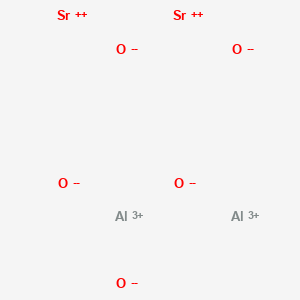
Aluminum strontium oxide (Al2SrO4)
Strontium aluminate is a chemical compound of strontium and aluminum. When activated with a suitable dopant, it acts as a photoluminescent phosphor with long persistence of phosphorescence. Aluminum is the most abundant metal in the earth's crust and is always found combined with other elements such as oxygen, silicon, and fluorine. (L739, L740, L787) — Toxin and Toxin Target Database (T3DB)
- IUPAC 명칭
- dialuminum;distrontium;pentakis(oxygen(2-))
- 분자식
- Al2O5Sr2
- 분자량
- 309.2 g/mol
- 정확한 질량
- 309.748874 Da
- 위상 극성 표면적
- 5.0 Ų
- 수소 결합 공여체
- 0
- 수소 결합 수용체
- 5
- 공유결합 단위
- 9
- 정의된 입체중심
- 0
다른 이름
추가 과학 데이터베이스의 근거
NIH PubChem PUG-View
Attributed physical-property, hazard, environmental and use annotations.
- Carcinogen Classification: Not listed by IARC. IARC classified aluminum production as carcinogenic to humans (Group 1), but did not implicate aluminum itself as a human carcinogen. (L135) A link between use of aluminum-containing antiperspirants and increased risk of breast cancer has been proposed (A235), but studies have not been able to establish a clear link (A15468). 출처: Toxin and Toxin Target Database (T3DB)
- Exposure Routes: Oral (L739) ; inhalation (L739) 출처: Toxin and Toxin Target Database (T3DB)
- Note: This chemical does not meet GHS hazard criteria for 5.1% (10 of 195) of reports. 출처: European Chemicals Agency (ECHA)
- Signal: Warning 출처: European Chemicals Agency (ECHA)
- GHS Hazard Statements: H315 (94.9%): Causes skin irritation [Warning Skin corrosion/irritation]; H319 (94.9%): Causes serious eye irritation [Warning Serious eye damage/eye irritation]; H335 (94.9%): May cause respiratory irritation [Warning Specific target organ toxicity, single exposure; Respiratory tract irritation] 출처: European Chemicals Agency (ECHA)
- Precautionary Statement Codes: P261, P264, P264+P265, P271, P280, P302+P352, P304+P340, P305+P351+P338, P319, P321, P332+P317, P337+P317, P362+P364, P403+P233, P405, and P501 (click each P-code to see the statement) 출처: European Chemicals Agency (ECHA)
- ECHA C&L Notifications Summary: Aggregated GHS information provided per 195 reports by companies from 7 notifications to the ECHA C&L Inventory. Each notification may be associated with multiple companies.; Reported as not meeting GHS hazard criteria per 10 of 195 reports by companies.; There are 6 notifications provided by 185 of 195 reports by companies with hazard statement code(s).; Information may vary between notifications depending on impurities, additives, and other factors. The percentage value in parenthesis indicates the notified classification ratio from companies that provide hazard codes. Only hazard codes with percentage values above 10% are shown. For more detailed information, please visit ECHA C&L website. 출처: European Chemicals Agency (ECHA)
- Health Effects: Aluminum targets the nervous system and causes decreased nervous system performance and is associated with altered function of the blood-brain barrier. The accumulation of aluminum in the body may cause bone or brain diseases. High levels of aluminum have been linked to Alzheimer's disease. A small percentage of people are allergic to aluminium and experience contact dermatitis, digestive disorders, vomiting or other symptoms upon contact or ingestion of products containing aluminium. (L739, L740) 출처: Toxin and Toxin Target Database (T3DB)
- Toxicity Summary: The main target organs of aluminum are the central nervous system and bone. Aluminum binds with dietary phosphorus and impairs gastrointestinal absorption of phosphorus. The decreased phosphate body burden results in osteomalacia (softening of the bones due to defective bone mineralization) and rickets. Aluminum's neurotoxicity is believed to involve several mechanisms. Changes in cytoskeletal protein functions as a results of altered phosphorylation, proteolysis, transport, and synthesis are believed to be one cause. Aluminum may induce neurobehavioral effects by affecting permeability of the blood-brain barrier, cholinergic activity, signal transduction pathways, lipid peroxidation, and impair neuronal glutamate nitric oxide-cyclic GMP pathway, as well as interfere with metabolism of essential trace elements because of similar coordination chemistries and consequent competitive interactions. It has been suggested that aluminum's interaction with estrogen receptors increases the expression of estrogen-related genes and thereby contributes to the progression of breast cancer (A235), but studies have not been able to establish a clear link between aluminum and increased risk of brea 출처: Toxin and Toxin Target Database (T3DB)
- Uses: When activated with a suitable dopant, strontium aluminate acts as a photoluminescent phosphor with long persistence of phosphorescence. (L787) 출처: Toxin and Toxin Target Database (T3DB)
매핑 기준: Existing checksum-valid CAS to unique PubChem CID match. 가져온 시각: 2026-08-31. 출처 기록 열기
과학적 분류와 유해성 주석은 맥락을 제공할 뿐이며, 위에 표시된 시장별 규제 판단을 대체하지 않습니다.
추가 출처 적용 범위 및 일치 상태
| 출처 | 결과 | 확인됨 |
|---|---|---|
| NIH PubChem PUG-View | 정확히 일치 | 2026-08-31 |
기록된 불일치는 출처를 확인했다는 유용한 근거이며, 해당 물질이 다른 곳에 존재하지 않는다는 주장이 아닙니다.
체크섬이 유효한 CAS 일치를 통해 2026-08-31에 NIH PubChem에서 가져왔습니다. 화학적 특성은 이 페이지의 규제 판단을 대체하지 않습니다.
공식 INCI 명칭이 나타내는 것
The official label is a composite INCI name with 4 named source-material segments. Each segment must be reconciled with the supplier specification.
- 문구에서 본 정체 유형
- composite
- 명명된 출처 세그먼트
- 4
구문 분석된 출처 명칭 세그먼트 검토
- ALUMINUM
- DYSPROSIUM
- EUROPIUM
- STRONTIUM OXIDE
This structure is derived only from the official label wording. It does not establish composition, concentration, chemical equivalence, safety or regulatory permission.
공식 EU 원료 명칭 근거
이 원료 명칭은 공식 2025 EU 일반 원료 명칭 용어집과 정확히 일치합니다.
관련 목록 근거
처방 기능이 겹치는 원료
추가 공식 및 과학 출처
이 정체를 확인할 외부 데이터베이스 11개
각 링크는 해당 출처에서 이 정체를 검색합니다. 각 출처의 성격과 법적 비중
CosIng 목록에서 ALUMINUM/DYSPROSIUM/EUROPIUM/STRONTIUM OXIDE이(가) 나타나는 방식
CosIng 목록은 ALUMINUM/DYSPROSIUM/EUROPIUM/STRONTIUM OXIDE을(를) 화장품 원료로 나열하며, 이 페이지는 이를 부속서 기록 0건과 연결합니다. 목록 항목은 명칭과 식별자를 담고 있으며, 부속서 기록은 해당 물질이 EU 화장품 법령에서 사용금지, 사용제한 또는 허용 목록(포지티브 리스트)에 있는 위치를 보여 줍니다.
ALUMINUM/DYSPROSIUM/EUROPIUM/STRONTIUM OXIDE은(는) 공식 데이터에서 화장품 기능 1개로도 태그되어 있습니다. 기능 표시는 의도된 용도를 설명하지만, 처방 또는 표시 작업 전에 연결된 부속서 기록에 대한 규제 검토를 대체하지 않습니다.
자주 묻는 질문
ALUMINUM/DYSPROSIUM/EUROPIUM/STRONTIUM OXIDE의 출처 주석
이 페이지는 공개된 유럽연합 집행위원회 화장품 원료 자료에서 가져온 ALUMINUM/DYSPROSIUM/EUROPIUM/STRONTIUM OXIDE의 CosIng 목록 항목을 재현하며, 현재 직접 연결된 부속서 일치 항목이 없는 경우에도 연결된 식별자를 표시합니다.
이 목록 페이지를 이용해 ALUMINUM/DYSPROSIUM/EUROPIUM/STRONTIUM OXIDE을(를) 조사하고 연결된 기록을 비교하되, 규제 판단을 내리기 전에 제한 사항과 법적 상태를 현행 공식 출처 본문 및 법령으로 확인하세요.