
ETHYLENEDIAMINE
1,2-Diaminoethane,1,2-Ethanediamine
ETHYLENEDIAMINE은(는) EU CosIng 목록에 등재되어 있지만, 이 페이지에는 아직 직접 연결된 부속서 기록이 없습니다.
시장별 규제 근거
이 매트릭스는 검증된 원료 규칙과 매핑은 되었지만 아직 가져오지 않은 출처를 구분합니다. 가져온 규칙이 없다는 것이 해당 원료가 허용된다는 의미는 아닙니다.
모든 열을 보려면 가로로 스와이프하거나 스크롤하세요.
| 시장 | 근거 상태 | 기록 | 출처 언어 |
|---|---|---|---|
| European Union | 출처 매핑됨 Inventory entry; no linked annex rule | 0 | English and EU languages |
| Great Britain | 출처 매핑됨 Official source mapped; ingredient rule not imported | 0 | English |
| Canada | 근거 연결됨 Prohibited 이 근거 열기 | 1 | English and French |
| New Zealand | 출처 매핑됨 Official source mapped; ingredient rule not imported | 0 | English |
| ASEAN | 출처 매핑됨 Official source mapped; ingredient rule not imported | 0 | English and national languages |
| China | 출처 매핑됨 Official source mapped; ingredient rule not imported | 0 | Chinese with selected English material |
| Japan | 출처 매핑됨 Official source mapped; ingredient rule not imported | 0 | Japanese; official English translation available |
| South Korea | 출처 매핑됨 Official source mapped; ingredient rule not imported | 0 | Korean with some English names |
| United States | 출처 매핑됨 Official source mapped; ingredient rule not imported | 0 | English |
| Australia | 출처 매핑됨 Official source mapped; ingredient rule not imported | 0 | English |
| Brazil | 출처 매핑됨 Official source mapped; ingredient rule not imported | 0 | Portuguese with INCI crosswalks |
| India | 출처 매핑됨 Official source mapped; ingredient rule not imported | 0 | English and Hindi |
| Saudi Arabia | 출처 매핑됨 Official source mapped; ingredient rule not imported | 0 | Arabic and English |
ETHYLENEDIAMINE의 목록 세부 정보
INCI 명칭
ETHYLENEDIAMINE
설명
1,2-Diaminoethane,1,2-Ethanediamine
ETHYLENEDIAMINE의 부속서 기록
주요 데이터
화학적 정체 및 특성
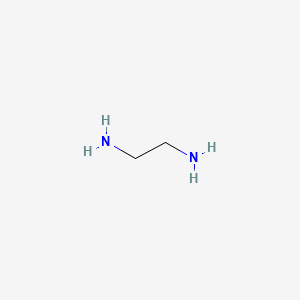
Ethylenediamine
Ethylenediamine is an alkane-alpha,-diamine in which the alkane is ethane. It has a role as a GABA agonist. It derives from a hydride of an ethane. — ChEBI
- IUPAC 명칭
- ethane-1,2-diamine
- 분자식
- C2H8N2
- 분자량
- 60.10 g/mol
- 정확한 질량
- 60.068748264 Da
- XLogP3
- -2.0
- 위상 극성 표면적
- 52.0 Ų
- 수소 결합 공여체
- 2
- 수소 결합 수용체
- 2
- 공유결합 단위
- 1
- 정의된 입체중심
- 0
다른 이름
보고된 명칭 16개 더 보기
외부 데이터베이스 식별자
추가 과학 데이터베이스의 근거
EMBL-EBI ChEBI
ethylenediamine
An alkane-α,ω-diamine in which the alkane is ethane.
- 처방
- C2H8N2
- 평균 질량
- 60.100 g/mol
- 단일 동위원소 질량
- 60.06875 Da
- 형식 전하
- 0
- alkane-α,ω-diamine — is a (CHEBI:35411)
- GABA agonist — has role (CHEBI:51373)
- antineoplastic agent — has role (CHEBI:35610)
- ethane — has parent hydride (CHEBI:42266)
- GABA agonist — has role (CHEBI:51373)
- antineoplastic agent — has role (CHEBI:35610)
- alkane-α,ω-diamine — is a (CHEBI:35411)
추가 선별 명칭
이 출처의 상호 참조
- CAS: 107-15-3 — NIST Chemistry WebBook
- CAS: 107-15-3 — ChemIDplus
- REGISTRY_NUMBER: 1098 — Gmelin
- REGISTRY_NUMBER: 605263 — Reaxys
- MANUAL_X_REF: CPD-3682 — MetaCyc
- MANUAL_X_REF: D01114 — KEGG DRUG
- MANUAL_X_REF: EDN — PDBeChem
- MANUAL_X_REF: Ethylenediamine — Wikipedia
- MANUAL_X_REF: HMDB0031225 — HMDB
매핑 기준: Exact CAS cross-reference in the ChEBI compound record. 출처 업데이트: 2016-02-16. 가져온 시각: 2026-08-31. 출처 기록 열기
NIH PubChem PUG-View
Attributed physical-property, hazard, environmental and use annotations.
- Autoignition Temperature: 715 °F (USCG, 1999) 출처: CAMEO Chemicals
- Autoignition Temperature: 385 °C (725 °F) /ANHYDROUS 76%/ 출처: Hazardous Substances Data Bank (HSDB)
- Autoignition Temperature: 385 °C 출처: ILO-WHO International Chemical Safety Cards (ICSCs)
- Boiling Point: 241 °F at 760 mmHg (EPA, 1998) 출처: CAMEO Chemicals
- Boiling Point: 116-117 °C 출처: Hazardous Substances Data Bank (HSDB)
- Boiling Point: 117.00 to 118.00 °C. @ 760.00 mm Hg 출처: Human Metabolome Database (HMDB)
- Boiling Point: 117 °C 출처: ILO-WHO International Chemical Safety Cards (ICSCs)
- Boiling Point: 241 °F 출처: Occupational Safety and Health Administration (OSHA)
- Boiling Point: 117.2 °C @760 [mm Hg] 출처: PAC Chemical Database, U.S. Department of Energy
- Boiling Point: 241 °F 출처: The National Institute for Occupational Safety and Health (NIOSH)
- Color/Form: Water-white liquid 출처: Hazardous Substances Data Bank (HSDB)
- Color/Form: Colorless, viscous liquid ... [Note: A solid below 47 degrees F]. 출처: Hazardous Substances Data Bank (HSDB)
- Density: 0.898 at 77 °F (EPA, 1998) - Less dense than water; will float 출처: CAMEO Chemicals
- Density: 0.898 @ 25 °C/4 °C 출처: Hazardous Substances Data Bank (HSDB)
- Density: Saturated liquid density: 56.650 lb/cu ft; liquid heat capacity: 0.694 Btu/lb-F; saturated vapor pressure: 0.216 lb/sq in; saturated vapor density: 0.00228 lb/cu ft (all at 70 °F) 출처: Hazardous Substances Data Bank (HSDB)
- Density: Relative density (water = 1): 0.9 출처: ILO-WHO International Chemical Safety Cards (ICSCs)
- Density: 0.91 출처: Occupational Safety and Health Administration (OSHA)
- Density: 1.46 @ 20°C 출처: PAC Chemical Database, U.S. Department of Energy
- Density: 0.91 출처: The National Institute for Occupational Safety and Health (NIOSH)
- Dissociation Constants: pKa= 10.712; Ka= 1.94X10⁻¹¹ at 0 °C (Step 1 in reaction) 출처: Hazardous Substances Data Bank (HSDB)
- Dissociation Constants: pKa= 7.564; Ka= 2.73X10⁻⁸ at 0 °C (Step 2 in reaction) 출처: Hazardous Substances Data Bank (HSDB)
- Flash Point: 93 °F (EPA, 1998) 출처: CAMEO Chemicals
- Flash Point: 93 °F 출처: Haz-Map, Information on Hazardous Chemicals and Occupational Diseases
- Flash Point: 104 °F (40 °C) CLOSED CUP, 150 °F (66 °C) OPEN CUP /ANHYDROUS 76%/ 출처: Hazardous Substances Data Bank (HSDB)
- Flash Point: 110 °F (closed cup) 출처: Hazardous Substances Data Bank (HSDB)
- Flash Point: 33.9 °C (open cup), 43.3 °C (closed cup) 출처: Hazardous Substances Data Bank (HSDB)
- Flash Point: 34 °C c.c. 출처: ILO-WHO International Chemical Safety Cards (ICSCs)
- Flash Point: 93 °F 출처: Occupational Safety and Health Administration (OSHA)
- Flash Point: 93 °F 출처: The National Institute for Occupational Safety and Health (NIOSH)
- LogP: log Kow = -2.04 @ pH 13 출처: Hazardous Substances Data Bank (HSDB)
- LogP: -2.04 출처: Human Metabolome Database (HMDB)
- LogP: -1.2 출처: ILO-WHO International Chemical Safety Cards (ICSCs)
- Melting Point: 46 °F (EPA, 1998) 출처: CAMEO Chemicals
- Melting Point: 8.5 °C 출처: Hazardous Substances Data Bank (HSDB)
- Melting Point: 11 °C 출처: Human Metabolome Database (HMDB)
- Melting Point: 8.5 °C 출처: ILO-WHO International Chemical Safety Cards (ICSCs)
- Melting Point: 47 °F 출처: Occupational Safety and Health Administration (OSHA)
- Melting Point: 11.14 °C 출처: PAC Chemical Database, U.S. Department of Energy
- Melting Point: 47 °F 출처: The National Institute for Occupational Safety and Health (NIOSH)
- Odor: Ammonia-like 출처: Hazardous Substances Data Bank (HSDB)
- Physical Description: Ethylenediamine appears as a clear colorless liquid with an ammonia-like odor. Flash point of 91 °F and a melting point of 47 °F. Corrosive to tissue. Vapors are heavier than air. Produces toxic oxides of nitrogen during combustion. Density 7.5 lb / gal. Used to make other chemicals and as a fungicide. 출처: CAMEO Chemicals
- Physical Description: CBI; Liquid; Other Solid; Liquid 출처: EPA Chemical Data Reporting (CDR)
- Physical Description: Colorless, viscous liquid with an ammonia-like odor; [NIOSH] 출처: Haz-Map, Information on Hazardous Chemicals and Occupational Diseases
- Physical Description: Liquid 출처: Human Metabolome Database (HMDB)
- Physical Description: COLOURLESS-TO-YELLOW HYGROSCOPIC LIQUID WITH PUNGENT ODOUR. 출처: ILO-WHO International Chemical Safety Cards (ICSCs)
- Physical Description: Colorless, viscous liquid with an ammonia-like odor. 출처: Occupational Safety and Health Administration (OSHA)
- Physical Description: Colorless, viscous liquid with an ammonia-like odor. [fungicide] [Note: A solid below 47 °F.] 출처: The National Institute for Occupational Safety and Health (NIOSH)
- Refractive Index: Index of refraction: 1.4565 @ 20 °C/D 출처: Hazardous Substances Data Bank (HSDB)
- Solubility: greater than or equal to 100 mg/mL at 63 °F (NTP, 1992) 출처: CAMEO Chemicals
- Solubility: Crystals; sublimes without melting; freely sol in water; practically insol in alc /Dihydrochloride/ 출처: Hazardous Substances Data Bank (HSDB)
- Solubility: Sol in benzene unless insufficiently dried; slightly sol in ether 출처: Hazardous Substances Data Bank (HSDB)
- Solubility: SOL IN ALL PROPORTIONS IN ETHYL ALCOHOL; VERY SOL IN WATER 출처: Hazardous Substances Data Bank (HSDB)
- Solubility: Water solubility = 1X10+6 mg/l 출처: Hazardous Substances Data Bank (HSDB)
- Solubility: Miscible with water, oxygenated and aromatic solvents 출처: Hazardous Substances Data Bank (HSDB)
- Solubility: 1000 mg/mL 출처: Human Metabolome Database (HMDB)
- Solubility: Solubility in water: miscible 출처: ILO-WHO International Chemical Safety Cards (ICSCs)
- Solubility: Miscible 출처: The National Institute for Occupational Safety and Health (NIOSH)
- Vapor Pressure: 10.7 mmHg at 68 °F (EPA, 1998) 출처: CAMEO Chemicals
- Vapor Pressure: 12.1 [mmHg] 출처: Haz-Map, Information on Hazardous Chemicals and Occupational Diseases
- Vapor Pressure: 12.1 mm Hg @ 25 °C 출처: Hazardous Substances Data Bank (HSDB)
- Vapor Pressure: Vapor pressure, kPa at 20 °C: 1.4 출처: ILO-WHO International Chemical Safety Cards (ICSCs)
- Vapor Pressure: 11 mmHg 출처: Occupational Safety and Health Administration (OSHA)
- Vapor Pressure: 12.1 [mm Hg] @25 °C 출처: PAC Chemical Database, U.S. Department of Energy
- Vapor Pressure: 11 mmHg 출처: The National Institute for Occupational Safety and Health (NIOSH)
- Viscosity: 0.0154 cP @ 25 °C 출처: Hazardous Substances Data Bank (HSDB)
- Viscosity: 0.0154 cP at 25 °C 출처: ILO-WHO International Chemical Safety Cards (ICSCs)
- pH: 11.9 @ 25 °C (25% soln) 출처: Hazardous Substances Data Bank (HSDB)
- Exposure Routes: The substance can be absorbed into the body by inhalation, through the skin and by ingestion. 출처: ILO-WHO International Chemical Safety Cards (ICSCs)
- Exposure Routes: inhalation, skin absorption, ingestion, skin and/or eye contact 출처: The National Institute for Occupational Safety and Health (NIOSH)
- First Aid: Signs and Symptoms of Acute Ethylenediamine Exposure: Acute exposure to ethylenediamine may result in cough, difficulty in breathing, irritation of the lungs, and pneumonia. Nausea, vomiting, and diarrhea are often seen. Contact with ethylenediamine may result in redness, pain, irritation, and burns.; Emergency Life-Support Procedures: Acute exposure to ethylenediamine may require decontamination and life support for the victims. Emergency personnel should wear protective clothing appropriate to the type and degree of contamination. Air-purifying or supplied-air respiratory equipment should also be worn, as necessary. Rescue vehicles should carry supplies such as plastic sheeting and disposable plastic bags to assist in preventing spread of contamination.; Inhalation Exposure:; 1. Move victims to fresh air. Emergency personnel should avoid self-exposure to ethylenediamine.; 2. Evaluate vital signs including pulse and respiratory rate, and note any trauma. If no pulse is detected, provide CPR. If not breathing, provide artificial respiration. If breathing is labored, administer oxygen or other respiratory support.; 3. Obtain authorization and/or further instructions from the local h 출처: CAMEO Chemicals
- ERG2024, Guide 132 (Ethylenediamine): General First Aid:; · Call 911 or emergency medical service.; · Ensure that medical personnel are aware of the material(s) involved, take precautions to protect themselves and avoid contamination.; · Move victim to fresh air if it can be done safely.; · Administer oxygen if breathing is difficult.; · If victim is not breathing:; -- DO NOT perform mouth-to-mouth resuscitation; the victim may have ingested or inhaled the substance.; -- If equipped and pulse detected, wash face and mouth, then give artificial respiration using a proper respiratory medical device (bag-valve mask, pocket mask equipped with a one-way valve or other device).; -- If no pulse detected or no respiratory medical device available, provide continuous compressions. Conduct a pulse check every two minutes or monitor for any signs of spontaneous respirations.; · Remove and isolate contaminated clothing and shoes.; · For minor skin contact, avoid spreading material on unaffected skin.; · In case of contact with substance, remove immediately by flushing skin or eyes with running water for at least 20 minutes.; · For severe burns, immediate medical attention is required.; · Effects of exposure (inhalation, ingestion, 출처: Emergency Response Guidebook (ERG)
- First Aid: (General first aid procedures); Eye: Irrigate immediately - If this chemical contacts the eyes, immediately wash (irrigate) the eyes with large amounts of water, occasionally lifting the lower and upper lids. Get medical attention immediately.; Skin: Water flush immediately - If this chemical contacts the skin, immediately flush the contaminated skin with water. If this chemical penetrates the clothing, immediately remove the clothing and flush the skin with water. Get medical attention promptly.; Breathing: Respiratory support; Swallow: Medical attention immediately - If this chemical has been swallowed, get medical attention immediately. 출처: The National Institute for Occupational Safety and Health (NIOSH)
- Signal: Danger 출처: Regulation (EC) No 1272/2008 of the European Parliament and of the Council
- GHS Hazard Statements: H226: Flammable liquid and vapor [Warning Flammable liquids]; H302: Harmful if swallowed [Warning Acute toxicity, oral]; H312: Harmful in contact with skin [Warning Acute toxicity, dermal]; H314: Causes severe skin burns and eye damage [Danger Skin corrosion/irritation]; H317: May cause an allergic skin reaction [Warning Sensitization, Skin]; H334: May cause allergy or asthma symptoms or breathing difficulties if inhaled [Danger Sensitization, respiratory] 출처: Regulation (EC) No 1272/2008 of the European Parliament and of the Council
- Precautionary Statement Codes: P210, P233, P240, P241, P242, P243, P260, P261, P264, P270, P271, P272, P280, P284, P301+P317, P301+P330+P331, P302+P352, P302+P361+P354, P303+P361+P353, P304+P340, P305+P354+P338, P316, P317, P321, P330, P333+P317, P342+P316, P362+P364, P363, P370+P378, P403, P403+P235, P405, and P501 (click each P-code to see the statement) 출처: Regulation (EC) No 1272/2008 of the European Parliament and of the Council
- Note: This chemical does not meet GHS hazard criteria for < 0.1% (1 of 2078) of reports. 출처: European Chemicals Agency (ECHA)
- Signal: Danger 출처: European Chemicals Agency (ECHA)
- GHS Hazard Statements: H226 (> 99.9%): Flammable liquid and vapor [Warning Flammable liquids]; H302+H332 (11.5%): Harmful if swallowed or if inhaled [Warning Acute toxicity, oral; acute toxicity, inhalation]; H302 (99.8%): Harmful if swallowed [Warning Acute toxicity, oral]; H311 (28.3%): Toxic in contact with skin [Danger Acute toxicity, dermal]; H312 (73.8%): Harmful in contact with skin [Warning Acute toxicity, dermal]; H314 (> 99.9%): Causes severe skin burns and eye damage [Danger Skin corrosion/irritation]; H317 (> 99.9%): May cause an allergic skin reaction [Warning Sensitization, Skin]; H318 (38.9%): Causes serious eye damage [Danger Serious eye damage/eye irritation]; H332 (27.7%): Harmful if inhaled [Warning Acute toxicity, inhalation]; H334 (> 99.9%): May cause allergy or asthma symptoms or breathing difficulties if inhaled [Danger Sensitization, respiratory]; H412 (49.6%): Harmful to aquatic life with long lasting effects [Hazardous to the aquatic environment, long-term hazard] 출처: European Chemicals Agency (ECHA)
- Precautionary Statement Codes: P210, P233, P240, P241, P242, P243, P260, P261, P262, P264, P264+P265, P270, P271, P272, P273, P280, P284, P301+P317, P301+P330+P331, P302+P352, P302+P361+P354, P303+P361+P353, P304+P340, P305+P354+P338, P316, P317, P321, P330, P333+P317, P342+P316, P361+P364, P362+P364, P363, P370+P378, P403, P403+P235, P405, and P501 (click each P-code to see the statement) 출처: European Chemicals Agency (ECHA)
- ECHA C&L Notifications Summary: Aggregated GHS information provided per 2078 reports by companies from 35 notifications to the ECHA C&L Inventory. Each notification may be associated with multiple companies.; Reported as not meeting GHS hazard criteria per 1 of 2078 reports by companies.; There are 34 notifications provided by 2077 of 2078 reports by companies with hazard statement code(s).; Information may vary between notifications depending on impurities, additives, and other factors. The percentage value in parenthesis indicates the notified classification ratio from companies that provide hazard codes. Only hazard codes with percentage values above 10% are shown. For more detailed information, please visit ECHA C&L website. 출처: European Chemicals Agency (ECHA)
- Signal: Danger 출처: NITE-CMC
- GHS Hazard Statements: H226: Flammable liquid and vapor [Warning Flammable liquids]; H302: Harmful if swallowed [Warning Acute toxicity, oral]; H311: Toxic in contact with skin [Danger Acute toxicity, dermal]; H314: Causes severe skin burns and eye damage [Danger Skin corrosion/irritation]; H317: May cause an allergic skin reaction [Warning Sensitization, Skin]; H318: Causes serious eye damage [Danger Serious eye damage/eye irritation]; H332: Harmful if inhaled [Warning Acute toxicity, inhalation]; H334: May cause allergy or asthma symptoms or breathing difficulties if inhaled [Danger Sensitization, respiratory]; H361: Suspected of damaging fertility or the unborn child [Warning Reproductive toxicity]; H370: Causes damage to organs [Danger Specific target organ toxicity, single exposure]; H373: May causes damage to organs through prolonged or repeated exposure [Warning Specific target organ toxicity, repeated exposure]; H401: Toxic to aquatic life [Hazardous to the aquatic environment, acute hazard]; H412: Harmful to aquatic life with long lasting effects [Hazardous to the aquatic environment, long-term hazard] 출처: NITE-CMC
- Precautionary Statement Codes: P203, P210, P233, P240, P241, P242, P243, P260, P261, P262, P264, P264+P265, P270, P271, P272, P273, P280, P284, P301+P317, P301+P330+P331, P302+P352, P302+P361+P354, P303+P361+P353, P304+P340, P305+P354+P338, P308+P316, P316, P317, P318, P319, P321, P330, P333+P317, P342+P316, P361+P364, P362+P364, P363, P370+P378, P403, P403+P235, P405, and P501 (click each P-code to see the statement) 출처: NITE-CMC
- GHS Hazard Statements: H226: Flammable liquid and vapor [Warning Flammable liquids]; H302: Harmful if swallowed [Warning Acute toxicity, oral]; H311: Toxic in contact with skin [Danger Acute toxicity, dermal]; H314: Causes severe skin burns and eye damage [Danger Skin corrosion/irritation]; H317: May cause an allergic skin reaction [Warning Sensitization, Skin]; H318: Causes serious eye damage [Danger Serious eye damage/eye irritation]; H334: May cause allergy or asthma symptoms or breathing difficulties if inhaled [Danger Sensitization, respiratory]; H370: Causes damage to organs [Danger Specific target organ toxicity, single exposure]; H373: May causes damage to organs through prolonged or repeated exposure [Warning Specific target organ toxicity, repeated exposure] 출처: NITE-CMC
- NFPA Health Rating: 3 - Materials that, under emergency conditions, can cause serious or permanent injury. 출처: Hazardous Substances Data Bank (HSDB)
- NFPA Fire Rating: 2 - Materials that must be moderately heated or exposed to relatively high ambient temperatures before ignition can occur. Materials would not under normal conditions form hazardous atmospheres with air, but under high ambient temperatures or under moderate heating could release vapor in sufficient quantities to produce hazardous atmospheres with air. 출처: Hazardous Substances Data Bank (HSDB)
- NFPA Instability Rating: 0 - Materials that in themselves are normally stable, even under fire conditions. 출처: Hazardous Substances Data Bank (HSDB)
- Target Organs: Skin, respiratory system, liver, kidneys 출처: The National Institute for Occupational Safety and Health (NIOSH)
- Environmental Bioconcentration: An estimated BCF of less than 1 was calculated for ethylenediamine(SRC), using a log Kow of -2.04(1)and a regression-derived equation(2). According to a classification scheme(3), this BCF suggests the potential for bioconcentration in aquatic organisms is low. 출처: Hazardous Substances Data Bank (HSDB)
- Environmental Fate: TERRESTRIAL FATE: Based on a classification scheme(1), an average Koc value of 4766(2) indicates that ethylenediamine is expected to have slight mobility in soil(SRC). Volatilization of ethylenediamine from moist soil surfaces is not expected to be an important fate process(SRC) given a Henry's Law constant of 1.73X10⁻⁹ atm-cu m/mole(3). The potential for volatilization of ethylenediamine from dry soil surfaces may exist based upon a vapor pressure of 12.1 mm Hg(4). However, adsorption to soil may attenuate volatilization(SRC). Based on screening studies(5-7), biodegradation is expected to be the most important degradation process for this compound but no experimental rates in soil are available. Ethylenediamine may also form stable complexes with metal ions(8) in soil, but again, experimental data are lacking(SRC). 출처: Hazardous Substances Data Bank (HSDB)
- Environmental Fate: AQUATIC FATE: Based on a classification scheme(1), an average Koc value of 4766(2) indicates that ethylenediamine is expected to adsorb to suspended solids and sediment in water(SRC). Volatilization from water surfaces is not expected(3) based upon a Henry's Law constant of 1.73X10⁻⁹ atm-cu m/mole(4). As ethylenediamine has two primary amine groups, at the pH range found in most environmental waters, it is expected to be partially protonated; the dissociated form will not volatilize. According to a classification scheme(5), an estimated BCF of less than 1(SRC), from its log Kow(6) and a regression-derived equation(7), suggests the potential for bioconcentration in aquatic organisms is low. Based on screening studies(8-10), biodegradation is expected to be the most important degradation process for this compound but no experimental rates in water are available. Complexation of ethylenediamine with transition metals(11) in the water or reaction with humic materials(12) is possible(SRC). 출처: Hazardous Substances Data Bank (HSDB)
- Environmental Fate: ATMOSPHERIC FATE: According to a model of gas/particle partitioning of semivolatile organic compounds in the atmosphere(1), ethylenediamine, which has a vapor pressure of 12.1 mm Hg at 25 °C(2), is expected to exist solely as a vapor. Vapor-phase ethylenediamine is degraded in the atmosphere by reaction with photochemically-produced hydroxyl radicals(SRC); the half-life for this reaction in air is estimated to be 6 hours(SRC), calculated from its rate constant of 6.3x10⁻¹¹ cu cm/molecule-sec at 25 °C(3) using a structure estimation method(3). As ethylenediamine is miscible in water(4), washout by rain will also be an important removal process(SRC). 출처: Hazardous Substances Data Bank (HSDB)
- Consumer Uses: Other; Processing aids not otherwise specified 출처: EPA Chemical Data Reporting (CDR)
- Industry Uses: Chelating agent; Etching agent; Intermediate; Not Known or Reasonably Ascertainable; Plating agent; CBI; Other; Solvent 출처: EPA Chemical Data Reporting (CDR)
- Sources/Uses: Used in the manufacture of chelating agents, fungicides, waxes, polyamide resins, and corrosion inhibitors. [ACGIH] Used as an emulsifier, an inhibitor in antifreeze solutions, and an additive to pharmaceuticals and textile lubricants; [Merck Index] Used in photography (color developing baths); [www.ci.tucson.az.us/arthazards/medium.html] 출처: Haz-Map, Information on Hazardous Chemicals and Occupational Diseases
- Industrial Processes with risk of exposure: Textiles (Fiber & Fabric Manufacturing) [Category: Industry]; Painting (Pigments, Binders, and Biocides) [Category: Paint]; Photographic Processing [Category: Other] 출처: Haz-Map, Information on Hazardous Chemicals and Occupational Diseases
- Uses: For Ethylenediamine (USEPA/OPP Pesticide Code: 004205) there are 0 labels match. /SRP: Not registered for current use in the U.S., but approved pesticide uses may change periodically and so federal, state and local authorities must be consulted for currently approved uses./ 출처: Hazardous Substances Data Bank (HSDB)
- Uses: Solvent for casein, albumin, shellac, and sulfur; emulsifier; stabilizing rubber latex; as inhibitor in antifreeze solutions; in textile lubricants; pharmaceutic aid (aminophylline injection stabilizer) 출처: Hazardous Substances Data Bank (HSDB)
- Uses: In prepn of dyes, synthetic waxes, resins, insecticides and asphalt wetting agents 출처: Hazardous Substances Data Bank (HSDB)
- Uses: Use in manuf of weed killers; use in manuf of surfactants, emulsifying agents, wetting agents, dispersants, corrosion inhibitors, detergents, and textile surface treatments 출처: Hazardous Substances Data Bank (HSDB)
- Uses: For more Uses (Complete) data for ETHYLENEDIAMINE (8 total), please visit the HSDB record page. 출처: Hazardous Substances Data Bank (HSDB)
매핑 기준: Existing checksum-valid CAS to unique PubChem CID match. 가져온 시각: 2026-08-31. 출처 기록 열기
과학적 분류와 유해성 주석은 맥락을 제공할 뿐이며, 위에 표시된 시장별 규제 판단을 대체하지 않습니다.
추가 출처 적용 범위 및 일치 상태
| 출처 | 결과 | 확인됨 |
|---|---|---|
| EMBL-EBI ChEBI | 정확히 일치 | 2026-08-31 |
| NIH PubChem PUG-View | 정확히 일치 | 2026-08-31 |
기록된 불일치는 출처를 확인했다는 유용한 근거이며, 해당 물질이 다른 곳에 존재하지 않는다는 주장이 아닙니다.
체크섬이 유효한 CAS 일치를 통해 2026-09-02에 NIH PubChem에서 가져왔습니다. 화학적 특성은 이 페이지의 규제 판단을 대체하지 않습니다.
공식 EU 원료 명칭 근거
이 원료 명칭은 공식 2025 EU 일반 원료 명칭 용어집과 정확히 일치합니다.
관련 목록 근거
처방 기능이 겹치는 원료
추가 공식 및 과학 출처
이 정체를 확인할 외부 데이터베이스 11개
각 링크는 해당 출처에서 이 정체를 검색합니다. 각 출처의 성격과 법적 비중
CosIng 목록에서 ETHYLENEDIAMINE이(가) 나타나는 방식
CosIng 목록은 ETHYLENEDIAMINE을(를) 화장품 원료로 나열하며, 이 페이지는 이를 부속서 기록 0건과 연결합니다. 목록 항목은 명칭과 식별자를 담고 있으며, 부속서 기록은 해당 물질이 EU 화장품 법령에서 사용금지, 사용제한 또는 허용 목록(포지티브 리스트)에 있는 위치를 보여 줍니다.
ETHYLENEDIAMINE은(는) 공식 데이터에서 화장품 기능 1개로도 태그되어 있습니다. 기능 표시는 의도된 용도를 설명하지만, 처방 또는 표시 작업 전에 연결된 부속서 기록에 대한 규제 검토를 대체하지 않습니다.