
DIETHYLHEXYL ADIPATE
Bis(2-ethylhexyl) adipate
DIETHYLHEXYL ADIPATE은(는) EU CosIng 목록에 등재되어 있지만, 이 페이지에는 아직 직접 연결된 부속서 기록이 없습니다.
시장별 규제 근거
이 매트릭스는 검증된 원료 규칙과 매핑은 되었지만 아직 가져오지 않은 출처를 구분합니다. 가져온 규칙이 없다는 것이 해당 원료가 허용된다는 의미는 아닙니다.
모든 열을 보려면 가로로 스와이프하거나 스크롤하세요.
| 시장 | 근거 상태 | 기록 | 출처 언어 |
|---|---|---|---|
| European Union | 출처 매핑됨 Inventory entry; no linked annex rule | 0 | English and EU languages |
| Great Britain | 출처 매핑됨 Official source mapped; ingredient rule not imported | 0 | English |
| Canada | 근거 연결됨 Restricted 이 근거 열기 | 1 | English and French |
| New Zealand | 출처 매핑됨 Official source mapped; ingredient rule not imported | 0 | English |
| ASEAN | 출처 매핑됨 Official source mapped; ingredient rule not imported | 0 | English and national languages |
| China | 출처 매핑됨 Official source mapped; ingredient rule not imported | 0 | Chinese with selected English material |
| Japan | 출처 매핑됨 Official source mapped; ingredient rule not imported | 0 | Japanese; official English translation available |
| South Korea | 출처 매핑됨 Official source mapped; ingredient rule not imported | 0 | Korean with some English names |
| United States | 출처 매핑됨 Official source mapped; ingredient rule not imported | 0 | English |
| Australia | 출처 매핑됨 Official source mapped; ingredient rule not imported | 0 | English |
| Brazil | 출처 매핑됨 Official source mapped; ingredient rule not imported | 0 | Portuguese with INCI crosswalks |
| India | 출처 매핑됨 Official source mapped; ingredient rule not imported | 0 | English and Hindi |
| Saudi Arabia | 출처 매핑됨 Official source mapped; ingredient rule not imported | 0 | Arabic and English |
DIETHYLHEXYL ADIPATE의 목록 세부 정보
INCI 명칭
DIETHYLHEXYL ADIPATE
설명
Bis(2-ethylhexyl) adipate
DIETHYLHEXYL ADIPATE의 부속서 기록
주요 데이터
- FILM FORMING
Producing (upon application) a continuous film on the skin, hair or nails.
- PLASTICISER
Softening and making supple synthetic polymers that otherwise could not be easily deformed, spread or worked out.
- SKIN CONDITIONING
Maintaining the skin in good condition.
- SKIN CONDITIONING - EMOLLIENT
Acting as lubricants on the skin surface providing the skin with a soft and smooth appearance.
- SOLVENT
Dissolving other components of cosmetics. Solvents are usually liquids (aqueous and nonaqueous).
화학적 정체 및 특성
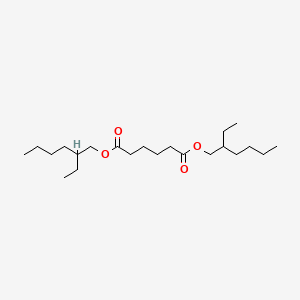
Bis(2-ethylhexyl) adipate
Bis(2-ethylhexyl) adipate is a diester resulting from the formal condensation of the carboxy groups of adipic acid with 2-ethylhexan-1-ol. It is used as a plasticiser in the preparation of various polymers. It has a role as a plasticiser. It is a member of dicarboxylic acids and O-substituted derivatives, a carboxylic ester and a diester. It is functionally related to a 2-ethylhexan-1-ol and an adipic acid. — ChEBI
- IUPAC 명칭
- bis(2-ethylhexyl) hexanedioate
- 분자식
- C22H42O4
- 분자량
- 370.6 g/mol
- 정확한 질량
- 370.30830982 Da
- XLogP3
- 6.8
- 위상 극성 표면적
- 52.6 Ų
- 수소 결합 공여체
- 0
- 수소 결합 수용체
- 4
- 공유결합 단위
- 1
- 정의된 입체중심
- 0
다른 이름
보고된 명칭 16개 더 보기
외부 데이터베이스 식별자
- ChEBI:CHEBI:34675
- ChEMBL:CHEMBL1414950
- EPA DTXSID:DTXSID0020606
- PubMed:22346617
- PubMed:21783615
- PubMed:21714626
- PubMed:21575223
- PubMed:21400322
- PubMed:20681565
- PubMed:20414453
- PubMed:20392686
- PubMed:20352652
- PubMed:20334193
- PubMed:19957297
- PubMed:19842066
추가 과학 데이터베이스의 근거
EMBL-EBI ChEBI
bis(2-ethylhexyl) adipate
A diester resulting from the formal condensation of the carboxy groups of adipic acid with 2-ethylhexan-1-ol. It is used as a plasticiser in the preparation of various polymers.
- 처방
- C22H42O4
- 평균 질량
- 370.574 g/mol
- 단일 동위원소 질량
- 370.30831 Da
- 형식 전하
- 0
- diester — is a (CHEBI:51307)
- carboxylic ester — is a (CHEBI:33308)
- dicarboxylic acids and O-substituted derivatives — is a (CHEBI:131927)
- plasticiser — has role (CHEBI:79056)
- 2-ethylhexan-1-ol — has functional parent (CHEBI:16011)
- adipic acid — has functional parent (CHEBI:30832)
- plasticiser — has role (CHEBI:79056)
- diester — is a (CHEBI:51307)
- carboxylic ester — is a (CHEBI:33308)
- dicarboxylic acids and O-substituted derivatives — is a (CHEBI:131927)
추가 선별 명칭
이 출처의 상호 참조
- CAS: 103-23-1 — KEGG COMPOUND
- CAS: 103-23-1 — ChemIDplus
- CAS: 103-23-1 — NIST Chemistry WebBook
- REGISTRY_NUMBER: 1803774 — Reaxys
- MANUAL_X_REF: Bis(2-ethylhexyl)_adipate — Wikipedia
- MANUAL_X_REF: C14240 — KEGG COMPOUND
- MANUAL_X_REF: HMDB0040270 — HMDB
매핑 기준: Exact CAS cross-reference in the ChEBI compound record. 출처 업데이트: 2016-05-16. 가져온 시각: 2026-08-31. 출처 기록 열기
NIH PubChem PUG-View
Attributed physical-property, hazard, environmental and use annotations.
- Autoignition Temperature: 710 °F (NTP, 1992) 출처: CAMEO Chemicals
- Autoignition Temperature: 710 °F (377 °C) 출처: Hazardous Substances Data Bank (HSDB)
- Boiling Point: 783 °F at 760 mmHg (NTP, 1992) 출처: CAMEO Chemicals
- Boiling Point: 214 °C @ 5 mm Hg 출처: Hazardous Substances Data Bank (HSDB)
- Boiling Point: 416.00 to 418.00 °C. @ 760.00 mm Hg 출처: Human Metabolome Database (HMDB)
- Color/Form: COLORLESS OR VERY PALE AMBER LIQ 출처: Hazardous Substances Data Bank (HSDB)
- Color/Form: Light colored, oily liquid. 출처: Hazardous Substances Data Bank (HSDB)
- Density: 0.923 (USCG, 1999) - Less dense than water; will float 출처: CAMEO Chemicals
- Density: 0.922 @ 25 °C/4 °C 출처: Hazardous Substances Data Bank (HSDB)
- Density: 0.922 @25 °C 출처: PAC Chemical Database, U.S. Department of Energy
- Flash Point: 385 °F (NTP, 1992) 출처: CAMEO Chemicals
- Flash Point: 196 °C 출처: Haz-Map, Information on Hazardous Chemicals and Occupational Diseases
- Flash Point: 402 °F (206 °C) (OPEN CUP) 출처: Hazardous Substances Data Bank (HSDB)
- Melting Point: -90 °F (NTP, 1992) 출처: CAMEO Chemicals
- Melting Point: -67.8 °C 출처: Hazardous Substances Data Bank (HSDB)
- Melting Point: -67.8 °C 출처: Human Metabolome Database (HMDB)
- Melting Point: -67.8 °C 출처: PAC Chemical Database, U.S. Department of Energy
- Odor: SLIGHT AROMATIC SMELL 출처: Hazardous Substances Data Bank (HSDB)
- Odor: Odorless 출처: Hazardous Substances Data Bank (HSDB)
- Odor: Mild 출처: Hazardous Substances Data Bank (HSDB)
- Physical Description: Bis(2-ethylhexyl) adipate is a colorless to straw-colored liquid with a mild odor. Floats on water. (USCG, 1999) 출처: CAMEO Chemicals
- Physical Description: Large Crystals; Liquid; Liquid; Liquid; Other Solid; CBI 출처: EPA Chemical Data Reporting (CDR)
- Physical Description: Light-colored, oily liquid; [Hawley] 출처: Haz-Map, Information on Hazardous Chemicals and Occupational Diseases
- Physical Description: Liquid 출처: Human Metabolome Database (HMDB)
- Refractive Index: Index of refraction: 1.4474 @ 20 °C/D 출처: Hazardous Substances Data Bank (HSDB)
- Solubility: less than 0.1 mg/mL at 72 °F (NTP, 1992) 출처: CAMEO Chemicals
- Solubility: SOL IN MOST ORG SOLVENTS; INSOL OR VERY SLIGHTLY SOL IN GLYCERINE & GLYCOLS 출처: Hazardous Substances Data Bank (HSDB)
- Solubility: Soluble in ethanol, ethyl ether, acetone, and acetic acid 출처: Hazardous Substances Data Bank (HSDB)
- Solubility: In water, 0.78 mg/l @ 22 °C 출처: Hazardous Substances Data Bank (HSDB)
- Solubility: 0.00078 mg/mL at 22 °C 출처: Human Metabolome Database (HMDB)
- Vapor Pressure: less than 0.01 mmHg at 68 °F ; 2.6 mmHg at 392 °F (NTP, 1992) 출처: CAMEO Chemicals
- Vapor Pressure: 0.00000085 [mmHg] 출처: Haz-Map, Information on Hazardous Chemicals and Occupational Diseases
- Vapor Pressure: 8.5X10⁻⁷ mm Hg at 20 °C 출처: Hazardous Substances Data Bank (HSDB)
- Viscosity: 13.7 cP @ 20 °C 출처: Hazardous Substances Data Bank (HSDB)
- pH: Acidity: 0.25 (meg/100 gm. max) 출처: Hazardous Substances Data Bank (HSDB)
- IARC Carcinogenic Agent: Di(2-ethylhexyl) adipate 출처: International Agency for Research on Cancer (IARC)
- IARC Carcinogenic Classes: Group 3: Not classifiable as to its carcinogenicity to humans 출처: International Agency for Research on Cancer (IARC)
- IARC Monographs: Volume Sup 7: Overall Evaluations of Carcinogenicity: An Updating of IARC Monographs Volumes 1 to 42, 1987; 440 pages; ISBN 92-832-1411-0 (out of print); Volume 77: (2000) Some Industrial Chemicals 출처: International Agency for Research on Cancer (IARC)
- Publication Year: 2000 출처: International Agency for Research on Cancer (IARC)
- Evaluation Year: 2000 출처: International Agency for Research on Cancer (IARC)
- Substance: Di(2-ethylhexyl) adipate 출처: NTP Technical Reports
- NTP Technical Report: TR-212: Carcinogenesis Bioassay of Di(2-ethylhexyl)adipate (CASRN 103-23-1) in F344 Rats and B6C3F1 Mice (Feed Study) (1982 ) 출처: NTP Technical Reports
- Peer Review Date: 06/27/80 출처: NTP Technical Reports
- Conclusion for Male Rat: No Evidence 출처: NTP Technical Reports
- Conclusion for Female Rat: No Evidence 출처: NTP Technical Reports
- Conclusion for Male Mice: Clear Evidence 출처: NTP Technical Reports
- Conclusion for Female Mice: Clear Evidence 출처: NTP Technical Reports
- First Aid: EYES: First check the victim for contact lenses and remove if present. Flush victim's eyes with water or normal saline solution for 20 to 30 minutes while simultaneously calling a hospital or poison control center. Do not put any ointments, oils, or medication in the victim's eyes without specific instructions from a physician. IMMEDIATELY transport the victim after flushing eyes to a hospital even if no symptoms (such as redness or irritation) develop.; SKIN: IMMEDIATELY flood affected skin with water while removing and isolating all contaminated clothing. Gently wash all affected skin areas thoroughly with soap and water. IMMEDIATELY call a hospital or poison control center even if no symptoms (such as redness or irritation) develop. IMMEDIATELY transport the victim to a hospital for treatment after washing the affected areas.; INHALATION: IMMEDIATELY leave the contaminated area; take deep breaths of fresh air. IMMEDIATELY call a physician and be prepared to transport the victim to a hospital even if no symptoms (such as wheezing, coughing, shortness of breath, or burning in the mouth, throat, or chest) develop. Provide proper respiratory protection to rescuers entering an unknow 출처: CAMEO Chemicals
- Note: This chemical does not meet GHS hazard criteria for 96.5% (1012 of 1049) of all reports. 출처: European Chemicals Agency (ECHA)
- GHS Hazard Statements: Not Classified; Reported as not meeting GHS hazard criteria by 1012 of 1049 companies (only 3.5% companies provided GHS information). For more detailed information, please visit ECHA C&L website. 출처: European Chemicals Agency (ECHA)
- ECHA C&L Notifications Summary: Aggregated GHS information provided per 1049 reports by companies from 12 notifications to the ECHA C&L Inventory.; Reported as not meeting GHS hazard criteria per 1012 of 1049 reports by companies.; There are 10 notifications provided by 37 of 1049 reports by companies with hazard statement code(s).; Information may vary between notifications depending on impurities, additives, and other factors. The percentage value in parenthesis indicates the notified classification ratio from companies that provide hazard codes. Only hazard codes with percentage values above 10% are shown. For more detailed information, please visit ECHA C&L website. 출처: European Chemicals Agency (ECHA)
- GHS Hazard Statements: Not Classified; Reported as not meeting GHS hazard criteria by 1 of 1 companies. For more detailed information, please visit ECHA C&L website. 출처: European Chemicals Agency (ECHA)
- Signal: Warning 출처: NITE-CMC
- GHS Hazard Statements: H410: Very toxic to aquatic life with long lasting effects [Warning Hazardous to the aquatic environment, long-term hazard] 출처: NITE-CMC
- Precautionary Statement Codes: P273, P391, and P501 (click each P-code to see the statement) 출처: NITE-CMC
- GHS Hazard Statements: H336: May cause drowsiness or dizziness [Warning Specific target organ toxicity, single exposure; Narcotic effects]; H361: Suspected of damaging fertility or the unborn child [Warning Reproductive toxicity] 출처: NITE-CMC
- Precautionary Statement Codes: P203, P261, P271, P280, P304+P340, P318, P319, P403+P233, P405, and P501 (click each P-code to see the statement) 출처: NITE-CMC
- GHS Hazard Statements: H400: Very toxic to aquatic life [Warning Hazardous to the aquatic environment, acute hazard]; H410: Very toxic to aquatic life with long lasting effects [Warning Hazardous to the aquatic environment, long-term hazard] 출처: NITE-CMC
- GHS Hazard Statements: Not Classified 출처: NITE-CMC
- GHS Hazard Statements: H316: Causes mild skin irritation [Warning Skin corrosion/irritation]; H361: Suspected of damaging fertility or the unborn child [Warning Reproductive toxicity] 출처: NITE-CMC
- NFPA Health Rating: 0 - Materials that, under emergency conditions, would offer no hazard beyond that of ordinary combustible materials. 출처: Hazardous Substances Data Bank (HSDB)
- NFPA Fire Rating: 1 - Materials that must be preheated before ignition can occur. Materials require considerable preheating, under all ambient temperature conditions, before ignition and combustion can occur. 출처: Hazardous Substances Data Bank (HSDB)
- NFPA Instability Rating: 0 - Materials that in themselves are normally stable, even under fire conditions. 출처: Hazardous Substances Data Bank (HSDB)
- Target Organs: Developmental; Hepatic; Musculoskeletal; Urinary 출처: EPA Integrated Risk Information System (IRIS)
- Cosmetic Ingredient Review Finding(s): Safe in the present practices of use and concentration. Ingredient, concentration, and use information are available in documents discoverable at https://cir-reports.cir-safety.org 출처: Cosmetic Ingredient Review (CIR)
- Environmental Bioconcentration: A whole-fish BCF of 27 was observed for blue-gill fish exposed to bis(2-ethylhexyl) adipate levels of 250 ug/l for a 28-day period(1). According to a classification scheme(2), this measured BCF value suggests the potential for bioconcentration in aquatic organisms is low. 출처: Hazardous Substances Data Bank (HSDB)
- Environmental Fate: TERRESTRIAL FATE: Based on a classification scheme(1), an estimated Koc value of 49,000(SRC), determined from a structure estimation method(2), indicates that bis(2-ethylhexyl) adipate is expected to be immobile in soil(SRC). The dominant degradation process in the soil environment is expected to be microbial degradation. Biodegradation test results indicate that bis(2-ethylhexyl) adipate is readily biodegradable(3,4). Therefore, the dominant degradation process in the soil environment is expected to be microbial degradation(SRC). Volatilization of bis(2-ethylhexyl) adipate from moist soil surfaces is not expected to be an important fate process(SRC) given a Henry's Law constant of 4.34X10⁻⁷atm-cu m/mole(3). Bis(2-ethylhexyl) adipate is not expected to volatilize from dry soil surfaces(SRC) based upon a vapor pressure of 8.5X10⁻⁷mm Hg(3). 출처: Hazardous Substances Data Bank (HSDB)
- Environmental Fate: AQUATIC FATE: Based on a classification scheme(1), an estimated Koc value of 49,000(SRC), determined from an estimation method(2), indicates that bis(2-ethylhexyl) adipate is expected to adsorb to suspended solids and sediment in water(SRC). Biodegradation test results indicate that bis(2-ethylhexyl) adipate is readily biodegradable(4). Therefore, the dominant degradation process in the aquatic environment is expected to be microbial degradation(4). Volatilization from water surfaces is not expected(3) based upon a Henry's Law constant of 4.34X10⁻⁷ atm-cu m/mole(4). According to a classification scheme(5), a BCF of 27(4), suggests the potential for bioconcentration in aquatic organisms is low. Bis(2-ethylhexyl) adipate is expected to hydrolyze producing 2-ethylhexanol and hexanoic acid(SRC). Estimated hydrolysis half-lives are 3 years and 120 days at pH values of 7 and 8, respectively(6). 출처: Hazardous Substances Data Bank (HSDB)
- Environmental Fate: ATMOSPHERIC FATE: According to a model of gas/particle partitioning of semivolatile organic compounds in the atmosphere(1), bis(2-ethylhexyl) adipate, which has a vapor pressure of 8.5X10⁻⁷ mm Hg at 20 °C(3), will exist in both the vapor and particulate phases in the ambient atmosphere. Vapor-phase bis(2-ethylhexyl) adipate is degraded in the atmosphere by reaction with photochemically-produced hydroxyl radicals(SRC); the half-life for this reaction in air is estimated to be 0.63 days(SRC), calculated from its rate constant of 2.5X10⁻¹¹ cu cm/molecule-sec at 25 °C(4) determined using a structure estimation method(2). Particulate-phase bis(2-ethylhexyl) adipate may be removed from the air by wet and dry deposition(SRC). Bis(2-ethylhexyl) adipate may undergo direct photolysis in the environment, since this compound contains a functional group that can absorb light >290 nm(5). 출처: Hazardous Substances Data Bank (HSDB)
- Consumer Uses: Anti-caking agent; Fragrance; Plasticizer; Binder; Lubricating agent; Emulsifier; Diluent; Not Known or Reasonably Ascertainable 출처: EPA Chemical Data Reporting (CDR)
- Industry Uses: Dispersing agent; Solvent; Polymerization promoter; Fragrance; Plasticizer; Flavoring and nutrient; Fixing agent (mordant); Wetting agent (non-aqueous); Other; Binder; Lubricating agent; Emulsifier; Diluent; Not Known or Reasonably Ascertainable; Laboratory chemicals 출처: EPA Chemical Data Reporting (CDR)
- Cosmetic Ingredient Review Link: CIR ingredient: Diethylhexyl Adipate 출처: Cosmetic Ingredient Review (CIR)
- Sources/Uses: Used as a plasticizer, in processing polyvinyl and other polymers, as a solvent, in aircraft lubricants, and in hydraulic fluids; [HSDB] 출처: Haz-Map, Information on Hazardous Chemicals and Occupational Diseases
- Uses: Plasticizer, commonly blended with general purpose plasticizers, such as /di-n-octyl phthalate/ and /diisooctyl phthalate/ in processing polyvinyl and other polymers; solvent; aircraft lubes 출처: Hazardous Substances Data Bank (HSDB)
- Uses: Functional (hydraulic) fluid 출처: Hazardous Substances Data Bank (HSDB)
- Uses: Plasticizer or solvent in the following cosmetics: bath oils, eye shadow, cologne, foundations, rouge, blusher, nail-polish remover, moisturizers and indoor tanning preparations 출처: Hazardous Substances Data Bank (HSDB)
- Uses: ... PVC film now used in meat wrapping operations contains bis(2-ethyl hexyl) adipate (DOA) as its major plasticizer. 출처: Hazardous Substances Data Bank (HSDB)
- Uses: Plastics -> Typical concentration range in plastic materials -> 10.0 - 35.0% 출처: NORMAN Suspect List Exchange
매핑 기준: Existing checksum-valid CAS to unique PubChem CID match. 가져온 시각: 2026-08-31. 출처 기록 열기
과학적 분류와 유해성 주석은 맥락을 제공할 뿐이며, 위에 표시된 시장별 규제 판단을 대체하지 않습니다.
추가 출처 적용 범위 및 일치 상태
| 출처 | 결과 | 확인됨 |
|---|---|---|
| EMBL-EBI ChEBI | 정확히 일치 | 2026-08-31 |
| NIH PubChem PUG-View | 정확히 일치 | 2026-08-31 |
기록된 불일치는 출처를 확인했다는 유용한 근거이며, 해당 물질이 다른 곳에 존재하지 않는다는 주장이 아닙니다.
체크섬이 유효한 CAS 일치를 통해 2026-09-02에 NIH PubChem에서 가져왔습니다. 화학적 특성은 이 페이지의 규제 판단을 대체하지 않습니다.
공식 EU 원료 명칭 근거
이 원료 명칭은 공식 2025 EU 일반 원료 명칭 용어집과 정확히 일치합니다.
관련 목록 근거
처방 기능이 겹치는 원료
추가 공식 및 과학 출처
이 정체를 확인할 외부 데이터베이스 11개
각 링크는 해당 출처에서 이 정체를 검색합니다. 각 출처의 성격과 법적 비중
CosIng 목록에서 DIETHYLHEXYL ADIPATE이(가) 나타나는 방식
CosIng 목록은 DIETHYLHEXYL ADIPATE을(를) 화장품 원료로 나열하며, 이 페이지는 이를 부속서 기록 0건과 연결합니다. 목록 항목은 명칭과 식별자를 담고 있으며, 부속서 기록은 해당 물질이 EU 화장품 법령에서 사용금지, 사용제한 또는 허용 목록(포지티브 리스트)에 있는 위치를 보여 줍니다.
DIETHYLHEXYL ADIPATE은(는) 공식 데이터에서 화장품 기능 5개로도 태그되어 있습니다. 기능 표시는 의도된 용도를 설명하지만, 처방 또는 표시 작업 전에 연결된 부속서 기록에 대한 규제 검토를 대체하지 않습니다.