
공식 EU 표시명용어집 항목 8612
DIETHYLHEXYL PHTHALATE
이 기록은 EU 화장품 표시에 사용하는 공식 일반 원료 명칭을 확인해 줍니다. 그것만으로는 해당 물질이 허용되거나 제한이 없거나 안전하다는 것이 확인되지 않습니다.
글로벌 근거 요약
확인된 정체는 색인된 시장 데이터세트 13개 중 9개에서 일치하는 규제 근거가 있습니다: 국가 기록 9건과 EU 부속서 기록 0건. 모든 결과와 근거 부족 사항은 아래에 나열되어 있습니다.
확인한 시장
13
근거가 있는 시장
9
근거 부족
4
확인된 식별자
2
확인된 물질 정체
CAS:117-81-7
EC:204-211-0
원료 색인 기록:
일치 또는 보고된 명칭 9개
DIETHYLHEXYL PHTHALATEbis(2-Ethylhexyl) phthalate (Diethylhexyl phthalate)Diethylhexyl phthalateBis(2-ethylhexyl) phthalate (diethylhexyl phthalate)bis(2-Ethylhexyl) phthalate邻苯二甲酸双(2-乙基己基)酯 — Bis (2-ethylhexyl) phthalate (Diethylhexyl phthalate) (CAS No. 117-81-7)Ftalato de bis(2-etilhexila)bis(2-Ethylhexyl) phthalate (Diethylhexyl phthalate) (CAS No. 117-81-7)bis(2-Ethylhexyl) phthalate; (Diethylhexyl phthalate)
13개 시장 전체의 규제 근거
일치하는 각 기록을 열어 범위, 농도, 조건, 경고 문구 및 공식 출처 버전을 확인하세요.
데이터세트 범위와 다음 조치를 보려면 가로로 스와이프하거나 스크롤하세요.
| 시장 | 결과 | 기록 | 데이터세트 | 의미 / 다음 조치 |
|---|---|---|---|---|
| European Union EU | 일치하는 항목 없음 | 0 | Complete annex dataset Regulation (EC) 1223/2009 consolidated to 1 May 2026 | No annex match only means that these five annexes did not return a match; CosIng identity data and other EU obligations still need review. |
| Great Britain GB | Prohibited | 1기록 열기 1 | Complete consolidated annex dataset GB retained Regulation 1223/2009 schedules, effective 15 August 2026 | 연결된 모든 기록과 정확한 조건을 검토하세요. |
| Canada CA | Prohibited | 1기록 열기 1 | Complete Hotlist snapshot Health Canada Cosmetic Ingredient Hotlist, 13 August 2025 | 연결된 모든 기록과 정확한 조건을 검토하세요. |
| New Zealand NZ | Prohibited | 1기록 열기 1 | Complete schedules dataset Cosmetic Products Group Standard schedules effective 1 January 2026 | 연결된 모든 기록과 정확한 조건을 검토하세요. |
| ASEAN ASEAN | Prohibited | 1기록 열기 1 | Complete regional annex dataset ASEAN Cosmetic Directive annexes 2026-1, 22 June 2026 | 연결된 모든 기록과 정확한 조건을 검토하세요. |
| China CN | Prohibited | 1기록 열기 1 | Complete prohibited catalogues plus official-source workflow NMPA 2021 banned catalogues plus dynamic IECIC List I/List II system current since 2025 | 연결된 모든 기록과 정확한 조건을 검토하세요. |
| Japan JP | 일치하는 항목 없음 | 0 | Complete Standards appendices dataset MHLW Standards for Cosmetics official English source and Japanese amendments checked for the imported snapshot | The Japanese text and subsequent notices are canonical; no local match is not a product-compliance conclusion. |
| South Korea KR | 일치하는 항목 없음 | 0 | Complete current appendix dataset MFDS Notice 2026-19, effective 18 March 2026 | Korean source wording is canonical and other positive lists/notices may still apply to the formulation. |
| United States US | 일치하는 항목 없음 | 0 | Complete enumerated federal ingredient rules eCFR Title 21 issue date 27 August 2026 | FDA has no general approved-cosmetic-ingredient catalogue; absence from these sections is not approval or proof of safety. |
| Australia AU | Prohibited | 1기록 열기 1 | Complete cosmetic-relevant Poisons Standard subset plus official workflow Therapeutic Goods (Poisons Standard—June 2026) Instrument 2026 | 연결된 모든 기록과 정확한 조건을 검토하세요. |
| Brazil BR | Prohibited | 1기록 열기 1 | Complete prohibited dataset plus current restricted-list workflow ANVISA RDC 1.029/2026 and RDC 1.030/2026, published 15 June 2026 | 연결된 모든 기록과 정확한 조건을 검토하세요. |
| India IN | Prohibited | 1기록 열기 1 | Complete current Part 2 dataset plus official workflow for Parts 1, 3 and 4 Cosmetics Rules 2020 plus current BIS IS 4707 parts (1:2020, 2:2025, 3:2025, 4:2022) | 연결된 모든 기록과 정확한 조건을 검토하세요. |
| Saudi Arabia SA | Prohibited | 1기록 열기 1 | Complete official list index SFDA live prohibited/restricted lists, snapshot 30 August 2026 | 연결된 모든 기록과 정확한 조건을 검토하세요. |
이 필터와 일치하는 시장 행이 없습니다.
일치하는 시장 기록 및 조건
Canada
Health Canada Cosmetic Ingredient Hotlist, 13 August 2025New Zealand
Cosmetic Products Group Standard schedules effective 1 January 2026ASEAN
ASEAN Cosmetic Directive annexes 2026-1, 22 June 2026China
NMPA 2021 banned catalogues plus dynamic IECIC List I/List II system current since 2025Australia
Therapeutic Goods (Poisons Standard—June 2026) Instrument 2026Brazil
ANVISA RDC 1.029/2026 and RDC 1.030/2026, published 15 June 2026India
Cosmetics Rules 2020 plus current BIS IS 4707 parts (1:2020, 2:2025, 3:2025, 4:2022)Saudi Arabia
SFDA live prohibited/restricted lists, snapshot 30 August 2026화학적 정체 및 특성
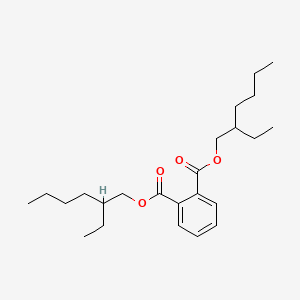
CAS 117-81-7PubChem CID 8343
Di(2-ethylhexyl) phthalate
Bis(2-ethylhexyl) phthalate is a phthalate ester that is the bis(2-ethylhexyl) ester of benzene-1,2-dicarboxylic acid. It has a role as an apoptosis inhibitor, an androstane receptor agonist and a plasticiser. It is a phthalate ester and a diester. — ChEBI
- IUPAC 명칭
- bis(2-ethylhexyl) benzene-1,2-dicarboxylate
- 분자식
- C24H38O4
- 분자량
- 390.6 g/mol
- 정확한 질량
- 390.27700969 Da
- XLogP3
- 7.4
- 위상 극성 표면적
- 52.6 Ų
- 수소 결합 공여체
- 0
- 수소 결합 수용체
- 4
- 공유결합 단위
- 1
- 정의된 입체중심
- 0
다른 이름
Bis(2-ethylhexyl) phthalateDi(2-ethylhexyl)phthalateEtalonEthylhexyl phthalateVinicizer 80DioctylphthalateHercoflex 260Nuoplaz dop
보고된 명칭 16개 더 보기
RC plasticizer DOPHatcol dopReomol dopSansocizer DOPErgoplast FDOMonocizer DOPPlasthall DOPMollan OPittsburgh PX-138Ergoplast FDO-SGood-rite gp 264Sconamoll DOPDiacizer DOPDi(2-ethylhexyl)orthophthalateEtalon (plasticizer)Behp
외부 데이터베이스 식별자
- ChEBI:CHEBI:17747
- ChEMBL:CHEMBL1242017
- EPA DTXSID:DTXSID5020607
- PubMed:23065997
- PubMed:23022116
- PubMed:22998075
- PubMed:22995194
- PubMed:22989312
- PubMed:22985986
- PubMed:22963843
- PubMed:22956148
- PubMed:22953188
- PubMed:22947618
- PubMed:22945567
- PubMed:22934997
추가 과학 데이터베이스의 근거
NIH PubChem PUG-View
식별자 정확히 일치8343
Attributed physical-property, hazard, environmental and use annotations.
- Autoignition Temperature: 735 °F (NTP, 1992) 출처: CAMEO Chemicals
- Autoignition Temperature: 735 °F (390 °C) 출처: Hazardous Substances Data Bank (HSDB)
- Autoignition Temperature: 350 °C 출처: ILO-WHO International Chemical Safety Cards (ICSCs)
- Boiling Point: 723 °F at 760 mmHg (NTP, 1992) 출처: CAMEO Chemicals
- Boiling Point: 384 °C 출처: Hazardous Substances Data Bank (HSDB)
- Boiling Point: BP: 231 °C at 5 mm Hg 출처: Hazardous Substances Data Bank (HSDB)
- Boiling Point: 385 °C 출처: ILO-WHO International Chemical Safety Cards (ICSCs)
- Boiling Point: 727 °F 출처: Occupational Safety and Health Administration (OSHA)
- Boiling Point: 384 °C @760 [mm Hg] 출처: PAC Chemical Database, U.S. Department of Energy
- Boiling Point: 727 °F 출처: The National Institute for Occupational Safety and Health (NIOSH)
- Color/Form: Liquid 출처: Hazardous Substances Data Bank (HSDB)
- Color/Form: Colorless, oily liquid 출처: Hazardous Substances Data Bank (HSDB)
- Density: 0.98 at 77 °F (USCG, 1999) - Less dense than water; will float 출처: CAMEO Chemicals
- Density: 0.981 g/cu cm at 25 °C 출처: Hazardous Substances Data Bank (HSDB)
- Density: Relative density (water = 1): 0.986 출처: ILO-WHO International Chemical Safety Cards (ICSCs)
- Density: 0.99 출처: Occupational Safety and Health Administration (OSHA)
- Density: 0.981 @25 °C 출처: PAC Chemical Database, U.S. Department of Energy
- Density: 0.99 출처: The National Institute for Occupational Safety and Health (NIOSH)
- Flash Point: 405 °F (NTP, 1992) 출처: CAMEO Chemicals
- Flash Point: 420 °F (215 °C) (Open cup) 출처: Hazardous Substances Data Bank (HSDB)
- Flash Point: 215 °C o.c. 출처: ILO-WHO International Chemical Safety Cards (ICSCs)
- Flash Point: 420 °F (open cup) 출처: Occupational Safety and Health Administration (OSHA)
- Flash Point: (oc) 420 °F 출처: The National Institute for Occupational Safety and Health (NIOSH)
- LogP: log Kow = 7.60 출처: Hazardous Substances Data Bank (HSDB)
- LogP: 5.03 출처: ILO-WHO International Chemical Safety Cards (ICSCs)
- Melting Point: -58 °F (NTP, 1992) 출처: CAMEO Chemicals
- Melting Point: -55 °C 출처: Hazardous Substances Data Bank (HSDB)
- Melting Point: -50 °C 출처: ILO-WHO International Chemical Safety Cards (ICSCs)
- Melting Point: -58 °F 출처: Occupational Safety and Health Administration (OSHA)
- Melting Point: -55 °C 출처: PAC Chemical Database, U.S. Department of Energy
- Melting Point: -58 °F 출처: The National Institute for Occupational Safety and Health (NIOSH)
- Odor: Slight odor 출처: Hazardous Substances Data Bank (HSDB)
- Physical Description: Di(2-ethylhexyl) phthalate is a colorless to pale yellow oily liquid. Nearly odorless. (USCG, 1999) 출처: CAMEO Chemicals
- Physical Description: Other Solid; Large Crystals; Liquid; Liquid 출처: EPA Chemical Data Reporting (CDR)
- Physical Description: COLOURLESS-TO-LIGHT COLOURED VISCOUS LIQUID WITH CHARACTERISTIC ODOUR. 출처: ILO-WHO International Chemical Safety Cards (ICSCs)
- Physical Description: Colorless, oily liquid with a slight odor. 출처: Occupational Safety and Health Administration (OSHA)
- Physical Description: Colorless, oily liquid with a slight odor. 출처: The National Institute for Occupational Safety and Health (NIOSH)
- Refractive Index: Index of refraction: 1.4853 at 20 °C/D 출처: Hazardous Substances Data Bank (HSDB)
- Solubility: less than 0.1 mg/mL at 72 °F (NTP, 1992) 출처: CAMEO Chemicals
- Solubility: In water, 2.70X10⁻¹ mg/L at 25 °C 출처: Hazardous Substances Data Bank (HSDB)
- Solubility: LESS THAN 0.01% IN WATER @ 25 °C 출처: Hazardous Substances Data Bank (HSDB)
- Solubility: Soluble in blood and fluids containing lipoproteins 출처: Hazardous Substances Data Bank (HSDB)
- Solubility: MISCIBLE WITH MINERAL OIL & HEXANE 출처: Hazardous Substances Data Bank (HSDB)
- Solubility: Slightly soluble in carbon tetrachloride 출처: Hazardous Substances Data Bank (HSDB)
- Solubility: Solubility in water: none 출처: ILO-WHO International Chemical Safety Cards (ICSCs)
- Solubility: (75 °F): 0.00003% 출처: The National Institute for Occupational Safety and Health (NIOSH)
- Vapor Pressure: 1.32 mmHg at 392 °F (NTP, 1992) 출처: CAMEO Chemicals
- Vapor Pressure: Vapor pressure = 9.75X10⁻⁶ mm Hg at 25 °C 출처: Hazardous Substances Data Bank (HSDB)
- Vapor Pressure: 1.42X10⁻⁷ mm Hg at 25 °C 출처: Hazardous Substances Data Bank (HSDB)
- Vapor Pressure: Vapor pressure, kPa at 20 °C: 0.001 출처: ILO-WHO International Chemical Safety Cards (ICSCs)
- Vapor Pressure: 1.32 mmHg at 392 °F 출처: Occupational Safety and Health Administration (OSHA)
- Vapor Pressure: <0.01 mmHg 출처: The National Institute for Occupational Safety and Health (NIOSH)
- Viscosity: 22 cSt at 20 °C; 386 cSt at 0 °C; 5 cSt at 100 °C 출처: Hazardous Substances Data Bank (HSDB)
- IARC Carcinogenic Agent: Di(2-ethylhexyl)phthalate 출처: International Agency for Research on Cancer (IARC)
- IARC Carcinogenic Classes: Group 2B: Possibly carcinogenic to humans 출처: International Agency for Research on Cancer (IARC)
- IARC Monographs: Volume Sup 7: Overall Evaluations of Carcinogenicity: An Updating of IARC Monographs Volumes 1 to 42, 1987; 440 pages; ISBN 92-832-1411-0 (out of print); Volume 77: (2000) Some Industrial Chemicals; Volume 101: (2012) Some Chemicals Present in Industrial and Consumer Products, Food and Drinking-water 출처: International Agency for Research on Cancer (IARC)
- Publication Year: 2013 출처: International Agency for Research on Cancer (IARC)
- Evaluation Year: 2011 출처: International Agency for Research on Cancer (IARC)
- Substance: Di(2-ethylhexyl) phthalate 출처: NTP Technical Reports
- NTP Technical Report: TR-601: Toxicology and Carcinogenesis Studies of Di(2-ethylhexyl) Phthalate (CASRN 117-81-7) Administered in Feed to Sprague Dawley (Hsd:Sprague Dawley SD) Rats (2021 ) 출처: NTP Technical Reports
- Peer Review Date: 04/02/21 출처: NTP Technical Reports
- Conclusion for Male Rat: Clear Evidence 출처: NTP Technical Reports
- Conclusion for Female Rat: Clear Evidence 출처: NTP Technical Reports
- Conclusion for Male Mice: Clear Evidence 출처: NTP Technical Reports
- Conclusion for Female Mice: Clear Evidence 출처: NTP Technical Reports
- Exposure Routes: The substance can be absorbed into the body by inhalation, through the skin and by ingestion. 출처: ILO-WHO International Chemical Safety Cards (ICSCs)
- Exposure Routes: inhalation, ingestion, skin and/or eye contact 출처: The National Institute for Occupational Safety and Health (NIOSH)
- Exposure Routes: Oral (L1903) ; inhalation (L1903) ; dermal (L1903) 출처: Toxin and Toxin Target Database (T3DB)
- First Aid: EYES: First check the victim for contact lenses and remove if present. Flush victim's eyes with water or normal saline solution for 20 to 30 minutes while simultaneously calling a hospital or poison control center. Do not put any ointments, oils, or medication in the victim's eyes without specific instructions from a physician. IMMEDIATELY transport the victim after flushing eyes to a hospital even if no symptoms (such as redness or irritation) develop.; SKIN: IMMEDIATELY flood affected skin with water while removing and isolating all contaminated clothing. Gently wash all affected skin areas thoroughly with soap and water. IMMEDIATELY call a hospital or poison control center even if no symptoms (such as redness or irritation) develop. IMMEDIATELY transport the victim to a hospital for treatment after washing the affected areas.; INHALATION: IMMEDIATELY leave the contaminated area; take deep breaths of fresh air. IMMEDIATELY call a physician and be prepared to transport the victim to a hospital even if no symptoms (such as wheezing, coughing, shortness of breath, or burning in the mouth, throat, or chest) develop. Provide proper respiratory protection to rescuers entering an unknow 출처: CAMEO Chemicals
- First Aid: (General first aid procedures); Eye: Irrigate immediately - If this chemical contacts the eyes, immediately wash (irrigate) the eyes with large amounts of water, occasionally lifting the lower and upper lids. Get medical attention immediately.; Breathing: Respiratory support; Swallow: Medical attention immediately - If this chemical has been swallowed, get medical attention immediately. 출처: The National Institute for Occupational Safety and Health (NIOSH)
- Signal: Danger 출처: Regulation (EC) No 1272/2008 of the European Parliament and of the Council
- GHS Hazard Statements: H360FD: May damage fertility; May damage the unborn child [Danger Reproductive toxicity] 출처: Regulation (EC) No 1272/2008 of the European Parliament and of the Council
- Precautionary Statement Codes: P203, P280, P318, P405, and P501 (click each P-code to see the statement) 출처: Regulation (EC) No 1272/2008 of the European Parliament and of the Council
- Note: This chemical does not meet GHS hazard criteria for < 0.1% (1 of 1071) of reports. 출처: European Chemicals Agency (ECHA)
- Signal: Danger 출처: European Chemicals Agency (ECHA)
- GHS Hazard Statements: H360 (94.5%): May damage fertility or the unborn child [Danger Reproductive toxicity] 출처: European Chemicals Agency (ECHA)
- Precautionary Statement Codes: P203, P280, P318, P405, and P501 (click each P-code to see the statement) 출처: European Chemicals Agency (ECHA)
- ECHA C&L Notifications Summary: Aggregated GHS information provided per 1071 reports by companies from 27 notifications to the ECHA C&L Inventory.; Reported as not meeting GHS hazard criteria per 1 of 1071 reports by companies.; There are 26 notifications provided by 1070 of 1071 reports by companies with hazard statement code(s).; Information may vary between notifications depending on impurities, additives, and other factors. The percentage value in parenthesis indicates the notified classification ratio from companies that provide hazard codes. Only hazard codes with percentage values above 10% are shown. For more detailed information, please visit ECHA C&L website. 출처: European Chemicals Agency (ECHA)
- Signal: Danger 출처: NITE-CMC
- GHS Hazard Statements: H320: Causes eye irritation [Warning Serious eye damage/eye irritation]; H335: May cause respiratory irritation [Warning Specific target organ toxicity, single exposure; Respiratory tract irritation]; H351: Suspected of causing cancer [Warning Carcinogenicity]; H360: May damage fertility or the unborn child [Danger Reproductive toxicity]; H373: May causes damage to organs through prolonged or repeated exposure [Warning Specific target organ toxicity, repeated exposure]; H400: Very toxic to aquatic life [Warning Hazardous to the aquatic environment, acute hazard]; H411: Toxic to aquatic life with long lasting effects [Hazardous to the aquatic environment, long-term hazard] 출처: NITE-CMC
- Precautionary Statement Codes: P203, P260, P261, P264+P265, P271, P273, P280, P304+P340, P305+P351+P338, P318, P319, P337+P317, P391, P403+P233, P405, and P501 (click each P-code to see the statement) 출처: NITE-CMC
- GHS Hazard Statements: Not Classified 출처: NITE-CMC
- Health Effects: Chronic and/or high levels of DEHP exposure may cause reproductive and developmental damage. This includes damaged sperm, delayed sexual maturity, and deficiencies in the development of male babies. DEHP may also cause liver and kidney damage, and is potentially carcinogenic. (L181, L182) 출처: Toxin and Toxin Target Database (T3DB)
- NFPA Health Rating: 1 - Materials that, under emergency conditions, can cause significant irritation. 출처: Hazardous Substances Data Bank (HSDB)
- NFPA Fire Rating: 1 - Materials that must be preheated before ignition can occur. Materials require considerable preheating, under all ambient temperature conditions, before ignition and combustion can occur. 출처: Hazardous Substances Data Bank (HSDB)
- NFPA Instability Rating: 0 - Materials that in themselves are normally stable, even under fire conditions. 출처: Hazardous Substances Data Bank (HSDB)
- Target Organs: Cancer, Developmental (effects while organs are developing), Hepatic (Liver), Immunological (Immune System), Renal (Urinary System or Kidneys), Reproductive (Producing Children) 출처: Agency for Toxic Substances and Disease Registry (ATSDR)
- Target Organs: Hepatic 출처: EPA Integrated Risk Information System (IRIS)
- Target Organs: Eyes, respiratory system, central nervous system, liver, reproductive system, gastrointestinal tract 출처: The National Institute for Occupational Safety and Health (NIOSH)
- Toxicity Summary: IDENTIFICATION AND USE: Di(2-ethylhexyl)phthalate (DEHP) is a colorless, oily liquid. Plastics may contain from 1 to 40% DEHP by weight and are used in consumer products such as imitation leather, rainwear, footwear, upholstery, flooring, wire and cable, tablecloths, shower curtains, food packaging materials and children's toys. DEHP is also used as a hydraulic fluid and as a dielectric fluid (a non-conductor of electric current) in electrical capacitors, a detector for leaks in respirators. DEHP is not registered for current use in the U.S., but approved pesticide uses may change periodically and so federal, state and local authorities must be consulted for currently approved uses. HUMAN EXPOSURE AND TOXICITY: DEHP has been found in various types of food, such as fish, shellfish, eggs and cheese. Blood transfusions and other medical treatment using plastic devices may lead to involuntary human exposure to DEHP. Available data on oral administration indicate that DEHP is hydrolyzed in the gut by pancreatic lipase. The metabolites formed, i.e., mono(2-ethylhexyl)phthalate and 2-ethyl hexanol, are rapidly absorbed. Mono-2-ethylhexyl phthalate was detected in human teeth. When adminis 출처: Hazardous Substances Data Bank (HSDB)
- Toxicity Summary: Monoethylhexylphthalate (MEHP), one of the major metabolites of DEHP, induces peroxisome proliferation by activating peroxisome proliferator activated receptors. This is believed to increase production of hydrogen peroxide by peroxisomes and enhance cell proliferation, leading to hepatotoxic and carcinogenic effects. MEHP is also believed to exhibit testicular toxicity by targeting and damaging the Sertoli cells. DEHP may act as an antiandrogen during a critical stage of reproductive tract differentiation by reducing testosterone in fetal males, hindering development. (L181, A106) 출처: Toxin and Toxin Target Database (T3DB)
- Environmental Bioconcentration: Experimental BCF values range from a log 2 to 4 in fish and invertebrates(1-7). Log BCFs of 2.93 and 2.06 were measured in fathead minnows (Pimephales promelas)(2) and bluegill sunfish (Lepomis macrochirus), respectively(3). BCF values of <0.7-29.7 and 1-3.4 were reported using carp (Cyprinus carpio) which were exposed over an 8-week period to bis(2-ethylhexyl) phthalate concentrations of 0.1 and 1.0 ppm, respectively(8). According to a classification scheme(9), these BCFs suggest that bioconcentration in aquatic organisms is low to very high(SRC). Experiments with rainbow trout (Salmo gairdneri) showed that the majority of (14)C-bis(2-ethylhexyl) phthalate did not reach the systemic circulation of the fish, but was present in the exposure water as metabolites as a result of pre-systemic branchial metabolism of this compound during uptake from the water to the blood(10). Biota-sediment accumulation factors were 1.0, 0.5 and 1.3 in roach (Rutilus rutilus), chub (Leuciscus cephalus) and perch (Perca fluviatilis), respectively; fish were collected from the Orge River, France from Jul 2009 to Apr 2010(11). BCFs of 0.02-0.11 were reported for bis(2-ethylhexyl) phthalate in water spinach 출처: Hazardous Substances Data Bank (HSDB)
- Environmental Bioconcentration: Bis(2-ethylhexyl) phthalate bioconcentration factor for rainbow trout: 42-113; duration, 36 days, whole body. Bioconcentration factor for fathead minnow 155-886; duration, 56 days, whole body. Bioconcentration factor for Gammarus pseudolimnaeus (scud): 54-2,680 (from dry to wet weight); duration, 14-21 days, whole body. Bioconcentration factor for Aselius brevicaudus (sowbug): 14-50 (from dry to wet weight); duration, 21 days, whole body. 출처: Hazardous Substances Data Bank (HSDB)
- Environmental Fate: TERRESTRIAL FATE: Based on a classification scheme(1), Koc values ranging from 87,420(2) to 510,000(3), indicate that bis(2-ethylhexyl) phthalate is expected to be immobile in soil(SRC). Volatilization of bis(2-ethylhexyl) phthalate from moist soil surfaces is not expected to be an important fate process(SRC) given an estimated Henry's Law constant of 2.7X10⁻⁷ atm-cu m/mole(SRC), based upon its vapor pressure, 1.42X10⁻⁷ mm Hg(4), and water solubility, 0.27 mg/L(5). Bis(2-ethylhexyl) phthalate is not expected to volatilize from dry soil surfaces(SRC) based upon its vapor pressure(4). Mineralization rates of 15 to 50% remaining after 80 days(6) and 22 to 32% (14)CO2 in three soils after 60 days incubation(7) suggest that biodegradation proceeds slowly in soil environments(SRC). 출처: Hazardous Substances Data Bank (HSDB)
- Environmental Fate: AQUATIC FATE: Based on a classification scheme(1), Koc values ranging from 87,420(2) to 510,000(3), indicate that bis(2-ethylhexyl) phthalate is expected to adsorb to suspended solids and sediment(SRC). Volatilization from water surfaces is not expected(4) based upon an estimated Henry's Law constant of 2.7X10⁻⁷ atm-cu m/mole(SRC), derived from its vapor pressure, 1.42X10⁻⁷ mm Hg(5), and water solubility, 0.27 mg/L(6). Bis(2-ethylhexyl) phthalate is not expected to undergo hydrolysis in the environment based on an aqueous hydrolysis half-life of 2000 years that was determined at pH 7(3). According to a classification scheme(7), BCF values of <0.1(8) to 850(9) in carp, bluegill and fathead minnows, suggest bioconcentration in aquatic organisms is low to very high; this range may indicate the ability of aquatic organisms to readily metabolize this class of compounds(3). In unacclimated aquatic systems no biodegradation was observed(10), but a biodegradation half-life of 60 to 70 hours in groundwater impacted by bis(2-ethylhexyl) phthalate was reported(11), suggesting that biodegradation is dependent to a large extent on acclimation of aquatic environments(SRC). 출처: Hazardous Substances Data Bank (HSDB)
- Environmental Fate: ATMOSPHERIC FATE: According to a model of gas/particle partitioning of semivolatile organic compounds in the atmosphere(1), bis(2-ethylhexyl) phthalate, which has a vapor pressure of 1.42X10⁻⁷ mm Hg at 25 °C(2), will exist in both the vapor and particulate phases in the ambient atmosphere. Vapor-phase bis(2-ethylhexyl) phthalate is degraded in the atmosphere by reaction with photochemically-produced hydroxyl radicals(SRC); the half-life for this reaction in air is estimated to be 16 hours(SRC), calculated from its rate constant of 2.2X10⁻¹¹ cu cm/molecule-sec at 25 °C(SRC) that was derived using a structure estimation method(3). Particulate-phase bis(2-ethylhexyl) phthalate may be removed from the air by wet and dry deposition(SRC). Bis(2-ethylhexyl) phthalate contains chromophores that absorb at wavelengths >290 nm(4) and, therefore, may be susceptible to direct photolysis by sunlight(SRC). Gas-phase hydroxyl radicals reacted with bis(2-ethylhexyl) phthalate adsorbed onto silicon dioxide, aluminum oxide, iron(III) oxide and coal fly ash(5), exhibiting half-lives of 1.1, 1.2, 1.3 and 2.0 days, respectively(SRC). 출처: Hazardous Substances Data Bank (HSDB)
- Consumer Uses: Processing aids not otherwise specified; Plasticizer; Not Known or Reasonably Ascertainable 출처: EPA Chemical Data Reporting (CDR)
- Industry Uses: Plasticizer; Not Known or Reasonably Ascertainable; Processing aids not otherwise specified 출처: EPA Chemical Data Reporting (CDR)
- Uses: Congress has permanently banned three types of phthalates (DEHP, DBP, BBP) in any amount greater than 0.1 percent (computed for each phthalate, individually) in (1) children's toys and (2) certain child care articles. di-(2-ethylhexyl) phthalate (DEHP), dibutyl phthalate (DBP), or benzyl butyl phthalate (BBP). 출처: Hazardous Substances Data Bank (HSDB)
- Uses: For bis(2-ethylhexylphthalate) (USEPA/OPP Pesticide Code: 295200) there are 0 labels match. /SRP: Not registered for current use in the U.S., but approved pesticide uses may change periodically and so federal, state and local authorities must be consulted for currently approved uses./ 출처: Hazardous Substances Data Bank (HSDB)
- Uses: The active ingredient is no longer contained in any registered pesticide products ... "cancelled." 출처: Hazardous Substances Data Bank (HSDB)
- Uses: Plastics may contain from 1 to 40% di(2-ethylhexyl) phthalate by weight and are used in consumer products such as imitation leather, rainwear, footwear, upholstery, flooring, wire and cable, tablecloths, shower curtains, food packaging materials and children's toys. ... Di(2-ethylhexyl) phthalate is also used as a hydraulic fluid and as a dielectric fluid (a non-conductor of electric current) in electrical capacitors. 출처: Hazardous Substances Data Bank (HSDB)
- Uses: For more Uses (Complete) data for BIS(2-ETHYLHEXYL) PHTHALATE (19 total), please visit the HSDB record page. 출처: Hazardous Substances Data Bank (HSDB)
- Uses: Plastics -> Typical concentration range in plastic materials -> 2.0 - 35.0% 출처: NORMAN Suspect List Exchange
- Uses: DEHP is present in plastic products such as wall coverings, tablecloths, floor tiles, furniture upholstery, shower curtains, garden hoses, swimming pool liners, rainwear, baby pants, dolls, some toys, shoes, automobile upholstery and tops, packaging film and sheets, sheathing for wire and cable, medical tubing, and blood storage bags. (L181) 출처: Toxin and Toxin Target Database (T3DB)
매핑 기준: Existing checksum-valid CAS to unique PubChem CID match. 가져온 시각: 2026-08-31. 출처 기록 열기
과학적 분류와 유해성 주석은 맥락을 제공할 뿐이며, 위에 표시된 시장별 규제 판단을 대체하지 않습니다.
추가 출처 적용 범위 및 일치 상태
| 출처 | 결과 | 확인됨 |
|---|---|---|
| NIH PubChem PUG-View | 정확히 일치 | 2026-08-31 |
기록된 불일치는 출처를 확인했다는 유용한 근거이며, 해당 물질이 다른 곳에 존재하지 않는다는 주장이 아닙니다.
체크섬이 유효한 CAS 일치를 통해 2026-08-31에 NIH PubChem에서 가져왔습니다. 화학적 특성은 이 페이지의 규제 판단을 대체하지 않습니다.
추가 공신력 있는 물질 조사
각 링크는 해당 출처에서 이 정체를 검색합니다. 링크는 조사 경로일 뿐이며, 그 출처에 정확히 일치하는 기록이 있다는 주장이 아닙니다. 각 출처의 성격과 법적 비중
공식 출처 및 범위
집행위원회 시행결정 (EU) 2025/1175(데이터세트 버전 EU 2025/1175)에서 가져왔습니다. 이 용어집은 제19조 제1항 (g)호에서 요구하는 성분 목록에 사용할 일반 원료 명칭을 제공하며, 승인 또는 안전성 목록이 아닙니다.
공식 결정 열기