
공식 EU 표시명용어집 항목 26674
SODIUM HYDROXIDE
이 기록은 EU 화장품 표시에 사용하는 공식 일반 원료 명칭을 확인해 줍니다. 그것만으로는 해당 물질이 허용되거나 제한이 없거나 안전하다는 것이 확인되지 않습니다.
글로벌 근거 요약
확인된 정체는 색인된 시장 데이터세트 13개 중 1개에서 일치하는 규제 근거가 있습니다: 국가 기록 1건과 EU 부속서 기록 0건. 모든 결과와 근거 부족 사항은 아래에 나열되어 있습니다.
확인한 시장
13
근거가 있는 시장
1
근거 부족
12
확인된 식별자
2
확인된 물질 정체
CAS:1310-73-2
EC:215-185-5
원료 색인 기록:
SODIUM HYDROXIDE
Ph. Eur. 명칭: natrii hydroxidum
화장품 기능: BUFFERING, DENATURANT
Sodium hydroxide
목록 제한 사항 주석: III/15a
일치 또는 보고된 명칭 4개
SODIUM HYDROXIDEsodium hydroxidenatrii hydroxidumPotassium or sodium hydroxide
13개 시장 전체의 규제 근거
일치하는 각 기록을 열어 범위, 농도, 조건, 경고 문구 및 공식 출처 버전을 확인하세요.
데이터세트 범위와 다음 조치를 보려면 가로로 스와이프하거나 스크롤하세요.
| 시장 | 결과 | 기록 | 데이터세트 | 의미 / 다음 조치 |
|---|---|---|---|---|
| European Union EU | 일치하는 항목 없음 | 0 | Complete annex dataset Regulation (EC) 1223/2009 consolidated to 1 May 2026 | No annex match only means that these five annexes did not return a match; CosIng identity data and other EU obligations still need review. |
| Great Britain GB | 일치하는 항목 없음 | 0 | Complete consolidated annex dataset GB retained Regulation 1223/2009 schedules, effective 15 August 2026 | No annex match is not approval and does not cover Northern Ireland, which follows the applicable EU framework. |
| Canada CA | 일치하는 항목 없음 | 0 | Complete Hotlist snapshot Health Canada Cosmetic Ingredient Hotlist, 13 August 2025 | The Hotlist is an administrative compliance tool, not an exhaustive safety approval list. |
| New Zealand NZ | Restricted | 1기록 열기 1 | Complete schedules dataset Cosmetic Products Group Standard schedules effective 1 January 2026 | 연결된 모든 기록과 정확한 조건을 검토하세요. |
| ASEAN ASEAN | 일치하는 항목 없음 | 0 | Complete regional annex dataset ASEAN Cosmetic Directive annexes 2026-1, 22 June 2026 | Regional annex coverage does not replace member-state implementation dates, notifications or national deviations. |
| China CN | 일치하는 항목 없음 | 0 | Complete prohibited catalogues plus official-source workflow NMPA 2021 banned catalogues plus dynamic IECIC List I/List II system current since 2025 | IECIC listing is not blanket approval; absence may require the new cosmetic ingredient route, and restrictions are checked separately. |
| Japan JP | 일치하는 항목 없음 | 0 | Complete Standards appendices dataset MHLW Standards for Cosmetics official English source and Japanese amendments checked for the imported snapshot | The Japanese text and subsequent notices are canonical; no local match is not a product-compliance conclusion. |
| South Korea KR | 일치하는 항목 없음 | 0 | Complete current appendix dataset MFDS Notice 2026-19, effective 18 March 2026 | Korean source wording is canonical and other positive lists/notices may still apply to the formulation. |
| United States US | 일치하는 항목 없음 | 0 | Complete enumerated federal ingredient rules eCFR Title 21 issue date 27 August 2026 | FDA has no general approved-cosmetic-ingredient catalogue; absence from these sections is not approval or proof of safety. |
| Australia AU | 일치하는 항목 없음 | 0 | Complete cosmetic-relevant Poisons Standard subset plus official workflow Therapeutic Goods (Poisons Standard—June 2026) Instrument 2026 | An AICIS Inventory match is not cosmetic approval; no Inventory match can indicate a new, exempted, reported or confidential introduction. |
| Brazil BR | 일치하는 항목 없음 | 0 | Complete prohibited dataset plus current restricted-list workflow ANVISA RDC 1.029/2026 and RDC 1.030/2026, published 15 June 2026 | RDC 1.030/2026 amends rather than replaces the prohibited baseline, and the second restricted-list revision was still under consultation in July 2026. |
| India IN | 일치하는 항목 없음 | 0 | Complete current Part 2 dataset plus official workflow for Parts 1, 3 and 4 Cosmetics Rules 2020 plus current BIS IS 4707 parts (1:2020, 2:2025, 3:2025, 4:2022) | The standards are separate controlled publications; absence from a locally indexed excerpt is not permission. |
| Saudi Arabia SA | 일치하는 항목 없음 | 0 | Complete official list index SFDA live prohibited/restricted lists, snapshot 30 August 2026 | No list match is not permission; Gulf/SFDA product, claim, notification and technical requirements still apply. |
이 필터와 일치하는 시장 행이 없습니다.
일치하는 시장 기록 및 조건
화학적 정체 및 특성
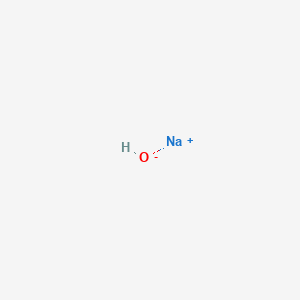
CAS 1310-73-2PubChem CID 14798
Sodium Hydroxide
Sodium hydroxide is an alkali metal hydroxide. — ChEBI
- IUPAC 명칭
- sodium hydroxide
- 분자식
- HNaO
- 분자량
- 39.997 g/mol
- 정확한 질량
- 39.99250893 Da
- 위상 극성 표면적
- 1.0 Ų
- 수소 결합 공여체
- 1
- 수소 결합 수용체
- 1
- 공유결합 단위
- 2
- 정의된 입체중심
- 0
다른 이름
Caustic sodaSodium hydrateAetznatronSoda lyeWhite causticSoda, causticNatriumhydroxidRohrputz
보고된 명칭 16개 더 보기
PlungCollo-GrillreinCollo-TapettaFuers RohrRohrreiniger RofixHydroxyde de sodiumSodium hydroxide (Na(OH))NatriumhydroxydeSoda, hydrateSodium hydroxide dimerNatrium causticumSoda, kaustischeLewis-red devil lyeSodio(idrossido di)Sodium hydroxide (Na2(OH)2)Stamperprep
외부 데이터베이스 식별자
- ChEBI:CHEBI:32145
- ChEMBL:CHEMBL2105794
- EPA DTXSID:DTXSID0029634
- PubMed:38202631
- PubMed:33358762
- PubMed:30365877
- PubMed:29953848
- PubMed:29893927
- PubMed:27258892
- PubMed:27206134
- PubMed:22363499
- PubMed:19433192
- PubMed:16756599
- PubMed:15965962
- PubMed:15302423
추가 과학 데이터베이스의 근거
NIH PubChem PUG-View
식별자 정확히 일치14798
Attributed physical-property, hazard, environmental and use annotations.
- Autoignition Temperature: Not flammable (USCG, 1999) 출처: CAMEO Chemicals
- Boiling Point: greater than 266 °F at 760 mmHg (USCG, 1999) 출처: CAMEO Chemicals
- Boiling Point: Very high (USCG, 1999) 출처: CAMEO Chemicals
- Boiling Point: 1388 출처: DrugBank
- Boiling Point: 1388 °C 출처: Hazardous Substances Data Bank (HSDB)
- Boiling Point: 1388 °C 출처: ILO-WHO International Chemical Safety Cards (ICSCs)
- Boiling Point: 2534 °F 출처: Occupational Safety and Health Administration (OSHA)
- Boiling Point: 1388 °C @760 [mm Hg] 출처: PAC Chemical Database, U.S. Department of Energy
- Boiling Point: 2534 °F 출처: The National Institute for Occupational Safety and Health (NIOSH)
- Color/Form: White, orthogonal crystals 출처: Hazardous Substances Data Bank (HSDB)
- Color/Form: Colorless to white ... solid (flakes, beads, granular form). 출처: Hazardous Substances Data Bank (HSDB)
- Color/Form: Brittle, white, translucent crystalline solid 출처: Hazardous Substances Data Bank (HSDB)
- Density: 1.5 at 68 °F (USCG, 1999) - Denser than water; will sink 출처: CAMEO Chemicals
- Density: 2.13 at 68 °F (USCG, 1999) - Denser than water; will sink 출처: CAMEO Chemicals
- Density: 2.13 g/cu cm 25 °C 출처: Hazardous Substances Data Bank (HSDB)
- Density: 70-73 % solution: MP 62 °C; Density = 2.0 at 15.5 °C 출처: Hazardous Substances Data Bank (HSDB)
- Density: 2.1 g/cm³ 출처: ILO-WHO International Chemical Safety Cards (ICSCs)
- Density: 2.13 출처: Occupational Safety and Health Administration (OSHA)
- Density: 2.13 @25 °C 출처: PAC Chemical Database, U.S. Department of Energy
- Density: 2.13 출처: The National Institute for Occupational Safety and Health (NIOSH)
- Dissociation Constants: SRP4: Completely dissociated 출처: Hazardous Substances Data Bank (HSDB)
- Melting Point: 604 °F (USCG, 1999) 출처: CAMEO Chemicals
- Melting Point: 323 출처: DrugBank
- Melting Point: 323 °C 출처: Hazardous Substances Data Bank (HSDB)
- Melting Point: 318 °C 출처: ILO-WHO International Chemical Safety Cards (ICSCs)
- Melting Point: 605 °F 출처: Occupational Safety and Health Administration (OSHA)
- Melting Point: 323 °C 출처: PAC Chemical Database, U.S. Department of Energy
- Melting Point: 605 °F 출처: The National Institute for Occupational Safety and Health (NIOSH)
- Odor: ... Odorless ... 출처: Hazardous Substances Data Bank (HSDB)
- Physical Description: Sodium hydroxide solution appears as a colorless liquid. More dense than water. Contact may severely irritate skin, eyes, and mucous membranes. Toxic by ingestion. Corrosive to metals and tissue. 출처: CAMEO Chemicals
- Physical Description: Sodium hydroxide, solid appears as a white solid. Corrosive to metals and tissue. Used in chemical manufacturing, petroleum refining, cleaning compounds, drain cleaners. 출처: CAMEO Chemicals
- Physical Description: Other Solid; Dry Powder; Liquid; Other Solid; CBI; Large Crystals; Dry Powder; Liquid; Large Crystals; Liquid; Liquid 출처: EPA Chemical Data Reporting (CDR)
- Physical Description: White or nearly white pellets, flakes, sticks, fused masses or other forms. Solutions are clear or slightly turbid, colourless or slightly coloured, strongly caustic and hygroscopic and when exposed to the air they absorb carbon dioxide, forming sodium carbonate 출처: EU Food Improvement Agents
- Physical Description: Colorless to white, odorless solid (flakes, beads, granular form); [NIOSH] Deliquescent; [CHEMINFO] 출처: Haz-Map, Information on Hazardous Chemicals and Occupational Diseases
- Physical Description: WHITE HYGROSCOPIC SOLID IN VARIOUS FORMS. 출처: ILO-WHO International Chemical Safety Cards (ICSCs)
- Physical Description: Colorless to white, odorless solid (flakes, beads, granular form). 출처: Occupational Safety and Health Administration (OSHA)
- Physical Description: Colorless to white, odorless solid (flakes, beads, granular form). 출처: The National Institute for Occupational Safety and Health (NIOSH)
- Refractive Index: Refractive index at 589.4 nm: 1.433 at 320 °C; 1.421 at 420 °C 출처: Hazardous Substances Data Bank (HSDB)
- Solubility: 111 % (NIOSH, 2024) 출처: CAMEO Chemicals
- Solubility: easily soluble in cold water, hot water 출처: DrugBank
- Solubility: Very soluble in water. Freely soluble in ethanol 출처: EU Food Improvement Agents
- Solubility: 1 g dissolves in 7.2 mL absolute alcohol, 4.2 mL methanol; also soluble in glycerol 출처: Hazardous Substances Data Bank (HSDB)
- Solubility: 1 g dissolves in 0.9 mL water, 0.3 mL boiling water 출처: Hazardous Substances Data Bank (HSDB)
- Solubility: Solubility in water, g/100ml at 20 °C: 109 (very good) 출처: ILO-WHO International Chemical Safety Cards (ICSCs)
- Solubility: 111% 출처: The National Institute for Occupational Safety and Health (NIOSH)
- Vapor Pressure: 0 mmHg (approx) (NIOSH, 2024) 출처: CAMEO Chemicals
- Vapor Pressure: VP: 1 Pa at 513 °C; 10 Pa at 605 °C; 100 Pa at 722 °C; 1kPa at 874 °C; 10 kPa at 1080 °C; 100 kPa at 1377 °C 출처: Hazardous Substances Data Bank (HSDB)
- Vapor Pressure: 1.82X10⁻²¹ mm Hg at 25 °C /extrapolated/ 출처: Hazardous Substances Data Bank (HSDB)
- Vapor Pressure: 0 mmHg (approx) 출처: Occupational Safety and Health Administration (OSHA)
- Vapor Pressure: 0 mmHg (approx) 출처: The National Institute for Occupational Safety and Health (NIOSH)
- Viscosity: 4.0 cP at 350 °C 출처: Hazardous Substances Data Bank (HSDB)
- pH: Strongly alkaline (1 % solution) 출처: EU Food Improvement Agents
- pH: pH of a 0.05% wt/wt solution about 12; 0.5% solution about 13; 5% solution about 14 출처: Hazardous Substances Data Bank (HSDB)
- Exposure Routes: Serious local effects by all routes of exposure. 출처: ILO-WHO International Chemical Safety Cards (ICSCs)
- Exposure Routes: inhalation, ingestion, skin and/or eye contact 출처: The National Institute for Occupational Safety and Health (NIOSH)
- First Aid: (Act quickly); EYES: flush with water at once for at least 15 min.; SKIN: flush with water, then rinse with dilute vinegar (acetic acid).; INGESTION: give water and milk. Do NOT induce vomiting. Call physician at once, even when injury seems to be slight. (USCG, 1999) 출처: CAMEO Chemicals
- First Aid: Excerpt from NIOSH Pocket Guide for Sodium hydroxide:; Eye: IRRIGATE IMMEDIATELY - If this chemical contacts the eyes, immediately wash (irrigate) the eyes with large amounts of water, occasionally lifting the lower and upper lids. Get medical attention immediately.; Skin: WATER FLUSH IMMEDIATELY - If this chemical contacts the skin, immediately flush the contaminated skin with water. If this chemical penetrates the clothing, immediately remove the clothing and flush the skin with water. Get medical attention promptly.; Breathing: RESPIRATORY SUPPORT - If a person breathes large amounts of this chemical, move the exposed person to fresh air at once. If breathing has stopped, perform artificial respiration. Keep the affected person warm and at rest. Get medical attention as soon as possible.; Swallow: MEDICAL ATTENTION IMMEDIATELY - If this chemical has been swallowed, get medical attention immediately. (NIOSH, 2024) 출처: CAMEO Chemicals
- ERG2024, Guide 154 (Sodium hydroxide, solution; Sodium hydroxide, solid): General First Aid:; · Call 911 or emergency medical service.; · Ensure that medical personnel are aware of the material(s) involved, take precautions to protect themselves and avoid contamination.; · Move victim to fresh air if it can be done safely.; · Administer oxygen if breathing is difficult.; · If victim is not breathing:; -- DO NOT perform mouth-to-mouth resuscitation; the victim may have ingested or inhaled the substance.; -- If equipped and pulse detected, wash face and mouth, then give artificial respiration using a proper respiratory medical device (bag-valve mask, pocket mask equipped with a one-way valve or other device).; -- If no pulse detected or no respiratory medical device available, provide continuous compressions. Conduct a pulse check every two minutes or monitor for any signs of spontaneous respirations.; · Remove and isolate contaminated clothing and shoes.; · For minor skin contact, avoid spreading material on unaffected skin.; · In case of contact with substance, remove immediately by flushing skin or eyes with running water for at least 20 minutes.; · For severe burns, immediate medical attention is required.; · Effects of exposure (inhalation, ingestion, 출처: Emergency Response Guidebook (ERG)
- ERG2024, Guide 154 (Caustic soda, solid; Caustic soda, solution): General First Aid:; · Call 911 or emergency medical service.; · Ensure that medical personnel are aware of the material(s) involved, take precautions to protect themselves and avoid contamination.; · Move victim to fresh air if it can be done safely.; · Administer oxygen if breathing is difficult.; · If victim is not breathing:; -- DO NOT perform mouth-to-mouth resuscitation; the victim may have ingested or inhaled the substance.; -- If equipped and pulse detected, wash face and mouth, then give artificial respiration using a proper respiratory medical device (bag-valve mask, pocket mask equipped with a one-way valve or other device).; -- If no pulse detected or no respiratory medical device available, provide continuous compressions. Conduct a pulse check every two minutes or monitor for any signs of spontaneous respirations.; · Remove and isolate contaminated clothing and shoes.; · For minor skin contact, avoid spreading material on unaffected skin.; · In case of contact with substance, remove immediately by flushing skin or eyes with running water for at least 20 minutes.; · For severe burns, immediate medical attention is required.; · Effects of exposure (inhalation, ingestion, 출처: Emergency Response Guidebook (ERG)
- First Aid: (General first aid procedures); Eye: Irrigate immediately - If this chemical contacts the eyes, immediately wash (irrigate) the eyes with large amounts of water, occasionally lifting the lower and upper lids. Get medical attention immediately.; Skin: Water flush immediately - If this chemical contacts the skin, immediately flush the contaminated skin with water. If this chemical penetrates the clothing, immediately remove the clothing and flush the skin with water. Get medical attention promptly.; Breathing: Respiratory support; Swallow: Medical attention immediately - If this chemical has been swallowed, get medical attention immediately. 출처: The National Institute for Occupational Safety and Health (NIOSH)
- Signal: Danger 출처: Regulation (EC) No 1272/2008 of the European Parliament and of the Council
- GHS Hazard Statements: H314: Causes severe skin burns and eye damage [Danger Skin corrosion/irritation] 출처: Regulation (EC) No 1272/2008 of the European Parliament and of the Council
- Precautionary Statement Codes: P260, P264, P280, P301+P330+P331, P302+P361+P354, P304+P340, P305+P354+P338, P316, P321, P363, P405, and P501 (click each P-code to see the statement) 출처: Regulation (EC) No 1272/2008 of the European Parliament and of the Council
- Note: This chemical does not meet GHS hazard criteria for < 0.1% (4 of 6949) of reports. 출처: European Chemicals Agency (ECHA)
- Signal: Danger 출처: European Chemicals Agency (ECHA)
- GHS Hazard Statements: H290 (47.5%): May be corrosive to metals [Warning Corrosive to Metals]; H314 (> 99.9%): Causes severe skin burns and eye damage [Danger Skin corrosion/irritation]; H315 (36.5%): Causes skin irritation [Warning Skin corrosion/irritation]; H318 (44.1%): Causes serious eye damage [Danger Serious eye damage/eye irritation]; H319 (36.6%): Causes serious eye irritation [Warning Serious eye damage/eye irritation] 출처: European Chemicals Agency (ECHA)
- Precautionary Statement Codes: P234, P260, P264, P264+P265, P280, P301+P330+P331, P302+P352, P302+P361+P354, P304+P340, P305+P351+P338, P305+P354+P338, P316, P317, P321, P332+P317, P337+P317, P362+P364, P363, P390, P405, P406, and P501 (click each P-code to see the statement) 출처: European Chemicals Agency (ECHA)
- ECHA C&L Notifications Summary: Aggregated GHS information provided per 6949 reports by companies from 80 notifications to the ECHA C&L Inventory. Each notification may be associated with multiple companies.; Reported as not meeting GHS hazard criteria per 4 of 6949 reports by companies.; There are 79 notifications provided by 6945 of 6949 reports by companies with hazard statement code(s).; Information may vary between notifications depending on impurities, additives, and other factors. The percentage value in parenthesis indicates the notified classification ratio from companies that provide hazard codes. Only hazard codes with percentage values above 10% are shown. For more detailed information, please visit ECHA C&L website. 출처: European Chemicals Agency (ECHA)
- GHS Hazard Statements: H290 (100%): May be corrosive to metals [Warning Corrosive to Metals]; H314 (100%): Causes severe skin burns and eye damage [Danger Skin corrosion/irritation]; H318 (100%): Causes serious eye damage [Danger Serious eye damage/eye irritation] 출처: European Chemicals Agency (ECHA)
- Precautionary Statement Codes: P234, P260, P264, P264+P265, P280, P301+P330+P331, P302+P361+P354, P304+P340, P305+P354+P338, P316, P317, P321, P363, P390, P405, P406, and P501 (click each P-code to see the statement) 출처: European Chemicals Agency (ECHA)
- ECHA C&L Notifications Summary: Aggregated GHS information provided per 2 reports by companies from 1 notifications to the ECHA C&L Inventory. Each notification may be associated with multiple companies.; Information may vary between notifications depending on impurities, additives, and other factors. The percentage value in parenthesis indicates the notified classification ratio from companies that provide hazard codes. Only hazard codes with percentage values above 10% are shown. For more detailed information, please visit ECHA C&L website. 출처: European Chemicals Agency (ECHA)
- Signal: Danger 출처: NITE-CMC
- NFPA Health Rating: 3 - Materials that, under emergency conditions, can cause serious or permanent injury. 출처: Hazardous Substances Data Bank (HSDB)
- NFPA Fire Rating: 0 - Materials that will not burn under typical fire conditions, including intrinsically noncombustible materials such as concrete, stone, and sand. 출처: Hazardous Substances Data Bank (HSDB)
- NFPA Instability Rating: 1 - Materials that in themselves are normally stable but that can become unstable at elevated temperatures and pressures. 출처: Hazardous Substances Data Bank (HSDB)
- Target Organs: Eyes, skin, respiratory system 출처: The National Institute for Occupational Safety and Health (NIOSH)
- Cosmetic Ingredient Review Conclusion: The CIR Expert Panel concluded that ... Sodium Hydroxide is safe in hair straighteners and depilatories under conditions of recommended use; users should minimize skin contact. These ingredients are safe for all other present practices of use and concentration described in this safety assessment when formulated to be nonirritating. 출처: Cosmetic Ingredient Review (CIR)
- Cosmetic Ingredient Review Finding(s): Safe for use in cosmetics, with qualifications 출처: Cosmetic Ingredient Review (CIR)
- Environmental Fate: AQUATIC FATE: In the case of a solid, anhydrous sodium hydroxide spill on soil, ground water pollution will occur if precipitation occurs prior to clean up. Precipitation will dissolve some of the solid (with much heat given off) and create an aqueous solution of sodium hydroxide, which then would be able to infiltrate the soil. However, prediction of the concentration and properties of the solution produced would be difficult. 출처: Hazardous Substances Data Bank (HSDB)
- Consumer Uses: Adhesion/cohesion promoter; Etching agent; Flocculating agent; Intermediate; Processing aids, specific to petroleum production; Oxidizing agent; Laboratory chemicals; Dye; Cleaning agent; Plasticizer; Stabilizing agent; Soil amendments (fertilizers); Catalyst; Ion exchange agent; Not Known or Reasonably Ascertainable; Processing aids not otherwise specified; Surfactant (surface active agent); Chemical reaction regulator; Fuel agents; pH regulating agent; Bleaching agent; Solvent; Dispersing agent; Anti-freeze agent; Anti-adhesive/cohesive; Other; Lubricating agent 출처: EPA Chemical Data Reporting (CDR)
- Industry Uses: Soil amendments (fertilizers); Ion exchange agent; Catalyst; Diluent; Not Known or Reasonably Ascertainable; Thickening agent; Corrosion inhibitor; Stabilizing agent; Reducing agent; Cleaning agent; Dye; Softener and conditioner; Adsorbent; Defoamer; Intermediate; Anti-scaling agent; Processing aids, specific to petroleum production; Adhesion/cohesion promoter; Etching agent; Flocculating agent; Chelating agent; Leaching agent; Lubricating agent; Other; Sizing agent; CBI; Swelling agent; Anti-freeze agent; Anti-adhesive/cohesive; Solvent; Fuel agents; pH regulating agent; Antioxidant; Bleaching agent; Chemical reaction regulator; Plating agent; Processing aids, not otherwise listed; Processing aids not otherwise specified 출처: EPA Chemical Data Reporting (CDR)
- Cosmetic Ingredient Review Link: CIR ingredient: Sodium Hydroxide 출처: Cosmetic Ingredient Review (CIR)
- Sources/Uses: Used to neutralize acids, produce sodium salts, hydrolyze fats to make soaps, and precipitate metals; large amounts are used in petroleum refining, rayon production, and rubber reclaiming; [Merck Index # 8627] Also used in metal cleaning, electroplating, processing cotton fabrics, and bleaching; [ATSDR Medical Management] Used in photography (developing bath); [www.ci.tucson.az.us/arthazards/medium.html] In semiconductor manufacturing, sodium hydroxide is used to develop the pattern in the photoresists and also as a wet echant. [CHS, p. 44-5] Caustic soda is used in hide preparation for leather production; [PMID 21938525] 출처: Haz-Map, Information on Hazardous Chemicals and Occupational Diseases
- Industrial Processes with risk of exposure: Acid and Alkali Cleaning of Metals [Category: Clean]; Electroplating [Category: Plate]; Petroleum Production and Refining [Category: Industry]; Semiconductor Manufacturing [Category: Industry]; Smelting Copper or Lead [Category: Industry]; Textiles (Fiber & Fabric Manufacturing) [Category: Industry]; Leather Tanning and Processing [Category: Industry]; Photographic Processing [Category: Other]; Textiles (Printing, Dyeing, or Finishing) [Category: Industry]; Metal Extraction and Refining [Category: Industry] 출처: Haz-Map, Information on Hazardous Chemicals and Occupational Diseases
- Activities with risk of exposure: Textile arts [Category: Hobbies]; Applying metallic patinas [Category: Hobbies] 출처: Haz-Map, Information on Hazardous Chemicals and Occupational Diseases
- Uses: Both oil base and water base fracturing fluids are being used in the fracturing industry. Water base, which includes alcohol-water mixtures and low strength acids, make up the majority of treating fluids. The common chemicals added to these fluids are polymers for viscosity development, crosslinkers for viscosity enhancement, pH control chemicals, gel breakers for polymer degradation following the treatment, surfactants, clay stabilizers, alcohol, bactericides, fluid loss additives and friction reducer. /Hydraulic fracturing/ 출처: Hazardous Substances Data Bank (HSDB)
- Uses: Hydraulic fracturing uses a specially blended liquid which is pumped into a well under extreme pressure causing cracks in rock formations underground. These cracks in the rock then allow oil and natural gas to flow, increasing resource production. ... Chemical Name: Sodium hydroxide; Chemical Purpose: Adjusts the pH of fluid to maintain the effectiveness of other components, such as crosslinkers; Product Function: pH Adjusting agent. 출처: Hazardous Substances Data Bank (HSDB)
- Uses: For sodium hydroxide (USEPA/OPP Pesticide Code: 075603) ACTIVE products with label matches. /SRP: Registered for use in the U.S. but approved pesticide uses may change periodically and so federal, state and local authorities must be consulted for currently approved uses./ 출처: Hazardous Substances Data Bank (HSDB)
- Uses: In inorganic chemistry, sodium hydroxide is used in the manufacture of sodium salts, for alkaline ore digestion, and for pH regulation. 출처: Hazardous Substances Data Bank (HSDB)
- Uses: For more Uses (Complete) data for SODIUM HYDROXIDE (16 total), please visit the HSDB record page. 출처: Hazardous Substances Data Bank (HSDB)
매핑 기준: Existing checksum-valid CAS to unique PubChem CID match. 가져온 시각: 2026-08-31. 출처 기록 열기
과학적 분류와 유해성 주석은 맥락을 제공할 뿐이며, 위에 표시된 시장별 규제 판단을 대체하지 않습니다.
추가 출처 적용 범위 및 일치 상태
| 출처 | 결과 | 확인됨 |
|---|---|---|
| NIH PubChem PUG-View | 정확히 일치 | 2026-08-31 |
기록된 불일치는 출처를 확인했다는 유용한 근거이며, 해당 물질이 다른 곳에 존재하지 않는다는 주장이 아닙니다.
체크섬이 유효한 CAS 일치를 통해 2026-09-02에 NIH PubChem에서 가져왔습니다. 화학적 특성은 이 페이지의 규제 판단을 대체하지 않습니다.
추가 공신력 있는 물질 조사
각 링크는 해당 출처에서 이 정체를 검색합니다. 링크는 조사 경로일 뿐이며, 그 출처에 정확히 일치하는 기록이 있다는 주장이 아닙니다. 각 출처의 성격과 법적 비중
공식 출처 및 범위
집행위원회 시행결정 (EU) 2025/1175(데이터세트 버전 EU 2025/1175)에서 가져왔습니다. 이 용어집은 제19조 제1항 (g)호에서 요구하는 성분 목록에 사용할 일반 원료 명칭을 제공하며, 승인 또는 안전성 목록이 아닙니다.
공식 결정 열기