
CAS
기록 1건
CAS 106-97-8
CAS 106-97-8은(는) 규정 1223/2009의 부속서 II–VI에 걸쳐 EU 부속서 기록 1건과 일치합니다.
CAS 106-97-8의 기록
1 총화학적 정체 및 특성
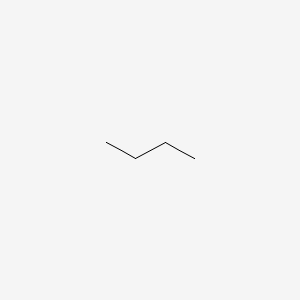
CAS 106-97-8PubChem CID 7843
Butane
Butane is a straight chain alkane composed of 4 carbon atoms. It has a role as a food propellant and a refrigerant. It is a gas molecular entity and an alkane. — ChEBI
- IUPAC 명칭
- butane
- 분자식
- C4H10
- 분자량
- 58.12 g/mol
- 정확한 질량
- 58.078250319 Da
- XLogP3
- 2.9
- 위상 극성 표면적
- 0.0 Ų
- 수소 결합 공여체
- 0
- 수소 결합 수용체
- 0
- 공유결합 단위
- 1
- 정의된 입체중심
- 0
다른 이름
n-ButaneDiethylMethylethylmethaneButanenButaniButyl hydrideHC 600A 21 (lowing agent)
보고된 명칭 16개 더 보기
R 600n-Butan6LV4FOR43RE943an-C4H10INS NO.943INS-943E-943R-600CHEBI:37808E 943aE-943anormal-ButaneRefChem:6622203-448-7butan
외부 데이터베이스 식별자
- ChEBI:CHEBI:37808
- ChEMBL:CHEMBL134702
- EPA DTXSID:DTXSID7024665
- PubMed:33064461
- PubMed:23125663
- PubMed:23068766
- PubMed:23061282
- PubMed:23044760
- PubMed:23033646
- PubMed:23023783
- PubMed:23013417
- PubMed:23013036
- PubMed:23007637
- PubMed:23007545
- PubMed:22998760
추가 과학 데이터베이스의 근거
EMBL-EBI ChEBI
식별자 정확히 일치CHEBI:37808
butane
A straight chain alkane composed of 4 carbon atoms.
- 처방
- C4H10
- 평균 질량
- 58.124 g/mol
- 단일 동위원소 질량
- 58.07825 Da
- 형식 전하
- 0
- alkane — is a (CHEBI:18310)
- gas molecular entity — is a (CHEBI:138675)
- refrigerant — has role (CHEBI:78433)
- food propellant — has role (CHEBI:78017)
- antihypertensive agent — has role (CHEBI:35674)
- refrigerant — has role (CHEBI:78433)
- food propellant — has role (CHEBI:78017)
- antihypertensive agent — has role (CHEBI:35674)
- alkane — is a (CHEBI:18310)
- gas molecular entity — is a (CHEBI:138675)
추가 선별 명칭
butaneE-943E 943aE-943aE943an-Butann-butanen-C4H10HC 600Hc 600 (hydrocarbon)INS-943INS NO.943N-BUTANER 600R-600R 600 (alkane)
이 출처의 상호 참조
매핑 기준: Exact CAS cross-reference in the ChEBI compound record. 출처 업데이트: 2020-11-13. 가져온 시각: 2026-08-31. 출처 기록 열기
NIH PubChem PUG-View
식별자 정확히 일치7843
Attributed physical-property, hazard, environmental and use annotations.
- Autoignition Temperature: 550 °F (USCG, 1999) 출처: CAMEO Chemicals
- Autoignition Temperature: 550 °F (287 °C) 출처: Hazardous Substances Data Bank (HSDB)
- Autoignition Temperature: 365 °C 출처: ILO-WHO International Chemical Safety Cards (ICSCs)
- Boiling Point: 31.1 °F at 760 mmHg (NTP, 1992) 출처: CAMEO Chemicals
- Boiling Point: -0.50 °C 출처: Hazardous Substances Data Bank (HSDB)
- Boiling Point: -0.5 °C 출처: ILO-WHO International Chemical Safety Cards (ICSCs)
- Boiling Point: 31 °F 출처: Occupational Safety and Health Administration (OSHA)
- Boiling Point: 31 °F 출처: The National Institute for Occupational Safety and Health (NIOSH)
- Color/Form: Colorless gas [Note: Shipped as a liquefied compressed gas. A liquid below 31 degrees F] 출처: Hazardous Substances Data Bank (HSDB)
- Density: 0.6 at 32 °F (USCG, 1999) - Less dense than water; will float 출처: CAMEO Chemicals
- Density: 0.573 g/cu cm at 25 °C (p>1 atm) 출처: Hazardous Substances Data Bank (HSDB)
- Density: Liquid density (at saturation pressure; 15.6 °C), kg/cu m: 583.0 /from table/ 출처: Hazardous Substances Data Bank (HSDB)
- Density: Relative density (water = 1): 0.6 출처: ILO-WHO International Chemical Safety Cards (ICSCs)
- Density: 0.6 at 32 °F 출처: Occupational Safety and Health Administration (OSHA)
- Density: 0.599 @25 °C 출처: PAC Chemical Database, U.S. Department of Energy
- Density: 0.6 (Liquid at 31 °F) 출처: The National Institute for Occupational Safety and Health (NIOSH)
- Density: 2.11(relative gas density) 출처: The National Institute for Occupational Safety and Health (NIOSH)
- Flash Point: -76 °F (NTP, 1992) 출처: CAMEO Chemicals
- Flash Point: -60 °C 출처: Haz-Map, Information on Hazardous Chemicals and Occupational Diseases
- Flash Point: Gas: -76 °F (-60 °C) (Closed cup) 출처: Hazardous Substances Data Bank (HSDB)
- Flash Point: -60 °C 출처: ILO-WHO International Chemical Safety Cards (ICSCs)
- Flash Point: -76 °F 출처: Occupational Safety and Health Administration (OSHA)
- Flash Point: NA (Gas) 출처: The National Institute for Occupational Safety and Health (NIOSH)
- LogP: log Kow = 2.89 출처: Hazardous Substances Data Bank (HSDB)
- LogP: 2.89 출처: ILO-WHO International Chemical Safety Cards (ICSCs)
- Melting Point: -217.1 °F (NTP, 1992) 출처: CAMEO Chemicals
- Melting Point: -138.3 °C 출처: Hazardous Substances Data Bank (HSDB)
- Melting Point: -138 °C 출처: ILO-WHO International Chemical Safety Cards (ICSCs)
- Melting Point: -217 °F 출처: Occupational Safety and Health Administration (OSHA)
- Melting Point: -138.3 °C 출처: PAC Chemical Database, U.S. Department of Energy
- Melting Point: -217 °F 출처: The National Institute for Occupational Safety and Health (NIOSH)
- Odor: Faint, disagreeable odor 출처: Hazardous Substances Data Bank (HSDB)
- Physical Description: Butane is a colorless gas with a faint petroleum-like odor. For transportation it may be stenched. It is shipped as a liquefied gas under its vapor pressure. Contact with the liquid can cause frostbite. It is easily ignited. Its vapors are heavier than air. Any leak can be either liquid or vapor. Under prolonged exposure to fire or intense heat the containers may rupture violently and rocket. It is used as a fuel, an aerosol propellant, in cigarette lighters, and to make other chemicals. 출처: CAMEO Chemicals
- Physical Description: CBI; Other Solid; Gas Vapor; Gas Vapor; Liquid; Liquid 출처: EPA Chemical Data Reporting (CDR)
- Physical Description: Colourless gas or liquid with mild, characteristic odour 출처: EU Food Improvement Agents
- Physical Description: Colorless gas with a gasoline-like or natural gas odor; Note: Shipped as a liquefied compressed gas. A liquid below 31 degrees F; [NIOSH] Vapor density = 2.07 (heavier than air); [HSDB] 출처: Haz-Map, Information on Hazardous Chemicals and Occupational Diseases
- Physical Description: ODOURLESS COLOURLESS COMPRESSED LIQUEFIED GAS. 출처: ILO-WHO International Chemical Safety Cards (ICSCs)
- Physical Description: Colorless gas with a gasoline-like or natural gas odor. 출처: Occupational Safety and Health Administration (OSHA)
- Physical Description: Colorless gas with a gasoline-like or natural gas odor. [Note: Shipped as a liquefied compressed gas. A liquid below 31 °F.] 출처: The National Institute for Occupational Safety and Health (NIOSH)
- Refractive Index: Index of refraction: 1.3326 at 20 °C/D 출처: Hazardous Substances Data Bank (HSDB)
- Solubility: 61 mg/L at 68 °F (NTP, 1992) 출처: CAMEO Chemicals
- Solubility: In water, 61.2 mg/L at 25 °C 출처: Hazardous Substances Data Bank (HSDB)
- Solubility: Very soluble in ethanol, ethyl ether, chloroform 출처: Hazardous Substances Data Bank (HSDB)
- Solubility: Solubility in water, g/100ml at 20 °C: 0.0061 출처: ILO-WHO International Chemical Safety Cards (ICSCs)
- Solubility: Slight 출처: The National Institute for Occupational Safety and Health (NIOSH)
- Vapor Pressure: 760 mmHg at 31.1 °F ; 1823 mmHg at 77 °F (NTP, 1992) 출처: CAMEO Chemicals
- Vapor Pressure: 1820 mm Hg at 25 °C 출처: Hazardous Substances Data Bank (HSDB)
- Vapor Pressure: Vapor pressure, kPa at 21.1 °C: 213.7 출처: ILO-WHO International Chemical Safety Cards (ICSCs)
- Vapor Pressure: 2.05 atm 출처: Occupational Safety and Health Administration (OSHA)
- Vapor Pressure: 1820 [mm Hg] @25 °C 출처: PAC Chemical Database, U.S. Department of Energy
- Vapor Pressure: 2.05 atm 출처: The National Institute for Occupational Safety and Health (NIOSH)
- Viscosity: 7.5 at 300 K; 9.9 at 400 K; 12.2 at 500 K; 14.5 at 600 K (all in uPa.s) (gas) 출처: Hazardous Substances Data Bank (HSDB)
- Carcinogen Classification: n-Butane is found in gasoline, which is possibly carcinogenic to humans (Group 2B). (L135) 출처: Toxin and Toxin Target Database (T3DB)
- Exposure Routes: The substance can be absorbed into the body by inhalation. 출처: ILO-WHO International Chemical Safety Cards (ICSCs)
- Exposure Routes: inhalation, skin and/or eye contact (liquid) 출처: The National Institute for Occupational Safety and Health (NIOSH)
- Exposure Routes: Inhalation (L1283) 출처: Toxin and Toxin Target Database (T3DB)
- First Aid: EYES: First check the victim for contact lenses and remove if present. Flush victim's eyes with water or normal saline solution for 20 to 30 minutes while simultaneously calling a hospital or poison control center. Do not put any ointments, oils, or medication in the victim's eyes without specific instructions from a physician. If symptoms (such as redness or irritation) develop, immediately transport the victim to a hospital.; SKIN: CAUTION: Exposure of skin to compressed gases may result in freezing of the skin. Treatment for frostbite may be necessary. Remove the victim from the source of contamination. IMMEDIATELY wash affected areas gently with COLD water (and soap, if necessary) while removing and isolating all contaminated clothing. Dry carefully with clean, soft towels. If symptoms such as inflammation or irritation develop, IMMEDIATELY call a physician or go to a hospital for treatment.; INHALATION: IMMEDIATELY leave the contaminated area; take deep breaths of fresh air. If symptoms (such as wheezing, coughing, shortness of breath, or burning in the mouth, throat, or chest) develop, call a physician and be prepared to transport the victim to a hospital. Provide proper resp 출처: CAMEO Chemicals
- ERG2024, Guide 115 (Butane): General First Aid:; · Call 911 or emergency medical service.; · Ensure that medical personnel are aware of the material(s) involved, take precautions to protect themselves and avoid contamination.; · Move victim to fresh air if it can be done safely.; · Administer oxygen if breathing is difficult.; · If victim is not breathing:; -- DO NOT perform mouth-to-mouth resuscitation; the victim may have ingested or inhaled the substance.; -- If equipped and pulse detected, wash face and mouth, then give artificial respiration using a proper respiratory medical device (bag-valve mask, pocket mask equipped with a one-way valve or other device).; -- If no pulse detected or no respiratory medical device available, provide continuous compressions. Conduct a pulse check every two minutes or monitor for any signs of spontaneous respirations.; · Remove and isolate contaminated clothing and shoes.; · For minor skin contact, avoid spreading material on unaffected skin.; · In case of contact with substance, remove immediately by flushing skin or eyes with running water for at least 20 minutes.; · For severe burns, immediate medical attention is required.; · Effects of exposure (inhalation, ingestion, 출처: Emergency Response Guidebook (ERG)
- First Aid: (General first aid procedures); Eye: Frostbite - If eye tissue is frozen, seek medical attention immediately; if tissue is not frozen, immediately and thoroughly flush the eyes with large amounts of water for at least 15 minutes, occasionally lifting the lower and upper eyelids. If irritation, pain, swelling, lacrimation, or photophobia persist, get medical attention as soon as possible.; Skin: Frostbite - Compressed gases may create low temperatures when they expand rapidly. Leaks and uses that allow rapid expansion may cause a frostbite hazard. Wear appropriate personal protective clothing to prevent the skin from becoming frozen.; Breathing: Respiratory support 출처: The National Institute for Occupational Safety and Health (NIOSH)
- Signal: Danger 출처: Regulation (EC) No 1272/2008 of the European Parliament and of the Council
- GHS Hazard Statements: H220: Extremely flammable gas [Danger Flammable gases] 출처: Regulation (EC) No 1272/2008 of the European Parliament and of the Council
- Precautionary Statement Codes: P203, P210, P222, P280, P377, P381, and P403 (click each P-code to see the statement) 출처: Regulation (EC) No 1272/2008 of the European Parliament and of the Council
- GHS Hazard Statements: H220: Extremely flammable gas [Danger Flammable gases]; H340: May cause genetic defects [Danger Germ cell mutagenicity]; H350: May cause cancer [Danger Carcinogenicity] 출처: Regulation (EC) No 1272/2008 of the European Parliament and of the Council
- Precautionary Statement Codes: P203, P210, P222, P280, P318, P377, P381, P403, P405, and P501 (click each P-code to see the statement) 출처: Regulation (EC) No 1272/2008 of the European Parliament and of the Council
- Signal: Danger 출처: European Chemicals Agency (ECHA)
- GHS Hazard Statements: H220 (99.8%): Extremely flammable gas [Danger Flammable gases]; H280 (35%): Contains gas under pressure; may explode if heated [Warning Gases under pressure] 출처: European Chemicals Agency (ECHA)
- Precautionary Statement Codes: P203, P210, P222, P280, P377, P381, P403, and P410+P403 (click each P-code to see the statement) 출처: European Chemicals Agency (ECHA)
- ECHA C&L Notifications Summary: Aggregated GHS information provided per 2477 reports by companies from 47 notifications to the ECHA C&L Inventory. Each notification may be associated with multiple companies.; Information may vary between notifications depending on impurities, additives, and other factors. The percentage value in parenthesis indicates the notified classification ratio from companies that provide hazard codes. Only hazard codes with percentage values above 10% are shown. For more detailed information, please visit ECHA C&L website. 출처: European Chemicals Agency (ECHA)
- Signal: Danger 출처: NITE-CMC
- GHS Hazard Statements: H220: Extremely flammable gas [Danger Flammable gases]; H336: May cause drowsiness or dizziness [Warning Specific target organ toxicity, single exposure; Narcotic effects]; H372: Causes damage to organs through prolonged or repeated exposure [Danger Specific target organ toxicity, repeated exposure] 출처: NITE-CMC
- Precautionary Statement Codes: P203, P210, P222, P260, P261, P264, P270, P271, P280, P304+P340, P319, P377, P381, P403, P403+P233, P405, and P501 (click each P-code to see the statement) 출처: NITE-CMC
- Health Effects: Butane targets the central nervous system and cardiovascular system. Inhalation of butane can cause frostbite which can result in death from asphyxiation and ventricular fibrillation. (L1283, L1284) 출처: Toxin and Toxin Target Database (T3DB)
- NFPA Health Rating: 1 - Materials that, under emergency conditions, can cause significant irritation. 출처: Hazardous Substances Data Bank (HSDB)
- NFPA Fire Rating: 4 - Materials that rapidly or completely vaporize at atmospheric pressure and normal ambient temperature or that are readily dispersed in air and burn readily. 출처: Hazardous Substances Data Bank (HSDB)
- NFPA Instability Rating: 0 - Materials that in themselves are normally stable, even under fire conditions. 출처: Hazardous Substances Data Bank (HSDB)
- Target Organs: central nervous system 출처: The National Institute for Occupational Safety and Health (NIOSH)
- Cosmetic Ingredient Review Finding(s): Safe in the present practices of use and concentration. Ingredient, concentration, and use information are available in documents discoverable at https://cir-reports.cir-safety.org 출처: Cosmetic Ingredient Review (CIR)
- Toxicity Summary: n-Butane is a colorless, flammable gas at room temperature. It occurs as a component in natural gas from which it is refined. n-Butane is used as fuel, refrigerant and aerosol propellant. The acute toxicity of n-butane has been studied after inhalation exposure in experimental animals. LC50 (4h) was 658 mg/l in rats and LC50 (2h) was 680 mg/l in mice. In dogs, lethal concentrations ranged from 474 to 592 mg/l. A concentration of 308 mg/l caused light anesthesia in mice within 25 minutes, and an exposure to 521 mg/l had similar effect within one minute. n-Butane ... sensitiz/ed/ the myocardium to epinephrine-induced cardiac arrhythmias in dogs after inhalation. No reports on acute toxicity of n-butane in experimental animals by other administration routes were located in the available literature. In a 21-day inhalation toxicity study of a mixture of n-butane, isobutane, n-penta and isopentane, containing 25% of each, the absence of toxicity was evident up to 11.8 mg/l which was the highest concentration tested. The study was performed in Sprague-Dawley rats which were exposed 6 hours per day over three weeks for a total of 15 exposures. No long-term studies using pure n-butane were 출처: Hazardous Substances Data Bank (HSDB)
- Toxicity Summary: Butane is a simple asphyxiant and causes toxicity by displacing oxygen. It also affects the central nervous system by enhancing glycine receptors and inhibiting N-methyl-d-aspartate (NMDA) receptors. (L1284, A352) 출처: Toxin and Toxin Target Database (T3DB)
- Environmental Bioconcentration: An estimated BCF of 33 was calculated for n-butane(SRC), using a log Kow of 2.89(1) and a regression-derived equation(2). According to a classification scheme(3), this BCF suggests the potential for bioconcentration in aquatic organisms is moderate(SRC). 출처: Hazardous Substances Data Bank (HSDB)
- Environmental Fate: TERRESTRIAL FATE: Based on a classification scheme(1), an estimated Koc value of 40(SRC), determined from a log Kow of 2.89(2) and a regression-derived equation(3), indicates that n-butane is expected to have high mobility in soil(SRC). Volatilization of n-butane from moist soil surfaces is expected to be an important fate process(SRC) given an estimated Henry's Law constant of 0.95 atm-cu m/mole(SRC), derived from its vapor pressure, 1820 mm Hg(4) and water solubility, 61.2 mg/L(5). The potential for volatilization of n-butane from dry soil surfaces may exist(SRC) based upon its vapor pressure(4). While volatilization from soil surfaces is expected to be the predominant fate process of n-butane released to soil, this compound is also susceptible to biodegradation(SRC). A biodegradation rate of 1.8 mg C/day/kg dry soil(6) suggests that biodegradation may be an important environmental fate process in soil(SRC). 출처: Hazardous Substances Data Bank (HSDB)
- Environmental Fate: AQUATIC FATE: Based on a classification scheme(1), an estimated Koc value of 40(SRC), determined from a log Kow of 2.89(2) and a regression-derived equation(3), indicates that n-butane is not expected to adsorb to suspended solids and sediment(SRC). Volatilization from water surfaces is expected(4) based upon an estimated Henry's Law constant of 0.95 atm-cu m/mole(SRC), derived from its vapor pressure, 1820 mm Hg(5) and water solubility, 61.2 mg/L(6). Using this Henry's Law constant and an estimation method(3), volatilization half-lives for a model river and model lake are 50 minutes and 3 days, respectively(SRC). According to a classification scheme(7), an estimated BCF of 40(SRC), from its log Kow(2) and a regression-derived equation(3), suggests the potential for bioconcentration in aquatic organisms is moderate(SRC). Photolysis(8) or hydrolysis(4) of n-butane in aquatic systems are not expected to be important environmental fate process in water(SRC). While volatilization from water surfaces is expected to be the predominant fate process in water, this compound is also susceptible to biodegradation(SRC). Complete biodegradation was reported in 34 days using an activated sludge 출처: Hazardous Substances Data Bank (HSDB)
- Environmental Fate: ATMOSPHERIC FATE: According to a model of gas/particle partitioning of semivolatile organic compounds in the atmosphere(1), n-butane, which has a vapor pressure of 1820 mm Hg at 25 °C(2), is expected to exist solely as a gas in the ambient atmosphere. Gas-phase n-butane is degraded in the atmosphere by reaction with photochemically-produced hydroxyl radicals(SRC); the half-life for this reaction in air is estimated to be 6.3 days(SRC), calculated from its rate constant of 2.54X10⁻¹² cu cm/molecule-sec at 25 deg(3). Experimental data showed that 7.7% of the n-butane fraction in a dark chamber reacted with nitrogen oxide to form the corresponding alkyl nitrate(4,5), suggesting nighttime reactions with radical species and nitrogen oxides may contribute to the atmospheric transformation of n-butane(SRC). Based on data for iso-octane and n-hexane(6), n-butane is not expected to absorb UV light at wavelengths >290 nm and, therefore, is not expected to be susceptible to direct photolysis by sunlight(SRC). 출처: Hazardous Substances Data Bank (HSDB)
- Consumer Uses: Intermediate; Propellants, non-motive (blowing agents); Filler; Not Known or Reasonably Ascertainable; Fuels and fuel additives; Fuel; Fuel agents; Other 출처: EPA Chemical Data Reporting (CDR)
- Industry Uses: Fuels and fuel additives; Processing aids not otherwise specified; Fuel; Fuel agents; Abrasives; Other; Intermediate; Propellants, non-motive (blowing agents); Not Known or Reasonably Ascertainable; Sealant (barrier) 출처: EPA Chemical Data Reporting (CDR)
- Cosmetic Ingredient Review Link: CIR ingredient: Butane 출처: Cosmetic Ingredient Review (CIR)
- Cosmetic Ingredient Review Link: CIR ingredient: n-Butane 출처: Cosmetic Ingredient Review (CIR)
- Sources/Uses: Used as an aerosol propellant, fuel, and chemical intermediate; present in natural gas and liquefied petroleum gas (LPG); [ACGIH] 출처: Haz-Map, Information on Hazardous Chemicals and Occupational Diseases
- Industrial Processes with risk of exposure: Petroleum Production and Refining [Category: Industry] 출처: Haz-Map, Information on Hazardous Chemicals and Occupational Diseases
- Uses: As producer gas; raw material for motor fuels, in the manufacture of synthetic rubbers. 출처: Hazardous Substances Data Bank (HSDB)
- Uses: Organic synthesis, raw material for synthetic rubber and high-octane liquid fuels, fuel for household and many industrial purposes; manufacture of ethylene; solvent; refrigerant; standby and enricher gas; propellant in aerosols; pure grades used in calibrating instruments; food additive. 출처: Hazardous Substances Data Bank (HSDB)
- Uses: ... In the synthesis of high octane blend stocks of motor fuel. 출처: Hazardous Substances Data Bank (HSDB)
- Uses: In the synthesis of maleic anhydride, ethylene and by-products, acetic acid and other oxygenated by-products, formic acid, and isobutane. 출처: Hazardous Substances Data Bank (HSDB)
- Uses: For more Uses (Complete) data for n-Butane (7 total), please visit the HSDB record page. 출처: Hazardous Substances Data Bank (HSDB)
- Uses: Butanes are components of gasoline and can also be used as refrigerants and propellants in aerosol sprays. Butane gas is sold bottled as a fuel for cooking and camping and is also found in cigarette lighters. Butane is a simple asphyxiant and commonly used substance of abuse that is responsible for a large number of "solvent related" deaths. (L1283, L1284) 출처: Toxin and Toxin Target Database (T3DB)
매핑 기준: Existing checksum-valid CAS to unique PubChem CID match. 가져온 시각: 2026-08-31. 출처 기록 열기
과학적 분류와 유해성 주석은 맥락을 제공할 뿐이며, 위에 표시된 시장별 규제 판단을 대체하지 않습니다.
추가 출처 적용 범위 및 일치 상태
| 출처 | 결과 | 확인됨 |
|---|---|---|
| EMBL-EBI ChEBI | 정확히 일치 | 2026-08-31 |
| NIH PubChem PUG-View | 정확히 일치 | 2026-08-31 |
기록된 불일치는 출처를 확인했다는 유용한 근거이며, 해당 물질이 다른 곳에 존재하지 않는다는 주장이 아닙니다.
체크섬이 유효한 CAS 일치를 통해 2026-09-02에 NIH PubChem에서 가져왔습니다. 화학적 특성은 이 페이지의 규제 판단을 대체하지 않습니다.
이 사이트에서 CAS 106-97-8을(를) 사용하는 방식
CAS 106-97-8은(는) 이 페이지를 특정 물질에 고정하는 데 사용하는 Chemical Abstracts Service 식별자입니다. 현재 데이터세트에서는 EU 부속서 기록 1건이 이 식별자를 공유하며, 같은 물질이 하나의 규제 맥락에 나타나는지 여러 맥락에 나타나는지 교차 확인하는 데 도움이 됩니다.
공급업체 규격서, SDS 또는 원료 문서에 CAS 106-97-8이(가) 제시되어 있고 연결된 모든 부속서 II–VI 기록을 한곳에서 확인해야 할 때 이 페이지를 이용하세요. 위의 항목 카드는 농도 한도, 경고 문구, 부속서 위치 및 제품 유형 조건을 가장 빠르게 확인하는 방법입니다.
자주 묻는 질문
CAS 106-97-8로 식별되는 물질은 맥락에 따라 다른 조건이 적용되는 경우 EU 화장품 규정의 여러 부속서에 나타날 수 있습니다. 예를 들어 어떤 물질이 부속서 III에서 특정 조건으로 사용제한될 수 있고, 같은 CAS가 부속서 IV에서 별도의 항목 조건에 따라 허용 색소로 나타날 수도 있습니다. 각 항목은 개별적으로 검토해야 합니다.
CAS 번호를 원료 규격서 및 CoA 문서와 대조하세요. CAS가 부속서 II에 있으면 해당 물질이 없는지 확인하세요. 부속서 III에 있으면 처방에서 농도 한도와 제품 유형 조건이 충족되는지 확인하세요. 이 CAS 번호를 공유하는 모든 부속서 항목이 위에 나열되어 있습니다.
CAS 번호는 미국의 Chemical Abstracts Service가 부여하며 전 세계적으로 통용됩니다. EC 번호는 EINECS, ELINCS 또는 NLP 목록 같은 목록에 수록된 유럽연합 집행위원회 식별자입니다. 두 식별자 모두 EU 화장품 부속서 항목에 나타날 수 있습니다. 두 가지를 모두 가진 물질도 있고, 하나만 가진 물질도 있으며, 일부 오래된 항목은 둘 다 없을 수도 있습니다.
INCI 검사기는 원료명, CAS 번호 및 EC 번호를 받습니다. 이 CAS 번호를 직접 확인한 다음, 결과를 공급업체 규격서 및 연결된 모든 부속서 조건과 대조하세요.