
TOLUENE
Toluene
TOLUENE은(는) 부속서 III에 등재되어 있으며 이 기록에 표시된 조건에서만 사용할 수 있습니다. 이 기록의 최대 농도: 25%.
기록 세부 정보
최대 농도
25%
제품 유형
경고 문구
Keep out of reach of children. To be used by adults only
INCI 용어집 명칭
TOLUENE
화학명
Toluene
규제 정보
SCCS 의견
식별된 원료
CMR
| 카테고리 | Carcinogenic | Mutagenic | Reprotoxic |
|---|---|---|---|
| Cat. 2 | — | — | ✓ |
주요 데이터
화학적 정체 및 특성
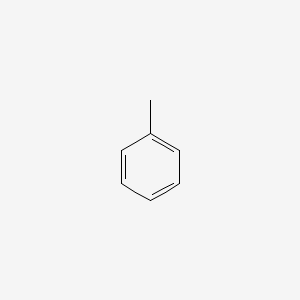
Toluene
Toluene is the simplest member of the class toluenes consisting of a benzene core which bears a single methyl substituent. It has a role as a non-polar solvent, a cholinergic antagonist, a neurotoxin and a fuel additive. It is a volatile organic compound, a member of toluenes and a methylbenzene. — ChEBI
- IUPAC 명칭
- toluene
- 분자식
- C7H8
- 분자량
- 92.14 g/mol
- 정확한 질량
- 92.062600255 Da
- XLogP3
- 2.7
- 위상 극성 표면적
- 0.0 Ų
- 수소 결합 공여체
- 0
- 수소 결합 수용체
- 0
- 공유결합 단위
- 1
- 정의된 입체중심
- 0
다른 이름
보고된 명칭 16개 더 보기
외부 데이터베이스 식별자
- ChEBI:CHEBI:17578
- ChEMBL:CHEMBL9113
- EPA DTXSID:DTXSID00184990
- EPA DTXSID:DTXSID7021360
- PubMed:38070821
- PubMed:37944760
- PubMed:36416909
- PubMed:34921580
- PubMed:33438815
- PubMed:33269480
- PubMed:33064461
- PubMed:32980479
- PubMed:32728564
- PubMed:32437847
- PubMed:32234516
- PubMed:30910524
추가 과학 데이터베이스의 근거
NIH PubChem PUG-View
Attributed physical-property, hazard, environmental and use annotations.
- Autoignition Temperature: 896 °F (USCG, 1999) 출처: CAMEO Chemicals
- Autoignition Temperature: 896 °F (480 °C) 출처: Hazardous Substances Data Bank (HSDB)
- Autoignition Temperature: 480 °C 출처: ILO-WHO International Chemical Safety Cards (ICSCs)
- Boiling Point: 231.1 °F at 760 mmHg (NTP, 1992) 출처: CAMEO Chemicals
- Boiling Point: 110.6 °C 출처: DrugBank
- Boiling Point: 110.6 °C 출처: Hazardous Substances Data Bank (HSDB)
- Boiling Point: 110.00 to 111.00 °C. @ 760.00 mm Hg 출처: Human Metabolome Database (HMDB)
- Boiling Point: 111 °C 출처: ILO-WHO International Chemical Safety Cards (ICSCs)
- Boiling Point: 232 °F 출처: Occupational Safety and Health Administration (OSHA)
- Boiling Point: 110.63 °C @760 [mm Hg] 출처: PAC Chemical Database, U.S. Department of Energy
- Boiling Point: 232 °F 출처: The National Institute for Occupational Safety and Health (NIOSH)
- Color/Form: Colorless liquid 출처: Hazardous Substances Data Bank (HSDB)
- Density: 0.867 at 68 °F (USCG, 1999) - Less dense than water; will float 출처: CAMEO Chemicals
- Density: 0.8623 g/cu cm at 20 °C 출처: Hazardous Substances Data Bank (HSDB)
- Density: Relative density (water = 1): 0.87 출처: ILO-WHO International Chemical Safety Cards (ICSCs)
- Density: 0.87 출처: Occupational Safety and Health Administration (OSHA)
- Density: 0.8623 @25 °C 출처: PAC Chemical Database, U.S. Department of Energy
- Density: 0.87 출처: The National Institute for Occupational Safety and Health (NIOSH)
- Flash Point: 40 °F (NTP, 1992) 출처: CAMEO Chemicals
- Flash Point: 4.4 °C 출처: Haz-Map, Information on Hazardous Chemicals and Occupational Diseases
- Flash Point: 4.0 °C (39.2 °F) - closed cup 출처: Hazardous Substances Data Bank (HSDB)
- Flash Point: 4.4 dec C (closed cup) 출처: Hazardous Substances Data Bank (HSDB)
- Flash Point: 40 °F (4 °C) (Closed cup) 출처: Hazardous Substances Data Bank (HSDB)
- Flash Point: 4 °C c.c. 출처: ILO-WHO International Chemical Safety Cards (ICSCs)
- Flash Point: 40 °F 출처: Occupational Safety and Health Administration (OSHA)
- Flash Point: 40 °F 출처: The National Institute for Occupational Safety and Health (NIOSH)
- LogP: 2.73 출처: DrugBank
- LogP: log Kow = 2.73 출처: Hazardous Substances Data Bank (HSDB)
- LogP: 2.73 출처: Human Metabolome Database (HMDB)
- LogP: 2.69 출처: ILO-WHO International Chemical Safety Cards (ICSCs)
- Melting Point: -139 °F (NTP, 1992) 출처: CAMEO Chemicals
- Melting Point: -94.9 °C 출처: DrugBank
- Melting Point: -94.9 °C 출처: Hazardous Substances Data Bank (HSDB)
- Melting Point: -95 °C 출처: Human Metabolome Database (HMDB)
- Melting Point: -95 °C 출처: ILO-WHO International Chemical Safety Cards (ICSCs)
- Melting Point: -139 °F 출처: Occupational Safety and Health Administration (OSHA)
- Melting Point: -94.95 °C 출처: PAC Chemical Database, U.S. Department of Energy
- Melting Point: -139 °F 출처: The National Institute for Occupational Safety and Health (NIOSH)
- Odor: Sweet, pungent, benzene-like odor 출처: Hazardous Substances Data Bank (HSDB)
- Physical Description: Toluene appears as a clear colorless liquid with a characteristic aromatic odor. Flash point 40 °F. Less dense than water (7.2 lb / gal) and insoluble in water. Hence floats on water. Vapors heavier than air. May be toxic by inhalation, ingestion or skin contact. Used in aviation and automotive fuels, as a solvent, and to make other chemicals. 출처: CAMEO Chemicals
- Physical Description: CBI; Gas Vapor; Dry Powder; Other Solid; Liquid; Gas Vapor; Liquid; Liquid; Other Solid 출처: EPA Chemical Data Reporting (CDR)
- Physical Description: Colorless liquid with a sweet, pungent, benzene-like odor; [NIOSH] 출처: Haz-Map, Information on Hazardous Chemicals and Occupational Diseases
- Physical Description: Liquid 출처: Human Metabolome Database (HMDB)
- Physical Description: COLOURLESS LIQUID WITH CHARACTERISTIC ODOUR. 출처: ILO-WHO International Chemical Safety Cards (ICSCs)
- Physical Description: Colorless liquid with a sweet, pungent, benzene-like odor. 출처: Occupational Safety and Health Administration (OSHA)
- Physical Description: Colorless liquid with a sweet, pungent, benzene-like odor. 출처: The National Institute for Occupational Safety and Health (NIOSH)
- Refractive Index: Index of refraction: 1.4967 @ 20 °C/D 출처: Hazardous Substances Data Bank (HSDB)
- Solubility: less than 1 mg/mL at 64 °F (NTP, 1992) 출처: CAMEO Chemicals
- Solubility: 526 mg/L (at 25 °C) 출처: DrugBank
- Solubility: In water, 526 mg/L at 25 °C 출처: Hazardous Substances Data Bank (HSDB)
- Solubility: Miscible with alcohol, chloroform, ether, acetone, glacial acetic acid, carbon disulfide 출처: Hazardous Substances Data Bank (HSDB)
- Solubility: Soluble in ethanol, benzene, diethyl ether, acetone, chloroform, glacial acetic acid and carbon disulfide 출처: Hazardous Substances Data Bank (HSDB)
- Solubility: 0.526 mg/mL at 25 °C 출처: Human Metabolome Database (HMDB)
- Solubility: Solubility in water: none 출처: ILO-WHO International Chemical Safety Cards (ICSCs)
- Solubility: (74 °F): 0.07% 출처: The National Institute for Occupational Safety and Health (NIOSH)
- Vapor Pressure: 10 mmHg at 43.5 °F ; 20 mmHg at 65.1 °F; 40 mmHg at 89.2 °F (NTP, 1992) 출처: CAMEO Chemicals
- Vapor Pressure: 28.4 [mmHg] 출처: Haz-Map, Information on Hazardous Chemicals and Occupational Diseases
- Vapor Pressure: 28.4 mm Hg at 25 °C 출처: Hazardous Substances Data Bank (HSDB)
- Vapor Pressure: Vapor pressure, kPa at 25 °C: 3.8 출처: ILO-WHO International Chemical Safety Cards (ICSCs)
- Vapor Pressure: 21 mmHg 출처: Occupational Safety and Health Administration (OSHA)
- Vapor Pressure: 7.5 [mm Hg] @1.5 °C 출처: PAC Chemical Database, U.S. Department of Energy
- Vapor Pressure: 21 mmHg 출처: The National Institute for Occupational Safety and Health (NIOSH)
- Viscosity: 1.165 mPa-s at -25 °C; 0.778 mPa-s at 0 °C; 0.560 mPa-s at 25 °C; 0.424 mPa-s at 50 °C; 0.333 mPa-s at 75 °C; 0.270 mPa-s at 100 °C 출처: Hazardous Substances Data Bank (HSDB)
- Viscosity: 0.68 mm²/s at 20 °C 출처: ILO-WHO International Chemical Safety Cards (ICSCs)
- IARC Carcinogenic Agent: Toluene 출처: International Agency for Research on Cancer (IARC)
- IARC Carcinogenic Classes: Group 3: Not classifiable as to its carcinogenicity to humans 출처: International Agency for Research on Cancer (IARC)
- IARC Monographs: Volume 47: (1989) Some Organic Solvents, Resin Monomers and Related Compounds, Pigments and Occupational Exposures in Paint Manufacture and Painting; Volume 71: (1999) Re-evaluation of Some Organic Chemicals, Hydrazine and Hydrogen Peroxide (Part 1, Part 2, Part 3) 출처: International Agency for Research on Cancer (IARC)
- Publication Year: 1999 출처: International Agency for Research on Cancer (IARC)
- Evaluation Year: 1998 출처: International Agency for Research on Cancer (IARC)
- Substance: Toluene 출처: NTP Technical Reports
- NTP Technical Report: TR-371: Toxicology and Carcinogenesis Studies of Toluene (CASRN 108-88-3) in F344/N Rats and B6C3F1 Mice (Inhalation Studies) (1990 ) 출처: NTP Technical Reports
- Peer Review Date: 03/13/89 출처: NTP Technical Reports
- Conclusion for Male Rat: No Evidence 출처: NTP Technical Reports
- Conclusion for Female Rat: No Evidence 출처: NTP Technical Reports
- Conclusion for Male Mice: No Evidence 출처: NTP Technical Reports
- Conclusion for Female Mice: No Evidence 출처: NTP Technical Reports
- Exposure Routes: The substance can be absorbed into the body by inhalation, through the skin and by ingestion. 출처: ILO-WHO International Chemical Safety Cards (ICSCs)
- Exposure Routes: inhalation, skin absorption, ingestion, skin and/or eye contact 출처: The National Institute for Occupational Safety and Health (NIOSH)
- Exposure Routes: Oral (L174) ; inhalation (L174) ; dermal (L174) 출처: Toxin and Toxin Target Database (T3DB)
- First Aid: EYES: First check the victim for contact lenses and remove if present. Flush victim's eyes with water or normal saline solution for 20 to 30 minutes while simultaneously calling a hospital or poison control center. Do not put any ointments, oils, or medication in the victim's eyes without specific instructions from a physician. IMMEDIATELY transport the victim after flushing eyes to a hospital even if no symptoms (such as redness or irritation) develop.; SKIN: IMMEDIATELY flood affected skin with water while removing and isolating all contaminated clothing. Gently wash all affected skin areas thoroughly with soap and water. If symptoms such as redness or irritation develop, IMMEDIATELY call a physician and be prepared to transport the victim to a hospital for treatment.; INHALATION: IMMEDIATELY leave the contaminated area; take deep breaths of fresh air. If symptoms (such as wheezing, coughing, shortness of breath, or burning in the mouth, throat, or chest) develop, call a physician and be prepared to transport the victim to a hospital. Provide proper respiratory protection to rescuers entering an unknown atmosphere. Whenever possible, Self-Contained Breathing Apparatus (SCBA) shou 출처: CAMEO Chemicals
- ERG2024, Guide 130 (Toluene): General First Aid:; · Call 911 or emergency medical service.; · Ensure that medical personnel are aware of the material(s) involved, take precautions to protect themselves and avoid contamination.; · Move victim to fresh air if it can be done safely.; · Administer oxygen if breathing is difficult.; · If victim is not breathing:; -- DO NOT perform mouth-to-mouth resuscitation; the victim may have ingested or inhaled the substance.; -- If equipped and pulse detected, wash face and mouth, then give artificial respiration using a proper respiratory medical device (bag-valve mask, pocket mask equipped with a one-way valve or other device).; -- If no pulse detected or no respiratory medical device available, provide continuous compressions. Conduct a pulse check every two minutes or monitor for any signs of spontaneous respirations.; · Remove and isolate contaminated clothing and shoes.; · For minor skin contact, avoid spreading material on unaffected skin.; · In case of contact with substance, remove immediately by flushing skin or eyes with running water for at least 20 minutes.; · For severe burns, immediate medical attention is required.; · Effects of exposure (inhalation, ingestion, 출처: Emergency Response Guidebook (ERG)
- First Aid: (General first aid procedures); Eye: Irrigate immediately - If this chemical contacts the eyes, immediately wash (irrigate) the eyes with large amounts of water, occasionally lifting the lower and upper lids. Get medical attention immediately.; Skin: Soap wash promptly - If this chemical contacts the skin, promptly wash the contaminated skin with soap and water. If this chemical penetrates the clothing, promptly remove the clothing and wash the skin with soap and water. Get medical attention promptly.; Breathing: Respiratory support; Swallow: Medical attention immediately - If this chemical has been swallowed, get medical attention immediately. 출처: The National Institute for Occupational Safety and Health (NIOSH)
- Signal: Danger 출처: Regulation (EC) No 1272/2008 of the European Parliament and of the Council
- GHS Hazard Statements: H225: Highly Flammable liquid and vapor [Danger Flammable liquids]; H304: May be fatal if swallowed and enters airways [Danger Aspiration hazard]; H315: Causes skin irritation [Warning Skin corrosion/irritation]; H336: May cause drowsiness or dizziness [Warning Specific target organ toxicity, single exposure; Narcotic effects]; H361d ***: Suspected of damaging the unborn child [Warning Reproductive toxicity]; H373 **: May causes damage to organs through prolonged or repeated exposure [Warning Specific target organ toxicity, repeated exposure] 출처: Regulation (EC) No 1272/2008 of the European Parliament and of the Council
- Precautionary Statement Codes: P203, P210, P233, P240, P241, P242, P243, P260, P261, P264, P271, P280, P301+P316, P302+P352, P303+P361+P353, P304+P340, P318, P319, P321, P331, P332+P317, P362+P364, P370+P378, P403+P233, P403+P235, P405, and P501 (click each P-code to see the statement) 출처: Regulation (EC) No 1272/2008 of the European Parliament and of the Council
- Note: This chemical does not meet GHS hazard criteria for < 0.1% (8 of 9036) of reports. 출처: European Chemicals Agency (ECHA)
- Signal: Danger 출처: European Chemicals Agency (ECHA)
- GHS Hazard Statements: H225 (98.5%): Highly Flammable liquid and vapor [Danger Flammable liquids]; H304 (99.8%): May be fatal if swallowed and enters airways [Danger Aspiration hazard]; H315 (98.5%): Causes skin irritation [Warning Skin corrosion/irritation]; H336 (98.3%): May cause drowsiness or dizziness [Warning Specific target organ toxicity, single exposure; Narcotic effects]; H361 (95.3%): Suspected of damaging fertility or the unborn child [Warning Reproductive toxicity]; H373 (98.4%): May causes damage to organs through prolonged or repeated exposure [Warning Specific target organ toxicity, repeated exposure]; H412 (16.5%): Harmful to aquatic life with long lasting effects [Hazardous to the aquatic environment, long-term hazard] 출처: European Chemicals Agency (ECHA)
- Precautionary Statement Codes: P203, P210, P233, P240, P241, P242, P243, P260, P261, P264, P271, P273, P280, P301+P316, P302+P352, P303+P361+P353, P304+P340, P318, P319, P321, P331, P332+P317, P362+P364, P370+P378, P403+P233, P403+P235, P405, and P501 (click each P-code to see the statement) 출처: European Chemicals Agency (ECHA)
- ECHA C&L Notifications Summary: Aggregated GHS information provided per 9036 reports by companies from 197 notifications to the ECHA C&L Inventory. Each notification may be associated with multiple companies.; Reported as not meeting GHS hazard criteria per 8 of 9036 reports by companies.; There are 195 notifications provided by 9028 of 9036 reports by companies with hazard statement code(s).; Information may vary between notifications depending on impurities, additives, and other factors. The percentage value in parenthesis indicates the notified classification ratio from companies that provide hazard codes. Only hazard codes with percentage values above 10% are shown. For more detailed information, please visit ECHA C&L website. 출처: European Chemicals Agency (ECHA)
- GHS Hazard Statements: H225 (100%): Highly Flammable liquid and vapor [Danger Flammable liquids]; H304 (100%): May be fatal if swallowed and enters airways [Danger Aspiration hazard]; H315 (100%): Causes skin irritation [Warning Skin corrosion/irritation]; H336 (100%): May cause drowsiness or dizziness [Warning Specific target organ toxicity, single exposure; Narcotic effects]; H361 (100%): Suspected of damaging fertility or the unborn child [Warning Reproductive toxicity]; H373 (100%): May causes damage to organs through prolonged or repeated exposure [Warning Specific target organ toxicity, repeated exposure] 출처: European Chemicals Agency (ECHA)
- Precautionary Statement Codes: P203, P210, P233, P240, P241, P242, P243, P260, P261, P264, P271, P280, P301+P316, P302+P352, P303+P361+P353, P304+P340, P318, P319, P321, P331, P332+P317, P362+P364, P370+P378, P403+P233, P403+P235, P405, and P501 (click each P-code to see the statement) 출처: European Chemicals Agency (ECHA)
- ECHA C&L Notifications Summary: The GHS information provided by 1 company from 1 notification to the ECHA C&L Inventory. 출처: European Chemicals Agency (ECHA)
- Signal: Danger 출처: NITE-CMC
- Health Effects: Acute exposure to cholinesterase inhibitors can cause a cholinergic crisis characterized by severe nausea/vomiting, salivation, sweating, bradycardia, hypotension, collapse, and convulsions. Increasing muscle weakness is a possibility and may result in death if respiratory muscles are involved. Accumulation of ACh at motor nerves causes overstimulation of nicotinic expression at the neuromuscular junction. When this occurs symptoms such as muscle weakness, fatigue, muscle cramps, fasciculation, and paralysis can be seen. When there is an accumulation of ACh at autonomic ganglia this causes overstimulation of nicotinic expression in the sympathetic system. Symptoms associated with this are hypertension, and hypoglycemia. Overstimulation of nicotinic acetylcholine receptors in the central nervous system, due to accumulation of ACh, results in anxiety, headache, convulsions, ataxia, depression of respiration and circulation, tremor, general weakness, and potentially coma. When there is expression of muscarinic overstimulation due to excess acetylcholine at muscarinic acetylcholine receptors symptoms of visual disturbances, tightness in chest, wheezing due to bronchoconstriction, incre 출처: Toxin and Toxin Target Database (T3DB)
- NFPA Health Rating: 2 - Materials that, under emergency conditions, can cause temporary incapacitation or residual injury. 출처: Hazardous Substances Data Bank (HSDB)
- NFPA Fire Rating: 3 - Liquids and solids that can be ignited under almost all ambient temperature conditions. Materials produce hazardous atmospheres with air under almost all ambient temperatures or, though unaffected by ambient temperatures, are readily ignited under almost all conditions. 출처: Hazardous Substances Data Bank (HSDB)
- NFPA Instability Rating: 0 - Materials that in themselves are normally stable, even under fire conditions. 출처: Hazardous Substances Data Bank (HSDB)
- Target Organs: Cardiovascular (Heart and Blood Vessels), Developmental (effects while organs are developing), Immunological (Immune System), Neurological (Nervous System), Respiratory (From the Nose to the Lungs) 출처: Agency for Toxic Substances and Disease Registry (ATSDR)
- Target Organs: Nervous; Urinary 출처: EPA Integrated Risk Information System (IRIS)
- Target Organs: Eyes, skin, respiratory system, central nervous system, liver, kidneys 출처: The National Institute for Occupational Safety and Health (NIOSH)
- Cosmetic Ingredient Review Finding(s): Safe in the present practices of use and concentration. Ingredient, concentration, and use information are available in documents discoverable at https://cir-reports.cir-safety.org 출처: Cosmetic Ingredient Review (CIR)
- Toxicity Summary: IDENTIFICATION AND USE: Toluene is a colorless liquid. It is not registered for current pesticide use in the U.S., but approved pesticide uses may change periodically and so federal, state and local authorities must be consulted for currently approved uses. Toluene is a component of gasoline, paints, inks, lacquers, paint thinners, adhesives, fingernail polish, cleaning agents, and rubber. BTX (a mixture of benzene, toluene, and xylene) is added to gasoline to improve octane ratings. Toluene is used to produce benzene, trinitrotoluene (TNT), nylon, plastics, and polyurethanes. It is also used in production of drugs of abuse. Toluene is a favorite of solvent abusers, who intentionally inhale high concentrations to achieve a euphoric effect. HUMAN EXPOSURE AND TOXICITY: Eye and upper airway irritation occurred after a 6.5 hr exposure to an air level of 100 ppm (377 mg/cu m) toluene, and lacrymation was seen at 500 mg/cu m. Volunteers exposed to 100 ppm (377 mg/cu m) toluene for 6 hr/day for four days suffered from subjective complaints of headache, dizziness and a sensation of intoxication. In subjects exposed to 750 mg/cu m for 8 hr, fatigue, muscular weakness, confusion, impaired c 출처: Hazardous Substances Data Bank (HSDB)
- Toxicity Summary: Toluene is a cholinesterase or acetylcholinesterase (AChE) inhibitor. A cholinesterase inhibitor (or 'anticholinesterase') suppresses the action of acetylcholinesterase. Because of its essential function, chemicals that interfere with the action of acetylcholinesterase are potent neurotoxins, causing excessive salivation and eye-watering in low doses, followed by muscle spasms and ultimately death. Nerve gases and many substances used in insecticides have been shown to act by binding a serine in the active site of acetylcholine esterase, inhibiting the enzyme completely. Acetylcholine esterase breaks down the neurotransmitter acetylcholine, which is released at nerve and muscle junctions, in order to allow the muscle or organ to relax. The result of acetylcholine esterase inhibition is that acetylcholine builds up and continues to act so that any nerve impulses are continually transmitted and muscle contractions do not stop. Among the most common acetylcholinesterase inhibitors are phosphorus-based compounds, which are designed to bind to the active site of the enzyme. The structural requirements are a phosphorus atom bearing two lipophilic groups, a leaving group (such as a halide 출처: Toxin and Toxin Target Database (T3DB)
- Environmental Bioconcentration: The BCF of toluene in eels (Anguilla japonica) was reported as 13(1) and the BCF in golden ide (Leuciscus idus melanotus) was reported as 90(2). According to a classification scheme(3), these BCF values suggest the potential for bioconcentration in aquatic organisms is low to moderate(SRC). 출처: Hazardous Substances Data Bank (HSDB)
- Environmental Fate: TERRESTRIAL FATE: Based on a classification scheme(1), Koc values of 37-178 measured in soil(2,3) indicate that toluene is expected to have high to moderate mobility in soil(SRC). Volatilization of toluene from moist soil surfaces is expected to be an important fate process(SRC) given a Henry's Law constant of 6.64X10⁻³ atm-cu m/mole(4). Toluene is expected to volatilize from dry soil surfaces(SRC) based upon a vapor pressure of 28.4 mm Hg at 25 °C(5). Complete biodegradation of toluene was observed in lab microcosm tests during a 40 hour incubation period using soils previously exposed to toluene(6). The biodegradation half-life in various soils was reported as several hours to 71 days(7). These tests suggest that biodegradation is an important environmental fate process in soil(SRC). 출처: Hazardous Substances Data Bank (HSDB)
- Environmental Fate: AQUATIC FATE: Based on a classification scheme(1), a Koc value of 166 measured in lake sediment(2) indicates that toluene is not expected to adsorb to suspended solids and sediment(SRC). Volatilization from water surfaces is expected(3) based upon a Henry's Law constant of 6.64X10⁻³ atm-cu m/mole(4). Using this Henry's Law constant and an estimation method(3), volatilization half-lives for a model river and model lake are 1 hour and 4 days, respectively(SRC). According to a classification scheme(5), BCF values of 13(6) and 90(7) measured in fish suggest the potential for bioconcentration in aquatic organisms is low to moderate(SRC). The half-life of toluene in aerobic and anaerobic water was reported as 4 and 56 days(8), respectively, suggesting that biodegradation is an important environmental fate process in water(SRC). 출처: Hazardous Substances Data Bank (HSDB)
- Environmental Fate: ATMOSPHERIC FATE: According to a model of gas/particle partitioning of semivolatile organic compounds in the atmosphere(1), toluene, which has a vapor pressure of 28.4 mm Hg at 25 °C(2), is expected to exist solely as a vapor in the ambient atmosphere. Vapor-phase toluene is degraded in the atmosphere by reaction with photochemically-produced hydroxyl radicals, nitrate radicals and ozone molecules(SRC). The half-life for the reaction with hydroxyl radicals is estimated to be 2 days(SRC), calculated from its rate constant of 5.93X10⁻¹² cu cm/molecule-sec at 25 °C(3). The half-life for the nighttime reaction with nitrate radicals is estimated as 491 days(SRC) calculated from its rate constant of 6.8X10⁻¹⁷ cu cm/molecule-sec at 25 °C(4). The half-life for the reaction with ozone is estimated as 27,950 days(SRC) calculated from its rate constant of 4.1X10⁻²² cu cm/molecule-sec at 25 °C(4). Toluene does not absorb light at wavelengths >290 nm(5) and, therefore, is not expected to be susceptible to direct photolysis by sunlight(SRC). 출처: Hazardous Substances Data Bank (HSDB)
- Consumer Uses: Adhesion/cohesion promoter; Intermediate; Sealant (barrier); Catalyst; Corrosion inhibitor; Not Known or Reasonably Ascertainable; Plasticizer; Fuel agents; Fuel; Fuels and fuel additives; Monomers; Other; Lubricating agent; Solvent; Dispersing agent 출처: EPA Chemical Data Reporting (CDR)
- Industry Uses: Not Known or Reasonably Ascertainable; Diluent; Waterproofing agent; Catalyst; Reducing agent; Sealant (barrier); Plasticizer; Laboratory chemicals; Anti-scaling agent; Intermediate; Processing aids, specific to petroleum production; Pigment; Adhesion/cohesion promoter; Lubricating agent; CBI; Other; Binder; Dispersing agent; Solvent; Fuel; Fuel agents; Chemical reaction regulator; Monomers; Fuels and fuel additives; Processing aids not otherwise specified 출처: EPA Chemical Data Reporting (CDR)
- Cosmetic Ingredient Review Link: CIR ingredient: Toluene 출처: Cosmetic Ingredient Review (CIR)
- Uses: The major use of toluene is as a mixture added to gasoline to improve octane ratings. Toluene is also used to produce benzene and as a solvent in paints, coatings, synthetic fragrances, adhesives, inks, and cleaning agents. 출처: EPA Hazardous Air Pollutants
- Sources/Uses: Derived from petroleum, toluene is used as a solvent and chemical intermediate. Purified toluene contains about 0.01% benzene, but crude toluene may contain as much as 25% benzene. Rotogravure printers were exposed to high concentrations of toluene (decreasing from about 1710 ppm in 1969 to about 43-157 ppm in 1980). [ACGIH] Used in photography (color retouching); [www.ci.tucson.az.us/arthazards/medium.html] 출처: Haz-Map, Information on Hazardous Chemicals and Occupational Diseases
- Industrial Processes with risk of exposure: Semiconductor Manufacturing [Category: Industry]; Painting (Solvents) [Category: Paint]; Working with Glues and Adhesives [Category: Other]; Leather Tanning and Processing [Category: Industry]; Photographic Processing [Category: Other]; Silk-Screen Printing [Category: Other] 출처: Haz-Map, Information on Hazardous Chemicals and Occupational Diseases
- Activities with risk of exposure: Painting [Category: Hobbies]; Woodworking [Category: Hobbies]; Preparing and mounting animal skins (taxidermy) [Category: Hobbies] 출처: Haz-Map, Information on Hazardous Chemicals and Occupational Diseases
- Uses: For toluene (USEPA/OPP Pesticide Code: 080601) there are 0 labels match. /SRP: Not registered for current use in the U.S., but approved pesticide uses may change periodically and so federal, state and local authorities must be consulted for currently approved uses./ 출처: Hazardous Substances Data Bank (HSDB)
- Uses: Toluene is a component of gasoline, paints, inks, lacquers, paint thinners, adhesives, fingernail polish, cleaning agents, and rubber. BTX (a mixture of benzene, toluene, and xylene) is added to gasoline to improve octane ratings. Toluene is used to produce benzene, trinitrotoluene (TNT), nylon, plastics, and polyurethanes. 출처: Hazardous Substances Data Bank (HSDB)
- Uses: Aviation gasoline and high-octane blending stock; benzene, phenol, and caprolactam; solvent for paints and coatings, gums, resins, most oils, rubber, vinyl organosols; diluent and thinner in nitrocellulose lacquers; adhesive solvent in plastic toys and model airplanes; chemicals (benzoic acid, benzyl and benzoyl derivatives, saccharin, medicines, dyes, perfumes); source of toluenediisocyanates (polyurethane resins); explosives (TNT); toluene sulfonates (detergents); scintillation counters. 출처: Hazardous Substances Data Bank (HSDB)
- Uses: In manufacture benzoic acid, benzaldehyde, explosives, dyes, and many other organic compounds; as a solvent for paints, lacquers, gums, resins; thinner for inks, perfumes, dyes; in the extraction of various principles from plants; as gasoline additive. 출처: Hazardous Substances Data Bank (HSDB)
- Uses: For more Uses (Complete) data for TOLUENE (13 total), please visit the HSDB record page. 출처: Hazardous Substances Data Bank (HSDB)
- Uses: Toluene is used in paints, paint thinners, fingernail polish, lacquers, adhesives, and rubber and in some printing and leather tanning processes. Gasoline, which contains 5 to 7 perfect toluene by weight, is the largest source of atmospheric emissions and exposure of the general populace. (T10, L174) 출처: Toxin and Toxin Target Database (T3DB)
매핑 기준: Existing checksum-valid CAS to unique PubChem CID match. 가져온 시각: 2026-08-31. 출처 기록 열기
과학적 분류와 유해성 주석은 맥락을 제공할 뿐이며, 위에 표시된 시장별 규제 판단을 대체하지 않습니다.
추가 출처 적용 범위 및 일치 상태
| 출처 | 결과 | 확인됨 |
|---|---|---|
| NIH PubChem PUG-View | 정확히 일치 | 2026-08-31 |
기록된 불일치는 출처를 확인했다는 유용한 근거이며, 해당 물질이 다른 곳에 존재하지 않는다는 주장이 아닙니다.
체크섬이 유효한 CAS 일치를 통해 2026-08-31에 NIH PubChem에서 가져왔습니다. 화학적 특성은 이 페이지의 규제 판단을 대체하지 않습니다.
TOLUENE의 목록 링크
TOLUENE의 관련 기록
이 기록에 직접 일치하는 항목이 제한적이어서, 부속서 III의 인접 항목도 함께 표시합니다.
DI-HEMA TRIMETHYLHEXYL DICARBAMATE
1-(5,6,7,8-Tetrahydro-3,5,5,6,8,8,-hexamethyl-2-naphthyl)ethan-1-one (AHTN)
Liquidambar styraciflua oil and extract (styrax)
CI 19140 / ACID YELLOW 23
Liquidambar orientalis oil and extract (styrax)
TOLUENE에 대한 부속서 III의 의미
TOLUENE은(는) EU 화장품 규정 1223/2009 부속서 III에 따른 사용제한 물질입니다. 화장품에서의 사용은 위 항목에 명시된 농도 한도, 제품 유형 제한 및 필수 경고 문구를 포함한 특정 조건에서만 허용됩니다.
이 물질을 처방에 포함할 때는 최대 농도, 제품 범위 및 경고 표시 등 모든 조건을 동시에 충족해야 합니다. 한 조건을 준수한다고 해서 다른 조건이 면제되지 않습니다.
이 기록은 명칭 및 식별자 교차 참조를 위해 CosIng 목록 원료 1건과 연결되어 있습니다. 또한 이 페이지에는 식별자, 부속서 논리 또는 명칭 패턴이 겹치는 관련 부속서 기록 12건이 표시됩니다.
규제 준수 체크리스트
- 처방 농도가 다음을 초과하지 않는지 확인하세요: 25%
- 제품 유형 적합성을 확인하세요: Nail products
- 필수 경고 문구를 제품 표시 사항에 포함하세요.
- 사용 조건을 제품정보파일(PIF)에 기록하세요.
- 이 물질은 CMR로 분류되어 있습니다. 사용 전에 위의 CMR 표를 검토하고 현재 부속서 II/III 상태를 확인하세요.