
HYDROBROMIC ACID
Hydrogen bromide
HYDROBROMIC ACID figure dans l’inventaire CosIng de l’UE, mais aucune fiche d’annexe directe n’est encore associée sur cette page.
En un coup d’œil
- Fonction
- Buffering
- CAS
- 10035-10-6
- EC
- 233-113-0
- Annexes de l’UE
- Non répertoriéAucune fiche d’annexe de l’UE n’est associée. Ce n’est pas une autorisation.
Preuves réglementaires par marché
Aucune règle pour cet ingrédient n’a été importée pour aucun des 13 marchés suivis ici.
Cela décrit cet inventaire, et non le droit. L’absence de règle importée n’est pas la preuve qu’un ingrédient est autorisé : une règle peut exister sous un autre nom ou identifiant, ou dans un jeu de données pas encore importé ici.
Détails d’inventaire pour HYDROBROMIC ACID
Nom INCI
HYDROBROMIC ACID
Description
Hydrogen bromide
Provenance de la fiche
- Référence d’inventaire
- 56415
- Identité importée
- HYDROBROMIC ACID
- Mise à jour de la source
- 15/10/2010
Fiches d’annexe pour HYDROBROMIC ACID
Données clés
- BUFFERING
Stabilising the pH of an aqueous medium in a narrow range even if an acid or base is added. Altering and/or maintaining a cosmetic product's pH at the desired level.
Identité et propriétés chimiques
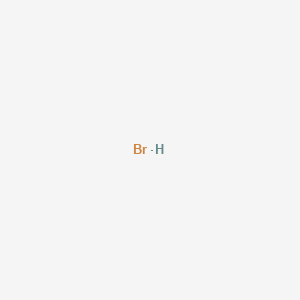
Hydrogen Bromide
Hydrogen bromide, anhydrous appears as a colorless gas with a pungent irritating odor. Corrosive. Heavier than air. Prolonged exposure to fire or intense heat may result in the violent rupture and rocketing of the container. Long-term exposure to low concentrations or short-term exposure to high concentrations can result in adverse health effects from inhalation. Used to make other chemicals and as a catalyst in the manufacture of chemicals. Rate of onset: Immediate Persistence: Minutes to hours Odor threshold: 2 ppm Source/use/other hazard: Chemical manufacturing industry; very corrosive. — CAMEO Chemicals
- Nom IUPAC
- bromane
- Formule moléculaire
- BrH
- Masse moléculaire
- 80.91 g/mol
- Masse exacte
- 79.92616 Da
- XLogP3
- 1,0
- Surface polaire topologique
- 0,0 Ų
- Donneurs de liaisons hydrogène
- 1
- Accepteurs de liaisons hydrogène
- 0
- Unités covalentes
- 1
- Stéréocentres définis
- 0
Également connu sous le nom de
16 autres noms signalés
Identifiants de bases de données externes
- ChEBI:CHEBI:22927
- ChEBI:CHEBI:37141
- ChEBI:CHEBI:47266
- ChEMBL:CHEMBL1231461
- EPA DTXSID:DTXSID0029713
Preuves issues de bases de données scientifiques complémentaires
EMBL-EBI ChEBI
hydrogen bromide
A diatomic molecule containing covalently bonded hydrogen and bromine atoms.
- Formule
- HBr
- Masse moyenne
- 80.912 g/mol
- Masse monoisotopique
- 79.92616 Da
- Charge formelle
- 0
- mononuclear parent hydride — is a (CHEBI:37176)
- hydrogen halide — is a (CHEBI:18140)
- gas molecular entity — is a (CHEBI:138675)
- mouse metabolite — has role (CHEBI:75771)
- mouse metabolite — has role (CHEBI:75771)
- mononuclear parent hydride — is a (CHEBI:37176)
- hydrogen halide — is a (CHEBI:18140)
- gas molecular entity — is a (CHEBI:138675)
- bromide — is conjugate acid of (CHEBI:15858)
- bromonium — is conjugate base of (CHEBI:50316)
Noms supplémentaires validés
Références croisées de cette source
- CAS: 10035-10-6 — ChemIDplus
- CAS: 10035-10-6 — NIST Chemistry WebBook
- CAS: 10035-10-6 — KEGG COMPOUND
- REGISTRY_NUMBER: 620 — Gmelin
- MANUAL_X_REF: C13645 — KEGG COMPOUND
Mis en correspondance par: Exact CAS cross-reference in the ChEBI compound record. Source mise à jour le: 2017-10-13. Récupéré le: 2026-08-31. Ouvrir la fiche source
NIH PubChem PUG-View
Attributed physical-property, hazard, environmental and use annotations.
- Boiling Point: -88.2 °F at 760 mmHg (USCG, 1999) Source: CAMEO Chemicals
- Boiling Point: -66.38 °C Source: Hazardous Substances Data Bank (HSDB)
- Boiling Point: -67 °C Source: ILO-WHO International Chemical Safety Cards (ICSCs)
- Boiling Point: -88.2 °F Source: Occupational Safety and Health Administration (OSHA)
- Boiling Point: -66.5 °C @760 [mm Hg] Source: PAC Chemical Database, U.S. Department of Energy
- Boiling Point: -88 °F Source: The National Institute for Occupational Safety and Health (NIOSH)
- Color/Form: Colorless gas Source: Hazardous Substances Data Bank (HSDB)
- Color/Form: Colorless gas [Note: Shipped as a liquified compressed gas] Source: Hazardous Substances Data Bank (HSDB)
- Density: 2.14 at -88.6 °F (USCG, 1999) - Denser than water; will sink Source: CAMEO Chemicals
- Density: 3.307 g/L Source: Hazardous Substances Data Bank (HSDB)
- Density: Density: 2.603 g/ cu cm at -84 °C (liquid) Source: Hazardous Substances Data Bank (HSDB)
- Density: A solution of hydrogen bromide gas in water. Colorless or faintly yellow; slowly darkens on exposure to air and light; miscible with water, alcohol; density: 1.517 (50% HBr solution); 1.38 (40% HBr solution); 1.13 (34% HBr solution); 1.08 (10% HBr solution); miscible with water and alcohol /Hydrobromic acid/ Source: Hazardous Substances Data Bank (HSDB)
- Density: Relative density (water = 1): 1.8 Source: ILO-WHO International Chemical Safety Cards (ICSCs)
- Density: 2.14 at -88.6 °F Source: Occupational Safety and Health Administration (OSHA)
- Density: 3.31 g/L Source: PAC Chemical Database, U.S. Department of Energy
- Density: 2.81(relative gas density) Source: The National Institute for Occupational Safety and Health (NIOSH)
- Melting Point: -124 °F (NIOSH, 2024) Source: CAMEO Chemicals
- Melting Point: -86.80 °C Source: Hazardous Substances Data Bank (HSDB)
- Melting Point: -87 °C Source: ILO-WHO International Chemical Safety Cards (ICSCs)
- Melting Point: -124 °F Source: Occupational Safety and Health Administration (OSHA)
- Melting Point: -87 °C Source: PAC Chemical Database, U.S. Department of Energy
- Melting Point: -124 °F Source: The National Institute for Occupational Safety and Health (NIOSH)
- Odor: Sharp, irritating odor Source: Hazardous Substances Data Bank (HSDB)
- Odor: Acrid odor Source: Hazardous Substances Data Bank (HSDB)
- Physical Description: Hydrobromic acid, solution appears as a colorless to yellow aqueous solution with a pungent odor. Fumes irritate the eyes and mucous membranes. Corrosive to metals and tissue. Source: CAMEO Chemicals
- Physical Description: Hydrogen bromide, anhydrous appears as a colorless gas with a pungent irritating odor. Corrosive. Heavier than air. Prolonged exposure to fire or intense heat may result in the violent rupture and rocketing of the container. Long-term exposure to low concentrations or short-term exposure to high concentrations can result in adverse health effects from inhalation. Used to make other chemicals and as a catalyst in the manufacture of chemicals. Rate of onset: Immediate Persistence: Minutes to hours Odor threshold: 2 ppm Source/use/other hazard: Chemical manufacturing industry; very corrosive. Source: CAMEO Chemicals
- Physical Description: Liquid; Gas Vapor Source: EPA Chemical Data Reporting (CDR)
- Physical Description: Colorless gas with a sharp, irritating odor. [Note: Shipped as a liquefied compressed gas. Often used in an aqueous solution.]; [NIOSH] Source: Haz-Map, Information on Hazardous Chemicals and Occupational Diseases
- Physical Description: COLOURLESS COMPRESSED LIQUEFIED GAS WITH PUNGENT ODOUR. Source: ILO-WHO International Chemical Safety Cards (ICSCs)
- Physical Description: Colorless gas with a sharp, irritating odor. Source: Occupational Safety and Health Administration (OSHA)
- Physical Description: Colorless gas with a sharp, irritating odor. [Note: Shipped as a liquefied compressed gas. Often used in an aqueous solution.] Source: The National Institute for Occupational Safety and Health (NIOSH)
- Solubility: 49 % (NIOSH, 2024) Source: CAMEO Chemicals
- Solubility: 221 g/100 cc water at 0 °C; 130 g/100 cc water at 100 °C Source: Hazardous Substances Data Bank (HSDB)
- Solubility: Freely soluble in water; 1 volume of water dissolves 600 volumes of HBr at 0 °C Source: Hazardous Substances Data Bank (HSDB)
- Solubility: 204.0 g/ 100 g water at 15 °C Source: Hazardous Substances Data Bank (HSDB)
- Solubility: Very soluble in water Source: Hazardous Substances Data Bank (HSDB)
- Solubility: For more Solubility (Complete) data for Hydrogen bromide (6 total), please visit the HSDB record page. Source: Hazardous Substances Data Bank (HSDB)
- Solubility: Solubility in water, g/100ml at 20 °C: 193 Source: ILO-WHO International Chemical Safety Cards (ICSCs)
- Solubility: 49% Source: The National Institute for Occupational Safety and Health (NIOSH)
- Vapor Pressure: 20 atm (NIOSH, 2024) Source: CAMEO Chemicals
- Vapor Pressure: 18,410 mm Hg at 25 °C Source: Hazardous Substances Data Bank (HSDB)
- Vapor Pressure: Vapor pressure, kPa at 20 °C: 2445 Source: ILO-WHO International Chemical Safety Cards (ICSCs)
- Vapor Pressure: 20 atm Source: Occupational Safety and Health Administration (OSHA)
- Vapor Pressure: 18410 [mm Hg] @25 °C Source: PAC Chemical Database, U.S. Department of Energy
- Vapor Pressure: 20 atm Source: The National Institute for Occupational Safety and Health (NIOSH)
- pH: Aqueous solutions are strongly acidic Source: Hazardous Substances Data Bank (HSDB)
- Carcinogen Classification: No indication of carcinogenicity to humans (not listed by IARC). Source: Toxin and Toxin Target Database (T3DB)
- Exposure Routes: The substance can be absorbed into the body by inhalation. Source: ILO-WHO International Chemical Safety Cards (ICSCs)
- Exposure Routes: inhalation, ingestion (solution), skin and/or eye contact Source: The National Institute for Occupational Safety and Health (NIOSH)
- Exposure Routes: Oral (L626) ; inhalation (L626) ; dermal (L626) Source: Toxin and Toxin Target Database (T3DB)
- First Aid: Excerpt from ERG Guide 154 [Substances - Toxic and/or Corrosive (Non-Combustible)]:; Refer to the "General First Aid" section. Specific First Aid: For corrosives, in case of contact, immediately flush skin or eyes with running water for at least 30 minutes. Additional flushing may be required. (ERG, 2024) Source: CAMEO Chemicals
- First Aid: Excerpt from NIOSH Pocket Guide for Hydrogen bromide:; Eye:; ⢠IRRIGATE IMMEDIATELY (SOLUTION) - If this chemical in solution contacts the eyes, immediately wash (irrigate) the eyes with large amounts of water, occasionally lifting the lower and upper lids. Get medical attention immediately.; ⢠FROSTBITE - If eye tissue is frozen, seek medical attention immediately; if tissue is not frozen, immediately and thoroughly flush the eyes with large amounts of water for at least 15 minutes, occasionally lifting the lower and upper eyelids. If irritation, pain, swelling, lacrimation, or photophobia persist, get medical attention as soon as possible.; Skin:; ⢠WATER FLUSH IMMEDIATELY (SOLUTION) - If this chemical in solution contacts the skin, immediately flush the contaminated skin with water. If this chemical penetrates the clothing, immediately remove the clothing and flush the skin with water. Get medical attention promptly.; ⢠FROSTBITE - If frostbite has occurred, seek medical attention immediately; do NOT rub the affected areas or flush them with water. In order to prevent further tissue damage, do NOT attempt to remove frozen clothing from frostbitten areas. If frostbite has Source: CAMEO Chemicals
- ERG2024, Guide 154 (Hydrobromic acid): General First Aid:; · Call 911 or emergency medical service.; · Ensure that medical personnel are aware of the material(s) involved, take precautions to protect themselves and avoid contamination.; · Move victim to fresh air if it can be done safely.; · Administer oxygen if breathing is difficult.; · If victim is not breathing:; -- DO NOT perform mouth-to-mouth resuscitation; the victim may have ingested or inhaled the substance.; -- If equipped and pulse detected, wash face and mouth, then give artificial respiration using a proper respiratory medical device (bag-valve mask, pocket mask equipped with a one-way valve or other device).; -- If no pulse detected or no respiratory medical device available, provide continuous compressions. Conduct a pulse check every two minutes or monitor for any signs of spontaneous respirations.; · Remove and isolate contaminated clothing and shoes.; · For minor skin contact, avoid spreading material on unaffected skin.; · In case of contact with substance, remove immediately by flushing skin or eyes with running water for at least 20 minutes.; · For severe burns, immediate medical attention is required.; · Effects of exposure (inhalation, ingestion, Source: Emergency Response Guidebook (ERG)
- ERG2024, Guide 125 (Hydrogen bromide, anhydrous): General First Aid:; · Call 911 or emergency medical service.; · Ensure that medical personnel are aware of the material(s) involved, take precautions to protect themselves and avoid contamination.; · Move victim to fresh air if it can be done safely.; · Administer oxygen if breathing is difficult.; · If victim is not breathing:; -- DO NOT perform mouth-to-mouth resuscitation; the victim may have ingested or inhaled the substance.; -- If equipped and pulse detected, wash face and mouth, then give artificial respiration using a proper respiratory medical device (bag-valve mask, pocket mask equipped with a one-way valve or other device).; -- If no pulse detected or no respiratory medical device available, provide continuous compressions. Conduct a pulse check every two minutes or monitor for any signs of spontaneous respirations.; · Remove and isolate contaminated clothing and shoes.; · For minor skin contact, avoid spreading material on unaffected skin.; · In case of contact with substance, remove immediately by flushing skin or eyes with running water for at least 20 minutes.; · For severe burns, immediate medical attention is required.; · Effects of exposure (inhalation, ingestion, Source: Emergency Response Guidebook (ERG)
- First Aid: (General first aid procedures); Eye: Irrigate immediately (solution)/Frostbite; Skin: Water flush immediately (solution)/Frostbite; Breathing: Respiratory support; Swallow: Medical attention immediately (solution) Source: The National Institute for Occupational Safety and Health (NIOSH)
- Signal: Danger Source: Regulation (EC) No 1272/2008 of the European Parliament and of the Council
- GHS Hazard Statements: H314: Causes severe skin burns and eye damage [Danger Skin corrosion/irritation]; H335: May cause respiratory irritation [Warning Specific target organ toxicity, single exposure; Respiratory tract irritation] Source: Regulation (EC) No 1272/2008 of the European Parliament and of the Council
- Precautionary Statement Codes: P260, P261, P264, P271, P280, P301+P330+P331, P302+P361+P354, P304+P340, P305+P354+P338, P316, P319, P321, P363, P403+P233, P405, and P501 (click each P-code to see the statement) Source: Regulation (EC) No 1272/2008 of the European Parliament and of the Council
- Note: This chemical does not meet GHS hazard criteria for 0.2% (1 of 432) of reports. Source: European Chemicals Agency (ECHA)
- Signal: Danger Source: European Chemicals Agency (ECHA)
- GHS Hazard Statements: H280 (32.9%): Contains gas under pressure; may explode if heated [Warning Gases under pressure]; H314 (99.8%): Causes severe skin burns and eye damage [Danger Skin corrosion/irritation]; H318 (40%): Causes serious eye damage [Danger Serious eye damage/eye irritation]; H331 (17.8%): Toxic if inhaled [Danger Acute toxicity, inhalation]; H335 (99.3%): May cause respiratory irritation [Warning Specific target organ toxicity, single exposure; Respiratory tract irritation] Source: European Chemicals Agency (ECHA)
- Precautionary Statement Codes: P260, P261, P264, P264+P265, P271, P280, P301+P330+P331, P302+P361+P354, P304+P340, P305+P354+P338, P316, P317, P319, P321, P363, P403+P233, P405, P410+P403, and P501 (click each P-code to see the statement) Source: European Chemicals Agency (ECHA)
- ECHA C&L Notifications Summary: Aggregated GHS information provided per 432 reports by companies from 31 notifications to the ECHA C&L Inventory. Each notification may be associated with multiple companies.; Reported as not meeting GHS hazard criteria per 1 of 432 reports by companies.; There are 30 notifications provided by 431 of 432 reports by companies with hazard statement code(s).; Information may vary between notifications depending on impurities, additives, and other factors. The percentage value in parenthesis indicates the notified classification ratio from companies that provide hazard codes. Only hazard codes with percentage values above 10% are shown. For more detailed information, please visit ECHA C&L website. Source: European Chemicals Agency (ECHA)
- Signal: Danger Source: NITE-CMC
- GHS Hazard Statements: H314: Causes severe skin burns and eye damage [Danger Skin corrosion/irritation]; H318: Causes serious eye damage [Danger Serious eye damage/eye irritation]; H331: Toxic if inhaled [Danger Acute toxicity, inhalation]; H370: Causes damage to organs [Danger Specific target organ toxicity, single exposure]; H372: Causes damage to organs through prolonged or repeated exposure [Danger Specific target organ toxicity, repeated exposure] Source: NITE-CMC
- Precautionary Statement Codes: P260, P261, P264, P264+P265, P270, P271, P280, P301+P330+P331, P302+P361+P354, P304+P340, P305+P354+P338, P308+P316, P316, P317, P319, P321, P363, P403+P233, P405, and P501 (click each P-code to see the statement) Source: NITE-CMC
- GHS Hazard Statements: H280: Contains gas under pressure; may explode if heated [Warning Gases under pressure]; H314: Causes severe skin burns and eye damage [Danger Skin corrosion/irritation]; H318: Causes serious eye damage [Danger Serious eye damage/eye irritation]; H331: Toxic if inhaled [Danger Acute toxicity, inhalation]; H370: Causes damage to organs [Danger Specific target organ toxicity, single exposure]; H372: Causes damage to organs through prolonged or repeated exposure [Danger Specific target organ toxicity, repeated exposure] Source: NITE-CMC
- Health Effects: Bromine vapour causes irritation and direct damage to the mucous membranes. Elemental bromine also burns the skin. The bromide ion is a central nervous system depressant and chronic exposure produces neuronal effects. This is called bromism and can result in central reactions reaching from somnolence to coma, cachexia, exicosis, loss of reflexes or pathologic reflexes, clonic seizures, tremor, ataxia, loss of neural sensitivity, paresis, papillar edema of the eyes, abnormal speech, cerebral edema, delirium, aggressiveness, and psychoses. (L625, L626, L627) Source: Toxin and Toxin Target Database (T3DB)
- Target Organs: Eyes, skin, respiratory system Source: The National Institute for Occupational Safety and Health (NIOSH)
- Toxicity Summary: IDENTIFICATION AND USE: Hydrogen bromide (HBr) is a colorless gas. It is utilized in the production of inorganic bromides and organic bromides, in reaction with alkynes to form bromoalkenes, opening epoxides and lactones, as a catalyst for oxidations, and in alkylations and condensations in organic chemistry. It is also used in analytical chemistry, and as a solvent for ore minerals. HUMAN STUDIES: Nose and throat irritation occurred in human subjects exposed to HBr for several minutes at concentrations of 3 ppm (1 of 6 subjects) and 4 ppm (3 of 6 subjects) respectively for several minutes. No effects were observed at 2 ppm, but detectable odor was noted at all exposure levels (2 to 6 ppm). No eye irritation was noted. The odor threshold is given as 6.667 mg/cu m and the irritating concentration as 10.00 mg/cu m. Concentrations of 0.13-0.2% are lethal. HBr is also corrosive to skin and mucous membranes and can cause severe burns. Exposure to high concentrations may result in dermatitis. Severe exposures result in pulmonary edema, and often laryngeal spasm. Ingestion causes burns of mouth and stomach. A 60-year-old laboratory technician developed pulmonary infiltrates consistent wit Source: Hazardous Substances Data Bank (HSDB)
- Toxicity Summary: Bromine is a powerful oxidizing agent and is able to release oxygen free radicals from the water in mucous membranes. These free radicals are also potent oxidizers and produce tissue damage. In additon, the formation of hydrobromic and bromic acids will result in secondary irritation. The bromide ion is also known to affect the central nervous system, causing bromism. This is believed to be a result of bromide ions substituting for chloride ions in the in actions of neurotransmitters and transport systems, thus affecting numerous synaptic processes. (L626, L627, A543) Source: Toxin and Toxin Target Database (T3DB)
- Industry Uses: Chemical reaction regulator; Plating agent; Solvent; Intermediate; Processing aids, specific to petroleum production; Etching agent; Catalyst; Ion exchange agent; Flux agent Source: EPA Chemical Data Reporting (CDR)
- Sources/Uses: Used in synthesis of organic compounds and bromides; also used to dissolve ores and catalyze alkylation; [ACGIH] Dilute HBr used in holography (color bleach); [www.ci.tucson.az.us/arthazards/medium.html] Source: Haz-Map, Information on Hazardous Chemicals and Occupational Diseases
- Industrial Processes with risk of exposure: Photographic Processing [Category: Other]; Metal Extraction and Refining [Category: Industry] Source: Haz-Map, Information on Hazardous Chemicals and Occupational Diseases
- Uses: Pharmaceutical intermediate. /Hydrogen bromide gas/ Source: Hazardous Substances Data Bank (HSDB)
- Uses: Isomerization of conjugated diolefins. /Hydrobromic acid/ Source: Hazardous Substances Data Bank (HSDB)
- Uses: Analytical chemistry, solvent for ore minerals. /Hydrobromic acid/ Source: Hazardous Substances Data Bank (HSDB)
- Uses: Hydrogen bromide is utilized in: production of inorganic bromides by reaction with the appropriate aqueous solution or slurry of metal hydroxides, oxides, or carbonates; production of organic bromides by reaction with alkyl alcohols or alkenes; reaction with alkynes to form bromoalkenes; opening epoxides and lactones; as a catalyst for oxidations; and alkylations and condensations in organic chemistry. /Hydrogen bromide gas/ Source: Hazardous Substances Data Bank (HSDB)
- Uses: Hydrobromic acid is used industrially in the production of inorganic bromides, alkyl bromides from alcohols, in cleaving acyclic and cyclic ethers, in adding to the cyclopropane group by ring opening, and as an alkylation catalyst. Source: Hazardous Substances Data Bank (HSDB)
- Uses: Hydrogen bromide and its acid are mainly used for the production of inorganic bromides, especially the bromides of zinc, calcium, and sodium. They are also useful reagents for generating organobromine compounds. (L649) Source: Toxin and Toxin Target Database (T3DB)
Mis en correspondance par: Existing checksum-valid CAS to unique PubChem CID match. Récupéré le: 2026-08-31. Ouvrir la fiche source
Les classifications scientifiques et les annotations de danger apportent du contexte et ne remplacent pas la décision réglementaire propre au marché indiquée ci-dessus.
Couverture des sources complémentaires et état des correspondances
| Source | Résultat | Vérifié |
|---|---|---|
| EMBL-EBI ChEBI | Correspondance exacte | 2026-08-31 |
| NIH PubChem PUG-View | Correspondance exacte | 2026-08-31 |
Une absence de correspondance enregistrée est une preuve utile que la source a été vérifiée ; ce n’est pas l’affirmation que la substance n’existe pas ailleurs.
Récupéré depuis NIH PubChem le 2026-08-31 par correspondance CAS à somme de contrôle valide. Les propriétés chimiques ne remplacent pas la décision réglementaire de cette page.
Preuves officielles sur le nom d’ingrédient de l’UE
Le nom de l’ingrédient correspond exactement au glossaire officiel 2025 de l’UE des dénominations communes d’ingrédients.
Preuves d’inventaire associées
Ingrédients ayant des fonctions de formulation communes
Sources officielles et scientifiques complémentaires
11 bases de données externes pour vérifier cette identité
Chaque lien lance une recherche de cette identité dans la source concernée. Ce qu’est chaque source et sa valeur juridique
Comment HYDROBROMIC ACID apparaît dans l’inventaire CosIng
L’inventaire CosIng répertorie HYDROBROMIC ACID comme ingrédient cosmétique et cette page l’associe à 0 fiche d’annexe. L’entrée d’inventaire reprend les noms et identifiants, tandis que la fiche d’annexe indique où la substance est interdite, soumise à restrictions ou inscrite sur une liste positive dans le droit de l’UE sur les cosmétiques.
HYDROBROMIC ACID est aussi associé à 1 fonction cosmétique dans les données officielles. Les désignations de fonction décrivent l’usage prévu, mais ne remplacent pas l’examen réglementaire des fiches d’annexe associées avant un travail de formulation ou d’étiquetage.
Questions fréquentes
Note de source pour HYDROBROMIC ACID
Cette page reproduit l’entrée d’inventaire CosIng de HYDROBROMIC ACID issue de documents publics de la Commission européenne sur les ingrédients cosmétiques et affiche les identifiants associés, même si aucune correspondance directe avec une annexe n’est actuellement rattachée.
Utilisez cette page d’inventaire pour étudier HYDROBROMIC ACID et comparer les fiches associées, mais vérifiez les restrictions et le statut juridique auprès du texte officiel en vigueur et de la législation avant toute décision réglementaire.
Outils et étapes suivantes
Vérifiez votre formule
Analysez une liste INCI complète pour détecter HYDROBROMIC ACID et les éventuelles restrictions d’annexes de l’UE ou signalements d’allergènes associés.
Vérificateur INCIRechercher des ingrédients similaires
Trouvez d’autres ingrédients de l’inventaire et entrées d’annexe liés à HYDROBROMIC ACID, à ses identifiants ou à des variantes de nom proches.
Rechercher