
HYDROBROMIC ACID
Hydrogen bromide
HYDROBROMIC ACID ist im EU-CosIng-Verzeichnis aufgeführt, aber auf dieser Seite sind noch keine direkten Anhangseinträge verknüpft.
Auf einen Blick
- Funktion
- Buffering
- CAS
- 10035-10-6
- EC
- 233-113-0
- EU-Anhänge
- Nicht aufgeführtEs ist kein EU-Anhangseintrag verknüpft. Das ist keine Zulassung.
Regulatorische Belege nach Markt
Für keinen der hier erfassten 13 Märkte wurde eine Vorschrift zu diesem Inhaltsstoff importiert.
Das beschreibt dieses Verzeichnis, nicht das Recht. Eine fehlende importierte Vorschrift ist kein Beleg dafür, dass ein Inhaltsstoff zulässig ist: Eine Vorschrift kann unter einem anderen Namen oder einer anderen Kennung oder in einem hier noch nicht importierten Datensatz existieren.
Verzeichnisangaben zu HYDROBROMIC ACID
INCI-Name
HYDROBROMIC ACID
Beschreibung
Hydrogen bromide
Herkunft des Eintrags
- Verzeichnisverweis
- 56415
- Importierte Identität
- HYDROBROMIC ACID
- Quellenaktualisierung
- 15/10/2010
Anhangseinträge für HYDROBROMIC ACID
Kerndaten
- BUFFERING
Stabilising the pH of an aqueous medium in a narrow range even if an acid or base is added. Altering and/or maintaining a cosmetic product's pH at the desired level.
Chemische Identität und Eigenschaften
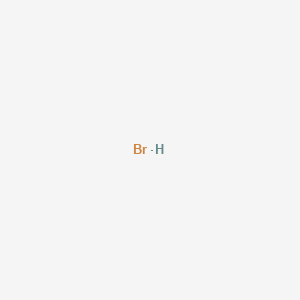
Hydrogen Bromide
Hydrogen bromide, anhydrous appears as a colorless gas with a pungent irritating odor. Corrosive. Heavier than air. Prolonged exposure to fire or intense heat may result in the violent rupture and rocketing of the container. Long-term exposure to low concentrations or short-term exposure to high concentrations can result in adverse health effects from inhalation. Used to make other chemicals and as a catalyst in the manufacture of chemicals. Rate of onset: Immediate Persistence: Minutes to hours Odor threshold: 2 ppm Source/use/other hazard: Chemical manufacturing industry; very corrosive. — CAMEO Chemicals
- IUPAC-Name
- bromane
- Summenformel
- BrH
- Molekulargewicht
- 80.91 g/mol
- Exakte Masse
- 79.92616 Da
- XLogP3
- 1,0
- Topologische polare Oberfläche
- 0,0 Ų
- Wasserstoffbrücken-Donoren
- 1
- Wasserstoffbrücken-Akzeptoren
- 0
- Kovalente Einheiten
- 1
- Definierte Stereozentren
- 0
Auch bekannt als
16 weitere gemeldete Namen
Kennungen in externen Datenbanken
- ChEBI:CHEBI:22927
- ChEBI:CHEBI:37141
- ChEBI:CHEBI:47266
- ChEMBL:CHEMBL1231461
- EPA DTXSID:DTXSID0029713
Belege aus weiteren wissenschaftlichen Datenbanken
EMBL-EBI ChEBI
hydrogen bromide
A diatomic molecule containing covalently bonded hydrogen and bromine atoms.
- Rezeptur
- HBr
- Durchschnittsmasse
- 80.912 g/mol
- Monoisotopische Masse
- 79.92616 Da
- Formale Ladung
- 0
- mononuclear parent hydride — is a (CHEBI:37176)
- hydrogen halide — is a (CHEBI:18140)
- gas molecular entity — is a (CHEBI:138675)
- mouse metabolite — has role (CHEBI:75771)
- mouse metabolite — has role (CHEBI:75771)
- mononuclear parent hydride — is a (CHEBI:37176)
- hydrogen halide — is a (CHEBI:18140)
- gas molecular entity — is a (CHEBI:138675)
- bromide — is conjugate acid of (CHEBI:15858)
- bromonium — is conjugate base of (CHEBI:50316)
Weitere kuratierte Namen
Querverweise aus dieser Quelle
- CAS: 10035-10-6 — ChemIDplus
- CAS: 10035-10-6 — NIST Chemistry WebBook
- CAS: 10035-10-6 — KEGG COMPOUND
- REGISTRY_NUMBER: 620 — Gmelin
- MANUAL_X_REF: C13645 — KEGG COMPOUND
Zugeordnet durch: Exact CAS cross-reference in the ChEBI compound record. Quelle aktualisiert: 2017-10-13. Abgerufen: 2026-08-31. Quelleneintrag öffnen
NIH PubChem PUG-View
Attributed physical-property, hazard, environmental and use annotations.
- Boiling Point: -88.2 °F at 760 mmHg (USCG, 1999) Quelle: CAMEO Chemicals
- Boiling Point: -66.38 °C Quelle: Hazardous Substances Data Bank (HSDB)
- Boiling Point: -67 °C Quelle: ILO-WHO International Chemical Safety Cards (ICSCs)
- Boiling Point: -88.2 °F Quelle: Occupational Safety and Health Administration (OSHA)
- Boiling Point: -66.5 °C @760 [mm Hg] Quelle: PAC Chemical Database, U.S. Department of Energy
- Boiling Point: -88 °F Quelle: The National Institute for Occupational Safety and Health (NIOSH)
- Color/Form: Colorless gas Quelle: Hazardous Substances Data Bank (HSDB)
- Color/Form: Colorless gas [Note: Shipped as a liquified compressed gas] Quelle: Hazardous Substances Data Bank (HSDB)
- Density: 2.14 at -88.6 °F (USCG, 1999) - Denser than water; will sink Quelle: CAMEO Chemicals
- Density: 3.307 g/L Quelle: Hazardous Substances Data Bank (HSDB)
- Density: Density: 2.603 g/ cu cm at -84 °C (liquid) Quelle: Hazardous Substances Data Bank (HSDB)
- Density: A solution of hydrogen bromide gas in water. Colorless or faintly yellow; slowly darkens on exposure to air and light; miscible with water, alcohol; density: 1.517 (50% HBr solution); 1.38 (40% HBr solution); 1.13 (34% HBr solution); 1.08 (10% HBr solution); miscible with water and alcohol /Hydrobromic acid/ Quelle: Hazardous Substances Data Bank (HSDB)
- Density: Relative density (water = 1): 1.8 Quelle: ILO-WHO International Chemical Safety Cards (ICSCs)
- Density: 2.14 at -88.6 °F Quelle: Occupational Safety and Health Administration (OSHA)
- Density: 3.31 g/L Quelle: PAC Chemical Database, U.S. Department of Energy
- Density: 2.81(relative gas density) Quelle: The National Institute for Occupational Safety and Health (NIOSH)
- Melting Point: -124 °F (NIOSH, 2024) Quelle: CAMEO Chemicals
- Melting Point: -86.80 °C Quelle: Hazardous Substances Data Bank (HSDB)
- Melting Point: -87 °C Quelle: ILO-WHO International Chemical Safety Cards (ICSCs)
- Melting Point: -124 °F Quelle: Occupational Safety and Health Administration (OSHA)
- Melting Point: -87 °C Quelle: PAC Chemical Database, U.S. Department of Energy
- Melting Point: -124 °F Quelle: The National Institute for Occupational Safety and Health (NIOSH)
- Odor: Sharp, irritating odor Quelle: Hazardous Substances Data Bank (HSDB)
- Odor: Acrid odor Quelle: Hazardous Substances Data Bank (HSDB)
- Physical Description: Hydrobromic acid, solution appears as a colorless to yellow aqueous solution with a pungent odor. Fumes irritate the eyes and mucous membranes. Corrosive to metals and tissue. Quelle: CAMEO Chemicals
- Physical Description: Hydrogen bromide, anhydrous appears as a colorless gas with a pungent irritating odor. Corrosive. Heavier than air. Prolonged exposure to fire or intense heat may result in the violent rupture and rocketing of the container. Long-term exposure to low concentrations or short-term exposure to high concentrations can result in adverse health effects from inhalation. Used to make other chemicals and as a catalyst in the manufacture of chemicals. Rate of onset: Immediate Persistence: Minutes to hours Odor threshold: 2 ppm Source/use/other hazard: Chemical manufacturing industry; very corrosive. Quelle: CAMEO Chemicals
- Physical Description: Liquid; Gas Vapor Quelle: EPA Chemical Data Reporting (CDR)
- Physical Description: Colorless gas with a sharp, irritating odor. [Note: Shipped as a liquefied compressed gas. Often used in an aqueous solution.]; [NIOSH] Quelle: Haz-Map, Information on Hazardous Chemicals and Occupational Diseases
- Physical Description: COLOURLESS COMPRESSED LIQUEFIED GAS WITH PUNGENT ODOUR. Quelle: ILO-WHO International Chemical Safety Cards (ICSCs)
- Physical Description: Colorless gas with a sharp, irritating odor. Quelle: Occupational Safety and Health Administration (OSHA)
- Physical Description: Colorless gas with a sharp, irritating odor. [Note: Shipped as a liquefied compressed gas. Often used in an aqueous solution.] Quelle: The National Institute for Occupational Safety and Health (NIOSH)
- Solubility: 49 % (NIOSH, 2024) Quelle: CAMEO Chemicals
- Solubility: 221 g/100 cc water at 0 °C; 130 g/100 cc water at 100 °C Quelle: Hazardous Substances Data Bank (HSDB)
- Solubility: Freely soluble in water; 1 volume of water dissolves 600 volumes of HBr at 0 °C Quelle: Hazardous Substances Data Bank (HSDB)
- Solubility: 204.0 g/ 100 g water at 15 °C Quelle: Hazardous Substances Data Bank (HSDB)
- Solubility: Very soluble in water Quelle: Hazardous Substances Data Bank (HSDB)
- Solubility: For more Solubility (Complete) data for Hydrogen bromide (6 total), please visit the HSDB record page. Quelle: Hazardous Substances Data Bank (HSDB)
- Solubility: Solubility in water, g/100ml at 20 °C: 193 Quelle: ILO-WHO International Chemical Safety Cards (ICSCs)
- Solubility: 49% Quelle: The National Institute for Occupational Safety and Health (NIOSH)
- Vapor Pressure: 20 atm (NIOSH, 2024) Quelle: CAMEO Chemicals
- Vapor Pressure: 18,410 mm Hg at 25 °C Quelle: Hazardous Substances Data Bank (HSDB)
- Vapor Pressure: Vapor pressure, kPa at 20 °C: 2445 Quelle: ILO-WHO International Chemical Safety Cards (ICSCs)
- Vapor Pressure: 20 atm Quelle: Occupational Safety and Health Administration (OSHA)
- Vapor Pressure: 18410 [mm Hg] @25 °C Quelle: PAC Chemical Database, U.S. Department of Energy
- Vapor Pressure: 20 atm Quelle: The National Institute for Occupational Safety and Health (NIOSH)
- pH: Aqueous solutions are strongly acidic Quelle: Hazardous Substances Data Bank (HSDB)
- Carcinogen Classification: No indication of carcinogenicity to humans (not listed by IARC). Quelle: Toxin and Toxin Target Database (T3DB)
- Exposure Routes: The substance can be absorbed into the body by inhalation. Quelle: ILO-WHO International Chemical Safety Cards (ICSCs)
- Exposure Routes: inhalation, ingestion (solution), skin and/or eye contact Quelle: The National Institute for Occupational Safety and Health (NIOSH)
- Exposure Routes: Oral (L626) ; inhalation (L626) ; dermal (L626) Quelle: Toxin and Toxin Target Database (T3DB)
- First Aid: Excerpt from ERG Guide 154 [Substances - Toxic and/or Corrosive (Non-Combustible)]:; Refer to the "General First Aid" section. Specific First Aid: For corrosives, in case of contact, immediately flush skin or eyes with running water for at least 30 minutes. Additional flushing may be required. (ERG, 2024) Quelle: CAMEO Chemicals
- First Aid: Excerpt from NIOSH Pocket Guide for Hydrogen bromide:; Eye:; ⢠IRRIGATE IMMEDIATELY (SOLUTION) - If this chemical in solution contacts the eyes, immediately wash (irrigate) the eyes with large amounts of water, occasionally lifting the lower and upper lids. Get medical attention immediately.; ⢠FROSTBITE - If eye tissue is frozen, seek medical attention immediately; if tissue is not frozen, immediately and thoroughly flush the eyes with large amounts of water for at least 15 minutes, occasionally lifting the lower and upper eyelids. If irritation, pain, swelling, lacrimation, or photophobia persist, get medical attention as soon as possible.; Skin:; ⢠WATER FLUSH IMMEDIATELY (SOLUTION) - If this chemical in solution contacts the skin, immediately flush the contaminated skin with water. If this chemical penetrates the clothing, immediately remove the clothing and flush the skin with water. Get medical attention promptly.; ⢠FROSTBITE - If frostbite has occurred, seek medical attention immediately; do NOT rub the affected areas or flush them with water. In order to prevent further tissue damage, do NOT attempt to remove frozen clothing from frostbitten areas. If frostbite has Quelle: CAMEO Chemicals
- ERG2024, Guide 154 (Hydrobromic acid): General First Aid:; · Call 911 or emergency medical service.; · Ensure that medical personnel are aware of the material(s) involved, take precautions to protect themselves and avoid contamination.; · Move victim to fresh air if it can be done safely.; · Administer oxygen if breathing is difficult.; · If victim is not breathing:; -- DO NOT perform mouth-to-mouth resuscitation; the victim may have ingested or inhaled the substance.; -- If equipped and pulse detected, wash face and mouth, then give artificial respiration using a proper respiratory medical device (bag-valve mask, pocket mask equipped with a one-way valve or other device).; -- If no pulse detected or no respiratory medical device available, provide continuous compressions. Conduct a pulse check every two minutes or monitor for any signs of spontaneous respirations.; · Remove and isolate contaminated clothing and shoes.; · For minor skin contact, avoid spreading material on unaffected skin.; · In case of contact with substance, remove immediately by flushing skin or eyes with running water for at least 20 minutes.; · For severe burns, immediate medical attention is required.; · Effects of exposure (inhalation, ingestion, Quelle: Emergency Response Guidebook (ERG)
- ERG2024, Guide 125 (Hydrogen bromide, anhydrous): General First Aid:; · Call 911 or emergency medical service.; · Ensure that medical personnel are aware of the material(s) involved, take precautions to protect themselves and avoid contamination.; · Move victim to fresh air if it can be done safely.; · Administer oxygen if breathing is difficult.; · If victim is not breathing:; -- DO NOT perform mouth-to-mouth resuscitation; the victim may have ingested or inhaled the substance.; -- If equipped and pulse detected, wash face and mouth, then give artificial respiration using a proper respiratory medical device (bag-valve mask, pocket mask equipped with a one-way valve or other device).; -- If no pulse detected or no respiratory medical device available, provide continuous compressions. Conduct a pulse check every two minutes or monitor for any signs of spontaneous respirations.; · Remove and isolate contaminated clothing and shoes.; · For minor skin contact, avoid spreading material on unaffected skin.; · In case of contact with substance, remove immediately by flushing skin or eyes with running water for at least 20 minutes.; · For severe burns, immediate medical attention is required.; · Effects of exposure (inhalation, ingestion, Quelle: Emergency Response Guidebook (ERG)
- First Aid: (General first aid procedures); Eye: Irrigate immediately (solution)/Frostbite; Skin: Water flush immediately (solution)/Frostbite; Breathing: Respiratory support; Swallow: Medical attention immediately (solution) Quelle: The National Institute for Occupational Safety and Health (NIOSH)
- Signal: Danger Quelle: Regulation (EC) No 1272/2008 of the European Parliament and of the Council
- GHS Hazard Statements: H314: Causes severe skin burns and eye damage [Danger Skin corrosion/irritation]; H335: May cause respiratory irritation [Warning Specific target organ toxicity, single exposure; Respiratory tract irritation] Quelle: Regulation (EC) No 1272/2008 of the European Parliament and of the Council
- Precautionary Statement Codes: P260, P261, P264, P271, P280, P301+P330+P331, P302+P361+P354, P304+P340, P305+P354+P338, P316, P319, P321, P363, P403+P233, P405, and P501 (click each P-code to see the statement) Quelle: Regulation (EC) No 1272/2008 of the European Parliament and of the Council
- Note: This chemical does not meet GHS hazard criteria for 0.2% (1 of 432) of reports. Quelle: European Chemicals Agency (ECHA)
- Signal: Danger Quelle: European Chemicals Agency (ECHA)
- GHS Hazard Statements: H280 (32.9%): Contains gas under pressure; may explode if heated [Warning Gases under pressure]; H314 (99.8%): Causes severe skin burns and eye damage [Danger Skin corrosion/irritation]; H318 (40%): Causes serious eye damage [Danger Serious eye damage/eye irritation]; H331 (17.8%): Toxic if inhaled [Danger Acute toxicity, inhalation]; H335 (99.3%): May cause respiratory irritation [Warning Specific target organ toxicity, single exposure; Respiratory tract irritation] Quelle: European Chemicals Agency (ECHA)
- Precautionary Statement Codes: P260, P261, P264, P264+P265, P271, P280, P301+P330+P331, P302+P361+P354, P304+P340, P305+P354+P338, P316, P317, P319, P321, P363, P403+P233, P405, P410+P403, and P501 (click each P-code to see the statement) Quelle: European Chemicals Agency (ECHA)
- ECHA C&L Notifications Summary: Aggregated GHS information provided per 432 reports by companies from 31 notifications to the ECHA C&L Inventory. Each notification may be associated with multiple companies.; Reported as not meeting GHS hazard criteria per 1 of 432 reports by companies.; There are 30 notifications provided by 431 of 432 reports by companies with hazard statement code(s).; Information may vary between notifications depending on impurities, additives, and other factors. The percentage value in parenthesis indicates the notified classification ratio from companies that provide hazard codes. Only hazard codes with percentage values above 10% are shown. For more detailed information, please visit ECHA C&L website. Quelle: European Chemicals Agency (ECHA)
- Signal: Danger Quelle: NITE-CMC
- GHS Hazard Statements: H314: Causes severe skin burns and eye damage [Danger Skin corrosion/irritation]; H318: Causes serious eye damage [Danger Serious eye damage/eye irritation]; H331: Toxic if inhaled [Danger Acute toxicity, inhalation]; H370: Causes damage to organs [Danger Specific target organ toxicity, single exposure]; H372: Causes damage to organs through prolonged or repeated exposure [Danger Specific target organ toxicity, repeated exposure] Quelle: NITE-CMC
- Precautionary Statement Codes: P260, P261, P264, P264+P265, P270, P271, P280, P301+P330+P331, P302+P361+P354, P304+P340, P305+P354+P338, P308+P316, P316, P317, P319, P321, P363, P403+P233, P405, and P501 (click each P-code to see the statement) Quelle: NITE-CMC
- GHS Hazard Statements: H280: Contains gas under pressure; may explode if heated [Warning Gases under pressure]; H314: Causes severe skin burns and eye damage [Danger Skin corrosion/irritation]; H318: Causes serious eye damage [Danger Serious eye damage/eye irritation]; H331: Toxic if inhaled [Danger Acute toxicity, inhalation]; H370: Causes damage to organs [Danger Specific target organ toxicity, single exposure]; H372: Causes damage to organs through prolonged or repeated exposure [Danger Specific target organ toxicity, repeated exposure] Quelle: NITE-CMC
- Health Effects: Bromine vapour causes irritation and direct damage to the mucous membranes. Elemental bromine also burns the skin. The bromide ion is a central nervous system depressant and chronic exposure produces neuronal effects. This is called bromism and can result in central reactions reaching from somnolence to coma, cachexia, exicosis, loss of reflexes or pathologic reflexes, clonic seizures, tremor, ataxia, loss of neural sensitivity, paresis, papillar edema of the eyes, abnormal speech, cerebral edema, delirium, aggressiveness, and psychoses. (L625, L626, L627) Quelle: Toxin and Toxin Target Database (T3DB)
- Target Organs: Eyes, skin, respiratory system Quelle: The National Institute for Occupational Safety and Health (NIOSH)
- Toxicity Summary: IDENTIFICATION AND USE: Hydrogen bromide (HBr) is a colorless gas. It is utilized in the production of inorganic bromides and organic bromides, in reaction with alkynes to form bromoalkenes, opening epoxides and lactones, as a catalyst for oxidations, and in alkylations and condensations in organic chemistry. It is also used in analytical chemistry, and as a solvent for ore minerals. HUMAN STUDIES: Nose and throat irritation occurred in human subjects exposed to HBr for several minutes at concentrations of 3 ppm (1 of 6 subjects) and 4 ppm (3 of 6 subjects) respectively for several minutes. No effects were observed at 2 ppm, but detectable odor was noted at all exposure levels (2 to 6 ppm). No eye irritation was noted. The odor threshold is given as 6.667 mg/cu m and the irritating concentration as 10.00 mg/cu m. Concentrations of 0.13-0.2% are lethal. HBr is also corrosive to skin and mucous membranes and can cause severe burns. Exposure to high concentrations may result in dermatitis. Severe exposures result in pulmonary edema, and often laryngeal spasm. Ingestion causes burns of mouth and stomach. A 60-year-old laboratory technician developed pulmonary infiltrates consistent wit Quelle: Hazardous Substances Data Bank (HSDB)
- Toxicity Summary: Bromine is a powerful oxidizing agent and is able to release oxygen free radicals from the water in mucous membranes. These free radicals are also potent oxidizers and produce tissue damage. In additon, the formation of hydrobromic and bromic acids will result in secondary irritation. The bromide ion is also known to affect the central nervous system, causing bromism. This is believed to be a result of bromide ions substituting for chloride ions in the in actions of neurotransmitters and transport systems, thus affecting numerous synaptic processes. (L626, L627, A543) Quelle: Toxin and Toxin Target Database (T3DB)
- Industry Uses: Chemical reaction regulator; Plating agent; Solvent; Intermediate; Processing aids, specific to petroleum production; Etching agent; Catalyst; Ion exchange agent; Flux agent Quelle: EPA Chemical Data Reporting (CDR)
- Sources/Uses: Used in synthesis of organic compounds and bromides; also used to dissolve ores and catalyze alkylation; [ACGIH] Dilute HBr used in holography (color bleach); [www.ci.tucson.az.us/arthazards/medium.html] Quelle: Haz-Map, Information on Hazardous Chemicals and Occupational Diseases
- Industrial Processes with risk of exposure: Photographic Processing [Category: Other]; Metal Extraction and Refining [Category: Industry] Quelle: Haz-Map, Information on Hazardous Chemicals and Occupational Diseases
- Uses: Pharmaceutical intermediate. /Hydrogen bromide gas/ Quelle: Hazardous Substances Data Bank (HSDB)
- Uses: Isomerization of conjugated diolefins. /Hydrobromic acid/ Quelle: Hazardous Substances Data Bank (HSDB)
- Uses: Analytical chemistry, solvent for ore minerals. /Hydrobromic acid/ Quelle: Hazardous Substances Data Bank (HSDB)
- Uses: Hydrogen bromide is utilized in: production of inorganic bromides by reaction with the appropriate aqueous solution or slurry of metal hydroxides, oxides, or carbonates; production of organic bromides by reaction with alkyl alcohols or alkenes; reaction with alkynes to form bromoalkenes; opening epoxides and lactones; as a catalyst for oxidations; and alkylations and condensations in organic chemistry. /Hydrogen bromide gas/ Quelle: Hazardous Substances Data Bank (HSDB)
- Uses: Hydrobromic acid is used industrially in the production of inorganic bromides, alkyl bromides from alcohols, in cleaving acyclic and cyclic ethers, in adding to the cyclopropane group by ring opening, and as an alkylation catalyst. Quelle: Hazardous Substances Data Bank (HSDB)
- Uses: Hydrogen bromide and its acid are mainly used for the production of inorganic bromides, especially the bromides of zinc, calcium, and sodium. They are also useful reagents for generating organobromine compounds. (L649) Quelle: Toxin and Toxin Target Database (T3DB)
Zugeordnet durch: Existing checksum-valid CAS to unique PubChem CID match. Abgerufen: 2026-08-31. Quelleneintrag öffnen
Wissenschaftliche Klassifizierungen und Gefahrenannotationen liefern Kontext und ersetzen nicht die oben gezeigte marktspezifische regulatorische Entscheidung.
Weitere Quellenabdeckung und Trefferstatus
| Quelle | Ergebnis | Geprüft |
|---|---|---|
| EMBL-EBI ChEBI | Exakter Treffer | 2026-08-31 |
| NIH PubChem PUG-View | Exakter Treffer | 2026-08-31 |
Ein erfasster Nicht-Treffer ist ein nützlicher Beleg dafür, dass die Quelle geprüft wurde; er ist keine Behauptung, dass der Stoff anderswo nicht existiert.
Am 2026-08-31 von NIH PubChem durch prüfsummengültigen CAS-Abgleich abgerufen. Chemische Eigenschaften ersetzen nicht die regulatorische Entscheidung auf dieser Seite.
Belege zum amtlichen EU-Inhaltsstoffnamen
Der Inhaltsstoffname stimmt exakt mit dem amtlichen EU-Glossar 2025 der gebräuchlichen Inhaltsstoffnamen überein.
Verwandte Belege aus dem Verzeichnis
Inhaltsstoffe mit sich überschneidenden Rezepturfunktionen
Weitere amtliche und wissenschaftliche Quellen
11 externe Datenbanken zur Prüfung dieser Identität
Jeder Link durchsucht die jeweilige Quelle nach dieser Identität. Was jede Quelle ist und welches rechtliche Gewicht sie hat
Wie HYDROBROMIC ACID im CosIng-Verzeichnis erscheint
Das CosIng-Verzeichnis führt HYDROBROMIC ACID als kosmetischen Inhaltsstoff, und diese Seite verknüpft ihn mit 0 Anhangseinträgen. Der Verzeichniseintrag erfasst Namen und Kennungen, während die Anhangseinträge zeigen, wo der Stoff im EU-Kosmetikrecht verboten, beschränkt oder positiv gelistet ist.
HYDROBROMIC ACID ist in den amtlichen Daten außerdem mit 1 kosmetischen Funktion gekennzeichnet. Funktionsbezeichnungen beschreiben die beabsichtigte Verwendung, ersetzen aber nicht die regulatorische Prüfung verknüpfter Anhangseinträge vor der Rezeptierung oder Kennzeichnung.
Häufig gestellte Fragen
Quellenhinweis zu HYDROBROMIC ACID
Diese Seite gibt den CosIng-Verzeichniseintrag für HYDROBROMIC ACID aus öffentlichen Materialien der Europäischen Kommission zu kosmetischen Inhaltsstoffen wieder und zeigt verknüpfte Kennungen auch dann, wenn derzeit kein direkter Anhangstreffer zugeordnet ist.
Nutzen Sie diese Verzeichnisseite, um HYDROBROMIC ACID zu recherchieren und verknüpfte Einträge zu vergleichen; verifizieren Sie Beschränkungen und Rechtsstatus jedoch anhand des aktuellen amtlichen Quellentextes und Rechts, bevor Sie regulatorische Entscheidungen treffen.
Werkzeuge und nächste Schritte
Rezeptur prüfen
Eine vollständige INCI-Liste prüfen, um HYDROBROMIC ACID und etwaige verknüpfte EU-Anhangsbeschränkungen oder Allergenmarkierungen zu erkennen.
INCI-CheckerÄhnliche Inhaltsstoffe suchen
Weitere Inhaltsstoffe aus dem Verzeichnis und Anhangseinträge finden, die mit HYDROBROMIC ACID, seinen Kennungen oder nahen Namensvarianten zusammenhängen.
Suche