
Nickel(II) trifluoroacetate; [1] Nickel(II) propionate; [2] Nickel bis(benzenesulfonate); [3] Nickel(II) hydrogen citrate; [4] Citric acid, ammonium nickel salt; [5] Citric acid, nickel salt; [6] Nickel bis(2-ethylhexanoate); [7] 2-Ethylhexanoic acid, Nickel salt; [8] Dimethylhexanoic acid nickel salt; [9] Nickel(II) isooctanoate; [10] Nickel isooctanoate; [11] Nickel bis(isononanoate); [12] Nickel(II) neononanoate; [13] Nickel(II) isodecanoate; [14] Nickel(II) neodecanoate; [15] Neodecanoic acid, nickel salt; [16] Nickel(II) neoundecanoate; [17] Bis(D-gluconato-O1,O2)nickel; [18] Nickel 3,5-bis(tert-butyl)-4-hydroxybenzoate (1:2); [19] Nickel(II) palmitate; [20] (2-Ethylhexanoato-O)(Isononanoato-O)nickel; [21] (Isononanoato-O)(Isooctanoato-O)nickel; [22] (Isooctanoato-O)(neodecanoato-O)nickel; [23] (2-Ethylhexanoato-O)(Isodecanoato-O)nickel; [24] (2-Ethylhexanoato-O)(Neodecanoato-O)nickel; [25] (Isodecanoato-O)(isooctanoato-O)nickel; [26] (Isodecanoato-O)(isononanoato-O)nickel; [27] (Isononanoato-O)(Neodecanoato-O)nickel; [28] fatty acids, C6-19-branched, nickel salts; [29] fatty acids, C8-18 and C18-unsaturated, nickel salts; [30] 2,7-Naphthalenedisulfonic acid, nickel(II) salt; [31]
Nickel(II) trifluoroacetate; [1] Nickel(II) propionate; [2] Nickel bis(benzenesulfonate); [3] Nickel(II) hydrogen citrate; [4] Citric acid, ammonium nickel salt; [5] Citric acid, nickel salt; [6] Nickel bis(2-ethylhexanoate); [7] 2-Ethylhexanoic acid, Nickel salt; [8] Dimethylhexanoic acid nickel salt; [9] Nickel(II) isooctanoate; [10] Nickel isooctanoate; [11] Nickel bis(isononanoate); [12] Nickel(II) neononanoate; [13] Nickel(II) isodecanoate; [14] Nickel(II) neodecanoate; [15] Neodecanoic acid, nickel salt; [16] Nickel(II) neoundecanoate; [17] Bis(D-gluconato-O1,O2)nickel; [18] Nickel 3,5-bis(tert-butyl)-4-hydroxybenzoate (1:2); [19] Nickel(II) palmitate; [20] (2-Ethylhexanoato-O)(Isononanoato-O)nickel; [21] (Isononanoato-O)(Isooctanoato-O)nickel; [22] (Isooctanoato-O)(neodecanoato-O)nickel; [23] (2-Ethylhexanoato-O)(Isodecanoato-O)nickel; [24] (2-Ethylhexanoato-O)(Neodecanoato-O)nickel; [25] (Isodecanoato-O)(isooctanoato-O)nickel; [26] (Isodecanoato-O)(isononanoato-O)nickel; [27] (Isononanoato-O)(Neodecanoato-O)nickel; [28] fatty acids, C6-19-branched, nickel salts; [29] fatty acids, C8-18 and C18-unsaturated, nickel salts; [30] 2,7-Naphthalenedisulfonic acid, nickel(II) salt; [31] figure à l’annexe II en tant que substance interdite dans les produits cosmétiques mis sur le marché de l’UE.
Détails de la fiche
Nom chimique
Nickel(II) trifluoroacetate; [1] Nickel(II) propionate; [2] Nickel bis(benzenesulfonate); [3] Nickel(II) hydrogen citrate; [4] Citric acid, ammonium nickel salt; [5] Citric acid, nickel salt; [6] Nickel bis(2-ethylhexanoate); [7] 2-Ethylhexanoic acid, Nickel salt; [8] Dimethylhexanoic acid nickel salt; [9] Nickel(II) isooctanoate; [10] Nickel isooctanoate; [11] Nickel bis(isononanoate); [12] Nickel(II) neononanoate; [13] Nickel(II) isodecanoate; [14] Nickel(II) neodecanoate; [15] Neodecanoic acid, nickel salt; [16] Nickel(II) neoundecanoate; [17] Bis(D-gluconato-O1,O2)nickel; [18] Nickel 3,5-bis(tert-butyl)-4-hydroxybenzoate (1:2); [19] Nickel(II) palmitate; [20] (2-Ethylhexanoato-O)(Isononanoato-O)nickel; [21] (Isononanoato-O)(Isooctanoato-O)nickel; [22] (Isooctanoato-O)(neodecanoato-O)nickel; [23] (2-Ethylhexanoato-O)(Isodecanoato-O)nickel; [24] (2-Ethylhexanoato-O)(Neodecanoato-O)nickel; [25] (Isodecanoato-O)(isooctanoato-O)nickel; [26] (Isodecanoato-O)(isononanoato-O)nickel; [27] (Isononanoato-O)(Neodecanoato-O)nickel; [28] fatty acids, C6-19-branched, nickel salts; [29] fatty acids, C8-18 and C18-unsaturated, nickel salts; [30] 2,7-Naphthalenedisulfonic acid, nickel(II) salt; [31]
Nom chimique / IUPAC
Nickel(II) trifluoroacetate; [1] Nickel(II) propionate; [2] Nickel bis(benzenesulfonate); [3] Nickel(II) hydrogen citrate; [4] Citric acid, ammonium nickel salt; [5] Citric acid, nickel salt; [6] Nickel bis(2-ethylhexanoate); [7] 2-Ethylhexanoic acid, Nickel salt; [8] Dimethylhexanoic acid nickel salt; [9] Nickel(II) isooctanoate; [10] Nickel isooctanoate; [11] Nickel bis(isononanoate); [12] Nickel(II) neononanoate; [13] Nickel(II) isodecanoate; [14] Nickel(II) neodecanoate; [15] Neodecanoic acid, nickel salt; [16] Nickel(II) neoundecanoate; [17] Bis(D-gluconato-O1,O2)nickel; [18] Nickel 3,5-bis(tert-butyl)-4-hydroxybenzoate (1:2); [19] Nickel(II) palmitate; [20] (2-Ethylhexanoato-O)(Isononanoato-O)nickel; [21] (Isononanoato-O)(Isooctanoato-O)nickel; [22] (Isooctanoato-O)(neodecanoato-O)nickel; [23] (2-Ethylhexanoato-O)(Isodecanoato-O)nickel; [24] (2-Ethylhexanoato-O)(Neodecanoato-O)nickel; [25] (Isodecanoato-O)(isooctanoato-O)nickel; [26] (Isodecanoato-O)(isononanoato-O)nickel; [27] (Isononanoato-O)(Neodecanoato-O)nickel; [28] fatty acids, C6-19-branched, nickel salts; [29] fatty acids, C8-18 and C18-unsaturated, nickel salts; [30] 2,7-Naphthalenedisulfonic acid, nickel(II) salt; [31]
Informations réglementaires
Données clés
Identité et propriétés chimiques
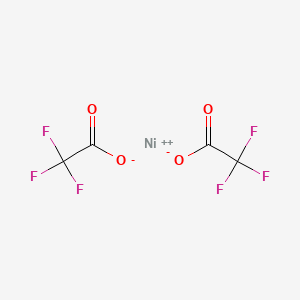
Nickel(2+) trifluoroacetate
- Nom IUPAC
- nickel(2+);bis(2,2,2-trifluoroacetate)
- Formule moléculaire
- C4F6NiO4
- Masse moléculaire
- 284.72 g/mol
- Masse exacte
- 283.905419 Da
- Surface polaire topologique
- 80,3 Ų
- Donneurs de liaisons hydrogène
- 0
- Accepteurs de liaisons hydrogène
- 10
- Unités covalentes
- 3
- Stéréocentres définis
- 0
Également connu sous le nom de
6 autres noms signalés
Identifiants de bases de données externes
- EPA DTXSID:DTXSID90936420
Récupéré depuis NIH PubChem le 2026-09-02 par correspondance CAS à somme de contrôle valide. Les propriétés chimiques ne remplacent pas la décision réglementaire de cette page.
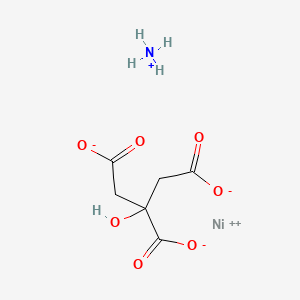
1,2,3-Propanetricarboxylic acid, 2-hydroxy-, ammonium nickel(2+) salt (2:2:1)
- Nom IUPAC
- azanium;2-hydroxypropane-1,2,3-tricarboxylate;nickel(2+)
- Formule moléculaire
- C6H9NNiO7
- Masse moléculaire
- 265.83 g/mol
- Masse exacte
- 264.973243 Da
- Surface polaire topologique
- 142,0 Ų
- Donneurs de liaisons hydrogène
- 2
- Accepteurs de liaisons hydrogène
- 7
- Unités covalentes
- 3
- Stéréocentres définis
- 0
Également connu sous le nom de
Identifiants de bases de données externes
- EPA DTXSID:DTXSID20889915
Récupéré depuis NIH PubChem le 2026-09-02 par correspondance CAS à somme de contrôle valide. Les propriétés chimiques ne remplacent pas la décision réglementaire de cette page.
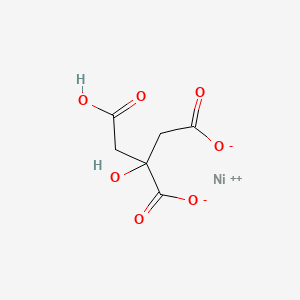
Nickel(2+) hydrogen citrate
- Nom IUPAC
- 2-(carboxymethyl)-2-hydroxybutanedioate;nickel(2+)
- Formule moléculaire
- C6H6NiO7
- Masse moléculaire
- 248.80 g/mol
- Masse exacte
- 247.946694 Da
- Surface polaire topologique
- 138,0 Ų
- Donneurs de liaisons hydrogène
- 2
- Accepteurs de liaisons hydrogène
- 7
- Unités covalentes
- 2
- Stéréocentres définis
- 0
Également connu sous le nom de
Identifiants de bases de données externes
- EPA DTXSID:DTXSID501029294
Récupéré depuis NIH PubChem le 2026-09-02 par correspondance CAS à somme de contrôle valide. Les propriétés chimiques ne remplacent pas la décision réglementaire de cette page.
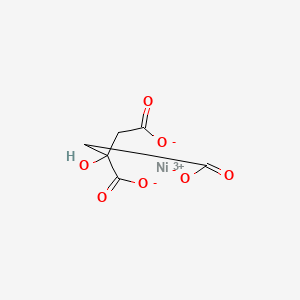
citric acid, nickel salt
- Nom IUPAC
- 2-hydroxypropane-1,2,3-tricarboxylate;nickel(3+)
- Formule moléculaire
- C6H5NiO7
- Masse moléculaire
- 247.79 g/mol
- Masse exacte
- 246.938869 Da
- Surface polaire topologique
- 141,0 Ų
- Donneurs de liaisons hydrogène
- 1
- Accepteurs de liaisons hydrogène
- 7
- Unités covalentes
- 2
- Stéréocentres définis
- 0
Également connu sous le nom de
Récupéré depuis NIH PubChem le 2026-09-02 par correspondance CAS à somme de contrôle valide. Les propriétés chimiques ne remplacent pas la décision réglementaire de cette page.
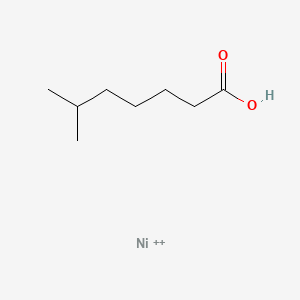
Nickel isooctanoate
- Nom IUPAC
- 6-methylheptanoic acid;nickel(2+)
- Formule moléculaire
- C8H16NiO2+2
- Masse moléculaire
- 202.90 g/mol
- Masse exacte
- 202.050371 Da
- Surface polaire topologique
- 37,3 Ų
- Donneurs de liaisons hydrogène
- 1
- Accepteurs de liaisons hydrogène
- 2
- Unités covalentes
- 2
- Stéréocentres définis
- 0
Également connu sous le nom de
Récupéré depuis NIH PubChem le 2026-09-02 par correspondance CAS à somme de contrôle valide. Les propriétés chimiques ne remplacent pas la décision réglementaire de cette page.
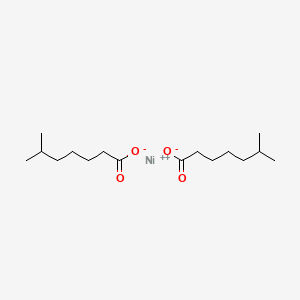
Nickel(II) isooctanoate
- Nom IUPAC
- bis(6-methylheptanoate);nickel(2+)
- Formule moléculaire
- C16H30NiO4
- Masse moléculaire
- 345.10 g/mol
- Masse exacte
- 344.149751 Da
- Surface polaire topologique
- 80,3 Ų
- Donneurs de liaisons hydrogène
- 0
- Accepteurs de liaisons hydrogène
- 4
- Unités covalentes
- 3
- Stéréocentres définis
- 0
Également connu sous le nom de
Identifiants de bases de données externes
- EPA DTXSID:DTXSID60950294
Récupéré depuis NIH PubChem le 2026-09-02 par correspondance CAS à somme de contrôle valide. Les propriétés chimiques ne remplacent pas la décision réglementaire de cette page.
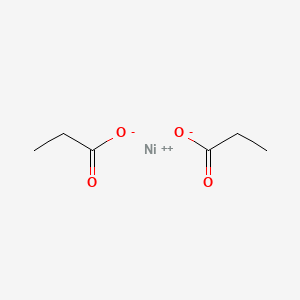
Nickel(2+) propionate
Zinc proprionate is a chemical compound of zinc. Zinc is a metallic element with the atomic number 30. It is found in nature most often as the mineral sphalerite. Though excess zinc in harmful, in smaller amounts it is an essential element for life, as it is a cofactor for over 300 enzymes and is found in just as many transcription factors. (L48, L49) — Toxin and Toxin Target Database (T3DB)
- Nom IUPAC
- nickel(2+);propanoate
- Formule moléculaire
- C6H10NiO4
- Masse moléculaire
- 204.83 g/mol
- Masse exacte
- 203.993250 Da
- Surface polaire topologique
- 80,3 Ų
- Donneurs de liaisons hydrogène
- 0
- Accepteurs de liaisons hydrogène
- 4
- Unités covalentes
- 3
- Stéréocentres définis
- 0
Également connu sous le nom de
1 autre nom signalé
Récupéré depuis NIH PubChem le 2026-09-02 par correspondance CAS à somme de contrôle valide. Les propriétés chimiques ne remplacent pas la décision réglementaire de cette page.
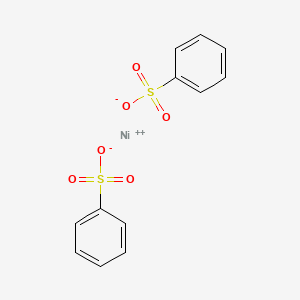
Nickel bis(benzenesulphonate)
- Nom IUPAC
- benzenesulfonate;nickel(2+)
- Formule moléculaire
- C12H10NiO6S2
- Masse moléculaire
- 373.0 g/mol
- Masse exacte
- 371.927222 Da
- Surface polaire topologique
- 131,0 Ų
- Donneurs de liaisons hydrogène
- 0
- Accepteurs de liaisons hydrogène
- 6
- Unités covalentes
- 3
- Stéréocentres définis
- 0
Également connu sous le nom de
3 autres noms signalés
Récupéré depuis NIH PubChem le 2026-09-02 par correspondance CAS à somme de contrôle valide. Les propriétés chimiques ne remplacent pas la décision réglementaire de cette page.
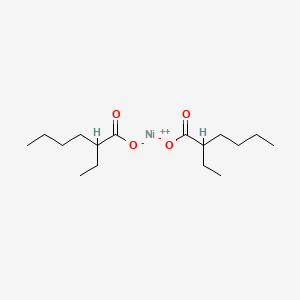
Nickel bis(2-ethylhexanoate)
- Nom IUPAC
- bis(2-ethylhexanoate);nickel(2+)
- Formule moléculaire
- C16H30NiO4
- Masse moléculaire
- 345.10 g/mol
- Masse exacte
- 344.149751 Da
- Surface polaire topologique
- 80,3 Ų
- Donneurs de liaisons hydrogène
- 0
- Accepteurs de liaisons hydrogène
- 4
- Unités covalentes
- 3
- Stéréocentres définis
- 0
Également connu sous le nom de
6 autres noms signalés
Identifiants de bases de données externes
- EPA DTXSID:DTXSID40890588
Récupéré depuis NIH PubChem le 2026-09-02 par correspondance CAS à somme de contrôle valide. Les propriétés chimiques ne remplacent pas la décision réglementaire de cette page.
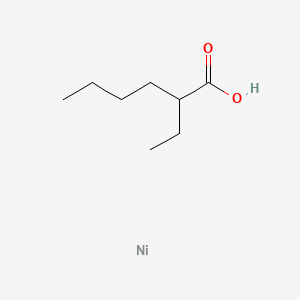
Hexanoic acid, 2-ethyl-, nickel salt (1:?)
- Nom IUPAC
- 2-ethylhexanoic acid;nickel
- Formule moléculaire
- C8H16NiO2
- Masse moléculaire
- 202.90 g/mol
- Masse exacte
- 202.050371 Da
- Surface polaire topologique
- 37,3 Ų
- Donneurs de liaisons hydrogène
- 1
- Accepteurs de liaisons hydrogène
- 2
- Unités covalentes
- 2
- Stéréocentres définis
- 0
Également connu sous le nom de
Récupéré depuis NIH PubChem le 2026-09-02 par correspondance CAS à somme de contrôle valide. Les propriétés chimiques ne remplacent pas la décision réglementaire de cette page.
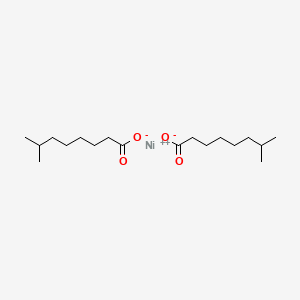
Isononanoic acid, nickel(2+) salt (2:1)
- Nom IUPAC
- bis(7-methyloctanoate);nickel(2+)
- Formule moléculaire
- C18H34NiO4
- Masse moléculaire
- 373.2 g/mol
- Masse exacte
- 372.181051 Da
- Surface polaire topologique
- 80,3 Ų
- Donneurs de liaisons hydrogène
- 0
- Accepteurs de liaisons hydrogène
- 4
- Unités covalentes
- 3
- Stéréocentres définis
- 0
Également connu sous le nom de
Récupéré depuis NIH PubChem le 2026-09-02 par correspondance CAS à somme de contrôle valide. Les propriétés chimiques ne remplacent pas la décision réglementaire de cette page.
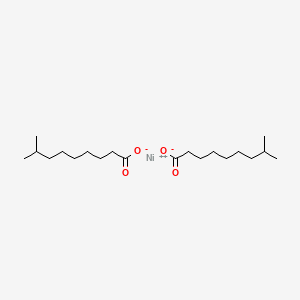
Nickel(II) isodecanoate
- Nom IUPAC
- bis(8-methylnonanoate);nickel(2+)
- Formule moléculaire
- C20H38NiO4
- Masse moléculaire
- 401.2 g/mol
- Masse exacte
- 400.212351 Da
- Surface polaire topologique
- 80,3 Ų
- Donneurs de liaisons hydrogène
- 0
- Accepteurs de liaisons hydrogène
- 4
- Unités covalentes
- 3
- Stéréocentres définis
- 0
Également connu sous le nom de
Identifiants de bases de données externes
- EPA DTXSID:DTXSID80234720
Récupéré depuis NIH PubChem le 2026-09-02 par correspondance CAS à somme de contrôle valide. Les propriétés chimiques ne remplacent pas la décision réglementaire de cette page.
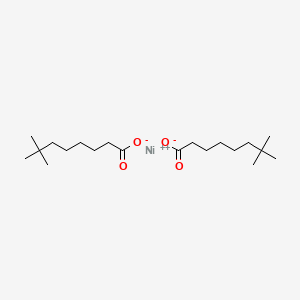
Neodecanoic acid, nickel salt (1:?)
- Nom IUPAC
- bis(7,7-dimethyloctanoate);nickel(2+)
- Formule moléculaire
- C20H38NiO4
- Masse moléculaire
- 401.2 g/mol
- Masse exacte
- 400.212351 Da
- Surface polaire topologique
- 80,3 Ų
- Donneurs de liaisons hydrogène
- 0
- Accepteurs de liaisons hydrogène
- 4
- Unités covalentes
- 3
- Stéréocentres définis
- 0
Également connu sous le nom de
Identifiants de bases de données externes
- EPA DTXSID:DTXSID201006075
Récupéré depuis NIH PubChem le 2026-09-02 par correspondance CAS à somme de contrôle valide. Les propriétés chimiques ne remplacent pas la décision réglementaire de cette page.
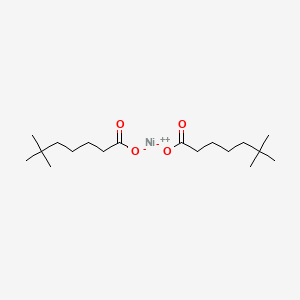
Nickel(2+) neononanoate
- Nom IUPAC
- bis(6,6-dimethylheptanoate);nickel(2+)
- Formule moléculaire
- C18H34NiO4
- Masse moléculaire
- 373.2 g/mol
- Masse exacte
- 372.181051 Da
- Surface polaire topologique
- 80,3 Ų
- Donneurs de liaisons hydrogène
- 0
- Accepteurs de liaisons hydrogène
- 4
- Unités covalentes
- 3
- Stéréocentres définis
- 0
Également connu sous le nom de
Identifiants de bases de données externes
- EPA DTXSID:DTXSID00917088
Récupéré depuis NIH PubChem le 2026-09-02 par correspondance CAS à somme de contrôle valide. Les propriétés chimiques ne remplacent pas la décision réglementaire de cette page.
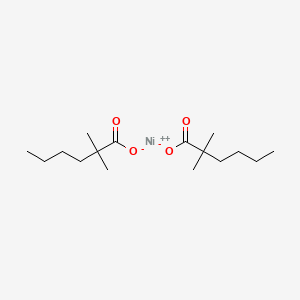
dimethylhexanoic acid, nickel salt
- Nom IUPAC
- bis(2,2-dimethylhexanoate);nickel(2+)
- Formule moléculaire
- C16H30NiO4
- Masse moléculaire
- 345.10 g/mol
- Masse exacte
- 344.149751 Da
- Surface polaire topologique
- 80,3 Ų
- Donneurs de liaisons hydrogène
- 0
- Accepteurs de liaisons hydrogène
- 4
- Unités covalentes
- 3
- Stéréocentres définis
- 0
Également connu sous le nom de
Identifiants de bases de données externes
- EPA DTXSID:DTXSID30240179
Récupéré depuis NIH PubChem le 2026-09-02 par correspondance CAS à somme de contrôle valide. Les propriétés chimiques ne remplacent pas la décision réglementaire de cette page.
Fiches associées pour Nickel(II) trifluoroacetate; [1] Nickel(II) propionate; [2] Nickel bis(benzenesulfonate); [3] Nickel(II) hydrogen citrate; [4] Citric acid, ammonium nickel salt; [5] Citric acid, nickel salt; [6] Nickel bis(2-ethylhexanoate); [7] 2-Ethylhexanoic acid, Nickel salt; [8] Dimethylhexanoic acid nickel salt; [9] Nickel(II) isooctanoate; [10] Nickel isooctanoate; [11] Nickel bis(isononanoate); [12] Nickel(II) neononanoate; [13] Nickel(II) isodecanoate; [14] Nickel(II) neodecanoate; [15] Neodecanoic acid, nickel salt; [16] Nickel(II) neoundecanoate; [17] Bis(D-gluconato-O1,O2)nickel; [18] Nickel 3,5-bis(tert-butyl)-4-hydroxybenzoate (1:2); [19] Nickel(II) palmitate; [20] (2-Ethylhexanoato-O)(Isononanoato-O)nickel; [21] (Isononanoato-O)(Isooctanoato-O)nickel; [22] (Isooctanoato-O)(neodecanoato-O)nickel; [23] (2-Ethylhexanoato-O)(Isodecanoato-O)nickel; [24] (2-Ethylhexanoato-O)(Neodecanoato-O)nickel; [25] (Isodecanoato-O)(isooctanoato-O)nickel; [26] (Isodecanoato-O)(isononanoato-O)nickel; [27] (Isononanoato-O)(Neodecanoato-O)nickel; [28] fatty acids, C6-19-branched, nickel salts; [29] fatty acids, C8-18 and C18-unsaturated, nickel salts; [30] 2,7-Naphthalenedisulfonic acid, nickel(II) salt; [31]
Les correspondances directes sont limitées pour cette fiche ; des entrées voisines de l’annexe II sont donc également affichées.
Nickel dichlorate [1]; Nickel dibromate [2]; Ethyl hydrogen sulfate, nickel(II) salt [3]
Nickel(II) sulfite [1]; Nickel tellurium trioxide [2]; Nickel tellurium tetraoxide [3]; Molybdenum …
Nickel barium titanium primrose priderite; C.I. Pigment Yellow 157; C.I. 77900
Nickel boride (NiB) [1]; Dinickel boride [2]; Trinickel boride [3]; Nickel boride [4]; Dinickel sil…
Nickel diarsenide [1]; Nickel arsenide [2]
Dialuminium nickel tetraoxide [1]; Nickel titanium trioxide [2]; Nickel titanium oxide [3]; Nickel …
Dibutyltin dichloride; (DBTC)
Ce que signifie l’annexe II pour Nickel(II) trifluoroacetate; [1] Nickel(II) propionate; [2] Nickel bis(benzenesulfonate); [3] Nickel(II) hydrogen citrate; [4] Citric acid, ammonium nickel salt; [5] Citric acid, nickel salt; [6] Nickel bis(2-ethylhexanoate); [7] 2-Ethylhexanoic acid, Nickel salt; [8] Dimethylhexanoic acid nickel salt; [9] Nickel(II) isooctanoate; [10] Nickel isooctanoate; [11] Nickel bis(isononanoate); [12] Nickel(II) neononanoate; [13] Nickel(II) isodecanoate; [14] Nickel(II) neodecanoate; [15] Neodecanoic acid, nickel salt; [16] Nickel(II) neoundecanoate; [17] Bis(D-gluconato-O1,O2)nickel; [18] Nickel 3,5-bis(tert-butyl)-4-hydroxybenzoate (1:2); [19] Nickel(II) palmitate; [20] (2-Ethylhexanoato-O)(Isononanoato-O)nickel; [21] (Isononanoato-O)(Isooctanoato-O)nickel; [22] (Isooctanoato-O)(neodecanoato-O)nickel; [23] (2-Ethylhexanoato-O)(Isodecanoato-O)nickel; [24] (2-Ethylhexanoato-O)(Neodecanoato-O)nickel; [25] (Isodecanoato-O)(isooctanoato-O)nickel; [26] (Isodecanoato-O)(isononanoato-O)nickel; [27] (Isononanoato-O)(Neodecanoato-O)nickel; [28] fatty acids, C6-19-branched, nickel salts; [29] fatty acids, C8-18 and C18-unsaturated, nickel salts; [30] 2,7-Naphthalenedisulfonic acid, nickel(II) salt; [31]
Nickel(II) trifluoroacetate; [1] Nickel(II) propionate; [2] Nickel bis(benzenesulfonate); [3] Nickel(II) hydrogen citrate; [4] Citric acid, ammonium nickel salt; [5] Citric acid, nickel salt; [6] Nickel bis(2-ethylhexanoate); [7] 2-Ethylhexanoic acid, Nickel salt; [8] Dimethylhexanoic acid nickel salt; [9] Nickel(II) isooctanoate; [10] Nickel isooctanoate; [11] Nickel bis(isononanoate); [12] Nickel(II) neononanoate; [13] Nickel(II) isodecanoate; [14] Nickel(II) neodecanoate; [15] Neodecanoic acid, nickel salt; [16] Nickel(II) neoundecanoate; [17] Bis(D-gluconato-O1,O2)nickel; [18] Nickel 3,5-bis(tert-butyl)-4-hydroxybenzoate (1:2); [19] Nickel(II) palmitate; [20] (2-Ethylhexanoato-O)(Isononanoato-O)nickel; [21] (Isononanoato-O)(Isooctanoato-O)nickel; [22] (Isooctanoato-O)(neodecanoato-O)nickel; [23] (2-Ethylhexanoato-O)(Isodecanoato-O)nickel; [24] (2-Ethylhexanoato-O)(Neodecanoato-O)nickel; [25] (Isodecanoato-O)(isooctanoato-O)nickel; [26] (Isodecanoato-O)(isononanoato-O)nickel; [27] (Isononanoato-O)(Neodecanoato-O)nickel; [28] fatty acids, C6-19-branched, nickel salts; [29] fatty acids, C8-18 and C18-unsaturated, nickel salts; [30] 2,7-Naphthalenedisulfonic acid, nickel(II) salt; [31] figure comme substance interdite à l’annexe II du règlement (CE) n° 1223/2009 relatif aux produits cosmétiques et ne doit pas être ajouté intentionnellement. L’article 17 traite séparément des traces involontaires, techniquement inévitables dans le respect des bonnes pratiques de fabrication et compatibles avec l’exigence de sécurité de l’article 3.
Les formulateurs doivent contrôler leurs ingrédients et matières premières afin de s’assurer qu’aucun ne contient cette substance. Les fournisseurs doivent fournir, sur demande, une documentation confirmant son absence.
La page fait également apparaître 12 fiches d’annexe associées présentant des identifiants, une logique d’annexe ou des schémas de dénomination qui se recoupent.
Liste de contrôle de conformité
- Vérifiez que cette substance est absente de toutes les matières premières et formulations finies.
- Demandez aux fournisseurs de matières premières une attestation d’absence ou un certificat d’analyse.
- Consignez le résultat du contrôle dans le dossier d’information produit (DIP).
Questions fréquentes
Note de source pour la fiche Nickel(II) trifluoroacetate; [1] Nickel(II) propionate; [2] Nickel bis(benzenesulfonate); [3] Nickel(II) hydrogen citrate; [4] Citric acid, ammonium nickel salt; [5] Citric acid, nickel salt; [6] Nickel bis(2-ethylhexanoate); [7] 2-Ethylhexanoic acid, Nickel salt; [8] Dimethylhexanoic acid nickel salt; [9] Nickel(II) isooctanoate; [10] Nickel isooctanoate; [11] Nickel bis(isononanoate); [12] Nickel(II) neononanoate; [13] Nickel(II) isodecanoate; [14] Nickel(II) neodecanoate; [15] Neodecanoic acid, nickel salt; [16] Nickel(II) neoundecanoate; [17] Bis(D-gluconato-O1,O2)nickel; [18] Nickel 3,5-bis(tert-butyl)-4-hydroxybenzoate (1:2); [19] Nickel(II) palmitate; [20] (2-Ethylhexanoato-O)(Isononanoato-O)nickel; [21] (Isononanoato-O)(Isooctanoato-O)nickel; [22] (Isooctanoato-O)(neodecanoato-O)nickel; [23] (2-Ethylhexanoato-O)(Isodecanoato-O)nickel; [24] (2-Ethylhexanoato-O)(Neodecanoato-O)nickel; [25] (Isodecanoato-O)(isooctanoato-O)nickel; [26] (Isodecanoato-O)(isononanoato-O)nickel; [27] (Isononanoato-O)(Neodecanoato-O)nickel; [28] fatty acids, C6-19-branched, nickel salts; [29] fatty acids, C8-18 and C18-unsaturated, nickel salts; [30] 2,7-Naphthalenedisulfonic acid, nickel(II) salt; [31] de l’annexe II
Cette page résume une fiche de l’annexe II pour Nickel(II) trifluoroacetate; [1] Nickel(II) propionate; [2] Nickel bis(benzenesulfonate); [3] Nickel(II) hydrogen citrate; [4] Citric acid, ammonium nickel salt; [5] Citric acid, nickel salt; [6] Nickel bis(2-ethylhexanoate); [7] 2-Ethylhexanoic acid, Nickel salt; [8] Dimethylhexanoic acid nickel salt; [9] Nickel(II) isooctanoate; [10] Nickel isooctanoate; [11] Nickel bis(isononanoate); [12] Nickel(II) neononanoate; [13] Nickel(II) isodecanoate; [14] Nickel(II) neodecanoate; [15] Neodecanoic acid, nickel salt; [16] Nickel(II) neoundecanoate; [17] Bis(D-gluconato-O1,O2)nickel; [18] Nickel 3,5-bis(tert-butyl)-4-hydroxybenzoate (1:2); [19] Nickel(II) palmitate; [20] (2-Ethylhexanoato-O)(Isononanoato-O)nickel; [21] (Isononanoato-O)(Isooctanoato-O)nickel; [22] (Isooctanoato-O)(neodecanoato-O)nickel; [23] (2-Ethylhexanoato-O)(Isodecanoato-O)nickel; [24] (2-Ethylhexanoato-O)(Neodecanoato-O)nickel; [25] (Isodecanoato-O)(isooctanoato-O)nickel; [26] (Isodecanoato-O)(isononanoato-O)nickel; [27] (Isononanoato-O)(Neodecanoato-O)nickel; [28] fatty acids, C6-19-branched, nickel salts; [29] fatty acids, C8-18 and C18-unsaturated, nickel salts; [30] 2,7-Naphthalenedisulfonic acid, nickel(II) salt; [31] à partir de documents publics de la Commission européenne sur les cosmétiques et ajoute les correspondances d’inventaire ou d’identifiants associées lorsqu’elles sont disponibles.
Utilisez cette page de fiche pour examiner les conditions de l’annexe II pour Nickel(II) trifluoroacetate; [1] Nickel(II) propionate; [2] Nickel bis(benzenesulfonate); [3] Nickel(II) hydrogen citrate; [4] Citric acid, ammonium nickel salt; [5] Citric acid, nickel salt; [6] Nickel bis(2-ethylhexanoate); [7] 2-Ethylhexanoic acid, Nickel salt; [8] Dimethylhexanoic acid nickel salt; [9] Nickel(II) isooctanoate; [10] Nickel isooctanoate; [11] Nickel bis(isononanoate); [12] Nickel(II) neononanoate; [13] Nickel(II) isodecanoate; [14] Nickel(II) neodecanoate; [15] Neodecanoic acid, nickel salt; [16] Nickel(II) neoundecanoate; [17] Bis(D-gluconato-O1,O2)nickel; [18] Nickel 3,5-bis(tert-butyl)-4-hydroxybenzoate (1:2); [19] Nickel(II) palmitate; [20] (2-Ethylhexanoato-O)(Isononanoato-O)nickel; [21] (Isononanoato-O)(Isooctanoato-O)nickel; [22] (Isooctanoato-O)(neodecanoato-O)nickel; [23] (2-Ethylhexanoato-O)(Isodecanoato-O)nickel; [24] (2-Ethylhexanoato-O)(Neodecanoato-O)nickel; [25] (Isodecanoato-O)(isooctanoato-O)nickel; [26] (Isodecanoato-O)(isononanoato-O)nickel; [27] (Isononanoato-O)(Neodecanoato-O)nickel; [28] fatty acids, C6-19-branched, nickel salts; [29] fatty acids, C8-18 and C18-unsaturated, nickel salts; [30] 2,7-Naphthalenedisulfonic acid, nickel(II) salt; [31], mais confirmez toute décision réglementaire finale auprès du libellé officiel en vigueur de l’annexe et des fichiers sources.
Outils et étapes suivantes
Vérifiez votre formule
Collez une liste INCI complète pour détecter Nickel(II) trifluoroacetate; [1] Nickel(II) propionate; [2] Nickel bis(benzenesulfonate); [3] Nickel(II) hydrogen citrate; [4] Citric acid, ammonium nickel salt; [5] Citric acid, nickel salt; [6] Nickel bis(2-ethylhexanoate); [7] 2-Ethylhexanoic acid, Nickel salt; [8] Dimethylhexanoic acid nickel salt; [9] Nickel(II) isooctanoate; [10] Nickel isooctanoate; [11] Nickel bis(isononanoate); [12] Nickel(II) neononanoate; [13] Nickel(II) isodecanoate; [14] Nickel(II) neodecanoate; [15] Neodecanoic acid, nickel salt; [16] Nickel(II) neoundecanoate; [17] Bis(D-gluconato-O1,O2)nickel; [18] Nickel 3,5-bis(tert-butyl)-4-hydroxybenzoate (1:2); [19] Nickel(II) palmitate; [20] (2-Ethylhexanoato-O)(Isononanoato-O)nickel; [21] (Isononanoato-O)(Isooctanoato-O)nickel; [22] (Isooctanoato-O)(neodecanoato-O)nickel; [23] (2-Ethylhexanoato-O)(Isodecanoato-O)nickel; [24] (2-Ethylhexanoato-O)(Neodecanoato-O)nickel; [25] (Isodecanoato-O)(isooctanoato-O)nickel; [26] (Isodecanoato-O)(isononanoato-O)nickel; [27] (Isononanoato-O)(Neodecanoato-O)nickel; [28] fatty acids, C6-19-branched, nickel salts; [29] fatty acids, C8-18 and C18-unsaturated, nickel salts; [30] 2,7-Naphthalenedisulfonic acid, nickel(II) salt; [31] et d’autres fiches d’annexe de l’UE signalées en une seule passe.
Vérificateur INCIComparer des entrées
Comparez Nickel(II) trifluoroacetate; [1] Nickel(II) propionate; [2] Nickel bis(benzenesulfonate); [3] Nickel(II) hydrogen citrate; [4] Citric acid, ammonium nickel salt; [5] Citric acid, nickel salt; [6] Nickel bis(2-ethylhexanoate); [7] 2-Ethylhexanoic acid, Nickel salt; [8] Dimethylhexanoic acid nickel salt; [9] Nickel(II) isooctanoate; [10] Nickel isooctanoate; [11] Nickel bis(isononanoate); [12] Nickel(II) neononanoate; [13] Nickel(II) isodecanoate; [14] Nickel(II) neodecanoate; [15] Neodecanoic acid, nickel salt; [16] Nickel(II) neoundecanoate; [17] Bis(D-gluconato-O1,O2)nickel; [18] Nickel 3,5-bis(tert-butyl)-4-hydroxybenzoate (1:2); [19] Nickel(II) palmitate; [20] (2-Ethylhexanoato-O)(Isononanoato-O)nickel; [21] (Isononanoato-O)(Isooctanoato-O)nickel; [22] (Isooctanoato-O)(neodecanoato-O)nickel; [23] (2-Ethylhexanoato-O)(Isodecanoato-O)nickel; [24] (2-Ethylhexanoato-O)(Neodecanoato-O)nickel; [25] (Isodecanoato-O)(isooctanoato-O)nickel; [26] (Isodecanoato-O)(isononanoato-O)nickel; [27] (Isononanoato-O)(Neodecanoato-O)nickel; [28] fatty acids, C6-19-branched, nickel salts; [29] fatty acids, C8-18 and C18-unsaturated, nickel salts; [30] 2,7-Naphthalenedisulfonic acid, nickel(II) salt; [31] côte à côte avec une autre fiche d’annexe pour examiner les différences de restrictions, de concentrations et d’annexe.
ComparerParcourir l’annexe
Consultez toutes les fiches de l’annexe II et comparez les conditions réglementaires entre les substances de cette annexe.
Ouvrir l’annexe II