
Alkali sulfides
Canada Hotlist: Alkali sulfides
Health Canada lists this ingredient as restricted; the listed conditions and warnings apply.
Regulatorische Entscheidung und vollständige Bedingungen
- Status
- Restricted
- Rechtsrolle
- Official guidance
- Regulatorische Zusammenfassung
- Health Canada lists this ingredient as restricted; the listed conditions and warnings apply.
- Bedingungen und Beschränkungen
Synonyms or related compounds: Lithium sulfide; Potassium sulfide; Sodium sulfide | In hair removal (depilatory) products · Maximum concentration: 2% as sulfur
Stoffidentität
- Name in der amtlichen Quelle
- Alkali sulfides
- CAS
- 12136-58-2; 1312-73-8; 1313-82-2
- EC
- Not supplied in this source row
- Identitätszuordnung
- Exact CAS: 12136-58-2
- Verknüpfter Inhaltsstoff
- LITHIUM SULFIDE
Verknüpfte CosIng-Identitätsdaten
Namen und Aliase
CosIng-Beschreibung: Lithium sulphide, anhydrous
Beschränkungshinweis aus dem EU-Verzeichnis: III/23
Erfasste kosmetische Funktion: DEPILATORY
Funktionsseiten:DEPILATORY
Das vollständige Inhaltsstoffprofil ansehenMarktübergreifende Übersicht zu dieser Identität
Exakte verknüpfte Einträge, die derzeit auf dieser Website vorhanden sind. Ein fehlender Markt bedeutet, dass kein exakter Treffer importiert wurde, nicht dass der Stoff verwendet werden darf.
European Union
1 verknüpfter Eintrag · 1 mit besonderen Bedingungen
Unterstützenden Eintrag öffnenCanada
Aktueller Eintrag1 verknüpfter Eintrag · 1 mit besonderen Bedingungen
Unterstützenden Eintrag öffnen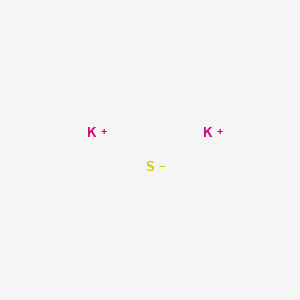
Verifizierte Chemie für CAS 1312-73-8
Potassium Sulfide
Potassium sulfide, hydrated, with not less than 30% water of crystallization appears as a red crystalline solid. Denser than water. Contact may severely irritate skin, eyes and mucous membranes. May be toxic by ingestion. — CAMEO Chemicals
- IUPAC-Name
- dipotassium;sulfide
- Summenformel
- K2S
- Molekulargewicht
- 110.26 g/mol
- Exakte Masse
- 109.89948414 Da
- Monoisotopische Masse
- 109.89948414 Da
- Topologische polare Oberfläche
- 1,0 Ų
- Molekulare Komplexität
- 0,0
- Formale Ladung
- 0
- Wasserstoffbrücken-Donoren
- 0
- Wasserstoffbrücken-Akzeptoren
- 1
- Drehbare Bindungen
- 0
- Schweratome
- 3
- Kovalente Einheiten
- 3
An PubChem gemeldete Namen und Synonyme
16 weitere gemeldete Namen
Kennungen in externen Datenbanken
- EPA DTXSID:DTXSID70909738
Erweiterte Strukturstatistik
- Definierte Atom-Stereozentren
- 0
- Nicht definierte Atom-Stereozentren
- 0
- Definierte Bindungs-Stereozentren
- 0
- Nicht definierte Bindungs-Stereozentren
- 0
- 3D-Konformere
- 0
Maschinenlesbare Strukturkennungen
- SMILES
[S-2].[K+].[K+]- InChI
InChI=1S/2K.S/q2*+1;-2- InChIKey
DPLVEEXVKBWGHE-UHFFFAOYSA-N
Belege aus weiteren wissenschaftlichen Datenbanken
NIH PubChem PUG-View
Attributed physical-property, hazard, environmental and use annotations.
- Color/Form: WHITE CUBIC CRYSTALS OR FUSED PLATES Quelle: Hazardous Substances Data Bank (HSDB)
- Color/Form: RED OR YELLOW-RED CRYSTALLINE MASS OR FUSED SOLID Quelle: Hazardous Substances Data Bank (HSDB)
- Density: Density = 1.74 g/cu cm Quelle: Hazardous Substances Data Bank (HSDB)
- Density: Relative density (water = 1): 1.8 Quelle: ILO-WHO International Chemical Safety Cards (ICSCs)
- Melting Point: 912 °C Quelle: Hazardous Substances Data Bank (HSDB)
- Melting Point: 840 °C Quelle: ILO-WHO International Chemical Safety Cards (ICSCs)
- Physical Description: Potassium sulfide, anhydrous appears as a yellow-red to red crystalline mass or fused solid with an odor of rotten eggs. Quelle: CAMEO Chemicals
- Physical Description: Potassium sulfide, hydrated, with not less than 30% water of crystallization appears as a red crystalline solid. Denser than water. Contact may severely irritate skin, eyes and mucous membranes. May be toxic by ingestion. Quelle: CAMEO Chemicals
- Physical Description: White very hygroscopic solid; Discolored by air; [Merck Index] Red or yellow-red deliquescent solid; [Hawley] White to yellow powder with an odor of rotten eggs; [Strem MSDS] Quelle: Haz-Map, Information on Hazardous Chemicals and Occupational Diseases
- Physical Description: HYGROSCOPIC WHITE CRYSTALS WITH CHARACTERISTIC ODOUR. TURNS RED OR BROWN ON EXPOSURE TO AIR. Quelle: ILO-WHO International Chemical Safety Cards (ICSCs)
- Solubility: FREELY SOL IN WATER Quelle: Hazardous Substances Data Bank (HSDB)
- Solubility: SOL IN ALCOHOL, GLYCERINE; INSOL IN ETHER Quelle: Hazardous Substances Data Bank (HSDB)
- Solubility: Soluble in ethanol, insoluble in ether. Quelle: Hazardous Substances Data Bank (HSDB)
- Solubility: Solubility in water: very good Quelle: ILO-WHO International Chemical Safety Cards (ICSCs)
- pH: AQ SOL ARE STRONGLY ALKALINE Quelle: Hazardous Substances Data Bank (HSDB)
- Exposure Routes: The substance can be absorbed into the body by inhalation and by ingestion. Quelle: ILO-WHO International Chemical Safety Cards (ICSCs)
- First Aid: Excerpt from ERG Guide 135 [Substances - Spontaneously Combustible]:; Refer to the "General First Aid" section. (ERG, 2024) Quelle: CAMEO Chemicals
- First Aid: Excerpt from ERG Guide 153 [Substances - Toxic and/or Corrosive (Combustible)]:; Refer to the "General First Aid" section. Specific First Aid: For corrosives, in case of contact, immediately flush skin or eyes with running water for at least 30 minutes. Additional flushing may be required. Removal of solidified molten material from skin requires medical assistance. (ERG, 2024) Quelle: CAMEO Chemicals
- ERG2024, Guide 153 (Potassium sulfide, hydrated, with not less than 30% water of crystallization): General First Aid:; · Call 911 or emergency medical service.; · Ensure that medical personnel are aware of the material(s) involved, take precautions to protect themselves and avoid contamination.; · Move victim to fresh air if it can be done safely.; · Administer oxygen if breathing is difficult.; · If victim is not breathing:; -- DO NOT perform mouth-to-mouth resuscitation; the victim may have ingested or inhaled the substance.; -- If equipped and pulse detected, wash face and mouth, then give artificial respiration using a proper respiratory medical device (bag-valve mask, pocket mask equipped with a one-way valve or other device).; -- If no pulse detected or no respiratory medical device available, provide continuous compressions. Conduct a pulse check every two minutes or monitor for any signs of spontaneous respirations.; · Remove and isolate contaminated clothing and shoes.; · For minor skin contact, avoid spreading material on unaffected skin.; · In case of contact with substance, remove immediately by flushing skin or eyes with running water for at least 20 minutes.; · For severe burns, immediate medical attention is required.; · Effects of exposure (inhalation, ingestion, Quelle: Emergency Response Guidebook (ERG)
- ERG2024, Guide 135 (Potassium sulfide, anhydrous; Potassium sulfide, with less than 30% water of crystallization): General First Aid:; · Call 911 or emergency medical service.; · Ensure that medical personnel are aware of the material(s) involved, take precautions to protect themselves and avoid contamination.; · Move victim to fresh air if it can be done safely.; · Administer oxygen if breathing is difficult.; · If victim is not breathing:; -- DO NOT perform mouth-to-mouth resuscitation; the victim may have ingested or inhaled the substance.; -- If equipped and pulse detected, wash face and mouth, then give artificial respiration using a proper respiratory medical device (bag-valve mask, pocket mask equipped with a one-way valve or other device).; -- If no pulse detected or no respiratory medical device available, provide continuous compressions. Conduct a pulse check every two minutes or monitor for any signs of spontaneous respirations.; · Remove and isolate contaminated clothing and shoes.; · For minor skin contact, avoid spreading material on unaffected skin.; · In case of contact with substance, remove immediately by flushing skin or eyes with running water for at least 20 minutes.; · For severe burns, immediate medical attention is required.; · Effects of exposure (inhalation, ingestion, Quelle: Emergency Response Guidebook (ERG)
- Signal: Danger Quelle: Regulation (EC) No 1272/2008 of the European Parliament and of the Council
- GHS Hazard Statements: H314: Causes severe skin burns and eye damage [Danger Skin corrosion/irritation]; H400: Very toxic to aquatic life [Warning Hazardous to the aquatic environment, acute hazard] Quelle: Regulation (EC) No 1272/2008 of the European Parliament and of the Council
- Precautionary Statement Codes: P260, P264, P273, P280, P301+P330+P331, P302+P361+P354, P304+P340, P305+P354+P338, P316, P321, P363, P391, P405, and P501 (click each P-code to see the statement) Quelle: Regulation (EC) No 1272/2008 of the European Parliament and of the Council
- Signal: Danger Quelle: European Chemicals Agency (ECHA)
- GHS Hazard Statements: H251 (44.3%): Self-heating; may catch fire [Danger Self-heating substances and mixtures]; H314 (100%): Causes severe skin burns and eye damage [Danger Skin corrosion/irritation]; H400 (100%): Very toxic to aquatic life [Warning Hazardous to the aquatic environment, acute hazard] Quelle: European Chemicals Agency (ECHA)
- Precautionary Statement Codes: P235, P260, P264, P273, P280, P301+P330+P331, P302+P361+P354, P304+P340, P305+P354+P338, P316, P321, P363, P391, P405, P407, P410, P413, P420, and P501 (click each P-code to see the statement) Quelle: European Chemicals Agency (ECHA)
- ECHA C&L Notifications Summary: Aggregated GHS information provided per 88 reports by companies from 3 notifications to the ECHA C&L Inventory. Each notification may be associated with multiple companies.; Information may vary between notifications depending on impurities, additives, and other factors. The percentage value in parenthesis indicates the notified classification ratio from companies that provide hazard codes. Only hazard codes with percentage values above 10% are shown. For more detailed information, please visit ECHA C&L website. Quelle: European Chemicals Agency (ECHA)
- Signal: Danger Quelle: NITE-CMC
- GHS Hazard Statements: H251: Self-heating; may catch fire [Danger Self-heating substances and mixtures]; H300: Fatal if swallowed [Danger Acute toxicity, oral]; H314: Causes severe skin burns and eye damage [Danger Skin corrosion/irritation]; H318: Causes serious eye damage [Danger Serious eye damage/eye irritation]; H371: May cause damage to organs [Warning Specific target organ toxicity, single exposure] Quelle: NITE-CMC
- Precautionary Statement Codes: P235, P260, P264, P264+P265, P270, P280, P301+P316, P301+P330+P331, P302+P361+P354, P304+P340, P305+P354+P338, P308+P316, P316, P317, P321, P330, P363, P405, P407, P410, P413, P420, and P501 (click each P-code to see the statement) Quelle: NITE-CMC
- Signal: Danger Quelle: Hazardous Chemical Information System (HCIS), Safe Work Australia
- GHS Hazard Statements: H301: Toxic if swallowed [Danger Acute toxicity, oral]; H312: Harmful in contact with skin [Warning Acute toxicity, dermal]; H314: Causes severe skin burns and eye damage [Danger Skin corrosion/irritation]; H400: Very toxic to aquatic life [Warning Hazardous to the aquatic environment, acute hazard] Quelle: Hazardous Chemical Information System (HCIS), Safe Work Australia
- NFPA Health Rating: 3 - Materials that, under emergency conditions, can cause serious or permanent injury. Quelle: Hazardous Substances Data Bank (HSDB)
- NFPA Fire Rating: 1 - Materials that must be preheated before ignition can occur. Materials require considerable preheating, under all ambient temperature conditions, before ignition and combustion can occur. Quelle: Hazardous Substances Data Bank (HSDB)
- NFPA Instability Rating: 0 - Materials that in themselves are normally stable, even under fire conditions. Quelle: Hazardous Substances Data Bank (HSDB)
- Sources/Uses: Used in photography (toner); [www.ci.tucson.az.us/arthazards/medium.html] Used as an analytical reagent, depilatory, and medicine; [Hawley] Quelle: Haz-Map, Information on Hazardous Chemicals and Occupational Diseases
- Industrial Processes with risk of exposure: Photographic Processing [Category: Other] Quelle: Haz-Map, Information on Hazardous Chemicals and Occupational Diseases
- Activities with risk of exposure: Applying metallic patinas [Category: Hobbies] Quelle: Haz-Map, Information on Hazardous Chemicals and Occupational Diseases
- Uses: Reagent in analytical chemistry, depilatory, medicine. Quelle: Hazardous Substances Data Bank (HSDB)
Zugeordnet durch: Existing checksum-valid CAS to unique PubChem CID match. Abgerufen: 2026-08-31. Quelleneintrag öffnen
Wissenschaftliche Klassifizierungen und Gefahrenannotationen liefern Kontext und ersetzen nicht die oben gezeigte marktspezifische regulatorische Entscheidung.
Weitere Quellenabdeckung und Trefferstatus
| Quelle | Ergebnis | Geprüft |
|---|---|---|
| NIH PubChem PUG-View | Exakter Treffer | 2026-08-31 |
Ein erfasster Nicht-Treffer ist ein nützlicher Beleg dafür, dass die Quelle geprüft wurde; er ist keine Behauptung, dass der Stoff anderswo nicht existiert.
Am 2026-09-02 von NIH PubChem durch prüfsummengültigen CAS-Abgleich abgerufen. Chemische Eigenschaften ersetzen nicht die regulatorische Entscheidung auf dieser Seite.
Verifizierte Chemie für CAS 1313-82-2
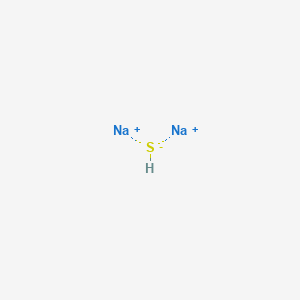
Sodium sulfide, hydrated, with not less than 30% water
Sodium sulfide, hydrated, with not less than 30% water appears as yellow-pink or white deliquescent crystals, flakes or lumps. Contains at least 30% water. Alkaline. Burns skin, eyes and mucous membranes. Mildly corrosive to most metals. May be toxic by skin absorption. Releases toxic hydrogen sulfide gas when mixed with an acid. — CAMEO Chemicals
- IUPAC-Name
- disodium;sulfanide
- Summenformel
- HNa2S+
- Formel ohne Ladung
- HNa2S
- Molekulargewicht
- 79.06 g/mol
- Exakte Masse
- 78.95943477 Da
- Monoisotopische Masse
- 78.95943477 Da
- Topologische polare Oberfläche
- 1,0 Ų
- Molekulare Komplexität
- 2,0
- Formale Ladung
- 1
- Wasserstoffbrücken-Donoren
- 1
- Wasserstoffbrücken-Akzeptoren
- 1
- Drehbare Bindungen
- 0
- Schweratome
- 3
- Kovalente Einheiten
- 3
An PubChem gemeldete Namen und Synonyme
14 weitere gemeldete Namen
Kennungen in externen Datenbanken
- PubMed:15790858
Erweiterte Strukturstatistik
- Definierte Atom-Stereozentren
- 0
- Nicht definierte Atom-Stereozentren
- 0
- Definierte Bindungs-Stereozentren
- 0
- Nicht definierte Bindungs-Stereozentren
- 0
- 3D-Konformere
- 0
Maschinenlesbare Strukturkennungen
- SMILES
[Na+].[Na+].[SH-]- InChI
InChI=1S/2Na.H2S/h;;1H2/q2*+1;/p-1- InChIKey
VDQVEACBQKUUSU-UHFFFAOYSA-M
Belege aus weiteren wissenschaftlichen Datenbanken
NIH PubChem PUG-View
Attributed physical-property, hazard, environmental and use annotations.
- Physical Description: Sodium sulfide, hydrated, with not less than 30% water appears as yellow-pink or white deliquescent crystals, flakes or lumps. Contains at least 30% water. Alkaline. Burns skin, eyes and mucous membranes. Mildly corrosive to most metals. May be toxic by skin absorption. Releases toxic hydrogen sulfide gas when mixed with an acid. Quelle: CAMEO Chemicals
- Physical Description: Wet Solid; Other Solid; Dry Powder; CBI; Large Crystals; Liquid Quelle: EPA Chemical Data Reporting (CDR)
- First Aid: Excerpt from ERG Guide 153 [Substances - Toxic and/or Corrosive (Combustible)]:; Refer to the "General First Aid" section. Specific First Aid: For corrosives, in case of contact, immediately flush skin or eyes with running water for at least 30 minutes. Additional flushing may be required. Removal of solidified molten material from skin requires medical assistance. (ERG, 2024) Quelle: CAMEO Chemicals
- Signal: Danger Quelle: European Chemicals Agency (ECHA)
- GHS Hazard Statements: H290 (14.7%): May be corrosive to metals [Warning Corrosive to Metals]; H301+H311 (15.7%): Toxic if swallowed or in contact with skin [Danger Acute toxicity, oral; acute toxicity, dermal]; H301 (65.3%): Toxic if swallowed [Danger Acute toxicity, oral]; H302 (34.8%): Harmful if swallowed [Warning Acute toxicity, oral]; H311 (96.2%): Toxic in contact with skin [Danger Acute toxicity, dermal]; H314 (100%): Causes severe skin burns and eye damage [Danger Skin corrosion/irritation]; H318 (62.9%): Causes serious eye damage [Danger Serious eye damage/eye irritation]; H400 (100%): Very toxic to aquatic life [Warning Hazardous to the aquatic environment, acute hazard] Quelle: European Chemicals Agency (ECHA)
- Precautionary Statement Codes: P234, P260, P262, P264, P264+P265, P270, P273, P280, P301+P316, P301+P317, P301+P330+P331, P302+P352, P302+P361+P354, P304+P340, P305+P354+P338, P316, P317, P321, P330, P361+P364, P363, P390, P391, P405, P406, and P501 (click each P-code to see the statement) Quelle: European Chemicals Agency (ECHA)
- ECHA C&L Notifications Summary: Aggregated GHS information provided per 1100 reports by companies from 24 notifications to the ECHA C&L Inventory. Each notification may be associated with multiple companies.; Information may vary between notifications depending on impurities, additives, and other factors. The percentage value in parenthesis indicates the notified classification ratio from companies that provide hazard codes. Only hazard codes with percentage values above 10% are shown. For more detailed information, please visit ECHA C&L website. Quelle: European Chemicals Agency (ECHA)
- Signal: Danger Quelle: NITE-CMC
- GHS Hazard Statements: H251: Self-heating; may catch fire [Danger Self-heating substances and mixtures]; H301: Toxic if swallowed [Danger Acute toxicity, oral]; H314: Causes severe skin burns and eye damage [Danger Skin corrosion/irritation]; H318: Causes serious eye damage [Danger Serious eye damage/eye irritation]; H335: May cause respiratory irritation [Warning Specific target organ toxicity, single exposure; Respiratory tract irritation]; H400: Very toxic to aquatic life [Warning Hazardous to the aquatic environment, acute hazard] Quelle: NITE-CMC
- Precautionary Statement Codes: P235, P260, P261, P264, P264+P265, P270, P271, P273, P280, P301+P316, P301+P330+P331, P302+P361+P354, P304+P340, P305+P354+P338, P316, P317, P319, P321, P330, P363, P391, P403+P233, P405, P407, P410, P413, P420, and P501 (click each P-code to see the statement) Quelle: NITE-CMC
- GHS Hazard Statements: H251: Self-heating; may catch fire [Danger Self-heating substances and mixtures]; H301: Toxic if swallowed [Danger Acute toxicity, oral]; H314: Causes severe skin burns and eye damage [Danger Skin corrosion/irritation]; H318: Causes serious eye damage [Danger Serious eye damage/eye irritation]; H371: May cause damage to organs [Warning Specific target organ toxicity, single exposure] Quelle: NITE-CMC
- Precautionary Statement Codes: P235, P260, P264, P264+P265, P270, P280, P301+P316, P301+P330+P331, P302+P361+P354, P304+P340, P305+P354+P338, P308+P316, P316, P317, P321, P330, P363, P405, P407, P410, P413, P420, and P501 (click each P-code to see the statement) Quelle: NITE-CMC
- Signal: Danger Quelle: Hazardous Chemical Information System (HCIS), Safe Work Australia
- GHS Hazard Statements: H301: Toxic if swallowed [Danger Acute toxicity, oral]; H312: Harmful in contact with skin [Warning Acute toxicity, dermal]; H314: Causes severe skin burns and eye damage [Danger Skin corrosion/irritation]; H400: Very toxic to aquatic life [Warning Hazardous to the aquatic environment, acute hazard] Quelle: Hazardous Chemical Information System (HCIS), Safe Work Australia
- Precautionary Statement Codes: P260, P264, P270, P273, P280, P301+P316, P301+P330+P331, P302+P352, P302+P361+P354, P304+P340, P305+P354+P338, P316, P317, P321, P330, P362+P364, P363, P391, P405, and P501 (click each P-code to see the statement) Quelle: Hazardous Chemical Information System (HCIS), Safe Work Australia
- Consumer Uses: Not Known or Reasonably Ascertainable Quelle: EPA Chemical Data Reporting (CDR)
- Industry Uses: Intermediate; Processing aids, specific to petroleum production; Solids separation (precipitating) agent, not otherwise specified; Not Known or Reasonably Ascertainable; pH regulating agent; Tanning agents not otherwise specified; Processing aids not otherwise specified; Lubricating agent; Other Quelle: EPA Chemical Data Reporting (CDR)
Zugeordnet durch: Existing checksum-valid CAS to unique PubChem CID match. Abgerufen: 2026-08-31. Quelleneintrag öffnen
Wissenschaftliche Klassifizierungen und Gefahrenannotationen liefern Kontext und ersetzen nicht die oben gezeigte marktspezifische regulatorische Entscheidung.
Weitere Quellenabdeckung und Trefferstatus
| Quelle | Ergebnis | Geprüft |
|---|---|---|
| NIH PubChem PUG-View | Exakter Treffer | 2026-08-31 |
Ein erfasster Nicht-Treffer ist ein nützlicher Beleg dafür, dass die Quelle geprüft wurde; er ist keine Behauptung, dass der Stoff anderswo nicht existiert.
Am 2026-09-02 von NIH PubChem durch prüfsummengültigen CAS-Abgleich abgerufen. Chemische Eigenschaften ersetzen nicht die regulatorische Entscheidung auf dieser Seite.
Amtliche Quelle und Herkunft
- Registrierte Quelle
- Health Canada Cosmetic Ingredient Hotlist
- Quellenverweis
- Hotlist restricted entry 7
- Eintrags-ID der Quelle
restricted:7- Quellenversion
- Health Canada Hotlist 2025-08-13
- Quellsprache
- English
- Übersetzungsstatus
- Original is English
- Quelle aktualisiert
- 2025-08-13
- Stand geprüft
- 2026-08-30 04:07 UTC
- Validierungsmethode
- strict HTML tables t1=490 and t2=90
- SHA-256
8b52ff573d08373ee90121f6a701b3607e4a3d6fc748a7d56171eb53510af91a
Hinweise zum registrierten Datensatz
- Datensatzabdeckung
- Administrative prohibitions, restrictions, conditions and warning requirements
- Hinweis zur Behörde
- Official Health Canada compliance indicator; not a complete safety clearance
Wie dieser Eintrag in den Marktdatensatz passt
Statusverteilung
Bedingungstext ist bei 172 von 580 aktuellen Einträgen vorhanden. Ein leeres Bedingungsfeld wird entsprechend der oben genannten Eintragsart interpretiert; es wird niemals in die Aussage einer uneingeschränkten Verwendung umgedeutet.
Canada Marktkontext
Complete Hotlist snapshot
Abdeckungsversion: Health Canada Cosmetic Ingredient Hotlist, 13 August 2025
All prohibited and restricted Hotlist entries, including conditions and warning requirements published in the official list.
Verifizierungs-Checkliste
- Search English/French names and CAS identifiers.
- Apply every restriction, concentration and label warning.
- Check Food and Drugs Act/Cosmetic Regulations requirements.
- Recheck the current Hotlist before notification or sale.
Amtliche Marktquellen
- Health Canada Cosmetic Ingredient HotlistOfficial Health Canada compliance indicator; not a complete safety clearance
Verifizierungsablauf und Vollständigkeit des Eintrags
Bevor Sie dieses Ergebnis für eine Compliance-Entscheidung verwenden
- Bestätigen Sie, dass „Alkali sulfides“ und jede CAS-/EC-Kennung sich auf das Material in Ihrer Lieferantenspezifikation beziehen.
- Search English/French names and CAS identifiers.
- Apply every restriction, concentration and label warning.
- Check Food and Drugs Act/Cosmetic Regulations requirements.
- Recheck the current Hotlist before notification or sale.
- Dokumentieren Sie die Quellenversion und prüfen Sie die Behörde vor Herstellung, Notifizierung oder Inverkehrbringen erneut.
In diesem Eintrag verfügbare Felder
- Amtlicher StoffnameVerfügbar
- CASVerfügbar
- ECNicht angegeben
- Gesonderter BedingungstextVerfügbar
- Datum des InkrafttretensNicht angegeben
- Snapshot-Hash und MethodeVerfügbar
Fragen, die diese Seite beantwortet
Dauerhafte Zitierweise
Alkali sulfides. Hotlist restricted entry 7. Canada. Source version Health Canada Hotlist 2025-08-13. CosIng Checker regulatory record: https://cosingchecker.com/de/regulations/ca/records/497/
Zitieren Sie die Aufsichtsbehörde als rechtliche Autorität. Diese Seite ist ein strukturierter Belegindex und eine Verifizierungshilfe, kein Ersatz für den amtlichen Text oder eine fachkundige rechtliche Bewertung.
Auslegung und Grenzen für Canada
This substance is not unrestricted: cosmetic use is subject to the conditions in the cited official record.
Check product type, body area, concentration, purity and warning requirements before deciding whether a formulation is compliant.
Wie die Rechtsrolle auszulegen ist
The authority uses this source as compliance guidance; the underlying legislation remains controlling.
Belege auf dieser Seite
- Erfasstes Ergebnis: Restricted
- Rechtsrolle: Official guidance
- Quellenversion: Health Canada Hotlist 2025-08-13
Was es nicht beweist
The Hotlist is an administrative compliance tool, not an exhaustive safety approval list.
Weitere maßgebliche Stoffrecherche
Keine dieser Quellen hebt die oben genannte Marktentscheidung auf.
Cosmetic Ingredient Review safety assessments
Expert Panel conclusions, assessed ingredient groups, use conditions, dates and report documents
Independent expert review considered by FDA; not a government approval or binding market rule
Diese Identität bei der Quelle recherchierenFDA Global Substance Registration System
UNII identifiers, preferred names, substance types, codes and public substance relationships
Identity registry only; UNII availability does not imply FDA review or approval
Diese Identität bei der Quelle recherchierenILO/WHO International Chemical Safety Cards
Hazards, symptoms, first aid, storage, incompatibilities and physical properties for covered chemicals
International occupational chemical-safety reference; not cosmetic-use approval
Diese Identität bei der Quelle recherchierenJapan NITE-CHRIP
Chemical identity, Japanese and foreign legal lists, GHS hazards and exposure-related information
Chemical-management evidence; cosmetic status remains governed by the applicable MHLW standard and market rules
Diese Identität bei der Quelle recherchierenNIOSH Pocket Guide to Chemical Hazards
REL, PEL, IDLH, properties, exposure routes, symptoms, target organs, first aid and measurement methods for covered workplace chemicals
US occupational-health guidance and limits; not a cosmetic ingredient decision
Diese Identität bei der Quelle recherchierenOECD eChemPortal
Gateway to authority-owned physical-property, fate, ecotoxicity, toxicity, exposure and GHS records
Discovery gateway; each linked authority remains responsible for its data
Diese Identität bei der Quelle recherchierenUS EPA CompTox CTX APIs
Für den Import ist ein API-Schlüssel erforderlichDTXSID identity, experimental and predicted properties, toxicity, bioactivity, exposure and environmental data
Scientific and computational evidence; predictions must remain labelled and do not determine cosmetic legality
Diese Identität bei der Quelle recherchieren