
Nitrosamines
Canada Hotlist: Nitrosamines
Health Canada lists this ingredient as prohibited for use in cosmetic products.
Regulatorische Entscheidung und vollständige Bedingungen
- Status
- Prohibited
- Rechtsrolle
- Official guidance
- Regulatorische Zusammenfassung
- Health Canada lists this ingredient as prohibited for use in cosmetic products.
- Bedingungen und Beschränkungen
Synonyms or related compounds: N-nitrosodiethanolamine
Stoffidentität
- Name in der amtlichen Quelle
- Nitrosamines
- CAS
- 64091-91-4; 35576-91-1; 930-55-2; 100-75-4; 10595-95-6; 59-89-2; 621-64-7; 924-16-3; 55-18-5; 1116-54-7; 62-75-9
- EC
- Not supplied in this source row
- Identitätszuordnung
- standalone:cas_number
Marktübergreifende Übersicht zu dieser Identität
Exakte verknüpfte Einträge, die derzeit auf dieser Website vorhanden sind. Ein fehlender Markt bedeutet, dass kein exakter Treffer importiert wurde, nicht dass der Stoff verwendet werden darf.
European Union
2 verknüpfte Einträge
Unterstützenden Eintrag öffnenGreat Britain
2 verknüpfte Einträge
Unterstützenden Eintrag öffnenCanada
Aktueller Eintrag1 verknüpfter Eintrag · 1 mit besonderen Bedingungen
Unterstützenden Eintrag öffnenNew Zealand
3 verknüpfte Einträge
Unterstützenden Eintrag öffnenASEAN
3 verknüpfte Einträge
Unterstützenden Eintrag öffnenChina
1 verknüpfter Eintrag · 1 mit besonderen Bedingungen
Unterstützenden Eintrag öffnenSouth Korea
1 verknüpfter Eintrag · 1 mit besonderen Bedingungen
Unterstützenden Eintrag öffnenBrazil
4 verknüpfte Einträge · 4 mit besonderen Bedingungen
Unterstützenden Eintrag öffnenIndia
1 verknüpfter Eintrag · 1 mit besonderen Bedingungen
Unterstützenden Eintrag öffnenSaudi Arabia
2 verknüpfte Einträge
Unterstützenden Eintrag öffnen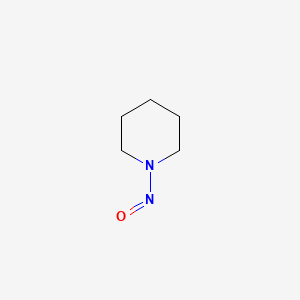
Verifizierte Chemie für CAS 100-75-4
N-Nitrosopiperidine
N-nitrosopiperidine is a nitrosamine that is piperidine in which the hydrogen attached to the nitrogen is replaced by a nitroso group. One of the many carcinogens detected in cigarette smoke, it is found in meat, cheese and spices that have been treated with the preservative sodium nitrite. It has a role as a mutagen, a carcinogenic agent, an apoptosis inducer and an environmental contaminant. It is a piperidine and a nitrosamine. — ChEBI
- IUPAC-Name
- 1-nitrosopiperidine
- Summenformel
- C5H10N2O
- Molekulargewicht
- 114.15 g/mol
- Exakte Masse
- 114.079312947 Da
- Monoisotopische Masse
- 114.079312947 Da
- XLogP3
- 0,4
- Topologische polare Oberfläche
- 32,7 Ų
- Molekulare Komplexität
- 78,0
- Formale Ladung
- 0
- Wasserstoffbrücken-Donoren
- 0
- Wasserstoffbrücken-Akzeptoren
- 3
- Drehbare Bindungen
- 0
- Schweratome
- 8
- Kovalente Einheiten
- 1
An PubChem gemeldete Namen und Synonyme
16 weitere gemeldete Namen
Kennungen in externen Datenbanken
- ChEBI:CHEBI:76324
- ChEMBL:CHEMBL165244
- EPA DTXSID:DTXSID8021060
- PubMed:22967534
- PubMed:22352424
- PubMed:22108029
- PubMed:22084566
- PubMed:21946166
- PubMed:21860515
- PubMed:21819861
- PubMed:21376329
- PubMed:21105252
- PubMed:20816717
- PubMed:20651851
- PubMed:20637784
Erweiterte Strukturstatistik
- Definierte Atom-Stereozentren
- 0
- Nicht definierte Atom-Stereozentren
- 0
- Definierte Bindungs-Stereozentren
- 0
- Nicht definierte Bindungs-Stereozentren
- 0
- 3D-Pharmakophormerkmale
- 1
- 3D-Ringe
- 1
- 3D-Hydrophobe
- 0
- 3D-Akzeptormerkmale
- 0
- 3D-Donormerkmale
- 0
- 3D-Anionenzentren
- 0
- 3D-Kationenzentren
- 0
- 3D-Konformere
- 10
- Effektive 3D-Rotoren
- 2,2
Maschinenlesbare Strukturkennungen
- SMILES
C1CCN(CC1)N=O- InChI
InChI=1S/C5H10N2O/c8-6-7-4-2-1-3-5-7/h1-5H2- InChIKey
UWSDONTXWQOZFN-UHFFFAOYSA-N
Belege aus weiteren wissenschaftlichen Datenbanken
EMBL-EBI ChEBI
N-nitrosopiperidine
A nitrosamine that is piperidine in which the hydrogen attached to the nitrogen is replaced by a nitroso group. One of the many carcinogens detected in cigarette smoke, it is found in meat, cheese and spices that have been treated with the preservative sodium nitrite.
- Rezeptur
- C5H10N2O
- Durchschnittsmasse
- 114.148 g/mol
- Monoisotopische Masse
- 114.07931 Da
- Formale Ladung
- 0
- nitrosamine — is a (CHEBI:35803)
- piperidine — is a (CHEBI:18049)
- carcinogenic agent — has role (CHEBI:50903)
- apoptosis inducer — has role (CHEBI:68495)
- mutagen — has role (CHEBI:25435)
- environmental contaminant — has role (CHEBI:78298)
- carcinogenic agent — has role (CHEBI:50903)
- apoptosis inducer — has role (CHEBI:68495)
- mutagen — has role (CHEBI:25435)
- environmental contaminant — has role (CHEBI:78298)
- nitrosamine — is a (CHEBI:35803)
- piperidine — is a (CHEBI:18049)
Weitere kuratierte Namen
Querverweise aus dieser Quelle
Zugeordnet durch: Exact CAS cross-reference in the ChEBI compound record. Quelle aktualisiert: 2014-07-28. Abgerufen: 2026-08-31. Quelleneintrag öffnen
NIH PubChem PUG-View
Attributed physical-property, hazard, environmental and use annotations.
- Boiling Point: 423 °F at 721 mmHg (NTP, 1992) Quelle: CAMEO Chemicals
- Boiling Point: 219 °C Quelle: Hazardous Substances Data Bank (HSDB)
- Boiling Point: BP: 109 °C at 20 mm Hg Quelle: Hazardous Substances Data Bank (HSDB)
- Boiling Point: 423 °F at 721 mmHg Quelle: Occupational Safety and Health Administration (OSHA)
- Color/Form: Yellow oil Quelle: Hazardous Substances Data Bank (HSDB)
- Color/Form: Pale yellow Quelle: Hazardous Substances Data Bank (HSDB)
- Density: 1.0631 at 65.3 °F (NTP, 1992) - Denser than water; will sink Quelle: CAMEO Chemicals
- Density: 1.0631 g/cu cm at 18.5 °C Quelle: Hazardous Substances Data Bank (HSDB)
- Density: 1.0631 at 65.3 °F Quelle: Occupational Safety and Health Administration (OSHA)
- LogP: log Kow = 0.36 Quelle: Hazardous Substances Data Bank (HSDB)
- Physical Description: N-nitrosopiperidine appears as light yellow oil or liquid. May be a carcinogen. Quelle: CAMEO Chemicals
- Physical Description: Yellow liquid; [HSDB] Quelle: Haz-Map, Information on Hazardous Chemicals and Occupational Diseases
- Physical Description: Light yellow oil or liquid. Quelle: Occupational Safety and Health Administration (OSHA)
- Refractive Index: Index of refraction: 1.4933 at 18 °C/D Quelle: Hazardous Substances Data Bank (HSDB)
- Solubility: 10 to 50 mg/mL at 72 °F (NTP, 1992) Quelle: CAMEO Chemicals
- Solubility: Soluble in water (7.7%) and in organic solvents and lipids Quelle: Hazardous Substances Data Bank (HSDB)
- Solubility: Soluble in hydrochloric acid Quelle: Hazardous Substances Data Bank (HSDB)
- Solubility: In water, 7.65X10+4 mg/L at 24 °C Quelle: Hazardous Substances Data Bank (HSDB)
- Vapor Pressure: 0.09 [mmHg] Quelle: Haz-Map, Information on Hazardous Chemicals and Occupational Diseases
- Vapor Pressure: 9.20X10⁻² mm Hg at 20 °C Quelle: Hazardous Substances Data Bank (HSDB)
- IARC Carcinogenic Agent: N-Nitrosopiperidine Quelle: International Agency for Research on Cancer (IARC)
- IARC Carcinogenic Classes: Group 2B: Possibly carcinogenic to humans Quelle: International Agency for Research on Cancer (IARC)
- IARC Monographs: Volume 17: (1978) Some N-Nitroso Compounds; Volume Sup 7: Overall Evaluations of Carcinogenicity: An Updating of IARC Monographs Volumes 1 to 42, 1987; 440 pages; ISBN 92-832-1411-0 (out of print) Quelle: International Agency for Research on Cancer (IARC)
- Publication Year: 1987 Quelle: International Agency for Research on Cancer (IARC)
- Evaluation Year: 1987 Quelle: International Agency for Research on Cancer (IARC)
- First Aid: EYES: First check the victim for contact lenses and remove if present. Flush victim's eyes with water or normal saline solution for 20 to 30 minutes while simultaneously calling a hospital or poison control center. Do not put any ointments, oils, or medication in the victim's eyes without specific instructions from a physician. IMMEDIATELY transport the victim after flushing eyes to a hospital even if no symptoms (such as redness or irritation) develop.; SKIN: IMMEDIATELY flood affected skin with water while removing and isolating all contaminated clothing. Gently wash all affected skin areas thoroughly with soap and water. IMMEDIATELY call a hospital or poison control center even if no symptoms (such as redness or irritation) develop. IMMEDIATELY transport the victim to a hospital for treatment after washing the affected areas.; INHALATION: IMMEDIATELY leave the contaminated area; take deep breaths of fresh air. IMMEDIATELY call a physician and be prepared to transport the victim to a hospital even if no symptoms (such as wheezing, coughing, shortness of breath, or burning in the mouth, throat, or chest) develop. Provide proper respiratory protection to rescuers entering an unknow Quelle: CAMEO Chemicals
- Note: This chemical does not meet GHS hazard criteria for 2% (1 of 51) of reports. Quelle: European Chemicals Agency (ECHA)
- Signal: Danger Quelle: European Chemicals Agency (ECHA)
- GHS Hazard Statements: H301 (98%): Toxic if swallowed [Danger Acute toxicity, oral]; H351 (92.2%): Suspected of causing cancer [Warning Carcinogenicity] Quelle: European Chemicals Agency (ECHA)
- Precautionary Statement Codes: P203, P264, P270, P280, P301+P316, P318, P321, P330, P405, and P501 (click each P-code to see the statement) Quelle: European Chemicals Agency (ECHA)
- ECHA C&L Notifications Summary: Aggregated GHS information provided per 51 reports by companies from 5 notifications to the ECHA C&L Inventory. Each notification may be associated with multiple companies.; Reported as not meeting GHS hazard criteria per 1 of 51 reports by companies.; There are 4 notifications provided by 50 of 51 reports by companies with hazard statement code(s).; Information may vary between notifications depending on impurities, additives, and other factors. The percentage value in parenthesis indicates the notified classification ratio from companies that provide hazard codes. Only hazard codes with percentage values above 10% are shown. For more detailed information, please visit ECHA C&L website. Quelle: European Chemicals Agency (ECHA)
- Signal: Danger Quelle: NITE-CMC
- GHS Hazard Statements: H350: May cause cancer [Danger Carcinogenicity] Quelle: NITE-CMC
- Precautionary Statement Codes: P203, P280, P318, P405, and P501 (click each P-code to see the statement) Quelle: NITE-CMC
- GHS Hazard Statements: H301: Toxic if swallowed [Danger Acute toxicity, oral]; H351: Suspected of causing cancer [Warning Carcinogenicity] Quelle: NITE-CMC
- Precautionary Statement Codes: P203, P264, P270, P280, P301+P316, P318, P321, P330, P405, and P501 (click each P-code to see the statement) Quelle: NITE-CMC
- Environmental Bioconcentration: An estimated BCF of 3 was calculated in fish for N-nitrosopiperidine(SRC), using a log Kow of 0.36(1) and a regression-derived equation(2). According to a classification scheme(3), this BCF suggests the potential for bioconcentration in aquatic organisms is low(SRC). Quelle: Hazardous Substances Data Bank (HSDB)
- Environmental Fate: TERRESTRIAL FATE: Based on a classification scheme(1), an estimated Koc value of 170(SRC), determined from a structure estimation method(2), indicates that N-nitrosopiperidine is expected to have moderate mobility in soil(SRC). Volatilization of N-nitrosopiperidine from moist soil surfaces is not expected to be an important fate process(SRC) given a Henry's Law constant of 8.44X10⁻⁷ atm-cu m/mole(3). N-Nitrosopiperidine is not expected to volatilize from dry soil surfaces(SRC) based upon a vapor pressure of 9.20X10⁻² mm Hg at 20 °C(4). A 33% biodegradation in 30 days(5) suggests that biodegradation is not an important environmental fate process in soil(SRC). Quelle: Hazardous Substances Data Bank (HSDB)
- Environmental Fate: AQUATIC FATE: Based on a classification scheme(1), an estimated Koc value of 170(SRC), determined from a structure estimation method(2), indicates that N-nitrosopiperidine is expected to adsorb to suspended solids and sediment(SRC). Volatilization from water surfaces is not expected(3) based upon a Henry's Law constant of 8.44X10⁻⁷ atm-cu m/mole(4). According to a classification scheme(5), an estimated BCF of 3(SRC), from its log Kow of 0.36(6) and a regression-derived equation(2), suggests the potential for bioconcentration in aquatic organisms is low(SRC). Under conditions simulating Southern California midsummer, midday sun, N-nitrosopiperidine exhibited an aqueous photolysis half-life of 12 minutes(7). A 33% biodegradation in 30 days(8) suggests that biodegradation is not an important environmental fate process in water(SRC). Quelle: Hazardous Substances Data Bank (HSDB)
- Environmental Fate: ATMOSPHERIC FATE: According to a model of gas/particle partitioning of semivolatile organic compounds in the atmosphere(1), N-nitrosopiperidine, which has a vapor pressure of 9.20X10⁻² mm Hg at 20 °C(2), is expected to exist solely as a vapor in the ambient atmosphere. Vapor-phase N-nitrosopiperidine is degraded in the atmosphere by reaction with photochemically-produced hydroxyl radicals(SRC); the half-life for this reaction in air is estimated to be 5 hours(SRC), calculated from its rate constant of 2.6X10⁻¹¹ cu cm/molecule-sec at 25 °C(SRC) that was derived using a structure estimation method(3). N-Nitrosopiperidine has a UV absorption maximum of 337 nm in water(4), and therefore may be susceptible to direct photolysis by sunlight(SRC). Quelle: Hazardous Substances Data Bank (HSDB)
- Sources/Uses: Used as a research chemical; [HSDB] Quelle: Haz-Map, Information on Hazardous Chemicals and Occupational Diseases
- Uses: ... N-Nitroso compounds are produced primarily as research chemicals and not for commercial purposes. /N-Nitroso compounds/ Quelle: Hazardous Substances Data Bank (HSDB)
Zugeordnet durch: Existing checksum-valid CAS to unique PubChem CID match. Abgerufen: 2026-08-31. Quelleneintrag öffnen
Wissenschaftliche Klassifizierungen und Gefahrenannotationen liefern Kontext und ersetzen nicht die oben gezeigte marktspezifische regulatorische Entscheidung.
Weitere Quellenabdeckung und Trefferstatus
| Quelle | Ergebnis | Geprüft |
|---|---|---|
| EMBL-EBI ChEBI | Exakter Treffer | 2026-08-31 |
| NIH PubChem PUG-View | Exakter Treffer | 2026-08-31 |
Ein erfasster Nicht-Treffer ist ein nützlicher Beleg dafür, dass die Quelle geprüft wurde; er ist keine Behauptung, dass der Stoff anderswo nicht existiert.
Am 2026-09-02 von NIH PubChem durch prüfsummengültigen CAS-Abgleich abgerufen. Chemische Eigenschaften ersetzen nicht die regulatorische Entscheidung auf dieser Seite.
Verifizierte Chemie für CAS 10595-95-6
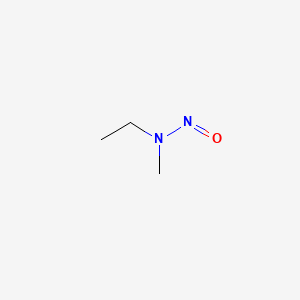
N-Nitrosomethylethylamine
N-Nitrosomethylethylamine is a nitroso compound. — ChEBI
- IUPAC-Name
- N-ethyl-N-methylnitrous amide
- Summenformel
- C3H8N2O
- Molekulargewicht
- 88.11 g/mol
- Exakte Masse
- 88.063662883 Da
- Monoisotopische Masse
- 88.063662883 Da
- XLogP3
- 0,6
- Topologische polare Oberfläche
- 32,7 Ų
- Molekulare Komplexität
- 46,0
- Formale Ladung
- 0
- Wasserstoffbrücken-Donoren
- 0
- Wasserstoffbrücken-Akzeptoren
- 3
- Drehbare Bindungen
- 1
- Schweratome
- 6
- Kovalente Einheiten
- 1
An PubChem gemeldete Namen und Synonyme
16 weitere gemeldete Namen
Kennungen in externen Datenbanken
- ChEBI:CHEBI:82360
- ChEMBL:CHEMBL164852
- EPA DTXSID:DTXSID6021036
- PubMed:21819861
- PubMed:18648862
- PubMed:17904190
- PubMed:16599441
- PubMed:15619126
Erweiterte Strukturstatistik
- Definierte Atom-Stereozentren
- 0
- Nicht definierte Atom-Stereozentren
- 0
- Definierte Bindungs-Stereozentren
- 0
- Nicht definierte Bindungs-Stereozentren
- 0
- 3D-Pharmakophormerkmale
- 0
- 3D-Ringe
- 0
- 3D-Hydrophobe
- 0
- 3D-Akzeptormerkmale
- 0
- 3D-Donormerkmale
- 0
- 3D-Anionenzentren
- 0
- 3D-Kationenzentren
- 0
- 3D-Konformere
- 10
- Effektive 3D-Rotoren
- 2,0
Maschinenlesbare Strukturkennungen
- SMILES
CCN(C)N=O- InChI
InChI=1S/C3H8N2O/c1-3-5(2)4-6/h3H2,1-2H3- InChIKey
RTDCJKARQCRONF-UHFFFAOYSA-N
Belege aus weiteren wissenschaftlichen Datenbanken
EMBL-EBI ChEBI
N-Nitrosomethylethylamine
- Rezeptur
- C3H8N2O
- Durchschnittsmasse
- 88.110 g/mol
- Monoisotopische Masse
- 88.06366 Da
- Formale Ladung
- 0
- nitroso compound — is a (CHEBI:35800)
- nitroso compound — is a (CHEBI:35800)
Querverweise aus dieser Quelle
- CAS: 10595-95-6 — KEGG COMPOUND
- MANUAL_X_REF: C19281 — KEGG COMPOUND
Zugeordnet durch: Exact CAS cross-reference in the ChEBI compound record. Abgerufen: 2026-08-31. Quelleneintrag öffnen
NIH PubChem PUG-View
Attributed physical-property, hazard, environmental and use annotations.
- Boiling Point: 163 °C at 747 mm Hg Quelle: Hazardous Substances Data Bank (HSDB)
- Boiling Point: 170 °C Quelle: Occupational Safety and Health Administration (OSHA)
- Color/Form: Yellow liquid Quelle: Hazardous Substances Data Bank (HSDB)
- Density: 0.9448 at 18 °C/4 °C Quelle: Hazardous Substances Data Bank (HSDB)
- Flash Point: 76 °C Quelle: Occupational Safety and Health Administration (OSHA)
- LogP: log Kow = 0.04 Quelle: Hazardous Substances Data Bank (HSDB)
- Physical Description: Yellow liquid; [HSDB] Quelle: Haz-Map, Information on Hazardous Chemicals and Occupational Diseases
- Physical Description: Pale yellow oil. Quelle: Occupational Safety and Health Administration (OSHA)
- Solubility: Soluble in water (30%) and in organic solvents & lipids Quelle: Hazardous Substances Data Bank (HSDB)
- Vapor Pressure: 1.1 [mmHg] Quelle: Haz-Map, Information on Hazardous Chemicals and Occupational Diseases
- IARC Carcinogenic Agent: N-Nitrosomethylethylamine Quelle: International Agency for Research on Cancer (IARC)
- IARC Carcinogenic Classes: Group 2B: Possibly carcinogenic to humans Quelle: International Agency for Research on Cancer (IARC)
- IARC Monographs: Volume 17: (1978) Some N-Nitroso Compounds; Volume Sup 7: Overall Evaluations of Carcinogenicity: An Updating of IARC Monographs Volumes 1 to 42, 1987; 440 pages; ISBN 92-832-1411-0 (out of print) Quelle: International Agency for Research on Cancer (IARC)
- Publication Year: 1987 Quelle: International Agency for Research on Cancer (IARC)
- Evaluation Year: 1987 Quelle: International Agency for Research on Cancer (IARC)
- Note: This chemical does not meet GHS hazard criteria for 5.9% (3 of 51) of reports. Quelle: European Chemicals Agency (ECHA)
- Signal: Danger Quelle: European Chemicals Agency (ECHA)
- GHS Hazard Statements: H301 (94.1%): Toxic if swallowed [Danger Acute toxicity, oral]; H315 (78.4%): Causes skin irritation [Warning Skin corrosion/irritation]; H319 (78.4%): Causes serious eye irritation [Warning Serious eye damage/eye irritation]; H335 (78.4%): May cause respiratory irritation [Warning Specific target organ toxicity, single exposure; Respiratory tract irritation]; H351 (94.1%): Suspected of causing cancer [Warning Carcinogenicity] Quelle: European Chemicals Agency (ECHA)
- Precautionary Statement Codes: P203, P261, P264, P264+P265, P270, P271, P280, P301+P316, P302+P352, P304+P340, P305+P351+P338, P318, P319, P321, P330, P332+P317, P337+P317, P362+P364, P403+P233, P405, and P501 (click each P-code to see the statement) Quelle: European Chemicals Agency (ECHA)
- ECHA C&L Notifications Summary: Aggregated GHS information provided per 51 reports by companies from 7 notifications to the ECHA C&L Inventory. Each notification may be associated with multiple companies.; Reported as not meeting GHS hazard criteria per 3 of 51 reports by companies.; There are 6 notifications provided by 48 of 51 reports by companies with hazard statement code(s).; Information may vary between notifications depending on impurities, additives, and other factors. The percentage value in parenthesis indicates the notified classification ratio from companies that provide hazard codes. Only hazard codes with percentage values above 10% are shown. For more detailed information, please visit ECHA C&L website. Quelle: European Chemicals Agency (ECHA)
- Signal: Danger Quelle: NITE-CMC
- GHS Hazard Statements: H301: Toxic if swallowed [Danger Acute toxicity, oral]; H351: Suspected of causing cancer [Warning Carcinogenicity] Quelle: NITE-CMC
- Precautionary Statement Codes: P203, P264, P270, P280, P301+P316, P318, P321, P330, P405, and P501 (click each P-code to see the statement) Quelle: NITE-CMC
- Environmental Bioconcentration: An estimated BCF of 3 was calculated in fish for N-nitrosomethylethylamine(SRC), using a log Kow of 0.04(1) and a regression-derived equation(2). According to a classification scheme(3), this BCF suggests that bioconcentration in aquatic organisms is low(SRC). Quelle: Hazardous Substances Data Bank (HSDB)
- Environmental Fate: TERRESTRIAL FATE: Based on a classification scheme(1), an estimated Koc value of 43(SRC), determined from a structure estimation method(2), indicates that N-nitrosomethylethylamine is expected to have very high mobility in soil(SRC). Volatilization of N-nitrosomethylethylamine from moist soil surfaces may be an important fate process(SRC) given an estimated Henry's Law constant of 1.44X10⁻⁶ atm-cu m/mole(SRC), using a fragment constant estimation method(2). N-Nitrosomethylethylamine is expected to volatilize from dry soil surfaces(SRC) based upon a an estimated vapor pressure of 1.1 mm Hg at 20 °C(3). Nitrosamines (such as N-nitrosomethylethylamine) photolyze rapidly in aqueous solution(4,5); therefore, photolysis is expected to occur on soil surfaces exposed to sunlight(SRC). N-Nitrosomethylethylamine has been shown to biodegrade slowly in anaerobic tests using digester sludge inocula(6). Quelle: Hazardous Substances Data Bank (HSDB)
- Environmental Fate: AQUATIC FATE: Based on a classification scheme(1), an estimated Koc value of 43(SRC), determined from a structure estimation method(2), indicates that N-nitrosomethylethylamine is not expected to adsorb to suspended solids and sediment(SRC). Volatilization from water surfaces is expected at occur slowly(3) based upon an estimated Henry's Law constant of 1.44X10⁻⁶ atm-cu m/mole at 25 °C(SRC), developed using a fragment constant estimation method(2). Using this Henry's Law constant and an estimation method(3), volatilization half-lives for a model river and model lake are 24 and 177 days, respectively(SRC). According to a classification scheme(4), an estimated BCF of 3(SRC), from its log Kow of 0.04(5) and a regression-derived equation(2), suggests the potential for bioconcentration in aquatic organisms is low(SRC). Nitrosamines (such as N-nitrosomethylethylamine) photolyze rapidly in aqueous solution(6); at a solar zenith angle of 40 deg N, the photolysis half-life of N-nitrosomethylethylamine and similar nitrosamines at the water's surface (exposed to full sunlight) is about 5.8 min(6). The direct photolysis rate constant for N-nitrosomethylethylamine in aqueous solution exposed to Quelle: Hazardous Substances Data Bank (HSDB)
- Environmental Fate: ATMOSPHERIC FATE: According to a model of gas/particle partitioning of semivolatile organic compounds in the atmosphere(1), N-nitrosomethylethylamine, which has an estimated vapor pressure of 1.1 mm Hg at 20 °C(2), is expected to exist solely as a vapor in the ambient atmosphere. Vapor-phase N-nitrosomethylethylamine is degraded in the atmosphere by reaction with photochemically-produced hydroxyl radicals(SRC); the half-life for this reaction in air is estimated to be 1.6 days(SRC), calculated from its rate constant of 1.0X10⁻¹¹ cu cm/molecule-sec at 25 °C(SRC) that was derived using a structure estimation method(3). Vapor-phase N-nitrosomethylethylamine may degrade readily via direct photolysis(SRC) based on rapid degradation in aqueous solution which has estimated half-lives of 5.8 minutes at a solar zenith angle of 40 deg N(4) and 15 minutes under California midsummer, midday sun irradiation(5). Quelle: Hazardous Substances Data Bank (HSDB)
- Sources/Uses: Used as a research chemical; [HSDB] Quelle: Haz-Map, Information on Hazardous Chemicals and Occupational Diseases
- Uses: RESEARCH CHEMICAL Quelle: Hazardous Substances Data Bank (HSDB)
Zugeordnet durch: Existing checksum-valid CAS to unique PubChem CID match. Abgerufen: 2026-08-31. Quelleneintrag öffnen
Wissenschaftliche Klassifizierungen und Gefahrenannotationen liefern Kontext und ersetzen nicht die oben gezeigte marktspezifische regulatorische Entscheidung.
Weitere Quellenabdeckung und Trefferstatus
| Quelle | Ergebnis | Geprüft |
|---|---|---|
| EMBL-EBI ChEBI | Exakter Treffer | 2026-08-31 |
| NIH PubChem PUG-View | Exakter Treffer | 2026-08-31 |
Ein erfasster Nicht-Treffer ist ein nützlicher Beleg dafür, dass die Quelle geprüft wurde; er ist keine Behauptung, dass der Stoff anderswo nicht existiert.
Am 2026-09-02 von NIH PubChem durch prüfsummengültigen CAS-Abgleich abgerufen. Chemische Eigenschaften ersetzen nicht die regulatorische Entscheidung auf dieser Seite.
Verifizierte Chemie für CAS 1116-54-7
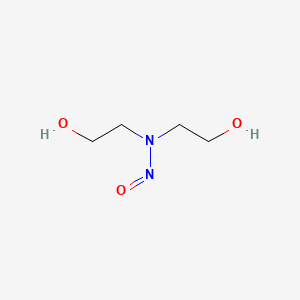
N-Nitrosodiethanolamine
N-Nitrosodiethanolamine is a nitroso compound. — ChEBI
- IUPAC-Name
- N,N-bis(2-hydroxyethyl)nitrous amide
- Summenformel
- C4H10N2O3
- Molekulargewicht
- 134.13 g/mol
- Exakte Masse
- 134.06914219 Da
- Monoisotopische Masse
- 134.06914219 Da
- XLogP3
- -1,5
- Topologische polare Oberfläche
- 73,1 Ų
- Molekulare Komplexität
- 72,0
- Formale Ladung
- 0
- Wasserstoffbrücken-Donoren
- 2
- Wasserstoffbrücken-Akzeptoren
- 5
- Drehbare Bindungen
- 4
- Schweratome
- 9
- Kovalente Einheiten
- 1
An PubChem gemeldete Namen und Synonyme
16 weitere gemeldete Namen
Kennungen in externen Datenbanken
- ChEBI:CHEBI:82357
- ChEMBL:CHEMBL1334
- EPA DTXSID:DTXSID7021027
- PubMed:37527026
- PubMed:30102407
- PubMed:18616954
Erweiterte Strukturstatistik
- Definierte Atom-Stereozentren
- 0
- Nicht definierte Atom-Stereozentren
- 0
- Definierte Bindungs-Stereozentren
- 0
- Nicht definierte Bindungs-Stereozentren
- 0
- 3D-Pharmakophormerkmale
- 4
- 3D-Ringe
- 0
- 3D-Hydrophobe
- 0
- 3D-Akzeptormerkmale
- 2
- 3D-Donormerkmale
- 2
- 3D-Anionenzentren
- 0
- 3D-Kationenzentren
- 0
- 3D-Konformere
- 10
- Effektive 3D-Rotoren
- 5,0
Maschinenlesbare Strukturkennungen
- SMILES
C(CO)N(CCO)N=O- InChI
InChI=1S/C4H10N2O3/c7-3-1-6(5-9)2-4-8/h7-8H,1-4H2- InChIKey
YFCDLVPYFMHRQZ-UHFFFAOYSA-N
Belege aus weiteren wissenschaftlichen Datenbanken
NIH PubChem PUG-View
Attributed physical-property, hazard, environmental and use annotations.
- Boiling Point: 237 °F at 1.5 mmHg (NTP, 1992) Quelle: CAMEO Chemicals
- Boiling Point: 114 °C at 1.4 mm Hg Quelle: Hazardous Substances Data Bank (HSDB)
- Boiling Point: 237 °F at 1.5 mmHg Quelle: Occupational Safety and Health Administration (OSHA)
- Color/Form: Light yellow oil Quelle: Hazardous Substances Data Bank (HSDB)
- Color/Form: Viscous yellow oil Quelle: Hazardous Substances Data Bank (HSDB)
- Density: 1.28 (NTP, 1992) - Denser than water; will sink Quelle: CAMEO Chemicals
- Density: 1.28 Quelle: Occupational Safety and Health Administration (OSHA)
- Odor: Odorless Quelle: Hazardous Substances Data Bank (HSDB)
- Physical Description: N-nitrosodiethanolamine is a yellow to dark brown very viscous liquid with no distinct odor. (NTP, 1992) Quelle: CAMEO Chemicals
- Physical Description: Light yellow liquid; [Merck Index] Quelle: Haz-Map, Information on Hazardous Chemicals and Occupational Diseases
- Physical Description: Yellow to dark brown very viscous liquid with no distinct odor. Quelle: Occupational Safety and Health Administration (OSHA)
- Refractive Index: Max absorption (water): 234 nm (E= 470.7); 345 nm (Log E= 5.3); index of refraction: 1.4540 @ 20 °C/D Quelle: Hazardous Substances Data Bank (HSDB)
- Refractive Index: Index of refraction: 1.4849 at 20 °C/D Quelle: Hazardous Substances Data Bank (HSDB)
- Solubility: greater than or equal to 100 mg/mL at 68.9 °F (NTP, 1992) Quelle: CAMEO Chemicals
- Solubility: Miscible with water in all proportions; soluble in polar organic solvents; insoluble in non-polar organic solvents Quelle: Hazardous Substances Data Bank (HSDB)
- Vapor Pressure: 0.0005 [mmHg] Quelle: Haz-Map, Information on Hazardous Chemicals and Occupational Diseases
- Viscosity: Highly viscous Quelle: Hazardous Substances Data Bank (HSDB)
- IARC Carcinogenic Agent: N-Nitrosodiethanolamine Quelle: International Agency for Research on Cancer (IARC)
- IARC Carcinogenic Classes: Group 2B: Possibly carcinogenic to humans Quelle: International Agency for Research on Cancer (IARC)
- IARC Monographs: Volume 17: (1978) Some N-Nitroso Compounds; Volume Sup 7: Overall Evaluations of Carcinogenicity: An Updating of IARC Monographs Volumes 1 to 42, 1987; 440 pages; ISBN 92-832-1411-0 (out of print); Volume 77: (2000) Some Industrial Chemicals Quelle: International Agency for Research on Cancer (IARC)
- Publication Year: 2000 Quelle: International Agency for Research on Cancer (IARC)
- Evaluation Year: 2000 Quelle: International Agency for Research on Cancer (IARC)
- First Aid: EYES: First check the victim for contact lenses and remove if present. Flush victim's eyes with water or normal saline solution for 20 to 30 minutes while simultaneously calling a hospital or poison control center. Do not put any ointments, oils, or medication in the victim's eyes without specific instructions from a physician. IMMEDIATELY transport the victim after flushing eyes to a hospital even if no symptoms (such as redness or irritation) develop.; SKIN: IMMEDIATELY flood affected skin with water while removing and isolating all contaminated clothing. Gently wash all affected skin areas thoroughly with soap and water. IMMEDIATELY call a hospital or poison control center even if no symptoms (such as redness or irritation) develop. IMMEDIATELY transport the victim to a hospital for treatment after washing the affected areas.; INHALATION: IMMEDIATELY leave the contaminated area; take deep breaths of fresh air. IMMEDIATELY call a physician and be prepared to transport the victim to a hospital even if no symptoms (such as wheezing, coughing, shortness of breath, or burning in the mouth, throat, or chest) develop. Provide proper respiratory protection to rescuers entering an unknow Quelle: CAMEO Chemicals
- Signal: Danger Quelle: Regulation (EC) No 1272/2008 of the European Parliament and of the Council
- GHS Hazard Statements: H350: May cause cancer [Danger Carcinogenicity] Quelle: Regulation (EC) No 1272/2008 of the European Parliament and of the Council
- Precautionary Statement Codes: P203, P280, P318, P405, and P501 (click each P-code to see the statement) Quelle: Regulation (EC) No 1272/2008 of the European Parliament and of the Council
- Signal: Danger Quelle: European Chemicals Agency (ECHA)
- GHS Hazard Statements: H225 (30.1%): Highly Flammable liquid and vapor [Danger Flammable liquids]; H350 (100%): May cause cancer [Danger Carcinogenicity] Quelle: European Chemicals Agency (ECHA)
- Precautionary Statement Codes: P203, P210, P233, P240, P241, P242, P243, P280, P303+P361+P353, P318, P370+P378, P403+P235, P405, and P501 (click each P-code to see the statement) Quelle: European Chemicals Agency (ECHA)
- ECHA C&L Notifications Summary: Aggregated GHS information provided per 133 reports by companies from 3 notifications to the ECHA C&L Inventory. Each notification may be associated with multiple companies.; Information may vary between notifications depending on impurities, additives, and other factors. The percentage value in parenthesis indicates the notified classification ratio from companies that provide hazard codes. Only hazard codes with percentage values above 10% are shown. For more detailed information, please visit ECHA C&L website. Quelle: European Chemicals Agency (ECHA)
- Signal: Danger Quelle: NITE-CMC
- GHS Hazard Statements: H350: May cause cancer [Danger Carcinogenicity] Quelle: NITE-CMC
- Precautionary Statement Codes: P203, P280, P318, P405, and P501 (click each P-code to see the statement) Quelle: NITE-CMC
- GHS Hazard Statements: H225: Highly Flammable liquid and vapor [Danger Flammable liquids] Quelle: NITE-CMC
- Precautionary Statement Codes: P210, P233, P240, P241, P242, P243, P280, P303+P361+P353, P370+P378, P403+P235, and P501 (click each P-code to see the statement) Quelle: NITE-CMC
- Environmental Bioconcentration: An estimated BCF of 3 was calculated in fish for N-nitrosodiethanolamine(SRC), using an estimated log Kow of -1.28(1) and a regression-derived equation(1). According to a classification scheme(2), this BCF suggests the potential for bioconcentration in aquatic organisms is low(SRC). Quelle: Hazardous Substances Data Bank (HSDB)
- Environmental Fate: TERRESTRIAL FATE: Based on a classification scheme(1), an estimated Koc value of 1(SRC), determined from a structure estimation method(2), indicates that N-nitrosodiethanolamine is expected to have very high mobility in soil(SRC). Volatilization of N-nitrosodiethanolamine from moist soil surfaces is not expected to be an important fate process(SRC) given an estimated Henry's Law constant of 4.9X10⁻¹² atm-cu m/mole(SRC), using a fragment constant estimation method(2). N-Nitrosodiethanolamine is not expected to volatilize from dry soil surfaces based on an estimated vapor pressure of 5.0X10⁻⁴ mm Hg at 20 °C(3). N-Nitrosodiethanolamine has a UV absorption max at 345 nm(4) which indicates that the compound may be susceptible to direct photolysis by sunlight(SRC). Biodegradation in soil may be slow(SRC), based upon N-nitrosodiethanolamine's slow biodegradation in two lake waters and sewage(5). Quelle: Hazardous Substances Data Bank (HSDB)
- Environmental Fate: AQUATIC FATE: Based on a classification scheme(1), an estimated Koc value of 1(SRC), determined from a structure estimation method(2), indicates that N-nitrosodiethanolamine is not expected to adsorb to suspended solids and sediment(SRC). Volatilization from water surfaces is not expected(3) based upon an estimated Henry's Law constant of 4.9X10⁻¹² atm-cu m/mole(SRC), developed using a fragment constant estimation method(2). According to a classification scheme(4), an estimated BCF of 3(SRC), from an estimated log Kow of -1.28(2) and a regression-derived equation(2), suggests the potential for bioconcentration in aquatic organisms is low. The direct photolysis rate constant for the analogous compound N-nitrosodiethylamine in aqueous solution exposed to irradiation representing Southern California midsummer, midday sun was observed to be 0.045/min with a half-life of 15 minutes and a quantum yield of 0.43(5); the photolysis rate of N-Nitrosodiethanolamine is expected to be similar(SRC). N-Nitrosodiethanolamine biodegraded slowly in samples of sewage and two lake waters(6). The fastest degradation of N-nitrosodiethanolamine in a lake water sample was in one taken in August; an initia Quelle: Hazardous Substances Data Bank (HSDB)
- Environmental Fate: ATMOSPHERIC FATE: According to a model of gas/particle partitioning of semivolatile organic compounds in the atmosphere(1), N-nitrosodiethanolamine, which has an estimated vapor pressure of 5.0X10⁻⁴ mm Hg at 20 °C(2), is expected to exist solely as a vapor in the ambient atmosphere. Vapor-phase N-nitrosodiethanolamine is degraded in the atmosphere by reaction with photochemically-produced hydroxyl radicals(SRC); the half-life for this reaction in air is estimated to be 13 hours(SRC), calculated from its rate constant of 3X10-11 cu cm/molecule-sec at 25 °C(SRC) that was derived using a structure estimation method(3). N-Nitrosodiethanolamine has a UV absorption max at 345 nm(4) which indicates that N-Nitrosodiethanolamine may be susceptible to direct photolysis by sunlight(SRC). Quelle: Hazardous Substances Data Bank (HSDB)
- Sources/Uses: May contaminate cosmetics and cutting fluids; [Merck Index] Used as a research chemical; [HSDB] Quelle: Haz-Map, Information on Hazardous Chemicals and Occupational Diseases
- Industrial Processes with risk of exposure: Metal Machining [Category: Heat or Machine] Quelle: Haz-Map, Information on Hazardous Chemicals and Occupational Diseases
- Uses: There is no known commercial use for N-nitrosodiethanolamine. Quelle: Hazardous Substances Data Bank (HSDB)
- Uses: It is available in research quantities. Quelle: Hazardous Substances Data Bank (HSDB)
Zugeordnet durch: Existing checksum-valid CAS to unique PubChem CID match. Abgerufen: 2026-08-31. Quelleneintrag öffnen
Wissenschaftliche Klassifizierungen und Gefahrenannotationen liefern Kontext und ersetzen nicht die oben gezeigte marktspezifische regulatorische Entscheidung.
Weitere Quellenabdeckung und Trefferstatus
| Quelle | Ergebnis | Geprüft |
|---|---|---|
| NIH PubChem PUG-View | Exakter Treffer | 2026-08-31 |
Ein erfasster Nicht-Treffer ist ein nützlicher Beleg dafür, dass die Quelle geprüft wurde; er ist keine Behauptung, dass der Stoff anderswo nicht existiert.
Am 2026-09-02 von NIH PubChem durch prüfsummengültigen CAS-Abgleich abgerufen. Chemische Eigenschaften ersetzen nicht die regulatorische Entscheidung auf dieser Seite.
Verifizierte Chemie für CAS 35576-91-1
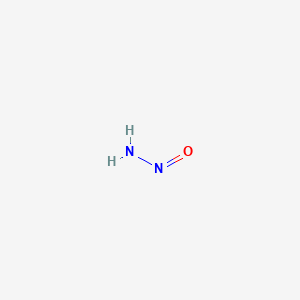
Nitrosamine
Nitrosamine is any of a class of organic compounds with the general formula R2NNO or RNHNO, present in various foods and other products and found to be carcinogenic in laboratory animals. (dictionary.com) — NCI Thesaurus (NCIt)
- IUPAC-Name
- nitrous amide
- Summenformel
- H2N2O
- Molekulargewicht
- 46.029 g/mol
- Exakte Masse
- 46.016712692 Da
- Monoisotopische Masse
- 46.016712692 Da
- XLogP3
- -0,6
- Topologische polare Oberfläche
- 55,5 Ų
- Molekulare Komplexität
- 10,0
- Formale Ladung
- 0
- Wasserstoffbrücken-Donoren
- 1
- Wasserstoffbrücken-Akzeptoren
- 3
- Drehbare Bindungen
- 0
- Schweratome
- 3
- Kovalente Einheiten
- 1
An PubChem gemeldete Namen und Synonyme
9 weitere gemeldete Namen
Kennungen in externen Datenbanken
Erweiterte Strukturstatistik
- Definierte Atom-Stereozentren
- 0
- Nicht definierte Atom-Stereozentren
- 0
- Definierte Bindungs-Stereozentren
- 0
- Nicht definierte Bindungs-Stereozentren
- 0
- 3D-Pharmakophormerkmale
- 0
- 3D-Ringe
- 0
- 3D-Hydrophobe
- 0
- 3D-Akzeptormerkmale
- 0
- 3D-Donormerkmale
- 0
- 3D-Anionenzentren
- 0
- 3D-Kationenzentren
- 0
- 3D-Konformere
- 1
- Effektive 3D-Rotoren
- 0,0
Maschinenlesbare Strukturkennungen
- SMILES
NN=O- InChI
InChI=1S/H2N2O/c1-2-3/h(H2,1,3)- InChIKey
XKLJHFLUAHKGGU-UHFFFAOYSA-N
Am 2026-09-02 von NIH PubChem durch prüfsummengültigen CAS-Abgleich abgerufen. Chemische Eigenschaften ersetzen nicht die regulatorische Entscheidung auf dieser Seite.
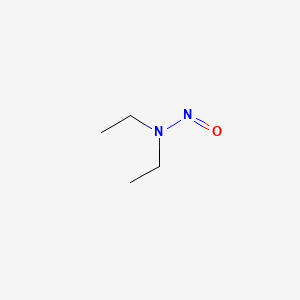
Verifizierte Chemie für CAS 55-18-5
N-Nitrosodiethylamine
N-nitrosodiethylamine is a nitrosamine that is N-ethylethanamine substituted by a nitroso group at the N-atom. It has a role as a mutagen, a carcinogenic agent and a hepatotoxic agent. — ChEBI
- IUPAC-Name
- N,N-diethylnitrous amide
- Summenformel
- C4H10N2O
- Molekulargewicht
- 102.14 g/mol
- Exakte Masse
- 102.079312947 Da
- Monoisotopische Masse
- 102.079312947 Da
- XLogP3
- 0,5
- Topologische polare Oberfläche
- 32,7 Ų
- Molekulare Komplexität
- 51,0
- Formale Ladung
- 0
- Wasserstoffbrücken-Donoren
- 0
- Wasserstoffbrücken-Akzeptoren
- 3
- Drehbare Bindungen
- 2
- Schweratome
- 7
- Kovalente Einheiten
- 1
An PubChem gemeldete Namen und Synonyme
16 weitere gemeldete Namen
Kennungen in externen Datenbanken
- ChEBI:CHEBI:34873
- ChEMBL:CHEMBL164290
- EPA DTXSID:DTXSID2021028
- PubMed:40882885
- PubMed:40754433
- PubMed:40613636
- PubMed:40527421
- PubMed:40319998
- PubMed:38866194
- PubMed:38798245
- PubMed:38369053
- PubMed:38367245
- PubMed:37858842
- PubMed:37527026
- PubMed:37258237
Erweiterte Strukturstatistik
- Definierte Atom-Stereozentren
- 0
- Nicht definierte Atom-Stereozentren
- 0
- Definierte Bindungs-Stereozentren
- 0
- Nicht definierte Bindungs-Stereozentren
- 0
- 3D-Pharmakophormerkmale
- 0
- 3D-Ringe
- 0
- 3D-Hydrophobe
- 0
- 3D-Akzeptormerkmale
- 0
- 3D-Donormerkmale
- 0
- 3D-Anionenzentren
- 0
- 3D-Kationenzentren
- 0
- 3D-Konformere
- 10
- Effektive 3D-Rotoren
- 3,0
Maschinenlesbare Strukturkennungen
- SMILES
CCN(CC)N=O- InChI
InChI=1S/C4H10N2O/c1-3-6(4-2)5-7/h3-4H2,1-2H3- InChIKey
WBNQDOYYEUMPFS-UHFFFAOYSA-N
Am 2026-09-02 von NIH PubChem durch prüfsummengültigen CAS-Abgleich abgerufen. Chemische Eigenschaften ersetzen nicht die regulatorische Entscheidung auf dieser Seite.
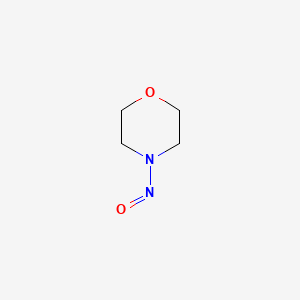
Verifizierte Chemie für CAS 59-89-2
N-Nitrosomorpholine
N-nitrosomorpholine is a nitrosamine that is morpholine in which the hydrogen attached to the nitrogen is replaced by a nitroso group. A carcinogen and mutagen, it is found in snuff tobacco. It has a role as a mutagen and a carcinogenic agent. — ChEBI
- IUPAC-Name
- 4-nitrosomorpholine
- Summenformel
- C4H8N2O2
- Molekulargewicht
- 116.12 g/mol
- Exakte Masse
- 116.058577502 Da
- Monoisotopische Masse
- 116.058577502 Da
- XLogP3
- -0,4
- Topologische polare Oberfläche
- 41,9 Ų
- Molekulare Komplexität
- 80,0
- Formale Ladung
- 0
- Wasserstoffbrücken-Donoren
- 0
- Wasserstoffbrücken-Akzeptoren
- 4
- Drehbare Bindungen
- 0
- Schweratome
- 8
- Kovalente Einheiten
- 1
An PubChem gemeldete Namen und Synonyme
16 weitere gemeldete Namen
Kennungen in externen Datenbanken
- ChEBI:CHEBI:76326
- ChEMBL:CHEMBL165908
- EPA DTXSID:DTXSID4021056
- PubMed:33211169
- PubMed:24990399
- PubMed:23288050
- PubMed:22967534
- PubMed:22634710
- PubMed:22529816
- PubMed:22490195
- PubMed:22458541
- PubMed:22353776
- PubMed:22352424
- PubMed:22272003
- PubMed:22234074
Erweiterte Strukturstatistik
- Definierte Atom-Stereozentren
- 0
- Nicht definierte Atom-Stereozentren
- 0
- Definierte Bindungs-Stereozentren
- 0
- Nicht definierte Bindungs-Stereozentren
- 0
- 3D-Pharmakophormerkmale
- 2
- 3D-Ringe
- 1
- 3D-Hydrophobe
- 0
- 3D-Akzeptormerkmale
- 1
- 3D-Donormerkmale
- 0
- 3D-Anionenzentren
- 0
- 3D-Kationenzentren
- 0
- 3D-Konformere
- 10
- Effektive 3D-Rotoren
- 2,2
Maschinenlesbare Strukturkennungen
- SMILES
C1COCCN1N=O- InChI
InChI=1S/C4H8N2O2/c7-5-6-1-3-8-4-2-6/h1-4H2- InChIKey
ZKXDGKXYMTYWTB-UHFFFAOYSA-N
Am 2026-09-02 von NIH PubChem durch prüfsummengültigen CAS-Abgleich abgerufen. Chemische Eigenschaften ersetzen nicht die regulatorische Entscheidung auf dieser Seite.
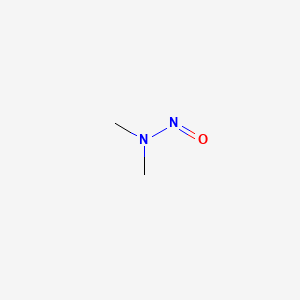
Verifizierte Chemie für CAS 62-75-9
N-Nitrosodimethylamine
N-nitrosodimethylamine is a nitrosamine. It has a role as a geroprotector and a mutagen. — ChEBI
- IUPAC-Name
- N,N-dimethylnitrous amide
- Summenformel
- C2H6N2O
- Molekulargewicht
- 74.08 g/mol
- Exakte Masse
- 74.048012819 Da
- Monoisotopische Masse
- 74.048012819 Da
- XLogP3
- -0,6
- Topologische polare Oberfläche
- 32,7 Ų
- Molekulare Komplexität
- 34,0
- Formale Ladung
- 0
- Wasserstoffbrücken-Donoren
- 0
- Wasserstoffbrücken-Akzeptoren
- 3
- Drehbare Bindungen
- 0
- Schweratome
- 5
- Kovalente Einheiten
- 1
An PubChem gemeldete Namen und Synonyme
16 weitere gemeldete Namen
Kennungen in externen Datenbanken
- ChEBI:CHEBI:35807
- ChEMBL:CHEMBL117311
- EPA DTXSID:DTXSID7021029
- PubMed:39395750
- PubMed:35882637
- PubMed:34510228
- PubMed:34472159
- PubMed:32833043
- PubMed:30203046
- PubMed:30172374
- PubMed:29777724
- PubMed:29024620
- PubMed:28321044
- PubMed:27913846
- PubMed:27009110
Erweiterte Strukturstatistik
- Definierte Atom-Stereozentren
- 0
- Nicht definierte Atom-Stereozentren
- 0
- Definierte Bindungs-Stereozentren
- 0
- Nicht definierte Bindungs-Stereozentren
- 0
- 3D-Pharmakophormerkmale
- 0
- 3D-Ringe
- 0
- 3D-Hydrophobe
- 0
- 3D-Akzeptormerkmale
- 0
- 3D-Donormerkmale
- 0
- 3D-Anionenzentren
- 0
- 3D-Kationenzentren
- 0
- 3D-Konformere
- 3
- Effektive 3D-Rotoren
- 1,0
Maschinenlesbare Strukturkennungen
- SMILES
CN(C)N=O- InChI
InChI=1S/C2H6N2O/c1-4(2)3-5/h1-2H3- InChIKey
UMFJAHHVKNCGLG-UHFFFAOYSA-N
Am 2026-08-31 von NIH PubChem durch prüfsummengültigen CAS-Abgleich abgerufen. Chemische Eigenschaften ersetzen nicht die regulatorische Entscheidung auf dieser Seite.
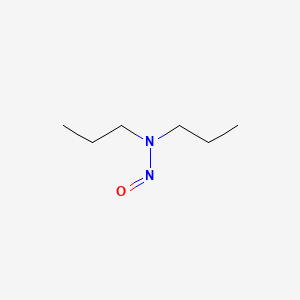
Verifizierte Chemie für CAS 621-64-7
N-Nitrosodipropylamine
N-Nitrosodi-n-propylamine is a nitroso compound. — ChEBI
- IUPAC-Name
- N,N-dipropylnitrous amide
- Summenformel
- C6H14N2O
- Molekulargewicht
- 130.19 g/mol
- Exakte Masse
- 130.110613074 Da
- Monoisotopische Masse
- 130.110613074 Da
- XLogP3
- 1,4
- Topologische polare Oberfläche
- 32,7 Ų
- Molekulare Komplexität
- 69,0
- Formale Ladung
- 0
- Wasserstoffbrücken-Donoren
- 0
- Wasserstoffbrücken-Akzeptoren
- 3
- Drehbare Bindungen
- 4
- Schweratome
- 9
- Kovalente Einheiten
- 1
An PubChem gemeldete Namen und Synonyme
16 weitere gemeldete Namen
Kennungen in externen Datenbanken
- ChEBI:CHEBI:82358
- ChEMBL:CHEMBL166242
- EPA DTXSID:DTXSID6021032
- PubMed:22967534
- PubMed:22490195
- PubMed:22368400
- PubMed:22352424
- PubMed:21863807
- PubMed:21860508
- PubMed:21819861
- PubMed:21377686
- PubMed:21089930
- PubMed:20816717
- PubMed:19161662
- PubMed:17937298
Erweiterte Strukturstatistik
- Definierte Atom-Stereozentren
- 0
- Nicht definierte Atom-Stereozentren
- 0
- Definierte Bindungs-Stereozentren
- 0
- Nicht definierte Bindungs-Stereozentren
- 0
- 3D-Pharmakophormerkmale
- 2
- 3D-Ringe
- 0
- 3D-Hydrophobe
- 2
- 3D-Akzeptormerkmale
- 0
- 3D-Donormerkmale
- 0
- 3D-Anionenzentren
- 0
- 3D-Kationenzentren
- 0
- 3D-Konformere
- 10
- Effektive 3D-Rotoren
- 5,0
Maschinenlesbare Strukturkennungen
- SMILES
CCCN(CCC)N=O- InChI
InChI=1S/C6H14N2O/c1-3-5-8(7-9)6-4-2/h3-6H2,1-2H3- InChIKey
YLKFDHTUAUWZPQ-UHFFFAOYSA-N
Am 2026-08-31 von NIH PubChem durch prüfsummengültigen CAS-Abgleich abgerufen. Chemische Eigenschaften ersetzen nicht die regulatorische Entscheidung auf dieser Seite.
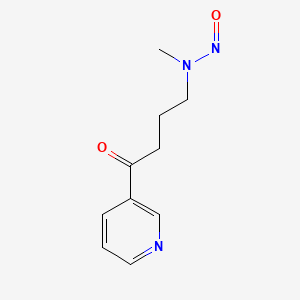
Verifizierte Chemie für CAS 64091-91-4
4-(Methylnitrosamino)-1-(3-Pyridyl)-1-Butanone
4-(n-nitroso-n-methylamino)-1-(3-pyridyl)-1-butanone (nnk) is a pale yellow crystalline solid. (NTP, 1992) — CAMEO Chemicals
- IUPAC-Name
- N-methyl-N-(4-oxo-4-pyridin-3-ylbutyl)nitrous amide
- Summenformel
- C10H13N3O2
- Molekulargewicht
- 207.23 g/mol
- Exakte Masse
- 207.100776666 Da
- Monoisotopische Masse
- 207.100776666 Da
- XLogP3
- 0,8
- Topologische polare Oberfläche
- 62,6 Ų
- Molekulare Komplexität
- 221,0
- Formale Ladung
- 0
- Wasserstoffbrücken-Donoren
- 0
- Wasserstoffbrücken-Akzeptoren
- 5
- Drehbare Bindungen
- 5
- Schweratome
- 15
- Kovalente Einheiten
- 1
An PubChem gemeldete Namen und Synonyme
16 weitere gemeldete Namen
Kennungen in externen Datenbanken
- ChEBI:CHEBI:32692
- ChEMBL:CHEMBL2311069
- EPA DTXSID:DTXSID3020881
- PubMed:40706909
- PubMed:35435490
- PubMed:34974052
- PubMed:34784199
- PubMed:33939976
- PubMed:32672941
- PubMed:32326378
- PubMed:31759049
- PubMed:31307193
- PubMed:30259641
- PubMed:30236600
- PubMed:28321046
Erweiterte Strukturstatistik
- Definierte Atom-Stereozentren
- 0
- Nicht definierte Atom-Stereozentren
- 0
- Definierte Bindungs-Stereozentren
- 0
- Nicht definierte Bindungs-Stereozentren
- 0
- 3D-Pharmakophormerkmale
- 3
- 3D-Ringe
- 1
- 3D-Hydrophobe
- 0
- 3D-Akzeptormerkmale
- 2
- 3D-Donormerkmale
- 0
- 3D-Anionenzentren
- 0
- 3D-Kationenzentren
- 0
- 3D-Konformere
- 10
- Effektive 3D-Rotoren
- 6,0
Maschinenlesbare Strukturkennungen
- SMILES
CN(CCCC(=O)C1=CN=CC=C1)N=O- InChI
InChI=1S/C10H13N3O2/c1-13(12-15)7-3-5-10(14)9-4-2-6-11-8-9/h2,4,6,8H,3,5,7H2,1H3- InChIKey
FLAQQSHRLBFIEZ-UHFFFAOYSA-N
Am 2026-09-02 von NIH PubChem durch prüfsummengültigen CAS-Abgleich abgerufen. Chemische Eigenschaften ersetzen nicht die regulatorische Entscheidung auf dieser Seite.
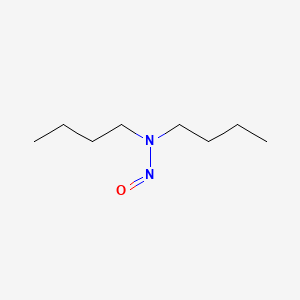
Verifizierte Chemie für CAS 924-16-3
N-Nitrosodibutylamine
N-Nitrosodi-n-butylamine is a nitroso compound. — ChEBI
- IUPAC-Name
- N,N-dibutylnitrous amide
- Summenformel
- C8H18N2O
- Molekulargewicht
- 158.24 g/mol
- Exakte Masse
- 158.141913202 Da
- Monoisotopische Masse
- 158.141913202 Da
- XLogP3
- 2,6
- Topologische polare Oberfläche
- 32,7 Ų
- Molekulare Komplexität
- 88,0
- Formale Ladung
- 0
- Wasserstoffbrücken-Donoren
- 0
- Wasserstoffbrücken-Akzeptoren
- 3
- Drehbare Bindungen
- 6
- Schweratome
- 11
- Kovalente Einheiten
- 1
An PubChem gemeldete Namen und Synonyme
16 weitere gemeldete Namen
Kennungen in externen Datenbanken
- ChEBI:CHEBI:82356
- ChEMBL:CHEMBL354920
- EPA DTXSID:DTXSID2021026
- PubMed:22967534
- PubMed:22490195
- PubMed:22352424
- PubMed:22265500
- PubMed:21941546
- PubMed:21863807
- PubMed:21860504
- PubMed:21843899
- PubMed:21819861
- PubMed:21377686
- PubMed:21089926
- PubMed:20816717
Erweiterte Strukturstatistik
- Definierte Atom-Stereozentren
- 0
- Nicht definierte Atom-Stereozentren
- 0
- Definierte Bindungs-Stereozentren
- 0
- Nicht definierte Bindungs-Stereozentren
- 0
- 3D-Pharmakophormerkmale
- 2
- 3D-Ringe
- 0
- 3D-Hydrophobe
- 2
- 3D-Akzeptormerkmale
- 0
- 3D-Donormerkmale
- 0
- 3D-Anionenzentren
- 0
- 3D-Kationenzentren
- 0
- 3D-Konformere
- 10
- Effektive 3D-Rotoren
- 7,0
Maschinenlesbare Strukturkennungen
- SMILES
CCCCN(CCCC)N=O- InChI
InChI=1S/C8H18N2O/c1-3-5-7-10(9-11)8-6-4-2/h3-8H2,1-2H3- InChIKey
YGJHZCLPZAZIHH-UHFFFAOYSA-N
Am 2026-09-02 von NIH PubChem durch prüfsummengültigen CAS-Abgleich abgerufen. Chemische Eigenschaften ersetzen nicht die regulatorische Entscheidung auf dieser Seite.
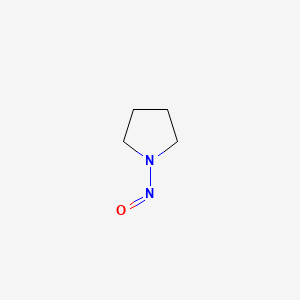
Verifizierte Chemie für CAS 930-55-2
N-Nitrosopyrrolidine
N-Nitrosopyrrolidine is a member of pyrrolidines. — ChEBI
- IUPAC-Name
- 1-nitrosopyrrolidine
- Summenformel
- C4H8N2O
- Molekulargewicht
- 100.12 g/mol
- Exakte Masse
- 100.063662883 Da
- Monoisotopische Masse
- 100.063662883 Da
- XLogP3
- -0,2
- Topologische polare Oberfläche
- 32,7 Ų
- Molekulare Komplexität
- 68,0
- Formale Ladung
- 0
- Wasserstoffbrücken-Donoren
- 0
- Wasserstoffbrücken-Akzeptoren
- 3
- Drehbare Bindungen
- 0
- Schweratome
- 7
- Kovalente Einheiten
- 1
An PubChem gemeldete Namen und Synonyme
16 weitere gemeldete Namen
Kennungen in externen Datenbanken
- ChEBI:CHEBI:82362
- ChEMBL:CHEMBL351175
- EPA DTXSID:DTXSID8021062
- PubMed:35690182
- PubMed:32234424
- PubMed:22967534
- PubMed:22654773
- PubMed:22352424
- PubMed:22276591
- PubMed:22108029
- PubMed:22064282
- PubMed:21946166
- PubMed:21863807
- PubMed:21860516
- PubMed:21559252
Erweiterte Strukturstatistik
- Definierte Atom-Stereozentren
- 0
- Nicht definierte Atom-Stereozentren
- 0
- Definierte Bindungs-Stereozentren
- 0
- Nicht definierte Bindungs-Stereozentren
- 0
- 3D-Pharmakophormerkmale
- 1
- 3D-Ringe
- 1
- 3D-Hydrophobe
- 0
- 3D-Akzeptormerkmale
- 0
- 3D-Donormerkmale
- 0
- 3D-Anionenzentren
- 0
- 3D-Kationenzentren
- 0
- 3D-Konformere
- 6
- Effektive 3D-Rotoren
- 2,0
Maschinenlesbare Strukturkennungen
- SMILES
C1CCN(C1)N=O- InChI
InChI=1S/C4H8N2O/c7-5-6-3-1-2-4-6/h1-4H2- InChIKey
WNYADZVDBIBLJJ-UHFFFAOYSA-N
Am 2026-09-02 von NIH PubChem durch prüfsummengültigen CAS-Abgleich abgerufen. Chemische Eigenschaften ersetzen nicht die regulatorische Entscheidung auf dieser Seite.
Amtliche Quelle und Herkunft
- Registrierte Quelle
- Health Canada Cosmetic Ingredient Hotlist
- Quellenverweis
- Hotlist prohibited entry 343
- Eintrags-ID der Quelle
prohibited:343- Quellenversion
- Health Canada Hotlist 2025-08-13
- Quellsprache
- English
- Übersetzungsstatus
- Original is English
- Quelle aktualisiert
- 2025-08-13
- Stand geprüft
- 2026-08-30 04:07 UTC
- Validierungsmethode
- strict HTML tables t1=490 and t2=90
- SHA-256
8b52ff573d08373ee90121f6a701b3607e4a3d6fc748a7d56171eb53510af91a
Hinweise zum registrierten Datensatz
- Datensatzabdeckung
- Administrative prohibitions, restrictions, conditions and warning requirements
- Hinweis zur Behörde
- Official Health Canada compliance indicator; not a complete safety clearance
Wie dieser Eintrag in den Marktdatensatz passt
Statusverteilung
Bedingungstext ist bei 172 von 580 aktuellen Einträgen vorhanden. Ein leeres Bedingungsfeld wird entsprechend der oben genannten Eintragsart interpretiert; es wird niemals in die Aussage einer uneingeschränkten Verwendung umgedeutet.
Canada Marktkontext
Complete Hotlist snapshot
Abdeckungsversion: Health Canada Cosmetic Ingredient Hotlist, 13 August 2025
All prohibited and restricted Hotlist entries, including conditions and warning requirements published in the official list.
Verifizierungs-Checkliste
- Search English/French names and CAS identifiers.
- Apply every restriction, concentration and label warning.
- Check Food and Drugs Act/Cosmetic Regulations requirements.
- Recheck the current Hotlist before notification or sale.
Amtliche Marktquellen
- Health Canada Cosmetic Ingredient HotlistOfficial Health Canada compliance indicator; not a complete safety clearance
Verifizierungsablauf und Vollständigkeit des Eintrags
Bevor Sie dieses Ergebnis für eine Compliance-Entscheidung verwenden
- Bestätigen Sie, dass „Nitrosamines“ und jede CAS-/EC-Kennung sich auf das Material in Ihrer Lieferantenspezifikation beziehen.
- Search English/French names and CAS identifiers.
- Apply every restriction, concentration and label warning.
- Check Food and Drugs Act/Cosmetic Regulations requirements.
- Recheck the current Hotlist before notification or sale.
- Dokumentieren Sie die Quellenversion und prüfen Sie die Behörde vor Herstellung, Notifizierung oder Inverkehrbringen erneut.
In diesem Eintrag verfügbare Felder
- Amtlicher StoffnameVerfügbar
- CASVerfügbar
- ECNicht angegeben
- Gesonderter BedingungstextVerfügbar
- Datum des InkrafttretensNicht angegeben
- Snapshot-Hash und MethodeVerfügbar
Fragen, die diese Seite beantwortet
Dauerhafte Zitierweise
Nitrosamines. Hotlist prohibited entry 343. Canada. Source version Health Canada Hotlist 2025-08-13. CosIng Checker regulatory record: https://cosingchecker.com/de/regulations/ca/records/343/
Zitieren Sie die Aufsichtsbehörde als rechtliche Autorität. Diese Seite ist ein strukturierter Belegindex und eine Verifizierungshilfe, kein Ersatz für den amtlichen Text oder eine fachkundige rechtliche Bewertung.
Auslegung und Grenzen für Canada
This official record identifies the substance as prohibited for cosmetic use in the stated market scope.
Do not rely on a formulation containing this identity until the cited source, effective date and exact substance match have been verified.
Wie die Rechtsrolle auszulegen ist
The authority uses this source as compliance guidance; the underlying legislation remains controlling.
Belege auf dieser Seite
- Erfasstes Ergebnis: Prohibited
- Rechtsrolle: Official guidance
- Quellenversion: Health Canada Hotlist 2025-08-13
Was es nicht beweist
The Hotlist is an administrative compliance tool, not an exhaustive safety approval list.
Weitere maßgebliche Stoffrecherche
Keine dieser Quellen hebt die oben genannte Marktentscheidung auf.
Cosmetic Ingredient Review safety assessments
Expert Panel conclusions, assessed ingredient groups, use conditions, dates and report documents
Independent expert review considered by FDA; not a government approval or binding market rule
Diese Identität bei der Quelle recherchierenFDA Global Substance Registration System
UNII identifiers, preferred names, substance types, codes and public substance relationships
Identity registry only; UNII availability does not imply FDA review or approval
Diese Identität bei der Quelle recherchierenILO/WHO International Chemical Safety Cards
Hazards, symptoms, first aid, storage, incompatibilities and physical properties for covered chemicals
International occupational chemical-safety reference; not cosmetic-use approval
Diese Identität bei der Quelle recherchierenJapan NITE-CHRIP
Chemical identity, Japanese and foreign legal lists, GHS hazards and exposure-related information
Chemical-management evidence; cosmetic status remains governed by the applicable MHLW standard and market rules
Diese Identität bei der Quelle recherchierenNIOSH Pocket Guide to Chemical Hazards
REL, PEL, IDLH, properties, exposure routes, symptoms, target organs, first aid and measurement methods for covered workplace chemicals
US occupational-health guidance and limits; not a cosmetic ingredient decision
Diese Identität bei der Quelle recherchierenOECD eChemPortal
Gateway to authority-owned physical-property, fate, ecotoxicity, toxicity, exposure and GHS records
Discovery gateway; each linked authority remains responsible for its data
Diese Identität bei der Quelle recherchierenUS EPA CompTox CTX APIs
Für den Import ist ein API-Schlüssel erforderlichDTXSID identity, experimental and predicted properties, toxicity, bioactivity, exposure and environmental data
Scientific and computational evidence; predictions must remain labelled and do not determine cosmetic legality
Diese Identität bei der Quelle recherchieren