
PHENOXYETHANOL
2-Phenoxyethanol
PHENOXYETHANOL ist auf dieser Seite mit 1 EU-Anhangseintrag verknüpft. Hinweis aus dem Verzeichnis: V/29.
Auf einen Blick
- Funktion
- Antimicrobial, preservative
- CAS
- 122-99-6
- EC
- 204-589-7
- EU-Anhänge
- Anhang V/29
- Anhang V/29: max. 1.0%
Wissenschaftliche Grundlage: 2 SCCS-Stellungnahmen
Der Wissenschaftliche Ausschuss „Verbrauchersicherheit“ (SCCS) der EU hat diesen Stoff bewertet. Seine Stellungnahmen sind die wissenschaftliche Grundlage des Anhangeintrags.
Regulatorische Belege nach Markt
Diese Matrix trennt verifizierte Vorschriften zu Inhaltsstoffen von Quellen, die zwar erfasst, aber noch nicht importiert sind. Eine fehlende importierte Vorschrift bedeutet nicht, dass der Inhaltsstoff zulässig ist.
Wischen oder scrollen Sie horizontal, um alle Spalten zu sehen.
| Markt | Belegstatus | Einträge | Quellsprache |
|---|---|---|---|
| European Union | Beleg verknüpft Positive-list entry with conditions Diesen Beleg öffnen | 1 | English and EU languages |
| Great Britain | Beleg verknüpft Permitted list with conditions Diesen Beleg öffnen | 1 | English |
| Canada | Quelle erfasst Official source mapped; ingredient rule not imported | 0 | English and French |
| New Zealand | Beleg verknüpft Permitted list with conditions Diesen Beleg öffnen | 1 | English |
| ASEAN | Beleg verknüpft Permitted list with conditions Diesen Beleg öffnen | 1 | English and national languages |
| China | Quelle erfasst Official source mapped; ingredient rule not imported | 0 | Chinese with selected English material |
| Japan | Beleg verknüpft Restricted Diesen Beleg öffnen | 1 | Japanese; official English translation available |
| South Korea | Beleg verknüpft Restricted Diesen Beleg öffnen | 1 | Korean with some English names |
| United States | Quelle erfasst Official source mapped; ingredient rule not imported | 0 | English |
| Australia | Quelle erfasst Official source mapped; ingredient rule not imported | 0 | English |
| Brazil | Quelle erfasst Official source mapped; ingredient rule not imported | 0 | Portuguese with INCI crosswalks |
| India | Quelle erfasst Official source mapped; ingredient rule not imported | 0 | English and Hindi |
| Saudi Arabia | Quelle erfasst Official source mapped; ingredient rule not imported | 0 | Arabic and English |
Verzeichnisangaben zu PHENOXYETHANOL
INCI-Name
PHENOXYETHANOL
Ph.-Eur.-Name
phenoxyethanolum
Beschreibung
2-Phenoxyethanol
Herkunft des Eintrags
- Verzeichnisverweis
- 36522
- Importierte Identität
- PHENOXYETHANOL
- Quellenaktualisierung
- 28/07/2020
Anhangseinträge für PHENOXYETHANOL
Kerndaten
- ANTIMICROBIAL
Preventing and/or slowing down microbial growth.
- PRESERVATIVE
Exclusively or mainly intended to inhibit the development of micro-organisms in the cosmetic product. All authorised preservatives are substances in the positive list of Annex V to the Cosmetics Regulation 1223/2009.
Chemische Identität und Eigenschaften
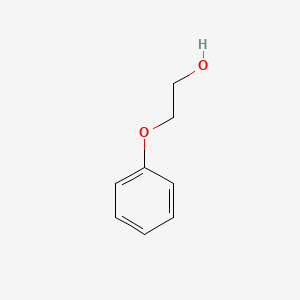
Phenoxyethanol
2-phenoxyethanol is an aromatic ether that is phenol substituted on oxygen by a 2-hydroxyethyl group. It has a role as an antiinfective agent and a central nervous system depressant. It is a primary alcohol, a glycol ether and an aromatic ether. It is functionally related to a phenol. — ChEBI
- IUPAC-Name
- 2-phenoxyethanol
- Summenformel
- C8H10O2
- Molekulargewicht
- 138.16 g/mol
- Exakte Masse
- 138.068079557 Da
- XLogP3
- 1,2
- Topologische polare Oberfläche
- 29,5 Ų
- Wasserstoffbrücken-Donoren
- 1
- Wasserstoffbrücken-Akzeptoren
- 2
- Kovalente Einheiten
- 1
- Definierte Stereozentren
- 0
Auch bekannt als
16 weitere gemeldete Namen
Kennungen in externen Datenbanken
- ChEBI:CHEBI:64275
- ChEMBL:CHEMBL1229846
- EPA DTXSID:DTXSID9021976
- PubMed:29205417
- PubMed:26188115
- PubMed:22970574
- PubMed:22685526
- PubMed:22666668
- PubMed:22666112
- PubMed:22653170
- PubMed:22615866
- PubMed:22577255
- PubMed:22558452
- PubMed:22514610
- PubMed:22496852
Belege aus weiteren wissenschaftlichen Datenbanken
NIH PubChem PUG-View
Attributed physical-property, hazard, environmental and use annotations.
- Autoignition Temperature: 500 °C Quelle: ILO-WHO International Chemical Safety Cards (ICSCs)
- Boiling Point: 473.4 °F at 760 mmHg (NTP, 1992) Quelle: CAMEO Chemicals
- Boiling Point: 245 Quelle: DrugBank
- Boiling Point: boiling point equals 473 °F Quelle: Haz-Map, Information on Hazardous Chemicals and Occupational Diseases
- Boiling Point: 245.2 °C Quelle: Hazardous Substances Data Bank (HSDB)
- Boiling Point: Liquid; bp: 243 °C /2-Phenoxyethanol acetate/ Quelle: Hazardous Substances Data Bank (HSDB)
- Boiling Point: 237.00 to 238.00 °C. @ 760.00 mm Hg Quelle: Human Metabolome Database (HMDB)
- Boiling Point: 245 °C Quelle: ILO-WHO International Chemical Safety Cards (ICSCs)
- Boiling Point: 242 °C @760 [mm Hg] Quelle: PAC Chemical Database, U.S. Department of Energy
- Color/Form: Oily liquid Quelle: Hazardous Substances Data Bank (HSDB)
- Color/Form: Colorless liquid Quelle: Hazardous Substances Data Bank (HSDB)
- Density: 1.104 (USCG, 1999) - Denser than water; will sink Quelle: CAMEO Chemicals
- Density: 1.1094 at 20 °C/20 °C Quelle: Hazardous Substances Data Bank (HSDB)
- Density: Bulk density: 9.2 lb/gal Quelle: Hazardous Substances Data Bank (HSDB)
- Density: Relative density (water = 1): 1.1 Quelle: ILO-WHO International Chemical Safety Cards (ICSCs)
- Density: 1.11 @ 20°C Quelle: PAC Chemical Database, U.S. Department of Energy
- Dissociation Constants: pKa = 15.10 at 25 °C Quelle: Hazardous Substances Data Bank (HSDB)
- Flash Point: 250 °F (NTP, 1992) Quelle: CAMEO Chemicals
- Flash Point: Flash point equals 250 °F Quelle: Haz-Map, Information on Hazardous Chemicals and Occupational Diseases
- Flash Point: 260 °F (127 °C) (Closed cup) Quelle: Hazardous Substances Data Bank (HSDB)
- Flash Point: 127 °C c.c. Quelle: ILO-WHO International Chemical Safety Cards (ICSCs)
- LogP: log Kow = 1.16 Quelle: Hazardous Substances Data Bank (HSDB)
- LogP: 1.160 Quelle: Human Metabolome Database (HMDB)
- LogP: 1.2 Quelle: ILO-WHO International Chemical Safety Cards (ICSCs)
- Melting Point: 57 °F (NTP, 1992) Quelle: CAMEO Chemicals
- Melting Point: 13 Quelle: DrugBank
- Melting Point: 14 °C Quelle: Hazardous Substances Data Bank (HSDB)
- Melting Point: 11-13 °C Quelle: Human Metabolome Database (HMDB)
- Melting Point: 14 °C Quelle: ILO-WHO International Chemical Safety Cards (ICSCs)
- Melting Point: 14 °C Quelle: PAC Chemical Database, U.S. Department of Energy
- Odor: Faint aromatic odor Quelle: Hazardous Substances Data Bank (HSDB)
- Physical Description: Ethylene glycol phenyl ether is a colorless liquid with a pleasant odor. Density 1.02 g / cm3. An irritant. Quelle: CAMEO Chemicals
- Physical Description: CBI; Wet Solid; Liquid; Liquid; Other Solid Quelle: EPA Chemical Data Reporting (CDR)
- Physical Description: Clear liquid with a pleasant odor; [CAMEO] Quelle: Haz-Map, Information on Hazardous Chemicals and Occupational Diseases
- Physical Description: Liquid Quelle: Human Metabolome Database (HMDB)
- Physical Description: OILY COLOURLESS LIQUID WITH CHARACTERISTIC ODOUR. Quelle: ILO-WHO International Chemical Safety Cards (ICSCs)
- Refractive Index: Index of refraction: 1.534 at 20 °C/D Quelle: Hazardous Substances Data Bank (HSDB)
- Solubility: 10 to 50 mg/mL at 68 °F (NTP, 1992) Quelle: CAMEO Chemicals
- Solubility: 24g/L at 20°C Quelle: DrugBank
- Solubility: Freely soluble in alcohol, ether, and sodium hydroxide Quelle: Hazardous Substances Data Bank (HSDB)
- Solubility: Soluble in ethanol, alkali, chloroform Quelle: Hazardous Substances Data Bank (HSDB)
- Solubility: 2.67 g/100 mL water Quelle: Hazardous Substances Data Bank (HSDB)
- Solubility: In water, 2.6X10+4 mg/L at 20 °C Quelle: Hazardous Substances Data Bank (HSDB)
- Solubility: 26700 mg/L @ 20 °C (exp) Quelle: Human Metabolome Database (HMDB)
- Solubility: Solubility in water, g/100ml: 2.7 Quelle: ILO-WHO International Chemical Safety Cards (ICSCs)
- Vapor Pressure: less than 0.01 mmHg at 68 °F ; 1 mmHg at 172.4 °F (NTP, 1992) Quelle: CAMEO Chemicals
- Vapor Pressure: 0.007 [mmHg] Quelle: Haz-Map, Information on Hazardous Chemicals and Occupational Diseases
- Vapor Pressure: 0.007 mm Hg at 25 °C Quelle: Hazardous Substances Data Bank (HSDB)
- Vapor Pressure: Vapor pressure, kPa at 20 °C: 0.0013 Quelle: ILO-WHO International Chemical Safety Cards (ICSCs)
- Vapor Pressure: 0.03 [mm Hg] @25 °C Quelle: PAC Chemical Database, U.S. Department of Energy
- Viscosity: 20.5 centistokes at 25 °C Quelle: Hazardous Substances Data Bank (HSDB)
- Carcinogen Classification: No indication of carcinogenicity to humans (not listed by IARC). Quelle: Toxin and Toxin Target Database (T3DB)
- Exposure Routes: The substance can be absorbed into the body by inhalation of its aerosol, through the skin and by ingestion. Quelle: ILO-WHO International Chemical Safety Cards (ICSCs)
- Exposure Routes: Dermal (A15201); ingestion Quelle: Toxin and Toxin Target Database (T3DB)
- First Aid: EYES: First check the victim for contact lenses and remove if present. Flush victim's eyes with water or normal saline solution for 20 to 30 minutes while simultaneously calling a hospital or poison control center. Do not put any ointments, oils, or medication in the victim's eyes without specific instructions from a physician. IMMEDIATELY transport the victim after flushing eyes to a hospital even if no symptoms (such as redness or irritation) develop.; SKIN: IMMEDIATELY flood affected skin with water while removing and isolating all contaminated clothing. Gently wash all affected skin areas thoroughly with soap and water. If symptoms such as redness or irritation develop, IMMEDIATELY call a physician and be prepared to transport the victim to a hospital for treatment.; INHALATION: IMMEDIATELY leave the contaminated area; take deep breaths of fresh air. If symptoms (such as wheezing, coughing, shortness of breath, or burning in the mouth, throat, or chest) develop, call a physician and be prepared to transport the victim to a hospital. Provide proper respiratory protection to rescuers entering an unknown atmosphere. Whenever possible, Self-Contained Breathing Apparatus (SCBA) shou Quelle: CAMEO Chemicals
- Signal: Danger Quelle: Regulation (EC) No 1272/2008 of the European Parliament and of the Council
- GHS Hazard Statements: H302: Harmful if swallowed [Warning Acute toxicity, oral]; H318: Causes serious eye damage [Danger Serious eye damage/eye irritation]; H335: May cause respiratory irritation [Warning Specific target organ toxicity, single exposure; Respiratory tract irritation] Quelle: Regulation (EC) No 1272/2008 of the European Parliament and of the Council
- Precautionary Statement Codes: P261, P264, P264+P265, P270, P271, P280, P301+P317, P304+P340, P305+P354+P338, P317, P319, P330, P403+P233, P405, and P501 (click each P-code to see the statement) Quelle: Regulation (EC) No 1272/2008 of the European Parliament and of the Council
- Note: This chemical does not meet GHS hazard criteria for < 0.1% (1 of 4299) of reports. Quelle: European Chemicals Agency (ECHA)
- Signal: Danger Quelle: European Chemicals Agency (ECHA)
- GHS Hazard Statements: H302 (99.8%): Harmful if swallowed [Warning Acute toxicity, oral]; H318 (13%): Causes serious eye damage [Danger Serious eye damage/eye irritation]; H319 (87%): Causes serious eye irritation [Warning Serious eye damage/eye irritation]; H335 (13%): May cause respiratory irritation [Warning Specific target organ toxicity, single exposure; Respiratory tract irritation] Quelle: European Chemicals Agency (ECHA)
- Precautionary Statement Codes: P261, P264, P264+P265, P270, P271, P280, P301+P317, P304+P340, P305+P351+P338, P305+P354+P338, P317, P319, P330, P337+P317, P403+P233, P405, and P501 (click each P-code to see the statement) Quelle: European Chemicals Agency (ECHA)
- ECHA C&L Notifications Summary: Aggregated GHS information provided per 4299 reports by companies from 38 notifications to the ECHA C&L Inventory. Each notification may be associated with multiple companies.; Reported as not meeting GHS hazard criteria per 1 of 4299 reports by companies.; There are 37 notifications provided by 4298 of 4299 reports by companies with hazard statement code(s).; Information may vary between notifications depending on impurities, additives, and other factors. The percentage value in parenthesis indicates the notified classification ratio from companies that provide hazard codes. Only hazard codes with percentage values above 10% are shown. For more detailed information, please visit ECHA C&L website. Quelle: European Chemicals Agency (ECHA)
- Signal: Danger Quelle: NITE-CMC
- GHS Hazard Statements: H302: Harmful if swallowed [Warning Acute toxicity, oral]; H318: Causes serious eye damage [Danger Serious eye damage/eye irritation] Quelle: NITE-CMC
- Precautionary Statement Codes: P264, P264+P265, P270, P280, P301+P317, P305+P354+P338, P317, P330, and P501 (click each P-code to see the statement) Quelle: NITE-CMC
- Signal: Warning Quelle: NITE-CMC
- NFPA Health Rating: 3 - Materials that, under emergency conditions, can cause serious or permanent injury. Quelle: Hazardous Substances Data Bank (HSDB)
- NFPA Fire Rating: 1 - Materials that must be preheated before ignition can occur. Materials require considerable preheating, under all ambient temperature conditions, before ignition and combustion can occur. Quelle: Hazardous Substances Data Bank (HSDB)
- NFPA Instability Rating: 0 - Materials that in themselves are normally stable, even under fire conditions. Quelle: Hazardous Substances Data Bank (HSDB)
- Cosmetic Ingredient Review Finding(s): Safe in the present practices of use and concentration. Ingredient, concentration, and use information are available in documents discoverable at https://cir-reports.cir-safety.org Quelle: Cosmetic Ingredient Review (CIR)
- Toxicity Summary: 2-Phenoxyethanol is a glycol ether. Glycol ethers can produce toxicity following oxidation to the corresponding aldehyde and alkoxyacetic acid by alcohol dehydrogenase (ADH; EC 1.1.1.1) and aldehyde dehydrogenase (ALDH; EC 1.2.1.3), respectively. (A15201) 2-Phenoxyethanol causes reduction of NMDA-induced membrane currents, indicating a neurotoxic potential for 2-phenoxyethanol. (A15202) Quelle: Toxin and Toxin Target Database (T3DB)
- Environmental Bioconcentration: An estimated BCF of 1.5 was calculated in fish for 2-phenoxyethanol(SRC), using a log Kow of 1.16(1) and a regression-derived equation(2). According to a classification scheme(3), this BCF suggests the potential for bioconcentration in aquatic organisms is low(SRC). Quelle: Hazardous Substances Data Bank (HSDB)
- Environmental Fate: TERRESTRIAL FATE: Based on a classification scheme(1), an estimated Koc value of 15(SRC), determined from a structure estimation method(2), indicates that 2-phenoxyethanol is expected to have very high mobility in soil(SRC). Volatilization of 2-phenoxyethanol from moist soil surfaces is not expected to be an important fate process(SRC) given an estimated Henry's Law constant of 4.9X10⁻⁸ atm-cu m/mole(SRC), based upon its vapor pressure, 0.007 mm Hg at 25 °C(3), and water solubility, 2.6X10+4 mg/L(4). One biodegradation study reported theoretical 2-phenoxyethanol BODs of 2% (5-day), 71% (10-day), and 80% (20-day)(3); a theoretical 20-day BOD of 50%(3) indicates biodegrdaation may be an important environmnetal fate process in soil(SRC). Quelle: Hazardous Substances Data Bank (HSDB)
- Environmental Fate: AQUATIC FATE: Based on a classification scheme(1), an estimated Koc value of 15(SRC), determined from a structure estimation method(2), indicates that 2-phenoxyethanol is not expected to adsorb to suspended solids and sediment(SRC). Volatilization from water surfaces is not expected(3) based upon an estimated Henry's Law constant of 4.9X10⁻⁸ atm-cu m/mole(SRC), derived from its vapor pressure, 0.007 mm Hg at 25 °C(4), and water solubility, 2.6X10+4 mg/L(5). According to a classification scheme(6), an estimated BCF of 1.5(SRC), from its log Kow of 1.16(7) and a regression-derived equation(8), suggests the potential for bioconcentration in aquatic organisms is low. One biodegradation study reported theoretical 2-phenoxyethanol BODs of 2% (5-day), 71% (10-day), and 80% (20-day)(4); a theoretical 20-day BOD of 50% indicates a compound will largely be removed during biological waste treatment(4). 2-Phenoxyethanol is not expected to undergo hydrolysis in the environment due to the lack of functional groups that hydrolyze under environmental conditions(3). Quelle: Hazardous Substances Data Bank (HSDB)
- Environmental Fate: ATMOSPHERIC FATE: According to a model of gas/particle partitioning of semivolatile organic compounds in the atmosphere(1), 2-phenoxyethanol, which has a estimated vapor pressure of 0.007 mm Hg at 25 °C(2), is expected to exist solely as a vapor in the ambient atmosphere. Vapor-phase 2-phenoxyethanol is degraded in the atmosphere by reaction with photochemically-produced hydroxyl radicals(SRC); the half-life for this reaction in air is estimated to be about 11.8 hours(SRC), calculated from its rate constant of 3.27X10⁻¹¹ cu cm/molecule-sec at 25 °C(SRC) that was derived using a structure estimation method(3). Monitoring data have shown that 2-phenoxyethanol can be removed from the atmosphere via precipitation such as snow(4). 2-Phenoxyethanol does not absorb at wavelengths >290 nm(5), and therefore is not expected to be susceptible to direct photolysis by sunlight(SRC). Quelle: Hazardous Substances Data Bank (HSDB)
- Consumer Uses: Solvent; Other; Processing aids not otherwise specified; Surfactant (surface active agent); Fragrance; Cleaning agent; Preservative; Not Known or Reasonably Ascertainable; Soil amendments (fertilizers) Quelle: EPA Chemical Data Reporting (CDR)
- Industry Uses: Etching agent; Preservative; Not Known or Reasonably Ascertainable; Waterproofing agent; Fragrance; Fixing agent (mordant); Cleaning agent; Plasticizer; Processing aids not otherwise specified; Surfactant (surface active agent); Other; Solvent Quelle: EPA Chemical Data Reporting (CDR)
- Cosmetic Ingredient Review Link: CIR ingredient: Phenoxyethanol Quelle: Cosmetic Ingredient Review (CIR)
- Sources/Uses: Used in perfumes, insect repellants, and antiseptics and to produce other organic chemicals; [Merck Index, 7257] Used as a solvent for inks, dyes, and cleaners; [HSDB] Quelle: Haz-Map, Information on Hazardous Chemicals and Occupational Diseases
- Industrial Processes with risk of exposure: Metal Degreasing [Category: Clean]; Using Disinfectants or Biocides [Category: Clean]; Textiles (Printing, Dyeing, or Finishing) [Category: Industry] Quelle: Haz-Map, Information on Hazardous Chemicals and Occupational Diseases
- Uses: Fixative for perfumes, in organic synthesis; as a bactericide in conjunction with quaternary ammonium compounds Quelle: Hazardous Substances Data Bank (HSDB)
- Uses: Solvent for cellulose acetate, dyes; inks, resins; perfume fixative; bactericidal agent; organic synthesis of plasticizers, germicides, pharmaceuticals; insect repellents Quelle: Hazardous Substances Data Bank (HSDB)
- Uses: MEDICATION Quelle: Hazardous Substances Data Bank (HSDB)
- Uses: Use (kg; approx.) in Germany (2009): >25000; Consumption (g per capita; approx.) in Germany (2009): 0.305; Calculated removal (%): 92.1 Quelle: NORMAN Suspect List Exchange
- Uses: 2-Phenoxyethanol is used in many applications such as cosmetics, vaccines and pharmaceuticals as a preservative. It is also used as a fixative for perfumes, an insect repellent, a topical antiseptic, a solvent for cellulose acetate, some dyes, inks, and resins, in preservatives, pharmaceuticals, and in organic synthesis. Quelle: Toxin and Toxin Target Database (T3DB)
Zugeordnet durch: Existing checksum-valid CAS to unique PubChem CID match. Abgerufen: 2026-08-31. Quelleneintrag öffnen
Wissenschaftliche Klassifizierungen und Gefahrenannotationen liefern Kontext und ersetzen nicht die oben gezeigte marktspezifische regulatorische Entscheidung.
Weitere Quellenabdeckung und Trefferstatus
| Quelle | Ergebnis | Geprüft |
|---|---|---|
| NIH PubChem PUG-View | Exakter Treffer | 2026-08-31 |
Ein erfasster Nicht-Treffer ist ein nützlicher Beleg dafür, dass die Quelle geprüft wurde; er ist keine Behauptung, dass der Stoff anderswo nicht existiert.
Am 2026-09-02 von NIH PubChem durch prüfsummengültigen CAS-Abgleich abgerufen. Chemische Eigenschaften ersetzen nicht die regulatorische Entscheidung auf dieser Seite.
Belege zum amtlichen EU-Inhaltsstoffnamen
Der Inhaltsstoffname stimmt exakt mit dem amtlichen EU-Glossar 2025 der gebräuchlichen Inhaltsstoffnamen überein.
Die 6 Märkte, die für diesen Stoff eine Vorschrift führen, stufen ihn nicht gleich ein.
- beschränkt
- JapanSouth Korea
- auf einer Positivliste zugelassen
- European UnionGreat BritainNew ZealandASEAN
Alle Stoffe ansehen, bei denen die Märkte voneinander abweichen
Verwandte Belege aus dem Verzeichnis
Inhaltsstoffe mit sich überschneidenden Rezepturfunktionen
Weitere amtliche und wissenschaftliche Quellen
11 externe Datenbanken zur Prüfung dieser Identität
Jeder Link durchsucht die jeweilige Quelle nach dieser Identität. Was jede Quelle ist und welches rechtliche Gewicht sie hat
Wie PHENOXYETHANOL im CosIng-Verzeichnis erscheint
Das CosIng-Verzeichnis führt PHENOXYETHANOL als kosmetischen Inhaltsstoff, und diese Seite verknüpft ihn mit 1 Anhangseintrag. Der Verzeichniseintrag erfasst Namen und Kennungen, während der Anhangseintrag zeigt, wo der Stoff im EU-Kosmetikrecht verboten, beschränkt oder positiv gelistet ist.
PHENOXYETHANOL ist in den amtlichen Daten außerdem mit 2 kosmetischen Funktionen gekennzeichnet. Funktionsbezeichnungen beschreiben die beabsichtigte Verwendung, ersetzen aber nicht die regulatorische Prüfung verknüpfter Anhangseinträge vor der Rezeptierung oder Kennzeichnung.
Häufig gestellte Fragen
Quellenhinweis zu PHENOXYETHANOL
Diese Seite verbindet den CosIng-Verzeichniseintrag für PHENOXYETHANOL mit 1 verknüpften Eintrag aus den Anhängen II–VI aus unserem Datenbestand, der aus öffentlichen Materialien der Europäischen Kommission zu kosmetischen Inhaltsstoffen aufgebaut ist.
Nutzen Sie diese Verzeichnisseite, um PHENOXYETHANOL zu recherchieren und verknüpfte Einträge zu vergleichen; verifizieren Sie Beschränkungen und Rechtsstatus jedoch anhand des aktuellen amtlichen Quellentextes und Rechts, bevor Sie regulatorische Entscheidungen treffen.
Werkzeuge und nächste Schritte
Rezeptur prüfen
Eine vollständige INCI-Liste prüfen, um PHENOXYETHANOL und etwaige verknüpfte EU-Anhangsbeschränkungen oder Allergenmarkierungen zu erkennen.
INCI-CheckerÄhnliche Inhaltsstoffe suchen
Weitere Inhaltsstoffe aus dem Verzeichnis und Anhangseinträge finden, die mit PHENOXYETHANOL, seinen Kennungen oder nahen Namensvarianten zusammenhängen.
Suche