
CI 77288
Dichromium trioxide; Chromic Oxide; Chromium (III) oxide
CI 77288 ist auf dieser Seite mit 1 EU-Anhangseintrag verknüpft. Hinweis aus dem Verzeichnis: IV/129.
Auf einen Blick
- Funktion
- Colorant
- CAS
- 1308-38-9
- EC
- 215-160-9
- EU-Anhänge
- Anhang IV/129
- Anhang IV/129:
keine einzelne Höchstkonzentration angegeben · Warnhinweis:
free from chromate ion
Regulatorische Belege nach Markt
Diese Matrix trennt verifizierte Vorschriften zu Inhaltsstoffen von Quellen, die zwar erfasst, aber noch nicht importiert sind. Eine fehlende importierte Vorschrift bedeutet nicht, dass der Inhaltsstoff zulässig ist.
Wischen oder scrollen Sie horizontal, um alle Spalten zu sehen.
| Markt | Belegstatus | Einträge | Quellsprache |
|---|---|---|---|
| European Union | Beleg verknüpft Positive-list entry with conditions Diesen Beleg öffnen | 1 | English and EU languages |
| Great Britain | Quelle erfasst Official source mapped; ingredient rule not imported | 0 | English |
| Canada | Quelle erfasst Official source mapped; ingredient rule not imported | 0 | English and French |
| New Zealand | Beleg verknüpft Permitted list with conditions Diesen Beleg öffnen | 1 | English |
| ASEAN | Quelle erfasst Official source mapped; ingredient rule not imported | 0 | English and national languages |
| China | Quelle erfasst Official source mapped; ingredient rule not imported | 0 | Chinese with selected English material |
| Japan | Quelle erfasst Official source mapped; ingredient rule not imported | 0 | Japanese; official English translation available |
| South Korea | Quelle erfasst Official source mapped; ingredient rule not imported | 0 | Korean with some English names |
| United States | Quelle erfasst Official source mapped; ingredient rule not imported | 0 | English |
| Australia | Quelle erfasst Official source mapped; ingredient rule not imported | 0 | English |
| Brazil | Quelle erfasst Official source mapped; ingredient rule not imported | 0 | Portuguese with INCI crosswalks |
| India | Quelle erfasst Official source mapped; ingredient rule not imported | 0 | English and Hindi |
| Saudi Arabia | Quelle erfasst Official source mapped; ingredient rule not imported | 0 | Arabic and English |
Verzeichnisangaben zu CI 77288
INCI-Name
CI 77288
INN-Name
dichromium trioxide
Beschreibung
Dichromium trioxide; Chromic Oxide; Chromium (III) oxide
Herkunft des Eintrags
- Verzeichnisverweis
- 32823
- Importierte Identität
- CI 77288
- Quellenaktualisierung
- 12/08/2020
Anhangseinträge für CI 77288
Kerndaten
- COLORANT
Exclusively or mainly intended to colour the cosmetic product, the body as a whole or certain parts thereof, by absorption or reflection of visible light. All authorised colorants are substances in the positive list of Annex IV to the Cosmetics Regulation 1223/2009.
Chemische Identität und Eigenschaften
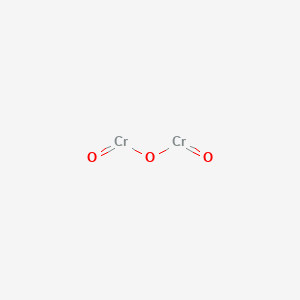
- IUPAC-Name
- oxo(oxochromiooxy)chromium
- Summenformel
- Cr2O3
- Molekulargewicht
- 151.990 g/mol
- Exakte Masse
- 151.865753 Da
- Topologische polare Oberfläche
- 43,4 Ų
- Wasserstoffbrücken-Donoren
- 0
- Wasserstoffbrücken-Akzeptoren
- 3
- Kovalente Einheiten
- 1
- Definierte Stereozentren
- 0
Auch bekannt als
16 weitere gemeldete Namen
Kennungen in externen Datenbanken
- ChEBI:CHEBI:48242
- EPA DTXSID:DTXSID4043721
- PubMed:26086747
- PubMed:24885771
- PubMed:21384495
- PubMed:15003702
- PubMed:12634122
- PubMed:1423875
Belege aus weiteren wissenschaftlichen Datenbanken
NIH PubChem PUG-View
Attributed physical-property, hazard, environmental and use annotations.
- Boiling Point: 4000 °C Quelle: Hazardous Substances Data Bank (HSDB)
- Boiling Point: 4000 °C Quelle: ILO-WHO International Chemical Safety Cards (ICSCs)
- Color/Form: Light to dark green, fine, hexagonal crystals Quelle: Hazardous Substances Data Bank (HSDB)
- Color/Form: Green powder Quelle: Hazardous Substances Data Bank (HSDB)
- Color/Form: Bright-green, extremely hard crystals Quelle: Hazardous Substances Data Bank (HSDB)
- Density: 5.22 at 25 °C Quelle: Hazardous Substances Data Bank (HSDB)
- Density: 5.22 g/cm³ Quelle: ILO-WHO International Chemical Safety Cards (ICSCs)
- Density: 5.22 @25 °C Quelle: PAC Chemical Database, U.S. Department of Energy
- Melting Point: 2435 °C Quelle: Hazardous Substances Data Bank (HSDB)
- Melting Point: 2435 °C Quelle: ILO-WHO International Chemical Safety Cards (ICSCs)
- Melting Point: 2320 °C Quelle: PAC Chemical Database, U.S. Department of Energy
- Physical Description: Dry Powder; Large Crystals; Dry Powder; Large Crystals; Liquid; Other Solid; Dry Powder; CBI; Large Crystals Quelle: EPA Chemical Data Reporting (CDR)
- Physical Description: Green, hygroscopic solid; [CHEMINFO] Insoluble in water; [ACGIH] Quelle: Haz-Map, Information on Hazardous Chemicals and Occupational Diseases
- Physical Description: LIGHT-TO-DARK-GREEN POWDER. Quelle: ILO-WHO International Chemical Safety Cards (ICSCs)
- Refractive Index: Index of refraction: 2.551 Quelle: Hazardous Substances Data Bank (HSDB)
- Solubility: In water, 3.13 ug/L at 20 °C, pH 6; 2.96 ug/L at 20 °C, pH 8 Quelle: Hazardous Substances Data Bank (HSDB)
- Solubility: Practically insoluble in water Quelle: Hazardous Substances Data Bank (HSDB)
- Solubility: Practically insoluble in alcohol, acetone; slightly soluble in acids, alkalies Quelle: Hazardous Substances Data Bank (HSDB)
- Solubility: Insoluble in acids, and alkalies Quelle: Hazardous Substances Data Bank (HSDB)
- Solubility: Solubility in water: none Quelle: ILO-WHO International Chemical Safety Cards (ICSCs)
- pH: Trivalent chromium compounds are amphoteric Quelle: Hazardous Substances Data Bank (HSDB)
- Carcinogen Classification: 3, not classifiable as to its carcinogenicity to humans. (L135) Quelle: Toxin and Toxin Target Database (T3DB)
- Exposure Routes: Oral (L16) ; inhalation (L16) ; dermal (L16) Quelle: Toxin and Toxin Target Database (T3DB)
- Note: This chemical does not meet GHS hazard criteria for 57.8% (1112 of 1924) of all reports. Quelle: European Chemicals Agency (ECHA)
- Signal: Danger Quelle: European Chemicals Agency (ECHA)
- GHS Hazard Statements: H302 (24%): Harmful if swallowed [Warning Acute toxicity, oral]; H317 (25.7%): May cause an allergic skin reaction [Warning Sensitization, Skin]; H319 (24.3%): Causes serious eye irritation [Warning Serious eye damage/eye irritation]; H360 (14.6%): May damage fertility or the unborn child [Danger Reproductive toxicity] Quelle: European Chemicals Agency (ECHA)
- Precautionary Statement Codes: P203, P261, P264, P264+P265, P270, P272, P280, P301+P317, P302+P352, P305+P351+P338, P318, P321, P330, P333+P317, P337+P317, P362+P364, P405, and P501 (click each P-code to see the statement) Quelle: European Chemicals Agency (ECHA)
- ECHA C&L Notifications Summary: Aggregated GHS information provided per 1924 reports by companies from 27 notifications to the ECHA C&L Inventory. Each notification may be associated with multiple companies.; Reported as not meeting GHS hazard criteria per 1112 of 1924 reports by companies.; There are 23 notifications provided by 812 of 1924 reports by companies with hazard statement code(s).; Information may vary between notifications depending on impurities, additives, and other factors. The percentage value in parenthesis indicates the notified classification ratio from companies that provide hazard codes. Only hazard codes with percentage values above 10% are shown. For more detailed information, please visit ECHA C&L website. Quelle: European Chemicals Agency (ECHA)
- Signal: Danger Quelle: NITE-CMC
- GHS Hazard Statements: H317: May cause an allergic skin reaction [Warning Sensitization, Skin]; H334: May cause allergy or asthma symptoms or breathing difficulties if inhaled [Danger Sensitization, respiratory]; H372: Causes damage to organs through prolonged or repeated exposure [Danger Specific target organ toxicity, repeated exposure] Quelle: NITE-CMC
- Precautionary Statement Codes: P233, P260, P261, P264, P270, P271, P272, P280, P284, P302+P352, P304+P340, P319, P321, P333+P317, P342+P316, P362+P364, P403, and P501 (click each P-code to see the statement) Quelle: NITE-CMC
- GHS Hazard Statements: H317: May cause an allergic skin reaction [Warning Sensitization, Skin]; H334: May cause allergy or asthma symptoms or breathing difficulties if inhaled [Danger Sensitization, respiratory] Quelle: NITE-CMC
- Precautionary Statement Codes: P233, P260, P261, P271, P272, P280, P284, P302+P352, P304+P340, P321, P333+P317, P342+P316, P362+P364, P403, and P501 (click each P-code to see the statement) Quelle: NITE-CMC
- Health Effects: Chromium in its trivalent state is not very toxic. It may be oxidized to hexavalent chromium, a known carcinogen. Hexavalent chromium has also been shown to affect reproduction and development. (A12) Quelle: Toxin and Toxin Target Database (T3DB)
- Toxicity Summary: IDENTIFICATION AND USE: Chromic oxide (Cr(2)O(3)) is a green powder. It is not registered for current use in the U.S., but approved pesticide uses may change periodically and so federal, state and local authorities must be consulted for currently approved uses. It is used in abrasives and electric semiconductors; in alloys; in printing fabrics and banknotes. It is also used in dyeing polymers; colorant for latex paints, in manufacturing of chromium metal and aluminum-chromium master alloys. It's other uses include catalyst in organic synthesis, green granules in asphalt roofing, component of refractory brick. Chromic oxide is a color additive in drug use. HUMAN EXPOSURE AND TOXICITY: Fine chromic oxide particles were insoluble in the culture medium; on the contrary, Cr(2)O(3) nanoparticles released soluble hexavalent chromium into the culture medium. Human lung carcinoma A549 cells and human keratinocyte HaCaT cells showed an increase in intracellular reactive oxygen species (ROS) level and activation of antioxidant defense systems on exposure to Cr(2)O(3) nanoparticles. The cellular influences of Cr(2)O(3) nanoparticles matched those of hexavalent chromium. Human lung epithelial c Quelle: Hazardous Substances Data Bank (HSDB)
- Toxicity Summary: Trivalent chromium may also form complexes with peptides, proteins, and DNA, resulting in DNA-protein crosslinks, DNA strand breaks, DNA-DNA interstrand crosslinks, chromium-DNA adducts, chromosomal aberrations and alterations in cellular signaling pathways. It has been shown to induce carcinogenesis by overstimulating cellular regulatory pathways and increasing peroxide levels by activating certain mitogen-activated protein kinases. It can also cause transcriptional repression by cross-linking histone deacetylase 1-DNA methyltransferase 1 complexes to CYP1A1 promoter chromatin, inhibiting histone modification. Chromium may increase its own toxicity by modifying metal regulatory transcription factor 1, causing the inhibition of zinc-induced metallothionein transcription. (A12, L16, A34, A35, A36) Quelle: Toxin and Toxin Target Database (T3DB)
- Consumer Uses: Other; Processing aids not otherwise specified; Catalyst; Not Known or Reasonably Ascertainable; Corrosion inhibitor; Pigment Quelle: EPA Chemical Data Reporting (CDR)
- Industry Uses: Abrasives; Other; Pigment; Dye; Catalyst; Not Known or Reasonably Ascertainable; Corrosion inhibitor Quelle: EPA Chemical Data Reporting (CDR)
- Sources/Uses: Used in abrasives, refractory materials, semiconductors, pigments, alloys, textile printing inks, and catalysts; [Merck Index] Used as a pigment in polymers and latex paints; [HSDB] Quelle: Haz-Map, Information on Hazardous Chemicals and Occupational Diseases
- Industrial Processes with risk of exposure: Semiconductor Manufacturing [Category: Industry]; Painting (Pigments, Binders, and Biocides) [Category: Paint]; Textiles (Printing, Dyeing, or Finishing) [Category: Industry] Quelle: Haz-Map, Information on Hazardous Chemicals and Occupational Diseases
- Uses: For chromic oxide (USEPA/OPP Pesticide Code: 021103) there are 0 labels match. /SRP: Not registered for current use in the U.S., but approved pesticide uses may change periodically and so federal, state and local authorities must be consulted for currently approved uses./ Quelle: Hazardous Substances Data Bank (HSDB)
- Uses: In abrasives, refractory materials, electric semiconductors; as pigment, particularly in coloring glass; in alloys; in printing fabrics and banknotes; catalyst for organic and inorganic reactions. Quelle: Hazardous Substances Data Bank (HSDB)
- Uses: Used in dyeing polymers, ... colorant for latex paints. Quelle: Hazardous Substances Data Bank (HSDB)
- Uses: In metallurgy in the manufacture of chromium metal and aluminum-chromium master alloys. Quelle: Hazardous Substances Data Bank (HSDB)
- Uses: For more Uses (Complete) data for Chromium (III) oxide (11 total), please visit the HSDB record page. Quelle: Hazardous Substances Data Bank (HSDB)
- Uses: Plastics -> Typical concentration range in plastic materials -> 1% Quelle: NORMAN Suspect List Exchange
- Uses: Chromium(III) oxide is commonly used as pigment, under the name viridian, in paints, inks, and glasses. (L523) Quelle: Toxin and Toxin Target Database (T3DB)
Zugeordnet durch: Existing checksum-valid CAS to unique PubChem CID match. Abgerufen: 2026-08-31. Quelleneintrag öffnen
Wissenschaftliche Klassifizierungen und Gefahrenannotationen liefern Kontext und ersetzen nicht die oben gezeigte marktspezifische regulatorische Entscheidung.
Weitere Quellenabdeckung und Trefferstatus
| Quelle | Ergebnis | Geprüft |
|---|---|---|
| NIH PubChem PUG-View | Exakter Treffer | 2026-08-31 |
Ein erfasster Nicht-Treffer ist ein nützlicher Beleg dafür, dass die Quelle geprüft wurde; er ist keine Behauptung, dass der Stoff anderswo nicht existiert.
Am 2026-09-02 von NIH PubChem durch prüfsummengültigen CAS-Abgleich abgerufen. Chemische Eigenschaften ersetzen nicht die regulatorische Entscheidung auf dieser Seite.
Belege zum amtlichen EU-Inhaltsstoffnamen
Der Inhaltsstoffname stimmt exakt mit dem amtlichen EU-Glossar 2025 der gebräuchlichen Inhaltsstoffnamen überein.
Verwandte Belege aus dem Verzeichnis
Inhaltsstoffe mit sich überschneidenden Rezepturfunktionen
Weitere amtliche und wissenschaftliche Quellen
11 externe Datenbanken zur Prüfung dieser Identität
Jeder Link durchsucht die jeweilige Quelle nach dieser Identität. Was jede Quelle ist und welches rechtliche Gewicht sie hat
Wie CI 77288 im CosIng-Verzeichnis erscheint
Das CosIng-Verzeichnis führt CI 77288 als kosmetischen Inhaltsstoff, und diese Seite verknüpft ihn mit 1 Anhangseintrag. Der Verzeichniseintrag erfasst Namen und Kennungen, während der Anhangseintrag zeigt, wo der Stoff im EU-Kosmetikrecht verboten, beschränkt oder positiv gelistet ist.
CI 77288 ist in den amtlichen Daten außerdem mit 1 kosmetischen Funktion gekennzeichnet. Funktionsbezeichnungen beschreiben die beabsichtigte Verwendung, ersetzen aber nicht die regulatorische Prüfung verknüpfter Anhangseinträge vor der Rezeptierung oder Kennzeichnung.
Häufig gestellte Fragen
Quellenhinweis zu CI 77288
Diese Seite verbindet den CosIng-Verzeichniseintrag für CI 77288 mit 1 verknüpften Eintrag aus den Anhängen II–VI aus unserem Datenbestand, der aus öffentlichen Materialien der Europäischen Kommission zu kosmetischen Inhaltsstoffen aufgebaut ist.
Nutzen Sie diese Verzeichnisseite, um CI 77288 zu recherchieren und verknüpfte Einträge zu vergleichen; verifizieren Sie Beschränkungen und Rechtsstatus jedoch anhand des aktuellen amtlichen Quellentextes und Rechts, bevor Sie regulatorische Entscheidungen treffen.
Werkzeuge und nächste Schritte
Rezeptur prüfen
Eine vollständige INCI-Liste prüfen, um CI 77288 und etwaige verknüpfte EU-Anhangsbeschränkungen oder Allergenmarkierungen zu erkennen.
INCI-CheckerÄhnliche Inhaltsstoffe suchen
Weitere Inhaltsstoffe aus dem Verzeichnis und Anhangseinträge finden, die mit CI 77288, seinen Kennungen oder nahen Namensvarianten zusammenhängen.
Suche