
Ipconazole (ISO); (1RS,2SR,5RS;1RS,2SR,5SR)-2-(4-chlorobenzyl)-5-isopropyl-1- (1H-1,2,4-triazol-1-ylmethyl)cyclopentanol
Listed by the Saudi Food and Drug Authority as prohibited in cosmetic products.
규제 판단 및 전체 조건
- 상태
- Prohibited
- 법적 역할
- Binding rule
- 규제 요약
- Listed by the Saudi Food and Drug Authority as prohibited in cosmetic products.
- 조건 및 제한 사항
- A prohibition entry may contain no separate condition text because the regulatory outcome is the prohibition itself. 인용된 출처를 열고 아래의 시장 전체 요건을 적용하세요.
물질 정체
- 공식 출처상의 명칭
- Ipconazole (ISO); (1RS,2SR,5RS;1RS,2SR,5SR)-2-(4-chlorobenzyl)-5-isopropyl-1- (1H-1,2,4-triazol-1-ylmethyl)cyclopentanol
- CAS
- 125225-28-7; 115850-69-6; 115937-89-8
- EC
- Not supplied in this source row
- 정체 매핑
- standalone:official_sfda_record
이 정체의 시장 간 요약
현재 이 사이트에 있는 정확히 연결된 기록입니다. 시장이 없는 것은 가져온 정확한 일치 항목이 없다는 뜻이며, 해당 물질의 사용이 허용된다는 뜻이 아닙니다.
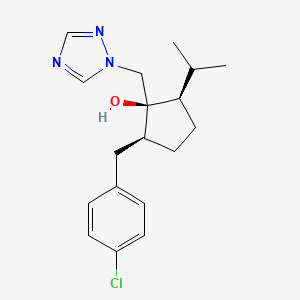
CAS 115850-69-6의 검증된 화학 정보
Ipconazole, (1R,2S,5R)-rel-
- IUPAC 명칭
- (1R,2S,5R)-2-[(4-chlorophenyl)methyl]-5-propan-2-yl-1-(1,2,4-triazol-1-ylmethyl)cyclopentan-1-ol
- 분자식
- C18H24ClN3O
- 분자량
- 333.9 g/mol
- 정확한 질량
- 333.1607901 Da
- 단일 동위원소 질량
- 333.1607901 Da
- XLogP3
- 4.1
- 위상 극성 표면적
- 50.9 Ų
- 분자 복잡도
- 386.0
- 형식 전하
- 0
- 수소 결합 공여체
- 1
- 수소 결합 수용체
- 3
- 회전 가능 결합
- 5
- 중원자
- 23
- 공유결합 단위
- 1
PubChem에 보고된 명칭 및 동의어
보고된 명칭 4개 더 보기
외부 데이터베이스 식별자
- ChEMBL:CHEMBL2286110
- EPA DTXSID:DTXSID60905067
고급 구조 통계
- 정의된 원자 입체중심
- 3
- 정의되지 않은 원자 입체중심
- 0
- 정의된 결합 입체중심
- 0
- 정의되지 않은 결합 입체중심
- 0
- 3D 파마코포어 특성
- 8
- 3D 고리
- 3
- 3D 소수성 부위
- 1
- 3D 수용체 특성
- 1
- 3D 공여체 특성
- 1
- 3D 음이온 중심
- 0
- 3D 양이온 중심
- 2
- 3D 형태이성질체
- 10
- 유효 3D 회전자
- 6.0
기계 판독 가능한 구조 식별자
- SMILES
CC(C)[C@H]1CC[C@H]([C@@]1(CN2C=NC=N2)O)CC3=CC=C(C=C3)Cl- InChI
InChI=1S/C18H24ClN3O/c1-13(2)17-8-5-15(9-14-3-6-16(19)7-4-14)18(17,23)10-22-12-20-11-21-22/h3-4,6-7,11-13,15,17,23H,5,8-10H2,1-2H3/t15-,17+,18+/m0/s1- InChIKey
QTYCMDBMOLSEAM-CGTJXYLNSA-N
추가 과학 데이터베이스의 근거
NIH PubChem PUG-View
Attributed physical-property, hazard, environmental and use annotations.
매핑 기준: Existing checksum-valid CAS to unique PubChem CID match. 가져온 시각: 2026-08-31. 출처 기록 열기
과학적 분류와 유해성 주석은 맥락을 제공할 뿐이며, 위에 표시된 시장별 규제 판단을 대체하지 않습니다.
추가 출처 적용 범위 및 일치 상태
| 출처 | 결과 | 확인됨 |
|---|---|---|
| NIH PubChem PUG-View | 정확히 일치 | 2026-08-31 |
기록된 불일치는 출처를 확인했다는 유용한 근거이며, 해당 물질이 다른 곳에 존재하지 않는다는 주장이 아닙니다.
체크섬이 유효한 CAS 일치를 통해 2026-09-02에 NIH PubChem에서 가져왔습니다. 화학적 특성은 이 페이지의 규제 판단을 대체하지 않습니다.
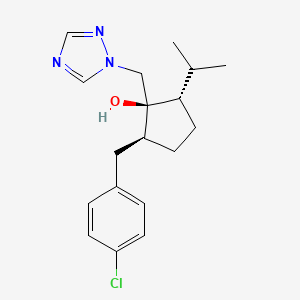
CAS 115937-89-8의 검증된 화학 정보
Ipconazole, (1R,2S,5S)-rel-
- IUPAC 명칭
- (1R,2S,5S)-2-[(4-chlorophenyl)methyl]-5-propan-2-yl-1-(1,2,4-triazol-1-ylmethyl)cyclopentan-1-ol
- 분자식
- C18H24ClN3O
- 분자량
- 333.9 g/mol
- 정확한 질량
- 333.1607901 Da
- 단일 동위원소 질량
- 333.1607901 Da
- XLogP3
- 4.1
- 위상 극성 표면적
- 50.9 Ų
- 분자 복잡도
- 386.0
- 형식 전하
- 0
- 수소 결합 공여체
- 1
- 수소 결합 수용체
- 3
- 회전 가능 결합
- 5
- 중원자
- 23
- 공유결합 단위
- 1
PubChem에 보고된 명칭 및 동의어
보고된 명칭 4개 더 보기
외부 데이터베이스 식별자
- ChEMBL:CHEMBL2286111
- EPA DTXSID:DTXSID00905066
- EPA DTXSID:DTXSID401044293
고급 구조 통계
- 정의된 원자 입체중심
- 3
- 정의되지 않은 원자 입체중심
- 0
- 정의된 결합 입체중심
- 0
- 정의되지 않은 결합 입체중심
- 0
- 3D 파마코포어 특성
- 8
- 3D 고리
- 3
- 3D 소수성 부위
- 1
- 3D 수용체 특성
- 1
- 3D 공여체 특성
- 1
- 3D 음이온 중심
- 0
- 3D 양이온 중심
- 2
- 3D 형태이성질체
- 10
- 유효 3D 회전자
- 6.0
기계 판독 가능한 구조 식별자
- SMILES
CC(C)[C@@H]1CC[C@H]([C@@]1(CN2C=NC=N2)O)CC3=CC=C(C=C3)Cl- InChI
InChI=1S/C18H24ClN3O/c1-13(2)17-8-5-15(9-14-3-6-16(19)7-4-14)18(17,23)10-22-12-20-11-21-22/h3-4,6-7,11-13,15,17,23H,5,8-10H2,1-2H3/t15-,17-,18+/m0/s1- InChIKey
QTYCMDBMOLSEAM-RYQLBKOJSA-N
추가 과학 데이터베이스의 근거
NIH PubChem PUG-View
Attributed physical-property, hazard, environmental and use annotations.
매핑 기준: Existing checksum-valid CAS to unique PubChem CID match. 가져온 시각: 2026-08-31. 출처 기록 열기
과학적 분류와 유해성 주석은 맥락을 제공할 뿐이며, 위에 표시된 시장별 규제 판단을 대체하지 않습니다.
추가 출처 적용 범위 및 일치 상태
| 출처 | 결과 | 확인됨 |
|---|---|---|
| NIH PubChem PUG-View | 정확히 일치 | 2026-08-31 |
기록된 불일치는 출처를 확인했다는 유용한 근거이며, 해당 물질이 다른 곳에 존재하지 않는다는 주장이 아닙니다.
체크섬이 유효한 CAS 일치를 통해 2026-09-02에 NIH PubChem에서 가져왔습니다. 화학적 특성은 이 페이지의 규제 판단을 대체하지 않습니다.
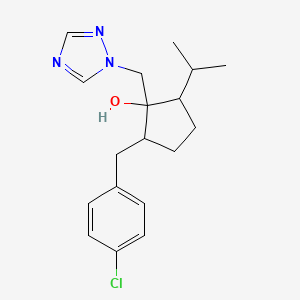
CAS 125225-28-7의 검증된 화학 정보
Ipconazole
Ipconazole is a member of the class of cyclopentanols carrying 1,2,4-triazol-1-ylmethyl, 4-chlorobenzyl and isopropyl substituents at positions 1, 2 and 5 respectively. Used to control a range of seed diseases in rice, vegetables and other, mainly non-food, crops. It has a role as an EC 1.14.13.70 (sterol 14alpha-demethylase) inhibitor and an antifungal agrochemical. It is a member of cyclopentanols, a tertiary alcohol, a member of triazoles, a member of monochlorobenzenes, a conazole fungicide and a triazole fungicide. — ChEBI
- IUPAC 명칭
- 2-[(4-chlorophenyl)methyl]-5-propan-2-yl-1-(1,2,4-triazol-1-ylmethyl)cyclopentan-1-ol
- 분자식
- C18H24ClN3O
- 분자량
- 333.9 g/mol
- 정확한 질량
- 333.1607901 Da
- 단일 동위원소 질량
- 333.1607901 Da
- XLogP3
- 4.1
- 위상 극성 표면적
- 50.9 Ų
- 분자 복잡도
- 386.0
- 형식 전하
- 0
- 수소 결합 공여체
- 1
- 수소 결합 수용체
- 3
- 회전 가능 결합
- 5
- 중원자
- 23
- 공유결합 단위
- 1
PubChem에 보고된 명칭 및 동의어
보고된 명칭 14개 더 보기
외부 데이터베이스 식별자
- ChEBI:CHEBI:81770
- ChEMBL:CHEMBL3185422
- EPA DTXSID:DTXSID7034674
고급 구조 통계
- 정의된 원자 입체중심
- 0
- 정의되지 않은 원자 입체중심
- 3
- 정의된 결합 입체중심
- 0
- 정의되지 않은 결합 입체중심
- 0
- 3D 파마코포어 특성
- 8
- 3D 고리
- 3
- 3D 소수성 부위
- 1
- 3D 수용체 특성
- 1
- 3D 공여체 특성
- 1
- 3D 음이온 중심
- 0
- 3D 양이온 중심
- 2
- 3D 형태이성질체
- 10
- 유효 3D 회전자
- 6.0
기계 판독 가능한 구조 식별자
- SMILES
CC(C)C1CCC(C1(CN2C=NC=N2)O)CC3=CC=C(C=C3)Cl- InChI
InChI=1S/C18H24ClN3O/c1-13(2)17-8-5-15(9-14-3-6-16(19)7-4-14)18(17,23)10-22-12-20-11-21-22/h3-4,6-7,11-13,15,17,23H,5,8-10H2,1-2H3- InChIKey
QTYCMDBMOLSEAM-UHFFFAOYSA-N
추가 과학 데이터베이스의 근거
NIH PubChem PUG-View
Attributed physical-property, hazard, environmental and use annotations.
- Signal: Danger 출처: Regulation (EC) No 1272/2008 of the European Parliament and of the Council
- GHS Hazard Statements: H302: Harmful if swallowed [Warning Acute toxicity, oral]; H360D: May damage the unborn child [Danger Reproductive toxicity]; H373: May causes damage to organs through prolonged or repeated exposure [Warning Specific target organ toxicity, repeated exposure]; H410: Very toxic to aquatic life with long lasting effects [Warning Hazardous to the aquatic environment, long-term hazard] 출처: Regulation (EC) No 1272/2008 of the European Parliament and of the Council
- Precautionary Statement Codes: P203, P260, P264, P270, P273, P280, P301+P317, P318, P319, P330, P391, P405, and P501 (click each P-code to see the statement) 출처: Regulation (EC) No 1272/2008 of the European Parliament and of the Council
- Signal: Danger 출처: European Chemicals Agency (ECHA)
- GHS Hazard Statements: H302 (84.7%): Harmful if swallowed [Warning Acute toxicity, oral]; H332 (30.1%): Harmful if inhaled [Warning Acute toxicity, inhalation]; H360D (55.8%): May damage the unborn child [Danger Reproductive toxicity]; H361 (13.7%): Suspected of damaging fertility or the unborn child [Warning Reproductive toxicity]; H373 (63.1%): May causes damage to organs through prolonged or repeated exposure [Warning Specific target organ toxicity, repeated exposure]; H400 (22.1%): Very toxic to aquatic life [Warning Hazardous to the aquatic environment, acute hazard]; H410 (77.9%): Very toxic to aquatic life with long lasting effects [Warning Hazardous to the aquatic environment, long-term hazard] 출처: European Chemicals Agency (ECHA)
- Precautionary Statement Codes: P203, P260, P261, P264, P270, P271, P273, P280, P301+P317, P304+P340, P317, P318, P319, P330, P391, P405, and P501 (click each P-code to see the statement) 출처: European Chemicals Agency (ECHA)
- ECHA C&L Notifications Summary: Aggregated GHS information provided per 249 reports by companies from 12 notifications to the ECHA C&L Inventory. Each notification may be associated with multiple companies.; Information may vary between notifications depending on impurities, additives, and other factors. The percentage value in parenthesis indicates the notified classification ratio from companies that provide hazard codes. Only hazard codes with percentage values above 10% are shown. For more detailed information, please visit ECHA C&L website. 출처: European Chemicals Agency (ECHA)
- Signal: Danger 출처: NITE-CMC
- GHS Hazard Statements: H302: Harmful if swallowed [Warning Acute toxicity, oral]; H360: May damage fertility or the unborn child [Danger Reproductive toxicity]; H371: May cause damage to organs [Warning Specific target organ toxicity, single exposure]; H372: Causes damage to organs through prolonged or repeated exposure [Danger Specific target organ toxicity, repeated exposure]; H373: May causes damage to organs through prolonged or repeated exposure [Warning Specific target organ toxicity, repeated exposure]; H401: Toxic to aquatic life [Hazardous to the aquatic environment, acute hazard]; H410: Very toxic to aquatic life with long lasting effects [Warning Hazardous to the aquatic environment, long-term hazard] 출처: NITE-CMC
- Precautionary Statement Codes: P203, P260, P264, P270, P273, P280, P301+P317, P308+P316, P318, P319, P330, P391, P405, and P501 (click each P-code to see the statement) 출처: NITE-CMC
매핑 기준: Existing checksum-valid CAS to unique PubChem CID match. 가져온 시각: 2026-08-31. 출처 기록 열기
과학적 분류와 유해성 주석은 맥락을 제공할 뿐이며, 위에 표시된 시장별 규제 판단을 대체하지 않습니다.
추가 출처 적용 범위 및 일치 상태
| 출처 | 결과 | 확인됨 |
|---|---|---|
| NIH PubChem PUG-View | 정확히 일치 | 2026-08-31 |
기록된 불일치는 출처를 확인했다는 유용한 근거이며, 해당 물질이 다른 곳에 존재하지 않는다는 주장이 아닙니다.
체크섬이 유효한 CAS 일치를 통해 2026-08-31에 NIH PubChem에서 가져왔습니다. 화학적 특성은 이 페이지의 규제 판단을 대체하지 않습니다.
공식 출처 및 출처 정보
- 등록된 출처
- Saudi SFDA prohibited and restricted ingredient lists
- 출처 참조
- SFDA prohibited list, page 166, row 7
- 출처 기록 ID
prohibited-165-7- 출처 버전
- live-snapshot-2026-08-30
- 출처 언어
- English
- 번역 상태
- Original is English
- 스냅샷 확인
- 2026-08-30 05:18 UTC
- 검증 방법
- complete SFDA paginated HTML snapshot; strict page/row counts
- SHA-256
ceb6cc636e6b1f4b3013f88ce0297217b49d6194342c6ece5c03b1e04256d71a
등록된 데이터세트 주석
- 데이터세트 적용 범위
- Prohibited and restricted substances with CAS, EC and conditions
- 권위 관련 주석
- Official SFDA dated lists; version and hash each release
이 기록이 시장 데이터세트에서 차지하는 위치
상태 분포
현재 기록 2090건 중 0건에 조건 텍스트가 있습니다. 조건 필드가 비어 있는 경우 위의 기록 유형에 따라 해석되며, 제한 없는 사용에 대한 주장으로 전환되지 않습니다.
Saudi Arabia 시장 맥락
Complete official list index
적용 범위 버전: SFDA live prohibited/restricted lists, snapshot 30 August 2026
Every page and entry in the public SFDA prohibited and restricted ingredient indexes; restricted detail pages remain the source for conditions.
확인 체크리스트
- Search names and CAS across both SFDA lists.
- Open the cited restricted-entry detail and apply every condition.
- Check current SFDA/GSO technical regulations and updates.
- Complete eCosma notification, label and responsible-party requirements.
공식 시장 출처
- Saudi SFDA prohibited and restricted ingredient listsOfficial SFDA dated lists; version and hash each release
확인 절차 및 기록 완전성
이 결과를 규제 준수 판단에 사용하기 전에
- “Ipconazole (ISO); (1RS,2SR,5RS;1RS,2SR,5SR)-2-(4-chlorobenzyl)-5-isopropyl-1- (1H-1,2,4-triazol-1-ylmethyl)cyclopentanol”와(과) 모든 CAS/EC 식별자가 공급업체 규격서의 물질을 가리키는지 확인하세요.
- Search names and CAS across both SFDA lists.
- Open the cited restricted-entry detail and apply every condition.
- Check current SFDA/GSO technical regulations and updates.
- Complete eCosma notification, label and responsible-party requirements.
- 출처 버전을 기록하고, 제조, 신고 또는 시장 출시 전에 규제 기관을 다시 확인하세요.
이 기록에서 제공되는 필드
- 공식 물질 명칭제공됨
- CAS제공됨
- EC제공되지 않음
- 별도의 조건 텍스트출처 행에 없음
- 시행일제공되지 않음
- 스냅샷 해시 및 방법제공됨
이 페이지가 답하는 질문
안정적인 인용
Ipconazole (ISO); (1RS,2SR,5RS;1RS,2SR,5SR)-2-(4-chlorobenzyl)-5-isopropyl-1- (1H-1,2,4-triazol-1-ylmethyl)cyclopentanol. SFDA prohibited list, page 166, row 7. Saudi Arabia. Source version live-snapshot-2026-08-30. CosIng Checker regulatory record: https://cosingchecker.com/ko/regulations/sa/records/11236/
법적 권위로서 규제 기관을 인용하세요. 이 페이지는 구조화된 근거 색인이자 확인 보조 도구이며, 공식 본문이나 전문적인 법률 평가를 대체하지 않습니다.
Saudi Arabia의 해석 및 한계
This official record identifies the substance as prohibited for cosmetic use in the stated market scope.
Do not rely on a formulation containing this identity until the cited source, effective date and exact substance match have been verified.
법적 역할 해석 방법
The cited row forms part of a binding rule or legally incorporated list for this market.
이 페이지의 근거
- 기록된 결과: Prohibited
- 법적 역할: Binding rule
- 출처 버전: live-snapshot-2026-08-30
증명하지 않는 것
No list match is not permission; Gulf/SFDA product, claim, notification and technical requirements still apply.
추가 공신력 있는 물질 조사
이 출처들 중 어느 것도 위의 시장 판단을 번복하지 않습니다.
Cosmetic Ingredient Review safety assessments
Expert Panel conclusions, assessed ingredient groups, use conditions, dates and report documents
Independent expert review considered by FDA; not a government approval or binding market rule
출처에서 이 정체 조사FDA Global Substance Registration System
UNII identifiers, preferred names, substance types, codes and public substance relationships
Identity registry only; UNII availability does not imply FDA review or approval
출처에서 이 정체 조사ILO/WHO International Chemical Safety Cards
Hazards, symptoms, first aid, storage, incompatibilities and physical properties for covered chemicals
International occupational chemical-safety reference; not cosmetic-use approval
출처에서 이 정체 조사Japan NITE-CHRIP
Chemical identity, Japanese and foreign legal lists, GHS hazards and exposure-related information
Chemical-management evidence; cosmetic status remains governed by the applicable MHLW standard and market rules
출처에서 이 정체 조사NIOSH Pocket Guide to Chemical Hazards
REL, PEL, IDLH, properties, exposure routes, symptoms, target organs, first aid and measurement methods for covered workplace chemicals
US occupational-health guidance and limits; not a cosmetic ingredient decision
출처에서 이 정체 조사OECD eChemPortal
Gateway to authority-owned physical-property, fate, ecotoxicity, toxicity, exposure and GHS records
Discovery gateway; each linked authority remains responsible for its data
출처에서 이 정체 조사US EPA CompTox CTX APIs
가져오기에 API 키 필요DTXSID identity, experimental and predicted properties, toxicity, bioactivity, exposure and environmental data
Scientific and computational evidence; predictions must remain labelled and do not determine cosmetic legality
출처에서 이 정체 조사