
Furan
New Zealand Cosmetic Products Group Standard Schedule 4, reference 732.
규제 판단 및 전체 조건
- 상태
- Prohibited
- 법적 역할
- Binding rule
- 규제 요약
- New Zealand Cosmetic Products Group Standard Schedule 4, reference 732.
- 조건 및 제한 사항
- A prohibition entry may contain no separate condition text because the regulatory outcome is the prohibition itself. 인용된 출처를 열고 아래의 시장 전체 요건을 적용하세요.
물질 정체
- 공식 출처상의 명칭
- Furan
- CAS
- 110-00-9
- EC
- Not supplied in this source row
- 정체 매핑
- standalone:official_nz_schedule
이 정체의 시장 간 요약
현재 이 사이트에 있는 정확히 연결된 기록입니다. 시장이 없는 것은 가져온 정확한 일치 항목이 없다는 뜻이며, 해당 물질의 사용이 허용된다는 뜻이 아닙니다.
European Union
연결된 기록 1건
보조 기록 열기Great Britain
연결된 기록 1건
보조 기록 열기New Zealand
현재 기록연결된 기록 1건
보조 기록 열기ASEAN
연결된 기록 1건
보조 기록 열기China
연결된 기록 1건 · 특정 조건이 있는 기록 1건
보조 기록 열기South Korea
연결된 기록 1건
보조 기록 열기Brazil
연결된 기록 1건 · 특정 조건이 있는 기록 1건
보조 기록 열기India
연결된 기록 1건 · 특정 조건이 있는 기록 1건
보조 기록 열기Saudi Arabia
연결된 기록 1건
보조 기록 열기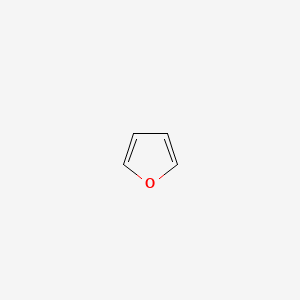
CAS 110-00-9의 검증된 화학 정보
Furan
Furan is a monocyclic heteroarene with a structure consisting of a 5-membered ring containing four carbons and one oxygen, with formula C4H4O. It is a toxic, flammable, low-boiling (31C) colourless liquid. It has a role as a carcinogenic agent, a hepatotoxic agent and a Maillard reaction product. It is a member of furans, a mancude organic heteromonocyclic parent and a monocyclic heteroarene. — ChEBI
- IUPAC 명칭
- furan
- 분자식
- C4H4O
- 분자량
- 68.07 g/mol
- 정확한 질량
- 68.026214747 Da
- 단일 동위원소 질량
- 68.026214747 Da
- XLogP3
- 1.3
- 위상 극성 표면적
- 13.1 Ų
- 분자 복잡도
- 22.0
- 형식 전하
- 0
- 수소 결합 공여체
- 0
- 수소 결합 수용체
- 1
- 회전 가능 결합
- 0
- 중원자
- 5
- 공유결합 단위
- 1
PubChem에 보고된 명칭 및 동의어
보고된 명칭 16개 더 보기
외부 데이터베이스 식별자
- ChEBI:CHEBI:35559
- ChEMBL:CHEMBL278980
- EPA DTXSID:DTXSID6020646
- PubMed:39171654
- PubMed:38160780
- PubMed:37517673
- PubMed:37488932
- PubMed:35750087
- PubMed:34450210
- PubMed:32758512
- PubMed:32251705
- PubMed:32174189
- PubMed:30203046
- PubMed:27402187
- PubMed:27387713
고급 구조 통계
- 정의된 원자 입체중심
- 0
- 정의되지 않은 원자 입체중심
- 0
- 정의된 결합 입체중심
- 0
- 정의되지 않은 결합 입체중심
- 0
- 3D 파마코포어 특성
- 2
- 3D 고리
- 1
- 3D 소수성 부위
- 0
- 3D 수용체 특성
- 1
- 3D 공여체 특성
- 0
- 3D 음이온 중심
- 0
- 3D 양이온 중심
- 0
- 3D 형태이성질체
- 1
- 유효 3D 회전자
- 0.0
기계 판독 가능한 구조 식별자
- SMILES
C1=COC=C1- InChI
InChI=1S/C4H4O/c1-2-4-5-3-1/h1-4H- InChIKey
YLQBMQCUIZJEEH-UHFFFAOYSA-N
추가 과학 데이터베이스의 근거
NIH PubChem PUG-View
Attributed physical-property, hazard, environmental and use annotations.
- Autoignition Temperature: 390 °C 출처: ILO-WHO International Chemical Safety Cards (ICSCs)
- Boiling Point: 90 °F at 758 mmHg (EPA, 1998) 출처: CAMEO Chemicals
- Boiling Point: 31.5 °C 출처: Hazardous Substances Data Bank (HSDB)
- Boiling Point: 32.00 °C. @ 758.00 mm Hg 출처: Human Metabolome Database (HMDB)
- Boiling Point: 31.3 °C 출처: ILO-WHO International Chemical Safety Cards (ICSCs)
- Boiling Point: 31.5 °C @760 [mm Hg] 출처: PAC Chemical Database, U.S. Department of Energy
- Color/Form: Colorless liquid, turns brown upon standing; color change is retarded if a small amount of water is added 출처: Hazardous Substances Data Bank (HSDB)
- Density: 0.9371 at 66.92 °F (EPA, 1998) - Less dense than water; will float 출처: CAMEO Chemicals
- Density: 0.9731 at 19.4 °C/4 °C 출처: Hazardous Substances Data Bank (HSDB)
- Density: Density = 0.9514 g/cu cm at 20 °C 출처: Hazardous Substances Data Bank (HSDB)
- Density: Relative density (water = 1): 0.94 출처: ILO-WHO International Chemical Safety Cards (ICSCs)
- Density: 0.9514 @ 20°C 출처: PAC Chemical Database, U.S. Department of Energy
- Flash Point: Less than 32F (EPA, 1998) 출처: CAMEO Chemicals
- Flash Point: -32 °F (-35 °C) (Closed cup) 출처: Hazardous Substances Data Bank (HSDB)
- Flash Point: -35 °C 출처: ILO-WHO International Chemical Safety Cards (ICSCs)
- LogP: log Kow = 1.34 출처: Hazardous Substances Data Bank (HSDB)
- LogP: 1.34 출처: Human Metabolome Database (HMDB)
- LogP: 1.34 출처: ILO-WHO International Chemical Safety Cards (ICSCs)
- Melting Point: -123 °F (EPA, 1998) 출처: CAMEO Chemicals
- Melting Point: -85.61 °C 출처: Hazardous Substances Data Bank (HSDB)
- Melting Point: -85.6 °C 출처: Human Metabolome Database (HMDB)
- Melting Point: -85.6 °C 출처: ILO-WHO International Chemical Safety Cards (ICSCs)
- Melting Point: -85.61 °C 출처: PAC Chemical Database, U.S. Department of Energy
- Odor: Ethereal 출처: Hazardous Substances Data Bank (HSDB)
- Physical Description: Furan appears as a clear colorless liquid with a strong odor. Flash point below 32 °F. Less dense than water and insoluble in water. Vapors heavier than air. 출처: CAMEO Chemicals
- Physical Description: Liquid 출처: EPA Chemical Data Reporting (CDR)
- Physical Description: Colorless liquid with an ethereal odor; darkens on exposure to light and air; [HSDB] 출처: Haz-Map, Information on Hazardous Chemicals and Occupational Diseases
- Physical Description: Liquid 출처: Human Metabolome Database (HMDB)
- Physical Description: CLEAR COLOURLESS LIQUID WITH CHARACTERISTIC ODOUR. TURNS BROWN ON STANDING. 출처: ILO-WHO International Chemical Safety Cards (ICSCs)
- Refractive Index: Index of refraction: 1.4214 at 20 °C/D 출처: Hazardous Substances Data Bank (HSDB)
- Solubility: less than 1 mg/mL at 72 °F (NTP, 1992) 출처: CAMEO Chemicals
- Solubility: Soluble in alcohol and ether 출처: Hazardous Substances Data Bank (HSDB)
- Solubility: Slightly soluble in chloroform; very soluble in ethanol, ether; soluble in acetone, benzene 출처: Hazardous Substances Data Bank (HSDB)
- Solubility: In water, 1X10+4 mg/L at 25 °C 출처: Hazardous Substances Data Bank (HSDB)
- Solubility: 10 mg/mL at 25 °C 출처: Human Metabolome Database (HMDB)
- Solubility: Solubility in water, g/l at 25 °C: 10 출처: ILO-WHO International Chemical Safety Cards (ICSCs)
- Vapor Pressure: 493 mmHg at 68 °F (NTP, 1992) 출처: CAMEO Chemicals
- Vapor Pressure: 600.0 [mmHg] 출처: Haz-Map, Information on Hazardous Chemicals and Occupational Diseases
- Vapor Pressure: 600 mm Hg at 25 °C /from experimentally derived coefficients/ 출처: Hazardous Substances Data Bank (HSDB)
- Vapor Pressure: Vapor pressure, kPa at 20 °C: 65.8 출처: ILO-WHO International Chemical Safety Cards (ICSCs)
- Vapor Pressure: 750 [mm Hg] @31 °C 출처: PAC Chemical Database, U.S. Department of Energy
- Viscosity: 0.38 cP at 20 °C 출처: Hazardous Substances Data Bank (HSDB)
- Viscosity: 0.38 mPa*s 출처: ILO-WHO International Chemical Safety Cards (ICSCs)
- IARC Carcinogenic Agent: Furan 출처: International Agency for Research on Cancer (IARC)
- IARC Carcinogenic Classes: Group 2B: Possibly carcinogenic to humans 출처: International Agency for Research on Cancer (IARC)
- IARC Monographs: Volume 63: (1995) Dry Cleaning, Some Chlorinated Solvents and Other Industrial Chemicals 출처: International Agency for Research on Cancer (IARC)
- Publication Year: 1995 출처: International Agency for Research on Cancer (IARC)
- Evaluation Year: 1995 출처: International Agency for Research on Cancer (IARC)
- Substance: Furan 출처: NTP Technical Reports
- NTP Technical Report: TR-402: Toxicology and Carcinogenesis Studies of Furan (CASRN 110-00-9) in F344 Rats and B6C3F1 Mice (Gavage Studies) (1993 ) 출처: NTP Technical Reports
- Peer Review Date: 03/11/91 출처: NTP Technical Reports
- Conclusion for Male Rat: Clear Evidence 출처: NTP Technical Reports
- Conclusion for Female Rat: Clear Evidence 출처: NTP Technical Reports
- Conclusion for Male Mice: Clear Evidence 출처: NTP Technical Reports
- Conclusion for Female Mice: Clear Evidence 출처: NTP Technical Reports
- Exposure Routes: The substance can be absorbed into the body by inhalation. 출처: ILO-WHO International Chemical Safety Cards (ICSCs)
- First Aid: Signs and Symptoms of Furan Exposure: Acute exposure to furan may produce dizziness, nausea, vomiting, diarrhea, and anorexia. Irritation and burning of the eyes and skin may occur. Furan vapor is a central nervous system depressant.; Emergency Life-Support Procedures: Acute exposure to furan may require decontamination and life support for the victims. Emergency personnel should wear protective clothing appropriate to the type and degree of contamination. Air-purifying or supplied-air respiratory equipment should also be worn, as necessary. Rescue vehicles should carry supplies such as plastic sheeting and disposable plastic bags to assist in preventing spread of contamination.; Inhalation Exposure:; 1. Move victims to fresh air. Emergency personnel should avoid self-exposure to furan.; 2. Evaluate vital signs including pulse and respiratory rate, and note any trauma. If no pulse is detected, provide CPR. If not breathing, provide artificial respiration. If breathing is labored, administer oxygen or other respiratory support.; 3. Obtain authorization and/or further instructions from the local hospital for administration of an antidote or performance of other invasive procedures.; 출처: CAMEO Chemicals
- ERG2024, Guide 128 (Furan): General First Aid:; · Call 911 or emergency medical service.; · Ensure that medical personnel are aware of the material(s) involved, take precautions to protect themselves and avoid contamination.; · Move victim to fresh air if it can be done safely.; · Administer oxygen if breathing is difficult.; · If victim is not breathing:; -- DO NOT perform mouth-to-mouth resuscitation; the victim may have ingested or inhaled the substance.; -- If equipped and pulse detected, wash face and mouth, then give artificial respiration using a proper respiratory medical device (bag-valve mask, pocket mask equipped with a one-way valve or other device).; -- If no pulse detected or no respiratory medical device available, provide continuous compressions. Conduct a pulse check every two minutes or monitor for any signs of spontaneous respirations.; · Remove and isolate contaminated clothing and shoes.; · For minor skin contact, avoid spreading material on unaffected skin.; · In case of contact with substance, remove immediately by flushing skin or eyes with running water for at least 20 minutes.; · For severe burns, immediate medical attention is required.; · Effects of exposure (inhalation, ingestion, 출처: Emergency Response Guidebook (ERG)
- Signal: Danger 출처: Regulation (EC) No 1272/2008 of the European Parliament and of the Council
- GHS Hazard Statements: H224: Extremely flammable liquid and vapor [Danger Flammable liquids]; H302: Harmful if swallowed [Warning Acute toxicity, oral]; H315: Causes skin irritation [Warning Skin corrosion/irritation]; H332: Harmful if inhaled [Warning Acute toxicity, inhalation]; H341: Suspected of causing genetic defects [Warning Germ cell mutagenicity]; H350: May cause cancer [Danger Carcinogenicity]; H373 **: May causes damage to organs through prolonged or repeated exposure [Warning Specific target organ toxicity, repeated exposure]; H412: Harmful to aquatic life with long lasting effects [Hazardous to the aquatic environment, long-term hazard] 출처: Regulation (EC) No 1272/2008 of the European Parliament and of the Council
- Precautionary Statement Codes: P203, P210, P233, P240, P241, P242, P243, P260, P261, P264, P270, P271, P273, P280, P301+P317, P302+P352, P303+P361+P353, P304+P340, P317, P318, P319, P321, P330, P332+P317, P362+P364, P370+P378, P403+P235, P405, and P501 (click each P-code to see the statement) 출처: Regulation (EC) No 1272/2008 of the European Parliament and of the Council
- Signal: Danger 출처: European Chemicals Agency (ECHA)
- GHS Hazard Statements: H224 (100%): Extremely flammable liquid and vapor [Danger Flammable liquids]; H302+H332 (40.3%): Harmful if swallowed or if inhaled [Warning Acute toxicity, oral; acute toxicity, inhalation]; H302 (100%): Harmful if swallowed [Warning Acute toxicity, oral]; H315 (100%): Causes skin irritation [Warning Skin corrosion/irritation]; H332 (93.9%): Harmful if inhaled [Warning Acute toxicity, inhalation]; H341 (99.6%): Suspected of causing genetic defects [Warning Germ cell mutagenicity]; H350 (99.6%): May cause cancer [Danger Carcinogenicity]; H373 (99.2%): May causes damage to organs through prolonged or repeated exposure [Warning Specific target organ toxicity, repeated exposure]; H412 (100%): Harmful to aquatic life with long lasting effects [Hazardous to the aquatic environment, long-term hazard] 출처: European Chemicals Agency (ECHA)
- Precautionary Statement Codes: P203, P210, P233, P240, P241, P242, P243, P260, P261, P264, P270, P271, P273, P280, P301+P317, P302+P352, P303+P361+P353, P304+P340, P317, P318, P319, P321, P330, P332+P317, P362+P364, P370+P378, P403+P235, P405, and P501 (click each P-code to see the statement) 출처: European Chemicals Agency (ECHA)
- ECHA C&L Notifications Summary: Aggregated GHS information provided per 263 reports by companies from 14 notifications to the ECHA C&L Inventory. Each notification may be associated with multiple companies.; Information may vary between notifications depending on impurities, additives, and other factors. The percentage value in parenthesis indicates the notified classification ratio from companies that provide hazard codes. Only hazard codes with percentage values above 10% are shown. For more detailed information, please visit ECHA C&L website. 출처: European Chemicals Agency (ECHA)
- Signal: Danger 출처: NITE-CMC
- GHS Hazard Statements: H224: Extremely flammable liquid and vapor [Danger Flammable liquids]; H331: Toxic if inhaled [Danger Acute toxicity, inhalation]; H351: Suspected of causing cancer [Warning Carcinogenicity]; H370: Causes damage to organs [Danger Specific target organ toxicity, single exposure]; H372: Causes damage to organs through prolonged or repeated exposure [Danger Specific target organ toxicity, repeated exposure]; H402: Harmful to aquatic life [Hazardous to the aquatic environment, acute hazard] 출처: NITE-CMC
- Precautionary Statement Codes: P203, P210, P233, P240, P241, P242, P243, P260, P261, P264, P270, P271, P273, P280, P303+P361+P353, P304+P340, P308+P316, P316, P318, P319, P321, P370+P378, P403+P233, P403+P235, P405, and P501 (click each P-code to see the statement) 출처: NITE-CMC
- GHS Hazard Statements: H224: Extremely flammable liquid and vapor [Danger Flammable liquids]; H331: Toxic if inhaled [Danger Acute toxicity, inhalation]; H335: May cause respiratory irritation [Warning Specific target organ toxicity, single exposure; Respiratory tract irritation]; H341: Suspected of causing genetic defects [Warning Germ cell mutagenicity]; H351: Suspected of causing cancer [Warning Carcinogenicity]; H371: May cause damage to organs [Warning Specific target organ toxicity, single exposure]; H372: Causes damage to organs through prolonged or repeated exposure [Danger Specific target organ toxicity, repeated exposure]; H373: May causes damage to organs through prolonged or repeated exposure [Warning Specific target organ toxicity, repeated exposure] 출처: NITE-CMC
- Precautionary Statement Codes: P203, P210, P233, P240, P241, P242, P243, P260, P261, P264, P270, P271, P280, P303+P361+P353, P304+P340, P308+P316, P316, P318, P319, P321, P370+P378, P403+P233, P403+P235, P405, and P501 (click each P-code to see the statement) 출처: NITE-CMC
- NFPA Health Rating: 2 - Materials that, under emergency conditions, can cause temporary incapacitation or residual injury. 출처: Hazardous Substances Data Bank (HSDB)
- NFPA Fire Rating: 4 - Materials that rapidly or completely vaporize at atmospheric pressure and normal ambient temperature or that are readily dispersed in air and burn readily. 출처: Hazardous Substances Data Bank (HSDB)
- NFPA Instability Rating: 1 - Materials that in themselves are normally stable but that can become unstable at elevated temperatures and pressures. 출처: Hazardous Substances Data Bank (HSDB)
- Target Organs: Hepatic 출처: EPA Integrated Risk Information System (IRIS)
- Toxicity Summary: Furan is a potent hepatotoxin and hepatocarcinogen in rodents, causing hepatocellular adenomas and carcinomas in rats and mice, and high incidences of cholangiocarcinomas in rats at doses ≥ 2 mg/kg bw. A genotoxic mode of action cannot be excluded for furan-induced tumor formation. Furan is metabolized by cytochrome P450 (CYP) enzymes, predominantly CYP2E1, to its major metabolite cis-2-butene-1,4-dial (BDA, maleic dialdehyde), a highly reactive electrophile identified as the key mediator of furan toxicity and carcinogenicity. Furan-mediated effects on glutathione (GSH) levels and cell viability can be suppressed by the CYP inhibitor 1-phenylimidazole and increased by pretreatment of rats with acetone (a CYP2E1-inducing agent), indicating that furan cytotoxicity depends on its metabolic activation. BDA has been shown to react with cellular nucleophiles such as GSH and amino acids and to cause cross-links between thiols and amino groups, giving rise to lactam and pyrrole derivatives. Furan reduced the percentage of DNA in the comet tail in turkey liver fetal hepatocytes. Furan was also shown to induce chromosomal aberrations and sister chromatid exchanges (SCEs) in Chinese hamster o 출처: Toxin and Toxin Target Database (T3DB)
- Environmental Bioconcentration: BCFs of 0.9-1.5 and <3.2-13 were measured in carp (Cyprinus carpio) at furan concentrations of 1 and 0.1 mg/L, respectively(1). According to a classification scheme(2), these BCFs suggest the potential for bioconcentration in aquatic organisms is low(SRC). 출처: Hazardous Substances Data Bank (HSDB)
- Environmental Fate: TERRESTRIAL FATE: Based on a classification scheme(1), an estimated Koc value of 80(SRC), determined from a structure estimation method(2), indicates that furan is expected to have high mobility in soil(SRC). Volatilization of furan from moist soil surfaces is expected to be an important fate process(SRC) given a Henry's Law constant of 5.4X10⁻³ atm-cu m/mole(SRC), based upon its vapor pressure, 600 mm Hg(3), and water solubility, 10,000 mg/L(4). Furan is expected to volatilize from dry soil surfaces(SRC) based upon its vapor pressure(4). A 4% of theoretical BOD using activated sludge in the Japanese MITI test(5) suggests that biodegradation is not an important environmental fate process in soil(SRC). 출처: Hazardous Substances Data Bank (HSDB)
- Environmental Fate: AQUATIC FATE: Based on a classification scheme(1), an estimated Koc value of 80(SRC), determined from a structure estimation method(2), indicates that furan is expected to adsorb to suspended solids and sediment(SRC). Volatilization from water surfaces is expected(3) based upon a Henry's Law constant of 5.4X10⁻³ atm-cu m/mole(SRC), derived from its vapor pressure, 600 mm Hg(4), and water solubility, 10,000 mg/L(5). Using this Henry's Law constant and an estimation method(3), volatilization half-lives for a model river and model lake are 2.5 hours and 3.3 days, respectively(SRC). According to a classification scheme(6), BCFs of 0.9-1.5 and <3.2-13 measured in carp (Cyprinus carpio) at furan concentrations of 1 and 0.1 mg/L(7), respectively, suggest that bioconcentration in aquatic organisms is low(SRC). A 4% of theoretical BOD using activated sludge in the Japanese MITI test(7) suggests that biodegradation is not an important environmental fate process in water(SRC). 출처: Hazardous Substances Data Bank (HSDB)
- Environmental Fate: ATMOSPHERIC FATE: According to a model of gas/particle partitioning of semivolatile organic compounds in the atmosphere(1), furan, which has a vapor pressure of 600 mm Hg at 25 °C(2), is expected to exist solely as a vapor in the ambient atmosphere. Vapor-phase furan is degraded in the atmosphere by reaction with photochemically-produced hydroxyl radicals(SRC); the half-life for this reaction in air is estimated to be 9 to 10 hours, calculated from its rate constants of 3.83X10⁻¹¹ to 4.23X10⁻¹¹ cu cm/molecule-sec(3-5). Furan will also react with nitrate radicals and ozone radicals in the atmosphere with half-lives of 50 minutes and 4.5 to 4.6 days, calculated from rate constants of 1.4X10⁻¹² cu cm/molecule sec(4) and 2.4X10⁻¹⁸(4) to 2.5X10⁻¹⁸(6), respectively. 출처: Hazardous Substances Data Bank (HSDB)
- Industry Uses: Intermediate 출처: EPA Chemical Data Reporting (CDR)
- Sources/Uses: Used as a chemical intermediate; [HSDB] 출처: Haz-Map, Information on Hazardous Chemicals and Occupational Diseases
- Uses: CHEMICAL INTERMEDIATE FOR TETRAHYDROFURAN 출처: Hazardous Substances Data Bank (HSDB)
- Uses: Organic synthesis, especially for pyrrole, tetrahydrofuran, thiophene 출처: Hazardous Substances Data Bank (HSDB)
- Uses: Used mainly in the preparation of specialty chemicals such as alpha-acetylfuran, 2,5-dimethoxy-2,5-dihydrofuran, 2,2-difurylpropane, 2,2-di(tetrahydrofurfuryl)propane, and pyrrole derivatives 출처: Hazardous Substances Data Bank (HSDB)
- Uses: Furan is ... used in the formation of lacquers, as a solvent for resins, and in the production of agricultural chemicals (insecticides), stabilizers, and pharmaceuticals 출처: Hazardous Substances Data Bank (HSDB)
매핑 기준: Existing checksum-valid CAS to unique PubChem CID match. 가져온 시각: 2026-08-31. 출처 기록 열기
과학적 분류와 유해성 주석은 맥락을 제공할 뿐이며, 위에 표시된 시장별 규제 판단을 대체하지 않습니다.
추가 출처 적용 범위 및 일치 상태
| 출처 | 결과 | 확인됨 |
|---|---|---|
| NIH PubChem PUG-View | 정확히 일치 | 2026-08-31 |
기록된 불일치는 출처를 확인했다는 유용한 근거이며, 해당 물질이 다른 곳에 존재하지 않는다는 주장이 아닙니다.
체크섬이 유효한 CAS 일치를 통해 2026-08-31에 NIH PubChem에서 가져왔습니다. 화학적 특성은 이 페이지의 규제 판단을 대체하지 않습니다.
공식 출처 및 출처 정보
- 등록된 출처
- New Zealand cosmetic product schedules 4–8
- 출처 참조
- Schedule 4, reference 732, source row 759
- 출처 기록 ID
S4-759- 출처 버전
- effective-2026-01-01
- 출처 언어
- English
- 번역 상태
- Original is English
- 시행일
- 2026-01-01
- 출처 업데이트
- 2024-01-01
- 스냅샷 확인
- 2026-08-30 04:54 UTC
- 검증 방법
- openpyxl extraction; reviewed per-schedule counts
- SHA-256
4e62e372fb0aad7ac630af8c41fa50b38b52a793fd51b99697a65f8ecce1ae8a
등록된 데이터세트 주석
- 데이터세트 적용 범위
- Prohibited and restricted substances, permitted colorants, preservatives and UV filters
- 권위 관련 주석
- Official EPA group standard schedules; current market-specific rule source
이 기록이 시장 데이터세트에서 차지하는 위치
상태 분포
현재 기록 2913건 중 747건에 조건 텍스트가 있습니다. 조건 필드가 비어 있는 경우 위의 기록 유형에 따라 해석되며, 제한 없는 사용에 대한 주장으로 전환되지 않습니다.
New Zealand 시장 맥락
Complete schedules dataset
적용 범위 버전: Cosmetic Products Group Standard schedules effective 1 January 2026
Schedules 4–8: prohibited, restricted, colourant, preservative and UV-filter entries.
확인 체크리스트
- Search exact identity across Schedules 4–8.
- Apply use, concentration and warning conditions.
- Check hazardous-substance classification and Group Standard scope.
- Confirm the latest legal instrument, not only the spreadsheet.
공식 시장 출처
- New Zealand cosmetic product schedules 4–8Official EPA group standard schedules; current market-specific rule source
확인 절차 및 기록 완전성
이 결과를 규제 준수 판단에 사용하기 전에
- “Furan”와(과) 모든 CAS/EC 식별자가 공급업체 규격서의 물질을 가리키는지 확인하세요.
- Search exact identity across Schedules 4–8.
- Apply use, concentration and warning conditions.
- Check hazardous-substance classification and Group Standard scope.
- Confirm the latest legal instrument, not only the spreadsheet.
- 출처 버전을 기록하고, 제조, 신고 또는 시장 출시 전에 규제 기관을 다시 확인하세요.
이 기록에서 제공되는 필드
- 공식 물질 명칭제공됨
- CAS제공됨
- EC제공되지 않음
- 별도의 조건 텍스트출처 행에 없음
- 시행일제공됨
- 스냅샷 해시 및 방법제공됨
이 페이지가 답하는 질문
안정적인 인용
Furan. Schedule 4, reference 732, source row 759. New Zealand. Source version effective-2026-01-01. CosIng Checker regulatory record: https://cosingchecker.com/ko/regulations/nz/records/7430/
법적 권위로서 규제 기관을 인용하세요. 이 페이지는 구조화된 근거 색인이자 확인 보조 도구이며, 공식 본문이나 전문적인 법률 평가를 대체하지 않습니다.
New Zealand의 해석 및 한계
This official record identifies the substance as prohibited for cosmetic use in the stated market scope.
Do not rely on a formulation containing this identity until the cited source, effective date and exact substance match have been verified.
법적 역할 해석 방법
The cited row forms part of a binding rule or legally incorporated list for this market.
이 페이지의 근거
- 기록된 결과: Prohibited
- 법적 역할: Binding rule
- 출처 버전: effective-2026-01-01
- 시행일: 2026-01-01
증명하지 않는 것
The searchable spreadsheet is an aid; the legal Group Standard and incorporated notices remain authoritative.
추가 공신력 있는 물질 조사
이 출처들 중 어느 것도 위의 시장 판단을 번복하지 않습니다.
Cosmetic Ingredient Review safety assessments
Expert Panel conclusions, assessed ingredient groups, use conditions, dates and report documents
Independent expert review considered by FDA; not a government approval or binding market rule
출처에서 이 정체 조사FDA Global Substance Registration System
UNII identifiers, preferred names, substance types, codes and public substance relationships
Identity registry only; UNII availability does not imply FDA review or approval
출처에서 이 정체 조사ILO/WHO International Chemical Safety Cards
Hazards, symptoms, first aid, storage, incompatibilities and physical properties for covered chemicals
International occupational chemical-safety reference; not cosmetic-use approval
출처에서 이 정체 조사Japan NITE-CHRIP
Chemical identity, Japanese and foreign legal lists, GHS hazards and exposure-related information
Chemical-management evidence; cosmetic status remains governed by the applicable MHLW standard and market rules
출처에서 이 정체 조사NIOSH Pocket Guide to Chemical Hazards
REL, PEL, IDLH, properties, exposure routes, symptoms, target organs, first aid and measurement methods for covered workplace chemicals
US occupational-health guidance and limits; not a cosmetic ingredient decision
출처에서 이 정체 조사OECD eChemPortal
Gateway to authority-owned physical-property, fate, ecotoxicity, toxicity, exposure and GHS records
Discovery gateway; each linked authority remains responsible for its data
출처에서 이 정체 조사US EPA CompTox CTX APIs
가져오기에 API 키 필요DTXSID identity, experimental and predicted properties, toxicity, bioactivity, exposure and environmental data
Scientific and computational evidence; predictions must remain labelled and do not determine cosmetic legality
출처에서 이 정체 조사