
세틸피리디늄클로라이드
Listed by the Korean MFDS as a cosmetic ingredient requiring conditions of use.
규제 판단 및 전체 조건
- 상태
- Restricted
- 법적 역할
- Binding rule
- 규제 요약
- Listed by the Korean MFDS as a cosmetic ingredient requiring conditions of use.
- 조건 및 제한 사항
0.08% · 세틸피리디늄클로라이드
물질 정체
- 공식 출처상의 명칭
- 세틸피리디늄클로라이드
- CAS
- 123-03-5
- EC
- 204-593-9
- 정체 매핑
- cas_number
- 연결된 원료
- CETYLPYRIDINIUM CHLORIDE
연결된 CosIng 정체 데이터
명칭 및 별칭
CosIng 설명: 1-Hexadecylpyridinium chloride
기록된 화장품 기능: ANTIMICROBIAL, ANTISTATIC, DEODORANT, HAIR CONDITIONING, ORAL CARE, SURFACTANT - CLEANSING, SURFACTANT - EMULSIFYING
기능 페이지:ANTIMICROBIAL, ANTISTATIC, DEODORANT, HAIR CONDITIONING, ORAL CARE, SURFACTANT, SURFACTANT - CLEANSING, SURFACTANT - EMULSIFYING
전체 원료 프로필 보기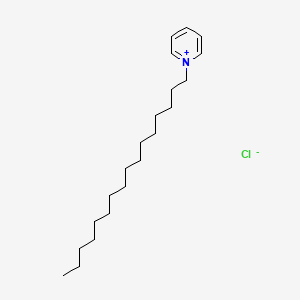
CAS 123-03-5의 검증된 화학 정보
Cetylpyridinium Chloride
Cetylpyridinium chloride is a pyridinium salt that has N-hexadecylpyridinium as the cation and chloride as the anion. It has antiseptic properties and is used in solutions or lozenges for the treatment of minor infections of the mouth and throat. It has a role as a surfactant and an antiseptic drug. It is a chloride salt and an organic chloride salt. It contains a cetylpyridinium. — ChEBI
- IUPAC 명칭
- 1-hexadecylpyridin-1-ium chloride
- 분자식
- C21H38ClN
- 분자량
- 340.0 g/mol
- 정확한 질량
- 339.2692779 Da
- 단일 동위원소 질량
- 339.2692779 Da
- 위상 극성 표면적
- 3.9 Ų
- 분자 복잡도
- 208.0
- 형식 전하
- 0
- 수소 결합 공여체
- 0
- 수소 결합 수용체
- 1
- 회전 가능 결합
- 15
- 중원자
- 23
- 공유결합 단위
- 2
PubChem에 보고된 명칭 및 동의어
보고된 명칭 16개 더 보기
외부 데이터베이스 식별자
- ChEBI:CHEBI:32915
- ChEMBL:CHEMBL34833
- EPA DTXSID:DTXSID6041761
고급 구조 통계
- 정의된 원자 입체중심
- 0
- 정의되지 않은 원자 입체중심
- 0
- 정의된 결합 입체중심
- 0
- 정의되지 않은 결합 입체중심
- 0
- 3D 형태이성질체
- 0
기계 판독 가능한 구조 식별자
- SMILES
CCCCCCCCCCCCCCCC[N+]1=CC=CC=C1.[Cl-]- InChI
InChI=1S/C21H38N.ClH/c1-2-3-4-5-6-7-8-9-10-11-12-13-14-16-19-22-20-17-15-18-21-22;/h15,17-18,20-21H,2-14,16,19H2,1H3;1H/q+1;/p-1- InChIKey
YMKDRGPMQRFJGP-UHFFFAOYSA-M
추가 과학 데이터베이스의 근거
NIH PubChem PUG-View
Attributed physical-property, hazard, environmental and use annotations.
- Color/Form: White powder 출처: Hazardous Substances Data Bank (HSDB)
- LogP: log Kow= 1.71 출처: Hazardous Substances Data Bank (HSDB)
- Melting Point: 80 °C 출처: Hazardous Substances Data Bank (HSDB)
- Physical Description: Dry Powder 출처: EPA Chemical Data Reporting (CDR)
- Physical Description: White solid; [HSDB] 출처: Haz-Map, Information on Hazardous Chemicals and Occupational Diseases
- Refractive Index: INDEX OF REFRACTION (@ 20 °C): MONOCLINIC 1.509; TRICLINIC 1.566; ORTHORHOMBIC 1.613 출처: Hazardous Substances Data Bank (HSDB)
- Solubility: Very soluble in water, chloroform 출처: Hazardous Substances Data Bank (HSDB)
- Note: This chemical does not meet GHS hazard criteria for 19.3% (36 of 187) of reports. 출처: European Chemicals Agency (ECHA)
- Signal: Danger 출처: European Chemicals Agency (ECHA)
- GHS Hazard Statements: H301 (33.7%): Toxic if swallowed [Danger Acute toxicity, oral]; H302 (46%): Harmful if swallowed [Warning Acute toxicity, oral]; H315 (80.7%): Causes skin irritation [Warning Skin corrosion/irritation]; H318 (72.7%): Causes serious eye damage [Danger Serious eye damage/eye irritation]; H330 (80.2%): Fatal if inhaled [Danger Acute toxicity, inhalation]; H335 (78.6%): May cause respiratory irritation [Warning Specific target organ toxicity, single exposure; Respiratory tract irritation]; H400 (79.7%): Very toxic to aquatic life [Warning Hazardous to the aquatic environment, acute hazard]; H410 (13.9%): Very toxic to aquatic life with long lasting effects [Warning Hazardous to the aquatic environment, long-term hazard] 출처: European Chemicals Agency (ECHA)
- Precautionary Statement Codes: P260, P261, P264, P264+P265, P270, P271, P273, P280, P284, P301+P316, P301+P317, P302+P352, P304+P340, P305+P354+P338, P316, P317, P319, P320, P321, P330, P332+P317, P362+P364, P391, P403+P233, P405, and P501 (click each P-code to see the statement) 출처: European Chemicals Agency (ECHA)
- ECHA C&L Notifications Summary: Aggregated GHS information provided per 187 reports by companies from 27 notifications to the ECHA C&L Inventory. Each notification may be associated with multiple companies.; Reported as not meeting GHS hazard criteria per 36 of 187 reports by companies.; There are 26 notifications provided by 151 of 187 reports by companies with hazard statement code(s).; Information may vary between notifications depending on impurities, additives, and other factors. The percentage value in parenthesis indicates the notified classification ratio from companies that provide hazard codes. Only hazard codes with percentage values above 10% are shown. For more detailed information, please visit ECHA C&L website. 출처: European Chemicals Agency (ECHA)
- Signal: Danger 출처: NITE-CMC
- GHS Hazard Statements: H301: Toxic if swallowed [Danger Acute toxicity, oral]; H315: Causes skin irritation [Warning Skin corrosion/irritation]; H318: Causes serious eye damage [Danger Serious eye damage/eye irritation]; H330: Fatal if inhaled [Danger Acute toxicity, inhalation]; H400: Very toxic to aquatic life [Warning Hazardous to the aquatic environment, acute hazard]; H410: Very toxic to aquatic life with long lasting effects [Warning Hazardous to the aquatic environment, long-term hazard] 출처: NITE-CMC
- Precautionary Statement Codes: P260, P264, P264+P265, P270, P271, P273, P280, P284, P301+P316, P302+P352, P304+P340, P305+P354+P338, P316, P317, P320, P321, P330, P332+P317, P362+P364, P391, P403+P233, P405, and P501 (click each P-code to see the statement) 출처: NITE-CMC
- GHS Hazard Statements: H301: Toxic if swallowed [Danger Acute toxicity, oral]; H319: Causes serious eye irritation [Warning Serious eye damage/eye irritation]; H330: Fatal if inhaled [Danger Acute toxicity, inhalation]; H335: May cause respiratory irritation [Warning Specific target organ toxicity, single exposure; Respiratory tract irritation] 출처: NITE-CMC
- Precautionary Statement Codes: P260, P261, P264, P264+P265, P270, P271, P280, P284, P301+P316, P304+P340, P305+P351+P338, P316, P319, P320, P321, P330, P337+P317, P403+P233, P405, and P501 (click each P-code to see the statement) 출처: NITE-CMC
- Environmental Bioconcentration: Whole body BCF values of 21, 22, and 13, were measured for clams, fathead minnows, and tadpoles, respectively, under flow-through conditions over a 7-day period, for a structurally-similar compound, cetylpyridinium bromide(1). An estimated BCF of 2 was calculated for cetylpyridinium chloride(SRC), using a log Kow of 1.71(2) and a regression-derived equation(3). According to a classification scheme(4), these BCF values suggest the potential for bioconcentration in aquatic organisms is low(SRC). 출처: Hazardous Substances Data Bank (HSDB)
- Environmental Fate: TERRESTRIAL FATE: Based on a classification scheme(1), an estimated Koc value of 200(SRC), determined from a log Kow of 1.71(2) and a regression-derived equation(3), indicates that cetylpyridinium chloride is expected to have moderate mobility in soil(SRC). However, quaternary ammonium compounds are known to sorb strongly and rapidly in well-mixed systems, to a wide variety of materials (such as sewage sludge, sediment, clay)(4) and the mobility of cetylpyridinium bromide in soil may be considerably less than estimated. Volatilization of cetylpyridinium chloride from moist soil surfaces is not expected as this compound is a salt(SRC). Cetylpyridinium chloride is also not expected to volatilize from dry soil surfaces(SRC) as ions do not volatilize. Cetylpyridinium chloride is expected to biodegrade rapidly in soil(SRC) based on sewage studies for structurally-similar compounds. Dodecyl and tetradecylpyridinium chloride, were biodegraded in the Spanish official test (93 and 94%, respectively) and in the OECD Confirmatory test (91 and 92%, respectively)(4). 출처: Hazardous Substances Data Bank (HSDB)
- Environmental Fate: AQUATIC FATE: Based on a classification scheme(1), an estimated Koc value of 200(SRC), determined from a log Kow of 1.71(2) and a regression-derived equation(3), indicates that cetylpyridinium chloride is not expected to adsorb to suspended solids and sediment(SRC). However, quaternary ammonium compounds are known to sorb strongly, and rapidly in well-mixed systems, to a wide variety of materials (such as sewage sludge, sediment, clay)(7); therefore, cetylpyridinium bromide should be strongly adsorbed to suspended solids and sediment in water. This compound is expected to exist in the dissociated form in the environment and therefore volatilization from water surfaces will not be an important fate process(SRC). According to a classification scheme(5), an estimated BCF of 2(SRC), from its log Kow(2) and a regression-derived equation(6), suggests the potential for bioconcentration in aquatic organisms is low(SRC). Cetylpyridinium chloride is expected to biodegrade rapidly in water(SRC) based on sewage studies for structurally-similar compounds. Dodecyl and tetradecylpyridinium chloride, were biodegraded in the Spanish official test (93 and 94%, respectively) and in the OECD Confirmat 출처: Hazardous Substances Data Bank (HSDB)
- Environmental Fate: ATMOSPHERIC FATE: Cetylpyridinium chloride will exist as the ion in the environment and, thus, will be present solely in the particulate phase in the atmosphere. Particulate-phase cetylpyridinium chloride may be removed from the air by wet and dry deposition. (SRC) 출처: Hazardous Substances Data Bank (HSDB)
- Consumer Uses: Other; Preservative 출처: EPA Chemical Data Reporting (CDR)
- Industry Uses: Preservative; Other 출처: EPA Chemical Data Reporting (CDR)
- Sources/Uses: Used as a preservative/antibacterial agent in cosmetics, pharmaceuticals, cough lozenges, mouthwashes, deodorants, and antiseptics; [HSDB] Quarternary ammonium compounds are used as algaecides/slimicides (swimming pools, industrial water reservoirs, and farm ponds), antiseptics for cleaning wounds, antistatic agents for textiles, softeners for paper products, and pigment dispersers; [IPCS-PIMs] 출처: Haz-Map, Information on Hazardous Chemicals and Occupational Diseases
- Industrial Processes with risk of exposure: Using Disinfectants or Biocides [Category: Clean] 출처: Haz-Map, Information on Hazardous Chemicals and Occupational Diseases
- Uses: For Cetylpyridinium chloride (USEPA/OPP Pesticide Code: 069160) there are 0 labels match. /SRP: Not registered for current use in the U.S., but approved pesticide uses may change periodically and so federal, state and local authorities must be consulted for currently approved uses./ 출처: Hazardous Substances Data Bank (HSDB)
- Uses: The active ingredient is no longer contained in any registered pesticide products ... "cancelled." 출처: Hazardous Substances Data Bank (HSDB)
- Uses: Pharmaceutic aid (preservative), antiseptic; disinfectant/monohydrate/ 출처: Hazardous Substances Data Bank (HSDB)
- Uses: Antiseptic; preservative(cosmetics, pharmaceuticals) 출처: Hazardous Substances Data Bank (HSDB)
- Uses: For more Uses (Complete) data for CETYLPYRIDINIUM CHLORIDE (9 total), please visit the HSDB record page. 출처: Hazardous Substances Data Bank (HSDB)
매핑 기준: Existing checksum-valid CAS to unique PubChem CID match. 가져온 시각: 2026-08-31. 출처 기록 열기
과학적 분류와 유해성 주석은 맥락을 제공할 뿐이며, 위에 표시된 시장별 규제 판단을 대체하지 않습니다.
추가 출처 적용 범위 및 일치 상태
| 출처 | 결과 | 확인됨 |
|---|---|---|
| NIH PubChem PUG-View | 정확히 일치 | 2026-08-31 |
기록된 불일치는 출처를 확인했다는 유용한 근거이며, 해당 물질이 다른 곳에 존재하지 않는다는 주장이 아닙니다.
체크섬이 유효한 CAS 일치를 통해 2026-09-02에 NIH PubChem에서 가져왔습니다. 화학적 특성은 이 페이지의 규제 판단을 대체하지 않습니다.
공식 출처 및 출처 정보
- 등록된 출처
- South Korea MFDS cosmetic ingredient data
- 출처 참조
- 화장품 안전기준 등에 관한 규정, 별표 2, record 2-56
- 출처 기록 ID
2-56- 출처 버전
- 2026-19
- 출처 언어
- Korean
- 번역 상태
- No English translation
- 시행일
- 2026-03-18
- 출처 업데이트
- 2026-03-18
- 스냅샷 확인
- 2026-08-30 04:33 UTC
- 검증 방법
- MFDS JSON appendices 1–2 parse; 1077 prohibited, 243 restricted
- SHA-256
056de35b843a5e31f709073f9e79d5e6e18f7c9164eb537bb099b185a37ef7d8
등록된 데이터세트 주석
- 데이터세트 적용 범위
- Ingredient identity and separate restriction/regulation data endpoints
- 권위 관련 주석
- Korean source is canonical; English materials alone are not complete enough for certification
이 기록이 시장 데이터세트에서 차지하는 위치
상태 분포
현재 기록 1320건 중 638건에 조건 텍스트가 있습니다. 조건 필드가 비어 있는 경우 위의 기록 유형에 따라 해석되며, 제한 없는 사용에 대한 주장으로 전환되지 않습니다.
South Korea 시장 맥락
Complete current appendix dataset
적용 범위 버전: MFDS Notice 2026-19, effective 18 March 2026
All rows in official Appendix 1 (prohibited) and Appendix 2 (restricted) of the Safety Standards for Cosmetics.
확인 체크리스트
- Match the Korean canonical substance name and identifiers.
- Review all Appendix 1 and 2 matches and conditions.
- Check functional-cosmetic and positive-list requirements where applicable.
- Confirm current MFDS notice, responsible seller and label obligations.
공식 시장 출처
- South Korea MFDS cosmetic ingredient dataKorean source is canonical; English materials alone are not complete enough for certification
확인 절차 및 기록 완전성
이 결과를 규제 준수 판단에 사용하기 전에
- “세틸피리디늄클로라이드”와(과) 모든 CAS/EC 식별자가 공급업체 규격서의 물질을 가리키는지 확인하세요.
- Match the Korean canonical substance name and identifiers.
- Review all Appendix 1 and 2 matches and conditions.
- Check functional-cosmetic and positive-list requirements where applicable.
- Confirm current MFDS notice, responsible seller and label obligations.
- 출처 버전을 기록하고, 제조, 신고 또는 시장 출시 전에 규제 기관을 다시 확인하세요.
이 기록에서 제공되는 필드
- 공식 물질 명칭제공됨
- CAS제공됨
- EC제공됨
- 별도의 조건 텍스트제공됨
- 시행일제공됨
- 스냅샷 해시 및 방법제공됨
이 페이지가 답하는 질문
안정적인 인용
세틸피리디늄클로라이드. 화장품 안전기준 등에 관한 규정, 별표 2, record 2-56. South Korea. Source version 2026-19. CosIng Checker regulatory record: https://cosingchecker.com/ko/regulations/kr/records/1914/
법적 권위로서 규제 기관을 인용하세요. 이 페이지는 구조화된 근거 색인이자 확인 보조 도구이며, 공식 본문이나 전문적인 법률 평가를 대체하지 않습니다.
South Korea의 해석 및 한계
This substance is not unrestricted: cosmetic use is subject to the conditions in the cited official record.
Check product type, body area, concentration, purity and warning requirements before deciding whether a formulation is compliant.
법적 역할 해석 방법
The cited row forms part of a binding rule or legally incorporated list for this market.
이 페이지의 근거
- 기록된 결과: Restricted
- 법적 역할: Binding rule
- 출처 버전: 2026-19
- 시행일: 2026-03-18
증명하지 않는 것
Korean source wording is canonical and other positive lists/notices may still apply to the formulation.
추가 공신력 있는 물질 조사
이 출처들 중 어느 것도 위의 시장 판단을 번복하지 않습니다.
Cosmetic Ingredient Review safety assessments
Expert Panel conclusions, assessed ingredient groups, use conditions, dates and report documents
Independent expert review considered by FDA; not a government approval or binding market rule
출처에서 이 정체 조사FDA Global Substance Registration System
UNII identifiers, preferred names, substance types, codes and public substance relationships
Identity registry only; UNII availability does not imply FDA review or approval
출처에서 이 정체 조사ILO/WHO International Chemical Safety Cards
Hazards, symptoms, first aid, storage, incompatibilities and physical properties for covered chemicals
International occupational chemical-safety reference; not cosmetic-use approval
출처에서 이 정체 조사Japan NITE-CHRIP
Chemical identity, Japanese and foreign legal lists, GHS hazards and exposure-related information
Chemical-management evidence; cosmetic status remains governed by the applicable MHLW standard and market rules
출처에서 이 정체 조사NIOSH Pocket Guide to Chemical Hazards
REL, PEL, IDLH, properties, exposure routes, symptoms, target organs, first aid and measurement methods for covered workplace chemicals
US occupational-health guidance and limits; not a cosmetic ingredient decision
출처에서 이 정체 조사OECD eChemPortal
Gateway to authority-owned physical-property, fate, ecotoxicity, toxicity, exposure and GHS records
Discovery gateway; each linked authority remains responsible for its data
출처에서 이 정체 조사US EPA CompTox CTX APIs
가져오기에 API 키 필요DTXSID identity, experimental and predicted properties, toxicity, bioactivity, exposure and environmental data
Scientific and computational evidence; predictions must remain labelled and do not determine cosmetic legality
출처에서 이 정체 조사