
코발트설페이트
Listed by the Korean MFDS as a substance that may not be used in cosmetics.
규제 판단 및 전체 조건
- 상태
- Prohibited
- 법적 역할
- Binding rule
- 규제 요약
- Listed by the Korean MFDS as a substance that may not be used in cosmetics.
- 조건 및 제한 사항
- A prohibition entry may contain no separate condition text because the regulatory outcome is the prohibition itself. 인용된 출처를 열고 아래의 시장 전체 요건을 적용하세요.
물질 정체
- 공식 출처상의 명칭
- 코발트설페이트
- CAS
- 10124-43-3
- EC
- Not supplied in this source row
- 정체 매핑
- standalone:official_korean_name
이 정체의 시장 간 요약
현재 이 사이트에 있는 정확히 연결된 기록입니다. 시장이 없는 것은 가져온 정확한 일치 항목이 없다는 뜻이며, 해당 물질의 사용이 허용된다는 뜻이 아닙니다.
European Union
연결된 기록 1건
보조 기록 열기Great Britain
연결된 기록 1건
보조 기록 열기New Zealand
연결된 기록 1건
보조 기록 열기ASEAN
연결된 기록 1건
보조 기록 열기China
연결된 기록 1건 · 특정 조건이 있는 기록 1건
보조 기록 열기South Korea
현재 기록연결된 기록 1건
보조 기록 열기Brazil
연결된 기록 1건 · 특정 조건이 있는 기록 1건
보조 기록 열기India
연결된 기록 1건 · 특정 조건이 있는 기록 1건
보조 기록 열기Saudi Arabia
연결된 기록 1건
보조 기록 열기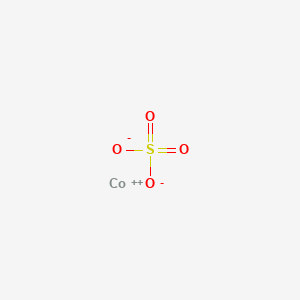
CAS 10124-43-3의 검증된 화학 정보
Cobalt Sulfate
Cobalt(2+) sulfate is a compound of cobalt and sulfate in which the ratio of cobalt (+2 oxidation state) to sulfate is 1:1. It contains a cobalt(2+). — ChEBI
- IUPAC 명칭
- cobalt(2+) sulfate
- 분자식
- CoO4S
- 분자량
- 155.00 g/mol
- 정확한 질량
- 154.884923 Da
- 단일 동위원소 질량
- 154.884923 Da
- 위상 극성 표면적
- 88.6 Ų
- 분자 복잡도
- 62.0
- 형식 전하
- 0
- 수소 결합 공여체
- 0
- 수소 결합 수용체
- 4
- 회전 가능 결합
- 0
- 중원자
- 6
- 공유결합 단위
- 2
PubChem에 보고된 명칭 및 동의어
보고된 명칭 16개 더 보기
외부 데이터베이스 식별자
- ChEBI:CHEBI:53470
- EPA DTXSID:DTXSID1031042
고급 구조 통계
- 정의된 원자 입체중심
- 0
- 정의되지 않은 원자 입체중심
- 0
- 정의된 결합 입체중심
- 0
- 정의되지 않은 결합 입체중심
- 0
- 3D 형태이성질체
- 0
기계 판독 가능한 구조 식별자
- SMILES
[O-]S(=O)(=O)[O-].[Co+2]- InChI
InChI=1S/Co.H2O4S/c;1-5(2,3)4/h;(H2,1,2,3,4)/q+2;/p-2- InChIKey
KTVIXTQDYHMGHF-UHFFFAOYSA-L
추가 과학 데이터베이스의 근거
EMBL-EBI ChEBI
cobalt(2+) sulfate
A compound of cobalt and sulfate in which the ratio of cobalt (+2 oxidation state) to sulfate is 1:1.
- 처방
- Co.O4S
- 평균 질량
- 154.996 g/mol
- 단일 동위원소 질량
- 154.88492 Da
- 형식 전하
- 0
- metal sulfate — is a (CHEBI:51336)
- cobalt(2+) — has part (CHEBI:48828)
- metal sulfate — is a (CHEBI:51336)
- 2415590 출처: PubMed
추가 선별 명칭
이 출처의 상호 참조
- CAS: 10026-24-1 — KEGG COMPOUND
- CAS: 10124-43-3 — KEGG COMPOUND
- CAS: 10124-43-3 — ChemIDplus
- CAS: 10124-43-3 — NIST Chemistry WebBook
- REGISTRY_NUMBER: 268815 — Gmelin
- REGISTRY_NUMBER: 270126 — Gmelin
- REGISTRY_NUMBER: 270959 — Gmelin
- REGISTRY_NUMBER: 8292 — Gmelin
- MANUAL_X_REF: C17383 — KEGG COMPOUND
- MANUAL_X_REF: C19215 — KEGG COMPOUND
매핑 기준: Exact CAS cross-reference in the ChEBI compound record. 출처 업데이트: 2016-02-17. 가져온 시각: 2026-08-31. 출처 기록 열기
NIH PubChem PUG-View
Attributed physical-property, hazard, environmental and use annotations.
- Color/Form: Red to lavender dimorphic, othorhombic crystals 출처: Hazardous Substances Data Bank (HSDB)
- Color/Form: Red orthorhombic crystals 출처: Hazardous Substances Data Bank (HSDB)
- Color/Form: Red powder 출처: Hazardous Substances Data Bank (HSDB)
- Color/Form: Rose-pink solid 출처: Hazardous Substances Data Bank (HSDB)
- Density: 1.948 at 68 °F (USCG, 1999) - Denser than water; will sink 출처: CAMEO Chemicals
- Density: 3.71 at 25 °C/4 °C 출처: Hazardous Substances Data Bank (HSDB)
- Density: Light red crystalline solid; loses waters of crystallization when heated above 42 °C, producing the monohydrate at 100 °C and anhydrous salt above 250 °C; density: 2.01 kg/L at 25 °C /Cobalt(II) sulfate hexahydrate/ 출처: Hazardous Substances Data Bank (HSDB)
- Density: Density: 1.948 g/cu cm; loses heptahydrate at 420 °C /Cobalt(II) sulfate heptahydrate/ 출처: Hazardous Substances Data Bank (HSDB)
- Density: 3.71 g/cm³ 출처: ILO-WHO International Chemical Safety Cards (ICSCs)
- Density: 3.71 @25 °C 출처: PAC Chemical Database, U.S. Department of Energy
- Melting Point: 735 °C 출처: Hazardous Substances Data Bank (HSDB)
- Melting Point: 735 °C 출처: PAC Chemical Database, U.S. Department of Energy
- Odor: Odorless 출처: Hazardous Substances Data Bank (HSDB)
- Physical Description: Cobalt sulfate is an odorless rose-pink solid. Sinks and mixes with water. (USCG, 1999) 출처: CAMEO Chemicals
- Physical Description: Dry Powder; Large Crystals; Large Crystals; Liquid; Dry Powder; Large Crystals 출처: EPA Chemical Data Reporting (CDR)
- Physical Description: Red to lavender solid; [Merck Index] Blue odorless powder; Soluble in water (362 g/L at 20 deg C); [MSDSonline] 출처: Haz-Map, Information on Hazardous Chemicals and Occupational Diseases
- Physical Description: LAVENDER-TO-DARK-BLUE CRYSTALS. 출처: ILO-WHO International Chemical Safety Cards (ICSCs)
- Solubility: Odorless; heat of solution: 23 BTU/lb= 13 cal/g= 0.54X10+5 J/kg; solubility: 35.040 lb/100 lb water at 70 °F /Cobaltous sulfate heptahydrate/ 출처: Hazardous Substances Data Bank (HSDB)
- Solubility: In water, 330 g/L at 20 °C 출처: Hazardous Substances Data Bank (HSDB)
- Solubility: 38.3 g/100 g water at 25 °C 출처: Hazardous Substances Data Bank (HSDB)
- Solubility: Dissolves slowly in boiling water 출처: Hazardous Substances Data Bank (HSDB)
- Solubility: 84 g/100 mL water at 100 °C 출처: Hazardous Substances Data Bank (HSDB)
- Solubility: For more Solubility (Complete) data for Cobaltous sulfate (6 total), please visit the HSDB record page. 출처: Hazardous Substances Data Bank (HSDB)
- Solubility: Solubility in water, g/100ml at 20 °C: 36.2 (good) 출처: ILO-WHO International Chemical Safety Cards (ICSCs)
- pH: Acidic salts, such as cobalt sulfate ... resulting aqueous solutions contain moderate concentrations of hydrogen ions and have pH's of less than 7.0. They react as acids to neutralize bases. 출처: Hazardous Substances Data Bank (HSDB)
- Carcinogen Classification: 2B, possibly carcinogenic to humans. (L135) 출처: Toxin and Toxin Target Database (T3DB)
- Exposure Routes: The substance can be absorbed into the body by inhalation and by ingestion. 출처: ILO-WHO International Chemical Safety Cards (ICSCs)
- Exposure Routes: Inhalation (L29) ; oral (L29) ; dermal (L29) 출처: Toxin and Toxin Target Database (T3DB)
- First Aid: INHALATION: move to fresh air; if breathing has stopped, begin artificial respiration and call a doctor.; INGESTION: give large amount of water; induce vomiting; call a doctor.; EYES: flush with water for at least 15 min.; consult a physician if irritation persists.; SKIN: flush with water. (USCG, 1999) 출처: CAMEO Chemicals
- Signal: Danger 출처: Regulation (EC) No 1272/2008 of the European Parliament and of the Council
- GHS Hazard Statements: H302: Harmful if swallowed [Warning Acute toxicity, oral]; H317: May cause an allergic skin reaction [Warning Sensitization, Skin]; H334: May cause allergy or asthma symptoms or breathing difficulties if inhaled [Danger Sensitization, respiratory]; H341: Suspected of causing genetic defects [Warning Germ cell mutagenicity]; H350i: May cause cancer by inhalation [Danger Carcinogenicity]; H360F ***: May damage fertility [Danger Reproductive toxicity]; H400: Very toxic to aquatic life [Warning Hazardous to the aquatic environment, acute hazard]; H410: Very toxic to aquatic life with long lasting effects [Warning Hazardous to the aquatic environment, long-term hazard] 출처: Regulation (EC) No 1272/2008 of the European Parliament and of the Council
- Precautionary Statement Codes: P203, P233, P260, P261, P264, P270, P271, P272, P273, P280, P284, P301+P317, P302+P352, P304+P340, P318, P321, P330, P333+P317, P342+P316, P362+P364, P391, P403, P405, and P501 (click each P-code to see the statement) 출처: Regulation (EC) No 1272/2008 of the European Parliament and of the Council
- Signal: Danger 출처: European Chemicals Agency (ECHA)
- GHS Hazard Statements: H302 (99.8%): Harmful if swallowed [Warning Acute toxicity, oral]; H317 (100%): May cause an allergic skin reaction [Warning Sensitization, Skin]; H319 (15.9%): Causes serious eye irritation [Warning Serious eye damage/eye irritation]; H334 (> 99.9%): May cause allergy or asthma symptoms or breathing difficulties if inhaled [Danger Sensitization, respiratory]; H341 (99.8%): Suspected of causing genetic defects [Warning Germ cell mutagenicity]; H350 (85.6%): May cause cancer [Danger Carcinogenicity]; H350i (14.4%): May cause cancer by inhalation [Danger Carcinogenicity]; H360 (84.1%): May damage fertility or the unborn child [Danger Reproductive toxicity]; H360F (10.5%): May damage fertility [Danger Reproductive toxicity]; H400 (99.9%): Very toxic to aquatic life [Warning Hazardous to the aquatic environment, acute hazard]; H410 (97.3%): Very toxic to aquatic life with long lasting effects [Warning Hazardous to the aquatic environment, long-term hazard] 출처: European Chemicals Agency (ECHA)
- Precautionary Statement Codes: P203, P233, P260, P261, P264, P264+P265, P270, P271, P272, P273, P280, P284, P301+P317, P302+P352, P304+P340, P305+P351+P338, P318, P321, P330, P333+P317, P337+P317, P342+P316, P362+P364, P391, P403, P405, and P501 (click each P-code to see the statement) 출처: European Chemicals Agency (ECHA)
- ECHA C&L Notifications Summary: Aggregated GHS information provided per 2654 reports by companies from 34 notifications to the ECHA C&L Inventory. Each notification may be associated with multiple companies.; Information may vary between notifications depending on impurities, additives, and other factors. The percentage value in parenthesis indicates the notified classification ratio from companies that provide hazard codes. Only hazard codes with percentage values above 10% are shown. For more detailed information, please visit ECHA C&L website. 출처: European Chemicals Agency (ECHA)
- Signal: Danger 출처: NITE-CMC
- GHS Hazard Statements: H350: May cause cancer [Danger Carcinogenicity] 출처: NITE-CMC
- Precautionary Statement Codes: P203, P280, P318, P405, and P501 (click each P-code to see the statement) 출처: NITE-CMC
- Signal: Warning 출처: NITE-CMC
- GHS Hazard Statements: H341: Suspected of causing genetic defects [Warning Germ cell mutagenicity] 출처: NITE-CMC
- Health Effects: Exposure to high amount of cobalt can cause heart, lung, kidney, and liver damage. Skin contact is known to result in contact dermatitis. Cobalt may also have mutagenic and carcinogenic effects. (L29, L30) 출처: Toxin and Toxin Target Database (T3DB)
- Toxicity Summary: IDENTIFICATION: Cobalt sulfate is a red powder. It is used in storage batteries; in cobalt-electroplating baths; as drier for lithographic inks, and varnishes; in ceramics, enamels, and glazes to prevent discoloring; in cobalt pigments for decorating porcelain. HUMAN EXPOSURE AND TOXICITY: Cardiomyopathy has been observed in individuals who consume large quantities of beer where cobalt sulfate was added as a foam stabilizer. Repeated or prolonged contact may cause skin sensitization. Repeated or prolonged inhalation exposure may cause asthma. The substance may have effects on the heart, thyroid and bone marrow, resulting in cardiomyopathy, goiter and polycythemia. ANIMAL STUDIES: Rats and mice exposed short term to cobalt sulfate by inhalation exhibited necrosis and inflammation of the respiratory tract epithelium. Rats developed thymus necrosis and testicular atrophy. Rats exposed for 2-3 months to cobalt sulfate in the diet for 24 weeks had significant reductions in heart enzyme activity levels. Rats and mice were exposed to cobalt sulfate heptahydrate by inhalation 6 hr/day, 5 days/week for 13 weeks developed adverse effects throughout the respiratory system. At higher concentra 출처: Hazardous Substances Data Bank (HSDB)
- Toxicity Summary: Cobalt is believed to exhibit its toxicity through a oxidant-based and free radical-based processes. It produces oxygen radicals and may be oxidized to ionic cobalt, causing increased lipid peroxidation, DNA damage, and inducing certain enzymes that lead to cell apoptosis. Cobalt has also been shown to block inorganic calcium channels, possibly impairing neurotransmission. Cobalt can also chelate lipoic acids, impairing oxidation of pyruvate or fatty acids. In addition, cobalt may inhibit DNA repair by interacting with zinc finger DNA repair proteins, and has also been shown to inhibit heme synthesis and glucose metabolism. Cobalt may activate specific helper T-lymphocyte cells and interact directly with immunologic proteins, such as antibodies (IgA and IgE) or Fc receptors, resulting in immunosensitization. (L29) 출처: Toxin and Toxin Target Database (T3DB)
- Environmental Bioconcentration: Food Chain Concentration Potential of Cobaltous Sulfate (heptahydrate): Bioconcentration of 200-1000 fold only under constant exposure. Not significant in spill conditions(1). 출처: Hazardous Substances Data Bank (HSDB)
- Environmental Fate: ATMOSPHERIC FATE: Inorganic cobalt compounds are nonvolatile and released into the atmosphere in particulate form(1). Particulate-phase cobalt compounds are removed from the air by wet and dry deposition(SRC). Cobalt has been detected in atmospheric deposition(2) and in rain-snow precipitation(3). 출처: Hazardous Substances Data Bank (HSDB)
- Consumer Uses: Laboratory chemicals; Processing aids not otherwise specified 출처: EPA Chemical Data Reporting (CDR)
- Industry Uses: Processing aids not otherwise specified; Plating agent; Intermediate; Pigment; Catalyst; Soil amendments (fertilizers) 출처: EPA Chemical Data Reporting (CDR)
- Sources/Uses: Used as a pigment (ceramics, glazes, and enamels), catalyst, paint and ink drier, and soil additive; Also used in electroplating, storage batteries, and veterinary medicine (prevent and treat of cobalt-deficiency in ruminants; [HSDB] 출처: Haz-Map, Information on Hazardous Chemicals and Occupational Diseases
- Industrial Processes with risk of exposure: Electroplating [Category: Plate]; Battery Manufacturing [Category: Industry]; Painting (Pigments, Binders, and Biocides) [Category: Paint] 출처: Haz-Map, Information on Hazardous Chemicals and Occupational Diseases
- Activities with risk of exposure: Ceramics making [Category: Hobbies]; Enameling [Category: Hobbies] 출처: Haz-Map, Information on Hazardous Chemicals and Occupational Diseases
- Uses: Usual source of water-soluble cobalt since it is the most economical and it shows less tendency to deliquesc or dehydrate than the chloride or nitrate. Used in storage batteries; in cobalt-electroplating baths; as drier for lithographic inks, varnishes; in ceramics, enamels, glazes to prevent discoloring; in cobalt pigments for decorating porcelain. 출처: Hazardous Substances Data Bank (HSDB)
- Uses: Additive to soils, catalyst. 출처: Hazardous Substances Data Bank (HSDB)
- Uses: ... used in feed supplements. 출처: Hazardous Substances Data Bank (HSDB)
- Uses: Added to nickel plating baths to improve smoothness, brightness, hardness, and ductility of deposits. 출처: Hazardous Substances Data Bank (HSDB)
- Uses: Cobalt(II) sulfate is used in pigments for glass and porcelain, as well as in storage batteries and electroplating baths, sympathetic inks, and as an additive to soils and animal feeds. (L36) 출처: Toxin and Toxin Target Database (T3DB)
매핑 기준: Existing checksum-valid CAS to unique PubChem CID match. 가져온 시각: 2026-08-31. 출처 기록 열기
과학적 분류와 유해성 주석은 맥락을 제공할 뿐이며, 위에 표시된 시장별 규제 판단을 대체하지 않습니다.
추가 출처 적용 범위 및 일치 상태
| 출처 | 결과 | 확인됨 |
|---|---|---|
| EMBL-EBI ChEBI | 정확히 일치 | 2026-08-31 |
| NIH PubChem PUG-View | 정확히 일치 | 2026-08-31 |
기록된 불일치는 출처를 확인했다는 유용한 근거이며, 해당 물질이 다른 곳에 존재하지 않는다는 주장이 아닙니다.
체크섬이 유효한 CAS 일치를 통해 2026-09-02에 NIH PubChem에서 가져왔습니다. 화학적 특성은 이 페이지의 규제 판단을 대체하지 않습니다.
공식 출처 및 출처 정보
- 등록된 출처
- South Korea MFDS cosmetic ingredient data
- 출처 참조
- 화장품 안전기준 등에 관한 규정, 별표 1, record 1-874
- 출처 기록 ID
1-874- 출처 버전
- 2026-19
- 출처 언어
- Korean
- 번역 상태
- No English translation
- 시행일
- 2026-03-18
- 출처 업데이트
- 2026-03-18
- 스냅샷 확인
- 2026-08-30 04:33 UTC
- 검증 방법
- MFDS JSON appendices 1–2 parse; 1077 prohibited, 243 restricted
- SHA-256
056de35b843a5e31f709073f9e79d5e6e18f7c9164eb537bb099b185a37ef7d8
등록된 데이터세트 주석
- 데이터세트 적용 범위
- Ingredient identity and separate restriction/regulation data endpoints
- 권위 관련 주석
- Korean source is canonical; English materials alone are not complete enough for certification
이 기록이 시장 데이터세트에서 차지하는 위치
상태 분포
현재 기록 1320건 중 638건에 조건 텍스트가 있습니다. 조건 필드가 비어 있는 경우 위의 기록 유형에 따라 해석되며, 제한 없는 사용에 대한 주장으로 전환되지 않습니다.
South Korea 시장 맥락
Complete current appendix dataset
적용 범위 버전: MFDS Notice 2026-19, effective 18 March 2026
All rows in official Appendix 1 (prohibited) and Appendix 2 (restricted) of the Safety Standards for Cosmetics.
확인 체크리스트
- Match the Korean canonical substance name and identifiers.
- Review all Appendix 1 and 2 matches and conditions.
- Check functional-cosmetic and positive-list requirements where applicable.
- Confirm current MFDS notice, responsible seller and label obligations.
공식 시장 출처
- South Korea MFDS cosmetic ingredient dataKorean source is canonical; English materials alone are not complete enough for certification
확인 절차 및 기록 완전성
이 결과를 규제 준수 판단에 사용하기 전에
- “코발트설페이트”와(과) 모든 CAS/EC 식별자가 공급업체 규격서의 물질을 가리키는지 확인하세요.
- Match the Korean canonical substance name and identifiers.
- Review all Appendix 1 and 2 matches and conditions.
- Check functional-cosmetic and positive-list requirements where applicable.
- Confirm current MFDS notice, responsible seller and label obligations.
- 출처 버전을 기록하고, 제조, 신고 또는 시장 출시 전에 규제 기관을 다시 확인하세요.
이 기록에서 제공되는 필드
- 공식 물질 명칭제공됨
- CAS제공됨
- EC제공되지 않음
- 별도의 조건 텍스트출처 행에 없음
- 시행일제공됨
- 스냅샷 해시 및 방법제공됨
이 페이지가 답하는 질문
안정적인 인용
코발트설페이트. 화장품 안전기준 등에 관한 규정, 별표 1, record 1-874. South Korea. Source version 2026-19. CosIng Checker regulatory record: https://cosingchecker.com/ko/regulations/kr/records/1528/
법적 권위로서 규제 기관을 인용하세요. 이 페이지는 구조화된 근거 색인이자 확인 보조 도구이며, 공식 본문이나 전문적인 법률 평가를 대체하지 않습니다.
South Korea의 해석 및 한계
This official record identifies the substance as prohibited for cosmetic use in the stated market scope.
Do not rely on a formulation containing this identity until the cited source, effective date and exact substance match have been verified.
법적 역할 해석 방법
The cited row forms part of a binding rule or legally incorporated list for this market.
이 페이지의 근거
- 기록된 결과: Prohibited
- 법적 역할: Binding rule
- 출처 버전: 2026-19
- 시행일: 2026-03-18
증명하지 않는 것
Korean source wording is canonical and other positive lists/notices may still apply to the formulation.
추가 공신력 있는 물질 조사
이 출처들 중 어느 것도 위의 시장 판단을 번복하지 않습니다.
Cosmetic Ingredient Review safety assessments
Expert Panel conclusions, assessed ingredient groups, use conditions, dates and report documents
Independent expert review considered by FDA; not a government approval or binding market rule
출처에서 이 정체 조사FDA Global Substance Registration System
UNII identifiers, preferred names, substance types, codes and public substance relationships
Identity registry only; UNII availability does not imply FDA review or approval
출처에서 이 정체 조사ILO/WHO International Chemical Safety Cards
Hazards, symptoms, first aid, storage, incompatibilities and physical properties for covered chemicals
International occupational chemical-safety reference; not cosmetic-use approval
출처에서 이 정체 조사Japan NITE-CHRIP
Chemical identity, Japanese and foreign legal lists, GHS hazards and exposure-related information
Chemical-management evidence; cosmetic status remains governed by the applicable MHLW standard and market rules
출처에서 이 정체 조사NIOSH Pocket Guide to Chemical Hazards
REL, PEL, IDLH, properties, exposure routes, symptoms, target organs, first aid and measurement methods for covered workplace chemicals
US occupational-health guidance and limits; not a cosmetic ingredient decision
출처에서 이 정체 조사OECD eChemPortal
Gateway to authority-owned physical-property, fate, ecotoxicity, toxicity, exposure and GHS records
Discovery gateway; each linked authority remains responsible for its data
출처에서 이 정체 조사US EPA CompTox CTX APIs
가져오기에 API 키 필요DTXSID identity, experimental and predicted properties, toxicity, bioactivity, exposure and environmental data
Scientific and computational evidence; predictions must remain labelled and do not determine cosmetic legality
출처에서 이 정체 조사