
m-fenilenodiamina e seus sais
ANVISA lists this substance among materials that may not be used in personal-hygiene products, cosmetics or perfumes in Brazil.
규제 판단 및 전체 조건
- 상태
- Prohibited
- 법적 역할
- Binding rule
- 규제 요약
- ANVISA lists this substance among materials that may not be used in personal-hygiene products, cosmetics or perfumes in Brazil.
- 조건 및 제한 사항
m-fenilenodiamina e seus sais
물질 정체
- 공식 출처상의 명칭
- m-fenilenodiamina e seus sais
- CAS
- 108-45-2
- EC
- 203-584-7
- 정체 매핑
- cas_number
- 연결된 원료
- M-PHENYLENEDIAMINE
연결된 CosIng 정체 데이터
명칭 및 별칭
CosIng 설명: Benzene-1,3-diamine
EU 목록 제한 사항 주석: II/1204
기록된 화장품 기능: HAIR DYEING
기능 페이지:HAIR DYEING
전체 원료 프로필 보기이 정체의 시장 간 요약
현재 이 사이트에 있는 정확히 연결된 기록입니다. 시장이 없는 것은 가져온 정확한 일치 항목이 없다는 뜻이며, 해당 물질의 사용이 허용된다는 뜻이 아닙니다.
European Union
연결된 기록 1건
보조 기록 열기Great Britain
연결된 기록 1건
보조 기록 열기New Zealand
연결된 기록 1건
보조 기록 열기ASEAN
연결된 기록 1건
보조 기록 열기China
연결된 기록 1건 · 특정 조건이 있는 기록 1건
보조 기록 열기South Korea
연결된 기록 1건
보조 기록 열기Brazil
현재 기록연결된 기록 1건 · 특정 조건이 있는 기록 1건
보조 기록 열기India
연결된 기록 1건 · 특정 조건이 있는 기록 1건
보조 기록 열기Saudi Arabia
연결된 기록 1건
보조 기록 열기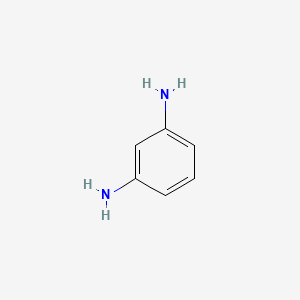
CAS 108-45-2의 검증된 화학 정보
M-Phenylenediamine
1,3-phenylenediamine is a phenylenediamine taht is benzene substituted at positions 1 and 3 with amino functions. — ChEBI
- IUPAC 명칭
- benzene-1,3-diamine
- 분자식
- C6H8N2
- 분자량
- 108.14 g/mol
- 정확한 질량
- 108.068748264 Da
- 단일 동위원소 질량
- 108.068748264 Da
- XLogP3
- -0.3
- 위상 극성 표면적
- 52.0 Ų
- 분자 복잡도
- 64.0
- 형식 전하
- 0
- 수소 결합 공여체
- 2
- 수소 결합 수용체
- 2
- 회전 가능 결합
- 0
- 중원자
- 8
- 공유결합 단위
- 1
PubChem에 보고된 명칭 및 동의어
보고된 명칭 16개 더 보기
외부 데이터베이스 식별자
- ChEBI:CHEBI:8092
- ChEMBL:CHEMBL1595914
- EPA DTXSID:DTXSID4021137
- PubMed:22699336
- PubMed:22653005
- PubMed:22592989
- PubMed:22592985
- PubMed:22567565
- PubMed:22534882
- PubMed:22519120
- PubMed:22435290
- PubMed:22373845
- PubMed:22326702
- PubMed:22187186
- PubMed:22173422
고급 구조 통계
- 정의된 원자 입체중심
- 0
- 정의되지 않은 원자 입체중심
- 0
- 정의된 결합 입체중심
- 0
- 정의되지 않은 결합 입체중심
- 0
- 3D 파마코포어 특성
- 5
- 3D 고리
- 1
- 3D 소수성 부위
- 0
- 3D 수용체 특성
- 0
- 3D 공여체 특성
- 2
- 3D 음이온 중심
- 0
- 3D 양이온 중심
- 2
- 3D 형태이성질체
- 1
- 유효 3D 회전자
- 0.0
기계 판독 가능한 구조 식별자
- SMILES
C1=CC(=CC(=C1)N)N- InChI
InChI=1S/C6H8N2/c7-5-2-1-3-6(8)4-5/h1-4H,7-8H2- InChIKey
WZCQRUWWHSTZEM-UHFFFAOYSA-N
추가 과학 데이터베이스의 근거
NIH PubChem PUG-View
Attributed physical-property, hazard, environmental and use annotations.
- Autoignition Temperature: 1040 °F (NTP, 1992) 출처: CAMEO Chemicals
- Autoignition Temperature: 560 °C 출처: ILO-WHO International Chemical Safety Cards (ICSCs)
- Boiling Point: 540 to 543 °F at 760 mmHg (NTP, 1992) 출처: CAMEO Chemicals
- Boiling Point: 284-287 °C 출처: Hazardous Substances Data Bank (HSDB)
- Boiling Point: 284-287 °C 출처: ILO-WHO International Chemical Safety Cards (ICSCs)
- Boiling Point: 540-543 °F 출처: Occupational Safety and Health Administration (OSHA)
- Boiling Point: 287 °C @760 [mm Hg] 출처: PAC Chemical Database, U.S. Department of Energy
- Color/Form: WHITE CRYSTALS BECOMING RED ON EXPOSURE TO AIR 출처: Hazardous Substances Data Bank (HSDB)
- Color/Form: Colorless needles 출처: Hazardous Substances Data Bank (HSDB)
- Color/Form: RHOMBIC CRYSTALS FROM ALCOHOL 출처: Hazardous Substances Data Bank (HSDB)
- Color/Form: COLORLESS RHOMBIC NEEDLES 출처: Hazardous Substances Data Bank (HSDB)
- Color/Form: Dark oxidation products /are/ present in compound exposed to moist air. 출처: Hazardous Substances Data Bank (HSDB)
- Density: 1.0696 at 136 °F (NTP, 1992) - Denser than water; will sink 출처: CAMEO Chemicals
- Density: 1.0096 g/cu cm at 58 °C 출처: Hazardous Substances Data Bank (HSDB)
- Density: Density = 1.139 출처: Hazardous Substances Data Bank (HSDB)
- Density: 1.14 g/cm³ 출처: ILO-WHO International Chemical Safety Cards (ICSCs)
- Density: 1.0696 at 136 °F 출처: Occupational Safety and Health Administration (OSHA)
- Density: 1.139 @25 °C 출처: PAC Chemical Database, U.S. Department of Energy
- Dissociation Constants: pKa = 4.98 at 25 °C (conjugate acid) 출처: Hazardous Substances Data Bank (HSDB)
- Dissociation Constants: pKa1 = 2.65; pKa2 = 4.88 at 25 °C 출처: Hazardous Substances Data Bank (HSDB)
- Flash Point: 280 °F (NTP, 1992) 출처: CAMEO Chemicals
- Flash Point: 187 °C c.c. 출처: ILO-WHO International Chemical Safety Cards (ICSCs)
- Flash Point: 280 °F 출처: Occupational Safety and Health Administration (OSHA)
- LogP: log Kow = -0.33 출처: Hazardous Substances Data Bank (HSDB)
- LogP: -0.33 출처: ILO-WHO International Chemical Safety Cards (ICSCs)
- Melting Point: 145 to 147 °F (NTP, 1992) 출처: CAMEO Chemicals
- Melting Point: 145-147 °F 출처: Haz-Map, Information on Hazardous Chemicals and Occupational Diseases
- Melting Point: 62-63 °C 출처: Hazardous Substances Data Bank (HSDB)
- Melting Point: 62-63 °C 출처: ILO-WHO International Chemical Safety Cards (ICSCs)
- Melting Point: 145-147 °F 출처: Occupational Safety and Health Administration (OSHA)
- Melting Point: 65 °C 출처: PAC Chemical Database, U.S. Department of Energy
- Physical Description: 1,3-phenylenediamine appears as colorless or white colored needles that turn red or purple in air. Melting point 64-66 C. Density 1.14 g / cm3. Flash point 280 F. May irritate skin and eyes. Toxic by skin absorption, inhalation or ingestion. Used in aramid fiber manufacture, as a polymer additive, dye manufacturing, as a laboratory reagent, and in photography. 출처: CAMEO Chemicals
- Physical Description: Dry Powder; Other Solid; Large Crystals; CBI; Liquid; Liquid; Other Solid 출처: EPA Chemical Data Reporting (CDR)
- Physical Description: White crystals that change to red on exposure to light and air; [CHEMINFO] 출처: Haz-Map, Information on Hazardous Chemicals and Occupational Diseases
- Physical Description: WHITE CRYSTALS. TURNS RED ON EXPOSURE TO AIR. 출처: ILO-WHO International Chemical Safety Cards (ICSCs)
- Physical Description: Colorless or white colored needles that turn red or purple in air. 출처: Occupational Safety and Health Administration (OSHA)
- Refractive Index: INDEX OF REFRACTION: 1.6339 AT 58 °C/D 출처: Hazardous Substances Data Bank (HSDB)
- Solubility: less than 1 mg/mL at 66 °F (NTP, 1992) 출처: CAMEO Chemicals
- Solubility: SOL IN WATER, METHANOL, ETHANOL, CHLOROFORM, ACETONE, DIMETHYLFORMAMIDE, METHYL ETHYL KETONE, DIOXANE; SLIGHTLY SOL IN ETHER, CARBON TETRACHLORIDE, ISOPROPANOL, DIBUTYL PHTHALATE. VERY SLIGHTLY SOL IN BENZENE, TOLUENE, XYLENE, BUTANOL. 출처: Hazardous Substances Data Bank (HSDB)
- Solubility: In water, 2.38X10+5 mg/l at 20 deg 출처: Hazardous Substances Data Bank (HSDB)
- Solubility: Solubility in water: soluble 출처: ILO-WHO International Chemical Safety Cards (ICSCs)
- Vapor Pressure: 1 mmHg at 211.6 °F ; 0.0018 mmHg at 77 °F (NTP, 1992) 출처: CAMEO Chemicals
- Vapor Pressure: 0.0018 [mmHg] 출처: Haz-Map, Information on Hazardous Chemicals and Occupational Diseases
- Vapor Pressure: 1 MM HG @ 99.8 °C 출처: Hazardous Substances Data Bank (HSDB)
- Vapor Pressure: Vapor pressure, Pa at 99.8 °C: 133 출처: ILO-WHO International Chemical Safety Cards (ICSCs)
- Vapor Pressure: 1 mmHg at 211.6 °F, 0.0018 mmHg at 77 °F 출처: Occupational Safety and Health Administration (OSHA)
- Vapor Pressure: 1 [mm Hg] @99.8 °C 출처: PAC Chemical Database, U.S. Department of Energy
- IARC Carcinogenic Agent: meta-Phenylenediamine 출처: International Agency for Research on Cancer (IARC)
- IARC Carcinogenic Classes: Group 3: Not classifiable as to its carcinogenicity to humans 출처: International Agency for Research on Cancer (IARC)
- IARC Monographs: Volume 16: (1978) Some Aromatic Amines and Related Nitro Compounds – Hair Dyes, Colouring Agents and Miscellaneous Industrial Chemicals; Volume Sup 7: Overall Evaluations of Carcinogenicity: An Updating of IARC Monographs Volumes 1 to 42, 1987; 440 pages; ISBN 92-832-1411-0 (out of print) 출처: International Agency for Research on Cancer (IARC)
- Publication Year: 1987 출처: International Agency for Research on Cancer (IARC)
- Evaluation Year: 1987 출처: International Agency for Research on Cancer (IARC)
- Exposure Routes: The substance can be absorbed into the body by inhalation of its vapour, through the skin and by ingestion. 출처: ILO-WHO International Chemical Safety Cards (ICSCs)
- First Aid: EYES: First check the victim for contact lenses and remove if present. Flush victim's eyes with water or normal saline solution for 20 to 30 minutes while simultaneously calling a hospital or poison control center. Do not put any ointments, oils, or medication in the victim's eyes without specific instructions from a physician. IMMEDIATELY transport the victim after flushing eyes to a hospital even if no symptoms (such as redness or irritation) develop.; SKIN: IMMEDIATELY flood affected skin with water while removing and isolating all contaminated clothing. Gently wash all affected skin areas thoroughly with soap and water. If symptoms such as redness or irritation develop, IMMEDIATELY call a physician and be prepared to transport the victim to a hospital for treatment.; INHALATION: IMMEDIATELY leave the contaminated area; take deep breaths of fresh air. If symptoms (such as wheezing, coughing, shortness of breath, or burning in the mouth, throat, or chest) develop, call a physician and be prepared to transport the victim to a hospital. Provide proper respiratory protection to rescuers entering an unknown atmosphere. Whenever possible, Self-Contained Breathing Apparatus (SCBA) shou 출처: CAMEO Chemicals
- Signal: Danger 출처: Regulation (EC) No 1272/2008 of the European Parliament and of the Council
- GHS Hazard Statements: H301: Toxic if swallowed [Danger Acute toxicity, oral]; H311: Toxic in contact with skin [Danger Acute toxicity, dermal]; H317: May cause an allergic skin reaction [Warning Sensitization, Skin]; H319: Causes serious eye irritation [Warning Serious eye damage/eye irritation]; H331: Toxic if inhaled [Danger Acute toxicity, inhalation]; H341: Suspected of causing genetic defects [Warning Germ cell mutagenicity]; H400: Very toxic to aquatic life [Warning Hazardous to the aquatic environment, acute hazard]; H410: Very toxic to aquatic life with long lasting effects [Warning Hazardous to the aquatic environment, long-term hazard] 출처: Regulation (EC) No 1272/2008 of the European Parliament and of the Council
- Precautionary Statement Codes: P203, P261, P262, P264, P264+P265, P270, P271, P272, P273, P280, P301+P316, P302+P352, P304+P340, P305+P351+P338, P316, P318, P321, P330, P333+P317, P337+P317, P361+P364, P362+P364, P391, P403+P233, P405, and P501 (click each P-code to see the statement) 출처: Regulation (EC) No 1272/2008 of the European Parliament and of the Council
- Signal: Danger 출처: European Chemicals Agency (ECHA)
- GHS Hazard Statements: H301+H311+H331 (23.9%): Toxic if swallowed, in contact with skin or if inhaled [Danger Acute toxicity, oral; acute toxicity, dermal; acute toxicity, inhalation]; H301 (100%): Toxic if swallowed [Danger Acute toxicity, oral]; H311 (100%): Toxic in contact with skin [Danger Acute toxicity, dermal]; H317 (100%): May cause an allergic skin reaction [Warning Sensitization, Skin]; H319 (100%): Causes serious eye irritation [Warning Serious eye damage/eye irritation]; H331 (100%): Toxic if inhaled [Danger Acute toxicity, inhalation]; H341 (99.7%): Suspected of causing genetic defects [Warning Germ cell mutagenicity]; H400 (96.2%): Very toxic to aquatic life [Warning Hazardous to the aquatic environment, acute hazard]; H410 (100%): Very toxic to aquatic life with long lasting effects [Warning Hazardous to the aquatic environment, long-term hazard] 출처: European Chemicals Agency (ECHA)
- Precautionary Statement Codes: P203, P261, P262, P264, P264+P265, P270, P271, P272, P273, P280, P301+P316, P302+P352, P304+P340, P305+P351+P338, P316, P318, P321, P330, P333+P317, P337+P317, P361+P364, P362+P364, P391, P403+P233, P405, and P501 (click each P-code to see the statement) 출처: European Chemicals Agency (ECHA)
- ECHA C&L Notifications Summary: Aggregated GHS information provided per 343 reports by companies from 16 notifications to the ECHA C&L Inventory. Each notification may be associated with multiple companies.; Information may vary between notifications depending on impurities, additives, and other factors. The percentage value in parenthesis indicates the notified classification ratio from companies that provide hazard codes. Only hazard codes with percentage values above 10% are shown. For more detailed information, please visit ECHA C&L website. 출처: European Chemicals Agency (ECHA)
- Signal: Danger 출처: NITE-CMC
- GHS Hazard Statements: H301: Toxic if swallowed [Danger Acute toxicity, oral]; H312: Harmful in contact with skin [Warning Acute toxicity, dermal]; H317: May cause an allergic skin reaction [Warning Sensitization, Skin]; H320: Causes eye irritation [Warning Serious eye damage/eye irritation]; H370: Causes damage to organs [Danger Specific target organ toxicity, single exposure]; H372: Causes damage to organs through prolonged or repeated exposure [Danger Specific target organ toxicity, repeated exposure]; H373: May causes damage to organs through prolonged or repeated exposure [Warning Specific target organ toxicity, repeated exposure]; H401: Toxic to aquatic life [Hazardous to the aquatic environment, acute hazard]; H410: Very toxic to aquatic life with long lasting effects [Warning Hazardous to the aquatic environment, long-term hazard] 출처: NITE-CMC
- Precautionary Statement Codes: P260, P261, P264, P264+P265, P270, P272, P273, P280, P301+P316, P302+P352, P305+P351+P338, P308+P316, P317, P319, P321, P330, P333+P317, P337+P317, P362+P364, P391, P405, and P501 (click each P-code to see the statement) 출처: NITE-CMC
- GHS Hazard Statements: H301: Toxic if swallowed [Danger Acute toxicity, oral]; H312: Harmful in contact with skin [Warning Acute toxicity, dermal]; H317: May cause an allergic skin reaction [Warning Sensitization, Skin]; H319: Causes serious eye irritation [Warning Serious eye damage/eye irritation]; H341: Suspected of causing genetic defects [Warning Germ cell mutagenicity]; H361: Suspected of damaging fertility or the unborn child [Warning Reproductive toxicity]; H370: Causes damage to organs [Danger Specific target organ toxicity, single exposure]; H372: Causes damage to organs through prolonged or repeated exposure [Danger Specific target organ toxicity, repeated exposure]; H373: May causes damage to organs through prolonged or repeated exposure [Warning Specific target organ toxicity, repeated exposure] 출처: NITE-CMC
- Precautionary Statement Codes: P203, P260, P261, P264, P264+P265, P270, P272, P280, P301+P316, P302+P352, P305+P351+P338, P308+P316, P317, P318, P319, P321, P330, P333+P317, P337+P317, P362+P364, P405, and P501 (click each P-code to see the statement) 출처: NITE-CMC
- Target Organs: Hepatic 출처: EPA Integrated Risk Information System (IRIS)
- Cosmetic Ingredient Review Conclusion: On the basis of the animal and clinical data included in this report, the CIR Expert Panel concludes that m-Phenylenediamine and m-Phenylenediamine Sulfate are safe for use in hair dyes at concentrations of up to 10%. 출처: Cosmetic Ingredient Review (CIR)
- Cosmetic Ingredient Review Finding(s): Safe for use in cosmetics, with qualifications 출처: Cosmetic Ingredient Review (CIR)
- Environmental Bioconcentration: An estimated BCF value of 0.33 was calculated for 1,3-benzenediamine(SRC), using an estimated log Kow of -0.33(1) and a recommended regression-derived equation(2). BCF values of 1.3 to 4.6 and <1.6 to 24 were measured for 1,3-benzenediamine in carp at 2 and 0.2 mg/l, respectively(3). According to a classification scheme(4), these BCF values suggest that bioconcentration in aquatic organisms is low(SRC). 출처: Hazardous Substances Data Bank (HSDB)
- Environmental Fate: TERRESTRIAL FATE: Based on a recommended classification scheme(1), an estimated Koc value of 16(SRC), determined from a measured log Kow of -0.33(2) and a recommended regression-derived equation(3), indicates that 1,3-benzenediamine is expected to have very high mobility in soil(SRC). However, anilines are expected to bind strongly to humus or organic matter in soils due to the high reactivity of the aromatic amino group(4,5); therefore, mobility may be much lower in some soils(SRC). Volatilization of 1,3-benzenediamine is not expected to be important from moist soil surfaces(SRC) given an estimated Henry's Law constant of 1.3X10⁻⁹ atm-cu m/mole(SRC), from its extrapolated vapor pressure, 2.1X10⁻³ mm Hg(6), and measured water solubility, 2.4X10+5 mg/l(7). 1,3-Benzenediamine is not expected to volatilize from dry soil surfaces based on its extrapolated vapor pressure(6). Limited biodegradation data indicate 1,3-benzenediamine may be resistant to biodegradation in soil; soil microflora did not cleave the benzene ring of 1,3-benzenediamine in 64 days(8). 출처: Hazardous Substances Data Bank (HSDB)
- Environmental Fate: AQUATIC FATE: Based on a recommended classification scheme(1), an estimated Koc value of 16(SRC), determined from a measured log Kow of -0.33(2) and a recommended regression-derived equation(3), indicates that 1,3-benzenediamine is not expected to adsorb to suspended solids and sediment in water(SRC). However, aromatic amines are recognized as having a strong affinity to organic carbon, suggesting that this compound may bind strongly to suspended organic material in water(4,5). 1,3-Benzenediamine is not expected to volatilize from water surfaces(3,SRC) based on an estimated Henry's Law constant of 1.3X10⁻⁹ atm-cu m/mole(SRC), derived from its extrapolated vapor pressure, 2.1X10⁻³ mm Hg(6), and measured water solubility, 2.4X10+5 mg/l(7). 1,3-Benzenediamine may exist partially in the ionized form at environmental pH's based on pKa values of 2.65 and 4.88 at 25 °C(8). Volatilization of the ionized form is not expected to be an important fate process(SRC). According to a classification scheme(9), BCF values of 1.3 to 4.6 and <1.6 to 24 measured for 1,3-benzenediamine in carp at 2 and 0.2 mg/l, respectively(10), suggest that bioconcentration in aquatic organisms is low(SRC). 1,3-Benzen 출처: Hazardous Substances Data Bank (HSDB)
- Environmental Fate: ATMOSPHERIC FATE: According to a model of gas/particle partitioning of semivolatile organic compounds in the atmosphere(1), 1,3-benzenediamine, which has an extrapolated vapor pressure of 2.1X10⁻³ mm Hg at 25 °C(2), is expected to exist solely as a vapor in the ambient atmosphere. Vapor-phase 1,3-benzenediamine is degraded in the atmosphere by reaction with photochemically-produced hydroxyl radicals(SRC); the half-life for this reaction in air is estimated to be about 1.9 hours(3,SRC). 1,3-Benzenediamine absorbs light in the environmental spectrum(4), which suggests a potential for direct photolysis in the environment(SRC). 출처: Hazardous Substances Data Bank (HSDB)
- Consumer Uses: Adhesion/cohesion promoter; Not Known or Reasonably Ascertainable 출처: EPA Chemical Data Reporting (CDR)
- Industry Uses: Adhesion/cohesion promoter; Intermediate; Surface modifier; Dye; Flame retardant; Not Known or Reasonably Ascertainable; Other 출처: EPA Chemical Data Reporting (CDR)
- Cosmetic Ingredient Review Link: CIR ingredient: m-Phenylenediamine 출처: Cosmetic Ingredient Review (CIR)
- Sources/Uses: Used to make diisocyanates for the production of polyurethane foams and other resins and polymers; Also used as a corrosion inhibitor, curing agent, photographic developer, and intermediate for other chemical products; [CHEMINFO] Used to make dyes, to develop dyes, to dye hair, and to cure epoxy resins; [ACGIH] 출처: Haz-Map, Information on Hazardous Chemicals and Occupational Diseases
- Industrial Processes with risk of exposure: Plastic Composites Manufacturing [Category: Industry]; Photographic Processing [Category: Other]; Dressing Hair [Category: Other] 출처: Haz-Map, Information on Hazardous Chemicals and Occupational Diseases
- Uses: MFR DYES; RUBBER CURING AGENTS; ION EXCHANGE RESINS, DECOLORIZING RESINS, FORMALDEHYDE CONDENSATES; RESINOUS POLYAMIDES, BLOCK POLYMERS, TEXTILE FIBERS, URETHANES, PETROLEUM ADDITIVES, RUBBER CHEMICALS; IN CORROSION INHIBITORS; IN PHOTOGRAPHY; AS REAGENT FOR GOLD & BROMINE 출처: Hazardous Substances Data Bank (HSDB)
- Uses: Dyestuff manufacture, detection of nitrite, textile developing agent, laboratory reagent, vulcanizing agent. 출처: Hazardous Substances Data Bank (HSDB)
- Uses: IT IS ... EMPLOYED AS CURING AGENT TO HARDEN EPOXY RESINS USED IN CASTING & PLASTIC TOOLING, LAMINATING APPLICATIONS & IN ADHESIVES. IT IS ADDED TO ISOPHTHALOYL CHLORIDE TO PRODUCE POLY-META-PHENYLENE ISOPHTHALAMIDE RESIN, A POLYAMIDE FIBER (NOMEX) USED IN HIGH-TEMP APPLICATIONS, EG PROTECTIVE CLOTHING ... 출처: Hazardous Substances Data Bank (HSDB)
- Uses: ... CAN BE USED FOR PRODN OF OVER 140 DYES, 37 OF WHICH ARE BELIEVED TO HAVE COMMERCIAL ... SIGNIFICANCE. ... THESE DYES ARE USED TO COLOR VARIOUS TEXTILE FIBERS & OTHER MATERIALS, EG, LEATHER, PAPER, POLISHES, SPIRIT INKS ... ALSO USED AS DIRECT DYE DEVELOPER TO OBTAIN BLACK, BLUE & BROWN SHADES ... AND IT IS INCL IN HAIR-DYE FORMULATIONS TO PRODUCE BROWN, GOLDEN-BLOND, BLUE & GRAY SHADES ON THE HAIR. 출처: Hazardous Substances Data Bank (HSDB)
- Uses: For more Uses (Complete) data for 1,3-BENZENEDIAMINE (11 total), please visit the HSDB record page. 출처: Hazardous Substances Data Bank (HSDB)
매핑 기준: Existing checksum-valid CAS to unique PubChem CID match. 가져온 시각: 2026-08-31. 출처 기록 열기
과학적 분류와 유해성 주석은 맥락을 제공할 뿐이며, 위에 표시된 시장별 규제 판단을 대체하지 않습니다.
추가 출처 적용 범위 및 일치 상태
| 출처 | 결과 | 확인됨 |
|---|---|---|
| NIH PubChem PUG-View | 정확히 일치 | 2026-08-31 |
기록된 불일치는 출처를 확인했다는 유용한 근거이며, 해당 물질이 다른 곳에 존재하지 않는다는 주장이 아닙니다.
체크섬이 유효한 CAS 일치를 통해 2026-08-31에 NIH PubChem에서 가져왔습니다. 화학적 특성은 이 페이지의 규제 판단을 대체하지 않습니다.
공식 출처 및 출처 정보
- 등록된 출처
- Brazil ANVISA consolidated prohibited substances — RDC 529/2021 through RDC 1.030/2026
- 출처 참조
- RDC 529/2021 consolidated annex, entry 1204 (through RDC 1.030/2026)
- 출처 기록 ID
annex:1204- 출처 버전
- RDC 529/2021 consolidated through RDC 1.030/2026
- 출처 언어
- Portuguese with official English identity where published
- 번역 상태
- Official English translation · 영문 번역
- 시행일
- 2026-06-15
- 출처 업데이트
- 2026-06-15
- 스냅샷 확인
- 2026-08-31 15:26 UTC
- 검증 방법
- pdfplumber government baseline + 4 RDC 1.030 exclusions + 15 additions; 1,387 substantive rows
- SHA-256
a212e85540a186a842664fbdd4f351af0b1b4baeeb0c4765b9b52c6ce91c1e84
등록된 데이터세트 주석
- 데이터세트 적용 범위
- All 1,387 substantive current prohibited rows after applying RDC 1.030/2026 additions, amendments and exclusions to RDC 529/2021
- 권위 관련 주석
- Binding consolidated prohibited list for personal-hygiene products, cosmetics and perfumes
이 기록이 시장 데이터세트에서 차지하는 위치
상태 분포
현재 기록 1387건 중 1387건에 조건 텍스트가 있습니다. 조건 필드가 비어 있는 경우 위의 기록 유형에 따라 해석되며, 제한 없는 사용에 대한 주장으로 전환되지 않습니다.
Brazil 시장 맥락
Complete prohibited dataset plus current restricted-list workflow
적용 범위 버전: ANVISA RDC 1.029/2026 and RDC 1.030/2026, published 15 June 2026
All 1,387 substantive current prohibited rows in RDC 529/2021 consolidated through RDC 1.030/2026, plus the current RDC 1.029 restricted-list and identity workflow.
확인 체크리스트
- Resolve Portuguese, INCI and CAS identity with the ANVISA crosswalk.
- Check the consolidated prohibited list including RDC 1.030/2026 changes.
- Apply RDC 1.029/2026 restrictions and the still-effective complementary rules.
- Verify Mercosur incorporation, regularisation, labelling and transition periods.
공식 시장 출처
- Brazil ANVISA INCI translation panelIdentity and labelling crosswalk only; regulatory lists must be sourced separately
- Brazil ANVISA restricted substances — RDC 1.029/2026Binding ANVISA resolution effective on publication; replaced RDC 530/2021 for this list part
- Brazil ANVISA consolidated prohibited substances — RDC 529/2021 through RDC 1.030/2026Binding consolidated prohibited list for personal-hygiene products, cosmetics and perfumes
확인 절차 및 기록 완전성
이 결과를 규제 준수 판단에 사용하기 전에
- “m-fenilenodiamina e seus sais”와(과) 모든 CAS/EC 식별자가 공급업체 규격서의 물질을 가리키는지 확인하세요.
- Resolve Portuguese, INCI and CAS identity with the ANVISA crosswalk.
- Check the consolidated prohibited list including RDC 1.030/2026 changes.
- Apply RDC 1.029/2026 restrictions and the still-effective complementary rules.
- Verify Mercosur incorporation, regularisation, labelling and transition periods.
- 출처 버전을 기록하고, 제조, 신고 또는 시장 출시 전에 규제 기관을 다시 확인하세요.
이 기록에서 제공되는 필드
- 공식 물질 명칭제공됨
- CAS제공됨
- EC제공됨
- 별도의 조건 텍스트제공됨
- 시행일제공됨
- 스냅샷 해시 및 방법제공됨
이 페이지가 답하는 질문
안정적인 인용
m-fenilenodiamina e seus sais. RDC 529/2021 consolidated annex, entry 1204 (through RDC 1.030/2026). Brazil. Source version RDC 529/2021 consolidated through RDC 1.030/2026. CosIng Checker regulatory record: https://cosingchecker.com/ko/regulations/br/records/14401/
법적 권위로서 규제 기관을 인용하세요. 이 페이지는 구조화된 근거 색인이자 확인 보조 도구이며, 공식 본문이나 전문적인 법률 평가를 대체하지 않습니다.
Brazil의 해석 및 한계
This official record identifies the substance as prohibited for cosmetic use in the stated market scope.
Do not rely on a formulation containing this identity until the cited source, effective date and exact substance match have been verified.
법적 역할 해석 방법
The cited row forms part of a binding rule or legally incorporated list for this market.
이 페이지의 근거
- 기록된 결과: Prohibited
- 법적 역할: Binding rule
- 출처 버전: RDC 529/2021 consolidated through RDC 1.030/2026
- 시행일: 2026-06-15
증명하지 않는 것
RDC 1.030/2026 amends rather than replaces the prohibited baseline, and the second restricted-list revision was still under consultation in July 2026.
추가 공신력 있는 물질 조사
이 출처들 중 어느 것도 위의 시장 판단을 번복하지 않습니다.
Cosmetic Ingredient Review safety assessments
Expert Panel conclusions, assessed ingredient groups, use conditions, dates and report documents
Independent expert review considered by FDA; not a government approval or binding market rule
출처에서 이 정체 조사FDA Global Substance Registration System
UNII identifiers, preferred names, substance types, codes and public substance relationships
Identity registry only; UNII availability does not imply FDA review or approval
출처에서 이 정체 조사ILO/WHO International Chemical Safety Cards
Hazards, symptoms, first aid, storage, incompatibilities and physical properties for covered chemicals
International occupational chemical-safety reference; not cosmetic-use approval
출처에서 이 정체 조사Japan NITE-CHRIP
Chemical identity, Japanese and foreign legal lists, GHS hazards and exposure-related information
Chemical-management evidence; cosmetic status remains governed by the applicable MHLW standard and market rules
출처에서 이 정체 조사NIOSH Pocket Guide to Chemical Hazards
REL, PEL, IDLH, properties, exposure routes, symptoms, target organs, first aid and measurement methods for covered workplace chemicals
US occupational-health guidance and limits; not a cosmetic ingredient decision
출처에서 이 정체 조사OECD eChemPortal
Gateway to authority-owned physical-property, fate, ecotoxicity, toxicity, exposure and GHS records
Discovery gateway; each linked authority remains responsible for its data
출처에서 이 정체 조사US EPA CompTox CTX APIs
가져오기에 API 키 필요DTXSID identity, experimental and predicted properties, toxicity, bioactivity, exposure and environmental data
Scientific and computational evidence; predictions must remain labelled and do not determine cosmetic legality
출처에서 이 정체 조사