
CARBOXYLESTERASE
Carboxylesterase is the enzyme that catalyzes the hydrolysis of carboxylic acids.
CARBOXYLESTERASE은(는) EU CosIng 목록에 등재되어 있지만, 이 페이지에는 아직 직접 연결된 부속서 기록이 없습니다.
시장별 규제 근거
여기에서 추적하는 시장 13곳 중 어느 곳에도 이 원료의 규칙이 가져와지지 않았습니다.
이는 이 목록에 관한 설명이지 법에 관한 설명이 아닙니다. 가져온 규칙이 없다는 것이 원료가 허용된다는 근거는 아닙니다. 규칙은 다른 명칭이나 식별자로, 또는 아직 이곳에 가져오지 않은 데이터세트에 존재할 수 있습니다.
CARBOXYLESTERASE의 목록 세부 정보
INCI 명칭
CARBOXYLESTERASE
설명
Carboxylesterase is the enzyme that catalyzes the hydrolysis of carboxylic acids.
CARBOXYLESTERASE의 부속서 기록
주요 데이터
화학적 정체 및 특성
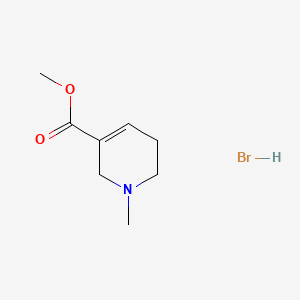
Arecoline Hydrobromide
Arecoline is found in nuts. Arecoline is isolated from betel nuts Arecoline is an alkaloid natural product found in the areca nut, the fruit of the areca palm (Areca catechu). It is an oily liquid that is soluble in water, alcohols, and ether. Owing to its muscarinic and nicotinic agonist properties, arecoline has shown improvement in the learning ability of healthy volunteers. Since one of the hallmarks of Alzheimer's disease is a cognitive decline, arecoline was suggested as a treatment to slow down this process and arecoline administered via i.v. route did indeed show modest verbal and spatial memory improvement in Alzheimer's patients, though due to arecoline's possible carcinogenic properties, it is not the first drug of choice for this degenerative disease. Arecoline has been shown to exhibit apoptotic, excitant and steroidogenic functions (A7876, A7878, A7879). Arecoline belongs to the family of Alkaloids and Derivatives. These are naturally occurring chemical compounds that contain mostly basic nitrogen atoms. This group also includes some related compounds with neutral and even weakly acidic properties. Also some synthetic compounds of similar structure are attributed to alkaloids. In addition to carbon, hydrogen and nitrogen, alkaloids may also contain oxygen, sulfur and more rarely other elements such as chlorine, bromine, and phosphorus. — Toxin and Toxin Target Database (T3DB)
- IUPAC 명칭
- methyl 1-methyl-3,6-dihydro-2H-pyridine-5-carboxylate;hydrobromide
- 분자식
- C8H14BrNO2
- 분자량
- 236.11 g/mol
- 정확한 질량
- 235.02079 Da
- 위상 극성 표면적
- 29.5 Ų
- 수소 결합 공여체
- 1
- 수소 결합 수용체
- 3
- 공유결합 단위
- 2
- 정의된 입체중심
- 0
다른 이름
보고된 명칭 16개 더 보기
외부 데이터베이스 식별자
- ChEBI:CHEBI:233150
- ChEMBL:CHEMBL449209
- EPA DTXSID:DTXSID9075379
- PubMed:30910432
- PubMed:17997002
체크섬이 유효한 CAS 일치를 통해 2026-08-31에 NIH PubChem에서 가져왔습니다. 화학적 특성은 이 페이지의 규제 판단을 대체하지 않습니다.
공식 EU 원료 명칭 근거
이 원료 명칭은 공식 2025 EU 일반 원료 명칭 용어집과 정확히 일치합니다.
관련 목록 근거
CAS 또는 EC 정체를 공유하는 기록
처방 기능이 겹치는 원료
추가 공식 및 과학 출처
이 정체를 확인할 외부 데이터베이스 11개
각 링크는 해당 출처에서 이 정체를 검색합니다. 각 출처의 성격과 법적 비중
CosIng 목록에서 CARBOXYLESTERASE이(가) 나타나는 방식
CosIng 목록은 CARBOXYLESTERASE을(를) 화장품 원료로 나열하며, 이 페이지는 이를 부속서 기록 0건과 연결합니다. 목록 항목은 명칭과 식별자를 담고 있으며, 부속서 기록은 해당 물질이 EU 화장품 법령에서 사용금지, 사용제한 또는 허용 목록(포지티브 리스트)에 있는 위치를 보여 줍니다.
CARBOXYLESTERASE은(는) 공식 데이터에서 화장품 기능 1개로도 태그되어 있습니다. 기능 표시는 의도된 용도를 설명하지만, 처방 또는 표시 작업 전에 연결된 부속서 기록에 대한 규제 검토를 대체하지 않습니다.