
MIBK
4-Methylpentan-2-one
MIBK은(는) 이 페이지에서 EU 부속서 기록 1건과 연결되어 있습니다.
시장별 규제 근거
이 매트릭스는 검증된 원료 규칙과 매핑은 되었지만 아직 가져오지 않은 출처를 구분합니다. 가져온 규칙이 없다는 것이 해당 원료가 허용된다는 의미는 아닙니다.
모든 열을 보려면 가로로 스와이프하거나 스크롤하세요.
| 시장 | 근거 상태 | 기록 | 출처 언어 |
|---|---|---|---|
| European Union | 근거 연결됨 Prohibited entry found 이 근거 열기 | 1 | English and EU languages |
| Great Britain | 근거 연결됨 Prohibited 이 근거 열기 | 1 | English |
| Canada | 출처 매핑됨 Official source mapped; ingredient rule not imported | 0 | English and French |
| New Zealand | 근거 연결됨 Prohibited 이 근거 열기 | 1 | English |
| ASEAN | 출처 매핑됨 Official source mapped; ingredient rule not imported | 0 | English and national languages |
| China | 출처 매핑됨 Official source mapped; ingredient rule not imported | 0 | Chinese with selected English material |
| Japan | 출처 매핑됨 Official source mapped; ingredient rule not imported | 0 | Japanese; official English translation available |
| South Korea | 출처 매핑됨 Official source mapped; ingredient rule not imported | 0 | Korean with some English names |
| United States | 출처 매핑됨 Official source mapped; ingredient rule not imported | 0 | English |
| Australia | 출처 매핑됨 Official source mapped; ingredient rule not imported | 0 | English |
| Brazil | 출처 매핑됨 Official source mapped; ingredient rule not imported | 0 | Portuguese with INCI crosswalks |
| India | 출처 매핑됨 Official source mapped; ingredient rule not imported | 0 | English and Hindi |
| Saudi Arabia | 근거 연결됨 Prohibited 이 근거 열기 | 1 | Arabic and English |
MIBK의 목록 세부 정보
INCI 명칭
MIBK
INN 명칭
methyl isobutyl ketone
설명
4-Methylpentan-2-one
MIBK의 부속서 기록
4-methylpentan-2-one; isobutyl methyl ketone (MIBK)
주요 데이터
- DENATURANT
Rendering cosmetics unpalatable. Mostly added to cosmetics containing ethyl alcohol to make it unsuitable for ingestion.
- PERFUMING
Used for perfume and aromatic raw materials.
- SOLVENT
Dissolving other components of cosmetics. Solvents are usually liquids (aqueous and nonaqueous).
화학적 정체 및 특성
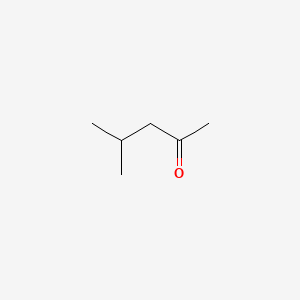
- IUPAC 명칭
- 4-methylpentan-2-one
- 분자식
- C6H12O
- 분자량
- 100.16 g/mol
- 정확한 질량
- 100.088815002 Da
- XLogP3
- 1.3
- 위상 극성 표면적
- 17.1 Ų
- 수소 결합 공여체
- 0
- 수소 결합 수용체
- 1
- 공유결합 단위
- 1
- 정의된 입체중심
- 0
다른 이름
보고된 명칭 16개 더 보기
외부 데이터베이스 식별자
- ChEBI:CHEBI:82344
- ChEMBL:CHEMBL285323
- EPA DTXSID:DTXSID5021889
- PubMed:25797582
- PubMed:23065996
- PubMed:22993718
- PubMed:22827098
- PubMed:22684032
- PubMed:22654610
- PubMed:22654606
- PubMed:22586250
- PubMed:22573008
- PubMed:22486673
- PubMed:22482743
- PubMed:22468653
추가 과학 데이터베이스의 근거
NIH PubChem PUG-View
Attributed physical-property, hazard, environmental and use annotations.
- Autoignition Temperature: 854 °F (USCG, 1999) 출처: CAMEO Chemicals
- Autoignition Temperature: 840 °F (448 °C) 출처: Hazardous Substances Data Bank (HSDB)
- Autoignition Temperature: 460 °C 출처: ILO-WHO International Chemical Safety Cards (ICSCs)
- Boiling Point: 243 to 244 °F at 760 mmHg (NTP, 1992) 출처: CAMEO Chemicals
- Boiling Point: 115.7 °C 출처: Hazardous Substances Data Bank (HSDB)
- Boiling Point: 116.50 °C. @ 760.00 mm Hg 출처: Human Metabolome Database (HMDB)
- Boiling Point: 117-118 °C 출처: ILO-WHO International Chemical Safety Cards (ICSCs)
- Boiling Point: 117 °C 출처: Joint FAO/WHO Expert Committee on Food Additives (JECFA)
- Boiling Point: 242 °F 출처: Occupational Safety and Health Administration (OSHA)
- Boiling Point: 116.5 °C @760 [mm Hg] 출처: PAC Chemical Database, U.S. Department of Energy
- Boiling Point: 242 °F 출처: The National Institute for Occupational Safety and Health (NIOSH)
- Color/Form: Liquid 출처: Hazardous Substances Data Bank (HSDB)
- Color/Form: Colorless liquid 출처: Hazardous Substances Data Bank (HSDB)
- Density: 0.802 at 68 °F (USCG, 1999) - Less dense than water; will float 출처: CAMEO Chemicals
- Density: 0.7965 g/cu cm at 25 °C 출처: Hazardous Substances Data Bank (HSDB)
- Density: Density: 0.8042 at 20 °C/20 °C 출처: Hazardous Substances Data Bank (HSDB)
- Density: Bulk density: 6.68 lb/gal at 20 °C 출처: Hazardous Substances Data Bank (HSDB)
- Density: Relative density (water = 1): 0.80 출처: ILO-WHO International Chemical Safety Cards (ICSCs)
- Density: 0.796-0.799 출처: Joint FAO/WHO Expert Committee on Food Additives (JECFA)
- Density: 0.8 출처: Occupational Safety and Health Administration (OSHA)
- Density: 0.7965 @25 °C 출처: PAC Chemical Database, U.S. Department of Energy
- Density: 0.80 출처: The National Institute for Occupational Safety and Health (NIOSH)
- Flash Point: 73 °F (NTP, 1992) 출처: CAMEO Chemicals
- Flash Point: 23 °C 출처: Haz-Map, Information on Hazardous Chemicals and Occupational Diseases
- Flash Point: 64 °F (18 °C) (Closed cup) 출처: Hazardous Substances Data Bank (HSDB)
- Flash Point: 14 °C c.c. 출처: ILO-WHO International Chemical Safety Cards (ICSCs)
- Flash Point: 73 °F 출처: Occupational Safety and Health Administration (OSHA)
- Flash Point: 64 °F 출처: The National Institute for Occupational Safety and Health (NIOSH)
- LogP: log Kow = 1.31 출처: Hazardous Substances Data Bank (HSDB)
- LogP: 1.31 출처: Human Metabolome Database (HMDB)
- LogP: 1.38 출처: ILO-WHO International Chemical Safety Cards (ICSCs)
- Melting Point: -120.5 °F (NTP, 1992) 출처: CAMEO Chemicals
- Melting Point: -85 °C 출처: Hazardous Substances Data Bank (HSDB)
- Melting Point: -84 °C 출처: Human Metabolome Database (HMDB)
- Melting Point: -84.7 °C 출처: ILO-WHO International Chemical Safety Cards (ICSCs)
- Melting Point: -120.5 °F 출처: Occupational Safety and Health Administration (OSHA)
- Melting Point: -84 °C 출처: PAC Chemical Database, U.S. Department of Energy
- Melting Point: -120 °F 출처: The National Institute for Occupational Safety and Health (NIOSH)
- Odor: Pleasant odor 출처: Hazardous Substances Data Bank (HSDB)
- Odor: Faint, ketonic and camphor odor 출처: Hazardous Substances Data Bank (HSDB)
- Odor: Fruity, ethereal odor 출처: Hazardous Substances Data Bank (HSDB)
- Physical Description: Methyl isobutyl ketone appears as a clear colorless liquid with a pleasant odor. Flash point 73 °F. Less dense than water. Vapors heavier than air. 출처: CAMEO Chemicals
- Physical Description: CBI; Liquid 출처: EPA Chemical Data Reporting (CDR)
- Physical Description: Colorless liquid with a pleasant odor; [NIOSH] 출처: Haz-Map, Information on Hazardous Chemicals and Occupational Diseases
- Physical Description: Liquid 출처: Human Metabolome Database (HMDB)
- Physical Description: COLOURLESS LIQUID WITH CHARACTERISTIC ODOUR. 출처: ILO-WHO International Chemical Safety Cards (ICSCs)
- Physical Description: colourless, mobile liquid with a fruity, ethereal odour 출처: Joint FAO/WHO Expert Committee on Food Additives (JECFA)
- Physical Description: Colorless liquid with a pleasant odor. 출처: Occupational Safety and Health Administration (OSHA)
- Physical Description: Colorless liquid with a pleasant odor. 출처: The National Institute for Occupational Safety and Health (NIOSH)
- Refractive Index: Index of refraction: 1.3962 at 20 °C/D 출처: Hazardous Substances Data Bank (HSDB)
- Refractive Index: 1.391-1.396 출처: Joint FAO/WHO Expert Committee on Food Additives (JECFA)
- Solubility: 1 to 5 mg/mL at 70 °F (NTP, 1992) 출처: CAMEO Chemicals
- Solubility: Water/air, blood/air, oil (olive oil)/air, oil/water, and oil/blood partition (or solubility) coefficients of methyl isobutyl ketone were measured by vial-equilibration in combination with gas chromatography. Partition coefficients for methyl isobutyl ketone: water/air: 79; blood/air: 90; oil/air: 926. The blood/air partition coefficients for ketones are almost in the same range as the water/air, irrespective of the oil/air partition coefficients. 출처: Hazardous Substances Data Bank (HSDB)
- Solubility: In water, 19,000 mg/L at 25 °C 출처: Hazardous Substances Data Bank (HSDB)
- Solubility: Slightly soluble in water 출처: Hazardous Substances Data Bank (HSDB)
- Solubility: Miscible with ethanol, ether, acetone, benzene; soluble in chloroform 출처: Hazardous Substances Data Bank (HSDB)
- Solubility: Miscible with most organic solvents 출처: Hazardous Substances Data Bank (HSDB)
- Solubility: 19 mg/mL at 25 °C 출처: Human Metabolome Database (HMDB)
- Solubility: Solubility in water, g/100ml at 20 °C: 1.91 출처: ILO-WHO International Chemical Safety Cards (ICSCs)
- Solubility: miscible with alcohol, ether, and to 1 ml in 50 ml of water 출처: Joint FAO/WHO Expert Committee on Food Additives (JECFA)
- Solubility: (in ethanol) 출처: Joint FAO/WHO Expert Committee on Food Additives (JECFA)
- Solubility: 2% 출처: The National Institute for Occupational Safety and Health (NIOSH)
- Vapor Pressure: 5 mmHg at 67.5 °F ; 10 mmHg at 86.0 °F (NTP, 1992) 출처: CAMEO Chemicals
- Vapor Pressure: 19.9 [mmHg] 출처: Haz-Map, Information on Hazardous Chemicals and Occupational Diseases
- Vapor Pressure: 19.9 mm Hg at 25 °C 출처: Hazardous Substances Data Bank (HSDB)
- Vapor Pressure: Vapor pressure, kPa at 20 °C: 2.1 출처: ILO-WHO International Chemical Safety Cards (ICSCs)
- Vapor Pressure: 16 mmHg 출처: Occupational Safety and Health Administration (OSHA)
- Vapor Pressure: 7.5 [mm Hg] @9 °C 출처: PAC Chemical Database, U.S. Department of Energy
- Vapor Pressure: 16 mmHg 출처: The National Institute for Occupational Safety and Health (NIOSH)
- IARC Carcinogenic Agent: Methyl isobutyl ketone 출처: International Agency for Research on Cancer (IARC)
- IARC Carcinogenic Classes: Group 2B: Possibly carcinogenic to humans 출처: International Agency for Research on Cancer (IARC)
- IARC Monographs: Volume 101: (2012) Some Chemicals Present in Industrial and Consumer Products, Food and Drinking-water 출처: International Agency for Research on Cancer (IARC)
- Publication Year: 2013 출처: International Agency for Research on Cancer (IARC)
- Evaluation Year: 2011 출처: International Agency for Research on Cancer (IARC)
- Substance: Methyl isobutyl ketone 출처: NTP Technical Reports
- NTP Technical Report: TR-538: Toxicology and Carcinogenesis Studies of Methyl Isobutyl Ketone (CASRN 108-10-1) in F344/N Rats and B6C3F1 Mice (Inhalation Studies) (2007 ) 출처: NTP Technical Reports
- Peer Review Date: 09/27/05 출처: NTP Technical Reports
- Conclusion for Male Rat: Some Evidence 출처: NTP Technical Reports
- Conclusion for Female Rat: Equivocal Evidence 출처: NTP Technical Reports
- Conclusion for Male Mice: Some Evidence 출처: NTP Technical Reports
- Conclusion for Female Mice: Some Evidence 출처: NTP Technical Reports
- Exposure Routes: The substance can be absorbed into the body by inhalation of its vapour and by ingestion. 출처: ILO-WHO International Chemical Safety Cards (ICSCs)
- Exposure Routes: inhalation, ingestion, skin and/or eye contact 출처: The National Institute for Occupational Safety and Health (NIOSH)
- First Aid: EYES: First check the victim for contact lenses and remove if present. Flush victim's eyes with water or normal saline solution for 20 to 30 minutes while simultaneously calling a hospital or poison control center. Do not put any ointments, oils, or medication in the victim's eyes without specific instructions from a physician. IMMEDIATELY transport the victim after flushing eyes to a hospital even if no symptoms (such as redness or irritation) develop.; SKIN: IMMEDIATELY flood affected skin with water while removing and isolating all contaminated clothing. Gently wash all affected skin areas thoroughly with soap and water. If symptoms such as redness or irritation develop, IMMEDIATELY call a physician and be prepared to transport the victim to a hospital for treatment.; INHALATION: IMMEDIATELY leave the contaminated area; take deep breaths of fresh air. If symptoms (such as wheezing, coughing, shortness of breath, or burning in the mouth, throat, or chest) develop, call a physician and be prepared to transport the victim to a hospital. Provide proper respiratory protection to rescuers entering an unknown atmosphere. Whenever possible, Self-Contained Breathing Apparatus (SCBA) shou 출처: CAMEO Chemicals
- ERG2024, Guide 127 (Methyl isobutyl ketone): General First Aid:; · Call 911 or emergency medical service.; · Ensure that medical personnel are aware of the material(s) involved, take precautions to protect themselves and avoid contamination.; · Move victim to fresh air if it can be done safely.; · Administer oxygen if breathing is difficult.; · If victim is not breathing:; -- DO NOT perform mouth-to-mouth resuscitation; the victim may have ingested or inhaled the substance.; -- If equipped and pulse detected, wash face and mouth, then give artificial respiration using a proper respiratory medical device (bag-valve mask, pocket mask equipped with a one-way valve or other device).; -- If no pulse detected or no respiratory medical device available, provide continuous compressions. Conduct a pulse check every two minutes or monitor for any signs of spontaneous respirations.; · Remove and isolate contaminated clothing and shoes.; · For minor skin contact, avoid spreading material on unaffected skin.; · In case of contact with substance, remove immediately by flushing skin or eyes with running water for at least 20 minutes.; · For severe burns, immediate medical attention is required.; · Effects of exposure (inhalation, ingestion, 출처: Emergency Response Guidebook (ERG)
- First Aid: (General first aid procedures); Eye: Irrigate immediately - If this chemical contacts the eyes, immediately wash (irrigate) the eyes with large amounts of water, occasionally lifting the lower and upper lids. Get medical attention immediately.; Skin: Water flush promptly - If this chemical contacts the skin, flush the contaminated skin with water promptly. If this chemical penetrates the clothing, immediately remove the clothing and flush the skin with water promptly. If irritation persists after washing, get medical attention.; Breathing: Respiratory support; Swallow: Medical attention immediately - If this chemical has been swallowed, get medical attention immediately. 출처: The National Institute for Occupational Safety and Health (NIOSH)
- Signal: Danger 출처: Regulation (EC) No 1272/2008 of the European Parliament and of the Council
- GHS Hazard Statements: H225: Highly Flammable liquid and vapor [Danger Flammable liquids]; H319: Causes serious eye irritation [Warning Serious eye damage/eye irritation]; H332: Harmful if inhaled [Warning Acute toxicity, inhalation]; H336: May cause drowsiness or dizziness [Warning Specific target organ toxicity, single exposure; Narcotic effects]; H351: Suspected of causing cancer [Warning Carcinogenicity] 출처: Regulation (EC) No 1272/2008 of the European Parliament and of the Council
- Precautionary Statement Codes: P203, P210, P233, P240, P241, P242, P243, P261, P264+P265, P271, P280, P303+P361+P353, P304+P340, P305+P351+P338, P317, P318, P319, P337+P317, P370+P378, P403+P233, P403+P235, P405, and P501 (click each P-code to see the statement) 출처: Regulation (EC) No 1272/2008 of the European Parliament and of the Council
- Note: This chemical does not meet GHS hazard criteria for < 0.1% (2 of 4455) of reports. 출처: European Chemicals Agency (ECHA)
- Signal: Danger 출처: European Chemicals Agency (ECHA)
- GHS Hazard Statements: H225 (> 99.9%): Highly Flammable liquid and vapor [Danger Flammable liquids]; H319 (> 99.9%): Causes serious eye irritation [Warning Serious eye damage/eye irritation]; H332 (97.1%): Harmful if inhaled [Warning Acute toxicity, inhalation]; H335 (93.7%): May cause respiratory irritation [Warning Specific target organ toxicity, single exposure; Respiratory tract irritation]; H336 (11.5%): May cause drowsiness or dizziness [Warning Specific target organ toxicity, single exposure; Narcotic effects]; H351 (11.8%): Suspected of causing cancer [Warning Carcinogenicity] 출처: European Chemicals Agency (ECHA)
- Precautionary Statement Codes: P203, P210, P233, P240, P241, P242, P243, P261, P264+P265, P271, P280, P303+P361+P353, P304+P340, P305+P351+P338, P317, P318, P319, P337+P317, P370+P378, P403+P233, P403+P235, P405, and P501 (click each P-code to see the statement) 출처: European Chemicals Agency (ECHA)
- ECHA C&L Notifications Summary: Aggregated GHS information provided per 4455 reports by companies from 80 notifications to the ECHA C&L Inventory. Each notification may be associated with multiple companies.; Reported as not meeting GHS hazard criteria per 2 of 4455 reports by companies.; There are 79 notifications provided by 4453 of 4455 reports by companies with hazard statement code(s).; Information may vary between notifications depending on impurities, additives, and other factors. The percentage value in parenthesis indicates the notified classification ratio from companies that provide hazard codes. Only hazard codes with percentage values above 10% are shown. For more detailed information, please visit ECHA C&L website. 출처: European Chemicals Agency (ECHA)
- Signal: Danger 출처: NITE-CMC
- GHS Hazard Statements: H350: May cause cancer [Danger Carcinogenicity] 출처: NITE-CMC
- Precautionary Statement Codes: P203, P280, P318, P405, and P501 (click each P-code to see the statement) 출처: NITE-CMC
- GHS Hazard Statements: H225: Highly Flammable liquid and vapor [Danger Flammable liquids]; H320: Causes eye irritation [Warning Serious eye damage/eye irritation]; H331: Toxic if inhaled [Danger Acute toxicity, inhalation]; H335: May cause respiratory irritation [Warning Specific target organ toxicity, single exposure; Respiratory tract irritation]; H336: May cause drowsiness or dizziness [Warning Specific target organ toxicity, single exposure; Narcotic effects]; H351: Suspected of causing cancer [Warning Carcinogenicity]; H372: Causes damage to organs through prolonged or repeated exposure [Danger Specific target organ toxicity, repeated exposure] 출처: NITE-CMC
- NFPA Health Rating: 1 - Materials that, under emergency conditions, can cause significant irritation. 출처: Hazardous Substances Data Bank (HSDB)
- NFPA Fire Rating: 3 - Liquids and solids that can be ignited under almost all ambient temperature conditions. Materials produce hazardous atmospheres with air under almost all ambient temperatures or, though unaffected by ambient temperatures, are readily ignited under almost all conditions. 출처: Hazardous Substances Data Bank (HSDB)
- NFPA Instability Rating: 0 - Materials that in themselves are normally stable, even under fire conditions. 출처: Hazardous Substances Data Bank (HSDB)
- Target Organs: Developmental; Musculoskeletal 출처: EPA Integrated Risk Information System (IRIS)
- Target Organs: Eyes, skin, respiratory system, central nervous system, liver, kidneys 출처: The National Institute for Occupational Safety and Health (NIOSH)
- Cosmetic Ingredient Review Conclusion: Based on the available animal and clinical data in this report, the CIR Expert Panel concludes that MIBK is safe as used in nail polish removers and as an alcohol denaturant in cosmetic products. 출처: Cosmetic Ingredient Review (CIR)
- Cosmetic Ingredient Review Finding(s): Safe for use in cosmetics, with qualifications 출처: Cosmetic Ingredient Review (CIR)
- Toxicity Summary: IDENTIFICATION AND USE: Methyl isobutyl ketone (MIBK) is a colorless liquid. It is used as a solvent for gums, resins, nitrocellulose, paints, varnishes, and lacquers. It is also used as denaturant for rubbing alcohol, in the manufacture of methyl amyl alcohol, and in dry-cleaning preparations. It is also widely used in rubber chemicals for the production of tyres. HUMAN STUDIES: Symptoms and signs of poisoning include: irritation of the eyes, skin, and respiratory tract, as well as CNS depression. Gastrointestinal pain and hepatic toxicity may occur with exposure to high concentrations. In workers exposed to up to 2050 mg MIBK/cu m (500 ppm) for 20-30 min per day and to 328 mg/cu m (80 ppm) for much of the remainder of the working day, over half of the 19 workers complained of weakness, loss of appetite, headache, eye irritation, stomach ache, nausea, vomiting, and sore throat. A few of the workers experienced insomnia, somnolence, heartburn, intestinal pain, and some unsteadiness. Four workers had slightly enlarged livers and six had a nonspecific colitis. Prolonged or repeated skin contact may cause drying and flaking of the skin. Accidental aspiration of liquid MIBK can cause c 출처: Hazardous Substances Data Bank (HSDB)
- Environmental Bioconcentration: An estimated BCF of 3 was calculated in fish for methyl isobutyl ketone(SRC), using a log Kow of 1.31(1) and a regression-derived equation(2). According to a classification scheme(3), this BCF suggests the potential for bioconcentration in aquatic organisms is low(SRC). 출처: Hazardous Substances Data Bank (HSDB)
- Environmental Fate: TERRESTRIAL FATE: Based on a classification scheme(1), an estimated Koc value of 70(SRC), determined from a log Kow of 1.31(2) and a regression-derived equation(3), indicates that methyl isobutyl ketone is expected to have high mobility in soil(SRC). Volatilization of methyl isobutyl ketone from moist soil surfaces is expected to be an important fate process(SRC) given an estimated Henry's Law constant of 1.4X10⁻⁴ atm-cu m/mole(SRC) derived from its vapor pressure, 19.9 mm Hg(4), and water solubility, 19,000 mg/L(5). Methyl isobutyl ketone is expected to volatilize from dry soil surfaces(SRC) based upon its vapor pressure(4). An 84% of theoretical BOD using activated sludge in the Japanese MITI test(6) suggests that biodegradation is an important environmental fate process in soil(SRC). 출처: Hazardous Substances Data Bank (HSDB)
- Environmental Fate: AQUATIC FATE: Based on a classification scheme(1), an estimated Koc value of 70(SRC), determined from a log Kow of 1.31(2) and a regression-derived equation(3), indicates that methyl isobutyl ketone is not expected to adsorb to suspended solids and sediment(SRC). Volatilization from water surfaces is expected(3) based upon an estimated Henry's Law constant of 1.4X10⁻⁴ atm-cu m/mole(SRC), derived from its vapor pressure, 19.9 mm Hg(4), and water solubility, 19,000 mg/L(5). Using this Henry's Law constant and an estimation method(3), volatilization half-lives for a model river and model lake are 9 hours and 6 days, respectively(SRC). According to a classification scheme(6), an estimated BCF of 3(SRC), from its log Kow(2) and a regression-derived equation(7), suggests the potential for bioconcentration in aquatic organisms is low(SRC). An 84% of theoretical BOD using activated sludge in the Japanese MITI test(8) suggests that biodegradation is an important environmental fate process in water(SRC). 출처: Hazardous Substances Data Bank (HSDB)
- Environmental Fate: ATMOSPHERIC FATE: According to a model of gas/particle partitioning of semivolatile organic compounds in the atmosphere(1), methyl isobutyl ketone, which has a vapor pressure of 19.9 mm Hg at 25 °C(2), is expected to exist solely as a vapor in the ambient atmosphere. Vapor-phase methyl isobutyl ketone is degraded in the atmosphere by reaction with photochemically-produced hydroxyl radicals(SRC); the half-life for this reaction in air is estimated to be 30(SRC), calculated from its rate constant of 1.3X10⁻¹¹ cu cm/molecule-sec at 25 °C(3). Methyl isobutyl ketone absorbs UV at wavelengths >290 nm(3) and, therefore, may be susceptible to direct photolysis by sunlight(SRC). 출처: Hazardous Substances Data Bank (HSDB)
- Consumer Uses: Sealant (barrier); Not Known or Reasonably Ascertainable; Diluent; Solvent; Other 출처: EPA Chemical Data Reporting (CDR)
- Industry Uses: Sealant (barrier); Not Known or Reasonably Ascertainable; Intermediate; Surface modifier; Solvent; Other; Fuel 출처: EPA Chemical Data Reporting (CDR)
- Cosmetic Ingredient Review Link: CIR ingredient: MIBK 출처: Cosmetic Ingredient Review (CIR)
- Uses: Methyl isobutyl ketone is used as a solvent for gums, resins, paints, varnishes, lacquers, and nitrocellulose, as an alcohol denaturant, in the extraction of rare metals, and as a synthetic flavoring adjuvant. 출처: EPA Hazardous Air Pollutants
- Sources/Uses: Used as a solvent in the paint, synthetic resin, adhesive, aircraft, and pharmaceutical manufacturing industries; [ACGIH] 출처: Haz-Map, Information on Hazardous Chemicals and Occupational Diseases
- Industrial Processes with risk of exposure: Textiles (Fiber & Fabric Manufacturing) [Category: Industry]; Painting (Solvents) [Category: Paint]; Working with Glues and Adhesives [Category: Other]; Plastic Composites Manufacturing [Category: Industry] 출처: Haz-Map, Information on Hazardous Chemicals and Occupational Diseases
- Uses: Solvent for gums, resins, nitrocellulose, paints, varnishes, and lacquers. Denaturant for rubbing alcohol. In manufacture of methyl amyl alcohol. In dry-cleaning preparations. 출처: Hazardous Substances Data Bank (HSDB)
- Uses: ... Extraction processes including extraction of uranium from fission products; organic synthesis ... . 출처: Hazardous Substances Data Bank (HSDB)
- Uses: ... Denaturant and solvent in cosmetic products. 출처: Hazardous Substances Data Bank (HSDB)
- Uses: The major application of 4-methyl-2-pentanone is as a solvent for vinyl, epoxy, and acrylic resins, for natural resins, and for nitrocellulose. A further use is as a solvent for dyes in the printing industry. 4-Methyl-2-pentanone is also a versatile extracting agent, e.g., for the production of antibiotics, or the removal of paraffins from mineral oil for the production of lubricating oils. 출처: Hazardous Substances Data Bank (HSDB)
- Uses: For more Uses (Complete) data for Methyl isobutyl ketone (9 total), please visit the HSDB record page. 출처: Hazardous Substances Data Bank (HSDB)
매핑 기준: Existing checksum-valid CAS to unique PubChem CID match. 가져온 시각: 2026-08-31. 출처 기록 열기
과학적 분류와 유해성 주석은 맥락을 제공할 뿐이며, 위에 표시된 시장별 규제 판단을 대체하지 않습니다.
추가 출처 적용 범위 및 일치 상태
| 출처 | 결과 | 확인됨 |
|---|---|---|
| NIH PubChem PUG-View | 정확히 일치 | 2026-08-31 |
기록된 불일치는 출처를 확인했다는 유용한 근거이며, 해당 물질이 다른 곳에 존재하지 않는다는 주장이 아닙니다.
체크섬이 유효한 CAS 일치를 통해 2026-09-02에 NIH PubChem에서 가져왔습니다. 화학적 특성은 이 페이지의 규제 판단을 대체하지 않습니다.
공식 EU 원료 명칭 근거
이 원료 명칭은 공식 2025 EU 일반 원료 명칭 용어집과 정확히 일치합니다.
관련 목록 근거
처방 기능이 겹치는 원료
추가 공식 및 과학 출처
이 정체를 확인할 외부 데이터베이스 11개
각 링크는 해당 출처에서 이 정체를 검색합니다. 각 출처의 성격과 법적 비중
CosIng 목록에서 MIBK이(가) 나타나는 방식
CosIng 목록은 MIBK을(를) 화장품 원료로 나열하며, 이 페이지는 이를 부속서 기록 1건과 연결합니다. 목록 항목은 명칭과 식별자를 담고 있으며, 부속서 기록은 해당 물질이 EU 화장품 법령에서 사용금지, 사용제한 또는 허용 목록(포지티브 리스트)에 있는 위치를 보여 줍니다.
MIBK은(는) 공식 데이터에서 화장품 기능 3개로도 태그되어 있습니다. 기능 표시는 의도된 용도를 설명하지만, 처방 또는 표시 작업 전에 연결된 부속서 기록에 대한 규제 검토를 대체하지 않습니다.