
공식 EU 표시명용어집 항목 16701
MICA
이 기록은 EU 화장품 표시에 사용하는 공식 일반 원료 명칭을 확인해 줍니다. 그것만으로는 해당 물질이 허용되거나 제한이 없거나 안전하다는 것이 확인되지 않습니다.
글로벌 근거 요약
확인된 정체는 색인된 시장 데이터세트 13개 중 2개에서 일치하는 규제 근거가 있습니다: 국가 기록 2건과 EU 부속서 기록 0건. 모든 결과와 근거 부족 사항은 아래에 나열되어 있습니다.
확인한 시장
13
근거가 있는 시장
2
근거 부족
11
확인된 식별자
2
확인된 물질 정체
CAS:12001-26-2
EC:310-127-6
원료 색인 기록:
MICA
화장품 기능: ANTICAKING, BULKING, COLORANT, OPACIFYING
Mica is a series of silicate minerals of varying chemical composition but with similar physical properties. Mica may have well-defined cleavage and split into very thin sheets.
일치 또는 보고된 명칭 2개
MICAMica
13개 시장 전체의 규제 근거
일치하는 각 기록을 열어 범위, 농도, 조건, 경고 문구 및 공식 출처 버전을 확인하세요.
데이터세트 범위와 다음 조치를 보려면 가로로 스와이프하거나 스크롤하세요.
| 시장 | 결과 | 기록 | 데이터세트 | 의미 / 다음 조치 |
|---|---|---|---|---|
| European Union EU | 일치하는 항목 없음 | 0 | Complete annex dataset Regulation (EC) 1223/2009 consolidated to 1 May 2026 | No annex match only means that these five annexes did not return a match; CosIng identity data and other EU obligations still need review. |
| Great Britain GB | 일치하는 항목 없음 | 0 | Complete consolidated annex dataset GB retained Regulation 1223/2009 schedules, effective 15 August 2026 | No annex match is not approval and does not cover Northern Ireland, which follows the applicable EU framework. |
| Canada CA | 일치하는 항목 없음 | 0 | Complete Hotlist snapshot Health Canada Cosmetic Ingredient Hotlist, 13 August 2025 | The Hotlist is an administrative compliance tool, not an exhaustive safety approval list. |
| New Zealand NZ | Permitted list with conditions | 1기록 열기 1 | Complete schedules dataset Cosmetic Products Group Standard schedules effective 1 January 2026 | 연결된 모든 기록과 정확한 조건을 검토하세요. |
| ASEAN ASEAN | 일치하는 항목 없음 | 0 | Complete regional annex dataset ASEAN Cosmetic Directive annexes 2026-1, 22 June 2026 | Regional annex coverage does not replace member-state implementation dates, notifications or national deviations. |
| China CN | 일치하는 항목 없음 | 0 | Complete prohibited catalogues plus official-source workflow NMPA 2021 banned catalogues plus dynamic IECIC List I/List II system current since 2025 | IECIC listing is not blanket approval; absence may require the new cosmetic ingredient route, and restrictions are checked separately. |
| Japan JP | 일치하는 항목 없음 | 0 | Complete Standards appendices dataset MHLW Standards for Cosmetics official English source and Japanese amendments checked for the imported snapshot | The Japanese text and subsequent notices are canonical; no local match is not a product-compliance conclusion. |
| South Korea KR | 일치하는 항목 없음 | 0 | Complete current appendix dataset MFDS Notice 2026-19, effective 18 March 2026 | Korean source wording is canonical and other positive lists/notices may still apply to the formulation. |
| United States US | Permitted list with conditions | 1기록 열기 1 | Complete enumerated federal ingredient rules eCFR Title 21 issue date 27 August 2026 | 연결된 모든 기록과 정확한 조건을 검토하세요. |
| Australia AU | 일치하는 항목 없음 | 0 | Complete cosmetic-relevant Poisons Standard subset plus official workflow Therapeutic Goods (Poisons Standard—June 2026) Instrument 2026 | An AICIS Inventory match is not cosmetic approval; no Inventory match can indicate a new, exempted, reported or confidential introduction. |
| Brazil BR | 일치하는 항목 없음 | 0 | Complete prohibited dataset plus current restricted-list workflow ANVISA RDC 1.029/2026 and RDC 1.030/2026, published 15 June 2026 | RDC 1.030/2026 amends rather than replaces the prohibited baseline, and the second restricted-list revision was still under consultation in July 2026. |
| India IN | 일치하는 항목 없음 | 0 | Complete current Part 2 dataset plus official workflow for Parts 1, 3 and 4 Cosmetics Rules 2020 plus current BIS IS 4707 parts (1:2020, 2:2025, 3:2025, 4:2022) | The standards are separate controlled publications; absence from a locally indexed excerpt is not permission. |
| Saudi Arabia SA | 일치하는 항목 없음 | 0 | Complete official list index SFDA live prohibited/restricted lists, snapshot 30 August 2026 | No list match is not permission; Gulf/SFDA product, claim, notification and technical requirements still apply. |
이 필터와 일치하는 시장 행이 없습니다.
일치하는 시장 기록 및 조건
United States
eCFR Title 21 issue date 27 August 2026화학적 정체 및 특성
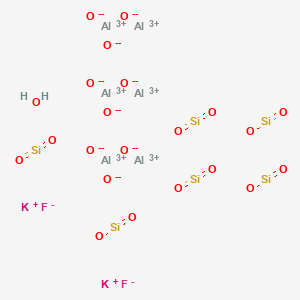
CAS 12001-26-2PubChem CID 131842327
Mica-group minerals
MICA, a generic term, refers to any of a group of approximately 30 silicate minerals occurring as non-fibrous plates. Muscovite (hydrated aluminium potassium silicate[KAl2(AlSi3O10)(F, OH)2 ])and phlogopite (potassium magnesium aluminum silicate hydroxide) are the two major micas of commerce. Micas are commonly found in ordinary rocks. Inhalation of mica dust presents an occupational hazard. — CAMEO Chemicals
- IUPAC 명칭
- hexaaluminum;dipotassium;hexakis(dioxosilane);nonakis(oxygen(2-));difluoride;hydrate
- 분자식
- Al6F2H2K2O22Si6
- 분자량
- 800.60 g/mol
- 정확한 질량
- 799.578781 Da
- 위상 극성 표면적
- 215.0 Ų
- 수소 결합 공여체
- 1
- 수소 결합 수용체
- 24
- 공유결합 단위
- 26
- 정의된 입체중심
- 0
다른 이름
MICAMuscovite micaV8A1AW0880ZimmwalditeSuzoriteAbhrakSuzorite micaMica, fluorian
보고된 명칭 16개 더 보기
Silicate, micaMicromica W 1Suzorite 60SDavenite P 12Sansostory SHC2000RefChem:818809P 80PHX 610Mica (containing less than 1% quartz)CI 77019Beautyturess 24K Gold Peel-Off Mask 120gBeautyturess Gold Foil Snail Peel-Off Mask 50g 24K601-648-2C 1000S 200COMMON MICA
외부 데이터베이스 식별자
- PubMed:24946801
추가 과학 데이터베이스의 근거
NIH PubChem PUG-View
식별자 정확히 일치131842327
Attributed physical-property, hazard, environmental and use annotations.
- Color/Form: Light gray to dark flakes or particles 출처: Hazardous Substances Data Bank (HSDB)
- Color/Form: Soft, translucent solid; colorless to slight red (ruby), brown to greenish yellow (amber)... thin sheets that are flexible and elastic 출처: Hazardous Substances Data Bank (HSDB)
- Color/Form: Colorless flakes or sheets of hydrous silicates 출처: Hazardous Substances Data Bank (HSDB)
- Density: 2.6 to 3.2 (NIOSH, 2024) 출처: CAMEO Chemicals
- Density: 2.6-3.2 출처: Hazardous Substances Data Bank (HSDB)
- Density: 2.6-3.2 출처: Occupational Safety and Health Administration (OSHA)
- Density: 2.6-3.2 @25 °C 출처: PAC Chemical Database, U.S. Department of Energy
- Density: 2.6-3.2 출처: The National Institute for Occupational Safety and Health (NIOSH)
- Melting Point: 1500 °C 출처: Hazardous Substances Data Bank (HSDB)
- Melting Point: Melting point = 1387 °C /Synthetic fluorophlogopite/ 출처: Hazardous Substances Data Bank (HSDB)
- Melting Point: 1387 °C 출처: PAC Chemical Database, U.S. Department of Energy
- Odor: Odorless 출처: Hazardous Substances Data Bank (HSDB)
- Physical Description: MICA, a generic term, refers to any of a group of approximately 30 silicate minerals occurring as non-fibrous plates. Muscovite (hydrated aluminium potassium silicate[KAl2(AlSi3O10)(F, OH)2 ])and phlogopite (potassium magnesium aluminum silicate hydroxide) are the two major micas of commerce. Micas are commonly found in ordinary rocks. Inhalation of mica dust presents an occupational hazard. 출처: CAMEO Chemicals
- Physical Description: Dry Powder; Large Crystals; CBI 출처: EPA Chemical Data Reporting (CDR)
- Physical Description: Colorless, odorless flakes or sheets of hydrous silicates; [NIOSH] Crystalline silica not bound to other minerals is "free" silica. Silicates are minerals in which silicon and oxygen are combined with other elements. [Rom, p. 364] 출처: Haz-Map, Information on Hazardous Chemicals and Occupational Diseases
- Physical Description: Colorless, odorless flakes or sheets of hydrous silicates. 출처: Occupational Safety and Health Administration (OSHA)
- Physical Description: Colorless, odorless flakes or sheets of hydrous silicates. 출처: The National Institute for Occupational Safety and Health (NIOSH)
- Refractive Index: Refractive index: 1.56-1.60 출처: Hazardous Substances Data Bank (HSDB)
- Solubility: Insoluble (NIOSH, 2024) 출처: CAMEO Chemicals
- Solubility: Insoluble in water 출처: Hazardous Substances Data Bank (HSDB)
- Solubility: Insoluble 출처: The National Institute for Occupational Safety and Health (NIOSH)
- Vapor Pressure: 0 mmHg (approx) (NIOSH, 2024) 출처: CAMEO Chemicals
- Vapor Pressure: 0 mm Hg (approximate) 출처: Hazardous Substances Data Bank (HSDB)
- Vapor Pressure: 0 mmHg (approx) 출처: Occupational Safety and Health Administration (OSHA)
- Vapor Pressure: 0 mmHg (approx) 출처: The National Institute for Occupational Safety and Health (NIOSH)
- Exposure Routes: inhalation, skin and/or eye contact 출처: The National Institute for Occupational Safety and Health (NIOSH)
- First Aid: Excerpt from NIOSH Pocket Guide for Mica (containing less than 1% quartz):; Eye: IRRIGATE IMMEDIATELY - If this chemical contacts the eyes, immediately wash (irrigate) the eyes with large amounts of water, occasionally lifting the lower and upper lids. Get medical attention immediately.; Breathing: FRESH AIR - If a person breathes large amounts of this chemical, move the exposed person to fresh air at once. Other measures are usually unnecessary. (NIOSH, 2024) 출처: CAMEO Chemicals
- First Aid: (General first aid procedures); Eye: Irrigate immediately - If this chemical contacts the eyes, immediately wash (irrigate) the eyes with large amounts of water, occasionally lifting the lower and upper lids. Get medical attention immediately.; Breathing: Fresh air 출처: The National Institute for Occupational Safety and Health (NIOSH)
- Note: This chemical does not meet GHS hazard criteria for 71.3% (600 of 841) of all reports. 출처: European Chemicals Agency (ECHA)
- Signal: Danger 출처: European Chemicals Agency (ECHA)
- GHS Hazard Statements: H319 (17.5%): Causes serious eye irritation [Warning Serious eye damage/eye irritation]; H335 (17.5%): May cause respiratory irritation [Warning Specific target organ toxicity, single exposure; Respiratory tract irritation]; H372 (11.5%): Causes damage to organs through prolonged or repeated exposure [Danger Specific target organ toxicity, repeated exposure]; H373 (12.5%): May causes damage to organs through prolonged or repeated exposure [Warning Specific target organ toxicity, repeated exposure] 출처: European Chemicals Agency (ECHA)
- Precautionary Statement Codes: P260, P261, P264, P264+P265, P270, P271, P280, P304+P340, P305+P351+P338, P319, P337+P317, P403+P233, P405, and P501 (click each P-code to see the statement) 출처: European Chemicals Agency (ECHA)
- ECHA C&L Notifications Summary: Aggregated GHS information provided per 841 reports by companies from 22 notifications to the ECHA C&L Inventory. Each notification may be associated with multiple companies.; Reported as not meeting GHS hazard criteria per 600 of 841 reports by companies.; There are 20 notifications provided by 241 of 841 reports by companies with hazard statement code(s).; Information may vary between notifications depending on impurities, additives, and other factors. The percentage value in parenthesis indicates the notified classification ratio from companies that provide hazard codes. Only hazard codes with percentage values above 10% are shown. For more detailed information, please visit ECHA C&L website. 출처: European Chemicals Agency (ECHA)
- Signal: Danger 출처: NITE-CMC
- GHS Hazard Statements: H372: Causes damage to organs through prolonged or repeated exposure [Danger Specific target organ toxicity, repeated exposure] 출처: NITE-CMC
- Precautionary Statement Codes: P260, P264, P270, P319, and P501 (click each P-code to see the statement) 출처: NITE-CMC
- Target Organs: respiratory system 출처: The National Institute for Occupational Safety and Health (NIOSH)
- Consumer Uses: Filler; Not Known or Reasonably Ascertainable; Pigment; Lubricating agent 출처: EPA Chemical Data Reporting (CDR)
- Industry Uses: Other; Lubricating agent; Filler; Not Known or Reasonably Ascertainable; Pigment 출처: EPA Chemical Data Reporting (CDR)
- Sources/Uses: Mica, mainly muscovite and phlogopite, contains less than 1% quartz. Other species of mica are biotite, lepidolite, zimmwaldite, and roscoelite. Used as a filler for paint, cement, asphalt, and insulation material for electrical cables; Also used in drilling muds, cosmetics, and vacuum tubes/condensers; [ACGIH] Sericite is a variety of white mica; it is similar to muscovite and is used as a filler, carrier, and lubricant; [Reference #1] 출처: Haz-Map, Information on Hazardous Chemicals and Occupational Diseases
- Industrial Processes with risk of exposure: Petroleum Production and Refining [Category: Industry]; Mining [Category: Industry] 출처: Haz-Map, Information on Hazardous Chemicals and Occupational Diseases
- Uses: In aircraft construction 출처: Hazardous Substances Data Bank (HSDB)
- Uses: PAPER & PAINT MANUFACTURE, & IN ELECTRIC INDUSTRY 출처: Hazardous Substances Data Bank (HSDB)
- Uses: Electrical equipment, vacuum tubes, incandescent lamps, dusting agent, lubricant, windows in high-temperature equipment, filler in exterior paints, cosmetics, glass and ceramic flux, roofing, rubber, mold-release- agent, specialty paper for insulation and filtration, wallpaper and wallboard joint cement, oil-well drilling muds. 출처: Hazardous Substances Data Bank (HSDB)
- Uses: Large transparent sheets used to serve as window panes...still used for slow combustion stoves, lanterns or peep-hole furnances...mica powder is used in the mfg of electric cables, pneumatic tyres, welding electrodes, bitmunized cardboard, paints and plastics, dielectric dressings, and flameproof insulators; it is often compacted with alkyd resins; vermiculite is widely used as an insulating material in the building industry; lepidolite is used in the glass and ceramic industries 출처: Hazardous Substances Data Bank (HSDB)
- Uses: For more Uses (Complete) data for MICA (6 total), please visit the HSDB record page. 출처: Hazardous Substances Data Bank (HSDB)
매핑 기준: Existing checksum-valid CAS to unique PubChem CID match. 가져온 시각: 2026-08-31. 출처 기록 열기
과학적 분류와 유해성 주석은 맥락을 제공할 뿐이며, 위에 표시된 시장별 규제 판단을 대체하지 않습니다.
추가 출처 적용 범위 및 일치 상태
| 출처 | 결과 | 확인됨 |
|---|---|---|
| NIH PubChem PUG-View | 정확히 일치 | 2026-08-31 |
기록된 불일치는 출처를 확인했다는 유용한 근거이며, 해당 물질이 다른 곳에 존재하지 않는다는 주장이 아닙니다.
체크섬이 유효한 CAS 일치를 통해 2026-09-02에 NIH PubChem에서 가져왔습니다. 화학적 특성은 이 페이지의 규제 판단을 대체하지 않습니다.
추가 공신력 있는 물질 조사
각 링크는 해당 출처에서 이 정체를 검색합니다. 링크는 조사 경로일 뿐이며, 그 출처에 정확히 일치하는 기록이 있다는 주장이 아닙니다. 각 출처의 성격과 법적 비중
공식 출처 및 범위
집행위원회 시행결정 (EU) 2025/1175(데이터세트 버전 EU 2025/1175)에서 가져왔습니다. 이 용어집은 제19조 제1항 (g)호에서 요구하는 성분 목록에 사용할 일반 원료 명칭을 제공하며, 승인 또는 안전성 목록이 아닙니다.
공식 결정 열기