
공식 EU 표시명용어집 항목 16423
METHOXYDIGLYCOL
이 기록은 EU 화장품 표시에 사용하는 공식 일반 원료 명칭을 확인해 줍니다. 그것만으로는 해당 물질이 허용되거나 제한이 없거나 안전하다는 것이 확인되지 않습니다.
글로벌 근거 요약
확인된 정체는 색인된 시장 데이터세트 13개 중 9개에서 일치하는 규제 근거가 있습니다: 국가 기록 9건과 EU 부속서 기록 0건. 모든 결과와 근거 부족 사항은 아래에 나열되어 있습니다.
확인한 시장
13
근거가 있는 시장
9
근거 부족
4
확인된 식별자
2
확인된 물질 정체
CAS:111-77-3
EC:203-906-6
원료 색인 기록:
일치 또는 보고된 명칭 10개
METHOXYDIGLYCOL2-(2-Methoxyethoxy)ethanol (Diethylene glycol monomethyl ether; DEGME)Methoxydiglycol2-(2-Methoxyethoxy)ethanol (diethylene glycol monomethyl ether; DEGME)2-(2-Methoxyethoxy)ethanol2-(2-甲氧基乙氧基)乙醇 — 2(- 2-Methoxyethoxy)ethanol (Diethylene glycol monomethyl ether; DEGME) (CAS No .111-77-3)2-(2-메톡시에톡시)에탄올(메톡시디글리콜)2-(2-metoxietoxi)etanol2-(2-Methoxyethoxy)ethanol (Diethylene glycol monomethyl ether; DEGME) (CAS No. 111-77-3)2-Methoxyethoxy)ethanol (Diethylene glycol monomethyl ether; DEGME)
13개 시장 전체의 규제 근거
일치하는 각 기록을 열어 범위, 농도, 조건, 경고 문구 및 공식 출처 버전을 확인하세요.
데이터세트 범위와 다음 조치를 보려면 가로로 스와이프하거나 스크롤하세요.
| 시장 | 결과 | 기록 | 데이터세트 | 의미 / 다음 조치 |
|---|---|---|---|---|
| European Union EU | 일치하는 항목 없음 | 0 | Complete annex dataset Regulation (EC) 1223/2009 consolidated to 1 May 2026 | No annex match only means that these five annexes did not return a match; CosIng identity data and other EU obligations still need review. |
| Great Britain GB | Prohibited | 1기록 열기 1 | Complete consolidated annex dataset GB retained Regulation 1223/2009 schedules, effective 15 August 2026 | 연결된 모든 기록과 정확한 조건을 검토하세요. |
| Canada CA | Prohibited | 1기록 열기 1 | Complete Hotlist snapshot Health Canada Cosmetic Ingredient Hotlist, 13 August 2025 | 연결된 모든 기록과 정확한 조건을 검토하세요. |
| New Zealand NZ | Prohibited | 1기록 열기 1 | Complete schedules dataset Cosmetic Products Group Standard schedules effective 1 January 2026 | 연결된 모든 기록과 정확한 조건을 검토하세요. |
| ASEAN ASEAN | Prohibited | 1기록 열기 1 | Complete regional annex dataset ASEAN Cosmetic Directive annexes 2026-1, 22 June 2026 | 연결된 모든 기록과 정확한 조건을 검토하세요. |
| China CN | Prohibited | 1기록 열기 1 | Complete prohibited catalogues plus official-source workflow NMPA 2021 banned catalogues plus dynamic IECIC List I/List II system current since 2025 | 연결된 모든 기록과 정확한 조건을 검토하세요. |
| Japan JP | 일치하는 항목 없음 | 0 | Complete Standards appendices dataset MHLW Standards for Cosmetics official English source and Japanese amendments checked for the imported snapshot | The Japanese text and subsequent notices are canonical; no local match is not a product-compliance conclusion. |
| South Korea KR | Prohibited | 1기록 열기 1 | Complete current appendix dataset MFDS Notice 2026-19, effective 18 March 2026 | 연결된 모든 기록과 정확한 조건을 검토하세요. |
| United States US | 일치하는 항목 없음 | 0 | Complete enumerated federal ingredient rules eCFR Title 21 issue date 27 August 2026 | FDA has no general approved-cosmetic-ingredient catalogue; absence from these sections is not approval or proof of safety. |
| Australia AU | 일치하는 항목 없음 | 0 | Complete cosmetic-relevant Poisons Standard subset plus official workflow Therapeutic Goods (Poisons Standard—June 2026) Instrument 2026 | An AICIS Inventory match is not cosmetic approval; no Inventory match can indicate a new, exempted, reported or confidential introduction. |
| Brazil BR | Prohibited | 1기록 열기 1 | Complete prohibited dataset plus current restricted-list workflow ANVISA RDC 1.029/2026 and RDC 1.030/2026, published 15 June 2026 | 연결된 모든 기록과 정확한 조건을 검토하세요. |
| India IN | Prohibited | 1기록 열기 1 | Complete current Part 2 dataset plus official workflow for Parts 1, 3 and 4 Cosmetics Rules 2020 plus current BIS IS 4707 parts (1:2020, 2:2025, 3:2025, 4:2022) | 연결된 모든 기록과 정확한 조건을 검토하세요. |
| Saudi Arabia SA | Prohibited | 1기록 열기 1 | Complete official list index SFDA live prohibited/restricted lists, snapshot 30 August 2026 | 연결된 모든 기록과 정확한 조건을 검토하세요. |
이 필터와 일치하는 시장 행이 없습니다.
일치하는 시장 기록 및 조건
Canada
Health Canada Cosmetic Ingredient Hotlist, 13 August 2025New Zealand
Cosmetic Products Group Standard schedules effective 1 January 2026ASEAN
ASEAN Cosmetic Directive annexes 2026-1, 22 June 2026China
NMPA 2021 banned catalogues plus dynamic IECIC List I/List II system current since 2025South Korea
MFDS Notice 2026-19, effective 18 March 2026Brazil
ANVISA RDC 1.029/2026 and RDC 1.030/2026, published 15 June 2026India
Cosmetics Rules 2020 plus current BIS IS 4707 parts (1:2020, 2:2025, 3:2025, 4:2022)Saudi Arabia
SFDA live prohibited/restricted lists, snapshot 30 August 2026화학적 정체 및 특성
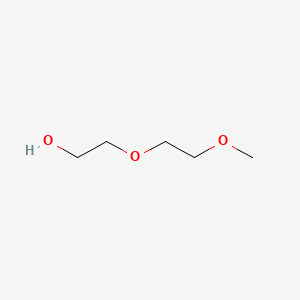
CAS 111-77-3PubChem CID 8134
Diethylene Glycol Monomethyl Ether
2-(2-methoxyethoxy)ethanol is a hydroxypolyether that is the monomethyl ether derivative of diethylene glycol. It has a role as a solvent and a teratogenic agent. It is a glycol ether, a diether and a hydroxypolyether. It is functionally related to a diethylene glycol. — ChEBI
- IUPAC 명칭
- 2-(2-methoxyethoxy)ethanol
- 분자식
- C5H12O3
- 분자량
- 120.15 g/mol
- 정확한 질량
- 120.078644241 Da
- XLogP3
- -0.9
- 위상 극성 표면적
- 38.7 Ų
- 수소 결합 공여체
- 1
- 수소 결합 수용체
- 3
- 공유결합 단위
- 1
- 정의된 입체중심
- 0
다른 이름
Methyl carbitolMethoxydiglycolMethyl digolDowanol DMDiethylene glycol methyl etherMECB3,6-Dioxa-1-heptanolEthanol, 2-(2-methoxyethoxy)-
보고된 명칭 16개 더 보기
Methyl dioxitolEktasolve DMDiglycol monomethyl etherDEGMEMethyl karbitolJeffersol DMDiethyleneglycol monomethyl etherDowanol 16Ethylene diglycol monomethyl etherEthanol, 2,2'-oxybis-, monomethyl etherbeta-Methoxy-beta'-hydroxydiethyl ether465DDJ8G8KNSC-2261CHEBI:448362-MEE cpdRefChem:133503
외부 데이터베이스 식별자
- ChEBI:CHEBI:44836
- ChEMBL:CHEMBL1235250
- EPA DTXSID:DTXSID3025049
- PubMed:22617435
- PubMed:21175159
- PubMed:21175157
- PubMed:20232803
- PubMed:20021058
- PubMed:19208476
- PubMed:17898459
- PubMed:16158298
- PubMed:15705492
- PubMed:15568825
- PubMed:14606891
- PubMed:12957179
추가 과학 데이터베이스의 근거
NIH PubChem PUG-View
식별자 정확히 일치8134
Attributed physical-property, hazard, environmental and use annotations.
- Autoignition Temperature: 465 °F (NTP, 1992) 출처: CAMEO Chemicals
- Autoignition Temperature: 465 °F (240 °C) 출처: Hazardous Substances Data Bank (HSDB)
- Autoignition Temperature: 215 °C 출처: ILO-WHO International Chemical Safety Cards (ICSCs)
- Boiling Point: 381 °F at 760 mmHg (NTP, 1992) 출처: CAMEO Chemicals
- Boiling Point: 193 °C 출처: Hazardous Substances Data Bank (HSDB)
- Boiling Point: 193 °C 출처: ILO-WHO International Chemical Safety Cards (ICSCs)
- Boiling Point: 381 °F 출처: Occupational Safety and Health Administration (OSHA)
- Boiling Point: 194.2 °C @760 [mm Hg] 출처: PAC Chemical Database, U.S. Department of Energy
- Color/Form: Colorless liquid 출처: Hazardous Substances Data Bank (HSDB)
- Color/Form: Water-white liquid 출처: Hazardous Substances Data Bank (HSDB)
- Color/Form: Light yellow clear liquid 출처: Hazardous Substances Data Bank (HSDB)
- Density: 1.025 at 68 °F (USCG, 1999) - Denser than water; will sink 출처: CAMEO Chemicals
- Density: 1.035 g/cu cm at 20 °C 출처: Hazardous Substances Data Bank (HSDB)
- Density: Relative density (water = 1): 1.04 출처: ILO-WHO International Chemical Safety Cards (ICSCs)
- Density: 1.025 출처: Occupational Safety and Health Administration (OSHA)
- Density: 1.04 @ 20°C 출처: PAC Chemical Database, U.S. Department of Energy
- Flash Point: 200 °F (NTP, 1992) 출처: CAMEO Chemicals
- Flash Point: 205 °F (96 °C) (open cup) 출처: Hazardous Substances Data Bank (HSDB)
- Flash Point: 93 °C o.c. 출처: ILO-WHO International Chemical Safety Cards (ICSCs)
- Flash Point: 200 °F 출처: Occupational Safety and Health Administration (OSHA)
- LogP: -1.14/-0.93 (calculated) 출처: ILO-WHO International Chemical Safety Cards (ICSCs)
- Melting Point: -94 °F (NTP, 1992) 출처: CAMEO Chemicals
- Melting Point: Less than -84 °C 출처: Hazardous Substances Data Bank (HSDB)
- Melting Point: -94 °F 출처: Occupational Safety and Health Administration (OSHA)
- Odor: Slight or pleasant smell /Solvents/ 출처: Hazardous Substances Data Bank (HSDB)
- Odor: Ether-like odor 출처: Hazardous Substances Data Bank (HSDB)
- Physical Description: Diethylene glycol monomethyl ether is a colorless liquid with a sweet odor. Floats and mixes with water. (USCG, 1999) 출처: CAMEO Chemicals
- Physical Description: Liquid 출처: EPA Chemical Data Reporting (CDR)
- Physical Description: Colorless liquid; [Hawley] Hygroscopic; [HSDB] 출처: Haz-Map, Information on Hazardous Chemicals and Occupational Diseases
- Physical Description: COLOURLESS LIQUID. 출처: ILO-WHO International Chemical Safety Cards (ICSCs)
- Physical Description: Colorless liquid with a sweet odor. 출처: Occupational Safety and Health Administration (OSHA)
- Refractive Index: Index of refraction: 1.4264 at 27 °C/D 출처: Hazardous Substances Data Bank (HSDB)
- Solubility: greater than or equal to 100 mg/mL at 66 °F (NTP, 1992) 출처: CAMEO Chemicals
- Solubility: Miscible /1X10+6 mg/L/ with water 출처: Hazardous Substances Data Bank (HSDB)
- Solubility: Miscible with alcohol, glycerol, ether, acetone, dimethylformamide 출처: Hazardous Substances Data Bank (HSDB)
- Solubility: Very soluble in ethanol, ethyl ether 출처: Hazardous Substances Data Bank (HSDB)
- Solubility: SOL IN ALL PROPN IN BENZENE 출처: Hazardous Substances Data Bank (HSDB)
- Solubility: Solubility in water: very good 출처: ILO-WHO International Chemical Safety Cards (ICSCs)
- Vapor Pressure: 0.2 mmHg at 68 °F ; 0.25 mmHg at 77 °F (NTP, 1992) 출처: CAMEO Chemicals
- Vapor Pressure: 0.25 [mmHg] 출처: Haz-Map, Information on Hazardous Chemicals and Occupational Diseases
- Vapor Pressure: 0.25 mm Hg at 25 °C 출처: Hazardous Substances Data Bank (HSDB)
- Vapor Pressure: Vapor pressure, Pa at 20 °C: 30 출처: ILO-WHO International Chemical Safety Cards (ICSCs)
- Vapor Pressure: 0.2 mmHg 출처: Occupational Safety and Health Administration (OSHA)
- Vapor Pressure: 0.25 [mm Hg] @25 °C 출처: PAC Chemical Database, U.S. Department of Energy
- Viscosity: 3.48 mPa.s (=cPa) at 25 °C 출처: Hazardous Substances Data Bank (HSDB)
- Exposure Routes: The substance can be absorbed into the body by inhalation, through the skin and by ingestion. 출처: ILO-WHO International Chemical Safety Cards (ICSCs)
- First Aid: EYES: First check the victim for contact lenses and remove if present. Flush victim's eyes with water or normal saline solution for 20 to 30 minutes while simultaneously calling a hospital or poison control center. Do not put any ointments, oils, or medication in the victim's eyes without specific instructions from a physician. IMMEDIATELY transport the victim after flushing eyes to a hospital even if no symptoms (such as redness or irritation) develop.; SKIN: IMMEDIATELY flood affected skin with water while removing and isolating all contaminated clothing. Gently wash all affected skin areas thoroughly with soap and water. If symptoms such as redness or irritation develop, IMMEDIATELY call a physician and be prepared to transport the victim to a hospital for treatment.; INHALATION: IMMEDIATELY leave the contaminated area; take deep breaths of fresh air. If symptoms (such as wheezing, coughing, shortness of breath, or burning in the mouth, throat, or chest) develop, call a physician and be prepared to transport the victim to a hospital. Provide proper respiratory protection to rescuers entering an unknown atmosphere. Whenever possible, Self-Contained Breathing Apparatus (SCBA) shou 출처: CAMEO Chemicals
- Signal: Danger 출처: Regulation (EC) No 1272/2008 of the European Parliament and of the Council
- GHS Hazard Statements: H360D: May damage the unborn child [Danger Reproductive toxicity] 출처: Regulation (EC) No 1272/2008 of the European Parliament and of the Council
- Precautionary Statement Codes: P203, P280, P318, P405, and P501 (click each P-code to see the statement) 출처: Regulation (EC) No 1272/2008 of the European Parliament and of the Council
- Signal: Warning 출처: European Chemicals Agency (ECHA)
- GHS Hazard Statements: H312 (11%): Harmful in contact with skin [Warning Acute toxicity, dermal]; H319 (11%): Causes serious eye irritation [Warning Serious eye damage/eye irritation]; H361 (93.6%): Suspected of damaging fertility or the unborn child [Warning Reproductive toxicity] 출처: European Chemicals Agency (ECHA)
- Precautionary Statement Codes: P203, P264+P265, P280, P302+P352, P305+P351+P338, P317, P318, P321, P337+P317, P362+P364, P405, and P501 (click each P-code to see the statement) 출처: European Chemicals Agency (ECHA)
- ECHA C&L Notifications Summary: Aggregated GHS information provided per 4012 reports by companies from 28 notifications to the ECHA C&L Inventory. Each notification may be associated with multiple companies.; Information may vary between notifications depending on impurities, additives, and other factors. The percentage value in parenthesis indicates the notified classification ratio from companies that provide hazard codes. Only hazard codes with percentage values above 10% are shown. For more detailed information, please visit ECHA C&L website. 출처: European Chemicals Agency (ECHA)
- Signal: Danger 출처: NITE-CMC
- GHS Hazard Statements: H227: Combustible liquid [Warning Flammable liquids]; H336: May cause drowsiness or dizziness [Warning Specific target organ toxicity, single exposure; Narcotic effects]; H360: May damage fertility or the unborn child [Danger Reproductive toxicity] 출처: NITE-CMC
- Precautionary Statement Codes: P203, P210, P261, P271, P280, P304+P340, P318, P319, P370+P378, P403, P403+P233, P405, and P501 (click each P-code to see the statement) 출처: NITE-CMC
- GHS Hazard Statements: H336: May cause drowsiness or dizziness [Warning Specific target organ toxicity, single exposure; Narcotic effects]; H360: May damage fertility or the unborn child [Danger Reproductive toxicity]; H373: May causes damage to organs through prolonged or repeated exposure [Warning Specific target organ toxicity, repeated exposure] 출처: NITE-CMC
- Precautionary Statement Codes: P203, P260, P261, P271, P280, P304+P340, P318, P319, P403+P233, P405, and P501 (click each P-code to see the statement) 출처: NITE-CMC
- NFPA Health Rating: 1 - Materials that, under emergency conditions, can cause significant irritation. 출처: Hazardous Substances Data Bank (HSDB)
- NFPA Fire Rating: 2 - Materials that must be moderately heated or exposed to relatively high ambient temperatures before ignition can occur. Materials would not under normal conditions form hazardous atmospheres with air, but under high ambient temperatures or under moderate heating could release vapor in sufficient quantities to produce hazardous atmospheres with air. 출처: Hazardous Substances Data Bank (HSDB)
- NFPA Instability Rating: 0 - Materials that in themselves are normally stable, even under fire conditions. 출처: Hazardous Substances Data Bank (HSDB)
- Environmental Bioconcentration: An estimated BCF of 3 was calculated in fish for diethylene glycol monomethyl ether(SRC), using an estimated log Kow of -1.18 and a regression-derived equation(1). According to a classification scheme(2), this BCF suggests the potential for bioconcentration in aquatic organisms is low(SRC). 출처: Hazardous Substances Data Bank (HSDB)
- Environmental Fate: TERRESTRIAL FATE: Based on a classification scheme(1), an estimated Koc value of 1(SRC), determined from a structure estimation method(2), indicates that diethylene glycol monomethyl ether is expected to have very high mobility in soil(SRC). Volatilization of diethylene glycol monomethyl ether from moist soil surfaces is not expected to be an important fate process(SRC) given an estimated Henry's Law constant of 1.6X10⁻¹¹ atm-cu m/mole(SRC), using a fragment constant estimation method(2). Diethylene glycol monomethyl ether is not expected to volatilize from dry soil surfaces(SRC) based upon a vapor pressure of 0.25 mm Hg at 25 °C(3). Aqueous screening test data suggest that biodegradation may be an important removal mechanism of diethylene glycol monomethyl ether in soil: theoretical BOD losses of 0, 21 and 66% when incubated at 20 °C for 5, 10 and 20 days, respectively, were reported(4). 출처: Hazardous Substances Data Bank (HSDB)
- Environmental Fate: AQUATIC FATE: Based on a classification scheme(1), an estimated Koc value of 1(SRC), determined from a structure estimation method(2), indicates that diethylene glycol monomethyl ether is not expected to adsorb to suspended solids and sediment(SRC). Volatilization from water surfaces is not expected(3) based upon an estimated Henry's Law constant of 1.6X10⁻¹¹ atm-cu m/mole(SRC), developed using a fragment constant estimation method(2). Diethylene glycol monomethyl ether is not expected to undergo hydrolysis in the environment due to the lack of functional groups that hydrolyze under environmental conditions(3). According to a classification scheme(4), an estimated BCF of 3(SRC), from an estimated log Kow of -1.18(2) and a regression-derived equation(2), suggests the potential for bioconcentration in aquatic organisms is low(SRC). Aqueous screening test data suggest that biodegradation may be an important removal mechanism of diethylene glycol monomethyl ether: theoretical BOD losses of 0, 21 and 66% when incubated at 20 °C for 5, 10 and 20 days, respectively, were reported(5). 출처: Hazardous Substances Data Bank (HSDB)
- Environmental Fate: ATMOSPHERIC FATE: According to a model of gas/particle partitioning of semivolatile organic compounds in the atmosphere(1), diethylene glycol monomethyl ether, which has a vapor pressure of 0.25 mm Hg at 25 °C(2), is expected to exist solely as a vapor in the ambient atmosphere. Vapor-phase diethylene glycol monomethyl ether is degraded in the atmosphere by reaction with photochemically-produced hydroxyl radicals(SRC); the half-life for this reaction in air is estimated to be 13 hours(SRC), calculated from its rate constant of 2.6X10⁻¹¹ cu cm/molecule-sec at 25 °C(SRC) that was derived using a structure estimation method(3). Alcohols and ethers do not contain chromophores that absorb at wavelengths >290 nm(4) and, therefore, diethylene glycol monomethyl ether is not expected to be susceptible to direct photolysis by sunlight(SRC). 출처: Hazardous Substances Data Bank (HSDB)
- Consumer Uses: Fuel agents; Solvent; Intermediate; Hydraulic fluids 출처: EPA Chemical Data Reporting (CDR)
- Industry Uses: Fuel agents; Solvent; Lubricating agent; Intermediate; Hydraulic fluids; Cleaning agent; Not Known or Reasonably Ascertainable 출처: EPA Chemical Data Reporting (CDR)
- Sources/Uses: Used as a solvent for wood stains, lacquers, inks, textile dye pastes, paints, waxes, dyes, and nitrocellulose resins; Also used in brake fluid, aviation fuel anti-icing additive, and inert ingredient in pesticides; [HSDB] Used as an intermediate; [Hawley] Not produced commercially in the EU; [Glycol Ethers Online] 출처: Haz-Map, Information on Hazardous Chemicals and Occupational Diseases
- Industrial Processes with risk of exposure: Painting (Solvents) [Category: Paint]; Textiles (Printing, Dyeing, or Finishing) [Category: Industry] 출처: Haz-Map, Information on Hazardous Chemicals and Occupational Diseases
- Uses: For diethylene glycol monomethyl ether (USEPA/OPP Pesticide Code: 042204) ACTIVE products with label matches. /SRP: Registered for use in the U.S. but approved pesticide uses may change periodically and so federal, state and local authorities must be consulted for currently approved uses./ 출처: Hazardous Substances Data Bank (HSDB)
- Uses: ... Inert (or occasionally active) ingredients in pesticide formulations applied to growing crops only. Use: Deactivator for formulations used before crop emerges from soil, stabilizer. 출처: Hazardous Substances Data Bank (HSDB)
- Uses: This additive is for use in liquid hydrocarbon fuels including jet fuel, diesel fuels, marine fuels, and fuel oils for anti-microbial control of fungi and bacteria found in hydrocarbon fuel systems and/or for anti-icing control. /Phillips Fuel Additive 56 MB/ 출처: Hazardous Substances Data Bank (HSDB)
- Uses: De-icing additive for jet fuel. Solvent for paints, coatings and inks. Deactivator and stabilizer for pesticides. 출처: Hazardous Substances Data Bank (HSDB)
- Uses: For more Uses (Complete) data for DIETHYLENE GLYCOL MONOMETHYL ETHER (10 total), please visit the HSDB record page. 출처: Hazardous Substances Data Bank (HSDB)
매핑 기준: Existing checksum-valid CAS to unique PubChem CID match. 가져온 시각: 2026-08-31. 출처 기록 열기
과학적 분류와 유해성 주석은 맥락을 제공할 뿐이며, 위에 표시된 시장별 규제 판단을 대체하지 않습니다.
추가 출처 적용 범위 및 일치 상태
| 출처 | 결과 | 확인됨 |
|---|---|---|
| NIH PubChem PUG-View | 정확히 일치 | 2026-08-31 |
기록된 불일치는 출처를 확인했다는 유용한 근거이며, 해당 물질이 다른 곳에 존재하지 않는다는 주장이 아닙니다.
체크섬이 유효한 CAS 일치를 통해 2026-09-02에 NIH PubChem에서 가져왔습니다. 화학적 특성은 이 페이지의 규제 판단을 대체하지 않습니다.
추가 공신력 있는 물질 조사
각 링크는 해당 출처에서 이 정체를 검색합니다. 링크는 조사 경로일 뿐이며, 그 출처에 정확히 일치하는 기록이 있다는 주장이 아닙니다. 각 출처의 성격과 법적 비중
공식 출처 및 범위
집행위원회 시행결정 (EU) 2025/1175(데이터세트 버전 EU 2025/1175)에서 가져왔습니다. 이 용어집은 제19조 제1항 (g)호에서 요구하는 성분 목록에 사용할 일반 원료 명칭을 제공하며, 승인 또는 안전성 목록이 아닙니다.
공식 결정 열기