
공식 EU 표시명용어집 항목 12353
HYDROGEN PEROXIDE
이 기록은 EU 화장품 표시에 사용하는 공식 일반 원료 명칭을 확인해 줍니다. 그것만으로는 해당 물질이 허용되거나 제한이 없거나 안전하다는 것이 확인되지 않습니다.
글로벌 근거 요약
확인된 정체는 색인된 시장 데이터세트 13개 중 9개에서 일치하는 규제 근거가 있습니다: 국가 기록 10건과 EU 부속서 기록 1건. 모든 결과와 근거 부족 사항은 아래에 나열되어 있습니다.
확인한 시장
13
근거가 있는 시장
9
근거 부족
4
확인된 식별자
9
확인된 물질 정체
CAS:7722-84-1124-43-61305-79-91335-26-87632-04-41314-22-315630-89-415120-21-5
EC:231-765-0
원료 색인 기록:
HYDROGEN PEROXIDE
Ph. Eur. 명칭: hydrogenii peroxidum
화장품 기능: ANTIMICROBIAL, ORAL CARE, OXIDISING
Hydrogen peroxide
목록 제한 사항 주석: III/12
일치 또는 보고된 명칭 11개
HYDROGEN PEROXIDEhydrogen peroxidehydrogenii peroxidumHydrogen peroxide and other compounds or mixtures that release hydrogen peroxide, including carbamide peroxide and zinc peroxide, with the exception of the following substances in Annex II: No 1397, 1398, 1399Hydrogen peroxidePeroxide and peroxide-generating compoundsHydrogen peroxide, and other compounds or mixtures that release hydrogen peroxide, including carbamide peroxide and zinc peroxide, with the exception of the following substances in Schedule 4 entries 1397, 1398, 1399Hydrogen peroxide, and other compounds or mixtures that release hydrogen peroxide, including carbamide peroxide and zinc peroxide, with the exception of the following substances in Annex II: No. 1397, 1398, 1399 CAS No 7722-84-1과산화수소수과탄산나트륨과산화수소 및 과산화수소 생성물질Hydrogen peroxide (CAS No. 7722-84-1) and other compounds or mixtures that release hydrogen peroxide, including carbamide peroxide and zinc peroxide of the following substances in Annex II: No 1404, 1405 — and 1406
13개 시장 전체의 규제 근거
일치하는 각 기록을 열어 범위, 농도, 조건, 경고 문구 및 공식 출처 버전을 확인하세요.
데이터세트 범위와 다음 조치를 보려면 가로로 스와이프하거나 스크롤하세요.
| 시장 | 결과 | 기록 | 데이터세트 | 의미 / 다음 조치 |
|---|---|---|---|---|
| European Union EU | 사용제한 | 1기록 열기 1 | Complete annex dataset Regulation (EC) 1223/2009 consolidated to 1 May 2026 | 연결된 모든 기록과 정확한 조건을 검토하세요. |
| Great Britain GB | Restricted | 1기록 열기 1 | Complete consolidated annex dataset GB retained Regulation 1223/2009 schedules, effective 15 August 2026 | 연결된 모든 기록과 정확한 조건을 검토하세요. |
| Canada CA | Restricted | 2기록 열기 1기록 열기 2 | Complete Hotlist snapshot Health Canada Cosmetic Ingredient Hotlist, 13 August 2025 | 연결된 모든 기록과 정확한 조건을 검토하세요. |
| New Zealand NZ | Restricted | 1기록 열기 1 | Complete schedules dataset Cosmetic Products Group Standard schedules effective 1 January 2026 | 연결된 모든 기록과 정확한 조건을 검토하세요. |
| ASEAN ASEAN | Restricted | 1기록 열기 1 | Complete regional annex dataset ASEAN Cosmetic Directive annexes 2026-1, 22 June 2026 | 연결된 모든 기록과 정확한 조건을 검토하세요. |
| China CN | 일치하는 항목 없음 | 0 | Complete prohibited catalogues plus official-source workflow NMPA 2021 banned catalogues plus dynamic IECIC List I/List II system current since 2025 | IECIC listing is not blanket approval; absence may require the new cosmetic ingredient route, and restrictions are checked separately. |
| Japan JP | Prohibited | 1기록 열기 1 | Complete Standards appendices dataset MHLW Standards for Cosmetics official English source and Japanese amendments checked for the imported snapshot | 연결된 모든 기록과 정확한 조건을 검토하세요. |
| South Korea KR | Restricted | 2기록 열기 1기록 열기 2 | Complete current appendix dataset MFDS Notice 2026-19, effective 18 March 2026 | 연결된 모든 기록과 정확한 조건을 검토하세요. |
| United States US | 일치하는 항목 없음 | 0 | Complete enumerated federal ingredient rules eCFR Title 21 issue date 27 August 2026 | FDA has no general approved-cosmetic-ingredient catalogue; absence from these sections is not approval or proof of safety. |
| Australia AU | 일치하는 항목 없음 | 0 | Complete cosmetic-relevant Poisons Standard subset plus official workflow Therapeutic Goods (Poisons Standard—June 2026) Instrument 2026 | An AICIS Inventory match is not cosmetic approval; no Inventory match can indicate a new, exempted, reported or confidential introduction. |
| Brazil BR | 일치하는 항목 없음 | 0 | Complete prohibited dataset plus current restricted-list workflow ANVISA RDC 1.029/2026 and RDC 1.030/2026, published 15 June 2026 | RDC 1.030/2026 amends rather than replaces the prohibited baseline, and the second restricted-list revision was still under consultation in July 2026. |
| India IN | Restricted | 1기록 열기 1 | Complete current Part 2 dataset plus official workflow for Parts 1, 3 and 4 Cosmetics Rules 2020 plus current BIS IS 4707 parts (1:2020, 2:2025, 3:2025, 4:2022) | 연결된 모든 기록과 정확한 조건을 검토하세요. |
| Saudi Arabia SA | Restricted | 1기록 열기 1 | Complete official list index SFDA live prohibited/restricted lists, snapshot 30 August 2026 | 연결된 모든 기록과 정확한 조건을 검토하세요. |
이 필터와 일치하는 시장 행이 없습니다.
일치하는 시장 기록 및 조건
Great Britain
GB retained Regulation 1223/2009 schedules, effective 15 August 2026Canada
Health Canada Cosmetic Ingredient Hotlist, 13 August 2025Hydrogen peroxideRestricted
See " Peroxide and peroxide-generating compounds ".
Hotlist restricted entry 45 · Health Canada Hotlist 2025-08-13
Peroxide and peroxide-generating compoundsRestricted
Synonyms or related compounds: Urea peroxide; calcium peroxide; calcium dioxide; hydrogen peroxide; magnesium peroxide; sodium perborate; zinc peroxide | a) Not permitted for use in products intended for application to the genital area | b) Oral products containing peroxides or …
Hotlist restricted entry 65 · Health Canada Hotlist 2025-08-13
New Zealand
Cosmetic Products Group Standard schedules effective 1 January 2026Japan
MHLW Standards for Cosmetics official English source and Japanese amendments checked for the imported snapshotSouth Korea
MFDS Notice 2026-19, effective 18 March 2026India
Cosmetics Rules 2020 plus current BIS IS 4707 parts (1:2020, 2:2025, 3:2025, 4:2022)Saudi Arabia
SFDA live prohibited/restricted lists, snapshot 30 August 2026정확히 일치하는 부속서 II–VI 근거
Annex III항목 12
전체 규제 기록 열기HYDROGEN PEROXIDE
제품 범위: (a) Hair products (b) Skin products (c) Nail hardening products (d) Oral products, including mouth rinse, tooth paste and tooth whitening or bleaching products (e) Tooth whitening or bleaching products (f) Products intended for eyelashes
최대 농도: (a) 12 % of H2O2 (40 volumes), present or released (b) 4 % of H2O2, present or released (c) 2 % of H2O2, present or released (d) ≤ 0,1 % of H2O2, present or released (e) > 0,1 % ≤ 6 % of H2O2, present or released (f) 2 % of H2O2, present or released
제한 사항: (e) To be only sold to dental practitioners. For each cycle of use, first use by dental practitioners as defined under Directive 2005/36/EC of the European Parliament and of the Council* or under their direct supervision if an equivalent level of safety is ensured. Afterwards to be provided to the consumer to complete the cycle of use. Not to be used on a person under 18 years of age. (f) For professional use only
경고 문구: (a) (f) Wear suitable gloves (a) (b) (c) (e) Contains hydrogen peroxide Avoid contact with eyes Rinse immediately if product comes into contact with them. (e) Concentration of H2O2 present or released indicated in percentage. Not to be used on a person under 18 years of age. To be only sold…
화학적 정체 및 특성
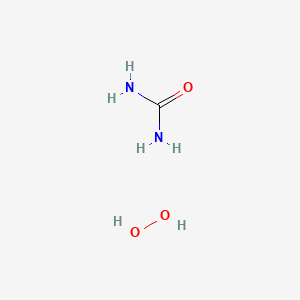
CAS 124-43-6PubChem CID 31294
Carbamide Peroxide
Urea hydrogen peroxide is a mixture obtained by combining equimolar amounts of hydrogen peroxide and urea. It has a role as a reagent, a disinfectant and an oxidising agent. It contains a urea and a hydrogen peroxide. — ChEBI
- IUPAC 명칭
- hydrogen peroxide;urea
- 분자식
- CH6N2O3
- 분자량
- 94.07 g/mol
- 정확한 질량
- 94.03784206 Da
- 위상 극성 표면적
- 110.0 Ų
- 수소 결합 공여체
- 4
- 수소 결합 수용체
- 3
- 공유결합 단위
- 2
- 정의된 입체중심
- 0
다른 이름
Urea hydrogen peroxidePercarbamideUrea peroxideUrea dioxideUrea hydroperoxideHydroperitHydroperitePercarbamid
보고된 명칭 16개 더 보기
HyperolOrtizonPerhydritThenardolPerhydrol-UreaHydrogen peroxide ureaHydrogen peroxide carbamideMurine Ear DropsDebroxGly-oxideUrea compound with hydrogen peroxide (1:1)31PZ2VAU81NSC-24852Carbamide peroxide (USP)Carbamide peroxide [USP]CHEBI:75178
외부 데이터베이스 식별자
- ChEBI:CHEBI:75178
- ChEMBL:CHEMBL3184026
- EPA DTXSID:DTXSID9024726
- PubMed:25254197
- PubMed:22666835
- PubMed:22031060
- PubMed:15527615
추가 과학 데이터베이스의 근거
NIH PubChem PUG-View
식별자 정확히 일치31294
Attributed physical-property, hazard, environmental and use annotations.
- Autoignition Temperature: greater than 680 °F (USCG, 1999) 출처: CAMEO Chemicals
- Density: 0.8 at 68 °F (USCG, 1999) - Less dense than water; will float 출처: CAMEO Chemicals
- Density: 0.8 @ 20°C 출처: PAC Chemical Database, U.S. Department of Energy
- Melting Point: 167 to 185 °F (decomposes) (NTP, 1992) 출처: CAMEO Chemicals
- Melting Point: 75-85 출처: DrugBank
- Physical Description: Urea hydrogen peroxide appears as a solid or paste-like semisolid. Used to make plastics. 출처: CAMEO Chemicals
- Physical Description: White solid; [Merck Index] Solid or paste-like semisolid; [CAMEO] Odorless; [CHRIS] White tablet; [Sigma-Aldrich MSDS] 출처: Haz-Map, Information on Hazardous Chemicals and Occupational Diseases
- Solubility: greater than or equal to 100 mg/mL at 68 °F (NTP, 1992) 출처: CAMEO Chemicals
- Solubility: 500 g/L at °C 출처: DrugBank
- First Aid: EYES: First check the victim for contact lenses and remove if present. Flush victim's eyes with water or normal saline solution for 20 to 30 minutes while simultaneously calling a hospital or poison control center. Do not put any ointments, oils, or medication in the victim's eyes without specific instructions from a physician. IMMEDIATELY transport the victim after flushing eyes to a hospital even if no symptoms (such as redness or irritation) develop.; SKIN: IMMEDIATELY flood affected skin with water while removing and isolating all contaminated clothing. Gently wash all affected skin areas thoroughly with soap and water. If symptoms such as redness or irritation develop, IMMEDIATELY call a physician and be prepared to transport the victim to a hospital for treatment.; INHALATION: IMMEDIATELY leave the contaminated area; take deep breaths of fresh air. If symptoms (such as wheezing, coughing, shortness of breath, or burning in the mouth, throat, or chest) develop, call a physician and be prepared to transport the victim to a hospital. Provide proper respiratory protection to rescuers entering an unknown atmosphere. Whenever possible, Self-Contained Breathing Apparatus (SCBA) shou 출처: CAMEO Chemicals
- ERG2024, Guide 140 (Urea hydrogen peroxide): General First Aid:; · Call 911 or emergency medical service.; · Ensure that medical personnel are aware of the material(s) involved, take precautions to protect themselves and avoid contamination.; · Move victim to fresh air if it can be done safely.; · Administer oxygen if breathing is difficult.; · If victim is not breathing:; -- DO NOT perform mouth-to-mouth resuscitation; the victim may have ingested or inhaled the substance.; -- If equipped and pulse detected, wash face and mouth, then give artificial respiration using a proper respiratory medical device (bag-valve mask, pocket mask equipped with a one-way valve or other device).; -- If no pulse detected or no respiratory medical device available, provide continuous compressions. Conduct a pulse check every two minutes or monitor for any signs of spontaneous respirations.; · Remove and isolate contaminated clothing and shoes.; · For minor skin contact, avoid spreading material on unaffected skin.; · In case of contact with substance, remove immediately by flushing skin or eyes with running water for at least 20 minutes.; · For severe burns, immediate medical attention is required.; · Effects of exposure (inhalation, ingestion, 출처: Emergency Response Guidebook (ERG)
- Signal: Danger 출처: European Chemicals Agency (ECHA)
- GHS Hazard Statements: H272 (94.9%): May intensify fire; oxidizer [Danger Oxidizing liquids; Oxidizing solids]; H314 (83.1%): Causes severe skin burns and eye damage [Danger Skin corrosion/irritation]; H315 (16.9%): Causes skin irritation [Warning Skin corrosion/irritation]; H318 (18.6%): Causes serious eye damage [Danger Serious eye damage/eye irritation] 출처: European Chemicals Agency (ECHA)
- Precautionary Statement Codes: P210, P220, P260, P264, P264+P265, P280, P301+P330+P331, P302+P352, P302+P361+P354, P304+P340, P305+P354+P338, P316, P317, P321, P332+P317, P362+P364, P363, P370+P378, P405, and P501 (click each P-code to see the statement) 출처: European Chemicals Agency (ECHA)
- ECHA C&L Notifications Summary: Aggregated GHS information provided per 59 reports by companies from 12 notifications to the ECHA C&L Inventory. Each notification may be associated with multiple companies.; Information may vary between notifications depending on impurities, additives, and other factors. The percentage value in parenthesis indicates the notified classification ratio from companies that provide hazard codes. Only hazard codes with percentage values above 10% are shown. For more detailed information, please visit ECHA C&L website. 출처: European Chemicals Agency (ECHA)
- Signal: Danger 출처: NITE-CMC
- GHS Hazard Statements: H272: May intensify fire; oxidizer [Danger Oxidizing liquids; Oxidizing solids]; H315: Causes skin irritation [Warning Skin corrosion/irritation]; H318: Causes serious eye damage [Danger Serious eye damage/eye irritation] 출처: NITE-CMC
- Precautionary Statement Codes: P210, P220, P264, P264+P265, P280, P302+P352, P305+P354+P338, P317, P321, P332+P317, P362+P364, P370+P378, and P501 (click each P-code to see the statement) 출처: NITE-CMC
- GHS Hazard Statements: H272: May intensify fire; oxidizer [Danger Oxidizing liquids; Oxidizing solids]; H314: Causes severe skin burns and eye damage [Danger Skin corrosion/irritation]; H318: Causes serious eye damage [Danger Serious eye damage/eye irritation]; H335: May cause respiratory irritation [Warning Specific target organ toxicity, single exposure; Respiratory tract irritation] 출처: NITE-CMC
- Precautionary Statement Codes: P210, P220, P260, P261, P264, P264+P265, P271, P280, P301+P330+P331, P302+P361+P354, P304+P340, P305+P354+P338, P316, P317, P319, P321, P363, P370+P378, P403+P233, P405, and P501 (click each P-code to see the statement) 출처: NITE-CMC
- Signal: Danger 출처: Hazardous Chemical Information System (HCIS), Safe Work Australia
- GHS Hazard Statements: H302: Harmful if swallowed [Warning Acute toxicity, oral]; H315: Causes skin irritation [Warning Skin corrosion/irritation]; H318: Causes serious eye damage [Danger Serious eye damage/eye irritation]; H335: May cause respiratory irritation [Warning Specific target organ toxicity, single exposure; Respiratory tract irritation] 출처: Hazardous Chemical Information System (HCIS), Safe Work Australia
- Precautionary Statement Codes: P261, P264, P264+P265, P270, P271, P280, P301+P317, P302+P352, P304+P340, P305+P354+P338, P317, P319, P321, P330, P332+P317, P362+P364, P403+P233, P405, and P501 (click each P-code to see the statement) 출처: Hazardous Chemical Information System (HCIS), Safe Work Australia
- Sources/Uses: Used as an antiseptic, cerumenolytic, and dental bleach; [Merck Index] Used to make plastics; [CAMEO] Used for hair bleaching, oxidation of permanent waves, and hair relaxing; [ExPub: EC: SCCP] Used to develop blueprints and for the modification of starches; [NTP] 출처: Haz-Map, Information on Hazardous Chemicals and Occupational Diseases
- Industrial Processes with risk of exposure: Using Disinfectants or Biocides [Category: Clean]; Dressing Hair [Category: Other] 출처: Haz-Map, Information on Hazardous Chemicals and Occupational Diseases
매핑 기준: Existing checksum-valid CAS to unique PubChem CID match. 가져온 시각: 2026-08-31. 출처 기록 열기
과학적 분류와 유해성 주석은 맥락을 제공할 뿐이며, 위에 표시된 시장별 규제 판단을 대체하지 않습니다.
추가 출처 적용 범위 및 일치 상태
| 출처 | 결과 | 확인됨 |
|---|---|---|
| NIH PubChem PUG-View | 정확히 일치 | 2026-08-31 |
기록된 불일치는 출처를 확인했다는 유용한 근거이며, 해당 물질이 다른 곳에 존재하지 않는다는 주장이 아닙니다.
체크섬이 유효한 CAS 일치를 통해 2026-08-31에 NIH PubChem에서 가져왔습니다. 화학적 특성은 이 페이지의 규제 판단을 대체하지 않습니다.
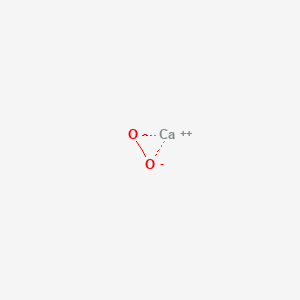
CAS 1305-79-9PubChem CID 14779
Calcium peroxide
Calcium peroxide is a member of calcium oxides. — ChEBI
- IUPAC 명칭
- calcium peroxide
- 분자식
- CaO2
- 분자량
- 72.08 g/mol
- 정확한 질량
- 71.9524201 Da
- 위상 극성 표면적
- 46.1 Ų
- 수소 결합 공여체
- 0
- 수소 결합 수용체
- 2
- 공유결합 단위
- 2
- 정의된 입체중심
- 0
다른 이름
Calcium dioxideCalperCalper GCalcium peroxide (Ca(O2))7FRO2ENO91CHEBI:48233RefChem:122888215-139-4
보고된 명칭 13개 더 보기
684-873-9calcium;peroxideUNII-7FRO2ENO91peroxidocalciumCalciumperoxidKalziumperoxidHSDB 965cyc-CaO2EINECS 215-139-4UN1457Ca(O2)(eta~2~-Dioxidanediido)calciumCalcium peroxide [UN1457] [Oxidizer]
외부 데이터베이스 식별자
- ChEBI:CHEBI:48233
- EPA DTXSID:DTXSID4050489
- PubMed:31515881
- PubMed:26053405
추가 과학 데이터베이스의 근거
NIH PubChem PUG-View
식별자 정확히 일치14779
Attributed physical-property, hazard, environmental and use annotations.
- Color/Form: White or yellowish powder 출처: Hazardous Substances Data Bank (HSDB)
- Color/Form: White tetragonal crystals 출처: Hazardous Substances Data Bank (HSDB)
- Density: 2.92 at 77 °F (USCG, 1999) - Denser than water; will sink 출처: CAMEO Chemicals
- Density: 2.9 g/cu cm 출처: Hazardous Substances Data Bank (HSDB)
- Melting Point: Decomp at 200 °C 출처: Hazardous Substances Data Bank (HSDB)
- Odor: Odorless 출처: Hazardous Substances Data Bank (HSDB)
- Physical Description: Calcium peroxide appears as a grayish white granular material. Used in baking, in medicine, in bleaching oils. 출처: CAMEO Chemicals
- Physical Description: White or yellowish odorless solid; Slightly soluble in water; Decomposes in moist air; [Merck Index] Yellowish odorless powder; Insoluble in water; [MSDSonline] 출처: Haz-Map, Information on Hazardous Chemicals and Occupational Diseases
- Refractive Index: INDEX OF REFRACTION: 1.895 출처: Hazardous Substances Data Bank (HSDB)
- Solubility: Slightly soluble in water 출처: Hazardous Substances Data Bank (HSDB)
- Solubility: Soluble in acids with formation of hydrogen peroxide 출처: Hazardous Substances Data Bank (HSDB)
- First Aid: INHALATION: remove to fresh air.; EYES: flush with water for 15 min. and consult physician.; SKIN: flush with water.; INGESTION: give large amounts of water. (USCG, 1999) 출처: CAMEO Chemicals
- ERG2024, Guide 140 (Calcium peroxide): General First Aid:; · Call 911 or emergency medical service.; · Ensure that medical personnel are aware of the material(s) involved, take precautions to protect themselves and avoid contamination.; · Move victim to fresh air if it can be done safely.; · Administer oxygen if breathing is difficult.; · If victim is not breathing:; -- DO NOT perform mouth-to-mouth resuscitation; the victim may have ingested or inhaled the substance.; -- If equipped and pulse detected, wash face and mouth, then give artificial respiration using a proper respiratory medical device (bag-valve mask, pocket mask equipped with a one-way valve or other device).; -- If no pulse detected or no respiratory medical device available, provide continuous compressions. Conduct a pulse check every two minutes or monitor for any signs of spontaneous respirations.; · Remove and isolate contaminated clothing and shoes.; · For minor skin contact, avoid spreading material on unaffected skin.; · In case of contact with substance, remove immediately by flushing skin or eyes with running water for at least 20 minutes.; · For severe burns, immediate medical attention is required.; · Effects of exposure (inhalation, ingestion, 출처: Emergency Response Guidebook (ERG)
- Signal: Danger 출처: European Chemicals Agency (ECHA)
- GHS Hazard Statements: H272 (97.1%): May intensify fire; oxidizer [Danger Oxidizing liquids; Oxidizing solids]; H315 (94.3%): Causes skin irritation [Warning Skin corrosion/irritation]; H319 (94.3%): Causes serious eye irritation [Warning Serious eye damage/eye irritation]; H335 (94.3%): May cause respiratory irritation [Warning Specific target organ toxicity, single exposure; Respiratory tract irritation] 출처: European Chemicals Agency (ECHA)
- Precautionary Statement Codes: P210, P220, P261, P264, P264+P265, P271, P280, P302+P352, P304+P340, P305+P351+P338, P319, P321, P332+P317, P337+P317, P362+P364, P370+P378, P403+P233, P405, and P501 (click each P-code to see the statement) 출처: European Chemicals Agency (ECHA)
- ECHA C&L Notifications Summary: Aggregated GHS information provided per 140 reports by companies from 7 notifications to the ECHA C&L Inventory. Each notification may be associated with multiple companies.; Information may vary between notifications depending on impurities, additives, and other factors. The percentage value in parenthesis indicates the notified classification ratio from companies that provide hazard codes. Only hazard codes with percentage values above 10% are shown. For more detailed information, please visit ECHA C&L website. 출처: European Chemicals Agency (ECHA)
- GHS Hazard Statements: H272 (100%): May intensify fire; oxidizer [Danger Oxidizing liquids; Oxidizing solids]; H315 (100%): Causes skin irritation [Warning Skin corrosion/irritation]; H319 (100%): Causes serious eye irritation [Warning Serious eye damage/eye irritation]; H335 (100%): May cause respiratory irritation [Warning Specific target organ toxicity, single exposure; Respiratory tract irritation] 출처: European Chemicals Agency (ECHA)
- ECHA C&L Notifications Summary: Aggregated GHS information provided per 38 reports by companies from 1 notifications to the ECHA C&L Inventory. Each notification may be associated with multiple companies.; Information may vary between notifications depending on impurities, additives, and other factors. The percentage value in parenthesis indicates the notified classification ratio from companies that provide hazard codes. Only hazard codes with percentage values above 10% are shown. For more detailed information, please visit ECHA C&L website. 출처: European Chemicals Agency (ECHA)
- Signal: Danger 출처: NITE-CMC
- GHS Hazard Statements: H272: May intensify fire; oxidizer [Danger Oxidizing liquids; Oxidizing solids]; H318: Causes serious eye damage [Danger Serious eye damage/eye irritation] 출처: NITE-CMC
- Precautionary Statement Codes: P210, P220, P264+P265, P280, P305+P354+P338, P317, P370+P378, and P501 (click each P-code to see the statement) 출처: NITE-CMC
- Signal: Danger 출처: Hazardous Chemical Information System (HCIS), Safe Work Australia
- GHS Hazard Statements: H302: Harmful if swallowed [Warning Acute toxicity, oral]; H314: Causes severe skin burns and eye damage [Danger Skin corrosion/irritation]; H335: May cause respiratory irritation [Warning Specific target organ toxicity, single exposure; Respiratory tract irritation] 출처: Hazardous Chemical Information System (HCIS), Safe Work Australia
- Precautionary Statement Codes: P260, P261, P264, P270, P271, P280, P301+P317, P301+P330+P331, P302+P361+P354, P304+P340, P305+P354+P338, P316, P319, P321, P330, P363, P403+P233, P405, and P501 (click each P-code to see the statement) 출처: Hazardous Chemical Information System (HCIS), Safe Work Australia
- Toxicity Summary: IDENTIFICATION AND USE: Calcium peroxide is white or yellowish powder. It is used as a stabilizer for rubber. Other uses including seed disinfectant, dentifrices, dough conditioners, antiseptic, bleaching of oils, modification of starches, high temperature oxidation. An important application of calcium peroxide is for curing the polysulfide sealants used in double glazing window units. Calcium peroxide is also used at several gold mines in Australia to increase recovery of gold and reduce the consumption of cyanide. Calcium peroxide has been identified as being used in hydraulic fracturing as a breaker. HUMAN EXPOSURE AND TOXICITY: Contact with calcium peroxide can severely irritate and may burn the skin and eyes. Exposure can irritate the eyes, nose, and throat. Prolonged exposure can damage the skin. Higher levels of calcium peroxide can irritate the lungs causing coughing and/or shortness of breath. Still higher exposures may cause a buildup of fluid in the lungs (pulmonary edema). This can cause death. ANIMAL STUDIES: Experiments with calcium peroxide revealed that the compound is not toxic to dogs treated orally. ECOTOXICITY STUDIES: New method was proposed for increasing the 출처: Hazardous Substances Data Bank (HSDB)
- Consumer Uses: Oxidizing agent 출처: EPA Chemical Data Reporting (CDR)
- Industry Uses: Oxidizing agent 출처: EPA Chemical Data Reporting (CDR)
- Sources/Uses: Used as a rubber stabilizer, antiseptic, seed disinfectant, starch modifier, sewage deodorizer, and wastewater dechlorinator; Also used for dentifrices; in dough conditioners; for bleaching of oils; in high temperature oxidations; for curing the polysulfide sealants used in double glazing window units; to increase recovery of gold and reduce the consumption of cyanide (at gold mines); to improve the bioremediation of soils contaminated with creosote or kerosene; for removing metal ions from acidic waste streams such as coal ash leachate and acid mine drainage; in the cultivation of tomatoes, cucumbers, tobacco, and prawns (Japan); [HSDB] Used as a flour treatment agent; [JECFA] 출처: Haz-Map, Information on Hazardous Chemicals and Occupational Diseases
- Industrial Processes with risk of exposure: Using Disinfectants or Biocides [Category: Clean]; Farming (Pesticides) [Category: Industry]; Sewer and Wastewater Treatment [Category: Industry]; Metal Extraction and Refining [Category: Industry] 출처: Haz-Map, Information on Hazardous Chemicals and Occupational Diseases
- Uses: Stabilizer for rubber. 출처: Hazardous Substances Data Bank (HSDB)
- Uses: Seed disinfectant, dentifrices, dough conditioners, antiseptic, bleaching of oils, modification of starches, high temperature oxidation. 출처: Hazardous Substances Data Bank (HSDB)
- Uses: Calcium peroxide is used as oxygen source in the leaching of gold and silver ores with cyanide to improve precious metal recovery and leaching kinetics. A relatively new application for CaO2 is as a peroxide source in toothpaste and dental chewing gum products. Calcium peroxide is also used in limited quantities as a hardening accelerator for sulfide rubber, as dough conditioner in the baking industry, and as a nontoxic disinfectant for seed and grain. 출처: Hazardous Substances Data Bank (HSDB)
- Uses: An important application of calcium peroxide is for curing the polysulfide sealants used in double glazing window units. Calcium peroxide is also used at several gold mines in Australia to increase recovery of gold and reduce the consumption of cyanide. Calcium peroxide (PermeOx) is also used to improve the bioremediation of soils contaminated with creosote or kerosene, to deodorize sewage sludges and wastewater, and to dechlorinate wastewater and effluents. A special formulation of calcium peroxide ... is used for removing metal ions from acidic waste streams such as coal ash leachate and acid mine drainage. 출처: Hazardous Substances Data Bank (HSDB)
- Uses: For more Uses (Complete) data for CALCIUM PEROXIDE (7 total), please visit the HSDB record page. 출처: Hazardous Substances Data Bank (HSDB)
매핑 기준: Existing checksum-valid CAS to unique PubChem CID match. 가져온 시각: 2026-08-31. 출처 기록 열기
과학적 분류와 유해성 주석은 맥락을 제공할 뿐이며, 위에 표시된 시장별 규제 판단을 대체하지 않습니다.
추가 출처 적용 범위 및 일치 상태
| 출처 | 결과 | 확인됨 |
|---|---|---|
| NIH PubChem PUG-View | 정확히 일치 | 2026-08-31 |
기록된 불일치는 출처를 확인했다는 유용한 근거이며, 해당 물질이 다른 곳에 존재하지 않는다는 주장이 아닙니다.
체크섬이 유효한 CAS 일치를 통해 2026-08-31에 NIH PubChem에서 가져왔습니다. 화학적 특성은 이 페이지의 규제 판단을 대체하지 않습니다.
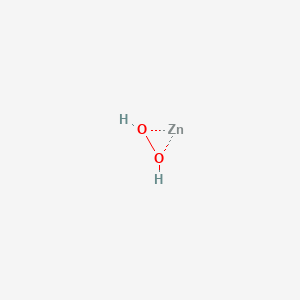
CAS 1314-22-3PubChem CID 14809
Zinc Peroxide
Zinc peroxide appears as a white powder. — CAMEO Chemicals
- IUPAC 명칭
- hydrogen peroxide;zinc
- 분자식
- H2O2Zn
- 분자량
- 99.4 g/mol
- 정확한 질량
- 97.934621 Da
- 위상 극성 표면적
- 40.5 Ų
- 수소 결합 공여체
- 2
- 수소 결합 수용체
- 2
- 공유결합 단위
- 2
- 정의된 입체중심
- 0
다른 이름
Zinc superoxideZinc dioxideZinc peroxide, medicinalZinc peroxide (Zn(O2))AI3-03965Zinc peroxide, medicinal [USP]HSDB 10580I969DVM77
보고된 명칭 16개 더 보기
EINECS 215-226-7UN1516ZINC PEROXIDE (MART.)ZINC PEROXIDE [MART.]Zinc peroxide, medicinal (USP)peroxol zincZinc bioxideZEONET ZPRefChem:904988ZINC PEROXIDE [MI]ZINC OXIDE (ZNO2)STRUKTOL ZP 1014ZINC PEROXIDE [HSDB]ZINC PEROXIDE [INCI]ZINC PEROXIDE (Zn(O2)ZINC PEROXIDE [WHO-DD]
외부 데이터베이스 식별자
- EPA DTXSID:DTXSID5051658
체크섬이 유효한 CAS 일치를 통해 2026-09-02에 NIH PubChem에서 가져왔습니다. 화학적 특성은 이 페이지의 규제 판단을 대체하지 않습니다.
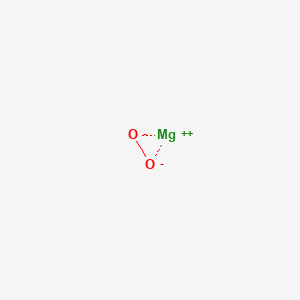
CAS 1335-26-8PubChem CID 61745
Magnesium peroxide (Mg(O2))
Magnesium peroxide appears as a white powder. Noncombustible but accelerates the burning of combustible material, if the combustible material is finely divided the mixture may be explosive. Mixtures of combustible material and the peroxide can be ignited by friction or contact with moisture. Used in medicine, and as a bleaching agent. — CAMEO Chemicals
- IUPAC 명칭
- magnesium peroxide
- 분자식
- MgO2
- 분자량
- 56.304 g/mol
- 정확한 질량
- 55.9748709 Da
- 위상 극성 표면적
- 46.1 Ų
- 수소 결합 공여체
- 0
- 수소 결합 수용체
- 2
- 공유결합 단위
- 2
- 정의된 입체중심
- 0
다른 이름
PeromagMagnesium perhydrolDrillox MMagnesium superoxolX8YVJ0TN96EktomorRefChem:58182215-627-7
보고된 명칭 11개 더 보기
238-438-1Magnesium dioxidemagnesium;peroxideMagnesiumperoxydUNII-X8YVJ0TN96Magnesium peroxide (Mg(O2)a)HSDB 7986(eta~2~-Dioxidanediido)magnesiumEINECS 238-438-1UN1476Magnesium peroxide [UN1476] [Oxidizer]
외부 데이터베이스 식별자
- EPA DTXSID:DTXSID9049667
체크섬이 유효한 CAS 일치를 통해 2026-09-02에 NIH PubChem에서 가져왔습니다. 화학적 특성은 이 페이지의 규제 판단을 대체하지 않습니다.
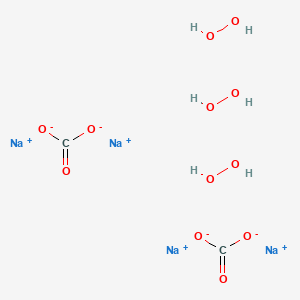
CAS 15630-89-4PubChem CID 159762
Sodium percarbonate
Sodium percarbonate appears as a colorless, crystalline solid. Denser than water. May combust in contact with organic materials. Contact may irritate skin, eyes and mucous membranes. May be toxic by ingestion. Used to make other chemicals. — CAMEO Chemicals
- IUPAC 명칭
- tetrasodium;hydrogen peroxide;dicarbonate
- 분자식
- C2H6Na4O12
- 분자량
- 314.02 g/mol
- 정확한 질량
- 313.94500275 Da
- 위상 극성 표면적
- 248.0 Ų
- 수소 결합 공여체
- 6
- 수소 결합 수용체
- 12
- 공유결합 단위
- 9
- 정의된 입체중심
- 0
다른 이름
OxyperSodium carbonate peroxyhydratePerdoxSodium carbonate peroxideFB Sodium percarbonatePeroxy sodium carbonateZ7G82NV92PDisodium carbonate, hydrogen peroxide (2:3)
보고된 명칭 16개 더 보기
DISODIUM CARBONATE SESQUIPEROXIDEHOOF CARERefChem:6244ASPEN FOOT PATROLSODIUM PERCARBONATESHYDROGEN PEROXIDE, COMPOUND WITH DISODIUM CARBONATE (3:2)CARBONIC ACID DISODIUM SALT, COMPOUND WITH HYDROGEN PEROXIDE (2:3)239-707-6PercarbonateEINECS 239-707-6UNII-Z7G82NV92PHSDB 8161Disodium carbonate, compound with hydrogen peroxide (2:3)Sodium percarbonate, CPSodium Percarbonate(SPC)EC 239-707-6
외부 데이터베이스 식별자
- EPA DTXSID:DTXSID3029736
체크섬이 유효한 CAS 일치를 통해 2026-09-02에 NIH PubChem에서 가져왔습니다. 화학적 특성은 이 페이지의 규제 판단을 대체하지 않습니다.
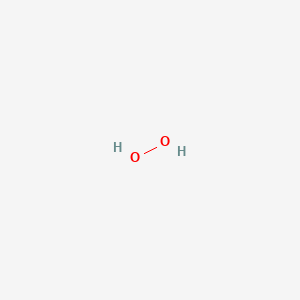
CAS 7722-84-1PubChem CID 784
Hydrogen Peroxide
Peroxides is compounds of structure ROOR'. It has a role as an oxidising agent. It contains a peroxy group. — ChEBI
- IUPAC 명칭
- hydrogen peroxide
- 분자식
- H2O2
- 분자량
- 34.015 g/mol
- 정확한 질량
- 34.005479302 Da
- XLogP3
- -0.9
- 위상 극성 표면적
- 40.5 Ų
- 수소 결합 공여체
- 2
- 수소 결합 수용체
- 2
- 공유결합 단위
- 1
- 정의된 입체중심
- 0
다른 이름
oxydolperhydrolSuperoxolInteroxHydrogen dioxideInhibinePeroxaanAlbone
보고된 명칭 16개 더 보기
HioxylKastoneH2O2Albone 35Albone DSDihydrogen dioxideT-StuffElawoxLenseptPeroneAlbone 35CGAlbone 50Albone 50CGAlbone 70Albone 70CGPerone 50
외부 데이터베이스 식별자
- ChEBI:CHEBI:16240
- ChEBI:CHEBI:25940
- ChEMBL:CHEMBL71595
- EPA DTXSID:DTXSID2020715
- PubMed:40965455
- PubMed:40706909
- PubMed:40522286
- PubMed:40436237
- PubMed:40384022
- PubMed:40378909
- PubMed:40139512
- PubMed:40086586
- PubMed:39866090
- PubMed:39743035
- PubMed:39709020
- PubMed:39667565
체크섬이 유효한 CAS 일치를 통해 2026-08-31에 NIH PubChem에서 가져왔습니다. 화학적 특성은 이 페이지의 규제 판단을 대체하지 않습니다.
추가 공신력 있는 물질 조사
각 링크는 해당 출처에서 이 정체를 검색합니다. 링크는 조사 경로일 뿐이며, 그 출처에 정확히 일치하는 기록이 있다는 주장이 아닙니다. 각 출처의 성격과 법적 비중
공식 출처 및 범위
집행위원회 시행결정 (EU) 2025/1175(데이터세트 버전 EU 2025/1175)에서 가져왔습니다. 이 용어집은 제19조 제1항 (g)호에서 요구하는 성분 목록에 사용할 일반 원료 명칭을 제공하며, 승인 또는 안전성 목록이 아닙니다.
공식 결정 열기