
CAS
기록 1건
CAS 1303-00-0
CAS 1303-00-0은(는) 규정 1223/2009의 부속서 II–VI에 걸쳐 EU 부속서 기록 1건과 일치합니다.
CAS 1303-00-0의 기록
1 총화학적 정체 및 특성
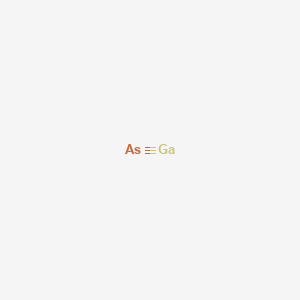
CAS 1303-00-0PubChem CID 14770
Gallium arsenide
Gallium Arsenide can cause cancer according to California Labor Code. — California Office of Environmental Health Hazard Assessment (OEHHA)
- IUPAC 명칭
- gallanylidynearsane
- 분자식
- AsGa
- 분자량
- 144.645 g/mol
- 정확한 질량
- 143.84717 Da
- 위상 극성 표면적
- 0.0 Ų
- 수소 결합 공여체
- 0
- 수소 결합 수용체
- 0
- 공유결합 단위
- 1
- 정의된 입체중심
- 0
다른 이름
Gallium arsenide (GaAs)Gallium monoarsenideGallium monoarsenide (GaAs)GaAs27FC46GA44Gallium ArsenatumRefChem:58150215-114-8
보고된 명칭 15개 더 보기
CCRIS 4020HSDB 4376EINECS 215-114-8arsinogallaneUNII-27FC46GA44GalliummonoarsenideGallium Arsenide, piecesEC 215-114-8GALLIUM ARSENIDE [MI]Gallium arsenide, pieces, 99.999% trace metals basisGallium arsenide Optical Window, 12.7mm (0.5in) dia x 1mm (0.04in) thickGallium arsenide Optical Window, 12.7mm (0.5in) dia x 2mm (0.08in) thickGallium arsenide Optical Window, 25.4mm (1.0in) dia x 2mm (0.08in) thickGallium arsenide Optical Window, 50.8mm (2.0in) dia x 2mm (0.08in) thickGallium arsenide, (single crystal substrate), <100>, diam. x thickness 2 in. x 0.5 mm
추가 과학 데이터베이스의 근거
NIH PubChem PUG-View
식별자 정확히 일치14770
Attributed physical-property, hazard, environmental and use annotations.
- Color/Form: Cubic crystals, dark gray with metallic sheen 출처: Hazardous Substances Data Bank (HSDB)
- Color/Form: Gray cubic crystals 출처: Hazardous Substances Data Bank (HSDB)
- Density: 5.31 at 77 °F (NTP, 1992) - Denser than water; will sink 출처: CAMEO Chemicals
- Density: 5.3176 @ 25 °C 출처: Hazardous Substances Data Bank (HSDB)
- Density: Lattice constant 5.6-54 Angstroms; dielectric constant 11.1; intrinsic resistivity @ 300 deg K= 3.7X10+8 ohm-cm; electron lattice mobility @ 300 deg K= 10,000 square cm/volt-sec; intrinsic charge density @ 300 deg K= 1.4X10+6/cc; electron diffusion constant @ 300 deg K= 310 square cm/sec; hole diffusion constant= 11.5 square cm/sec 출처: Hazardous Substances Data Bank (HSDB)
- Density: 5.31 출처: Occupational Safety and Health Administration (OSHA)
- Melting Point: 2260 °F (NTP, 1992) 출처: CAMEO Chemicals
- Melting Point: 1238 °C 출처: Haz-Map, Information on Hazardous Chemicals and Occupational Diseases
- Melting Point: 1238 °C 출처: Hazardous Substances Data Bank (HSDB)
- Melting Point: 2260 °F 출처: Occupational Safety and Health Administration (OSHA)
- Odor: Garlic odor when moistened 출처: Hazardous Substances Data Bank (HSDB)
- Physical Description: Gallium arsenide is an insoluble, high-boiling solid which may react very slowly with water or water vapor to evolve toxic gases such as arsine. It is used as a high-performance material in the semiconductor industry. 출처: CAMEO Chemicals
- Physical Description: Gray crystals or powder; [CAMEO] 출처: Haz-Map, Information on Hazardous Chemicals and Occupational Diseases
- Physical Description: Dark gray crystals with a metallic greenish-blue sheen or gray powder. 출처: Occupational Safety and Health Administration (OSHA)
- Solubility: less than 1 mg/mL at 68 °F (NTP, 1992) 출처: CAMEO Chemicals
- Solubility: <1 mg/mg in DMSO, 95% ethanol, methanol, and acetone; soluble in hydrochloric acid 출처: Hazardous Substances Data Bank (HSDB)
- Solubility: In water, <1 mg/ml @ 20 °C 출처: Hazardous Substances Data Bank (HSDB)
- Substance: Gallium Arsenide 출처: NTP Technical Reports
- NTP Technical Report: TR-492: Toxicology and Carcinogenesis Studies of Gallium Arsenide (CASRN 1303-00-0) in F344/N Rats and B6C3F1 Mice (Inhalation Studies) (2000 ) 출처: NTP Technical Reports
- Peer Review Date: 05/21/99 출처: NTP Technical Reports
- Conclusion for Male Rat: No Evidence 출처: NTP Technical Reports
- Conclusion for Female Rat: Clear Evidence 출처: NTP Technical Reports
- Conclusion for Male Mice: No Evidence 출처: NTP Technical Reports
- Conclusion for Female Mice: No Evidence 출처: NTP Technical Reports
- Summary: Under the conditions of these 2-year inhalation studies, there was no evidence of carcinogenic activity of gallium arsenide in male F344/N rats exposed to 0.01, 0.1, or 1.0 mg/m3. There was clear evidence of carcinogenic activity in female F344/N rats based on increased incidences of benign and malignant neoplasms in the lung. Increased incidences of benign neoplasms of the adrenal medulla and increased incidences of mononuclear cell leukemia were also considered to be exposure related. There was no evidence of carcinogenic activity in male or female B6C3F1 mice exposed to 0.1, 0.5, or 1.0 mg/m3.; Exposure to gallium arsenide caused a spectrum of nonneoplastic lesions in the lung of rats and mice, the larynx of male rats and hyperplasia of the tracheobronchial lymph node in mice. 출처: NTP Technical Reports
- Carcinogen Classification: 1, carcinogenic to humans. (L135) 출처: Toxin and Toxin Target Database (T3DB)
- Exposure Routes: Oral (L2) ; inhalation (L2); dermal (L2) 출처: Toxin and Toxin Target Database (T3DB)
- First Aid: EYES: First check the victim for contact lenses and remove if present. Flush victim's eyes with water or normal saline solution for 20 to 30 minutes while simultaneously calling a hospital or poison control center. Do not put any ointments, oils, or medication in the victim's eyes without specific instructions from a physician. IMMEDIATELY transport the victim after flushing eyes to a hospital even if no symptoms (such as redness or irritation) develop.; SKIN: IMMEDIATELY flood affected skin with water while removing and isolating all contaminated clothing. Gently wash all affected skin areas thoroughly with soap and water. If symptoms such as redness or irritation develop, IMMEDIATELY call a physician and be prepared to transport the victim to a hospital for treatment.; INHALATION: IMMEDIATELY leave the contaminated area; take deep breaths of fresh air. IMMEDIATELY call a physician and be prepared to transport the victim to a hospital even if no symptoms (such as wheezing, coughing, shortness of breath, or burning in the mouth, throat, or chest) develop. Provide proper respiratory protection to rescuers entering an unknown atmosphere. Whenever possible, Self-Contained Breathing Ap 출처: CAMEO Chemicals
- Signal: Danger 출처: Regulation (EC) No 1272/2008 of the European Parliament and of the Council
- GHS Hazard Statements: H350: May cause cancer [Danger Carcinogenicity]; H360F: May damage fertility [Danger Reproductive toxicity]; H372: Causes damage to organs through prolonged or repeated exposure [Danger Specific target organ toxicity, repeated exposure] 출처: Regulation (EC) No 1272/2008 of the European Parliament and of the Council
- Precautionary Statement Codes: P203, P260, P264, P270, P280, P318, P319, P405, and P501 (click each P-code to see the statement) 출처: Regulation (EC) No 1272/2008 of the European Parliament and of the Council
- Note: This chemical does not meet GHS hazard criteria for 6.2% (7 of 112) of reports. 출처: European Chemicals Agency (ECHA)
- Signal: Danger 출처: European Chemicals Agency (ECHA)
- GHS Hazard Statements: H350 (88.4%): May cause cancer [Danger Carcinogenicity]; H360 (50.9%): May damage fertility or the unborn child [Danger Reproductive toxicity]; H372 (88.4%): Causes damage to organs through prolonged or repeated exposure [Danger Specific target organ toxicity, repeated exposure] 출처: European Chemicals Agency (ECHA)
- Precautionary Statement Codes: P203, P260, P264, P270, P280, P318, P319, P405, and P501 (click each P-code to see the statement) 출처: European Chemicals Agency (ECHA)
- ECHA C&L Notifications Summary: Aggregated GHS information provided per 112 reports by companies from 7 notifications to the ECHA C&L Inventory. Each notification may be associated with multiple companies.; Reported as not meeting GHS hazard criteria per 7 of 112 reports by companies.; There are 6 notifications provided by 105 of 112 reports by companies with hazard statement code(s).; Information may vary between notifications depending on impurities, additives, and other factors. The percentage value in parenthesis indicates the notified classification ratio from companies that provide hazard codes. Only hazard codes with percentage values above 10% are shown. For more detailed information, please visit ECHA C&L website. 출처: European Chemicals Agency (ECHA)
- Signal: Danger 출처: NITE-CMC
- GHS Hazard Statements: H350: May cause cancer [Danger Carcinogenicity]; H360: May damage fertility or the unborn child [Danger Reproductive toxicity]; H370: Causes damage to organs [Danger Specific target organ toxicity, single exposure]; H372: Causes damage to organs through prolonged or repeated exposure [Danger Specific target organ toxicity, repeated exposure] 출처: NITE-CMC
- Precautionary Statement Codes: P203, P260, P264, P270, P280, P308+P316, P318, P319, P321, P405, and P501 (click each P-code to see the statement) 출처: NITE-CMC
- Signal: Danger 출처: Hazardous Chemical Information System (HCIS), Safe Work Australia
- Health Effects: Arsenic poisoning can lead to death from multi-system organ failure, probably from necrotic cell death, not apoptosis. Arsenic is also a known carcinogen, esepcially in skin, liver, bladder and lung cancers. (T1, L20) 출처: Toxin and Toxin Target Database (T3DB)
- Toxicity Summary: Arsenic and its metabolites disrupt ATP production through several mechanisms. At the level of the citric acid cycle, arsenic inhibits pyruvate dehydrogenase and by competing with phosphate it uncouples oxidative phosphorylation, thus inhibiting energy-linked reduction of NAD+, mitochondrial respiration, and ATP synthesis. Hydrogen peroxide production is also increased, which might form reactive oxygen species and oxidative stress. Arsenic's carginogenicity is influenced by the arsenical binding of tubulin, which results in aneuploidy, polyploidy and mitotic arrests. The binding of other arsenic protein targets may also cause altered DNA repair enzyme activity, altered DNA methylation patterns and cell proliferation. (T1, A17) 출처: Toxin and Toxin Target Database (T3DB)
- Sources/Uses: Used in semiconductor applications; [Merck Index #4347] 출처: Haz-Map, Information on Hazardous Chemicals and Occupational Diseases
- Industrial Processes with risk of exposure: Semiconductor Manufacturing [Category: Industry] 출처: Haz-Map, Information on Hazardous Chemicals and Occupational Diseases
- Uses: In semiconductor applications (transistors, solar cells, lasers) 출처: Hazardous Substances Data Bank (HSDB)
- Uses: Semiconductor in light-emitting diodes for telephone dials; magnetoresistance devices; thermistors; microwave generation 출처: Hazardous Substances Data Bank (HSDB)
- Uses: Infrared emitters; photoelectronic transmission of data by optical fibers 출처: Hazardous Substances Data Bank (HSDB)
- Uses: Gallium arsenide is used as a semiconductor, as well as in solar cells, x-ray detection diodes, and laser diodes. (L354) 출처: Toxin and Toxin Target Database (T3DB)
매핑 기준: Existing checksum-valid CAS to unique PubChem CID match. 가져온 시각: 2026-08-31. 출처 기록 열기
과학적 분류와 유해성 주석은 맥락을 제공할 뿐이며, 위에 표시된 시장별 규제 판단을 대체하지 않습니다.
추가 출처 적용 범위 및 일치 상태
| 출처 | 결과 | 확인됨 |
|---|---|---|
| NIH PubChem PUG-View | 정확히 일치 | 2026-08-31 |
기록된 불일치는 출처를 확인했다는 유용한 근거이며, 해당 물질이 다른 곳에 존재하지 않는다는 주장이 아닙니다.
체크섬이 유효한 CAS 일치를 통해 2026-09-02에 NIH PubChem에서 가져왔습니다. 화학적 특성은 이 페이지의 규제 판단을 대체하지 않습니다.
이 사이트에서 CAS 1303-00-0을(를) 사용하는 방식
CAS 1303-00-0은(는) 이 페이지를 특정 물질에 고정하는 데 사용하는 Chemical Abstracts Service 식별자입니다. 현재 데이터세트에서는 EU 부속서 기록 1건이 이 식별자를 공유하며, 같은 물질이 하나의 규제 맥락에 나타나는지 여러 맥락에 나타나는지 교차 확인하는 데 도움이 됩니다.
공급업체 규격서, SDS 또는 원료 문서에 CAS 1303-00-0이(가) 제시되어 있고 연결된 모든 부속서 II–VI 기록을 한곳에서 확인해야 할 때 이 페이지를 이용하세요. 위의 항목 카드는 농도 한도, 경고 문구, 부속서 위치 및 제품 유형 조건을 가장 빠르게 확인하는 방법입니다.
자주 묻는 질문
CAS 1303-00-0로 식별되는 물질은 맥락에 따라 다른 조건이 적용되는 경우 EU 화장품 규정의 여러 부속서에 나타날 수 있습니다. 예를 들어 어떤 물질이 부속서 III에서 특정 조건으로 사용제한될 수 있고, 같은 CAS가 부속서 IV에서 별도의 항목 조건에 따라 허용 색소로 나타날 수도 있습니다. 각 항목은 개별적으로 검토해야 합니다.
CAS 번호를 원료 규격서 및 CoA 문서와 대조하세요. CAS가 부속서 II에 있으면 해당 물질이 없는지 확인하세요. 부속서 III에 있으면 처방에서 농도 한도와 제품 유형 조건이 충족되는지 확인하세요. 이 CAS 번호를 공유하는 모든 부속서 항목이 위에 나열되어 있습니다.
CAS 번호는 미국의 Chemical Abstracts Service가 부여하며 전 세계적으로 통용됩니다. EC 번호는 EINECS, ELINCS 또는 NLP 목록 같은 목록에 수록된 유럽연합 집행위원회 식별자입니다. 두 식별자 모두 EU 화장품 부속서 항목에 나타날 수 있습니다. 두 가지를 모두 가진 물질도 있고, 하나만 가진 물질도 있으며, 일부 오래된 항목은 둘 다 없을 수도 있습니다.
INCI 검사기는 원료명, CAS 번호 및 EC 번호를 받습니다. 이 CAS 번호를 직접 확인한 다음, 결과를 공급업체 규격서 및 연결된 모든 부속서 조건과 대조하세요.