
CAS
기록 1건
CAS 106-89-8
CAS 106-89-8은(는) 규정 1223/2009의 부속서 II–VI에 걸쳐 EU 부속서 기록 1건과 일치합니다.
CAS 106-89-8의 기록
1 총화학적 정체 및 특성
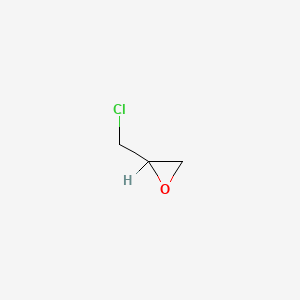
CAS 106-89-8PubChem CID 7835
Epichlorohydrin
Epichlorohydrin is an epoxide that is 1,2-epoxypropene in which one of the methyl hydrogens is substituted by chlorine. It is an epoxide and an organochlorine compound. It is functionally related to a 1,2-epoxypropane. — ChEBI
- IUPAC 명칭
- 2-(chloromethyl)oxirane
- 분자식
- C3H5ClO
- 분자량
- 92.52 g/mol
- 정확한 질량
- 92.0028925 Da
- XLogP3
- 0.5
- 위상 극성 표면적
- 12.5 Ų
- 수소 결합 공여체
- 0
- 수소 결합 수용체
- 1
- 공유결합 단위
- 1
- 정의된 입체중심
- 0
다른 이름
Epichlorhydrin1-Chloro-2,3-epoxypropaneGlycidyl chlorideEpichlorhydrineChloromethyloxiraneOxirane, (chloromethyl)-Chloropropylene oxide2,3-Epoxypropyl chloride
보고된 명칭 16개 더 보기
Epichloorhydrine(CHLOROMETHYL)OXIRANE1,2-Epoxy-3-chloropropane3-Chloro-1,2-epoxypropaneGlycerol epichlorhydrinGlycerol epichlorohydrin3-Chloropropylene oxidealpha-Epichlorohydrin(Chloromethyl)ethylene oxide3-Chloro-1,2-propylene oxideEpicloridrinaEpichlorohydrynaEpichlorophydrinSKEKhGepi-Chlorohydrin3-Chloropropene-1,2-oxide
외부 데이터베이스 식별자
- ChEBI:CHEBI:37144
- ChEMBL:CHEMBL1421613
- EPA DTXSID:DTXSID1020566
- PubMed:29792945
- PubMed:25622337
- PubMed:24211530
- PubMed:23082668
- PubMed:23071914
- PubMed:23044099
- PubMed:23032779
- PubMed:23020247
- PubMed:22971580
- PubMed:22954965
- PubMed:22922194
- PubMed:22875418
추가 과학 데이터베이스의 근거
EMBL-EBI ChEBI
식별자 정확히 일치CHEBI:37144
epichlorohydrin
An epoxide that is 1,2-epoxypropene in which one of the methyl hydrogens is substituted by chlorine.
- 처방
- C3H5ClO
- 평균 질량
- 92.525 g/mol
- 단일 동위원소 질량
- 92.00289 Da
- 형식 전하
- 0
- organochlorine compound — is a (CHEBI:36683)
- epoxide — is a (CHEBI:32955)
- 1,2-epoxypropane — has functional parent (CHEBI:38685)
- organochlorine compound — is a (CHEBI:36683)
- epoxide — is a (CHEBI:32955)
추가 선별 명칭
2-(chloromethyl)oxirane1-Chloro-2,3-epoxypropane2,3-epoxypropyl chloride3-chloro-1,2-epoxypropane(chloromethyl)ethylene oxidechloromethyloxiraneEpichlorohydrin(RS)-3-chloro-1,2-epoxypropanealpha-epichlorohydringamma-chloropropylene oxide
이 출처의 상호 참조
- CAS: 106-89-8 — ChemIDplus
- CAS: 106-89-8 — KEGG COMPOUND
- CAS: 106-89-8 — NIST Chemistry WebBook
- CAS: 13403-37-7 — NIST Chemistry WebBook
- CAS: 13403-37-7 — ChemIDplus
- REGISTRY_NUMBER: 164180 — Gmelin
- REGISTRY_NUMBER: 79785 — Beilstein
- REGISTRY_NUMBER: 79785 — Reaxys
- MANUAL_X_REF: 1733 — PPDB
- MANUAL_X_REF: c0077 — UM-BBD
- MANUAL_X_REF: C14449 — KEGG COMPOUND
- MANUAL_X_REF: Epichlorohydrin — Wikipedia
- MANUAL_X_REF: HMDB0034232 — HMDB
- MANUAL_X_REF: US2011054197 — Patent
매핑 기준: Exact CAS cross-reference in the ChEBI compound record. 출처 업데이트: 2026-08-08. 가져온 시각: 2026-08-31. 출처 기록 열기
NIH PubChem PUG-View
식별자 정확히 일치7835
Attributed physical-property, hazard, environmental and use annotations.
- Autoignition Temperature: 772 °F (USCG, 1999) 출처: CAMEO Chemicals
- Autoignition Temperature: 772 °F (411 °C) 출처: Hazardous Substances Data Bank (HSDB)
- Autoignition Temperature: 385 °C 출처: ILO-WHO International Chemical Safety Cards (ICSCs)
- Boiling Point: 241.7 °F at 760 mmHg (EPA, 1998) 출처: CAMEO Chemicals
- Boiling Point: 117.9 °C 출처: Hazardous Substances Data Bank (HSDB)
- Boiling Point: 116 °C 출처: ILO-WHO International Chemical Safety Cards (ICSCs)
- Boiling Point: 242 °F 출처: Occupational Safety and Health Administration (OSHA)
- Boiling Point: 117.9 °C @760 [mm Hg] 출처: PAC Chemical Database, U.S. Department of Energy
- Boiling Point: 242 °F 출처: The National Institute for Occupational Safety and Health (NIOSH)
- Color/Form: Colorless liquid 출처: Hazardous Substances Data Bank (HSDB)
- Density: 1.18 to 1.801 at 68 °F (EPA, 1998) 출처: CAMEO Chemicals
- Density: 1.1750 at 25 °C/4 °C 출처: Hazardous Substances Data Bank (HSDB)
- Density: Relative density (water = 1): 1.2 출처: ILO-WHO International Chemical Safety Cards (ICSCs)
- Density: 1.18 출처: Occupational Safety and Health Administration (OSHA)
- Density: 1.175 @25 °C 출처: PAC Chemical Database, U.S. Department of Energy
- Density: 1.18 출처: The National Institute for Occupational Safety and Health (NIOSH)
- Flash Point: 93 °F (EPA, 1998) 출처: CAMEO Chemicals
- Flash Point: 88 °F 출처: Haz-Map, Information on Hazardous Chemicals and Occupational Diseases
- Flash Point: 88 °F (31 °C) (Closed cup) 출처: Hazardous Substances Data Bank (HSDB)
- Flash Point: 31 °C c.c. 출처: ILO-WHO International Chemical Safety Cards (ICSCs)
- Flash Point: 93 °F 출처: Occupational Safety and Health Administration (OSHA)
- Flash Point: 93 °F 출처: The National Institute for Occupational Safety and Health (NIOSH)
- LogP: log Kow = 0.45 출처: Hazardous Substances Data Bank (HSDB)
- LogP: 0.45 출처: Human Metabolome Database (HMDB)
- LogP: 0.26 출처: ILO-WHO International Chemical Safety Cards (ICSCs)
- Melting Point: -54.4 to -14.1 °F (EPA, 1998) 출처: CAMEO Chemicals
- Melting Point: -25.6 °C 출처: Hazardous Substances Data Bank (HSDB)
- Melting Point: -57.2 °C 출처: Human Metabolome Database (HMDB)
- Melting Point: -48 °C 출처: ILO-WHO International Chemical Safety Cards (ICSCs)
- Melting Point: -54 °F 출처: Occupational Safety and Health Administration (OSHA)
- Melting Point: -25.6 °C 출처: PAC Chemical Database, U.S. Department of Energy
- Melting Point: -54 °F 출처: The National Institute for Occupational Safety and Health (NIOSH)
- Odor: Odor is sweet, pungent or chloroform-like ... generally perceived as a slightly irritating chloroformlike odor 출처: Hazardous Substances Data Bank (HSDB)
- Odor: Pungent, garlic-like odor 출처: Hazardous Substances Data Bank (HSDB)
- Physical Description: 1-chloro-2,3-epoxypropane appears as a clear colorless liquid with an irritating chloroform-like odor. Density 9.8 lb / gal. Flash point 87 °F. Polymerizable. If polymerization takes place inside a closed container, the container is subject to violent rupture. Irritates the skin and respiratory system. Toxic by ingestion. A confirmed carcinogen. Vapors heavier than air. Used to make plastics and as a solvent. 출처: CAMEO Chemicals
- Physical Description: Liquid; Gas Vapor; Liquid 출처: EPA Chemical Data Reporting (CDR)
- Physical Description: Colorless liquid with a slightly irritating, chloroform-like odor; [NIOSH] 출처: Haz-Map, Information on Hazardous Chemicals and Occupational Diseases
- Physical Description: Liquid 출처: Human Metabolome Database (HMDB)
- Physical Description: COLOURLESS LIQUID WITH CHARACTERISTIC ODOUR. 출처: ILO-WHO International Chemical Safety Cards (ICSCs)
- Physical Description: Colorless liquid with a slightly irritating, chloroform-like odor. 출처: Occupational Safety and Health Administration (OSHA)
- Physical Description: Colorless liquid with a slightly irritating, chloroform-like odor. 출처: The National Institute for Occupational Safety and Health (NIOSH)
- Refractive Index: Index of refraction: 1.44195 at 11.6 °C/D; 1.43969 at 16 °C/D; 1.43585 at 25 °C/D 출처: Hazardous Substances Data Bank (HSDB)
- Solubility: 50 to 100 mg/mL at 72 °F (NTP, 1992) 출처: CAMEO Chemicals
- Solubility: Miscible with most organic solvents 출처: Hazardous Substances Data Bank (HSDB)
- Solubility: Miscible with alcohol, ether, chloroform, trichloroethylene, carbon tetrachloride; immiscible with petroleum hydrocarbons. 출처: Hazardous Substances Data Bank (HSDB)
- Solubility: In water, 6.59X10+4 mg/L at 25 °C 출처: Hazardous Substances Data Bank (HSDB)
- Solubility: 65.9 mg/mL at 25 °C 출처: Human Metabolome Database (HMDB)
- Solubility: Solubility in water, g/100ml at 20 °C: 6 출처: ILO-WHO International Chemical Safety Cards (ICSCs)
- Solubility: 7% 출처: The National Institute for Occupational Safety and Health (NIOSH)
- Vapor Pressure: 10 mmHg at 61.88 °F (EPA, 1998) 출처: CAMEO Chemicals
- Vapor Pressure: 16.4 [mmHg] 출처: Haz-Map, Information on Hazardous Chemicals and Occupational Diseases
- Vapor Pressure: 16.4 mm Hg at 25 °C 출처: Hazardous Substances Data Bank (HSDB)
- Vapor Pressure: Vapor pressure, kPa at 20 °C: 1.6 출처: ILO-WHO International Chemical Safety Cards (ICSCs)
- Vapor Pressure: 13 mmHg 출처: Occupational Safety and Health Administration (OSHA)
- Vapor Pressure: 16.4 [mm Hg] @25 °C 출처: PAC Chemical Database, U.S. Department of Energy
- Vapor Pressure: 13 mmHg 출처: The National Institute for Occupational Safety and Health (NIOSH)
- Viscosity: 0.0103 poise at 25 °C 출처: Hazardous Substances Data Bank (HSDB)
- IARC Carcinogenic Agent: Epichlorohydrin 출처: International Agency for Research on Cancer (IARC)
- IARC Carcinogenic Classes: Group 2A: Probably carcinogenic to humans 출처: International Agency for Research on Cancer (IARC)
- IARC Monographs: Volume 11: (1976) Cadmium, Nickel, Some Epoxides, Miscellaneous Industrial Chemicals and General Considerations on Volatile Anaesthetics; Volume Sup 7: Overall Evaluations of Carcinogenicity: An Updating of IARC Monographs Volumes 1 to 42, 1987; 440 pages; ISBN 92-832-1411-0 (out of print); Volume 71: (1999) Re-evaluation of Some Organic Chemicals, Hydrazine and Hydrogen Peroxide (Part 1, Part 2, Part 3) 출처: International Agency for Research on Cancer (IARC)
- Publication Year: 1999 출처: International Agency for Research on Cancer (IARC)
- Evaluation Year: 1998 출처: International Agency for Research on Cancer (IARC)
- Additional information: NB Overall evaluation upgraded to Group 2A with supporting evidence from other relevant data 출처: International Agency for Research on Cancer (IARC)
- Exposure Routes: The substance can be absorbed into the body by inhalation, through the skin and by ingestion. 출처: ILO-WHO International Chemical Safety Cards (ICSCs)
- Exposure Routes: inhalation, skin absorption, ingestion, skin and/or eye contact 출처: The National Institute for Occupational Safety and Health (NIOSH)
- First Aid: Warning: Effects may be delayed for several hours. Caution is advised.; Signs and Symptoms of Acute Epichlorohydrin Exposure: Acute exposure to epichlorohydrin may result in nausea, vomiting, and abdominal pain. Liver and kidney effects may be observed. The respiratory tract may become irritated, dyspnea (shortness of breath) may occur, and in acute cases, respiratory paralysis has been observed. Central nervous system and respiratory depression have been noted. Facial swelling, mucosal irritation, dermatitis (red, inflamed skin), and eye irritation may also occur following exposure to epichlorohydrin.; Emergency Life-Support Procedures: Acute exposure to epichlorohydrin may require decontamination and life support for the victims. Emergency personnel should wear protective clothing appropriate to the type and degree of contamination. Air-purifying or supplied-air respiratory equipment should also be worn, as necessary. Rescue vehicles should carry supplies such as plastic sheeting and disposable plastic bags to assist in preventing spread of contamination.; Inhalation Exposure:; 1. Move victims to fresh air. Emergency personnel should avoid self-exposure to epichlorohydrin.; 2. Ev 출처: CAMEO Chemicals
- ERG2024, Guide 131P (Epichlorohydrin): General First Aid:; · Call 911 or emergency medical service.; · Ensure that medical personnel are aware of the material(s) involved, take precautions to protect themselves and avoid contamination.; · Move victim to fresh air if it can be done safely.; · Administer oxygen if breathing is difficult.; · If victim is not breathing:; -- DO NOT perform mouth-to-mouth resuscitation; the victim may have ingested or inhaled the substance.; -- If equipped and pulse detected, wash face and mouth, then give artificial respiration using a proper respiratory medical device (bag-valve mask, pocket mask equipped with a one-way valve or other device).; -- If no pulse detected or no respiratory medical device available, provide continuous compressions. Conduct a pulse check every two minutes or monitor for any signs of spontaneous respirations.; · Remove and isolate contaminated clothing and shoes.; · For minor skin contact, avoid spreading material on unaffected skin.; · In case of contact with substance, remove immediately by flushing skin or eyes with running water for at least 20 minutes.; · For severe burns, immediate medical attention is required.; · Effects of exposure (inhalation, ingestion, 출처: Emergency Response Guidebook (ERG)
- First Aid: (General first aid procedures); Eye: Irrigate immediately - If this chemical contacts the eyes, immediately wash (irrigate) the eyes with large amounts of water, occasionally lifting the lower and upper lids. Get medical attention immediately.; Skin: Soap wash immediately - If this chemical contacts the skin, immediately wash the contaminated skin with soap and water. If this chemical penetrates the clothing, immediately remove the clothing, wash the skin with soap and water, and get medical attention promptly.; Breathing: Respiratory support; Swallow: Medical attention immediately - If this chemical has been swallowed, get medical attention immediately. 출처: The National Institute for Occupational Safety and Health (NIOSH)
- Signal: Danger 출처: Regulation (EC) No 1272/2008 of the European Parliament and of the Council
- GHS Hazard Statements: H226: Flammable liquid and vapor [Warning Flammable liquids]; H301: Toxic if swallowed [Danger Acute toxicity, oral]; H311: Toxic in contact with skin [Danger Acute toxicity, dermal]; H314: Causes severe skin burns and eye damage [Danger Skin corrosion/irritation]; H317: May cause an allergic skin reaction [Warning Sensitization, Skin]; H331: Toxic if inhaled [Danger Acute toxicity, inhalation]; H350: May cause cancer [Danger Carcinogenicity] 출처: Regulation (EC) No 1272/2008 of the European Parliament and of the Council
- Precautionary Statement Codes: P203, P210, P233, P240, P241, P242, P243, P260, P261, P262, P264, P270, P271, P272, P280, P301+P316, P301+P330+P331, P302+P352, P302+P361+P354, P303+P361+P353, P304+P340, P305+P354+P338, P316, P318, P321, P330, P333+P317, P361+P364, P362+P364, P363, P370+P378, P403+P233, P403+P235, P405, and P501 (click each P-code to see the statement) 출처: Regulation (EC) No 1272/2008 of the European Parliament and of the Council
- Note: This chemical does not meet GHS hazard criteria for < 0.1% (1 of 1920) of reports. 출처: European Chemicals Agency (ECHA)
- Signal: Danger 출처: European Chemicals Agency (ECHA)
- GHS Hazard Statements: H226 (> 99.9%): Flammable liquid and vapor [Warning Flammable liquids]; H301+H311+H331 (11.5%): Toxic if swallowed, in contact with skin or if inhaled [Danger Acute toxicity, oral; acute toxicity, dermal; acute toxicity, inhalation]; H301+H331 (23%): Toxic if swallowed or if inhaled [Danger Acute toxicity, oral; acute toxicity, inhalation]; H301 (> 99.9%): Toxic if swallowed [Danger Acute toxicity, oral]; H311 (> 99.9%): Toxic in contact with skin [Danger Acute toxicity, dermal]; H314 (> 99.9%): Causes severe skin burns and eye damage [Danger Skin corrosion/irritation]; H317 (> 99.9%): May cause an allergic skin reaction [Warning Sensitization, Skin]; H318 (49.6%): Causes serious eye damage [Danger Serious eye damage/eye irritation]; H330 (23.1%): Fatal if inhaled [Danger Acute toxicity, inhalation]; H331 (76.9%): Toxic if inhaled [Danger Acute toxicity, inhalation]; H350 (99.9%): May cause cancer [Danger Carcinogenicity]; H361 (17.8%): Suspected of damaging fertility or the unborn child [Warning Reproductive toxicity]; H361f (15.5%): Suspected of damaging fertility [Warning Reproductive toxicity]; H412 (27.3%): Harmful to aquatic life with long lasting effects [Hazardous to the aq 출처: European Chemicals Agency (ECHA)
- Precautionary Statement Codes: P203, P210, P233, P240, P241, P242, P243, P260, P261, P262, P264, P264+P265, P270, P271, P272, P273, P280, P284, P301+P316, P301+P330+P331, P302+P352, P302+P361+P354, P303+P361+P353, P304+P340, P305+P354+P338, P316, P317, P318, P320, P321, P330, P333+P317, P361+P364, P362+P364, P363, P370+P378, P403+P233, P403+P235, P405, and P501 (click each P-code to see the statement) 출처: European Chemicals Agency (ECHA)
- ECHA C&L Notifications Summary: Aggregated GHS information provided per 1920 reports by companies from 30 notifications to the ECHA C&L Inventory. Each notification may be associated with multiple companies.; Reported as not meeting GHS hazard criteria per 1 of 1920 reports by companies.; There are 29 notifications provided by 1919 of 1920 reports by companies with hazard statement code(s).; Information may vary between notifications depending on impurities, additives, and other factors. The percentage value in parenthesis indicates the notified classification ratio from companies that provide hazard codes. Only hazard codes with percentage values above 10% are shown. For more detailed information, please visit ECHA C&L website. 출처: European Chemicals Agency (ECHA)
- Signal: Danger 출처: NITE-CMC
- GHS Hazard Statements: H226: Flammable liquid and vapor [Warning Flammable liquids]; H301: Toxic if swallowed [Danger Acute toxicity, oral]; H311: Toxic in contact with skin [Danger Acute toxicity, dermal]; H314: Causes severe skin burns and eye damage [Danger Skin corrosion/irritation]; H317: May cause an allergic skin reaction [Warning Sensitization, Skin]; H318: Causes serious eye damage [Danger Serious eye damage/eye irritation]; H330: Fatal if inhaled [Danger Acute toxicity, inhalation]; H341: Suspected of causing genetic defects [Warning Germ cell mutagenicity]; H350: May cause cancer [Danger Carcinogenicity]; H360: May damage fertility or the unborn child [Danger Reproductive toxicity]; H370: Causes damage to organs [Danger Specific target organ toxicity, single exposure]; H372: Causes damage to organs through prolonged or repeated exposure [Danger Specific target organ toxicity, repeated exposure] 출처: NITE-CMC
- Precautionary Statement Codes: P203, P210, P233, P240, P241, P242, P243, P260, P261, P262, P264, P264+P265, P270, P271, P272, P280, P284, P301+P316, P301+P330+P331, P302+P352, P302+P361+P354, P303+P361+P353, P304+P340, P305+P354+P338, P308+P316, P316, P317, P318, P319, P320, P321, P330, P333+P317, P361+P364, P362+P364, P363, P370+P378, P403+P233, P403+P235, P405, and P501 (click each P-code to see the statement) 출처: NITE-CMC
- GHS Hazard Statements: H402: Harmful to aquatic life [Hazardous to the aquatic environment, acute hazard] 출처: NITE-CMC
- NFPA Health Rating: 3 - Materials that, under emergency conditions, can cause serious or permanent injury. 출처: Hazardous Substances Data Bank (HSDB)
- NFPA Fire Rating: 3 - Liquids and solids that can be ignited under almost all ambient temperature conditions. Materials produce hazardous atmospheres with air under almost all ambient temperatures or, though unaffected by ambient temperatures, are readily ignited under almost all conditions. 출처: Hazardous Substances Data Bank (HSDB)
- NFPA Instability Rating: 2 - Materials that readily undergo violent chemical changes at elevated temperatures and pressures. 출처: Hazardous Substances Data Bank (HSDB)
- NFPA Specific Notice: W - No water: Materials that react violently or explosively with water. 출처: Hazardous Substances Data Bank (HSDB)
- Target Organs: Respiratory 출처: EPA Integrated Risk Information System (IRIS)
- Target Organs: Eyes, skin, respiratory system, kidneys, liver, reproductive system 출처: The National Institute for Occupational Safety and Health (NIOSH)
- Toxicity Summary: IDENTIFICATION: Epichlorohydrin is a colorless liquid in which the vapor forms explosive mixtures in air. Phosgene, hydrogen chloride and carbon monoxide are liberated while burning. Acids, caustic solutions and halide salts initiate polymerization reactions. The compound is very reactive with metals such as zinc, aluminum, anhydrous metal halides, strong acids and bases along with alcohol containing materials. In the presence of moisture epichlorohydrin is corrosive to steel. Epichlorohydrin has a chloroform like odor. It is soluble in water. Epichlorohydrin is used for the manufacture of glycerine and unmodified epoxyresins. It is also used in the production of elastomers, glycidil ether, cross linked food starch, wet strength resins for the paper industry, water treatment resins, surfactants, ion exchange resins, plasticizers, dyestuffs, pharmaceutical products, emulsifiers, lubricants and adhesives. HUMAN EXPOSURE: On the basis of use patterns and the chemical and physical properties of epichlorohydrin, human exposure is mainly occupational, through vapor inhalation, direct skin contact and a slight exposure resulting from food consumption. Five human volunteers showed signific 출처: Hazardous Substances Data Bank (HSDB)
- Environmental Bioconcentration: An estimated BCF of 3 was calculated for epichlorohydrin(SRC), using a log Kow of 0.45(1) and a regression-derived equation(2). According to a classification scheme(3), this BCF suggests the potential for bioconcentration in aquatic organisms is low. 출처: Hazardous Substances Data Bank (HSDB)
- Environmental Fate: TERRESTRIAL FATE: Based on a classification scheme(1), an estimated Koc value of 40(SRC), determined from a log Kow of 0.45(2) and a regression-derived equation(3), indicates that epichlorohydrin is expected to have very high mobility in soil(SRC). Volatilization of epichlorohydrin from moist soil surfaces is expected to be an important fate process(SRC) given an estimated Henry's Law constant of 3.0X10⁻⁵ atm-cu m/mole(SRC), calculated from a vapor pressure of 16.4 mm Hg(4) and water solubility of 65,900 mg/L(5). The potential for volatilization of epichlorohydrin from dry soil surfaces may exist based upon the vapor pressure(4). Epichlorohydrin may undergo hydrolysis in moist soil surfaces based on a hydrolysis half-life of 8.2 days in distilled water(6). Epichlorohydrin achieved 3% of the theoretical BOD in a sewage sludge over a 5 day incubation period, but achieved 14% of the theoretical BOD following acclimation(7), suggesting that biodegradation in acclimated soils may be important(SRC). 출처: Hazardous Substances Data Bank (HSDB)
- Environmental Fate: AQUATIC FATE: Based on a classification scheme(1), an estimated Koc value of 40(SRC), determined from a log Kow of 0.45(2) and a regression-derived equation(3), indicates that epichlorohydrin is not expected to adsorb to suspended solids and sediment in water(SRC). Volatilization from water surfaces is expected(3) based upon an estimated Henry's Law constant of 3.0X10⁻⁵ atm-cu m/mole(SRC), calculated from its vapor pressure of 16.4 mm Hg(4) and water solubility of 65,900 mg/L(5). Using this estimated Henry's Law constant and an estimation method(3), volatilization half-lives for a model river and model lake are 19 hours and 12 days, respectively(SRC). According to a classification scheme(6), an estimated BCF of 3(SRC), from its log Kow(2) and a regression-derived equation(7), suggests the potential for bioconcentration in aquatic organisms is low. The hydrolysis half-life of epichlorohydrin is 8.2 days in distilled water and 5.3 days in simulated seawater(8). Epichlorohydrin achieved 3% of the theoretical BOD in a sewage sludge over a 5 day incubation period, but achieved 14% of the theoretical BOD following acclimation(9); thus biodegradation in acclimated water may be important(S 출처: Hazardous Substances Data Bank (HSDB)
- Environmental Fate: ATMOSPHERIC FATE: According to a model of gas/particle partitioning of semivolatile organic compounds in the atmosphere(1), epichlorohydrin, which has a vapor pressure of 16.4 mm Hg at 25 °C(2), is expected to exist solely as a vapor in the ambient atmosphere. Vapor-phase epichlorohydrin is degraded in the atmosphere by reaction with photochemically-produced hydroxyl radicals(SRC); the half-life for this reaction in air is estimated to be 36 days(SRC), calculated from its rate constant of 4.4X10⁻¹³ cu cm/molecule-sec at 25 °C(3). 출처: Hazardous Substances Data Bank (HSDB)
- Consumer Uses: Flocculating agent; Adhesion/cohesion promoter; Intermediate; Monomers 출처: EPA Chemical Data Reporting (CDR)
- Industry Uses: Filler; Not Known or Reasonably Ascertainable; Stabilizing agent; Intermediate; Flocculating agent; Monomers; Processing aids not otherwise specified 출처: EPA Chemical Data Reporting (CDR)
- Uses: The primary use of epichlorohydrin is in the production of epoxy resins used in coatings, adhesives, and plastics. Epichlorohydrin is also used in the manufacture of synthetic glycerine, textiles, paper, inks and dyes, solvents, surfactants, and pharmaceuticals. 출처: EPA Hazardous Air Pollutants
- Sources/Uses: Used primarily in the manufacture of epoxy and phenoxy resins; [ACGIH] 출처: Haz-Map, Information on Hazardous Chemicals and Occupational Diseases
- Industrial Processes with risk of exposure: Semiconductor Manufacturing [Category: Industry]; Painting (Pigments, Binders, and Biocides) [Category: Paint]; Working with Glues and Adhesives [Category: Other]; Plastic Composites Manufacturing [Category: Industry] 출처: Haz-Map, Information on Hazardous Chemicals and Occupational Diseases
- Uses: PRODUCT PROFILE: Epichlorohydrin: Epichlorohydrin (ECH) is mainly used in epoxy resins, which account for up to 75% of output. Synthetic glycerine is an ECH 'sink' allowing integrated players to use spare capacity to run synthetic glycerine plants independently of the natural glycerine market, and exit or substitute the natural product whenever epoxy demand requires. Glycerine can run to 10-15% of demand while other end uses, such as water and paper treatment resins, and elastomers, account for the remainder. 출처: Hazardous Substances Data Bank (HSDB)
- Uses: Insect fumigant /Former US/ 출처: Hazardous Substances Data Bank (HSDB)
- Uses: Solvent for natural and synthetic resins, gums, cellulose esters and ethers, paints, varnishes, nail enamels and lacquers, cement for celluloid 출처: Hazardous Substances Data Bank (HSDB)
- Uses: Raw material for a number of glycerol and glycidol derivatives 출처: Hazardous Substances Data Bank (HSDB)
- Uses: For more Uses (Complete) data for EPICHLOROHYDRIN (24 total), please visit the HSDB record page. 출처: Hazardous Substances Data Bank (HSDB)
매핑 기준: Existing checksum-valid CAS to unique PubChem CID match. 가져온 시각: 2026-08-31. 출처 기록 열기
과학적 분류와 유해성 주석은 맥락을 제공할 뿐이며, 위에 표시된 시장별 규제 판단을 대체하지 않습니다.
추가 출처 적용 범위 및 일치 상태
| 출처 | 결과 | 확인됨 |
|---|---|---|
| EMBL-EBI ChEBI | 정확히 일치 | 2026-08-31 |
| NIH PubChem PUG-View | 정확히 일치 | 2026-08-31 |
기록된 불일치는 출처를 확인했다는 유용한 근거이며, 해당 물질이 다른 곳에 존재하지 않는다는 주장이 아닙니다.
체크섬이 유효한 CAS 일치를 통해 2026-08-31에 NIH PubChem에서 가져왔습니다. 화학적 특성은 이 페이지의 규제 판단을 대체하지 않습니다.
이 사이트에서 CAS 106-89-8을(를) 사용하는 방식
CAS 106-89-8은(는) 이 페이지를 특정 물질에 고정하는 데 사용하는 Chemical Abstracts Service 식별자입니다. 현재 데이터세트에서는 EU 부속서 기록 1건이 이 식별자를 공유하며, 같은 물질이 하나의 규제 맥락에 나타나는지 여러 맥락에 나타나는지 교차 확인하는 데 도움이 됩니다.
공급업체 규격서, SDS 또는 원료 문서에 CAS 106-89-8이(가) 제시되어 있고 연결된 모든 부속서 II–VI 기록을 한곳에서 확인해야 할 때 이 페이지를 이용하세요. 위의 항목 카드는 농도 한도, 경고 문구, 부속서 위치 및 제품 유형 조건을 가장 빠르게 확인하는 방법입니다.
자주 묻는 질문
CAS 106-89-8로 식별되는 물질은 맥락에 따라 다른 조건이 적용되는 경우 EU 화장품 규정의 여러 부속서에 나타날 수 있습니다. 예를 들어 어떤 물질이 부속서 III에서 특정 조건으로 사용제한될 수 있고, 같은 CAS가 부속서 IV에서 별도의 항목 조건에 따라 허용 색소로 나타날 수도 있습니다. 각 항목은 개별적으로 검토해야 합니다.
CAS 번호를 원료 규격서 및 CoA 문서와 대조하세요. CAS가 부속서 II에 있으면 해당 물질이 없는지 확인하세요. 부속서 III에 있으면 처방에서 농도 한도와 제품 유형 조건이 충족되는지 확인하세요. 이 CAS 번호를 공유하는 모든 부속서 항목이 위에 나열되어 있습니다.
CAS 번호는 미국의 Chemical Abstracts Service가 부여하며 전 세계적으로 통용됩니다. EC 번호는 EINECS, ELINCS 또는 NLP 목록 같은 목록에 수록된 유럽연합 집행위원회 식별자입니다. 두 식별자 모두 EU 화장품 부속서 항목에 나타날 수 있습니다. 두 가지를 모두 가진 물질도 있고, 하나만 가진 물질도 있으며, 일부 오래된 항목은 둘 다 없을 수도 있습니다.
INCI 검사기는 원료명, CAS 번호 및 EC 번호를 받습니다. 이 CAS 번호를 직접 확인한 다음, 결과를 공급업체 규격서 및 연결된 모든 부속서 조건과 대조하세요.