
PHENOXYETHANOL
2-Phenoxyethanol
PHENOXYETHANOL은(는) EU 화장품의 허용 목록(포지티브 리스트) 보존제 항목으로 부속서 V에 나타납니다. 이 기록의 최대 농도: 1.0%.
이 항목 읽는 방법
Phenoxyethanol is permitted as a preservative at 1.0%, with no product-type restriction — one of the plainest entries in Annex V, and the reason it is so widely used.
- 1.0% maximum, in any cosmetic product type.
- No warning statement and no product-type condition attach to this entry.
- The limit is for preservative use; Annex V governs that purpose.
- Its breadth is why it appears in formulas that avoid parabens and isothiazolinones, both of which carry narrower entries.
Most Annex V entries carve out product types, set several tiers or attach a warning. This one does none of that: 1.0%, anywhere. That plainness is the practical reason phenoxyethanol turns up in so many ingredient lists. A formulator moving away from parabens, which are split across three regulatory cases, or from the isothiazolinones, which are rinse-off only at a fraction of a percent, arrives at an entry with no conditions to navigate.
What the entry does not do is guarantee that 1.0% will preserve a given product. Phenoxyethanol is comparatively weak against moulds and yeasts and is usually paired with something else, which is why it is so often seen alongside ethylhexylglycerin or an organic acid. The regulation sets a ceiling; whether a formula is adequately preserved is decided by challenge testing, not by being inside the limit.
Note also that a substance can be present for a purpose other than preservation, and Annex V governs the preservative use. Where phenoxyethanol appears as a solvent or fragrance component, the entry that applies is the one matching the purpose the product presents.
대조 대상
기록 세부 정보
최대 농도
1.0%
INCI 용어집 명칭
PHENOXYETHANOL
화학명
2-Phenoxyethanol
화학명 / IUPAC 명칭
2-Phenoxyethanol
규제 정보
주요 데이터
화학적 정체 및 특성
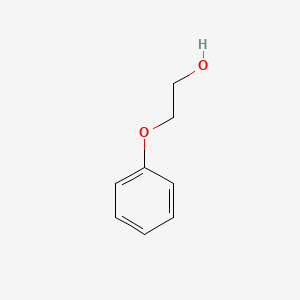
Phenoxyethanol
2-phenoxyethanol is an aromatic ether that is phenol substituted on oxygen by a 2-hydroxyethyl group. It has a role as an antiinfective agent and a central nervous system depressant. It is a primary alcohol, a glycol ether and an aromatic ether. It is functionally related to a phenol. — ChEBI
- IUPAC 명칭
- 2-phenoxyethanol
- 분자식
- C8H10O2
- 분자량
- 138.16 g/mol
- 정확한 질량
- 138.068079557 Da
- XLogP3
- 1.2
- 위상 극성 표면적
- 29.5 Ų
- 수소 결합 공여체
- 1
- 수소 결합 수용체
- 2
- 공유결합 단위
- 1
- 정의된 입체중심
- 0
다른 이름
보고된 명칭 16개 더 보기
외부 데이터베이스 식별자
- ChEBI:CHEBI:64275
- ChEMBL:CHEMBL1229846
- EPA DTXSID:DTXSID9021976
- PubMed:29205417
- PubMed:26188115
- PubMed:22970574
- PubMed:22685526
- PubMed:22666668
- PubMed:22666112
- PubMed:22653170
- PubMed:22615866
- PubMed:22577255
- PubMed:22558452
- PubMed:22514610
- PubMed:22496852
추가 과학 데이터베이스의 근거
NIH PubChem PUG-View
Attributed physical-property, hazard, environmental and use annotations.
- Autoignition Temperature: 500 °C 출처: ILO-WHO International Chemical Safety Cards (ICSCs)
- Boiling Point: 473.4 °F at 760 mmHg (NTP, 1992) 출처: CAMEO Chemicals
- Boiling Point: 245 출처: DrugBank
- Boiling Point: boiling point equals 473 °F 출처: Haz-Map, Information on Hazardous Chemicals and Occupational Diseases
- Boiling Point: 245.2 °C 출처: Hazardous Substances Data Bank (HSDB)
- Boiling Point: Liquid; bp: 243 °C /2-Phenoxyethanol acetate/ 출처: Hazardous Substances Data Bank (HSDB)
- Boiling Point: 237.00 to 238.00 °C. @ 760.00 mm Hg 출처: Human Metabolome Database (HMDB)
- Boiling Point: 245 °C 출처: ILO-WHO International Chemical Safety Cards (ICSCs)
- Boiling Point: 242 °C @760 [mm Hg] 출처: PAC Chemical Database, U.S. Department of Energy
- Color/Form: Oily liquid 출처: Hazardous Substances Data Bank (HSDB)
- Color/Form: Colorless liquid 출처: Hazardous Substances Data Bank (HSDB)
- Density: 1.104 (USCG, 1999) - Denser than water; will sink 출처: CAMEO Chemicals
- Density: 1.1094 at 20 °C/20 °C 출처: Hazardous Substances Data Bank (HSDB)
- Density: Bulk density: 9.2 lb/gal 출처: Hazardous Substances Data Bank (HSDB)
- Density: Relative density (water = 1): 1.1 출처: ILO-WHO International Chemical Safety Cards (ICSCs)
- Density: 1.11 @ 20°C 출처: PAC Chemical Database, U.S. Department of Energy
- Dissociation Constants: pKa = 15.10 at 25 °C 출처: Hazardous Substances Data Bank (HSDB)
- Flash Point: 250 °F (NTP, 1992) 출처: CAMEO Chemicals
- Flash Point: Flash point equals 250 °F 출처: Haz-Map, Information on Hazardous Chemicals and Occupational Diseases
- Flash Point: 260 °F (127 °C) (Closed cup) 출처: Hazardous Substances Data Bank (HSDB)
- Flash Point: 127 °C c.c. 출처: ILO-WHO International Chemical Safety Cards (ICSCs)
- LogP: log Kow = 1.16 출처: Hazardous Substances Data Bank (HSDB)
- LogP: 1.160 출처: Human Metabolome Database (HMDB)
- LogP: 1.2 출처: ILO-WHO International Chemical Safety Cards (ICSCs)
- Melting Point: 57 °F (NTP, 1992) 출처: CAMEO Chemicals
- Melting Point: 13 출처: DrugBank
- Melting Point: 14 °C 출처: Hazardous Substances Data Bank (HSDB)
- Melting Point: 11-13 °C 출처: Human Metabolome Database (HMDB)
- Melting Point: 14 °C 출처: ILO-WHO International Chemical Safety Cards (ICSCs)
- Melting Point: 14 °C 출처: PAC Chemical Database, U.S. Department of Energy
- Odor: Faint aromatic odor 출처: Hazardous Substances Data Bank (HSDB)
- Physical Description: Ethylene glycol phenyl ether is a colorless liquid with a pleasant odor. Density 1.02 g / cm3. An irritant. 출처: CAMEO Chemicals
- Physical Description: CBI; Wet Solid; Liquid; Liquid; Other Solid 출처: EPA Chemical Data Reporting (CDR)
- Physical Description: Clear liquid with a pleasant odor; [CAMEO] 출처: Haz-Map, Information on Hazardous Chemicals and Occupational Diseases
- Physical Description: Liquid 출처: Human Metabolome Database (HMDB)
- Physical Description: OILY COLOURLESS LIQUID WITH CHARACTERISTIC ODOUR. 출처: ILO-WHO International Chemical Safety Cards (ICSCs)
- Refractive Index: Index of refraction: 1.534 at 20 °C/D 출처: Hazardous Substances Data Bank (HSDB)
- Solubility: 10 to 50 mg/mL at 68 °F (NTP, 1992) 출처: CAMEO Chemicals
- Solubility: 24g/L at 20°C 출처: DrugBank
- Solubility: Freely soluble in alcohol, ether, and sodium hydroxide 출처: Hazardous Substances Data Bank (HSDB)
- Solubility: Soluble in ethanol, alkali, chloroform 출처: Hazardous Substances Data Bank (HSDB)
- Solubility: 2.67 g/100 mL water 출처: Hazardous Substances Data Bank (HSDB)
- Solubility: In water, 2.6X10+4 mg/L at 20 °C 출처: Hazardous Substances Data Bank (HSDB)
- Solubility: 26700 mg/L @ 20 °C (exp) 출처: Human Metabolome Database (HMDB)
- Solubility: Solubility in water, g/100ml: 2.7 출처: ILO-WHO International Chemical Safety Cards (ICSCs)
- Vapor Pressure: less than 0.01 mmHg at 68 °F ; 1 mmHg at 172.4 °F (NTP, 1992) 출처: CAMEO Chemicals
- Vapor Pressure: 0.007 [mmHg] 출처: Haz-Map, Information on Hazardous Chemicals and Occupational Diseases
- Vapor Pressure: 0.007 mm Hg at 25 °C 출처: Hazardous Substances Data Bank (HSDB)
- Vapor Pressure: Vapor pressure, kPa at 20 °C: 0.0013 출처: ILO-WHO International Chemical Safety Cards (ICSCs)
- Vapor Pressure: 0.03 [mm Hg] @25 °C 출처: PAC Chemical Database, U.S. Department of Energy
- Viscosity: 20.5 centistokes at 25 °C 출처: Hazardous Substances Data Bank (HSDB)
- Carcinogen Classification: No indication of carcinogenicity to humans (not listed by IARC). 출처: Toxin and Toxin Target Database (T3DB)
- Exposure Routes: The substance can be absorbed into the body by inhalation of its aerosol, through the skin and by ingestion. 출처: ILO-WHO International Chemical Safety Cards (ICSCs)
- Exposure Routes: Dermal (A15201); ingestion 출처: Toxin and Toxin Target Database (T3DB)
- First Aid: EYES: First check the victim for contact lenses and remove if present. Flush victim's eyes with water or normal saline solution for 20 to 30 minutes while simultaneously calling a hospital or poison control center. Do not put any ointments, oils, or medication in the victim's eyes without specific instructions from a physician. IMMEDIATELY transport the victim after flushing eyes to a hospital even if no symptoms (such as redness or irritation) develop.; SKIN: IMMEDIATELY flood affected skin with water while removing and isolating all contaminated clothing. Gently wash all affected skin areas thoroughly with soap and water. If symptoms such as redness or irritation develop, IMMEDIATELY call a physician and be prepared to transport the victim to a hospital for treatment.; INHALATION: IMMEDIATELY leave the contaminated area; take deep breaths of fresh air. If symptoms (such as wheezing, coughing, shortness of breath, or burning in the mouth, throat, or chest) develop, call a physician and be prepared to transport the victim to a hospital. Provide proper respiratory protection to rescuers entering an unknown atmosphere. Whenever possible, Self-Contained Breathing Apparatus (SCBA) shou 출처: CAMEO Chemicals
- Signal: Danger 출처: Regulation (EC) No 1272/2008 of the European Parliament and of the Council
- GHS Hazard Statements: H302: Harmful if swallowed [Warning Acute toxicity, oral]; H318: Causes serious eye damage [Danger Serious eye damage/eye irritation]; H335: May cause respiratory irritation [Warning Specific target organ toxicity, single exposure; Respiratory tract irritation] 출처: Regulation (EC) No 1272/2008 of the European Parliament and of the Council
- Precautionary Statement Codes: P261, P264, P264+P265, P270, P271, P280, P301+P317, P304+P340, P305+P354+P338, P317, P319, P330, P403+P233, P405, and P501 (click each P-code to see the statement) 출처: Regulation (EC) No 1272/2008 of the European Parliament and of the Council
- Note: This chemical does not meet GHS hazard criteria for < 0.1% (1 of 4299) of reports. 출처: European Chemicals Agency (ECHA)
- Signal: Danger 출처: European Chemicals Agency (ECHA)
- GHS Hazard Statements: H302 (99.8%): Harmful if swallowed [Warning Acute toxicity, oral]; H318 (13%): Causes serious eye damage [Danger Serious eye damage/eye irritation]; H319 (87%): Causes serious eye irritation [Warning Serious eye damage/eye irritation]; H335 (13%): May cause respiratory irritation [Warning Specific target organ toxicity, single exposure; Respiratory tract irritation] 출처: European Chemicals Agency (ECHA)
- Precautionary Statement Codes: P261, P264, P264+P265, P270, P271, P280, P301+P317, P304+P340, P305+P351+P338, P305+P354+P338, P317, P319, P330, P337+P317, P403+P233, P405, and P501 (click each P-code to see the statement) 출처: European Chemicals Agency (ECHA)
- ECHA C&L Notifications Summary: Aggregated GHS information provided per 4299 reports by companies from 38 notifications to the ECHA C&L Inventory. Each notification may be associated with multiple companies.; Reported as not meeting GHS hazard criteria per 1 of 4299 reports by companies.; There are 37 notifications provided by 4298 of 4299 reports by companies with hazard statement code(s).; Information may vary between notifications depending on impurities, additives, and other factors. The percentage value in parenthesis indicates the notified classification ratio from companies that provide hazard codes. Only hazard codes with percentage values above 10% are shown. For more detailed information, please visit ECHA C&L website. 출처: European Chemicals Agency (ECHA)
- Signal: Danger 출처: NITE-CMC
- GHS Hazard Statements: H302: Harmful if swallowed [Warning Acute toxicity, oral]; H318: Causes serious eye damage [Danger Serious eye damage/eye irritation] 출처: NITE-CMC
- Precautionary Statement Codes: P264, P264+P265, P270, P280, P301+P317, P305+P354+P338, P317, P330, and P501 (click each P-code to see the statement) 출처: NITE-CMC
- Signal: Warning 출처: NITE-CMC
- NFPA Health Rating: 3 - Materials that, under emergency conditions, can cause serious or permanent injury. 출처: Hazardous Substances Data Bank (HSDB)
- NFPA Fire Rating: 1 - Materials that must be preheated before ignition can occur. Materials require considerable preheating, under all ambient temperature conditions, before ignition and combustion can occur. 출처: Hazardous Substances Data Bank (HSDB)
- NFPA Instability Rating: 0 - Materials that in themselves are normally stable, even under fire conditions. 출처: Hazardous Substances Data Bank (HSDB)
- Cosmetic Ingredient Review Finding(s): Safe in the present practices of use and concentration. Ingredient, concentration, and use information are available in documents discoverable at https://cir-reports.cir-safety.org 출처: Cosmetic Ingredient Review (CIR)
- Toxicity Summary: 2-Phenoxyethanol is a glycol ether. Glycol ethers can produce toxicity following oxidation to the corresponding aldehyde and alkoxyacetic acid by alcohol dehydrogenase (ADH; EC 1.1.1.1) and aldehyde dehydrogenase (ALDH; EC 1.2.1.3), respectively. (A15201) 2-Phenoxyethanol causes reduction of NMDA-induced membrane currents, indicating a neurotoxic potential for 2-phenoxyethanol. (A15202) 출처: Toxin and Toxin Target Database (T3DB)
- Environmental Bioconcentration: An estimated BCF of 1.5 was calculated in fish for 2-phenoxyethanol(SRC), using a log Kow of 1.16(1) and a regression-derived equation(2). According to a classification scheme(3), this BCF suggests the potential for bioconcentration in aquatic organisms is low(SRC). 출처: Hazardous Substances Data Bank (HSDB)
- Environmental Fate: TERRESTRIAL FATE: Based on a classification scheme(1), an estimated Koc value of 15(SRC), determined from a structure estimation method(2), indicates that 2-phenoxyethanol is expected to have very high mobility in soil(SRC). Volatilization of 2-phenoxyethanol from moist soil surfaces is not expected to be an important fate process(SRC) given an estimated Henry's Law constant of 4.9X10⁻⁸ atm-cu m/mole(SRC), based upon its vapor pressure, 0.007 mm Hg at 25 °C(3), and water solubility, 2.6X10+4 mg/L(4). One biodegradation study reported theoretical 2-phenoxyethanol BODs of 2% (5-day), 71% (10-day), and 80% (20-day)(3); a theoretical 20-day BOD of 50%(3) indicates biodegrdaation may be an important environmnetal fate process in soil(SRC). 출처: Hazardous Substances Data Bank (HSDB)
- Environmental Fate: AQUATIC FATE: Based on a classification scheme(1), an estimated Koc value of 15(SRC), determined from a structure estimation method(2), indicates that 2-phenoxyethanol is not expected to adsorb to suspended solids and sediment(SRC). Volatilization from water surfaces is not expected(3) based upon an estimated Henry's Law constant of 4.9X10⁻⁸ atm-cu m/mole(SRC), derived from its vapor pressure, 0.007 mm Hg at 25 °C(4), and water solubility, 2.6X10+4 mg/L(5). According to a classification scheme(6), an estimated BCF of 1.5(SRC), from its log Kow of 1.16(7) and a regression-derived equation(8), suggests the potential for bioconcentration in aquatic organisms is low. One biodegradation study reported theoretical 2-phenoxyethanol BODs of 2% (5-day), 71% (10-day), and 80% (20-day)(4); a theoretical 20-day BOD of 50% indicates a compound will largely be removed during biological waste treatment(4). 2-Phenoxyethanol is not expected to undergo hydrolysis in the environment due to the lack of functional groups that hydrolyze under environmental conditions(3). 출처: Hazardous Substances Data Bank (HSDB)
- Environmental Fate: ATMOSPHERIC FATE: According to a model of gas/particle partitioning of semivolatile organic compounds in the atmosphere(1), 2-phenoxyethanol, which has a estimated vapor pressure of 0.007 mm Hg at 25 °C(2), is expected to exist solely as a vapor in the ambient atmosphere. Vapor-phase 2-phenoxyethanol is degraded in the atmosphere by reaction with photochemically-produced hydroxyl radicals(SRC); the half-life for this reaction in air is estimated to be about 11.8 hours(SRC), calculated from its rate constant of 3.27X10⁻¹¹ cu cm/molecule-sec at 25 °C(SRC) that was derived using a structure estimation method(3). Monitoring data have shown that 2-phenoxyethanol can be removed from the atmosphere via precipitation such as snow(4). 2-Phenoxyethanol does not absorb at wavelengths >290 nm(5), and therefore is not expected to be susceptible to direct photolysis by sunlight(SRC). 출처: Hazardous Substances Data Bank (HSDB)
- Consumer Uses: Solvent; Other; Processing aids not otherwise specified; Surfactant (surface active agent); Fragrance; Cleaning agent; Preservative; Not Known or Reasonably Ascertainable; Soil amendments (fertilizers) 출처: EPA Chemical Data Reporting (CDR)
- Industry Uses: Etching agent; Preservative; Not Known or Reasonably Ascertainable; Waterproofing agent; Fragrance; Fixing agent (mordant); Cleaning agent; Plasticizer; Processing aids not otherwise specified; Surfactant (surface active agent); Other; Solvent 출처: EPA Chemical Data Reporting (CDR)
- Cosmetic Ingredient Review Link: CIR ingredient: Phenoxyethanol 출처: Cosmetic Ingredient Review (CIR)
- Sources/Uses: Used in perfumes, insect repellants, and antiseptics and to produce other organic chemicals; [Merck Index, 7257] Used as a solvent for inks, dyes, and cleaners; [HSDB] 출처: Haz-Map, Information on Hazardous Chemicals and Occupational Diseases
- Industrial Processes with risk of exposure: Metal Degreasing [Category: Clean]; Using Disinfectants or Biocides [Category: Clean]; Textiles (Printing, Dyeing, or Finishing) [Category: Industry] 출처: Haz-Map, Information on Hazardous Chemicals and Occupational Diseases
- Uses: Fixative for perfumes, in organic synthesis; as a bactericide in conjunction with quaternary ammonium compounds 출처: Hazardous Substances Data Bank (HSDB)
- Uses: Solvent for cellulose acetate, dyes; inks, resins; perfume fixative; bactericidal agent; organic synthesis of plasticizers, germicides, pharmaceuticals; insect repellents 출처: Hazardous Substances Data Bank (HSDB)
- Uses: MEDICATION 출처: Hazardous Substances Data Bank (HSDB)
- Uses: Use (kg; approx.) in Germany (2009): >25000; Consumption (g per capita; approx.) in Germany (2009): 0.305; Calculated removal (%): 92.1 출처: NORMAN Suspect List Exchange
- Uses: 2-Phenoxyethanol is used in many applications such as cosmetics, vaccines and pharmaceuticals as a preservative. It is also used as a fixative for perfumes, an insect repellent, a topical antiseptic, a solvent for cellulose acetate, some dyes, inks, and resins, in preservatives, pharmaceuticals, and in organic synthesis. 출처: Toxin and Toxin Target Database (T3DB)
매핑 기준: Existing checksum-valid CAS to unique PubChem CID match. 가져온 시각: 2026-08-31. 출처 기록 열기
과학적 분류와 유해성 주석은 맥락을 제공할 뿐이며, 위에 표시된 시장별 규제 판단을 대체하지 않습니다.
추가 출처 적용 범위 및 일치 상태
| 출처 | 결과 | 확인됨 |
|---|---|---|
| NIH PubChem PUG-View | 정확히 일치 | 2026-08-31 |
기록된 불일치는 출처를 확인했다는 유용한 근거이며, 해당 물질이 다른 곳에 존재하지 않는다는 주장이 아닙니다.
체크섬이 유효한 CAS 일치를 통해 2026-09-02에 NIH PubChem에서 가져왔습니다. 화학적 특성은 이 페이지의 규제 판단을 대체하지 않습니다.
PHENOXYETHANOL의 목록 링크
PHENOXYETHANOL의 관련 기록
이 기록에 직접 일치하는 항목이 제한적이어서, 부속서 V의 인접 항목도 함께 표시합니다.
POLYAMINOPROPYL BIGUANIDE
1-Hydroxy-4-methyl-6-(2,4,4-trimethylpentyl)-2 pyridon, piroctone olamine
PHENOXYETHANOL에 대한 부속서 V의 의미
PHENOXYETHANOL은(는) EU 화장품 규정 1223/2009 부속서 V에 등재된 허용 보존제입니다. 이 허용 목록(포지티브 리스트)에 있는 물질만 EU에서 화장품 보존제로 사용할 수 있습니다.
각 보존제 항목은 최대 허용 농도와 적용 제품 범위를 명시합니다. 농도는 명시된 최대치를 초과해서는 안 됩니다. 일부 보존제는 제품 표시 사항에 경고 문구를 표기해야 합니다.
이 기록은 명칭 및 식별자 교차 참조를 위해 CosIng 목록 원료 1건과 연결되어 있습니다. 또한 이 페이지에는 식별자, 부속서 논리 또는 명칭 패턴이 겹치는 관련 부속서 기록 12건이 표시됩니다.
규제 준수 체크리스트
- 사용 농도는 다음을 초과해서는 안 됩니다: 1.0%
- 해당 처방 기제에서 허용 농도로 보존제가 효과적인지 확인하세요.