
BUTENE
1-Butene,Butylene
BUTENE figure dans l’inventaire CosIng de l’UE, mais aucune fiche d’annexe directe n’est encore associée sur cette page.
En un coup d’œil
- Fonction
- Not reported
- CAS
- 106-98-9; 25167-67-3
- EC
- 203-449-2; 246-689-3
- Annexes de l’UE
- Non répertoriéAucune fiche d’annexe de l’UE n’est associée. Ce n’est pas une autorisation.
Preuves réglementaires par marché
Aucune règle pour cet ingrédient n’a été importée pour aucun des 13 marchés suivis ici.
Cela décrit cet inventaire, et non le droit. L’absence de règle importée n’est pas la preuve qu’un ingrédient est autorisé : une règle peut exister sous un autre nom ou identifiant, ou dans un jeu de données pas encore importé ici.
Détails d’inventaire pour BUTENE
Nom INCI
BUTENE
Description
1-Butene,Butylene
Provenance de la fiche
- Référence d’inventaire
- 97360
- Identité importée
- BUTENE
- Mise à jour de la source
- 11/10/2019
Fiches d’annexe pour BUTENE
Données clés
- NOT REPORTED
No function currently reported.
Identité et propriétés chimiques
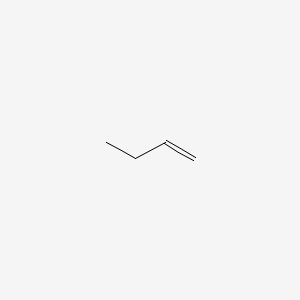
1-Butene
But-1-ene is a butene with unsaturation at position 1. — ChEBI
- Nom IUPAC
- but-1-ene
- Formule moléculaire
- C4H8
- Masse moléculaire
- 56.11 g/mol
- Masse exacte
- 56.062600255 Da
- XLogP3
- 2,4
- Surface polaire topologique
- 0,0 Ų
- Donneurs de liaisons hydrogène
- 0
- Accepteurs de liaisons hydrogène
- 0
- Unités covalentes
- 1
- Stéréocentres définis
- 0
Également connu sous le nom de
16 autres noms signalés
Identifiants de bases de données externes
- ChEBI:CHEBI:48362
- ChEMBL:CHEMBL117210
- EPA DTXSID:DTXSID1026746
- PubMed:22956037
- PubMed:22946999
- PubMed:22938236
- PubMed:22934735
- PubMed:22902655
- PubMed:22814869
- PubMed:22784373
- PubMed:22719604
- PubMed:22712561
- PubMed:22649449
- PubMed:22611397
- PubMed:22594443
Preuves issues de bases de données scientifiques complémentaires
EMBL-EBI ChEBI
but-1-ene
A butene with unsaturation at position 1.
- Formule
- C4H8
- Masse moyenne
- 56.108 g/mol
- Masse monoisotopique
- 56.06260 Da
- Charge formelle
- 0
Noms supplémentaires validés
Références croisées de cette source
Mis en correspondance par: Exact CAS cross-reference in the ChEBI compound record. Source mise à jour le: 2026-08-13. Récupéré le: 2026-08-31. Ouvrir la fiche source
NIH PubChem PUG-View
Attributed physical-property, hazard, environmental and use annotations.
- Autoignition Temperature: 723 °F (NTP, 1992) Source: CAMEO Chemicals
- Autoignition Temperature: 725 °F (385 °C) Source: Hazardous Substances Data Bank (HSDB)
- Boiling Point: 21 °F at 760 mmHg (NTP, 1992) Source: CAMEO Chemicals
- Boiling Point: -6.47 °C at 760 mm Hg Source: Hazardous Substances Data Bank (HSDB)
- Boiling Point: -6.3 °C @760 [mm Hg] Source: PAC Chemical Database, U.S. Department of Energy
- Color/Form: Colorless gas Source: Hazardous Substances Data Bank (HSDB)
- Density: 0.6255 at 19.9 °F (NTP, 1992) - Less dense than water; will float Source: CAMEO Chemicals
- Density: 0.588 g/cu cm at 25 °C, 1 atm Source: Hazardous Substances Data Bank (HSDB)
- Density: Density of liquid 10.47 mol/L at 298.15 K; critical volume 0.240 L/mol Source: Hazardous Substances Data Bank (HSDB)
- Density: 0.557 @25 °C Source: PAC Chemical Database, U.S. Department of Energy
- Flash Point: -110 °F (NTP, 1992) Source: CAMEO Chemicals
- LogP: log Kow = 2.40 Source: Hazardous Substances Data Bank (HSDB)
- Melting Point: -301.5 °F (NTP, 1992) Source: CAMEO Chemicals
- Melting Point: -185.33 °C Source: Hazardous Substances Data Bank (HSDB)
- Melting Point: -185.3 °C Source: PAC Chemical Database, U.S. Department of Energy
- Odor: Slightly aromatic odor Source: Hazardous Substances Data Bank (HSDB)
- Odor: Gassy, slightly aromatic odor Source: Hazardous Substances Data Bank (HSDB)
- Physical Description: 1-butene is a colorless gas. (NTP, 1992) Source: CAMEO Chemicals
- Physical Description: Gas Vapor; Liquid; Liquid; Gas Vapor; Other Solid Source: EPA Chemical Data Reporting (CDR)
- Physical Description: Gas Vapor; Liquid Source: EPA Chemical Data Reporting (CDR)
- Refractive Index: Index of refraction: 1.3962 at 20 °C/D Source: Hazardous Substances Data Bank (HSDB)
- Solubility: Insoluble (NTP, 1992) Source: CAMEO Chemicals
- Solubility: In water, 221 mg/L at 25 °C Source: Hazardous Substances Data Bank (HSDB)
- Solubility: Soluble in benzene; very soluble in alcohol, ether Source: Hazardous Substances Data Bank (HSDB)
- Vapor Pressure: 3480 mmHg at 70 °F (NTP, 1992) Source: CAMEO Chemicals
- Vapor Pressure: Vapor pressure: 3480 mm Hg at 21 °C Source: Hazardous Substances Data Bank (HSDB)
- Vapor Pressure: 2.253X10+3 mm Hg at 25 °C Source: Hazardous Substances Data Bank (HSDB)
- Vapor Pressure: 2253 [mm Hg] @25 °C Source: PAC Chemical Database, U.S. Department of Energy
- First Aid: EYES: First check the victim for contact lenses and remove if present. Flush victim's eyes with water or normal saline solution for 20 to 30 minutes while simultaneously calling a hospital or poison control center. Do not put any ointments, oils, or medication in the victim's eyes without specific instructions from a physician. IMMEDIATELY transport the victim after flushing eyes to a hospital even if no symptoms (such as redness or irritation) develop.; SKIN: CAUTION: Exposure of skin to compressed gases may result in freezing of the skin. Treatment for frostbite may be necessary. Remove the victim from the source of contamination. IMMEDIATELY wash affected areas gently with COLD water (and soap, if necessary) while removing and isolating all contaminated clothing. Dry carefully with clean, soft towels. If symptoms such as inflammation or irritation develop, IMMEDIATELY call a physician or go to a hospital for treatment.; INHALATION: IMMEDIATELY leave the contaminated area; take deep breaths of fresh air. If symptoms (such as wheezing, coughing, shortness of breath, or burning in the mouth, throat, or chest) develop, call a physician and be prepared to transport the victim to a ho Source: CAMEO Chemicals
- Signal: Danger Source: Regulation (EC) No 1272/2008 of the European Parliament and of the Council
- GHS Hazard Statements: H220: Extremely flammable gas [Danger Flammable gases] Source: Regulation (EC) No 1272/2008 of the European Parliament and of the Council
- Precautionary Statement Codes: P203, P210, P222, P280, P377, P381, and P403 (click each P-code to see the statement) Source: Regulation (EC) No 1272/2008 of the European Parliament and of the Council
- Note: This chemical does not meet GHS hazard criteria for 0.1% (2 of 1383) of reports. Source: European Chemicals Agency (ECHA)
- Signal: Danger Source: European Chemicals Agency (ECHA)
- GHS Hazard Statements: H220 (99.6%): Extremely flammable gas [Danger Flammable gases]; H280 (65.7%): Contains gas under pressure; may explode if heated [Warning Gases under pressure] Source: European Chemicals Agency (ECHA)
- Precautionary Statement Codes: P203, P210, P222, P280, P377, P381, P403, and P410+P403 (click each P-code to see the statement) Source: European Chemicals Agency (ECHA)
- ECHA C&L Notifications Summary: Aggregated GHS information provided per 1383 reports by companies from 17 notifications to the ECHA C&L Inventory. Each notification may be associated with multiple companies.; Reported as not meeting GHS hazard criteria per 2 of 1383 reports by companies.; There are 16 notifications provided by 1381 of 1383 reports by companies with hazard statement code(s).; Information may vary between notifications depending on impurities, additives, and other factors. The percentage value in parenthesis indicates the notified classification ratio from companies that provide hazard codes. Only hazard codes with percentage values above 10% are shown. For more detailed information, please visit ECHA C&L website. Source: European Chemicals Agency (ECHA)
- Note: This chemical does not meet GHS hazard criteria for 0.3% (1 of 399) of reports. Source: European Chemicals Agency (ECHA)
- GHS Hazard Statements: H220 (99.5%): Extremely flammable gas [Danger Flammable gases]; H280 (95.2%): Contains gas under pressure; may explode if heated [Warning Gases under pressure] Source: European Chemicals Agency (ECHA)
- ECHA C&L Notifications Summary: Aggregated GHS information provided per 399 reports by companies from 4 notifications to the ECHA C&L Inventory. Each notification may be associated with multiple companies.; Reported as not meeting GHS hazard criteria per 1 of 399 reports by companies.; There are 3 notifications provided by 398 of 399 reports by companies with hazard statement code(s).; Information may vary between notifications depending on impurities, additives, and other factors. The percentage value in parenthesis indicates the notified classification ratio from companies that provide hazard codes. Only hazard codes with percentage values above 10% are shown. For more detailed information, please visit ECHA C&L website. Source: European Chemicals Agency (ECHA)
- Signal: Danger Source: NITE-CMC
- NFPA Health Rating: 1 - Materials that, under emergency conditions, can cause significant irritation. Source: Hazardous Substances Data Bank (HSDB)
- NFPA Fire Rating: 4 - Materials that rapidly or completely vaporize at atmospheric pressure and normal ambient temperature or that are readily dispersed in air and burn readily. Source: Hazardous Substances Data Bank (HSDB)
- NFPA Instability Rating: 0 - Materials that in themselves are normally stable, even under fire conditions. Source: Hazardous Substances Data Bank (HSDB)
- Toxicity Summary: IDENTIFICATION AND USE: 1-Butene is a colorless gas. It is is used for the production of a wide variety of chemicals in the gasoline and rubber processing areas. Most 1-butene is used as a comonomer for linear low-density polyethylene, which contains up to 10%. However, 1-butene is also used as a comonomer for modifying high-density polyethylene, which contains up to 4%. HUMAN STUDIES: 1-Butene is a simple asphyxiant and may be a CNS depressant in high concentrations. It has a low acute toxicity and is mildly irritating to the eye. On direct eye and skin contact liquid butene can cause burns and frostbite. The treatment of human peripheral blood mononuclear cells (PBMCs) and promyelocytic leukemia cells (HL60) for 24 hr resulted in an increase of DNA damage. HL60 cells were more resistant than PBMCs to the DNA damage. ANIMAL STUDIES: Exposure to 1-butene at target concentrations of 500, 2000, 8000 ppm (approximately 1147, 4589, 18359 mg/cu m) did not induce systemic toxicity in male and female rats exposed for 28 days or in pregnant female rats exposed for 14 days pre-mating, through mating and gestation to day 19. There were no treatment-related effects on the development of pups. Source: Hazardous Substances Data Bank (HSDB)
- Environmental Bioconcentration: An estimated BCF of 18 was calculated in fish for 1-butene(SRC), using a log Kow of 2.40(1) and a regression-derived equation(2). According to a classification scheme(3), this BCF suggests the potential for bioconcentration in aquatic organisms is low(SRC). Source: Hazardous Substances Data Bank (HSDB)
- Environmental Fate: TERRESTRIAL FATE: Based on a classification scheme(1), an estimated Koc value of 120(SRC), determined from a log Kow of 2.40(2) and a regression-derived equation(3), indicates that 1-butene is expected to have high mobility in soil(SRC). Volatilization of 1-butene from moist soil surfaces is expected to be an important fate process(SRC) given a Henry's Law constant of 2.33X10⁻¹ atm-cu m/mole(4). 1-Butene is expected to volatilize from dry soil surfaces(SRC) based upon a vapor pressure of 2250 at 25 °C(5). Utilizing the Japanese MITI test, 3% of the Theoretical BOD was reached in 4 weeks(6) indicating that biodegradation is not an important environmental fate process in soil(SRC). However, alkenes can be utilized by a wide range of microorganisms and are catabolized via several routes, resulting in the unsaturated alcohol, aldehyde and fatty acid or the formation of epoxide, diol compounds and possibly hydroxyacids(7). Source: Hazardous Substances Data Bank (HSDB)
- Environmental Fate: AQUATIC FATE: Based on a classification scheme(1), an estimated Koc value of 120(SRC), determined from a log Kow of 2.40(2) and a regression-derived equation(3), indicates that 1-butene is not expected to adsorb to suspended solids and sediment(SRC). Volatilization from water surfaces is expected(4) based upon a Henry's Law constant of 2.33X10⁻¹ atm-cu m/mole(5). Using this Henry's Law constant and an estimation method(4), volatilization half-lives for a model river and model lake are 2 hours and 3 days, respectively(SRC). According to a classification scheme(6), an estimated BCF of 18(SRC), from its log Kow(2) and a regression-derived equation(3), suggests the potential for bioconcentration in aquatic organisms is low(SRC). Utilizing the Japanese MITI test, 3% of the Theoretical BOD was reached in 4 weeks(7) indicating that biodegradation is not an important environmental fate process in water(SRC). However, alkenes can be utilized by a wide range of microorganisms and are catabolized via several routes, resulting in the unsaturated alcohol, aldehyde and fatty acid or the formation of epoxide, diol compounds and possibly hydroxyacids(8). Source: Hazardous Substances Data Bank (HSDB)
- Environmental Fate: ATMOSPHERIC FATE: According to a model of gas/particle partitioning of semivolatile organic compounds in the atmosphere(1), 1-butene, which has a vapor pressure of 2.25X10+3 mm Hg at 25 °C(2), is expected to exist solely as a gas in the ambient atmosphere. Gas-phase 1-butene is degraded in the atmosphere by reaction with photochemically-produced hydroxyl radicals(SRC); the half-life for this reaction in air is estimated to be 12 hours(SRC), calculated from its rate constant of 3.14X10⁻¹¹ cu cm/molecule-sec at 25 °C(3). The rate constant for the vapor-phase reaction of 1-butene with ozone has been estimated as 1.2X10⁻¹⁷ cu cm/molecule-sec at 25 °C(SRC) that was derived using a structure estimation method(4). This corresponds to an atmospheric half-life of about 23 hours at an atmospheric concentration of 7X10+11 ozone molecules per cu cm(5). Products from this reaction are formic and propionic acid(6). Based on a half-life of 149 hours, from and average rate constant of 5.4X10⁻¹⁵ cu cm/molec-sec(7,8), night-time degradation by the reaction with nitrate radicals is not expected to be a significant removal process. 1-Butene does not contain chromophores that absorb at wavelengths >290 Source: Hazardous Substances Data Bank (HSDB)
- Consumer Uses: Not Known or Reasonably Ascertainable; Intermediate; Fuel; Fuel agents Source: EPA Chemical Data Reporting (CDR)
- Consumer Uses: Fuel; Intermediate; Not Known or Reasonably Ascertainable Source: EPA Chemical Data Reporting (CDR)
- Industry Uses: Fuel; Fuel agents; Abrasives; Monomers; Intermediate Source: EPA Chemical Data Reporting (CDR)
- Industry Uses: Intermediate; Monomers; Fuel Source: EPA Chemical Data Reporting (CDR)
- Uses: /1-Butene/ is used for the production of a wide variety of chemicals in the gasoline and rubber processing industries. Source: Hazardous Substances Data Bank (HSDB)
- Uses: Most high-purity 1-butene is used as a comonomer for linear low-density polyethylene (LLDPE) and for modifying high-density polyethylene (HDPE), which contains up to 4%. Source: Hazardous Substances Data Bank (HSDB)
- Uses: COMONOMER FOR HIGH DENSITY POLYETHYLENE FOR BLOW-MOLDING RESINS; MONOMER FOR POLYBUTENE USED IN PLASTIC PIPE & FILM; INT FOR 1,2-BUTYLENE OXIDE Source: Hazardous Substances Data Bank (HSDB)
Mis en correspondance par: Existing checksum-valid CAS to unique PubChem CID match. Récupéré le: 2026-08-31. Ouvrir la fiche source
Les classifications scientifiques et les annotations de danger apportent du contexte et ne remplacent pas la décision réglementaire propre au marché indiquée ci-dessus.
Couverture des sources complémentaires et état des correspondances
| Source | Résultat | Vérifié |
|---|---|---|
| EMBL-EBI ChEBI | Correspondance exacte | 2026-08-31 |
| NIH PubChem PUG-View | Correspondance exacte | 2026-08-31 |
Une absence de correspondance enregistrée est une preuve utile que la source a été vérifiée ; ce n’est pas l’affirmation que la substance n’existe pas ailleurs.
Récupéré depuis NIH PubChem le 2026-08-31 par correspondance CAS à somme de contrôle valide. Les propriétés chimiques ne remplacent pas la décision réglementaire de cette page.
Preuves d’inventaire associées
Ingrédients ayant des fonctions de formulation communes
Sources officielles et scientifiques complémentaires
11 bases de données externes pour vérifier cette identité
Chaque lien lance une recherche de cette identité dans la source concernée. Ce qu’est chaque source et sa valeur juridique
Comment BUTENE apparaît dans l’inventaire CosIng
L’inventaire CosIng répertorie BUTENE comme ingrédient cosmétique et cette page l’associe à 0 fiche d’annexe. L’entrée d’inventaire reprend les noms et identifiants, tandis que la fiche d’annexe indique où la substance est interdite, soumise à restrictions ou inscrite sur une liste positive dans le droit de l’UE sur les cosmétiques.
BUTENE est aussi associé à 1 fonction cosmétique dans les données officielles. Les désignations de fonction décrivent l’usage prévu, mais ne remplacent pas l’examen réglementaire des fiches d’annexe associées avant un travail de formulation ou d’étiquetage.
Questions fréquentes
Note de source pour BUTENE
Cette page reproduit l’entrée d’inventaire CosIng de BUTENE issue de documents publics de la Commission européenne sur les ingrédients cosmétiques et affiche les identifiants associés, même si aucune correspondance directe avec une annexe n’est actuellement rattachée.
Utilisez cette page d’inventaire pour étudier BUTENE et comparer les fiches associées, mais vérifiez les restrictions et le statut juridique auprès du texte officiel en vigueur et de la législation avant toute décision réglementaire.
Outils et étapes suivantes
Vérifiez votre formule
Analysez une liste INCI complète pour détecter BUTENE et les éventuelles restrictions d’annexes de l’UE ou signalements d’allergènes associés.
Vérificateur INCIRechercher des ingrédients similaires
Trouvez d’autres ingrédients de l’inventaire et entrées d’annexe liés à BUTENE, à ses identifiants ou à des variantes de nom proches.
Rechercher