
SILICA
Silicon dioxide
SILICA figure dans l’inventaire CosIng de l’UE, mais aucune fiche d’annexe directe n’est encore associée sur cette page.
En un coup d’œil
- Fonction
- Abrasive, absorbent, anticaking, bulking, opacifying, viscosity controlling
- CAS
- 7631-86-9 / 112945-52-5 / 60676-86-0
- EC
- 231-545-4 / 262-373-8 / 310-060-2
- Annexes de l’UE
- Non répertoriéAucune fiche d’annexe de l’UE n’est associée. Ce n’est pas une autorisation.
Preuves réglementaires par marché
Aucune règle pour cet ingrédient n’a été importée pour aucun des 13 marchés suivis ici.
Cela décrit cet inventaire, et non le droit. L’absence de règle importée n’est pas la preuve qu’un ingrédient est autorisé : une règle peut exister sous un autre nom ou identifiant, ou dans un jeu de données pas encore importé ici.
Détails d’inventaire pour SILICA
Nom INCI
SILICA
Description
Silicon dioxide
Provenance de la fiche
- Référence d’inventaire
- 78845
- Identité importée
- SILICA
- Mise à jour de la source
- 28/07/2020
Fiches d’annexe pour SILICA
Données clés
- ABRASIVE
Removing unwanted tissue or foreign materials from various body surfaces, including mechanical tooth cleaning and/or gloss improvement.
- ABSORBENT
Taking up water- and/or oil-soluble (dissolved or finely dispersed) substances.
- ANTICAKING
Preventing agglomeration of particulate solids into lumps or hard masses (cohesive cake), thus allowing free flow of particles.
- BULKING
Non-reactive (chemically inert), solid ingredients that dilute other solids and/or increase the volume of cosmetic products.
- OPACIFYING
Reducing transparency or translucency of cosmetics.
- VISCOSITY CONTROLLING
Increasing or decreasing the viscosity (thickness) of cosmetics.
Identité et propriétés chimiques
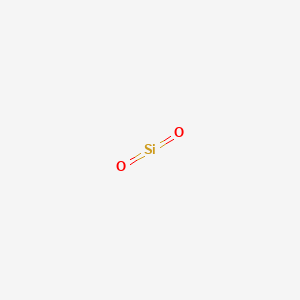
Silica
Silicon Dioxide is a natural compound of silicon and oxygen found mostly in sand, Silica has three main crystalline varieties: quartz, tridymite, and cristobalite. Fine particulate silica dust from quartz rock causes over a long-term progressive lung injury, silicosis. (NCI04) — NCI Thesaurus (NCIt)
- Nom IUPAC
- dioxosilane
- Formule moléculaire
- O2Si
- Masse moléculaire
- 60.084 g/mol
- Masse exacte
- 59.966755773 Da
- Surface polaire topologique
- 34,1 Ų
- Donneurs de liaisons hydrogène
- 0
- Accepteurs de liaisons hydrogène
- 2
- Unités covalentes
- 1
- Stéréocentres définis
- 0
Également connu sous le nom de
16 autres noms signalés
Identifiants de bases de données externes
- ChEBI:CHEBI:30563
- EPA DTXSID:DTXSID1029677
Preuves issues de bases de données scientifiques complémentaires
NIH PubChem PUG-View
Attributed physical-property, hazard, environmental and use annotations.
- Boiling Point: 4046 °F at 760 mmHg (NIOSH, 2024) Source: CAMEO Chemicals
- Boiling Point: 4046 °F Source: Hazardous Substances Data Bank (HSDB)
- Boiling Point: 2230 °C Source: Hazardous Substances Data Bank (HSDB)
- Boiling Point: 2230 °C Source: ILO-WHO International Chemical Safety Cards (ICSCs)
- Boiling Point: 2950 °C @760 [mm Hg] Source: PAC Chemical Database, U.S. Department of Energy
- Boiling Point: 4046 °F Source: The National Institute for Occupational Safety and Health (NIOSH)
- Color/Form: Amorphous powder Source: Hazardous Substances Data Bank (HSDB)
- Color/Form: Transparent to gray powder (Note: Amorphous silica is the non-crystalline form of O2Si). ... solid Source: Hazardous Substances Data Bank (HSDB)
- Color/Form: Silica gel is a coherent, rigid, continuous three-dimensional network of spherical particles of colloidal microporous silica. Source: Hazardous Substances Data Bank (HSDB)
- Color/Form: Transparent crystals Source: Hazardous Substances Data Bank (HSDB)
- Density: 2.2 (NIOSH, 2024) - Denser than water; will sink Source: CAMEO Chemicals
- Density: 2.2 @ 25 °C Source: Hazardous Substances Data Bank (HSDB)
- Density: 2.6 Source: Hazardous Substances Data Bank (HSDB)
- Density: Colorless crystals or white powder; odorless and tasteless; density: 2.2-2.6; soluble in molten alkai when finely divided and amorphous /Silicon dioxide/ Source: Hazardous Substances Data Bank (HSDB)
- Density: Density = 2.20 g/cm; Refractive index = 1.459; Surface tension = 5.200 @ 298 K (calc); Thermal conductivity = 1.37 W/m-deg K at 298 deg K ; Heat of Formation = -903.2 kJ/mol at 298 deg K; Heat Capacity = 37.94 J/mol-deg K at 298 deg K; Dielectric Constant = 3.8 /Corning 7940 fused silica/ Source: Hazardous Substances Data Bank (HSDB)
- Density: Density = 2.648 /alpha-Quartz/ /from table/ Source: Hazardous Substances Data Bank (HSDB)
- Density: Density = 2.269 /alpha-Tridymite/ /from table/ Source: Hazardous Substances Data Bank (HSDB)
- Density: Density = 2.318 /alpha-Cristobalite/ /from table/ Source: Hazardous Substances Data Bank (HSDB)
- Density: Density = 2.909 /Coesite/ /from table/ Source: Hazardous Substances Data Bank (HSDB)
- Density: Density = 4.287 /Stishovite/ /from table/ Source: Hazardous Substances Data Bank (HSDB)
- Density: 2.3 g/cm³ Source: ILO-WHO International Chemical Safety Cards (ICSCs)
- Density: 2.334 @25 °C Source: PAC Chemical Database, U.S. Department of Energy
- Melting Point: 3110 °F (NIOSH, 2024) Source: CAMEO Chemicals
- Melting Point: 3110 °F Source: Hazardous Substances Data Bank (HSDB)
- Melting Point: 1710 °C Source: Hazardous Substances Data Bank (HSDB)
- Melting Point: 1716 - 1736 °C Source: Human Metabolome Database (HMDB)
- Melting Point: 1713 °C Source: ILO-WHO International Chemical Safety Cards (ICSCs)
- Melting Point: 1722 °C Source: PAC Chemical Database, U.S. Department of Energy
- Melting Point: 3110 °F Source: The National Institute for Occupational Safety and Health (NIOSH)
- Odor: Odorless Source: Hazardous Substances Data Bank (HSDB)
- Physical Description: Transparent to gray, odorless powder. Irritating to the skin and eyes on contact. Inhalation will cause irritation in the respiratory tract. [Note: Amorphous silica is the non-crystalline form of SiO2.] Source: CAMEO Chemicals
- Physical Description: Dry Powder; Other Solid; Large Crystals; CBI Source: EPA Chemical Data Reporting (CDR)
- Physical Description: Dry Powder; Wet Solid; Other Solid; Large Crystals; CBI; Liquid Source: EPA Chemical Data Reporting (CDR)
- Physical Description: Dry Powder; Large Crystals; Dry Powder; Large Crystals; Wet Solid; Dry Powder; Liquid; Liquid; Large Crystals; Liquid; Liquid; Other Solid; Dry Powder; Other Solid; Dry Powder; Large Crystals; Liquid; Other Solid; Dry Powder; Large Crystals; Liquid; Wet Solid; Other Solid; Other Solid; Wet Solid; Large Crystals; Dry Powder; Wet Solid; Other Solid; Dry Powder; Wet Solid; Large Crystals; Other Solid; CBI Source: EPA Chemical Data Reporting (CDR)
- Physical Description: Liquid; Other Solid; Dry Powder Source: EPA Chemical Data Reporting (CDR)
- Physical Description: White, fluffy powder or granules. Hygroscopic Source: EU Food Improvement Agents
- Physical Description: Transparent to gray, odorless powder. [Note: Amorphous silica is the non-crystalline form of SiO2.]; [NIOSH] Source: Haz-Map, Information on Hazardous Chemicals and Occupational Diseases
- Physical Description: Solid Source: Human Metabolome Database (HMDB)
- Physical Description: COLOURLESS OR WHITE CRYSTALS. Source: ILO-WHO International Chemical Safety Cards (ICSCs)
- Physical Description: Solid Source: Occupational Safety and Health Administration (OSHA)
- Physical Description: Transparent to gray, odorless powder. [Note: Amorphous silica is the non-crystalline form of SiO2.] Source: The National Institute for Occupational Safety and Health (NIOSH)
- Solubility: Insoluble (NIOSH, 2024) Source: CAMEO Chemicals
- Solubility: The solubility of the various phases of silicas is very complex and depends upon several factors. Solubility increases with temperature and pH and is affected by the presence of trace metals. Particle size influences the rate of solubility. /Silica/ Source: Hazardous Substances Data Bank (HSDB)
- Solubility: Insoluble Source: Hazardous Substances Data Bank (HSDB)
- Solubility: Silica is rather poorly soluble in water although solubility is higher for the amorphous than for the crystalline morphologies. ... The external amorphous layer in quartz is more soluble than the crystalline underlying core. Source: Hazardous Substances Data Bank (HSDB)
- Solubility: AMORPHOUS IS SOL IN ALKALIES, ESP WHEN FINELY DIVIDED Source: Hazardous Substances Data Bank (HSDB)
- Solubility: Practically insoluble in water or acids. Dissolves readily in HF, forming silicon tetrafluoride. Source: Hazardous Substances Data Bank (HSDB)
- Solubility: Very slightly sol in alkali. Source: Hazardous Substances Data Bank (HSDB)
- Solubility: Soluble in hot potassium hydroxide and hot sodium hydroxide solutions. Insoluble in ethanol. Source: Hazardous Substances Data Bank (HSDB)
- Solubility: Silica is rather poorly soluble in water and solubility is lower for the crystalline than for the amorphous morphologies. ...Solubility increases with temperature and pH and is affected by the presence of trace metals. Particle size influences the rate of solubility. Source: Hazardous Substances Data Bank (HSDB)
- Solubility: The external amorphous layer in quartz (the Beilby layer) is more soluble than the crystalline underlying core. Source: Hazardous Substances Data Bank (HSDB)
- Solubility: Solubility in water: none Source: ILO-WHO International Chemical Safety Cards (ICSCs)
- Solubility: Insoluble Source: The National Institute for Occupational Safety and Health (NIOSH)
- Vapor Pressure: 0 mmHg (approx) (NIOSH, 2024) Source: CAMEO Chemicals
- Vapor Pressure: approx 0 mm Hg Source: Hazardous Substances Data Bank (HSDB)
- Vapor Pressure: 10 mm Hg @ 1732 °C Source: Hazardous Substances Data Bank (HSDB)
- Vapor Pressure: 0 mmHg (approx) Source: The National Institute for Occupational Safety and Health (NIOSH)
- IARC Carcinogenic Agent: Silica, amorphous Source: International Agency for Research on Cancer (IARC)
- IARC Carcinogenic Classes: Group 3: Not classifiable as to its carcinogenicity to humans Source: International Agency for Research on Cancer (IARC)
- IARC Monographs: Volume Sup 7: Overall Evaluations of Carcinogenicity: An Updating of IARC Monographs Volumes 1 to 42, 1987; 440 pages; ISBN 92-832-1411-0 (out of print); Volume 68: (1997) Silica, Some Silicates, Coal Dust and para-Aramid Fibrils Source: International Agency for Research on Cancer (IARC)
- Publication Year: 1997 Source: International Agency for Research on Cancer (IARC)
- Evaluation Year: 1996 Source: International Agency for Research on Cancer (IARC)
- Exposure Routes: Exposure mainly occurs via inhalation. Source: ILO-WHO International Chemical Safety Cards (ICSCs)
- Exposure Routes: inhalation, skin and/or eye contact Source: The National Institute for Occupational Safety and Health (NIOSH)
- First Aid: Excerpt from NIOSH Pocket Guide for Silica, amorphous:; Eye: IRRIGATE IMMEDIATELY - If this chemical contacts the eyes, immediately wash (irrigate) the eyes with large amounts of water, occasionally lifting the lower and upper lids. Get medical attention immediately.; Breathing: FRESH AIR - If a person breathes large amounts of this chemical, move the exposed person to fresh air at once. Other measures are usually unnecessary. (NIOSH, 2024) Source: CAMEO Chemicals
- First Aid: (General first aid procedures); Eye: Irrigate immediately - If this chemical contacts the eyes, immediately wash (irrigate) the eyes with large amounts of water, occasionally lifting the lower and upper lids. Get medical attention immediately.; Breathing: Fresh air Source: The National Institute for Occupational Safety and Health (NIOSH)
- GHS Hazard Statements: Not Classified; Reported as not meeting GHS hazard criteria by 7724 of 9127 companies Source: European Chemicals Agency (ECHA)
- ECHA C&L Notifications Summary: Aggregated GHS information provided per 9127 reports by companies from 60 notifications to the ECHA C&L Inventory.; Reported as not meeting GHS hazard criteria per 7724 of 9127 reports by companies.; There are 55 notifications provided by 1403 of 9127 reports by companies with hazard statement code(s).; Information may vary between notifications depending on impurities, additives, and other factors. The percentage value in parenthesis indicates the notified classification ratio from companies that provide hazard codes. Only hazard codes with percentage values above 10% are shown. For more detailed information, please visit ECHA C&L website. Source: European Chemicals Agency (ECHA)
- Note: This chemical does not meet GHS hazard criteria for 35% (889 of 2540) of reports. Source: European Chemicals Agency (ECHA)
- Signal: Warning Source: European Chemicals Agency (ECHA)
- GHS Hazard Statements: H315 (56.3%): Causes skin irritation [Warning Skin corrosion/irritation]; H319 (56.3%): Causes serious eye irritation [Warning Serious eye damage/eye irritation]; H335 (56.3%): May cause respiratory irritation [Warning Specific target organ toxicity, single exposure; Respiratory tract irritation] Source: European Chemicals Agency (ECHA)
- Precautionary Statement Codes: P261, P264, P264+P265, P271, P280, P302+P352, P304+P340, P305+P351+P338, P319, P321, P332+P317, P337+P317, P362+P364, P403+P233, P405, and P501 (click each P-code to see the statement) Source: European Chemicals Agency (ECHA)
- ECHA C&L Notifications Summary: Aggregated GHS information provided per 2540 reports by companies from 18 notifications to the ECHA C&L Inventory. Each notification may be associated with multiple companies.; Reported as not meeting GHS hazard criteria per 889 of 2540 reports by companies.; There are 17 notifications provided by 1651 of 2540 reports by companies with hazard statement code(s).; Information may vary between notifications depending on impurities, additives, and other factors. The percentage value in parenthesis indicates the notified classification ratio from companies that provide hazard codes. Only hazard codes with percentage values above 10% are shown. For more detailed information, please visit ECHA C&L website. Source: European Chemicals Agency (ECHA)
- Note: This chemical does not meet GHS hazard criteria for 96% (1614 of 1682) of all reports. Source: European Chemicals Agency (ECHA)
- GHS Hazard Statements: Not Classified; Reported as not meeting GHS hazard criteria by 1614 of 1682 companies (only 4% companies provided GHS information). For more detailed information, please visit ECHA C&L website. Source: European Chemicals Agency (ECHA)
- ECHA C&L Notifications Summary: Aggregated GHS information provided per 1682 reports by companies from 17 notifications to the ECHA C&L Inventory.; Reported as not meeting GHS hazard criteria per 1614 of 1682 reports by companies.; There are 14 notifications provided by 68 of 1682 reports by companies with hazard statement code(s).; Information may vary between notifications depending on impurities, additives, and other factors. The percentage value in parenthesis indicates the notified classification ratio from companies that provide hazard codes. Only hazard codes with percentage values above 10% are shown. For more detailed information, please visit ECHA C&L website. Source: European Chemicals Agency (ECHA)
- Note: This chemical does not meet GHS hazard criteria for 9.7% (125 of 1288) of reports. Source: European Chemicals Agency (ECHA)
- Signal: Danger Source: European Chemicals Agency (ECHA)
- Target Organs: Cancer, Immunological (Immune System), Renal (Urinary System or Kidneys), Respiratory (From the Nose to the Lungs) Source: Agency for Toxic Substances and Disease Registry (ATSDR)
- Target Organs: Eyes, respiratory system Source: The National Institute for Occupational Safety and Health (NIOSH)
- Cosmetic Ingredient Review Conclusion: The Panel concluded that synthetically-manufactured amorphous Silica ... safe in the present practices of use and concentration described in the safety assessment when formulated to be non-irritating. Source: Cosmetic Ingredient Review (CIR)
- Cosmetic Ingredient Review Finding(s): Safe for use in cosmetics, with qualifications Source: Cosmetic Ingredient Review (CIR)
- Toxicity Summary: IDENTIFICATION: Quartz is a frequently occurring solid component of most natural mineral dusts. HUMAN EXPOSURE: Human exposures to quartz occur most often during occupational activities that involve the movement of earth, disturbance of silica containing products (masonry, concrete), or use or manufacture of silica containing products. Environmental exposure to ambient quartz dust can occur during natural, industrial and agricultural activities. Respirable quartz dust particles can be inhaled and deposited in the lung. There are many epidemiological studies of occupational cohorts exposed to respirable quartz dust. Silicosis, lung cancer and pulmonary tuberculosis are associated with occupational exposure to quartz dust. Statistically significant increases in deaths or cases of bronchitis, emphysema, chronic obstructive pulmonary disease, autoimmune related diseases (scleroderma, rheumatoid arthritis, systemic lupus erythematosus) and renal diseases have been reported. Silicosis is the critical effect for hazard identification and risk assessment. There are sufficient epidemiological data to allow the risk of silicosis to be quantitatively estimated, but not to permit accurate esti Source: Hazardous Substances Data Bank (HSDB)
- Consumer Uses: Filler; Not Known or Reasonably Ascertainable; Sealant (barrier); Other Source: EPA Chemical Data Reporting (CDR)
- Consumer Uses: Other; Abrasives; Filler; Not Known or Reasonably Ascertainable; Surface modifier Source: EPA Chemical Data Reporting (CDR)
- Consumer Uses: CBI; Binder; Other; Lubricating agent; Anti-caking agent; Polymerization promoter; Dispersing agent; Anti-adhesive/cohesive; Insulators; Abrasives; Processing aids not otherwise specified; Surfactant (surface active agent); Flow promoter; Sealant (barrier); Soil amendments (fertilizers); Viscosity modifiers; Not Known or Reasonably Ascertainable; Thickening agent; Filler; Catalyst; Absorbent; Plasticizer; Dehydrating agent (desiccant); Adsorbent; Defoamer; Surface modifier; Pigment; Hardener; Solids separation (precipitating) agent, not otherwise specified; Intermediate; Processing aids, specific to petroleum production Source: EPA Chemical Data Reporting (CDR)
- Consumer Uses: Abrasives; Binder; Insulators; Hardener; Not Known or Reasonably Ascertainable; Thickening agent; Sealant (barrier) Source: EPA Chemical Data Reporting (CDR)
- Industry Uses: Other; Insulators; Abrasives; Heat transferring agent; pH regulating agent; Sealant (barrier); Crystal growth modifiers (nucleating agents); Not Known or Reasonably Ascertainable; Filler Source: EPA Chemical Data Reporting (CDR)
- Industry Uses: Filler; Stabilizing agent; Flow promoter; Hardener; Adsorbent; Surface modifier; Other; Abrasives Source: EPA Chemical Data Reporting (CDR)
- Industry Uses: Surfactant (surface active agent); Processing aids not otherwise specified; Bleaching agent; Opacifer; Plating agent; Abrasives; Anti-adhesive/cohesive; Insulators; Intermediates; Polymerization promoter; Dispersing agent; Anti-caking agent; Lubricating agent; CBI; Wetting agent (non-aqueous); Other; Binder; Processing aids, specific to petroleum production; Intermediate; Hardener; Chelating agent; Solids separation (precipitating) agent, not otherwise specified; Anti-static agent; Pigment; Adhesion/cohesion promoter; Etching agent; Adsorbent; Defoamer; Surface modifier; Oxidizing agent; Dehydrating agent (desiccant); Anti-slip agent; Plasticizer; Dusting agent; Hydraulic fluids; Absorbent; Not Known or Reasonably Ascertainable; Corrosion inhibitor; Crystal growth modifiers (nucleating agents); Thickening agent; Filler; Ion exchange agent; Catalyst; Soil amendments (fertilizers); Viscosity modifiers; Flow promoter; Stabilizing agent; Film former Source: EPA Chemical Data Reporting (CDR)
- Industry Uses: Insulators; Other; Binder; Abrasives; Opacifer; Sealant (barrier); Thickening agent; Not Known or Reasonably Ascertainable; Filler Source: EPA Chemical Data Reporting (CDR)
- Cosmetic Ingredient Review Link: CIR ingredient: Silica Source: Cosmetic Ingredient Review (CIR)
- Sources/Uses: Used as a filler in rubber products, paints, animal feeds, pesticides, insulation materials, and cosmetics; [Rom, p. 527] Silica nanoparticle applications include leukemia cell biomarkers, cancer therapy, drug delivery, mechanical polishing, and additives to drugs, cosmetics, printing inks, varnishes, and food; [PMID 21191487] Polycrystalline silicon and silicon dioxide materials are etched in semiconductor manufacturing. [CSH, p. 45] Source: Haz-Map, Information on Hazardous Chemicals and Occupational Diseases
- Industrial Processes with risk of exposure: Semiconductor Manufacturing [Category: Industry]; Mining [Category: Industry]; Cement Producing [Category: Industry]; Farming (Feed Additives) [Category: Industry] Source: Haz-Map, Information on Hazardous Chemicals and Occupational Diseases
- Uses: For silicon dioxide (USEPA/OPP Pesticide Code: 072605 ACTIVE products with label matches. /SRP: Registered for use in the U.S. but approved pesticide uses may change periodically and so federal, state and local authorities must be consulted for currently approved uses./ Source: Hazardous Substances Data Bank (HSDB)
- Uses: Amorphous silica (such as fumed silica) is incorporated in a variety of food products as anti-caking agents at levels up to 2% by weight. Amorphous silica is also used as an anti-caking agent and as an excipient in pharmaceuticals for various drug and vitamin preparations. Source: Hazardous Substances Data Bank (HSDB)
- Uses: According to the different physicochemical properties, the major classes of synthetic amorphous silica are used in a variety of products, e.g. as fillers in the rubber industry, in tire compounds, as free-flow and anti-caking agents in powder materials, and as liquid carriers, particularly in the manufacture of animal feed and agrochemicals; other uses are found in toothpaste additives, paints, silicon rubber, insulation material, liquid systems in coatings, adhesives, printing inks, plastisol car undercoats, and cosmetics. Source: Hazardous Substances Data Bank (HSDB)
- Uses: Bioactive glasses are silica-based, surface-active bone substitutes that have shown good biocompatibility both in bone and in soft tissue and are used in oral and maxillofacial bone augmentation. Source: Hazardous Substances Data Bank (HSDB)
- Uses: For more Uses (Complete) data for AMORPHOUS SILICA (18 total), please visit the HSDB record page. Source: Hazardous Substances Data Bank (HSDB)
- Uses: Silica sand has been used for many different purposes for many years; its most ancient and principal use throughout history has been in the manufacture of glass. Sands are used in ceramics, foundry, abrasive, hydraulic fracturing applications and many other uses. Source: Hazardous Substances Data Bank (HSDB)
- Uses: Refractory silica bricks, in which silica is converted by heat into cristobalite and tridymite are used in sprung arches of open-hearth furnaces, covers of electric furnaces, roofs of glass-tank furnaces, blast pre-heaters and coke and gas ovens. Source: Hazardous Substances Data Bank (HSDB)
- Uses: ...Several uses require the material /sand and gravel/ to be ground. In some uses (e.g. sandblasting, abrasives), grinding also occurs during the use. Source: Hazardous Substances Data Bank (HSDB)
- Uses: Industrial sand sold or used by United States producers in 1994, by major end use -- Glass-making: containers, flat (plate and window), specialty, and fibreglass (un-ground or ground); Foundry: moulding and core, moulding and core facing (ground), and refractory; Metallurgical applications: silicon carbide and flux for metal smelting; Abrasives: blasting, scouring cleansers (ground), sawing and sanding, and chemicals (ground and un-ground); Fillers: rubber, paints, putty, and whole grain fillers/building products; Ceramics: pottery, brick, tile; Filtration: water (municipal, county, local), swimming pools, and others; Petroleum industry: hydraulic fracturing, well packing, and cementing; Recreational: golf courses, baseball, volleyball, play sands, beaches, traction (engine), roofing granules and fillers, and other purposes (ground silica or whole grain). /From table/ Source: Hazardous Substances Data Bank (HSDB)
Mis en correspondance par: Existing checksum-valid CAS to unique PubChem CID match. Récupéré le: 2026-08-31. Ouvrir la fiche source
Les classifications scientifiques et les annotations de danger apportent du contexte et ne remplacent pas la décision réglementaire propre au marché indiquée ci-dessus.
Couverture des sources complémentaires et état des correspondances
| Source | Résultat | Vérifié |
|---|---|---|
| NIH PubChem PUG-View | Correspondance exacte | 2026-08-31 |
Une absence de correspondance enregistrée est une preuve utile que la source a été vérifiée ; ce n’est pas l’affirmation que la substance n’existe pas ailleurs.
Récupéré depuis NIH PubChem le 2026-08-31 par correspondance CAS à somme de contrôle valide. Les propriétés chimiques ne remplacent pas la décision réglementaire de cette page.
Preuves officielles sur le nom d’ingrédient de l’UE
Le nom de l’ingrédient correspond exactement au glossaire officiel 2025 de l’UE des dénominations communes d’ingrédients.
Preuves d’inventaire associées
Ingrédients ayant des fonctions de formulation communes
Sources officielles et scientifiques complémentaires
11 bases de données externes pour vérifier cette identité
Chaque lien lance une recherche de cette identité dans la source concernée. Ce qu’est chaque source et sa valeur juridique
Comment SILICA apparaît dans l’inventaire CosIng
L’inventaire CosIng répertorie SILICA comme ingrédient cosmétique et cette page l’associe à 0 fiche d’annexe. L’entrée d’inventaire reprend les noms et identifiants, tandis que la fiche d’annexe indique où la substance est interdite, soumise à restrictions ou inscrite sur une liste positive dans le droit de l’UE sur les cosmétiques.
SILICA est aussi associé à 6 fonctions cosmétiques dans les données officielles. Les désignations de fonction décrivent l’usage prévu, mais ne remplacent pas l’examen réglementaire des fiches d’annexe associées avant un travail de formulation ou d’étiquetage.
Questions fréquentes
Note de source pour SILICA
Cette page reproduit l’entrée d’inventaire CosIng de SILICA issue de documents publics de la Commission européenne sur les ingrédients cosmétiques et affiche les identifiants associés, même si aucune correspondance directe avec une annexe n’est actuellement rattachée.
Utilisez cette page d’inventaire pour étudier SILICA et comparer les fiches associées, mais vérifiez les restrictions et le statut juridique auprès du texte officiel en vigueur et de la législation avant toute décision réglementaire.
Outils et étapes suivantes
Vérifiez votre formule
Analysez une liste INCI complète pour détecter SILICA et les éventuelles restrictions d’annexes de l’UE ou signalements d’allergènes associés.
Vérificateur INCIRechercher des ingrédients similaires
Trouvez d’autres ingrédients de l’inventaire et entrées d’annexe liés à SILICA, à ses identifiants ou à des variantes de nom proches.
Rechercher