
Nom officiel d’étiquetage de l’UEEntrée 6039 du glossaire
CETYLPYRIDINIUM CHLORIDE
Cette fiche confirme une dénomination commune officielle d’ingrédient pour l’étiquetage des produits cosmétiques de l’UE. Elle ne confirme pas à elle seule que la substance est autorisée, non restreinte ou sûre.
Aperçu des preuves mondiales
L’identité résolue présente des preuves réglementaires correspondantes dans 2 des 13 jeux de données de marchés indexés : 2 fiches de pays et 0 fiches d’annexes de l’UE. Chaque résultat et chaque lacune de preuves sont énumérés ci-dessous.
Marchés vérifiés
13
Marchés avec preuves
2
Lacunes de preuves
11
Identifiants résolus
2
Identité résolue de la substance
CAS:123-03-5
EC:204-593-9
Fiches de l’index des ingrédients :
CETYLPYRIDINIUM CHLORIDE
Nom Ph. Eur. : cetylpyridinii chloridum
Fonctions cosmétiques : ANTIMICROBIAL, ANTISTATIC, DEODORANT, HAIR CONDITIONING, ORAL CARE, SURFACTANT - CLEANSING, SURFACTANT - EMULSIFYING
1-Hexadecylpyridinium chloride
5 noms correspondants ou signalés
CETYLPYRIDINIUM CHLORIDEcetylpyridinium chloridecetylpyridinii chloridumCetylpyridinium chloride세틸피리디늄클로라이드
Preuves réglementaires dans les 13 marchés
Ouvrez chaque fiche correspondante pour connaître son champ d’application, sa concentration, ses conditions, ses avertissements et la version de la source officielle.
Balayez ou faites défiler horizontalement pour voir la couverture des jeux de données et les actions suivantes.
| Marché | Résultat | Fiches | Jeu de données | Signification / action suivante |
|---|---|---|---|---|
| European Union EU | Aucune correspondance trouvée | 0 | Complete annex dataset Regulation (EC) 1223/2009 consolidated to 1 May 2026 | No annex match only means that these five annexes did not return a match; CosIng identity data and other EU obligations still need review. |
| Great Britain GB | Aucune correspondance trouvée | 0 | Complete consolidated annex dataset GB retained Regulation 1223/2009 schedules, effective 15 August 2026 | No annex match is not approval and does not cover Northern Ireland, which follows the applicable EU framework. |
| Canada CA | Aucune correspondance trouvée | 0 | Complete Hotlist snapshot Health Canada Cosmetic Ingredient Hotlist, 13 August 2025 | The Hotlist is an administrative compliance tool, not an exhaustive safety approval list. |
| New Zealand NZ | Aucune correspondance trouvée | 0 | Complete schedules dataset Cosmetic Products Group Standard schedules effective 1 January 2026 | The searchable spreadsheet is an aid; the legal Group Standard and incorporated notices remain authoritative. |
| ASEAN ASEAN | Aucune correspondance trouvée | 0 | Complete regional annex dataset ASEAN Cosmetic Directive annexes 2026-1, 22 June 2026 | Regional annex coverage does not replace member-state implementation dates, notifications or national deviations. |
| China CN | Aucune correspondance trouvée | 0 | Complete prohibited catalogues plus official-source workflow NMPA 2021 banned catalogues plus dynamic IECIC List I/List II system current since 2025 | IECIC listing is not blanket approval; absence may require the new cosmetic ingredient route, and restrictions are checked separately. |
| Japan JP | Restricted | 1Ouvrir la fiche 1 | Complete Standards appendices dataset MHLW Standards for Cosmetics official English source and Japanese amendments checked for the imported snapshot | Examinez chaque fiche associée et ses conditions exactes. |
| South Korea KR | Restricted | 1Ouvrir la fiche 1 | Complete current appendix dataset MFDS Notice 2026-19, effective 18 March 2026 | Examinez chaque fiche associée et ses conditions exactes. |
| United States US | Aucune correspondance trouvée | 0 | Complete enumerated federal ingredient rules eCFR Title 21 issue date 27 August 2026 | FDA has no general approved-cosmetic-ingredient catalogue; absence from these sections is not approval or proof of safety. |
| Australia AU | Aucune correspondance trouvée | 0 | Complete cosmetic-relevant Poisons Standard subset plus official workflow Therapeutic Goods (Poisons Standard—June 2026) Instrument 2026 | An AICIS Inventory match is not cosmetic approval; no Inventory match can indicate a new, exempted, reported or confidential introduction. |
| Brazil BR | Aucune correspondance trouvée | 0 | Complete prohibited dataset plus current restricted-list workflow ANVISA RDC 1.029/2026 and RDC 1.030/2026, published 15 June 2026 | RDC 1.030/2026 amends rather than replaces the prohibited baseline, and the second restricted-list revision was still under consultation in July 2026. |
| India IN | Aucune correspondance trouvée | 0 | Complete current Part 2 dataset plus official workflow for Parts 1, 3 and 4 Cosmetics Rules 2020 plus current BIS IS 4707 parts (1:2020, 2:2025, 3:2025, 4:2022) | The standards are separate controlled publications; absence from a locally indexed excerpt is not permission. |
| Saudi Arabia SA | Aucune correspondance trouvée | 0 | Complete official list index SFDA live prohibited/restricted lists, snapshot 30 August 2026 | No list match is not permission; Gulf/SFDA product, claim, notification and technical requirements still apply. |
Aucune ligne de marché ne correspond à ce filtre.
Fiches de marché correspondantes et conditions
South Korea
MFDS Notice 2026-19, effective 18 March 2026Identité et propriétés chimiques
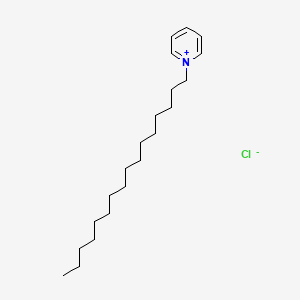
CAS 123-03-5PubChem CID 31239
Cetylpyridinium Chloride
Cetylpyridinium chloride is a pyridinium salt that has N-hexadecylpyridinium as the cation and chloride as the anion. It has antiseptic properties and is used in solutions or lozenges for the treatment of minor infections of the mouth and throat. It has a role as a surfactant and an antiseptic drug. It is a chloride salt and an organic chloride salt. It contains a cetylpyridinium. — ChEBI
- Nom IUPAC
- 1-hexadecylpyridin-1-ium chloride
- Formule moléculaire
- C21H38ClN
- Masse moléculaire
- 340.0 g/mol
- Masse exacte
- 339.2692779 Da
- Surface polaire topologique
- 3,9 Ų
- Donneurs de liaisons hydrogène
- 0
- Accepteurs de liaisons hydrogène
- 1
- Unités covalentes
- 2
- Stéréocentres définis
- 0
Également connu sous le nom de
hexadecylpyridinium chloridePristacinPyriseptCepacolCeprimCetamiumDobendanAktivex
16 autres noms signalés
BioseptAcetoquat CPC1-Cetylpyridinium chlorideCeepryn chlorideCepacol chlorideQuaternario CPCIntexsan CPCSwabettes HoechstAmmonyx CPCMedilaveCetyl pyridinium chlorideMerocetN-Hexadecylpyridinium chlorideN-Cetylpyridinium chlorideCeeprin chlorideCetylpyridini chloridum
Identifiants de bases de données externes
- ChEBI:CHEBI:32915
- ChEMBL:CHEMBL34833
- EPA DTXSID:DTXSID6041761
Preuves issues de bases de données scientifiques complémentaires
NIH PubChem PUG-View
Correspondance exacte d’identifiant31239
Attributed physical-property, hazard, environmental and use annotations.
- Color/Form: White powder Source: Hazardous Substances Data Bank (HSDB)
- LogP: log Kow= 1.71 Source: Hazardous Substances Data Bank (HSDB)
- Melting Point: 80 °C Source: Hazardous Substances Data Bank (HSDB)
- Physical Description: Dry Powder Source: EPA Chemical Data Reporting (CDR)
- Physical Description: White solid; [HSDB] Source: Haz-Map, Information on Hazardous Chemicals and Occupational Diseases
- Refractive Index: INDEX OF REFRACTION (@ 20 °C): MONOCLINIC 1.509; TRICLINIC 1.566; ORTHORHOMBIC 1.613 Source: Hazardous Substances Data Bank (HSDB)
- Solubility: Very soluble in water, chloroform Source: Hazardous Substances Data Bank (HSDB)
- Note: This chemical does not meet GHS hazard criteria for 19.3% (36 of 187) of reports. Source: European Chemicals Agency (ECHA)
- Signal: Danger Source: European Chemicals Agency (ECHA)
- GHS Hazard Statements: H301 (33.7%): Toxic if swallowed [Danger Acute toxicity, oral]; H302 (46%): Harmful if swallowed [Warning Acute toxicity, oral]; H315 (80.7%): Causes skin irritation [Warning Skin corrosion/irritation]; H318 (72.7%): Causes serious eye damage [Danger Serious eye damage/eye irritation]; H330 (80.2%): Fatal if inhaled [Danger Acute toxicity, inhalation]; H335 (78.6%): May cause respiratory irritation [Warning Specific target organ toxicity, single exposure; Respiratory tract irritation]; H400 (79.7%): Very toxic to aquatic life [Warning Hazardous to the aquatic environment, acute hazard]; H410 (13.9%): Very toxic to aquatic life with long lasting effects [Warning Hazardous to the aquatic environment, long-term hazard] Source: European Chemicals Agency (ECHA)
- Precautionary Statement Codes: P260, P261, P264, P264+P265, P270, P271, P273, P280, P284, P301+P316, P301+P317, P302+P352, P304+P340, P305+P354+P338, P316, P317, P319, P320, P321, P330, P332+P317, P362+P364, P391, P403+P233, P405, and P501 (click each P-code to see the statement) Source: European Chemicals Agency (ECHA)
- ECHA C&L Notifications Summary: Aggregated GHS information provided per 187 reports by companies from 27 notifications to the ECHA C&L Inventory. Each notification may be associated with multiple companies.; Reported as not meeting GHS hazard criteria per 36 of 187 reports by companies.; There are 26 notifications provided by 151 of 187 reports by companies with hazard statement code(s).; Information may vary between notifications depending on impurities, additives, and other factors. The percentage value in parenthesis indicates the notified classification ratio from companies that provide hazard codes. Only hazard codes with percentage values above 10% are shown. For more detailed information, please visit ECHA C&L website. Source: European Chemicals Agency (ECHA)
- Signal: Danger Source: NITE-CMC
- GHS Hazard Statements: H301: Toxic if swallowed [Danger Acute toxicity, oral]; H315: Causes skin irritation [Warning Skin corrosion/irritation]; H318: Causes serious eye damage [Danger Serious eye damage/eye irritation]; H330: Fatal if inhaled [Danger Acute toxicity, inhalation]; H400: Very toxic to aquatic life [Warning Hazardous to the aquatic environment, acute hazard]; H410: Very toxic to aquatic life with long lasting effects [Warning Hazardous to the aquatic environment, long-term hazard] Source: NITE-CMC
- Precautionary Statement Codes: P260, P264, P264+P265, P270, P271, P273, P280, P284, P301+P316, P302+P352, P304+P340, P305+P354+P338, P316, P317, P320, P321, P330, P332+P317, P362+P364, P391, P403+P233, P405, and P501 (click each P-code to see the statement) Source: NITE-CMC
- GHS Hazard Statements: H301: Toxic if swallowed [Danger Acute toxicity, oral]; H319: Causes serious eye irritation [Warning Serious eye damage/eye irritation]; H330: Fatal if inhaled [Danger Acute toxicity, inhalation]; H335: May cause respiratory irritation [Warning Specific target organ toxicity, single exposure; Respiratory tract irritation] Source: NITE-CMC
- Precautionary Statement Codes: P260, P261, P264, P264+P265, P270, P271, P280, P284, P301+P316, P304+P340, P305+P351+P338, P316, P319, P320, P321, P330, P337+P317, P403+P233, P405, and P501 (click each P-code to see the statement) Source: NITE-CMC
- Environmental Bioconcentration: Whole body BCF values of 21, 22, and 13, were measured for clams, fathead minnows, and tadpoles, respectively, under flow-through conditions over a 7-day period, for a structurally-similar compound, cetylpyridinium bromide(1). An estimated BCF of 2 was calculated for cetylpyridinium chloride(SRC), using a log Kow of 1.71(2) and a regression-derived equation(3). According to a classification scheme(4), these BCF values suggest the potential for bioconcentration in aquatic organisms is low(SRC). Source: Hazardous Substances Data Bank (HSDB)
- Environmental Fate: TERRESTRIAL FATE: Based on a classification scheme(1), an estimated Koc value of 200(SRC), determined from a log Kow of 1.71(2) and a regression-derived equation(3), indicates that cetylpyridinium chloride is expected to have moderate mobility in soil(SRC). However, quaternary ammonium compounds are known to sorb strongly and rapidly in well-mixed systems, to a wide variety of materials (such as sewage sludge, sediment, clay)(4) and the mobility of cetylpyridinium bromide in soil may be considerably less than estimated. Volatilization of cetylpyridinium chloride from moist soil surfaces is not expected as this compound is a salt(SRC). Cetylpyridinium chloride is also not expected to volatilize from dry soil surfaces(SRC) as ions do not volatilize. Cetylpyridinium chloride is expected to biodegrade rapidly in soil(SRC) based on sewage studies for structurally-similar compounds. Dodecyl and tetradecylpyridinium chloride, were biodegraded in the Spanish official test (93 and 94%, respectively) and in the OECD Confirmatory test (91 and 92%, respectively)(4). Source: Hazardous Substances Data Bank (HSDB)
- Environmental Fate: AQUATIC FATE: Based on a classification scheme(1), an estimated Koc value of 200(SRC), determined from a log Kow of 1.71(2) and a regression-derived equation(3), indicates that cetylpyridinium chloride is not expected to adsorb to suspended solids and sediment(SRC). However, quaternary ammonium compounds are known to sorb strongly, and rapidly in well-mixed systems, to a wide variety of materials (such as sewage sludge, sediment, clay)(7); therefore, cetylpyridinium bromide should be strongly adsorbed to suspended solids and sediment in water. This compound is expected to exist in the dissociated form in the environment and therefore volatilization from water surfaces will not be an important fate process(SRC). According to a classification scheme(5), an estimated BCF of 2(SRC), from its log Kow(2) and a regression-derived equation(6), suggests the potential for bioconcentration in aquatic organisms is low(SRC). Cetylpyridinium chloride is expected to biodegrade rapidly in water(SRC) based on sewage studies for structurally-similar compounds. Dodecyl and tetradecylpyridinium chloride, were biodegraded in the Spanish official test (93 and 94%, respectively) and in the OECD Confirmat Source: Hazardous Substances Data Bank (HSDB)
- Environmental Fate: ATMOSPHERIC FATE: Cetylpyridinium chloride will exist as the ion in the environment and, thus, will be present solely in the particulate phase in the atmosphere. Particulate-phase cetylpyridinium chloride may be removed from the air by wet and dry deposition. (SRC) Source: Hazardous Substances Data Bank (HSDB)
- Consumer Uses: Other; Preservative Source: EPA Chemical Data Reporting (CDR)
- Industry Uses: Preservative; Other Source: EPA Chemical Data Reporting (CDR)
- Sources/Uses: Used as a preservative/antibacterial agent in cosmetics, pharmaceuticals, cough lozenges, mouthwashes, deodorants, and antiseptics; [HSDB] Quarternary ammonium compounds are used as algaecides/slimicides (swimming pools, industrial water reservoirs, and farm ponds), antiseptics for cleaning wounds, antistatic agents for textiles, softeners for paper products, and pigment dispersers; [IPCS-PIMs] Source: Haz-Map, Information on Hazardous Chemicals and Occupational Diseases
- Industrial Processes with risk of exposure: Using Disinfectants or Biocides [Category: Clean] Source: Haz-Map, Information on Hazardous Chemicals and Occupational Diseases
- Uses: For Cetylpyridinium chloride (USEPA/OPP Pesticide Code: 069160) there are 0 labels match. /SRP: Not registered for current use in the U.S., but approved pesticide uses may change periodically and so federal, state and local authorities must be consulted for currently approved uses./ Source: Hazardous Substances Data Bank (HSDB)
- Uses: The active ingredient is no longer contained in any registered pesticide products ... "cancelled." Source: Hazardous Substances Data Bank (HSDB)
- Uses: Pharmaceutic aid (preservative), antiseptic; disinfectant/monohydrate/ Source: Hazardous Substances Data Bank (HSDB)
- Uses: Antiseptic; preservative(cosmetics, pharmaceuticals) Source: Hazardous Substances Data Bank (HSDB)
- Uses: For more Uses (Complete) data for CETYLPYRIDINIUM CHLORIDE (9 total), please visit the HSDB record page. Source: Hazardous Substances Data Bank (HSDB)
Mis en correspondance par: Existing checksum-valid CAS to unique PubChem CID match. Récupéré le: 2026-08-31. Ouvrir la fiche source
Les classifications scientifiques et les annotations de danger apportent du contexte et ne remplacent pas la décision réglementaire propre au marché indiquée ci-dessus.
Couverture des sources complémentaires et état des correspondances
| Source | Résultat | Vérifié |
|---|---|---|
| NIH PubChem PUG-View | Correspondance exacte | 2026-08-31 |
Une absence de correspondance enregistrée est une preuve utile que la source a été vérifiée ; ce n’est pas l’affirmation que la substance n’existe pas ailleurs.
Récupéré depuis NIH PubChem le 2026-09-02 par correspondance CAS à somme de contrôle valide. Les propriétés chimiques ne remplacent pas la décision réglementaire de cette page.
Recherche complémentaire sur la substance auprès de sources faisant autorité
Chaque lien lance une recherche de cette identité dans la source concernée. Un lien est une piste de recherche, et non l’affirmation que la source détient une fiche exacte. Ce qu’est chaque source et sa valeur juridique
Aller plus loin avec cette fiche
Source officielle et champ d’application
Importé de la décision d’exécution (UE) 2025/1175 de la Commission (version du jeu de données EU 2025/1175). Le glossaire fournit les dénominations communes des ingrédients pour la liste d’ingrédients exigée par l’article 19, paragraphe 1, point g) ; ce n’est ni une liste d’autorisation ni une liste de sécurité.
Ouvrir la décision officielle