
LITHIUM HYDROXIDE
Lithium hydroxide
LITHIUM HYDROXIDE ist auf dieser Seite mit 1 EU-Anhangseintrag verknüpft. Hinweis aus dem Verzeichnis: III/15b.
Auf einen Blick
- Funktion
- Buffering, hair waving or straightening
- CAS
- 1310-65-2
- EC
- 215-183-4
- EU-Anhänge
- Anhang III/15b
- Anhang III/15b:
max. (a) 1. 2% (6) 2. 4.5% (6) · (a) Hair straightener
(b) pH ajuster for depilatories
(c) Other uses as pH ajuster (for r… · Warnhinweis:
(a) 1. Contains alkali Avoid contact with eyes Can cause blindness Keep out of reach of children 2. Avoid contact w…
Wissenschaftliche Grundlage: 1 SCCS-Stellungnahme
Der Wissenschaftliche Ausschuss „Verbrauchersicherheit“ (SCCS) der EU hat diesen Stoff bewertet. Seine Stellungnahmen sind die wissenschaftliche Grundlage des Anhangeintrags.
Regulatorische Belege nach Markt
Diese Matrix trennt verifizierte Vorschriften zu Inhaltsstoffen von Quellen, die zwar erfasst, aber noch nicht importiert sind. Eine fehlende importierte Vorschrift bedeutet nicht, dass der Inhaltsstoff zulässig ist.
Wischen oder scrollen Sie horizontal, um alle Spalten zu sehen.
| Markt | Belegstatus | Einträge | Quellsprache |
|---|---|---|---|
| European Union | Beleg verknüpft Restricted entry found Diesen Beleg öffnen | 1 | English and EU languages |
| Great Britain | Beleg verknüpft Restricted Diesen Beleg öffnen | 1 | English |
| Canada | Quelle erfasst Official source mapped; ingredient rule not imported | 0 | English and French |
| New Zealand | Beleg verknüpft Restricted Diesen Beleg öffnen | 1 | English |
| ASEAN | Beleg verknüpft Restricted Diesen Beleg öffnen | 1 | English and national languages |
| China | Quelle erfasst Official source mapped; ingredient rule not imported | 0 | Chinese with selected English material |
| Japan | Quelle erfasst Official source mapped; ingredient rule not imported | 0 | Japanese; official English translation available |
| South Korea | Beleg verknüpft Restricted Diesen Beleg öffnen | 1 | Korean with some English names |
| United States | Quelle erfasst Official source mapped; ingredient rule not imported | 0 | English |
| Australia | Quelle erfasst Official source mapped; ingredient rule not imported | 0 | English |
| Brazil | Quelle erfasst Official source mapped; ingredient rule not imported | 0 | Portuguese with INCI crosswalks |
| India | Beleg verknüpft Restricted Diesen Beleg öffnen | 1 | English and Hindi |
| Saudi Arabia | Beleg verknüpft Restricted Diesen Beleg öffnen | 1 | Arabic and English |
Verzeichnisangaben zu LITHIUM HYDROXIDE
INCI-Name
LITHIUM HYDROXIDE
INN-Name
lithium hydroxide
Beschreibung
Lithium hydroxide
Herkunft des Eintrags
- Verzeichnisverweis
- 35038
- Importierte Identität
- LITHIUM HYDROXIDE
- Quellenaktualisierung
- 15/10/2010
Anhangseinträge für LITHIUM HYDROXIDE
Kerndaten
- BUFFERING
Stabilising the pH of an aqueous medium in a narrow range even if an acid or base is added. Altering and/or maintaining a cosmetic product's pH at the desired level.
- HAIR WAVING OR STRAIGHTENING
Modifying the chemical structure of the hair, allowing it to be set in the style required (permanent waves or hair straightening).
Chemische Identität und Eigenschaften
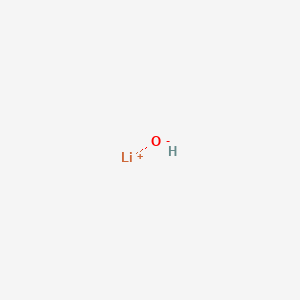
Lithium Hydroxide
Lithium hydroxide is an alkali metal hydroxide. — ChEBI
- IUPAC-Name
- lithium hydroxide
- Summenformel
- HLiO
- Molekulargewicht
- 24.0 g/mol
- Exakte Masse
- 24.01874309 Da
- Topologische polare Oberfläche
- 1,0 Ų
- Wasserstoffbrücken-Donoren
- 1
- Wasserstoffbrücken-Akzeptoren
- 1
- Kovalente Einheiten
- 2
- Definierte Stereozentren
- 0
Auch bekannt als
16 weitere gemeldete Namen
Kennungen in externen Datenbanken
- ChEBI:CHEBI:33979
- EPA DTXSID:DTXSID70893845
- EPA DTXSID:DTXSID901337186
Belege aus weiteren wissenschaftlichen Datenbanken
NIH PubChem PUG-View
Attributed physical-property, hazard, environmental and use annotations.
- Boiling Point: 1626 °C @760 [mm Hg] Quelle: PAC Chemical Database, U.S. Department of Energy
- Density: 2.54 g/cm³ Quelle: ILO-WHO International Chemical Safety Cards (ICSCs)
- Density: 1.45 @25 °C Quelle: PAC Chemical Database, U.S. Department of Energy
- Melting Point: 450-471 °C Quelle: ILO-WHO International Chemical Safety Cards (ICSCs)
- Melting Point: 473 °C Quelle: PAC Chemical Database, U.S. Department of Energy
- Physical Description: Lithium hydroxide, solution appears as a clear to water-white liquid which may have a pungent odor. Contact may cause severe irritation to skin, eyes, and mucous membranes. It may be toxic by ingestion, inhalation and skin absorption. It is used to make other chemicals. Quelle: CAMEO Chemicals
- Physical Description: Large Crystals; Liquid; Wet Solid; Dry Powder; Liquid Quelle: EPA Chemical Data Reporting (CDR)
- Physical Description: White crystals or granular powder; [AIHA] Readily absorbs carbon dioxide and water from air; [Merck Index] White odorless granules; Hygroscopic; [Alfa Aesar MSDS] Quelle: Haz-Map, Information on Hazardous Chemicals and Occupational Diseases
- Physical Description: COLOURLESS-TO-WHITE HYGROSCOPIC CRYSTALS. Quelle: ILO-WHO International Chemical Safety Cards (ICSCs)
- Solubility: Solubility in water, g/100ml at 20 °C: 12.8 (good) Quelle: ILO-WHO International Chemical Safety Cards (ICSCs)
- Vapor Pressure: Vapor pressure, Pa at 20 °C: (negligible) Quelle: ILO-WHO International Chemical Safety Cards (ICSCs)
- Exposure Routes: The substance can be absorbed into the body by inhalation of its aerosol and by ingestion. Serious local effects by all routes of exposure. Quelle: ILO-WHO International Chemical Safety Cards (ICSCs)
- First Aid: Excerpt from ERG Guide 154 [Substances - Toxic and/or Corrosive (Non-Combustible)]:; Refer to the "General First Aid" section. Specific First Aid: For corrosives, in case of contact, immediately flush skin or eyes with running water for at least 30 minutes. Additional flushing may be required. (ERG, 2024) Quelle: CAMEO Chemicals
- ERG2024, Guide 154 (Lithium hydroxide, solution; Lithium hydroxide): General First Aid:; · Call 911 or emergency medical service.; · Ensure that medical personnel are aware of the material(s) involved, take precautions to protect themselves and avoid contamination.; · Move victim to fresh air if it can be done safely.; · Administer oxygen if breathing is difficult.; · If victim is not breathing:; -- DO NOT perform mouth-to-mouth resuscitation; the victim may have ingested or inhaled the substance.; -- If equipped and pulse detected, wash face and mouth, then give artificial respiration using a proper respiratory medical device (bag-valve mask, pocket mask equipped with a one-way valve or other device).; -- If no pulse detected or no respiratory medical device available, provide continuous compressions. Conduct a pulse check every two minutes or monitor for any signs of spontaneous respirations.; · Remove and isolate contaminated clothing and shoes.; · For minor skin contact, avoid spreading material on unaffected skin.; · In case of contact with substance, remove immediately by flushing skin or eyes with running water for at least 20 minutes.; · For severe burns, immediate medical attention is required.; · Effects of exposure (inhalation, ingestion, Quelle: Emergency Response Guidebook (ERG)
- ERG2024, Guide 154 (Lithium hydroxide; Lithium hydroxide, solution): General First Aid:; · Call 911 or emergency medical service.; · Ensure that medical personnel are aware of the material(s) involved, take precautions to protect themselves and avoid contamination.; · Move victim to fresh air if it can be done safely.; · Administer oxygen if breathing is difficult.; · If victim is not breathing:; -- DO NOT perform mouth-to-mouth resuscitation; the victim may have ingested or inhaled the substance.; -- If equipped and pulse detected, wash face and mouth, then give artificial respiration using a proper respiratory medical device (bag-valve mask, pocket mask equipped with a one-way valve or other device).; -- If no pulse detected or no respiratory medical device available, provide continuous compressions. Conduct a pulse check every two minutes or monitor for any signs of spontaneous respirations.; · Remove and isolate contaminated clothing and shoes.; · For minor skin contact, avoid spreading material on unaffected skin.; · In case of contact with substance, remove immediately by flushing skin or eyes with running water for at least 20 minutes.; · For severe burns, immediate medical attention is required.; · Effects of exposure (inhalation, ingestion, Quelle: Emergency Response Guidebook (ERG)
- Note: This chemical does not meet GHS hazard criteria for 9.7% (95 of 980) of reports. Quelle: European Chemicals Agency (ECHA)
- Signal: Danger Quelle: European Chemicals Agency (ECHA)
- GHS Hazard Statements: H301 (12.6%): Toxic if swallowed [Danger Acute toxicity, oral]; H302 (73.6%): Harmful if swallowed [Warning Acute toxicity, oral]; H311 (10.9%): Toxic in contact with skin [Danger Acute toxicity, dermal]; H314 (89.8%): Causes severe skin burns and eye damage [Danger Skin corrosion/irritation]; H318 (72.4%): Causes serious eye damage [Danger Serious eye damage/eye irritation] Quelle: European Chemicals Agency (ECHA)
- Precautionary Statement Codes: P260, P262, P264, P264+P265, P270, P280, P301+P316, P301+P317, P301+P330+P331, P302+P352, P302+P361+P354, P304+P340, P305+P354+P338, P316, P317, P321, P330, P361+P364, P363, P405, and P501 (click each P-code to see the statement) Quelle: European Chemicals Agency (ECHA)
- ECHA C&L Notifications Summary: Aggregated GHS information provided per 980 reports by companies from 28 notifications to the ECHA C&L Inventory. Each notification may be associated with multiple companies.; Reported as not meeting GHS hazard criteria per 95 of 980 reports by companies.; There are 26 notifications provided by 885 of 980 reports by companies with hazard statement code(s).; Information may vary between notifications depending on impurities, additives, and other factors. The percentage value in parenthesis indicates the notified classification ratio from companies that provide hazard codes. Only hazard codes with percentage values above 10% are shown. For more detailed information, please visit ECHA C&L website. Quelle: European Chemicals Agency (ECHA)
- Signal: Danger Quelle: NITE-CMC
- GHS Hazard Statements: H301: Toxic if swallowed [Danger Acute toxicity, oral]; H314: Causes severe skin burns and eye damage [Danger Skin corrosion/irritation]; H318: Causes serious eye damage [Danger Serious eye damage/eye irritation]; H331: Toxic if inhaled [Danger Acute toxicity, inhalation]; H336: May cause drowsiness or dizziness [Warning Specific target organ toxicity, single exposure; Narcotic effects]; H360: May damage fertility or the unborn child [Danger Reproductive toxicity]; H362: May cause harm to breast-fed children [Reproductive toxicity, effects on or via lactation]; H370: Causes damage to organs [Danger Specific target organ toxicity, single exposure]; H372: Causes damage to organs through prolonged or repeated exposure [Danger Specific target organ toxicity, repeated exposure] Quelle: NITE-CMC
- Precautionary Statement Codes: P203, P260, P261, P263, P264, P264+P265, P270, P271, P280, P301+P316, P301+P330+P331, P302+P361+P354, P304+P340, P305+P354+P338, P308+P316, P316, P317, P318, P319, P321, P330, P363, P403+P233, P405, and P501 (click each P-code to see the statement) Quelle: NITE-CMC
- GHS Hazard Statements: H314: Causes severe skin burns and eye damage [Danger Skin corrosion/irritation]; H318: Causes serious eye damage [Danger Serious eye damage/eye irritation]; H331: Toxic if inhaled [Danger Acute toxicity, inhalation]; H360: May damage fertility or the unborn child [Danger Reproductive toxicity]; H370: Causes damage to organs [Danger Specific target organ toxicity, single exposure] Quelle: NITE-CMC
- Precautionary Statement Codes: P203, P260, P261, P264, P264+P265, P270, P271, P280, P301+P330+P331, P302+P361+P354, P304+P340, P305+P354+P338, P308+P316, P316, P317, P318, P321, P363, P403+P233, P405, and P501 (click each P-code to see the statement) Quelle: NITE-CMC
- Signal: Danger Quelle: Hazardous Chemical Information System (HCIS), Safe Work Australia
- GHS Hazard Statements: H302: Harmful if swallowed [Warning Acute toxicity, oral]; H314: Causes severe skin burns and eye damage [Danger Skin corrosion/irritation] Quelle: Hazardous Chemical Information System (HCIS), Safe Work Australia
- Consumer Uses: Lubricating agent; Viscosity modifiers; Ion exchange agent Quelle: EPA Chemical Data Reporting (CDR)
- Industry Uses: Absorbent; Ion exchange agent; Viscosity modifiers; Intermediate; Dye; Lubricating agent; Processing aids not otherwise specified Quelle: EPA Chemical Data Reporting (CDR)
- Sources/Uses: Used in photographic developing solutions, alkaline storage batteries, lithium-based greases, polymerization catalysts, carbon dioxide absorbents, alkyd paints, textile dye solubilizers, and copper electroplating baths; Produced along with lithium oxide when lithium-aluminum alloys are heated by welding or cutting; [AIHA] Used in cosmetics; [ExPub: EC] Quelle: Haz-Map, Information on Hazardous Chemicals and Occupational Diseases
- Industrial Processes with risk of exposure: Welding [Category: Weld]; Electroplating [Category: Plate]; Battery Manufacturing [Category: Industry]; Painting (Pigments, Binders, and Biocides) [Category: Paint]; Gas Welding and Cutting [Category: Weld]; Photographic Processing [Category: Other]; Textiles (Printing, Dyeing, or Finishing) [Category: Industry] Quelle: Haz-Map, Information on Hazardous Chemicals and Occupational Diseases
Zugeordnet durch: Existing checksum-valid CAS to unique PubChem CID match. Abgerufen: 2026-08-31. Quelleneintrag öffnen
Wissenschaftliche Klassifizierungen und Gefahrenannotationen liefern Kontext und ersetzen nicht die oben gezeigte marktspezifische regulatorische Entscheidung.
Weitere Quellenabdeckung und Trefferstatus
| Quelle | Ergebnis | Geprüft |
|---|---|---|
| NIH PubChem PUG-View | Exakter Treffer | 2026-08-31 |
Ein erfasster Nicht-Treffer ist ein nützlicher Beleg dafür, dass die Quelle geprüft wurde; er ist keine Behauptung, dass der Stoff anderswo nicht existiert.
Am 2026-08-31 von NIH PubChem durch prüfsummengültigen CAS-Abgleich abgerufen. Chemische Eigenschaften ersetzen nicht die regulatorische Entscheidung auf dieser Seite.
Belege zum amtlichen EU-Inhaltsstoffnamen
Der Inhaltsstoffname stimmt exakt mit dem amtlichen EU-Glossar 2025 der gebräuchlichen Inhaltsstoffnamen überein.
Verwandte Belege aus dem Verzeichnis
Inhaltsstoffe mit sich überschneidenden Rezepturfunktionen
Weitere amtliche und wissenschaftliche Quellen
11 externe Datenbanken zur Prüfung dieser Identität
Jeder Link durchsucht die jeweilige Quelle nach dieser Identität. Was jede Quelle ist und welches rechtliche Gewicht sie hat
Wie LITHIUM HYDROXIDE im CosIng-Verzeichnis erscheint
Das CosIng-Verzeichnis führt LITHIUM HYDROXIDE als kosmetischen Inhaltsstoff, und diese Seite verknüpft ihn mit 1 Anhangseintrag. Der Verzeichniseintrag erfasst Namen und Kennungen, während der Anhangseintrag zeigt, wo der Stoff im EU-Kosmetikrecht verboten, beschränkt oder positiv gelistet ist.
LITHIUM HYDROXIDE ist in den amtlichen Daten außerdem mit 2 kosmetischen Funktionen gekennzeichnet. Funktionsbezeichnungen beschreiben die beabsichtigte Verwendung, ersetzen aber nicht die regulatorische Prüfung verknüpfter Anhangseinträge vor der Rezeptierung oder Kennzeichnung.
Häufig gestellte Fragen
Quellenhinweis zu LITHIUM HYDROXIDE
Diese Seite verbindet den CosIng-Verzeichniseintrag für LITHIUM HYDROXIDE mit 1 verknüpften Eintrag aus den Anhängen II–VI aus unserem Datenbestand, der aus öffentlichen Materialien der Europäischen Kommission zu kosmetischen Inhaltsstoffen aufgebaut ist.
Nutzen Sie diese Verzeichnisseite, um LITHIUM HYDROXIDE zu recherchieren und verknüpfte Einträge zu vergleichen; verifizieren Sie Beschränkungen und Rechtsstatus jedoch anhand des aktuellen amtlichen Quellentextes und Rechts, bevor Sie regulatorische Entscheidungen treffen.
Werkzeuge und nächste Schritte
Rezeptur prüfen
Eine vollständige INCI-Liste prüfen, um LITHIUM HYDROXIDE und etwaige verknüpfte EU-Anhangsbeschränkungen oder Allergenmarkierungen zu erkennen.
INCI-CheckerÄhnliche Inhaltsstoffe suchen
Weitere Inhaltsstoffe aus dem Verzeichnis und Anhangseinträge finden, die mit LITHIUM HYDROXIDE, seinen Kennungen oder nahen Namensvarianten zusammenhängen.
Suche